HSO Pre-Mission Checklist – March 31st

Submitted by: Imane El Bakkali
Crew: 296
Date: 31/03/2024
Part 1: Using the attached Safety Equipment Inventory, locate, test and confirm operation of all safety equipment. List any equipment not found and/or missing: none
Part 2: Locate and confirm the emergency escape routes in the Hab are functional and clear:
1. Stairs [OK]
2. Emergency window [OK]
3. Commander’s window [OK]
Part Three:
Inventory First Aid kit and note what needs to be refilled: None
Note any safety issues: None
Note any health/environmental issues: None
Note any missing or recommended health and safety supplies:

Recommended :
– Anti-histaminic
– Paracetamol
– Cold pack

Safety Equipment Inventory 2023-2024

HAB Upper deck HAB Lower deck RAM GreenHab ScienceDome Rovers
CO monitor x [OK] X [OK] X [OK] X [OK] X [OK]
Escape ladder X [OK]
Eyewash X [OK]
Fire blanket X [OK] X [OK] X [OK]
Fire extinguisher X [OK] X [OK] X [OK] X [OK] X [OK]
First Aid X [OK] X [OK]
Intercom X [OK] X [OK] X [OK] X [OK]
Nightlight X [OK] X [OK]
Propane alarm X [OK] X [OK]
Radios (Channels 10 and 22) X [OK] X [OK] X [OK] X [OK] X [OK]
Smoke alarm X [OK] X [OK] X [OK] X [OK] X [OK]
Tow rope X [OK]

Mission Plan – March 31st

Crew 296, MarsUCLouvain 2024, is composed of 8 members. Each of us will be conducting experiments to broaden our knowledge about Mars and space travel.
Following in the report, you will find precise descriptions of the experiments we will be conducting.
This mission will be considered successful if, first, all our members come back safely to Earth, and if we manage to conduct our experiments for the full duration of the mission.

Romain
I will be conducting two experiments.
The aim of the first experiment is to test the extent to which a device for capturing and recognizing finger-based gestures can be impacted by extreme experimental conditions, such as those found in unfamiliar, restrictive or even hostile environments for human beings.
To this end, crew members will test the TapStrap, a ring-based gesture capture devices. This test will be carried out once before the mission, then three times during the mission. The efficiency, effectiveness and subjective satisfaction of crew members in using these devices will be evaluated.
A second experiment will test the extent to which drone piloting can be impacted by the same extreme conditions. The experiment will also be repeated four times.
From the analysis of the data collected, we hope to draw lessons about the use of interactive applications in extreme conditions, using different modalities of interaction.

Maxime
Space is a dangerous and relentless, throwing challenges to everybody who dares venture into the unknown. Collecting and understanding data from an alien world is key to survival, that is why my experiment is going to be about the study of the danger of dust from Martian storms. These storms are not very well understood and the dust they pick up can be hazardous for the vital equipment such as the solar panels. I will use two weather stations that will track luminosity, air pressure, wind speed and temperature for two weeks and use my mapping skills to figure out if the environment around the MDRS is suitable for sensitive equipment or not. One of the weather stations will be stationary during the two weeks and the other will be mobile, moved each day to a new location to try and gauge the exposition to dust and wind.

Louis
An overlooked aspect of a Mars exploration mission is the selection of the landing site location. Whether it is for the initial landing, or for the establishment of a base, the chosen location must meet a lot of mission-critical criteria. Most orbital-produced topographic maps of Mars suffer from a of lack of spatial resolution. My research project will hence be focused on the production of high-fidelity topographic maps of the study area using a method known as photogrammetry, along with UAV (unmanned aerial vehicle) technology.

Hippolyte
During the M.A.R.S. UCLouvain mission, team members will be confronted with an unpredictable environment. A great deal of preparation is required to cope with unexpected situations. To support the crew and help them carry out tasks and make the right decisions, I propose to use an artificial intelligence (AI) stored locally on a computer.
The AI would be trained throughout the year with mission information, such as scientific objectives, technical constraints and safety protocols. In this way, it could provide useful information and advice tailored to the specific circumstances of the mission.
AI could be used as a tool similar to ChatGPT, enabling team members to ask questions and get answers quickly and easily. It could also be used to monitor environmental conditions and report any significant changes that might affect the mission.
To take the idea a step further, I propose transforming the AI into a voice assistant using a program. This would enable team members to communicate with it without having to use a keyboard or screen, which could be particularly useful during spacewalks or in other situations where the hands are busy.

MARSISS
In the MARSISS study (2023/18DEC/530), we want to investigate various health parameters, ranging from immunity to psychology features, before, during and after simulation. These will be assessed during a two-week Martian simulation, involving group isolation and the absence of communication with the outside world. Young, healthy participants will receive a placebo or a supplementation with a probiotic, Lactobacillus helveticus (LH). This bacterial strain has been reported to have a positive influence on sleep and stress management in the scientific literature. Regarding the data and samples to be collected, stress levels will be measured through several biomarkers such as salivary cortisol and aMMP-8 levels, heart rate and heart rate variability. Body temperature and oxygen saturation, variables associated with sleep, will be recorded alongside sleep quality and quantity. The possible impact of LH on immunity will also be a focus of study. Thereby, the production of antibodies and cytokines in blood and saliva, as well as the population of immune cells present in the blood, will be studied. On top of that, we will collect urines to assess neurotransmitters related to stress levels as well as their metabolites together with faeces to determine the presence of the bacteria studied. In addition, several self-report questionnaires will be completed by participants to assess personality, perceived stress levels, daytime sleepiness, and personal satisfaction with sleep. The aim of this research is to improve our understanding of the living conditions and modifications undergoing in the human organism during exposure to the simulation environment, and to propose possible measures to improve the daily lives of those working in space before, during and after their mission(s).

Imane : Stress (urines + saliva) + faeces
Alba : Immunity (saliva and blood)
Arnaud : Sleep (physiological data + sleep questionnaires) + Stress (physiological data + urines)
Loriane : Psychology (personality questionnaire)

Supplemental Operations Report – March 30st

Date: 3/30/2024
Name of person filing report: Sergii Iakymov
Reason for Report: Routine
Non-Nominal Systems: Hab wall heater, solar observatory, perseverance parking brake & charger. EVA suit 5 & 9.

Power system:
Solar: Nominal.
SOC Last 24 hours: Max 70%; Min 31%; Avg 56.8%.
VDC Last 24 hours: Max 59.51V; Min 40.40; Avg 50.10V.
Generator run time: 5553.9 hours.

Propane Readings:
Station Tank: 72%
Director Tank: 70%
Intern Tank: 81%
Generator Tank: 82%

Water:
Hab Static Tank – 400 gallons
GreenHab – 180 gallons
Outpost tank – 150 gallons
Science Dome – 0 gallons
Septic Tanks emptied: No

Rovers:
Sojourner rover used: Yes
Hours: 199.8
Beginning Charge: 100 %
Ending Charge: 53 %
Currently Charging: Yes
Notes on Rovers: Perseverance is charging only up to 90%.

ATV: ATV’s Used: None. Nothing to report.

Cars:
Hab Car used and why, where: To Hanksville for supplies.
Crew Car used and why, where: To Grand Junction and for EVA by crew.
General notes and comments: N/A

Summary of Internet: All nominal.
EVA suits and radios:
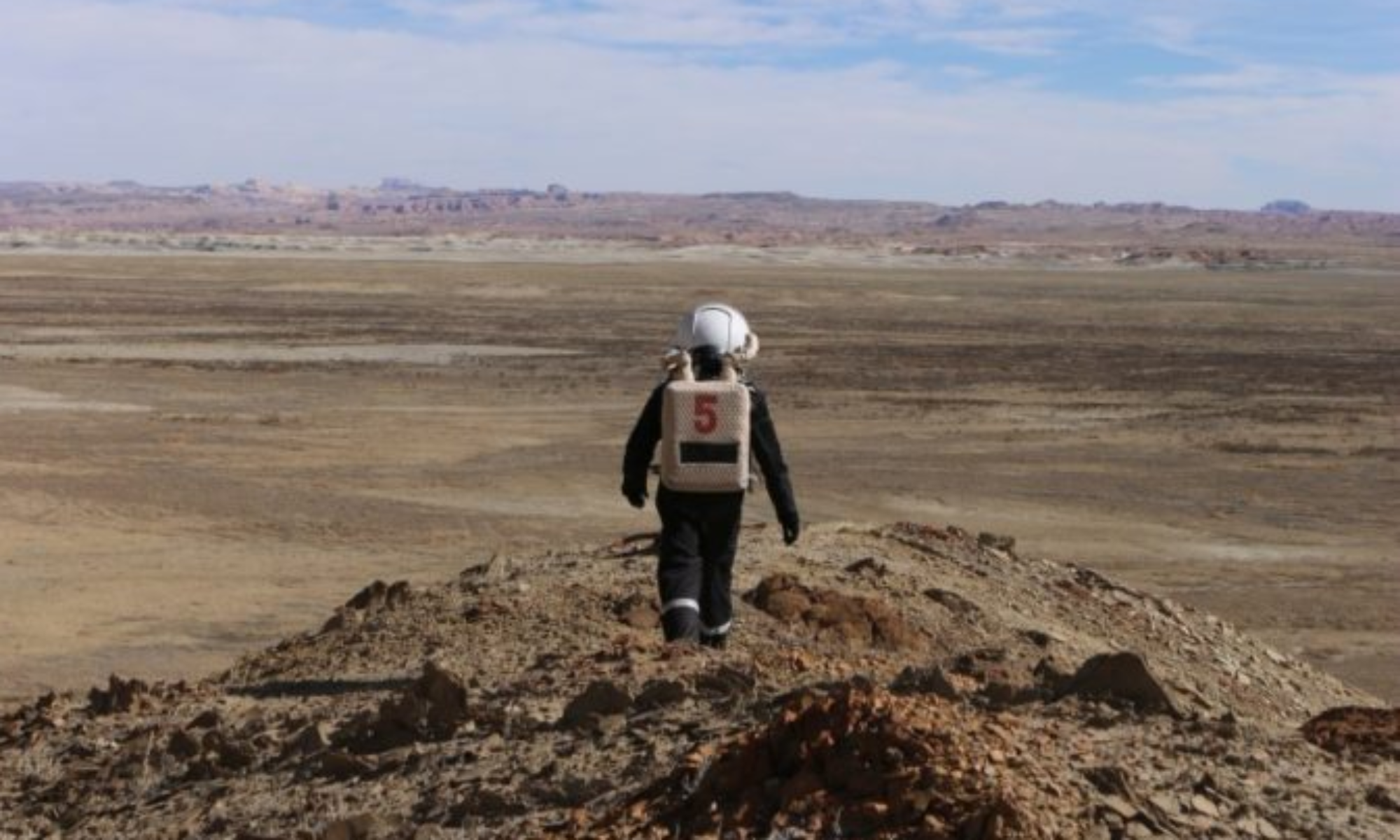
Suits: Suit 5 is not turning on, diagnostics are pending. Suit 9 has damaged visor and is put aside until the end of the season.
Comms: All nominal.

Campus wide inspection, if action taken, what and why: All nominal.
Summary of Hab Operations: Wall heater is not functioning, diagnostic is pending. Computer workstation (smart home access terminal) has been set up on the lower deck. Main heater filter replaced. Latch installed on the inside of the front door. Toiled level indicator is not working, diagnostic is in progress.
Summary of GreenHab Operations: All nominal. Supplemental lights turned off.
Summary of SciDome Operations: All nominal. Computer desk moved to Hab.
Summary of Observatories Operations: Solar observatory telescope diagonal is awaiting new part for replacement. Lower shatter is decoupled and fastened by bungee cord. Lower shutter hinges broken by winds and have been repaired.
Summary of RAM Operations: All nominal.
Summary of Outpost Operations: All nominal.
Summary of Health and Safety Issues: All nominal.

Supplemental Operations Report – March 24th

Date: 3/24/2024
Name of person filing report: Sergii Iakymov
Reason for Report: Routine
Non-Nominal Systems: Hab wall heater, solar observatory, perseverance parking brake

Power system:
Solar: Nominal.
Generator run time: 5494.2 hours. Oil changed on 03/22/2024

Propane Readings:
Station Tank: 77%
Director Tank: 74%
Intern Tank: 81%
Generator Tank: 58%

Water:
Hab Static Tank – 300 gallons
GreenHab – 110 gallons
Outpost tank – 250 gallons
Science Dome – 0 gallons
Septic Tanks emptied: No

Rovers:
Sojourner rover used: Yes
Hours: 197.2
Beginning Charge: 100 %
Ending Charge: 100 %
Currently Charging: Yes
Notes on Rovers: All rovers serviced on 03/21/2024

ATV: ATV’s Used: None. Nothing to report.

Cars:
Hab Car used and why, where: To Hanksville for supplies.
Crew Car used and why, where: From Grand Junction by crew.
General notes and comments: N/A

Summary of Internet: All nominal.
EVA suits and radios:
Suits: All nominal
Comms: All nominal.

Campus wide inspection, if action taken, what and why: All nominal.
Summary of Hab Operations: Wall heater is not functioning. Diagnostics are pending.
Summary of GreenHab Operations: All nominal.
Summary of SciDome Operations: All nominal.
Summary of Observatories Operations: Solar observatory telescope diagonal is awaiting new part for replacement. Lower shatter is decoupled and fastened by bungee cord.
Summary of RAM Operations: All nominal.
Summary of Outpost Operations: All nominal.
Summary of Health and Safety Issues: All nominal.

Mission Summary – March 29th

MDRS Crew 295
Mission Summary: Mars Desert Research Station Simulated Mission

Introduction:
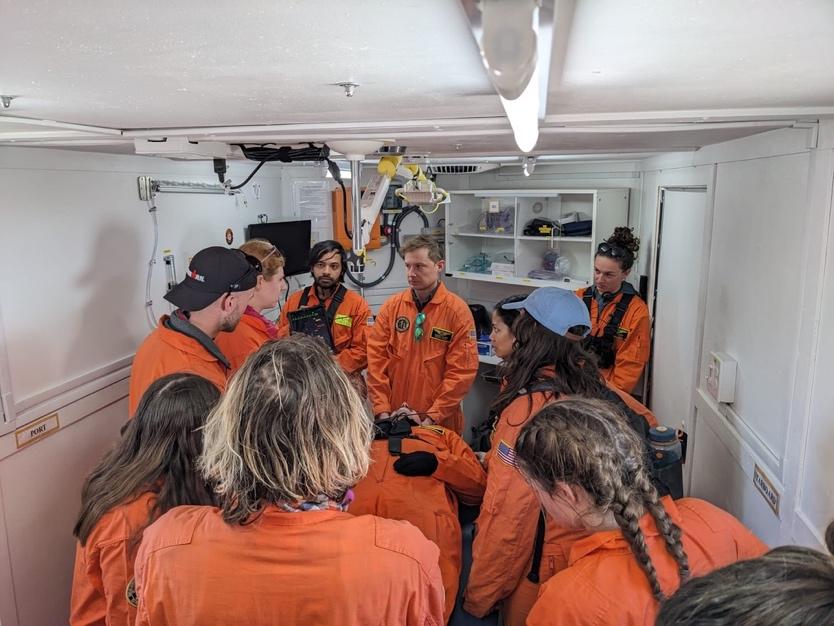
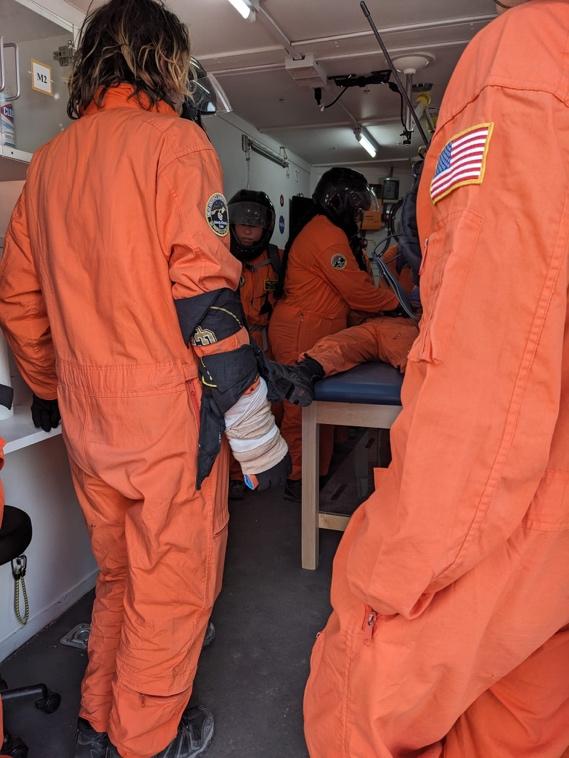
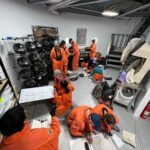
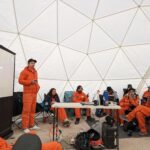
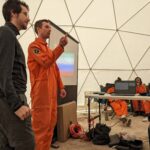
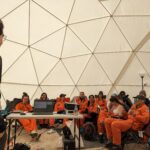
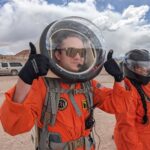
Our MISSE course takes students to the Mars Desert Research Station (MDRS) on a six-day simulated mission, serving as a unique platform for university students to undergo cross-training in wilderness medicine and human spaceflight principles. This immersive course aimed to blend didactic lectures with hands-on simulated medical scenarios, challenging students to apply their knowledge and skills in a Martian analog environment. Over the duration of the mission, students encountered a series of simulated emergencies and operational challenges, providing invaluable opportunities for learning, growth, and skill development.
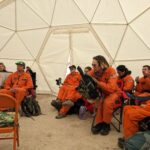
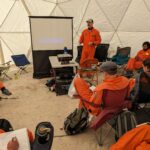
A group of people in orange jumpsuits sitting in a tent Description automatically generated
Day 1: Retrieval of Crashed Satellite and Radio Relay Repair
The mission commenced with the crew being tasked to retrieve a crashed satellite and repair a radio relay, simulating the operational demands of a Martian exploration mission. Despite meticulous planning, one crew member suffered an ankle injury during the retrieval process, underscoring the importance of safety protocols and emergency response training. The incident prompted the crew to assess their communication and leadership strategies, laying the foundation for collaborative problem-solving and effective decision-making throughout the mission.
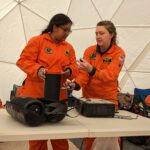
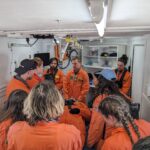
A group of people in orange jumpsuits working in a room Description automatically generated
Day 2: Design and Launch of Rocket with Medical Supplies
On the second day, the crew undertook the design and launch of a rocket carrying vital medical supplies to support another crew in need, mirroring real-life scenarios of resource allocation and interplanetary collaboration. This task required precise planning, teamwork, and coordination to ensure the successful delivery of supplies to the designated location. As the rocket soared into the Martian sky, the crew celebrated a significant milestone in their mission, showcasing their engineering prowess and adaptability in a simulated space environment.
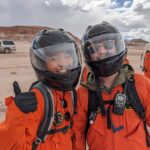
A group of people in orange jumpsuits and helmets standing in a desert Description automatically generated
Day 3: Summit Attempt and Emergency Response
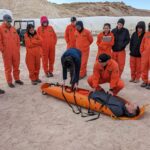
The third day saw the crew attempting to summit a local peak to set up a relay, presenting physical and logistical challenges akin to Martian exploration. Tragically, one crew member fell and broke their femur during the ascent, prompting an immediate shift in focus to emergency response and medical evacuation procedures. The incident tested the crew’s resilience and ability to remain calm under pressure, highlighting the critical importance of wilderness first aid training and effective communication in managing medical emergencies in remote environments.
A group of people in orange jumpsuits and helmets in a desert Description automatically generated
Day 4: Simulated Fire and Emergency Evacuation
A simulated fire outbreak on the fourth day thrust the crew into a high-stakes scenario, requiring swift identification, rescue, and extinguishing efforts to safeguard the habitat and its occupants. As flames engulfed a section of the habitat, the crew mobilized into action, implementing firefighting protocols and coordinating evacuation procedures. Despite the intensity of the situation, the crew demonstrated remarkable composure and teamwork, successfully containing the fire and preventing further damage to the habitat.
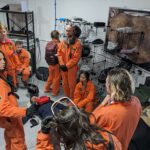
A group of people in orange jumpsuits Description automatically generated

Day 5: Search and Rescue Mission
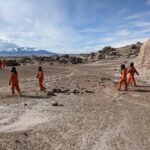
The penultimate day of the mission presented the crew with a search and rescue mission, simulating the challenges of locating and assisting crew members stranded in remote terrain. Utilizing their navigation skills and strategic planning, the crew embarked on a coordinated search operation, eventually locating and safely evacuating the stranded individuals. The successful outcome of the mission underscored the importance of preparedness, adaptability, and collaboration in responding to unforeseen emergencies in hostile environments.

A group of people in orange jumpsuits walking in a desert Description automatically generated

Day 6: Soil Testing and Future Habitat Location Identification
On the final day of the mission, the crew undertook soil testing to identify a suitable location for a future habitat, employing an explosive charge and seismometer to assess soil density and composition. This task required precision and scientific acumen, reflecting the multifaceted challenges of Martian exploration and habitat construction. Through meticulous data collection and analysis, the crew contributed valuable insights into potential habitat sites, laying the groundwork for future missions and scientific endeavors on Mars.

A group of people in orange jumpsuits Description automatically generated

Conclusion:
The Mars Desert Research Station simulated mission provided an immersive and transformative learning experience for university students, fostering interdisciplinary collaboration, leadership development, and hands-on application of technical skills. Through simulated emergencies and operational challenges, students gained invaluable insights into the complexities of Martian exploration and the demands of spaceflight missions. As they navigated through adversity and uncertainty, students emerged as more confident and effective team members, poised to tackle the challenges of future space exploration with skill and determination.
A group of tents in the desert Description automatically generated

Journalist Report – March 29th

Journalist ReportBy Arian Anderson

As we reach the sixth day of our Mars medical simulation course at the Mars Desert Research Station, fatigue and anticipation mingle in the air as we continue our mission to simulate medical emergencies and scientific exploration on the Martian surface. Today’s objectives focused on scoping a location for a future habitat, a critical step in our mission to lay the groundwork for sustained human presence on Mars. Utilizing a ground blast technique coupled with a seismograph to measure soil density, we sought to gather essential data to inform future habitat construction and ensure the safety and viability of our Martian outpost.

However, the day was not without its challenges. Our crew commander, tasked with leading the mission, succumbed to hypothermia, a stark reminder of the unforgiving nature of the Martian environment. As confusion set in, the commander began issuing incorrect instructions, jeopardizing the success of our mission. In a decisive moment, the deputy commander stepped in to assume leadership, ensuring that the team remained focused on meeting our objectives despite the unexpected setback.

In addition to the commander’s medical emergency, another crew member encountered a shocking incident when they accidentally received an (simulated) electrical shock from the rover, highlighting the inherent risks associated with operating advanced technology in extreme environments. Despite these obstacles, we persevered, drawing on our training and collective expertise to adapt to the challenges of Martian exploration.

As we reflect on the events of the day, a sense of weariness permeates the crew, signaling our readiness to return to Earth. The physical and mental demands of the mission have taken their toll, underscoring the importance of rest and recuperation in maintaining peak performance during extended space missions. As we prepare to conclude our time at the Mars Desert Research Station, we carry with us a wealth of experiences and lessons learned, furthering our understanding of the complexities of Martian exploration and reinforcing our commitment to advancing human knowledge beyond the bounds of our home planet.

Journalist Report – March 28th

Journalist Report
By Katya Sofia Arquilla

Today’s field instruction focused on practical skills and theoretical knowledge relevant to medical practices in space surface environments, supplemented by adjacent disciplines critical to space exploration, including medical imaging and emergency rescue operations. In the morning, students received hands-on training in the operation of hand-held ultrasound devices, essential for diagnosing medical conditions in space. They learned techniques for imaging and interpreting ultrasound scans, emphasizing adaptability and proficiency in utilizing medical technology beyond traditional settings. The students learned how to image their kidneys, livers, hearts, lungs, bladders, and other internal organs essential to monitor during long-duration space exploration missions.

After lunch, students analyzed the results and telemetry data from their recent rocket launch. Through collaborative analysis, they gained insights into telemetry principles and data interpretation, highlighting the interdisciplinary nature of space exploration. They were able to show a launch video recorded by a camera within the rocket body.

In the afternoon, an excursion to the nearby dinosaur dig site provided students with an opportunity to explore paleontology. They were able to see embedded fossils, drawing parallels between terrestrial and extraterrestrial exploration. In the evening, a lecture on the astronaut selection process covered the criteria and psychological considerations involved in space missions. Students gained insights into physiological adaptations and psychological resilience necessary for space travel, and they were also sorted into “space houses” related to their skill sets.

Today’s activities integrated practical skills and theoretical knowledge, emphasizing the interdisciplinary nature of space exploration. Students gained valuable insights into rescue operations, medical practices in space, alongside medical imaging and terrestrial excavation methods.