
Crew Bios and Mission Patch – March 29th

Crew Biographies
Crew #333
Position: Commander
Report prepared by: Marie Jansen
Date: 29-03-2026
Sol: 0

We are a team of six students from UCLouvain, united by a shared academic and personal interest in space science and the exploration of Mars. Our diverse educational backgrounds provide an interdisciplinary framework through which we approach the study of planetary environments, enabling us to integrate concepts from computer science, engineering, geology, and related scientific fields. This collaborative perspective allows us to examine complex challenges associated with extraterrestrial exploration in a systematic and rigorous manner.

We aim to establish meaningful connections between our respective fields of study while contributing to the broader scientific understanding of Martian systems. In particular, we seek to explore key questions related to planetary conditions, habitability, and the technological requirements for sustained exploration. By engaging with current methodologies and building upon existing scientific literature, our work is intended to both reinforce foundational knowledge and generate insights that may inform future investigations in planetary science.

Ultimately, this project represents not only an academic endeavor but also an opportunity to develop critical research skills and foster interdisciplinary collaboration.

Marie Jansen – Crew Commander
Psychology student

I am a final year student in clinical adult psychology. I hold the role of mission commander and am conducting research on conflict management within a group in a confined environment. Curious by nature and drawn to ambitious projects, I am particularly fascinated by space and what it reveals about human psychology. Participating in the MDRS is for me an opportunity to combine scientific rigor with my love for new experiences.

Article: Bishop, S. L., Kobrick, R., Battler, M., & Binsted, K. (2010). FMARS 2007: Stress and coping in an arctic Mars simulation. Acta Astronautica, 66(9–10), 1353–1367. https://doi.org/10.1016/j.actaastro.2009.12.014

Matias Ballivian – Crew Astronomer
Engineering student

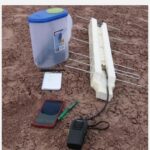
I am pursuing a Bachelor’s degree in Electromechanical Engineering at the Louvain School of Engineering (EPL) and will serve as astronomer for the Arsia Crew 2026 mission. I will conduct an experiment on passive methods to extend communication range by building an LC resonant circuit and a reflective surface, then testing their effect during EVA by comparing signal strength and range with and without the system, aiming to evaluate a simple, low-power solution for improving communication reliability in remote environment

Antoine Dubois – Crew Executive Officer & Crew Engineer
Geographical Sciences Graduate & Biology student

I hold a Master’s degree in Geographical Sciences from UCLouvain and have since pursued additional training in biology and ecology to broaden my interdisciplinary approach to environmental research. I currently serve as Executive Officer, while also taking on engineering responsibilities, building on my previous experience as Crew Engineer during an earlier mission.

My work now focuses on the comparison of terrain perception between ground-level observations during EVA reconnaissance and aerial perspectives acquired through drone imagery. This approach aims to better understand how scale, angle, and mobility influence the identification of geomorphological features and areas of scientific interest.

Joanna Galloway – Crew Journalist
Computer Science student

The crossover between technology and space is profound, as each continuously drives the advancement of the other. Technology enables us to explore and understand outer space in greater depth, while the discoveries we make in space, in turn, help us improve and innovate our technological capabilities. Space exploration, especially the ongoing focus on Mars, is a crucial area of study that pushes the boundaries of what we can achieve and accelerates the development of new tools, systems, and methods. In this project, I will take on the role of the Crew Journalist, where I will document findings and conduct a series of experiments focused on testing gesture-based interaction within this extreme and unfamiliar environment. This is a continuation of previous research conducted in this MDRS.

Article: https://dl.acm.org/doi/10.1145/3743712

Zahraa Al-bayati – Crew Health and Safety Officer
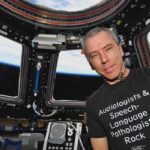
Speech and language therapist student

Throughout my academic journey, I have explored how humans express, adapt, and understand one another. My studies in speech and language pathology have deepened my curiosity about how communication functions across different contexts and how it might transform beyond Earth.

After working at the Euro Space Center, the mysteries of space and human adaptation became a true passion. I discovered how scientific exploration can bring people together around shared challenges and discoveries.Through this mission I will focus on how verbal communication evolves during a simulated Martian mission, particularly under conditions of isolation, stress, and fatigue. I aim to observe changes in speech fluency, identify adaptive communication strategies used by crew members, and explore how simple tools inspired by speech and language therapy could help maintain clear and efficient interactions.

Article: Badam, M. S. R. (2025). The Scope for Audiologists and Speech-Language Pathologists in Space Research: Views and Perspectives. Dil Konuşma ve Yutma Araştırmaları Dergisi, 8(1), 1-11. https://doi.org/10.58563/dkyad-2025.81.1

Matthias De Groote – Crew GreenHab Officer
Biologist, Master student

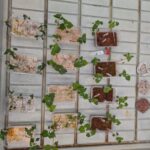
Currently in the first year of my Master’s degree in organism biology and ecology at UCLouvain, I will take on the role of GreenHab Officer for the Arsia Mission. Fascinated by the development of life in space, I aim to combine this passion with my research by studying the germination of tomatoes in different soils, including desert, martian and potting soil, to see if desert soil can be used a substitute to martian soil and what proportion of organic matter is necessary for ideal germination.

We anticipate that our research will yield significant contributions to the field and provide a foundation for subsequent investigations. Furthermore, we expect that this project will offer substantial opportunities for learning and intellectual development.
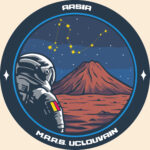
Mission Plan – March 29th

Mission Plan Crew 333
Mars Desert Research Station
March 29-April 11

Conflict management and stress in an isolated environment: a study among participants of the MARS project at UCLouvain
Marie Jansen

Objective
The aim of this research is to examine the extent to which conflict management strategies influence their resolution over time. It also seeks to analyze the evolution of these strategies and to compare their use between a terrestrial environment and a confined setting, as well as the influence all of this may have on stress. This study will contribute to a better understanding of how individuals adapt to conflict in contexts of isolation and confinement.

Methodology
Before the simulation:

  • Dutch questionnaire: assessment of usual conflict management styles in daily life

During the simulation (Anonymized online logbook, daily, ~10 min):

  • Brief description of any disagreements experienced during the day
  • Identification of conflict management strategies (Thomas-Kilmann model, Likert scales)
  • Self-assessment and assessment of the other parties involved
  • Additional questionnaire: emotional or cognitive presence of the disagreement at the time of completion

Schedule

  • Data collection every evening for 10 minutes.

Comparative Analysis of Ground-Based EVA and Drone-Acquired Terrain Perception
Antoine Dubois

Objective
To compare terrain perception in a Mars-analogue environment between ground-level observations during EVA and aerial perspectives acquired through drone imagery.

Methodology

  • Field observations during EVA with systematic description of geomorphological features and zones of interest.
  • Drone flights over the same areas to capture oblique imagery.
  • Comparative analysis between human perception and aerial data to identify biases and complementarities.

Schedule

  • EVA every two days on selected sites.
  • Pre-EVA briefing to define objectives and areas of interest.
  • Post-EVA debrief with crew to compare individual perceptions and confront them with drone imagery.
  • Data processing and synthesis between EVAs, with final analysis at the end of the mission.

Verbal Communication and adaptive strategies in extreme confinement: Contribution of speech and language pathology in a Simulated Martian Mission
Zahraa Al-bayati

Objective
To observe how verbal communication evolves during a two-week simulated mission and identify compensatory strategies used by participants to maintain efficiency and group cohesion under stress and fatigue.

Methodology

  • Five adult crew members participate voluntarily with informed consent
  • Audio recordings of daily briefings, team meetings, and EVA planning
  • Short language task (2–3 minutes) every 3–4 days (describe the day or explain a task)
  • Brief self-questionnaire every 3 days (stress, fatigue, communication ease)
  • Observation log of misunderstandings, conversational repairs, and adaptive strategies
  • Participants can withdraw at any time and request data deletion

Schedule

  • Beginning phase: Day 1–2 (baseline recordings)
  • Middle phase: Day 7–8 (mid-mission recordings)
  • Final phase: Day 11-12 (end-mission recordings)
  • Language tasks every 3–4 days throughout the mission
  • Self-questionnaires every 3 days throughout the mission

Passive Methods to Improve EVA Communication Range
Matias Ballivian

Objective
Compare passive methods to increase radio communication range during EVA without increasing transmitter power consumption.
Methodology

  • Directional Antenna Using Reflector Element.
  • Passive RLC networks

Schedule

  • Create the devices as soon as the components arrive at the station
  • Testing on short range EVA communication
  • Testing on long range EVA communication
  • Comparing the results and drawing conclusions on the viability of these methods

Testing gesture-based interaction in an extreme environment
Joanna Galloway
Objective
To analyze the evolution of a defined set of motor gestures performed by an individual over the course of a simulated extreme environment, utilizing a Tap Strap device, and to evaluate the extent to which the wearable equipment influences movement patterns, accuracy, and consistency.

Methodology

  • Use of two Tap Strap, a laptop and an iphone camera
  • Qualitative analysis with the help of a form to fill in after each session
  • 3 Different sessions for each individual

Schedule

  • Initial session in the science dome: Sol 3.
  • Session with light equipment: Sol 7
  • Session with heavy equipment: Sol 11

Assessing tomato germination on different soils and organic matter proportions
Matthias De Groote
Objective
To assess the effects of Martian soil simulant and organic matter on the germination and early growth of tomatoes (Solanum lycopersicum), and to compare its performance with desert soil and a control substrate.

Methodology

  • Prepare different substrate conditions (Martian soil simulant, desert soil, control substrate, and mixtures).
  • Use replicated pots for each condition to ensure experimental reliability.
  • Sow 10 seeds in each pot.
  • Monitor seeds daily to record germination rate and timing.
  • Select a subset of plants after germination for continued growth.
  • Measure stem length, root length, root development, and fresh biomass at the end of the experiment.
  • Schedule:
  • Initial setup and sowing at the beginning of the experiment.
  • Daily monitoring of germination until emergence.
  • Daily monitoring of plant growth after emergence.
  • Final measurements, data collection, and analysis at the end of the experiment

Mission Plan – March 15th

Mission Plan
Mars Desert Research Station
Crew 331
University of Colorado MiSSE Team

The goal of our teams’ mission at the Mars Desert Research Station is to integrate medical training, engineering, and space exploration operations within a Mars mission framework. The primary objectives for today are to develop practical competencies in the recognition and management of decompression sickness, to deepen our understanding of the physiological and operational challenges posed by altered vestibular function in extraterrestrial environments, and to successfully complete our first surface EVAs.

The day will begin with a series of instructional sessions. Crew members will review the challenges of Mars operations, including the physiological effects of prolonged spaceflight and the impacts of pressure changes on the human body. Particular emphasis will be placed on identifying the key clinical signs of decompression sickness, such as joint pain, neurological impairment, and fatigue. Treatment strategies, including oxygen administration and recompression protocols, will be discussed to ensure readiness for simulated or real medical contingencies.

Following this, the crew will participate in a briefing and hands-on training session focused on the vestibular system. This session is designed to deepen understanding of how balance and spatial orientation are affected in reduced-gravity environments and how these changes can lead to space motion sickness and disorientation. Through experiential activities, crew members will examine how sensory conflict can impair performance and decision-making during mission operations.

Operational readiness will be reinforced through a comprehensive orientation to MDRS facilities. Crew members will review habitat systems, EVA preparation procedures, communication protocols, and safety guidelines to support safe and efficient mission execution. In addition, the crew will receive training in SKED stretcher use and will practice patient extrication techniques in preparation for potential field emergencies.

The afternoon will be dedicated to two planned EVAs. During these excursions, the crew will attempt to locate a simulated crashed satellite, conduct repairs on a communications relay system, and perform geological sampling in the vicinity of the habitat. These activities are intended to highlight the challenges of integrating scientific objectives with operational constraints in a Mars analog environment.

Throughout all activities, the crew will emphasize safety, teamwork, and strict adherence to protocols. Any anomalies encountered during EVAs will be treated as realistic mission events, with appropriate medical and operational responses. By the conclusion of the sol, the crew aims to strengthen both technical proficiency and its ability to respond effectively to complex, interdisciplinary challenges on Mars.

Crew 335 Crew biographies, photos and mission patch 19Apr2026

[title Crew biographies, photos and mission patch – April 19th]

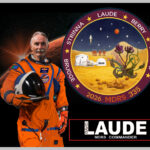
David Laude – Commander

David was present for the impressive launches of Apollo 11 and the first Space Shuttle launch. He has met two lunar astronauts and like many others dreamed about space exploration and being a crew member on a journey to Mars.

David began a lifelong passion for electronics and space exploration while in elementary school. He served in the U.S. Air Force. Later, after obtaining Bachelor of Science and Master of Engineering in Electrical Engineering degrees, he designed state of the art integrated circuits. He holds seven patents, has written technical papers and has presented his work at various international conferences. He also has formal training in anthropology and archaeology.

David is a lifelong learner and enjoys working with talented people. He is a founding member of The Mars Society. His hobbies include radio-controlled winged model airplanes, electronics, music composition and instrument synthesis and antique radio and pipe organ restoration. David also enjoys adventure, hiking and traveling. Utah, with its stark beauty and remote Mars like desert areas, is one of his favorite states to visit.

Katherine Berry , Crew 335 Engineer

Katherine “Kat” Berry is a mathematics student preparing to pursue aerospace engineering with a focus on astronautics and mission operations. She is also a student pilot. She has completed NASA’s NCAS program and L’SPACE MCA and NPWEE, contributing to mission design, proposal development, rover operations, and propulsion-related research.

Through these programs, she has worked on a lunar mission concept involving robotic exploration and has supported technical proposal evaluation in a review role. Her interests include robotics, planetary surface operations, and advancing human exploration beyond Earth.

Elisa Strinna (b. 1982, Padua) is an Italian multimedia artist based in the Netherlands. She works across film, sculpture, and environmental multi-sensory installation. Her work has been exhibited internationally, including the International Film Festival Rotterdam, documenta fifteen, and the Taipei Biennial. Her practice explores resilience, interdependence, and relations between humans and the more-than-human, often through research situated in ecological and extreme environments, addressing survival, adaptation, and the imaginaries surrounding life beyond Earth.

Matteo Calore is a Director of Photography and has worked as cinematographer on films and documentaries for cinema and television. He is a member of ZaLab and a founding partner of ZALABFILM s.r.l..

Lot Brugge is an interdisciplinary artist based in Rotterdam, the Netherlands. They are interested in sculpting, specifically ceramic formations, illustration, graphic novel making, animating and creating installations.

Lot is interested in wild clay and soil, using them as components for ceramic sculptures and glazes to explore themes of isolation and human behavior in constrained environments.

Mission Plan – April 19th

Crew 335
Apr 19th – May 2nd, 2026

Crew Members:

Commander: David Laude

Crew Engineer: Kat Berry
HSO: Matteo Calore
Crew Artist: Elisa Strinna
Crew Journalist: Matteo Calore
Greenhab Officer: Charlotte Brugge

Crew Projects:

Title: Journey Through the Outer Darkness

Investigator(s): Elisa Strinna, Matteo Calore

Objective: Experimental documentary that explores motivations, beliefs, expectations, and lived experience surrounding future life on Mars, as they emerge through daily routines, collective practices, and interaction with Mars-analog environments.

Description: During an analog Mars mission at the Mars Desert Research Station (MDRS) in the Utah desert, the film will document and collect audiovisual material that will form the basis for a future 60-minute work. Following the mission, the project will expand through further filming in the Netherlands, including rover experiments at the Mars Yard of the European Space Agency’s ESTEC facilities in Noordwijk. There, the film will engage with the Mars Yard simulation environment and existing Mars-related documentation, integrating these materials with the footage gathered during the MDRS mission. The project is expected to be completed in 2027.

Procedure: Over the course of two weeks, we will document daily life inside the simulated habitat, focusing on work routines, collective decision-making, and the dynamics that emerge under conditions of isolation, together with Extra-Vehicular Activities (EVAs). In addition to this documentation, I will propose to the crew a series of simple creative activities integrated into the daily life of the mission.

1. Bonding Sessions
These sessions are informal moments of exchange intended to support connection within the crew during the mission. They consist of simple activities based on storytelling, attentive listening, and small shared actions that encourage participants to get to know one another beyond their technical roles. Through open prompts, crew members are invited—if they wish—to share personal experiences, memories, or thoughts related to travel, exploration, and the idea of living or working in environments such as Mars. The sessions take place in a relaxed setting where participants sit in a circle and speak in turn. These moments offer a space where crew members can exchange stories, reflect on their motivations for exploring Mars, and imagine together what it might mean for humans to live or work in such an environment.

2. EVA — Landscape and Flora Observation
During selected EVAs, and under the guidance of the mission commander, I will explore the landscape surrounding MDRS, focusing on areas characterized by exposed geology and terrain conditions that resemble Martian environments. Alongside the geological landscape, I will observe and visually document the desert flora that survives in these extreme conditions, with particular attention to species of Astragalus—the plant represented on the mission patch—as well as other native plants. When possible and permitted, I may collect small plant references. Through photography, field notes, and observational drawing, I will gather visual material of the landscape and vegetation encountered during the EVAs. Some of these references will be brought back to the habitat and developed into drawings during the mission, which will later inform the development of ceramic sculptures once I return to the Netherlands.

External Collaborators and Partners: CBK Rotterdam, Mondriaan Funds, Rode & Cone Films

Title: Cinematic Documentation and Mars-Analog Landscape Photography

Investigator: Matteo Calore

Objective: To document the mission through cinematography and to photograph desert locations that present geological similarities to Martian landscapes.

Description: During the mission I will collaborate with Elisa Strinna on the cinematography of a film documenting daily life at the Mars Desert Research Station. Using digital cameras and video equipment, I will record activities inside the habitat and during EVAs. In parallel, I will develop a photographic survey of locations in the Utah desert that present visual similarities to Martian terrain.

Procedure: During daily mission activities and EVAs I will film life inside and outside the habitat, focusing on crew routines and field activities. At selected EVA locations under the suggestion of the commander I will also photograph geological formations that resemble Martian landscapes, creating a visual archive of Mars-analog environments.

Title: Operational Impact of Pre-Traverse Aerial Reconnaissance on Surface Route Planning Efficiency

Investigator: Katherine (Kat) Berry

Objective:
To evaluate whether pre-traverse aerial reconnaissance improves rover route planning efficiency, hazard avoidance, and overall navigation performance in an analog Mars environment.

Description:
This study investigates the operational benefit of using a manually piloted aerial drone to inform rover navigation decisions. The experiment compares two conditions: (1) rover traversal based solely on ground-level observation and (2) rover traversal informed by pre-traverse aerial reconnaissance. The study focuses on human-in-the-loop decision-making and aims to quantify how additional situational awareness impacts traversal outcomes. Results will contribute to analog astronaut operations research and surface mission planning strategies relevant to planetary exploration.

Procedure:
A series of rover traverses will be conducted across predefined terrain routes at MDRS. For each route, two runs will be performed:

Ground-Only Condition:
The operator plans and executes the rover route using only ground-level observation.

Drone-Assisted Condition:
The operator conducts a pre-traverse aerial survey using a drone, then plans and executes the rover route based on aerial observations.

During each run, the following data will be recorded: traversal time, number of directional corrections, number of stops, and hazard encounters. Observational notes on operator decision-making and perceived workload will also be documented.

Each condition will be repeated across multiple terrain types to ensure comparability. Results will be analyzed through direct comparison of performance metrics between conditions, supported by visualizations such as route overlays and performance charts.

Title: Panoramic Landscape Photo Survey

Investigator: David Laude

Objective: To provide future crews with photos from locations of potential interest for EVA planning to improve EVA efficiency and help ensure field research project success.

Description: This is a panoramic landscape photo survey for use by future crews with locations of interest based upon my previous experiences at MDRS.

Procedure: I will plan EVAs to areas I have found interesting while on previous missions. Once at a location within the area of interest I will perform a panoramic photo survey by standing and rotating around clockwise starting facing north. The photos with GPS locations will be arranged by region and given to MDRS management as MS Word files. Perhaps they could be entered into the Apple PC on the lower deck and easily accessed for EVA planning purposes.

Title: Evaluating Drone Piloting Performance During Simulated EVA Operations in a Mars Analog Environment

Investigators: Katherine Berry, Dave Laude

Objective: To assess how simulated EVA conditions impact human drone piloting performance and identify operational constraints relevant to future Mars exploration.

Description: This study evaluates differences in drone piloting performance between standard conditions and simulated EVA conditions. As aerial systems become more integrated into planetary exploration, understanding how EVA limitations (such as restricted mobility, reduced dexterity, and limited visibility) affect human control is critical. Results will help inform operational strategies and human-in-the-loop drone use during surface missions.

Procedure: Investigators will conduct drone flight trials under two conditions: (1) no EVA suit and (2) simulated EVA suit. Standardized flight tasks will be performed across MDRS terrain, including waypoint navigation and target approach.

Performance will be measured using:
• Accuracy (distance to target)
• Task completion time
• Flight stability and control adjustments

Qualitative observations on difficulty, visibility, and control limitations will also be recorded. Comparative analysis will be conducted between conditions to identify performance differences and operational impacts.

Title: Foraging Wild Clay
Investigator: Lot Brugge
Objective:
Sourcing local clay provides a more sustainable approach to living on Mars while contributing to art and culture, which is an essential part of human history and expression.
Description:
This project explores the process of locating, processing, and working with wild clay. I will experiment with treatment methods and investigate how the material behaves when shaped into different forms and objects.
Procedure:
I will conduct EVA’s to locate and collect naturally occurring clay. The collected material will be processed by sieving and refining it, followed by experimentation with varying sand-to-clay ratios to achieve a workable consistency. Once suitable material properties are reached, I will attempt to fire the clay using a microwave kiln. Finally, I will invite fellow crew members to participate in a workshop to explore creative applications of the processed clay.

Mission Plan – January 25th

Mars Desert Research Station
Mission Plan

Crew 328
Jan 25 2026 – Feb 7 2026

Crew Members
Commander: Mariló Torres Soto
Crew Engineer and HSO: Aaron Tener
Crew Scientist: Jahnavi Dangeti
Green Hub Officer: Rebeca Gonçalves
Crew Journalist: Tom Bickmore

General Mission Plan
We represent the first generation of Martian colonists. In the preceding years, through a series of unmanned missions, an army of machines and robots have landed on the Martian surface and constructed a life-support habitat, equipping it with the necessary elements and devices to make human life possible there.

Our crew was recruited to establish a settlement on the Red Planet, and, after a long and arduous journey, they are finally safe in the aforementioned facilities.

The pilot commander has successfully completed the first part of the mission, the journey, and now remains in command with the objective of protecting the valuable team of scientists, coordinating communications with Earth, and making operational and safety decisions.

The chief engineer and medical officer will improve the technical conditions in the module and monitor the health of their colleagues; the chief scientist will conduct research with bacteria to create a future breathable atmosphere; the Green Hub officer will initiate the production of food and vegetables in extraterrestrial soil; and finally, the crew journalist will conduct global outreach to raise awareness of the importance of space exploration for the future of humanity.

Main Objectives
– Replicate the same routines and limitations of a hypothetical crew on Mars through daily schedules.
– Perform research in the fields of engineering, astrobiology, geology and communications on the Red Planet.
– Keep the maximum level of fidelity and realism during the simulation, so that the results of the experiments are as reliable as possible.
– Develop emergency procedures and safety protocols.
– Analyze the interaction and coexistence of the group from a neuropsychological point of view.

Crew Projects
As this is a team of professionals, the studies to be conducted do not include titles, descriptions, or methodology.

The astrobiologist will compare the growth of tomato and radish seeds that have been on the International Space Station, subjected to radiation and microgravity, with that of other standard seeds from Earth.

The chief scientist will investigate, at a chemical level, certain types of bacteria found in minerals from the area and will also analyze the effect of the extreme desert environment on the skin of the astronauts in an effort to better protect the epidermis.

The chief engineer objective is to implement the functionality of the station’s systems and devices through improvement proposals and, at the same time, address any health needs of the group and conduct periodic checkups, especially before and after EVAs.

Finally, and no less important, the crew journalist will conduct online broadcasts, media connections, and mass outreach events to gauge the response of young people and learn about their concerns regarding Mars.

As for EVAs, after the first two training sessions for the entire crew, they will proceed successively along these lines: commander assessment and exploration, sample collection, audiovisual documentation, organic and chemical checks, and emergency plan drills.

Leadership Structure, Roles and Responsibilities
Crew Commander – With five successful analogous missions completed and extensive experience as a pilot and aerospace safety specialist, she is ultimately responsible for the expedition, coordinating daily operations and schedules, serving as the main point of contact with Mission Support, making overall decisions, and overseeing the progress of the simulation while prioritizing complete immersion in the performance. The purpose of her participation is to continue her training for future collaborations as a commercial/private astronaut.

Crew Engineer and HSO – Due to an understanding of the safety and emergency procedures, he acts as an Subcommander/Executive Officer, taking over command in the case the Commander is indisposed or otherwise unreachable.

Crew Scientist – In the unlikely case both the CC and HSO are indisposed, leadership role will fall to her, considering her skills and abilities acquired in two previous analog missions.

For EVAs: An effort will be made to place the Commander or HSO on each EVA and that person will take a leadership role for the EVA. Either the commander or the HSO will always remain in charge at the station during EVAs. Neither of them will ever leave the habitat at the same time. They take the role of mission leader and assume leader responsibilities for EVA’s at all times.

Responsibilities for Each Role
Crew Commander focused on tasks related to research and reporting, handling the daily Sol Summary reports and primary point of contact for Mission Support.

Engineer and Health and Safety Officer is the commander’s right-hand man and her trusted support person. As an aerospace engineer, his advice and recommendations are essential and vital. Monitor physical and mental health of crew and report on all health and safety issues as they arise. Ensure First Aid kits, fire extinguishers, fire blankets and other safety devices are in proper working order. Also, monitoring and maintenance of access tunnels., ensuring all communications equipment is working properly prior to EVAs and charging properly post EVAs. Maintenance and cleaning of RAM. Handling of daily operations report.

Green Hab Officer is leading the main and central research of this mission. Monitoring of plant growth in Green Hab as outlined by Green Hab coordinator Ben Greaves, and also the maintenance and cleaning of Green Hab. Of course handling of daily Green Hab reports. She receives assistance from the other crew members in her work if she requests it.

Crew Journalist tracking of daily activities performed by crew members at the station and on EVA. Gathering and cataloguing of all pictures taken by crew members throughout the day and, at the same time, handling of daily Journalist reports.

Crew Scientist maintenance and cleaning of Science Dome ensuring proper use and storage of equipment in the Science Dome. Handling of EVA requests when applicable.

Expected Deliverables
All crew members are expected to perform daily tasks that pertain to the research projects that were accepted. They will strive to make significant progress to be reported at the mid mission mark and have data generation and collection finished by the end of mission date. Data analysis and final reporting can happen post mission.

Crew Performance
Crew members are expected to improve on aspects of daily mission life, such as EVA prep and daily report writing. They will build a daily routine that is a healthy balance between work and relaxation in order to avoid excess stress and burn out while maintaining productivity.

Risk Management and Safety Protocols
The crew is thoroughly familiar with the emergency procedures in case of medical emergencies, fire, power outage and comms failure.

Through briefings and debriefings, the commander ensures the full commitment of the entire team to safety, especially during EVAs.

There is constant monitoring and observation of preventive measures and cautious and prudent actions in order to avoid incidents and accidents.

The MDRS manual is frequently consulted by everyone.

Any health concerns due to environmental factors, such as dehydration, heat exhaustion, extreme cold or others, will take priority over sim.

Crew 321 Crew biographies, photos and mission patch

[title Crew biographies, photos and mission patch – November 4th]

Jen Carver-Hunter

Jen Carver-Hunter is a 5th grade teacher at a Title 1 School in Salt Lake City, Utah. Carver-Hunter is the crew commander for the Spaceward Bound Utah program at the Mars Desert Research Station. She is also an alumni member of the Smithsonian National Air and Space Museum’s Teacher Innovator Institute and a current member of Space Center Houston’s SEEC Crew.

Alexander Rowe

Alex is a Digital Learning Coach from Salt Lake City School District. He has been in education for 18 years, in many capacities. When the opportunity to be a part of this experience arose, his inner child was ecstatic. He has dreamt of space travel since he was in elementary school.

Jake Paszko

My name is Jake Paszko. I am a 6th grade science teacher. I enjoy most things that get me outside from photographing wildlife to trail running. I look forward to sharing what I experience at the Mars Desert Research Station.

Dianea Phillips

Dianea Phillips is a lifelong learner and an informal educator from Montreal, Quebec, Canada. She is the education director of the Montreal Aviation Museum, a youth life coach, an entrepreneur, and the owner of STEM/STEAM programs known as Science Yourself! No G’s About It. She is a longtime presenter at JSCH and the SEEC Conference and is a member of the SEEC Crew. She works as a global educator, crossing our little blue marble to bring STEM/STEAM education to underserved communities. Her motto! Dream it! Design it! Manifest it! Get it done!

Yishan Lee

Yishan Lee is an 8th grade Earth & Space Sciences teacher from Queens, New York! She loves rocks, board games, reptiles, and traveling. Her mission as an educator is to make science accessible to all students and inspire them to be curious about the world that we live in.

Parker Ellison

I’m a 6th grade science teacher who’s been teaching for 14 years in Salt Lake City. My life apart from teaching is my wife Tori and my two cats.

[attach 1]
[attach 2]
[attach 3]
[attach 4]
[attach 5]
[attach 6]
[attach 7]

Crew 321 Crew biographies, photos and mission patch

[title Crew biographies, photos and mission patch – November 4th]

Jen Carver-Hunter

Jen Carver-Hunter is a 5th grade teacher at a Title 1 School in Salt Lake City, Utah. Carver-Hunter is the crew commander for the Spaceward Bound Utah program at the Mars Desert Research Station. She is also an alumni member of the Smithsonian National Air and Space Museum’s Teacher Innovator Institute and a current member of Space Center Houston’s SEEC Crew.

Alexander Rowe

Alex is a Digital Learning Coach from Salt Lake City School District. He has been in education for 18 years, in many capacities. When the opportunity to be a part of this experience arose, his inner child was ecstatic. He has dreamt of space travel since he was in elementary school.

Jake Paszko

My name is Jake Paszko. I am a 6th grade science teacher. I enjoy most things that get me outside from photographing wildlife to trail running. I look forward to sharing what I experience at the Mars Desert Research Station.

Dianea Phillips

Dianea Phillips is a lifelong learner and an informal educator from Montreal, Quebec, Canada. She is the education director of the Montreal Aviation Museum, a youth life coach, an entrepreneur, and the owner of STEM/STEAM programs known as Science Yourself! No G’s About It. She is a longtime presenter at JSCH and the SEEC Conference and is a member of the SEEC Crew. She works as a global educator, crossing our little blue marble to bring STEM/STEAM education to underserved communities. Her motto! Dream it! Design it! Manifest it! Get it done!

Yishan Lee

Yishan Lee is an 8th grade Earth & Space Sciences teacher from Queens, New York! She loves rocks, board games, reptiles, and traveling. Her mission as an educator is to make science accessible to all students and inspire them to be curious about the world that we live in.

Parker Ellison

I’m a 6th grade science teacher who’s been teaching for 14 years in Salt Lake City. My life apart from teaching is my wife Tori and my two cats.

[attach 1]
[attach 2]
[attach 3]
[attach 4]
[attach 5]
[attach 6]
[attach 7]

Mission Plan – <Date – November 9th>

Report title: Mission Plan
Crew #: 322
Position: Experimental Team
Report prepared by: Erin Richardson

Mission Plan:

Our mission objective is to conduct a full-scale Martian analog designed to study decision making under conflicting information in isolated, confined, and extreme environments. This week, we have a diverse, highly skilled, international crew of 6 staying in the habitat. During their stay, the crew will conduct a total of 12 EVAs. The crew will conduct at most 3 EVAs per day, where no crew member ever participates in more than one EVA per day. Throughout the week, the crew members will visit different EVA sites and complete missions with unique objectives, tasks, and tools. Beyond the EVAs, the crew will complete an ultrasound cardiac imaging task, train on Mars-relevant tasks in virtual reality, and conduct a study on space nutrition and supplementation via the GreenHab. We are looking forward to a busy, exciting, and productive week ahead!

Mission Plan – <Date – November 22nd>

The mission plan for Crew-303 follows below, showing the crew roles, projects, and EVA schedule.

Crew Composition:
Commander: Michael Andrews
Executive Officer: Sydney Phillips
Health and Safety Officer: Eli Henry
Crew Engineer: Aditya Kothari
Crew Artist: Sabrina Thompson
Crew Journalist: Aidan Westerland
Crew Astronomer: Vikram Kothari

Mission Projects:
Flight suit demonstration: Artist Thompson and XO Phillips have a demonstration suit (made of FR material) for functionality and durability.
Day-in-the-LIfe Content: Artist Thompson will be collecting footage and interviews of team members for STEM outreach.
Rover assembly and operation: Engineer Kothari will be assembling a small remote controlled rover at the station and will be deploying it on an EVA.
Astronomy: Astronomer Kothari has a research plan to capture a light curve of Algol during its primary eclipse on 11/24.
Drone/Timelapse Photos: Journalist Westerland and HSO Henry will be using a drone during EVAs and a tripod camera at night to capture additional footage.
3D Scanning: CO Andrews will be collecting rock samples and creating digital twins of them so they can be collecting without disturbing the environment.

EVA High-Level Plan:
11/23: two EVA teams will both visit Marble Ritual and Robert’s Rock Garden for EVA familiarization and rover familiarization.
11/24: two EVA teams will visit either Green Mars View or Somerville Overlook to gain experience in long-distance comms and longer duration EVAs
11/25: two EVA teams will choose a final mission that complements finishing their objectives: Sea of Shells, Candor Chasma, or Hab Ridge.

Copyright © The Mars Society. All rights reserved. | Main Site