Crew Biographies
Crew #333
Position: Commander
Report prepared by: Marie Jansen
Date: 29-03-2026
Sol: 0
We are a team of six students from UCLouvain, united by a shared academic and personal interest in space science and the exploration of Mars. Our diverse educational backgrounds provide an interdisciplinary framework through which we approach the study of planetary environments, enabling us to integrate concepts from computer science, engineering, geology, and related scientific fields. This collaborative perspective allows us to examine complex challenges associated with extraterrestrial exploration in a systematic and rigorous manner.
We aim to establish meaningful connections between our respective fields of study while contributing to the broader scientific understanding of Martian systems. In particular, we seek to explore key questions related to planetary conditions, habitability, and the technological requirements for sustained exploration. By engaging with current methodologies and building upon existing scientific literature, our work is intended to both reinforce foundational knowledge and generate insights that may inform future investigations in planetary science.
Ultimately, this project represents not only an academic endeavor but also an opportunity to develop critical research skills and foster interdisciplinary collaboration.
Marie Jansen – Crew Commander
Psychology student
I am a final year student in clinical adult psychology. I hold the role of mission commander and am conducting research on conflict management within a group in a confined environment. Curious by nature and drawn to ambitious projects, I am particularly fascinated by space and what it reveals about human psychology. Participating in the MDRS is for me an opportunity to combine scientific rigor with my love for new experiences.
Article: Bishop, S. L., Kobrick, R., Battler, M., & Binsted, K. (2010). FMARS 2007: Stress and coping in an arctic Mars simulation. Acta Astronautica, 66(9–10), 1353–1367. https://doi.org/10.1016/j.actaastro.2009.12.014
Matias Ballivian – Crew Astronomer
Engineering student
I am pursuing a Bachelor’s degree in Electromechanical Engineering at the Louvain School of Engineering (EPL) and will serve as astronomer for the Arsia Crew 2026 mission. I will conduct an experiment on passive methods to extend communication range by building an LC resonant circuit and a reflective surface, then testing their effect during EVA by comparing signal strength and range with and without the system, aiming to evaluate a simple, low-power solution for improving communication reliability in remote environment
Antoine Dubois – Crew Executive Officer & Crew Engineer
Geographical Sciences Graduate & Biology student
I hold a Master’s degree in Geographical Sciences from UCLouvain and have since pursued additional training in biology and ecology to broaden my interdisciplinary approach to environmental research. I currently serve as Executive Officer, while also taking on engineering responsibilities, building on my previous experience as Crew Engineer during an earlier mission.
My work now focuses on the comparison of terrain perception between ground-level observations during EVA reconnaissance and aerial perspectives acquired through drone imagery. This approach aims to better understand how scale, angle, and mobility influence the identification of geomorphological features and areas of scientific interest.
Joanna Galloway – Crew Journalist
Computer Science student
The crossover between technology and space is profound, as each continuously drives the advancement of the other. Technology enables us to explore and understand outer space in greater depth, while the discoveries we make in space, in turn, help us improve and innovate our technological capabilities. Space exploration, especially the ongoing focus on Mars, is a crucial area of study that pushes the boundaries of what we can achieve and accelerates the development of new tools, systems, and methods. In this project, I will take on the role of the Crew Journalist, where I will document findings and conduct a series of experiments focused on testing gesture-based interaction within this extreme and unfamiliar environment. This is a continuation of previous research conducted in this MDRS.
Article: https://dl.acm.org/doi/10.1145/3743712
Zahraa Al-bayati – Crew Health and Safety Officer
Speech and language therapist student
Throughout my academic journey, I have explored how humans express, adapt, and understand one another. My studies in speech and language pathology have deepened my curiosity about how communication functions across different contexts and how it might transform beyond Earth.
After working at the Euro Space Center, the mysteries of space and human adaptation became a true passion. I discovered how scientific exploration can bring people together around shared challenges and discoveries.Through this mission I will focus on how verbal communication evolves during a simulated Martian mission, particularly under conditions of isolation, stress, and fatigue. I aim to observe changes in speech fluency, identify adaptive communication strategies used by crew members, and explore how simple tools inspired by speech and language therapy could help maintain clear and efficient interactions.
Article: Badam, M. S. R. (2025). The Scope for Audiologists and Speech-Language Pathologists in Space Research: Views and Perspectives. Dil Konuşma ve Yutma Araştırmaları Dergisi, 8(1), 1-11. https://doi.org/10.58563/dkyad-2025.81.1
Matthias De Groote – Crew GreenHab Officer
Biologist, Master student
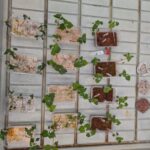
Currently in the first year of my Master’s degree in organism biology and ecology at UCLouvain, I will take on the role of GreenHab Officer for the Arsia Mission. Fascinated by the development of life in space, I aim to combine this passion with my research by studying the germination of tomatoes in different soils, including desert, martian and potting soil, to see if desert soil can be used a substitute to martian soil and what proportion of organic matter is necessary for ideal germination.
We anticipate that our research will yield significant contributions to the field and provide a foundation for subsequent investigations. Furthermore, we expect that this project will offer substantial opportunities for learning and intellectual development.
You must be logged in to post a comment.