
Mission Summary
Mission: 335
Dates: April 19 – May 2, 2026
Author: Commander David Laude
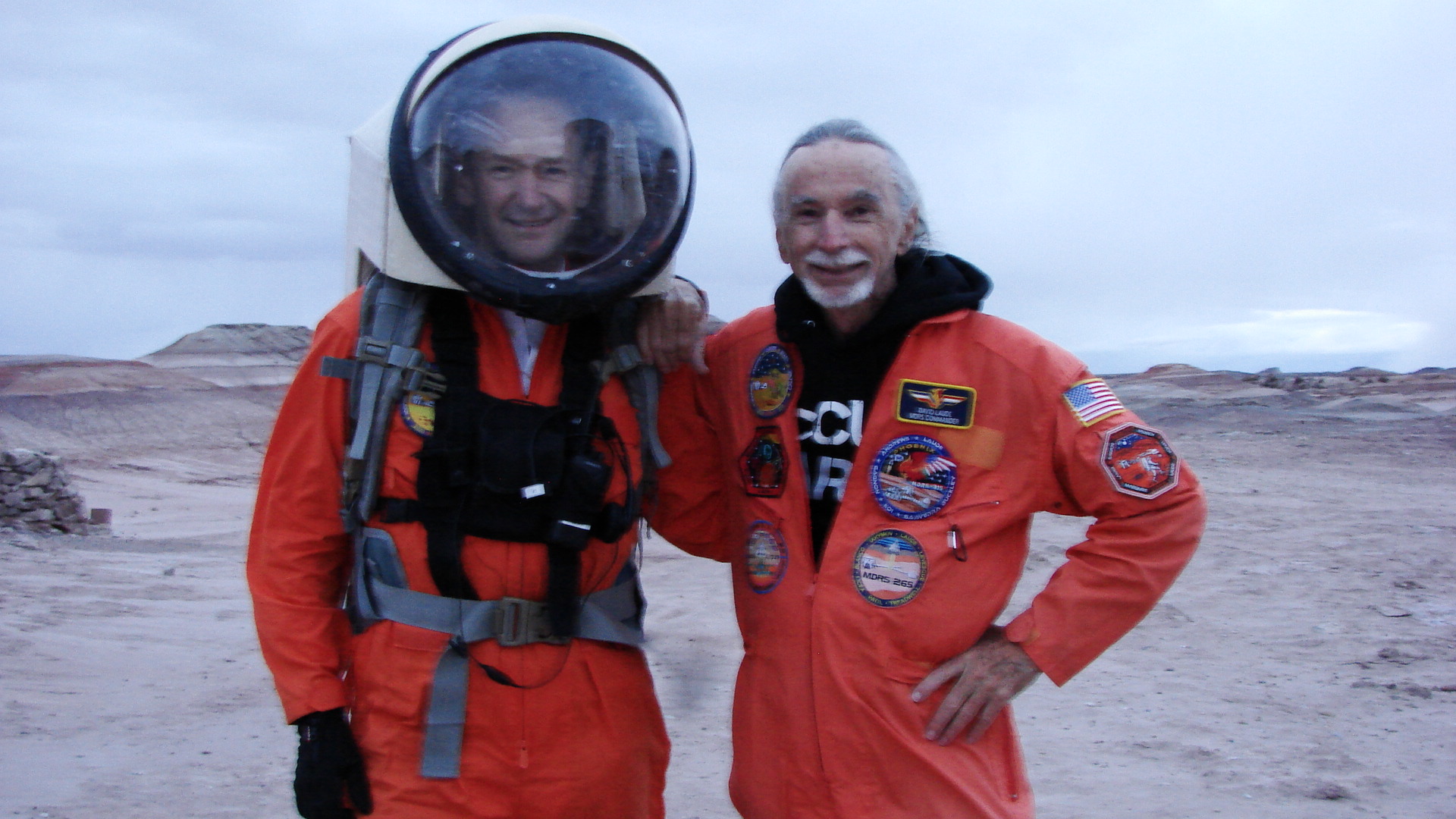

This Mars simulation mission was the last of one or two per season that the Mars Society sponsors for non self-organized missions with an early May ending, just a few weeks before the URC (University Rover Challenge). That means, as a so-called Mars Society crew, we had no previous knowledge of one another, making for an unknown compatibility outcome. The self-organized mission will have an organizer such as a college professor presiding over a team from their college with common goals in mind, a team from the very start.
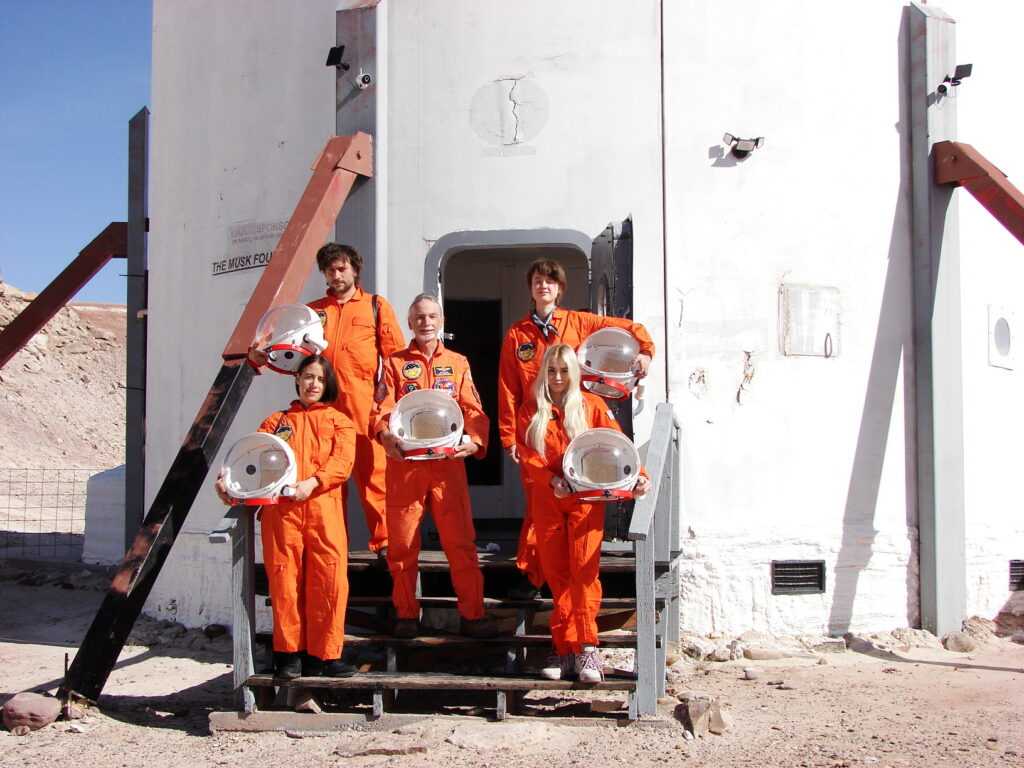
Our Crew Commander had previous experience as Commander of Crew 315, one year ago, and had served on a few other missions. As such, he had expectations as to what to expect over the course of about 10 months leading up to simulation while informing, guiding and educating the crew. These expectations were not fulfilled in the timeline expected. From the start it seemed some crew members had little interest in the mission. One can understand this when someone is delighted by the idea of it all, applies, gets accepted and then reality sets in. They will have to find time for video calls, pay crew fees, organize a field research project, take vacation and perhaps travel a large portion of the way around the Earth to get to Mars sim. Gradually this became apparent to three crew members from India and they subsequently dropped out. Then another, seeing the sinking ship, left for another crew. The crew was reduced down to three. A minimum of four is required and so the mission was in jeopardy of cancellation. The Crew Artist came to the rescue and found another person to function as a required HSO and then a few months before the mission found yet another person to function as Greenhab Officer. Now we were 5, an ideal number by the Commander’s experience:
Elisa Strinna, our Crew Artist, is an Italian multimedia artist based in the Netherlands. Her practice explores resilience, interdependence, and relations between humans and the more-than-human, often through research situated in ecological and extreme environments, addressing survival, adaptation, and the imaginaries surrounding life beyond Earth.
Matteo Calore, our HSO and Journalist, is a Director of Photography and has worked as cinematographer on films and documentaries for cinema and television.
Lot Brugge, our Greenhab Specialist, is an interdisciplinary artist based in Rotterdam, the Netherlands. Lot is interested in wild clay and soil, using them as components for ceramic sculptures and glazes to explore themes of isolation and human behavior in constrained environments.
David “Dave” Laude, our Commander, designed state of the art analog integrated circuits and is now retired from the profession. Dave enjoys working with talented people that have interest in space exploration. He is a founding member of The Mars Society. He has previously held the roles of Engineer, Executive Officer, Journalist, and Commander.
Katherine “Kat” Berry, our Engineer, is a mathematics student preparing to pursue aerospace engineering with a focus on astronautics and mission operations. She has worked on a lunar mission concept involving robotic exploration and has supported technical proposal evaluation in a review role. Her interests include robotics, planetary surface operations and advancing human exploration beyond Earth.
Since most crew members had never traversed the analog Martian regolith before, it was especially important to familiarize themselves with the procedures of the MDRS Campus. During the beginning of the mission, the crew became acquainted with the expected duties of their roles, way around the campus, use of radios and operation of the EVA suits, rovers, toilet and more.
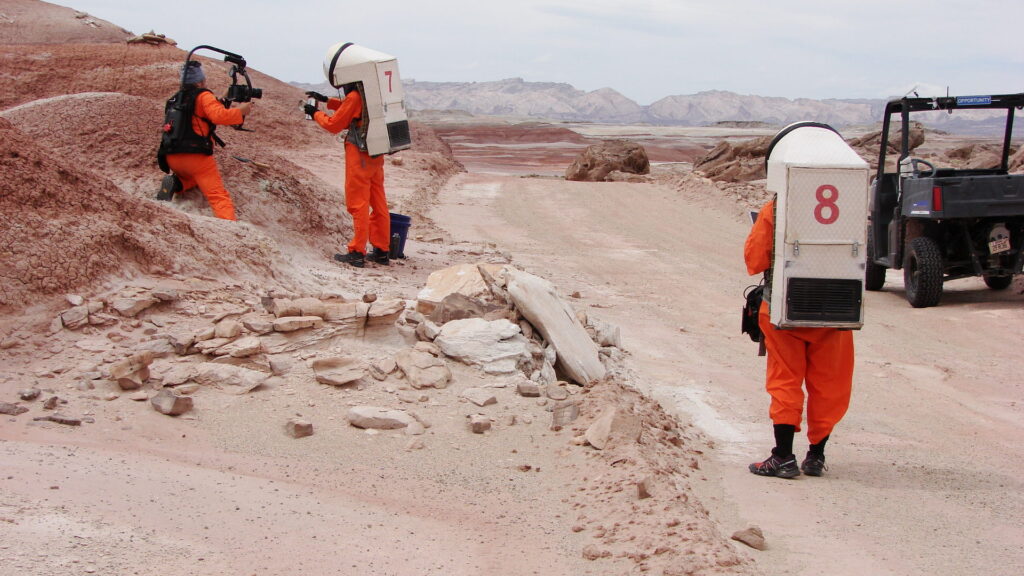
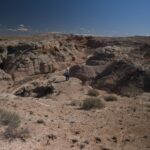
Elisa and Matteo were the first of us to set foot on this dusty red globe making its way around an orbit not the least affected by our meager presence on this world. This was a practice EVA that we all performed driving to a nearby place called “Marble Ritual”. Here one could place symbolic pebbles in a few simple suspended containers, perhaps representative of ancient Martian ceremonial artifacts.
The Crew quickly became accustomed to their Martian home, as the sols gradually became more habitual and routine. Mornings started with coffee, breakfast, and then the 8:00 AM daily planning meeting. Pancakes with fruit topping was a breakfast favorite and others included egg based delights and cereal with fruit. Breakfast was not just about food. It was the time the crew came together to plan before attacking all the tasks on the day’s agenda.
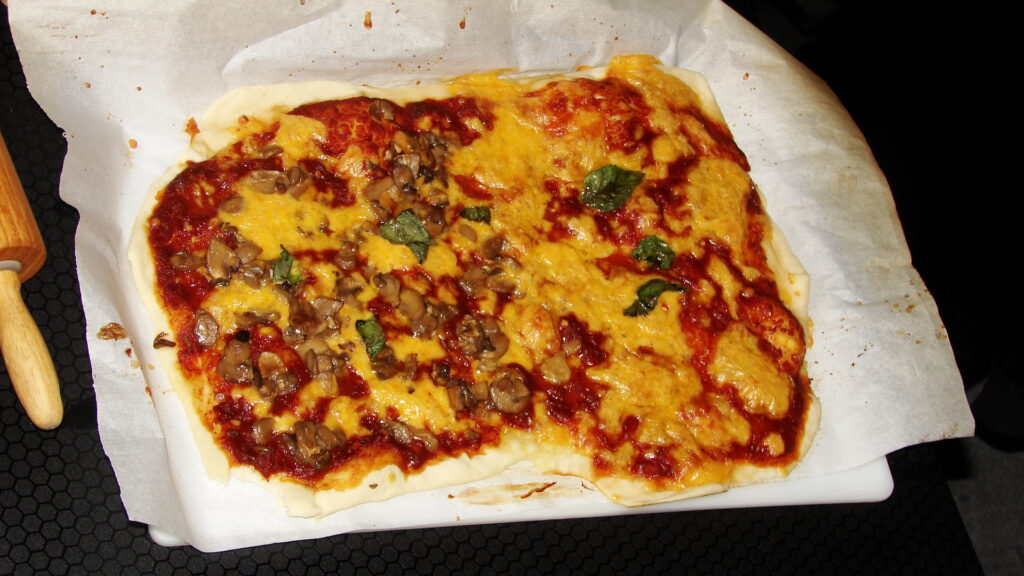
By 9:00-10:00 we had the first EVA of the day started, then lunch, followed by an afternoon EVA if needed. Arrivals back to the hab after an EVA were sometimes greeted by the smell of baking bread or meals cooking. We were so fortunate to have three talented chefs from Europe who made a variety of great meals from mostly freeze dried food. They were accustomed to making meals from basic ingredients. The Commander, while on Zoom before the sim, spoke of the good meal possibilities with freeze dried foods, and he even submitted some photos of past meals, but the crew was still pleasantly surprised over the outcomes.
Following is a list of our interesting and diverse projects, both science research and media. For more detail, see the End of Mission Research Report.
Elisa: “Journey Through the Outer Darkness” is an experimental documentary that explores the motivations, beliefs, expectations, and lived experiences surrounding the possibility of future life on Mars. These elements are examined as they emerge through daily routines, collective practices, and interactions within Mars-analog environments.
Dave: “Panoramic Landscape Photo Survey” is meant to provide future crews with photos from locations of potential interest for EVA planning to improve EVA efficiency and help ensure field research project success.
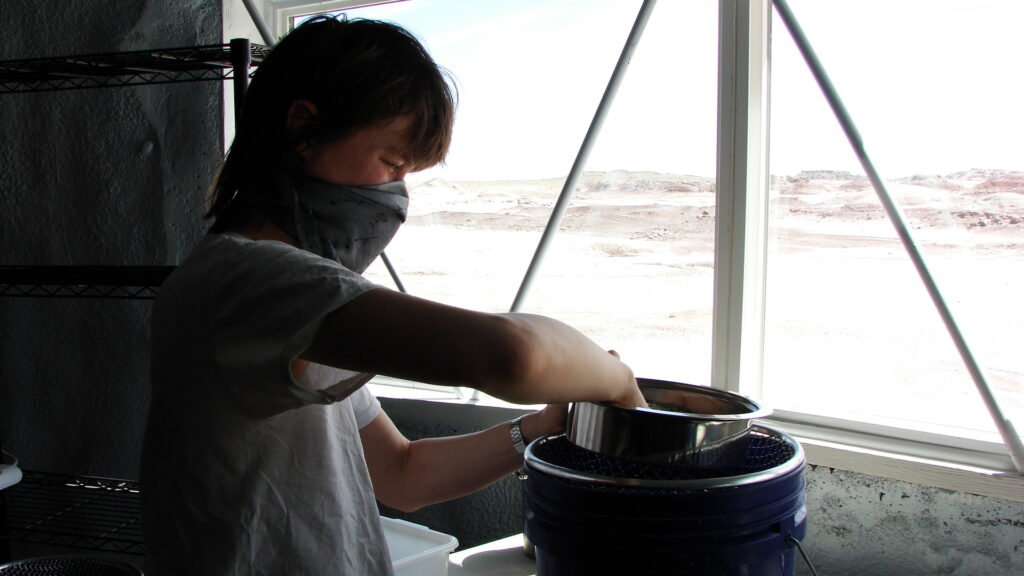
Lot: “Foraging Wild Clay”. Sourcing local clay provides a more sustainable approach to living on Mars while contributing to art and culture, which is an essential part of human history and expression. These clays can be fired in a microwave oven to make useful objects and perhaps building materials.
Kat & Dave: “Evaluating Drone Piloting Performance During Simulated EVA Operations in a Mars Analog Environment”. Assesses how simulated EVA conditions impact human drone piloting performance and identify operational constraints relevant to future Mars exploration.
Kat: “Operational Impact of Pre-Traverse Aerial Reconnaissance on Surface Route Planning Efficiency” evaluates whether pre-traverse aerial reconnaissance improves rover route planning efficiency, hazard avoidance, and overall navigation performance in an analog Mars environment.
For an educational diversion from regular activities the Commander brought some of his historical technological artifacts starting from the early 20th century for a show and tell that included magnetic tapes and disk, punch cards, electron tubes, transistors, circuit boards and integrated circuits.
As in any remote station, there were maintenance activities that could include fixing EVA suits and batteries, dealing with power interruptions, broken tunnel zip ties from wind damage, and more. Engineering Operations Reports noted the use of consumables such as water and rover battery power and listed any anomalies or special requests for materials. The engineer made sure that the Hab was functioning nominally by predicting water levels for the mission’s end so we can consume accordingly and by monitoring and emptying the toilet liquid holding tank every few days.
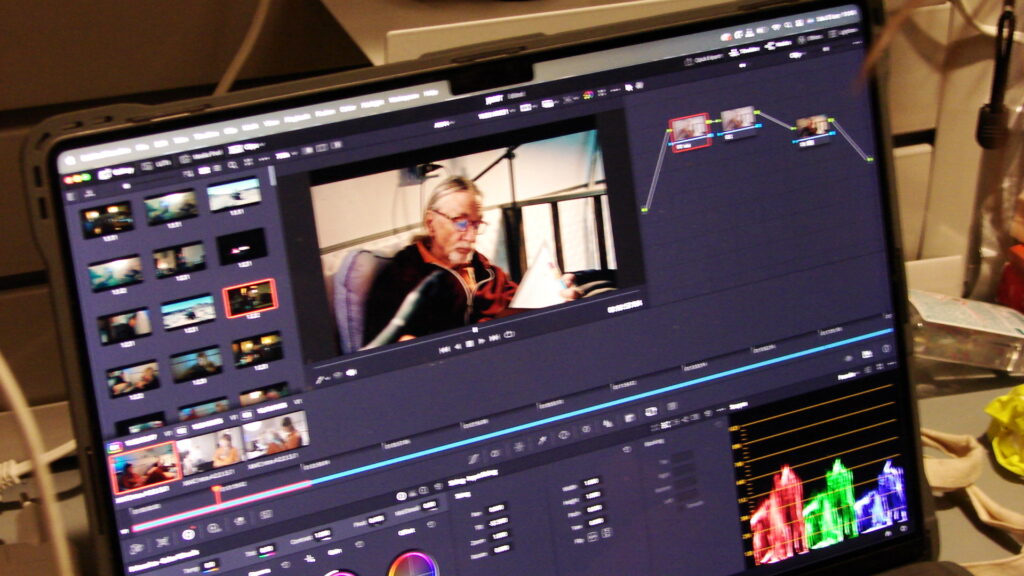
A company from London sent a crew here one afternoon to film for a documentary that we can’t disclose at this time. We also had in-situ film makers Elisa and Matteo who got many hours of recordings to sift through for their documentary. Sadly, the mission ended at 4:30 PM Thursday in preparation to leave this unique experience and place, completely upsetting and ending the Mars analog sim. A feast at the local Duke’s Slickrock Grill in downtown Hanksville was planned to celebrate the mission. Happily for the Commander, another mission may be in the works for one year from now.
You must be logged in to post a comment.