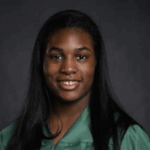
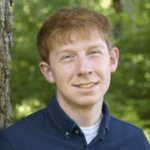
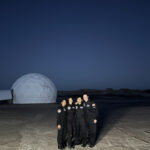
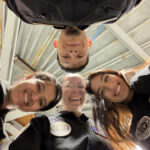
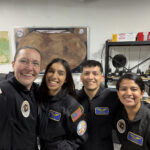
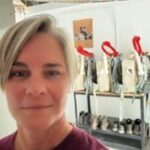
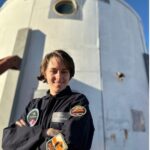
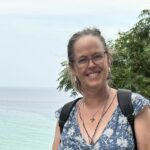
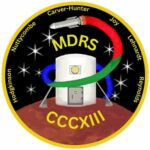
Crew Bios and Mission Patch – <Date – December 28th>

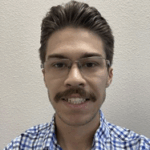
Idris Stevenson, Crew Engineer
Hometown: Menlo Park, CA
Studying: B.S. in Mechanical Engineering
Hobbies: Backpacking, rocketry, equestrianism
Why MDRS? I am excited about the opportunities that a high-fidelity simulation offers for both personal development and conducting high-impact research projects.
Researching: My project explores the use of raspberry pi and a sensor suite to measure weather patterns around the HAB to improve information availability to astronauts plannings EVAs and monitoring the safety of their environment.

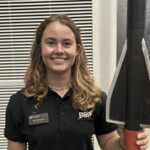
Katharina Guth, Health and Safety Officer
Hometown: Santa Cruz, CA
Studying: B.S. in Aeronautics and Astronautics Engineering; Minor Global Engineering
Hobbies: Latin & Ballroom Dance, rock climbing, skiing, traveling and learning languages
Why MDRS? I am participating in MDRS to align my personal goal of contributing to future human space exploration with research that advances our understanding of crew operations and communication systems in mars-analog environments.
Researching: My research investigates the efficiency of crew communication system by conducting terrain-dependent signal mapping to better understand how local geography affects communication performance.

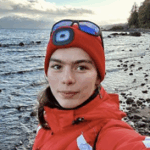
Vindhya Ganti, Green Hab Officer
Hometown: Mason, OH
Studying: B.S. in Mechanical Engineering, Minor in Global Engineering
Hobbies: Tennis
Why MDRS? This is an immersive experience that’ll help me learn more about how Mars vehicles work, and how they’re optimized for the rough terrain.
Researching: I’m creating a rover with Daria Bardus, capable of recognizing its environment while collecting soil samples.

Keegan Chavez, Crew Commander
Hometown: Albuquerque, NM
Studying: M.S. in Electrical Engineering
Hobbies: Soccer and cycling
Why MDRS? I have the ultimate goal of becoming an astronaut and MDRS is the perfect opportunity to develop the skills and discipline necessary to perform an actual space mission.
Researching: I will be studying the effects of low gravity on seed germination. I will also be assisting on the rover and RF communications projects

Ben Huber, Crew Scientist
Hometown: Janesville, WI
Studying: B.S. in Aeronautics and Astronautics Engineering
Hobbies: Soccer, geology, basketball, reading
Why MDRS? I wanted to push myself out of my comfort zone, and MDRS is a perfect way to do this in a learning environment. MDRS is a great way to learn if I want to become an astronaut in the future.
Researching: My research is in-situ construction of starch based bricks with Martian materials.

Armand Destin, Crew Biologist
Hometown: Damascus, MD
Studying: B.S. Biological Engineering, Minor Biotechnology
Hobbies: Taekwondo, soccer, Legos
Why MDRS? I have had an aspiration for space exploration since I was a kid. MDRS is a unique way to apply my technical and professional experience in an isolated and extreme environment.
Researching: My research integrates humans with systems to assist astronauts with decision-making and risk assessment to optimize human performance.

Daria Bardus, Crew Journalist
Hometown: Worthington, OH
Studying: B.S. in Aeronautics and Astronautics Engineering
Hobbies: Reading, building models, and trying different cafes
Why MDRS? This is a great opportunity to learn what it would be like living with limited resources, and how to complete mission goals in unideal Conditions.
Researching: I am Creating a rover with Vindhya Ganti with the Goal of collecting soil samples with navigation capabilities.

Mission Plan – December 29th

Mars Desert Research Station
Mission Plan
Crew 326 – Gaia
Dec 28th, 2025 – Jan 10th, 2026

Crew Members:
Commander Keegan Chavez
Crew Scientist: Benjamin Huber
Crew Engineer: Idris Stevenson
Health and Safety Officer: Katharina Guth
Green Hab Officer: Vindhya Ganti
Crew Journalist: Daria Bardus
Crew Biologist: Armand Destin

Mission Plan:
The twin “Aether” (325) and “Gaia” (326) missions are the tenth and eleventh all-Purdue crew at MDRS. The enthusiasm and interest raised by the previous experiences of Purdue students and alumni at the station, the numerous high-quality research projects carried on at MDRS, as well as Purdue’s honored tradition in the field of space exploration, granted us once again two back-to-back rotations.

Crew 326 will perform various research tasks, including engineering projects on RF communications, autonomous rover sample collection and navigation, in-situ resource utilization, environmental sensing, and low gravity seed germination. Some of the experiments will be performed inside the MDRS modules, while others require Extra Vehicular Activities (EVA), thus adding realistic difficulties to the task. As usual, the combination of excursions and life inside the habitat will provide crew members with the opportunity to both work on their research and identify potential difficulties of working with space suits and living in close quarters in a small habitat.

The main objectives of the Gaia analog Martian mission are:

  • Keeping the highest level of fidelity and realism in the simulation. Earth analogs cannot reproduce Martian gravity and atmosphere, but the crew will keep every other aspect into consideration. This includes safety and research protocols, definition of roles and daily schedule, EVA protocols (and limitations), communication protocols, fruitful collaboration with the program director and mission support, and adaptation to limited resources and environmental difficulties.
  • Performing research in the fields of engineering, biology, communications, autonomy, and geology on Mars.
  • Continuing the fruitful collaboration of Purdue crews with the MDRS program.
  • Following the mission, supporting MDRS with useful results for future crews.

Crew Projects:

Title: Autonomous Mars Rover for Geological Sample Collection
Author(s): Vindhya Ganti
Objectives: Train an image-based navigation system on local landmarks to allow a rover to navigate autonomously
Description: The goal of this project is to develop a rover capable of harnessing navigational targets, ideally in the form of images captured of the local geography, to gather localization information. Using this information, the robot should be able to adapt its autonomous path to optimally reach a target destination. In the autonomous path, the rover will move other attachments, like an arm to collect samples. This work is in collaboration with Daria Bardus, with an emphasis on developing an imaging pipeline.
Rationale: If this rover can harness imaging for navigation, we would have a fallback mechanism for localization that will not be affected by the rocky terrain of Mars. This will ensure greater consistency, along with checkpoint verification to hone accuracy in path movement. This would enable the crew to gather more samples and conduct additional research on Mars’ terrain within a single mission.
EVAs: 6; 1-2 EVAs to gather images of local landmarks, 1 EVA to test basic functionality of rover hardware and software, 1-2 EVAs to return to sites where images were taken and test the rover’s ability to navigate autonomously, 1 extra EVA is included for Crew member Daria Bardus to test rover’s sample collection ability on different regolith

Title: Dust Storm Detection
Author(s): Idris Stevenson
Objectives: Install environmental sensors to give crews early warnings on incoming dust storms and other hazardous weather
Description: A suite of sensors will be assembled on site and deployed in the Martain environment in areas surround the Hab. Many environmental factors are influenced by incoming weather patterns, including temperature and humidity, which will be measured in this study to determine their behavior before storms hit. By the end of the mission, all sensors will be collected and the data will be compared to weather data gathered while at the station.
Rationale: Dust storms on Mars can last for weeks, covering extremely large portions of the Martian surface. Detecting storm formation early helps astronauts and engineers plan for dust storm ramifications, including decreased solar panel power output, when it would be safe to perform EVAs, and when there would be periods of increased maintenance needs
EVAs: 6; 3 EVAs to place sensors in the environment, 3 EVAs to retrieve sensors

Title: Utilization of In-Situ Materials for Construction
Author(s): Benjamin Huber
Objectives: Gather materials from the surface of Mars to make bricks for construction and testing the strength of those bricks
Description: In this research, the experimenters will collect surrounding surface materials and create a concrete that will be able to withstand the harsh conditions of Mars. The geologically similar landscape of the Utah desert and the limited water given to the MDRS team makes the perfect circumstances to accurately reflect the viability of creating concrete on Mars. The materials gathered at the site will be made into bricks, different mineral compositions from different locations will be collected to find the strongest brick formula. To figure out which brick formula is strongest, each of the bricks will then be stress tested to gauge how well they can endure the environment of Mars.
Rationale: If concrete could be created on Mars, this will give future explorers on Mars the ability to construct structures without any materials from Earth. This will enable the colonization of Mars by improving the ability to create infrastructure and protect colonizers from the planet’s harsh environment.
EVAs: 4; 4 EVAs to gather different types of surface samples

Title: Terrain-Dependent RF Signal Propagation Mapping
Author(s): Katharina Guth
Objectives: Begin to create an RF signal strength map of the area surrounding the Hab
Description: The goal of this project is to investigate how Martian surface features, including rock formations, slopes, depressions, and habitat features, affect radio frequency (RF) signal strength and coverage during surface operations. Using a transmitter-receiver pair, this project will measure and map signal propagation across different terrain types. Data will be collected during multiple EVAs, with signal strength, GPS position, and environmental conditions recorded at each measurement point. The resulting dataset will be used to generate a terrain-dependent coverage map, influencing future communication network design.
Rationale: Reliable communication is essential to EVA safety, mission success, and crew coordination. Terrain irregularities can significantly disrupt line-of[1]sight communication and reduce signal reliability. By studying how environmental features influence signal behavior in a Mars analog setting, this project will guide communication infrastructure design for crewed surface missions.
EVAs: 4-5; all EVAs will be used to gather RF signal strengths level in areas of interest, we do not expect to be able to map the entire region but will give as many EVAs to this project as we can and is safe to map as much as possible

Title: Crew-Centric Interface for Performance Optimization at MDRS
Author(s): Armand Destin
Objectives: Develop a platform to allow teams to perform risk assessment in an efficient and effective manner
Description: This research proposes the development and preliminary validation of a quantitative framework design in case of a contingency event. It will act as a decision-support tool, providing crews with a data-driven assessment of risk and mission performance value in real time. This research aims to develop a model to assess mission success based upon realistic EVA scenarios. Collected data from the crew’s decisions and the model’s output are then evaluated through a debrief and analysis.
Rationale: For future long-duration missions to Mars, astronaut crews will operate with unprecedented autonomy, facing complex challenges far from the comfortability of Earth-based mission control. The ability to make rapid, accurate, and justifiable decisions during critical operations, such as Extravehicular Activities is important to crew safety, science, and mission success.
EVAs: 4; 4 EVAs with a different scenario for crews to handle on each

Title: Autonomous Mars Rover for Geological Sample Collection
Author(s): Daria Bardus
Objectives:
Description: The goal of this project is to develop a rover capable of reaching locations on Mars that are inaccessible to humans through EVAs, collect samples, and safely return them to the HAB. The rover will use imaging and recognition to locate where it is using landmarks created by the crew then collect a dirt sample and bring back to the HAB. This work is conducted in collaboration with Vindhya Ganti, whose research emphasizes imaging and recognition, while the complementary focus is on terrain traversal and sample collection
Rationale: If this rover can be utilized to collect samples for the crew geologist, then less EVAs will be needed. By using this rover for sample collection, life support resources can be allocated to other EVAs. This rover also has the potential of going farther than the crew members could travel. This would enable the crew to gather more samples and conduct additional research on Mars’ terrain within a single mission.
EVAs: 4, 4 EVAs to test rover’s ability to gather samples on different terrains, this project will also be supported by the efforts of the autonomous Mars rover navigation project

Title: Simulated Microgravity Germination: A Proof-of-Concept for Bioregenerative Life Support Systems (BLSS)
Author(s): Keegan Chavez
Objectives: Investigate Plant Growth in Simulated Microgravity
Description: This project is a continuation of the work done by Saranya Ravva on Crew 325. This experiment investigates how short-term exposure to simulated microgravity influences the germination and early growth of plants. Using a custom-built rotational positioning machine (RPM), seeds will experience continuous multi-axis rotation to nullify the net gravity vector—mimicking conditions of microgravity during space transit. After one week, treated seeds will be transferred to the Green Hab at MDRS for comparison with control samples germinated under Earth gravity.
Rationale: Long-duration missions to Mars require sustainable bioregenerative life support systems (BLSS) for food, oxygen, and waste recycling. Studying how plants initiate growth under microgravity analogs provides insights into seed resilience, cellular adaptation, and nutrient uptake mechanisms during space transit. This project models a Mars mission scenario where seeds are grown in microgravity en route to Mars and later cultivated under Martian gravity.
EVAs: None

Roles and Responsibilities:

The leadership structure is as follows:

  • Crew Commander – has ultimate say in operations performed by the crew, including in HAB and on EVA
  • HSO – Due to an understanding of the safety and emergency procedures the HSO will act as an Executive Officer, taking over command in the case the Commander is indisposed or otherwise unreachable
  • In the unlikely case both the CC and HSO are indisposed, leadership will fall to the crew member with skills and competencies relevant to the situation, this will be determined at the necessary time

For EVAs: An effort will be made to place the Commander or HSO on each EVA and that person will take a leadership role for the EVA. In the case where that cannot happen, the Commander will determine a member on the EVA team to take the role of mission leader and assume leader responsibilities for that EVA.

Responsibilities for Each Roles:
All crew members will be expected to perform scientific research that will benefit the advancement of humans on Mars.

Crew Commander:

  • Ensuring a high fidelity simulation while keeping members of the crew safe and focused on tasks related to research and reporting
  • Handling the daily Sol Summary reports
  • Primary point of contact for Mission Support

Health and Safety Officer

  • Monitor physical and mental health of crew
  • Report on all health and safety issues as they arise
  • Ensure First Aid kits, fire extinguishers, fire blankets, and other safety devices are in proper working order
  • Assume responsibilities of Commander when necessary

Green Hab Officer

  • Monitoring of plant growth in Green Hab as outlined by Green Hab coordinator Ben Greaves
  • Maintenance and cleaning of Green Hab
  • Handling of daily Green Hab report

Crew Journalist

  • Tracking of daily activities performed by crew members at the station and on EVA
  • Gathering and cataloguing of all pictures taken by crew members throughout the day
  • Handling of daily Journalist report

Crew Engineering

  • Monitoring and maintenance of access tunnels
  • Ensuring all communications equipment is working properly prior to EVAs and charging properly post EVAs
  • Maintenance and cleaning of RAM
  • Handling of daily Operations report

Crew Scientist

  • Maintenance and cleaning of Science Dome
  • Ensuring proper use and storage of equipment in the Science Dome
  • Handling of EVA requests when applicable

Crew Biologist

  • Handling of EVA reports when applicable

Expected Deliverable:

Research:
All crew members are expected to perform daily tasks that pertain to the research projects that were accepted by the Purdue MDRS command team. They will strive to make significant progress to be reported at the mid mission mark and have data generation and collection finished by the end of mission date. Data analysis and final reporting can happen post mission.

Crew performance:
Crew members are expected to improve on aspects of daily mission life, such as EVA prep and daily report writing. They will build a daily routine that is a healthy balance between work and relaxation in order to avoid excess stress and burn out while maintaining productivity.

Risk Management and Safety Protocols:

On EVA:

  • Any health concerns due to environmental factors, such as dehydration, heat exhaustion, extreme cold or others, will take priority over sim. This includes returning to base immediately while maintaining sim if possible, or breaking sim by removing EVA suits and returning to base as soon as possible.
  • Physical injuries constitute exiting sim and returning to base if possible, or waiting on site for assistance if necessary
  • If signs of dangerous wildlife can be identified, steps should be taken to avoid said wildlife and exit the area immediately
  • Encounters with non-mission personnel should be ignored if possible and sim can be maintained. If encounters escalate to dangerous levels then sim will be exited and steps taken to remove crew members from the encounter.

In Hab:

  • Health concerns due to environmental factors should first attempt to be dealt with in sim by HSO. Sim can be exited if conditions worsen
  • Physical injuries that do not require immediate medical attention can be treated in sim by HSO

Crew Bios and Mission Patch – <Date – April 5th>

Rym Chaid – Mission Commander & Crew Astronomer:
Rym is Director of the Mars Society Canada with a background in mechanical/aerospace engineering and space health research. An experienced analog astronaut, she has explored extreme environments from caves to Moon and Mars simulations, and flying in Microgravity, always with a mission to showcase the human context of exploration. As the Commander of the World’s Biggest Analog mission at MDRS, Rym brings both leadership experience and vision, and is dedicated to inspiring others and advancing humanity’s journey toward becoming a spacefaring civilization through her Documentary storytelling.

Ricardo J. Gonzalez – Crew Engineer & Crew Astronomer:
Ricardo J. Gonzalez is an astrophysicist turned engineer and NASA flight controller supporting the ISS from the Mission Control Center in Houston, Texas. As an aspiring astronaut, he is eager to find solutions to spaceflight’s most complex challenges, including living and working in extreme environments. Now, his ambitions turn towards the analog astronaut world in pursuit of his greater dreams through participation in Crew 319 at MDRS under the World’s Biggest Analog program.

Shriya Musuku – HSO & Crew Scientist:
Shriya Musuku is a Mechanical Engineer (BS/MS), first responder, and premedical candidate. Her passion for health and technology merges in her work in the analog astronautics field through the World’s Biggest Analog mission where she is the Crew Science Officer. She is passionate about expanding healthcare access and STEAM education and is leveraging this mission to advance those initiatives through community engagement

Mackenzie Calle – Crew Journalist & Green Hab Officer:
Mackenzie Calle is a documentary photographer and National Geographic Explorer. Focused on long-term stories, her work largely delves into space science and queer issues. Her work has been awarded by World Press Photo and the Sony World Photography Awards, amongst others. She is thrilled to be a part of the World’s Biggest Analog and Crew 319 at Mars Desert Research Station to document this story from the perspective of a crew member.

Mission Plan – October 14th

Mission Plan

MDRS Crew 319
Historic Global Mission, Expedition 1
World’s Biggest Analog – Advanced Analog Astronaut Crew
Author: Rym Chaid – Commander
Review: Full Crew
October 12-25, 2025

1. Mission Overview

The World’s Biggest Analog (WBA) is the largest coordinated analog mission in history, linking 17 analog habitats across five continents to simulate Moon and Mars settlements in a unified, synchronous campaign.

Its core objective is to explore how humans can “live and work together cooperatively in the harsh environment of Space,” investigating not only technical and scientific challenges but also the sociopsychological, anthropological, and human-factor aspects of off-Earth habitation.

As MDRS Crew 319, we will serve as one of the four advanced habitats at the core of WBA. We will operate under Mars-analog conditions (or Moon/Mars mixed, per habitat assignment) and collaborate with the global network of analogs.

Advanced Core Habitats – Leading the WBA Global Mission:

Mars Desert Research Station (MDRS) – The United States of America
Lunares – Poland
Habitat Marte – Brazil
Hydronaut – Czech Republic

This mission will run for 2 weeks (October 12–25, 2025) across participating habitats.

2. Crew Composition & Roles

Our crew has five mandatory roles and two supplemental roles to explore all facets of life on Mars during our mission and complete our experiments and outreach plans successfully and safely.

First, we have the five key roles:

Commander: Rym Y. Chaid

The Commander is responsible for the overall safety, organization and management of the mission and is the person held accountable for all things related to the mission, although they still need to respect the overall authority of MDRS staff and the HSO in health and safety matters. Commanders will have prior successful analog experience. Commanders usually have demonstrated leadership and experience in remote or challenging field areas. Their duty is to keep an overview on the mission goals, progress of the crew experiments, crew well-being, and social climate, mediate and settle any disputes inside the crew, and take a lead and responsibility for the crew in difficult situations (e.g. emergency simulations).

Health and Safety Officer (HSO): Elias Mulky and Shriya Musuku

The role of the HSO is dependent on the applicant’s skill level. First responder training is preferred and EMT’s, nurses and doctors are highly desired, unless no one in the crew has a medical background. This position is also responsible for the operational safety of the crew and the campus. The Medical Officer can override decisions made by the Commander if medical reasons suggest a veto. Their duty is to: oversee the correctness and completeness of taking the daily medical measurements,observe the crew physical and mental health, and take care of injuries and sick crew members.

Crew Engineer: Ricardo Gonzales

The Crew Engineer is responsible for the maintenance and monitoring of the station, its buildings and systems. The person in this position has to think proactively and be able to think like a Martian in terms of active response to the physical environment at MDRS. In order for daily activities to proceed as scheduled, the crew engineer needs to routinely monitor the equipment being used by the crew and make sure it is ready for whatever is planned. In addition, when systems fail, the crew engineer needs to diagnose the problem and contact Mission Support with a plan for solving the problem.

Crew Scientist: Shriya Musuku

The role of a scientist on the crew is to conduct research and maintain the ScienceDome and its equipment. They generally plan the crew’s EVAs based on their research goals. They must have a pre-approval of their home institution for any studies done at MDRS. This is particularly important if the scientist is studying human factors. All human factors research is required to be approved by the home institution’s IRB, even if it doesn’t require an IRB. In that case, simple proof that it was reviewed and an IRB was not deemed necessary is all that is needed for the research. For WBA, we will need to discuss this role further with the MDRS Organizers to discuss feasibility and need.

Crew Journalist: Mackenzie Calle

The Crew Journalist is responsible for the daily reports and photos sent from MDRS. This included a daily Journalist Report that is a record of your crew’s daily life, but also they should be the organizer for the crew’s media efforts.
Then we have the two supplemental roles to further explore the life on Mars through our connection to the greenery of Earth and the vastness of space:

Crew Astronomer: Ricardo Gonzales & Rym Chaid

The crew astronomers must have both experience using a telescope and a research project that has been approved by the MDRS Astronomy Team. They will work with the director of observatories prior to their arrival at MDRS and must take an online test in order to operate the observatories.

GreenHab Officer: Mackenzie Calle

This person is responsible for keeping the crops alive and thriving in the GreenHab, as well as the overall maintenance and monitoring of the GreenHab’s environmental controls. GreenHab Officers can have experience in biology and/or gardening.

Crew Educator: Rym Chaid & Shriya Musuku

The crew educators are responsible for all educational and outreach initiatives and coordinations relating to the mission. This includes coordination with classrooms around the World to teach hundreds of students about space exploration and life on Mars as part of the ACE education international program.

3. Mission Objectives
3.1 WBA’s Core Experiments

WBA has defined ten flagship experiments to be run across all participating habitats, to facilitate comparative analysis. Our crew has analyzed and selected a total of 7 experiments to conduct during our rotation at the Mars Desert Research Station. Below is a summary and how we plan to implement or augment them:

Emotion Response Analysis (ERA) – Astronaut Emotional Analysis
Principal Investigators: Dr. Patrick Stacey & Dr. Suzanne Elayan
The experiment objective is to identify key emotional dynamics in the astronaut experience and aims to understand motivational and hazardous factors in the job using interviews to predict astronaut emotional responses
Use regular video diaries and before and after interviews to model emotional response of the crews

SIMOC – Live Mesh Network Sensory Array – Measures Habitat Life Support Data
Principal Investigator: Kai Staats
The experiment objective is to identify real time sensor data in the habs to create a system that functions as an Environmental Control and Life Support System that observes air quality in real time and allows for future data analysis
The crew will monitor functionality of this installed sensor system to ensure continued experiment operation throughout the duration of the mission

Job / Home / Team Crafting (MARSCRAFT project)
Principal Investigator: Vera Hanger mann and Christianne Heinecke
The experiment objective is to explore how crew members self-adjust tasks (“job crafting”), adjust personal spaces (“home crafting”), and refine collaboration dynamics (“team crafting”) to maintain well-being and performance.
The crew will be taking two surveys that journal their crafting behaviors and well being right after work and right before bed

INDEX (INtuition and DEliberation in eXtreme environments)
Principal Investigators: Pierpaolo Zivi and Fabio Ferlazzo
The objective of the experiment is to examine individual decision making factors throughout the World’s Biggest Analog mission
The crew will complete surveys measuring stress, sleep, mood and team climate to facilitate data analysis

SPACESEED
Principal Investigators: Victor Buchli and Tarun Bandemegala
The objective of the study is to understand the human side of Space Controlled Environment Agriculture and study the socio cultural factors of SpaceCEA
The crew will complete the assembly of the space seed and report on plant growth as we monitor things

Salutogenesis in Space Analog Environments
Principal Investigators: Dr. Laura Thomas & Dr. Mike Rennie
The experiment objective is to study the post experience growth and subjective factors that impact the time spent in analog settings
The crew will conduct daily journaling and a post analog interview to trace these factors throughout the mission and provide reflection on salutogenesis after the mission

ARBMH – Relationship between Mental Health, Sexual Functioning, and Team Dynamics
Principal Investigators: Simon Dube and Justin Garcia
The objective of the experiment is to study the evolution of psychological and sexual well being in isolated, confined, and extreme environments.
The crew will answer a daily questionnaire about their well being to provide data for this experiment

Mars-to-Earth Outreach & Education
All habitats engage in public communication: data-sharing, livestreams, educational modules, virtual tours.
Our MDRS crew will produce multimedia content, host virtual classrooms, publish in National Geographic, run photography exhibitions.

We will map our internal experiments to these WBA standards to maximize cross-habitat comparability, while also contributing unique experiments (as below).

3.2 Crew-Specific Experiments

Engineering / Technical Experiments:
Hab Maintenance & Reliability
Monitor and log all maintenance, failures, and mean time between failures (MTBF).
Redundancy strategies and emergency repair protocols.

VR & Simulation for Space Tasks
Implement virtual-reality simulations

EVA Emergency Experiment:
Communication Protocol Testing
Create and test rigid but adaptive comms protocols under degraded signal, latency, or partial blackout conditions.
Capture metrics: packet loss, misinterpretation, delays, crew stress under degraded comms.

Emergency Response Protocol Testing & Framework Definition
Stage “EVA emergencies” (ex: suit breach, comms cut, medical splint) and test response workflows.
Evaluate decision-making time, crew coordination, resilience measures, and communications.

Assessment Criteria, Risk Mitigation
Define quantitative and qualitative criteria for success/failure in emergencies.
Pre-develop mitigation strategies (ex: abort thresholds, redundancy checks, fallback positions).

Adaptive Response in Wilderness (Mars-like Terrain)
Simulate emergency scenarios in rugged terrain outside the habitat (within EVA constraints). Simulation shall be verbal and no real hazard shall be implemented.
Observe how crew improvises given simulated constraints (power, comms, supply limits).

Media / Outreach Experiments:
National Geographic Collaboration
Co-author an article (print + digital) linking our Mars-analog experiences with a moon-analog mission elsewhere in the WBA network.

Public Talks / Virtual Classroom Engagement
Conduct scheduled recorded sessions with classrooms globally, walking through mission day, experiment highlights, crew Q&A.

Magazine Journaling, Photography, Social Media
Daily journaling (crew diaries), photo essays, art pieces, social media posts framed as “Life on Mars” content.

Short Documentary Film
Produce a short film capturing mission flow, personal stories, scientific moments, challenges overcome.

“Life on Mars” Photography Exhibition
Curate a small exhibit of photos narrating crew life, experiments, landscapes, micro-moments, to be shared digitally and post-mission in galleries.

4. EVA Strategy

EVA Personnel:
EVA Lead: Commander leads Crew during EVA operations and is responsible for Crew safety.
HABCOM: One crew member must remain in the Main Campus at all times during EVAs. Habcom is responsible for communications between MSC and EVA Crew. Habcom monitors EVA Crew activities via Dashboard. Crew will rotate this position to ensure everyone goes on at least one EVA.
EVA Crew: EVA crew shall only consist of 3 members maximum, as one crewmember must remain in the Main Campus.

EVA Planning Principles:
EVA windows will be scheduled with buffer margins for safety, weather, suit prep, and delays.
Each EVA will have clear objectives (science, sampling, traverse, infrastructure) and contingencies.
A buddy system will always be enforced; no solo EVA under any circumstance. One night EVA will be performed on Sol 0, prior to Mission Ingress following special permission and crew training.
Before EVA: checklists (suit integrity, Air flow, comms, tool inventory, emergency supplies, MSC awareness).
During EVA: strict timeline adherence, regular check-ins MSC, strict perimeter adherence
After EVA: immediate debrief, log any anomalies, sample processing, suit maintenance, checking with MSC.

EVA Allocation Framework:
MDRS allows for two EVA windows per day (morning + afternoon), with flexibility depending on crew fatigue and environmental conditions (weather forecasts)
Assign roles rotating among crew (e.g. leader, navigator, instrument handler, media) to build redundancy and cross-training.
Only two EVAs should test Crew’s emergency protocols (simulated health hazard).
Reserve contingency EVA time for unexpected troubleshooting or extra sampling.

Emergency EVA Scenario Use:
Insert forced delays, simulated system failures (e.g. comms dropout), or tool breakage to test robustness of protocols and visual communications strategies. Comms will remain nominal, but crew will simulate loss of comms, for a controlled and predetermined amount of time.
Use terrain features (rocks, slopes) to simulate challenges in EVA navigation, emergency return path planning.
Two EVAs should test Crew’s emergency protocols by simulated health hazards. Trainers shall be Commander and HSO, while trainees shall be Crew Engineer and GreenHab Officer.

5. Crew Cohesion, Morale & Well-Being
Crew mental health, trust, and cohesion are central to our mission success. Key strategies:

Crew Norms & Values
Pre-mission: conflict resolution norms, roles, communication practices, personal boundaries.

Daily Emotional Check-ins
Short check-ins/check-outs “highs and lows” rounds led by Commander each morning and evening.
Encourage vulnerability, psychological safety, and listening.
Commander and HSO are both responsible for monitoring the safety and well-being of the crew and are trained in human factors and emotional support.
All crewmembers are encouraged to reach out and communicate with whoever they are comfortable with in the crew, if needed.

Scheduled Social Time & Rituals
Board games, storytelling, themed nights (music, art), shared stargazing or guided astronomy sessions.
Small traditions (mission halfway celebration, mission closure celebration quote-of-the-day) help us build our identity.

Rotation / Cross-Role Engagement
Occasionally rotate duties to prevent monotony and foster empathy (e.g., engineers help with greenhab, journalist helps data entry).
Encourage side learning: short peer-led “micro-teach” sessions (biology, art) during downtime.

Physical Fitness & Recovery
1 hour daily exercise (stretching, yoga, cycling, resistance bands) to maintain physical health, reduce stress.
Encourage naps or rest periods when fatigue accumulates.

Private Reflection Time
All crew members have quiet time daily to journal, decompress, or meditate. Everyone should respect those boundaries.

Conflict Management Protocol
Early “cool-down” before escalation, structured mediation session if needed.
Use crew norms as reference for dispute resolution.

6. Risk Management & Safety Protocols

Primary Risk Categories
EVA mishaps (suit breach, tool failure, disorientation, heat stroke, hypothermia)
Habitat system failures (power, life support, communications)
Health and medical emergencies
Psychological stress, interpersonal conflict, fatigue
Media/communications breakdowns with external support
Environmental hazards (storms, terrain, dust, fire)

Mitigation Strategies

Redundancy & Backup Systems
Monitor critical systems (power, comms, telemetry).
Spare parts, tools, repair kits easily accessible.

Pre-mission Training & Drills
Emergency drills (fire, depressurization, medical) pre-mission and early mission days.
Cross-training: every crew member cross-training on backup systems, basic first aid, EVA rescue, COMS protocol.

Checklists & Standard Operating Procedures (SOPs)
Mandatory checklists for EVA, maintenance, communications, emergency.
All procedure updates must be documented and signed.

Abort Criteria & Decision Gates
Define clear thresholds to abort EVA, halt experiment, or retreat to safe mode.
Utilize “go/no-go” decision points, favor safety margins.

Health Monitoring & Medical Protocols
Medical kit ready, telemedicine support, protocols for remote assistance.
In case of worsening symptoms: fallback “safe mode” and potential early egress.

Psychological Safeguards
Scheduled breaks, counseling check-ins, possibility to pause high-load tasks.
Communicate stress or private feedback to Commander or HSO – per individual preference.
Commander/HSO and involved crewmember might decide to escalate this matter to MSC and/or external professional support.

Communications Backup & Latency Simulation
Use redundant comms channels, monitor delays and outages to test robustness.
Backup archive of critical data.

Environmental Monitoring & Safeguards
Continual habitat sensors (humidity, temp).
Fire hazard equipment.
Automated alerts, threshold alarms, emergency vent or scrubber activation.

Post-Incident Review & Learning
Immediate debrief after any anomaly, near-miss, or emergency test.
Log lessons learned, update procedures and file Incident Report.
Comms check with MSC.

7. Expected Outcomes & Deliverables

By the end of the mission, we aim to deliver:

Comparative data sets aligned with WBA’s core experiments (psychological, communication, productivity, space agriculture)
Internal reports on our crew’s engineering, EVA, and emergency protocol experiments
Daily SOL Summaries and Journaling reports
A collaborative National Geographic article (digital + print) intersecting our Mars analog story with another WBA Moon mission – Lunares Station in Poland
A short documentary film, photo exhibition, artistic pieces, and social media educational content
Recommendations and best-practice protocols (EVA, comms, conflict resolution) for future analog missions
A mission debrief and lessons-learned package to WBA/MDRS
Outreach engagements (virtual talks, classroom sessions, published mission diaries)
Personal growth, team resilience, cross-role competence, and a crew legacy of inspiration for future analog astronauts and space explorers

These deliverables will help us fulfill both our crew’s scientific objectives and the WBA’s global mission of expanding awareness, research standards, and analog cooperation.

8. Commander’s Closing Statement

Fellow crew members, as we stand on the cusp of this historic analog mission, I am honored to lead Crew 319 on Expedition 1 of the World’s Biggest Analog. This is more than a simulation, it is our chance to contribute meaningfully to humanity’s journey beyond Earth and onto newer Planets.

Each of you brings unique talents and perspectives: Ricardo with engineering rigor, Shriya with scientific curiosity, Mackenzie with narrative vision, and Elias with health and safety perspective. Together, we form a living mosaic of exploration, resilience, and creativity.

Our mission will test us: in environment, in psyche, in cooperation. But more than that, it will redefine us and allow us to explore not just Mars, but ourselves. Our success will not only be the science accomplished here at the Mars Station, but the way we support each other, adapt to surprises, and rise through challenges together.

Let us lead with empathy, discipline, curiosity, and courage. Let our data, art, words, and camaraderie echo across the global WBA network. We are writing a new chapter in analog exploration, and we can only hope that the world will watch, learn, and be inspired by our adventures here together.

Here’s to safe EVAs, crew laughter echoing in the Hab, starry nights of wonder, and a mission that leaves a legacy for future space explorers.

Onward, together.

Rym – Commander,
World’s Biggest Analog – Advanced Crew
Mars Desert Research Station
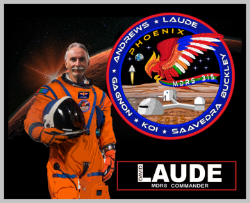
Crew 315 Crew biographies, photos and mission patch 20Apr2025

[title Crew biographies, photos and mission patch – January 8th]

TIMOTHY A. GAGNON
PO BOX 1283
TITUSVILLE, FL 32781
Email: KSCartist

Tim Gagnon was born and raised in Hartford, Connecticut. A fascination with space
exploration came early as did an interest in art. Like many others of his generation Tim
remembers watching the missions of his childhood heroes on a small black and white
television with “rabbit ears” that could receive few broadcast stations. For his 16th birthday
gift in 1972 his parents arranged for Tim and his father to attend the launch of Apollo 17 as
invited guests of NASA.
Ever since reading about the design of the Skylab 1 patch in an article written by the artist
Frank Kelly Freas in 1973, Tim dreamed about creating a patch for a flight crew, to use his
artistic talent to contribute to the space program. He came close in 1985 when Bob Crippen
invited him to submit designs for the first shuttle mission scheduled to launch from
Vandenberg Air Force Base in California, STS-62A. That mission was canceled after the
Challenger accident.
In 2004 his dream finally came true when astronaut John Phillips selected Tim to design the
emblem for the Expedition 11 mission to the International Space Station. When the
Expedition 11 patch was unveiled, Tim was contacted by Dr. Jorge Cartes of Madrid who
congratulated him and spoke of how he also wanted to design mission patches. Tim
responded that if the opportunity ever arose again, they would collaborate.
In 2007 Tim was selected by the STS-126 Crew to design their mission emblem. Knowing
how much it meant to participate, Tim invited his pen pal Jorge to join him on this project.
The STS-126 crew was so happy with the result that they recommended Tim and Jorge to the
STS-127 crew. As each patch was completed, Tim and Jorge were recommended to more
flight crews. Since 2008 they teamed to work with the astronauts of the following Space
Shuttle crews: STS-129, STS-132 and STS-133*. NOTE: this is the full story about the STS-
133 patch http://www.collectspace.com/news/news-030711a.html
The end of the Space Shuttle Program did not slow down demand. Tim and Jorge were proud
to work with the following crews serving aboard the International Space Station during
Expeditions 22, 23, 25, 26, 27, 29, 30, 34, One Year, 47, 48, 53 and 55. Over the last six
years Tim has worked with multiple Flight Directors and other NASA and industry teams to
create their emblems.
Tim continues to build a reputation as someone easy to work with and increasingly in
demand.

Bio:

Michael Andrews, CPIM, is a logistics leader in the aerospace industry. He holds dual degrees in Aerospace Engineering and Mechanical Engineering from the University of Florida, along with a Master’s Degree in Business Administration from Arizona State University. He is passionate about pathfinding logistics practices in austere locations in anticipation of aiding colonization of the Moon, of Mars, or beyond.

Michael has over 12 years of aerospace experience, and 10 of those have involved materials management leadership with defense contractors and launch providers. Michael has experience in program management; along with managing the receiving, shipping, inventory, and delivery operations in aerospace distribution centers.

This is Michael’s second analog astronaut mission. He served as the Logistics and Communications Officer for Crew-16 at the Flashline Mars Arctic Research Station on Devon Island (Nunavut, Canada) in July of 2024. He will be returning to Flashline in July of 2025 as an engineer on the 2025 advance team to upgrade their station.

Michael also holds a Certification in Planning and Inventory Management from APICS. He lives in San Pedro, CA, is a certified rescue scuba diver, and enjoys marathon running and hiking.

Respectfully,

Michael Andrews

Elena Saavedra Buckley — Crew 315 Journalist and GreenHab Officer

Elena Saavedra Buckley is a senior editor at Harper’s Magazine, where she edits and writes articles about a wide breadth of subjects. She is also a contributing editor at The Drift, a triannual literary magazine, and has written for The New Yorker, The Paris Review, and other publications.

After getting a bachelor in Humanities at Yale, Elena moved to rural Colorado to work for High Country News, a magazine that covers the American West. There, she covered Indigenous affairs and reported from multiple reservations. She then lived and wrote in New Mexico, Texas, and California before moving to New York City, where she is now based.

While Elena is likely the least scientifically qualified member of Crew 315—and primarily here to write a magazine story about the experience—she has had a lifelong interest in space and space exploration. As a teenager in Albuquerque, New Mexico, she saved the tips from her barista job to buy a telescope, and she attended an astronomy camp at the University of Arizona when she was 17. She’s happy to be at the MDRS to relive some of that curiosity. In her free time, she sings Renaissance music in a choir, cooks elaborately, and buys odd trinkets for her apartment.

On her mission to explore the mysteries of the universe and advance the future of human spaceflight, Urban Koi holds a Master’s in Space Systems Engineering from Johns Hopkins University and is continuing on with her studies as a future Doctor of Space Medicine. Koi’s multidisciplinary roles include: Principal Investigator & Space Systems Engineer in the NASA L’SPACE program with a focus on Human Health, Life Support, & Habitation Systems; Bioastronautics Researcher at the International Institute for Astronautical Sciences (IIAS); Analog Astronaut – Health & Safety Officer (HSO) at the Mars Desert Research Station (MDRS); Rescue Scuba Diver; Pilot-in-Training; and Award-Winning Film Director & Photographer.

Synthesizing her passions in science, engineering, and art, Koi is the Founder + Director of SOTU STUDIO (Student of the Universe®), an experimental multimedia studio born by curiosity, cosmic discovery, and limitless dreams that produces interdisciplinary art, photography, and films. Over 12+ years in the industry, Koi propelled the missions of world-renowned titans through a dynamic lens of otherworldly visions and established a global following with 1 Million+ in reach. Koi was selected by NASA as an independent photographer to document the engineering process of space missions to the Moon, Mars, and beyond. Koi’s work is featured on NASA multimedia/social channels, award-winning publications, and her Instagram (@urbanxkoi).

Over 10+ years, Koi has also served as Co-Leader on the 100cameras Board of Creatives, a nonprofit organization recognized by the United Nations University Centre for Policy Research (UNU-CPR), UNIDIR, and UNICEF as an enrichment program that empowers youth across the world to become leaders through a robust methodology that has shown to improve emotional intelligence, well-being, and resilience through photography and storytelling. Koi is pioneering a new epoch in space exploration, where human resilience converges with technological ingenuity to illuminate the path to celestial destiny in the vast expanse of the cosmos.

David was present for the impressive launches of Apollo 11 and the first Space Shuttle launch. He has met two lunar astronauts and like many others dreamed about space exploration and being a crew member on a journey to Mars.

David began a lifelong passion for electronics and space technology while in elementary school. He served in the U.S. Air Force. Later, after obtaining Bachelor of Science and Master of Engineering in Electrical Engineering degrees, he designed state of the art integrated circuits. He holds seven patents, has written technical papers and has presented his work at various international conferences.

David is a lifelong learner and enjoys working with talented people. He is a founding member of The Mars Society. He also has formal training in anthropology and archaeology. Hobbies include radio-controlled airplanes, electronics, music composition, musical instrument synthesis and antique radio and pipe organ restoration. David also enjoys adventure, hiking and traveling. Utah, with its stark beauty and remote Mars like desert areas, is one of his favorite states to visit.

Mission Plan – April 21st

Crew 315 – Phoenix

Apr 20th – May 3rd, 2025

Crew Members:

Commander: David Laude

Crew Engineer: Michael Andrews
HSO: Urban Koi
Crew Journalist/Greenhab Officer: Elena Saavedra Buckley
Crew Artist: Timothy Gagnon

Crew Projects:

Title: Extending Mobility Range on Mars
Principal Investigator: David Laude
Description: Mobility on Mars is key to any mission for maximizing scientific gains. Main mobility for humans is motorized rovers with limited range. Mobility can be extended for examination of more remote objects. Objects of interest can be observed from rover accessible vantage points. Two observations can be used to triangulate object position (no GPS on Mars). Position can be found or placed on map to determine travel range. If range is beyond rover range, but within rover + foot + drone range then range can be extended by foot and then deploying an FPV drone/helicopter. Drone can collect close up HD photos.
Objectives: An EVA team will set out on EVA with a small drone equipped with HD camera and FPV capability. EVA team will follow a planned course from maps. When rover is at maximum range (real or simulated), EVA crew will set out on foot with drone. Once EVA crew is close enough to the object, the drone pilot will launch it. Drone pilot will fly drone in full sim suit while drone spotter(s) stand nearby. Drone will acquire the needed object images from close up Image data will be retrieved from drone in Hab for analysis to determine if mission was a success. Project methods will be reviewed for success or needed improvements
EVAs: Three to seven EVAs are expected to cover a possible second object, some of which could be combined with other project EVAs.

Title: Evaluating Drone Piloting During EVA on Mars
Principal Investigator: David Laude
Description: With the success of Ingenuity paving the way, piloted drones will undoubtedly be used by humans on Mars. The purpose of this project is to study drone piloting with EVA suit and to evaluate any operational impediments. Co-investigators will evaluate drone flight control performance on standardized flight patterns, making use of URC fields and possibly other locations. Co-Investigators will rate each flight through several metrics. No EVA suit flights will take place prior to and/or just after sim.
Objectives: Metrics like accuracy (measured distance to center of target) and speed (time) of flying drone to marked targets of varying ranges will be evaluated via comparative analysis. Comments on difficulties experienced will also be documented.
EVAs: Three to four EVAs are expected that could be combined with other project EVAs.

Title: Essay for Harper’s Magazine
Principal investigator: Elena Saavedra Buckley
Description: The primary reason for my visit to the MDRS is to write an immersive, in-depth reported essay for Harper’s Magazine, to run as a feature at some point later in the year. This piece is assigned at Harper’s, where I am an editor, and has been approved by the MDRS via Michael Stoltz, the media and PR liaison.
Objectives: The aim of the article is not only to capture the experience of our mission, but to zoom out and consider the purpose of Martian simulations, of eventual Mars missions, and the place these phenomena have in the American imagination today.
EVAs: No specialized EVAs are needed, but I will aim to accompany my crewmates on as many EVAs as possible.

Title: Examining oyster mushroom growth in a Martian greenhouse environment
Principle investigator: Elena Saavedra Buckley
Description: Mushrooms are an easy to grow, nutritious source of food that can be transported in remarkably compact ways. (Beyond culinary uses, fungi structures are strong and lightweight, and NASA has studied the feasibility of using them for Martian architecture, or “mycotecture.”)
Objectives: Use a pre-made grow kit to grow oyster mushrooms in the Greenhab to gain information on possible hiccups and problems with mushroom growing in a sealed, arid environment; and, ideally, eat them!
EVAs: Zero

Title: Measuring soil desiccation patterns near the MDRS
Principle investigator: Elena Saavedra Buckley
Description: Desiccation cracks in soil form as moisture evaporates, leaving behind polygonal patterns that have been observed in terrestrial desert environments. On Mars, these features provide insight into past hydrological conditions, soil composition, and potential habitability. By studying desiccation patterns in the Mars-like environment of the MDRS, I will better understand how similar features on Mars might have formed, and learn more about how soil evaporation occurs.
Objectives: Measure various soil desiccation pattern areas and, in the science dome, do a simple experiment on soil samples to see how long cracks take to form.
EVAs: A minimum of three EVAs.

Title: Illustrating a Mars Analog Mission as an artist.
Principal Investigator: Timothy Gagnon
Description:In March 1962, NASA Administrator James Webb addressed a two-paragraph memorandum to NASA Public Affairs Director Hiden T. Cox about the possibility of bringing in artists to highlight the agency’s achievements in a new way. In it, he wrote, “We should consider in a deliberate way just what NASA should do in the field of fine arts to commemorate the … historic events” of America’s initial steps into space. Shortly thereafter, NASA employee and artist James Dean was tasked with implementing NASA’s brand-new art program. Working alongside National Art Gallery Curator of Painting H. Lester Cooke, he created a framework to give artists unparalleled access to NASA missions at every step along the way, such as suit-up, launch and landing activities, and meetings with scientists and astronauts. Over the years, NASA artwork has helped spark national pride and accomplishment. Technology, whether from the 1960s or today, documented these missions extensively, but artists are able to pull in emotion and imagination unlike data-collecting machinery. The relationship between science and art continues to inspire the public and inform us of current missions. When I was invited to participate in a MDRS analog mission as an artist, I immediately thought of contributing the same way as the artists involved in the NASA Art Program of the 1960’s and 1970’s.
Objectives: To document my experience and that of my crew mates by creating digital and fine art of our increment. I have already designed our mission patch, our crew portraits and a "Space Flight Awareness" themed crew poster. I intend to bring my iPhone camera, possibly my iPad as well as a sketch pad along with pens and colored pencils to sketch while there and then turning those into finished art post mission.
EVAs:Understanding that resources are limited and my crew mates also have EVA requirements, I will accomplish this with as few as two EVAs and welcome any additional opportunities.

Title: EVA Connectivity Kit
Principal Investigator: Michael Andrews
Description: By combining commercial off-the-shelf products, I will be developing a portable kit that can be taken on EVAs to provide internet connectivity to crew members. This has various benefits: sending data back to the station, enhanced communications, and en-situ research while on EVA.
Objectives: Confirm efficacy of kit (developed pre-Sim) and measure its performance parameters: battery life, upload speed, download speed, weight.
EVAs: 3 total EVAs – one to test kit, one to measure parameters, and a third to combine with the 3D mapping hardware to send samples en-situ.

Title: 3D Mapping of Samples
Principal Investigator: Michael Andrews
Description: To prevent physical extraction of geological samples on EVAs, I will be demonstrating 3D mapping technology as a way to create "digital twins" of specimens. This will also include engineering hardware on station.
Objectives: Determine how quickly samples can be recorded in station and on EVA, including sending them to the station via the Connectivity Kit above.
EVAs: 3 total EVAs – one to collect samples, one to scan samples on EVA, and one to scan samples and send them via Starlink while on EVA.

Title: 100cameras Method: Photography as a Tool to Mitigate Psychological Stress in Space
Principal Investigator:Urban Koi
Description:Space exploration presents unique psychological challenges for astronauts, particularly during long-duration missions where isolation, confinement, and distance from Earth can lead to significant emotional and mental stress. As humanity advances toward becoming a multi-planetary species, addressing these psychological effects is crucial for the success of future missions to the Moon, Mars, and beyond. Developed over 15 years of research and practice, the 100cameras Method leverages photography as a dynamic tool for self-expression, fostering emotional intelligence, resilience, and community-building skills. The 100cameras Method has been recognized by the United Nations University Centre for Policy Research (UNU-CPR), UNIDIR, and UNICEF for its positive impact on empowerment globally. By integrating the 100cameras Method into the daily lives of analog astronauts, we aim to provide future astronauts with a structured yet flexible approach to document their experiences, process emotions, and strengthen connections with their environment and peers, combating the psychological effects of space travel.
Objectives:(1) To evaluate the effectiveness of the 100cameras Method in enhancing emotional intelligence and resilience among analog astronauts. (2) To assess the impact of photography-based self-expression on the well-being of individuals in isolated or extreme environments, such as analog and space missions. (3) To analyze the potential of the 100cameras Method as a scalable intervention for various populations facing psychological challenges. (4) To integrate the 100cameras Method into future astronaut psychological wellness toolkits.
EVAs:TwoEVAs are requested for specific 100cameras Method Photo Mission Walks (two modules of the curriculum) at nearby locations around the MDRS habitat.

Crew 313 Crew biographies, photos and mission patch 31Mar2025

[title Crew biographies, photos and mission patch – March 31st]

Crew 313 Bios

Jen Carver-Hunter

Jen Carver-Hunter is a 5th grade teacher at a Title 1 School in Salt Lake City, Utah. Carver-Hunter is the crew commander for the Spaceward Bound Utah program at the Mars Desert Research Station. She is also an alumni member of the Smithsonian National Air and Space Museum’s Teacher Innovator Institute and a current member of Space Center Houston’s SEEC Crew.

Inline image

Emily Lehnardt

Emily Lehnardt first "gravitated" towards the exciting world of astronomy during a high school lecture about black holes. From that moment, she has actively pursued anything space related. She is the former director of the Utah Women Astronomical Society which focuses on STEM and astronomy outreach. Her love of knowledge, exploration, and space is contagious, and, for her indefatigable talent for teaching, Emily is a two-time-award winning educator. Currently, she is pursuing a PhD in science education with a research interest in astronomy and STEM. Additionally, she is collaborating with Clark Planetarium to create robust astronomy curriculum for rural communities. Emily loves to travel and share her passion about astronomy with others.

Becca Hodgkinson

Becca Hodgkinson is a National Board Certified Teacher who has worked at Escalante Elementary in Salt Lake City, UT since 2004. For the past three years, her sixth grade students have been maintaining a commercial hydroponics unit in order to study how matter cycles through the ecosystem and potential ways humans might be able to grow food on Mars. She is a three time graduate from the University of Utah and a proud mom of two young adults.

Samantha Reynolds

Samantha Reynolds is a homeschooling educator of 15 years, community organizer, and meditation instructor. She loves connecting people to resources and outlets for their passions, and looks forward to sharing the MDRS experience with others. In her free time she enjoys travel, reading, learning new things, and spending time with family.

Riley Nuttycombe

Riley Nuttycombe is a 17 year old high school student out of Boulder Colorado. She enjoys reading and writing science fiction, working on CAD projects, and playing ultimate frisbee. This is her third mission to MDRS where she is working on a project (the Mars Trek Project) to design and test her own EVA helmets.

David Joy

David Joy is a junior high school science teacher in Northern Utah. He is currently teaching physics and integrated science, but has also taught chemistry and Earth & Space science. In 2020 he earned a Ph.D. in outdoor education and social justice. This is his second Spaceward Bound mission at MDRS, and he is grateful to have these opportunities.

Crew Bios, Photos – April 6th

Béatrice Hollander – Crew Commander
Medical student
Currently in the second year of my master’s degree in medicine, I will be serving as the Crew Commander for this expedition. I have always been fascinated by space, particularly its effects on the human body. My research will focus on the effects of Lactobacillus helveticus on sleep and stress with Arnaud de Wergifosse.

Louis Baltus – Crew Astronomer
Data Science (Statistics) student
I began a master’s in data science a few months ago, and it was my strong interest in space and its industry that inspired me to join MARS UCLouvain. I am thrilled to take on the role of Crew Astronomer this year. My project will focus on developing a solar weather model to anticipate radiation levels on the surface of Mars.

Arnaud de Wergifosse – Crew Executive Officer
Cognitive and Behavioural Neurosciences & Physiotherapy student
With a master’s degree in cognitive and behavioral neurosciences and as a final-year physiotherapy student, my passion for human biology and lifelong fascination with space naturally led me to join the MARS UCLouvain project. Since joining in 2024, I’ve greatly valued its interdisciplinary approach and the challenge of contributing to such a large-scale organization. Motivated by the discoveries and experiences it offers, I am extending my involvement into 2025. My research will focus on the effects of Lactobacillus helveticus on sleep and stress with Béatrice Hollander.

Batoul Tani – Crew Journalist
Biology student
I have always been curious about the possibilities of life and how it behaves in the diverse environments of our universe. The MARS UCLouvain project is the ideal opportunity to immerse myself in astrobiology research. This year, I will take on the role of Crew Journalist, focusing on the survival of model bacteria to Mars-like UV-C

Antoine Dubois – Crew Engineer
Geographical Sciences student
I am currently pursuing a Master’s degree in Geographical Sciences at UCLouvain. As a Crew Engineer, I am also working on my thesis regarding the acceptability of agrivoltaic projects in Wallonia. Passionate about fieldwork, I am preparing an experiment to quantify sediment transport in arid areas. Identifying areas of interest for robotic and human missions includes lunar poles, Martian valleys, and volcanic regions, which offer opportunities for scientific research and resource exploitation.

Dr. Odile Hilgers – Crew Health and Safety Officer
Physician, Pediatric Resident
I am a pediatric resident and will serve as the Health and Safety Officer for the Syrtis Crew. Drawing from my medical expertise, I will focus on adapting Crisis Resource Management (CRM) principles to space environments. My goal is to explore how CRM can be applied to medical emergencies in isolated missions, identifying key adaptations for resource-limited and high-stress conditions, similar to those expected during future Mars expeditions.

Bérengère Bastogne – Crew GreenHab Officer
Bioengineer, PhD student
Currently in the final year of my PhD in bioengineering at the Mycology Laboratory of the Earth and Life Institute (ELI, UCLouvain), I will take on the role of GreenHab Officer for the Syrtis Mission. Fascinated by the development of life in space, I aim to combine this passion with my research by studying the growth of arbuscular mycorrhizal fungi (AMF) under Mars-like stress.

Mission Plan – April 6th

1. Béatrice Hollander and Arnaud de Wergifosse – Lactobacillus helveticus
Objective:
To evaluate the impact of Lactobacillus Helveticus on sleep and stress

Methodology:
Two groups: one control (Placebo) and one intervention group (Lactobacillus Helveticus) in a double blinded design. All participants will receive an active treatment or a placebo pill everyday.
Monitoring sleep and stress variations through behavioural and physiological data with questionnaires and wearables. Body temperature and oxygen blood saturation will be controlled.

Schedule:
Weekly questionnaires and everyday data during nights.

2. Antoine Dubois – Wind Erosion and Sediment Transport
Objective:
To study wind-driven erosion and sediment transport dynamics in a Mars analog desert environment.

Methodology:
Installation of sediment collectors at various heights and in the same area.
Granulometric analysis of collected sediment using sieves.
Environmental data recorded with temperature, humidity sensors, and GPS for spatial mapping.
Integration of data into GIS for visualization.

Schedule:
Equipment installation: early mission (Sol 1–2).
Regular data retrieval and sample collection (every 2–3 Sols).
Final analysis and synthesis near the end of the mission.

3. Louis Baltus – Mobile UX and Radiation Forecasting
Objective:
Evaluate user interaction with mobile devices in isolated, confined, and extreme (ICE) environments.
Develop a solar radiation forecasting model using ground and satellite data.

Methodology:
Usability tests under simulated Mars conditions with crew interaction logging.
Data integration from the Musk observatory at MDRS and satellite databases.
Model construction for predictive radiation events affecting Mars explorers.

Schedule:
UX test phases distributed across the mission (beginning, mid-point, and end).
Radiation data collection ongoing; model refinement toward the final days.
Crew surveys and feedback collected in parallel.

4. Bérengère Bastogne – Arbuscular Mycorrhizal Fungi under Stress Conditions
Objective:
To investigate how arbuscular mycorrhizal fungi respond to Martian-like stress.

Methodology:
Germination and viability tests (MTT assay) post-exposure to Martian-like stress.
Symbiosis testing with host plants; root staining and microscopy.

Schedule:
Sample exposure and monitoring start early (Sol 1–2).
Lab work and analysis continue throughout the mission.
Symbiosis testing and documentation near mission end.

5. Dr. Odile Hilgers – Crisis Resource Management (CRM) in Medical Emergencies
Objective:
To evaluate CRM strategies during medical emergencies in a simulated Mars mission, focusing on performance, debriefing impact, and team dynamics.

Methodology:
Implementation of medical emergency scenarios (CPR, EVA incidents, team confusion).
Performance assessment using Ottawa Global Rating Scale (GRS).
Use of high-fidelity manikins, AED trainers, and GoPro recordings.
Structured debriefing after each simulation.

Schedule:
Six key simulation events planned (Sol 2, 4, 7, 8, 10, 12).
Debriefings conducted the same evening.
Data collection includes video analysis and time-stamped feedback logs.

6. Batoul Tani – UV-C Exposure & thermal cycling effects on Biofilms and Spores
Objective:
To determine how UV-C radiation and thermal cycling affect the resistance of E. coli biofilms and Bacillus thuringiensis spores, and the protective potential of various materials.

Methodology:
Controlled exposure of bacterial cultures to UV-C
Use of petri dishes, 96 well plates, agar-agar media, and UV measurement devices.
Quantitative analysis post-exposure for viability and structural integrity.

Schedule:
Initial culture setup: Sol 4.
Exposure sessions spread across mission (Sol 5, 8, 10).
Sample documentation and interim analysis mid-mission.

Crew biographies, photos and mission patch

[title Crew biographies, photos and mission patch – March 17th]

Prachi.jpg

Prachi Dutta, Greenhab Officer
Fascinated by space, Prachi developed a strong passion for human exploration early on. She joined MDRS 319 as GreenHab Officer and is excited to use this analog mission as an opportunity to further deepen this passion. With a strong interest in both research and engineering, Prachi aims to work in bioastronautics and human factors engineering. Throughout the mission, she will be responsible for monitoring plant health, conducting experiments related to food production, and contributing to research on sustainable life-support systems for long-duration missions.

Jesus.jpg

Jesús E. Meléndez Gil, Crew Engineer
As an aspiring astronaut from the small island of Puerto Rico, Jesús has always dreamed of being one of the first humans to visit Mars. Having the opportunity to simulate his dream, he jumped at the chance to visit MDRS as part of Crew 309. Using his experience as Chemical Engineering PhD student at CU Boulder, Jesús will be participating as Crew Engineer for this analog mission. He will be responsible for maintaining all habitat systems in working order and assisting the crew with any technical issues that may arise. With his curiosity and sense of humor, he is determined on making this once-in-a-lifetime opportunity a joyful and memorable weeklong experience for the whole crew.

Priyanka.jpg

Priyanka Vasu, Health and Safety Officer
Priyanka is a first-year master’s student in the department of Aerospace Engineering Sciences at the University of Colorado, Boulder, focusing on Bioastronautics. With a drive to venture further and beyond, her work entails understanding the harsh environment of space and its physiological and psychological impacts on humans. As the Medic/Health Safety Officer of Crew 312 onboard the MDRS habitat, she will ensure the safety of the crew and will work on an autonomous delivery drone for medical supplies, thereby steering Crew 312 through a successful completion of the mission.

Lydia.jpg

Lydia Rader, Science Officer
Lydia Rader received her dual PhD in behavioral genetics and neuroscience from University of Colorado Boulder. Her research centers around genetic and environmental risk factors of chronic pain and its overlap with mental health traits. She runs a science communication nonprofit called Knowing Neurons.

Louisa.jpg

Louisa Smith – Co-Commander A
Louisa received her PhD in cognitive neuroscience at the University of Colorado Boulder. Her research uses both MRI and behavioral methods to understand how individuals flexibly and adaptively engage cognitive control. In particular, she seeks to elucidate the cognitive and neural mechanisms underlying individual differences in cognitive flexibility.

Caroline.jpg

Caroline Austin, Co-Commander B
Caroline is a 3rd year PhD student at the University of Colorado Boulder studying Aerospace Engineering Sciences with a focus in Bioastronautics. Her PhD research primarily focuses on spatial orientation and characterizing vestibular analogs for gravity transitions. She is also a Pathways Intern at NASA Glenn Research Center where she models human performance risks for Lunar and Martian missions like those conducted at MDRS. Caroline previously visited the MDRS as part of a space medicine course and hopes to use her prior experience to help lead her team through a successful week-long mission on Mars.

Copyright © The Mars Society. All rights reserved. | Main Site