EVA Report – April 20th

Crew #: 335

Position: Crew commander

Report prepared by: Dave Laude

Date: 20-04-2026

Sol: 1

EVA #: 3

Narrative:

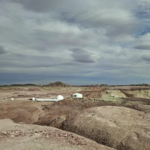
The purpose of this EVA was to survey much ground along travel route for film makers to consider for filming during the EVA or a later return. We will stop along the route as needed for filming. Also, for commander’s panaramic photo survey.

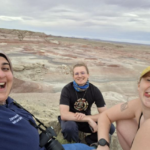
The EVA began at 1:30 PM heading north on Co Dung Rd. heading to final destination of Green Mars overlook, but Perseverance, with two passengers and heavy professional video camera and super duty tripod, charge dropped to 50% at Brahe Highway intersection. We decided too far to continue so turned around. During the trip there were four excellent filming stops thus making good use of the 3 hours. Returned at 4:30 PM. Dave’s panoramic photo project accomplished half of intended goals due to turning back. It will be reviewed to see if successful or if changes needed.
Destination : Green Mars View

Coordinates (use UTM WSG 84) :

Green Mars View : 4257000N, 520500W

EVA Participants:

Dave Laude (Commander)

Matteo Calore (HSO/Journalist)

Elisa Strinna (Artist)

Road(s) and routes per MDRS Map: The crew departed the MDRS via Moonwalk Road, then follow Cow Dung Road to Brahe Highway intersection

Mode of travel: driving

EVA Report – April 20th

Report title: EVA Report
Crew #: 335
Position: Crew Artist
Report prepared by: Elisa Strinna
Date: 19-04-2026
Sol: 1
EVA #: 1
Purpose of EVA:Practice EVA and look around for desiccated soil samples and for film making
Start time: 10:00
End time: 10:52
Narrative: We started preparation at 8:39 AM, we started the decompression at 8:55 AM, got in the rovers (9:00 AM ) and started our way to the destination. We arrived at 9:10 AM. We explored the area on the right side of the road for a little bit, took some pictures and short videos, and headed back at 10.38 AM. We arrived to the station at 11.46 AM. We started decompression and entered the hub at 11.52
Destination per MDRS Map: Marble Ritual
Destination Coordinates (use UTM WGS 84): 4250800N, 518750W
EVA Participants: Matteo Calore and Elisa Strinna
Road(s) and routes per MDRS Map: The EVA will begin on Moonwalk Road, then proceed along Cow Dung Road 0110 to Marble Ritual.
Mode of travel: Spirt

Sol Summary – April 20th

Report title: Sol Summary Report

Crew #: 335

Position: Crew Commander

Report prepared by: Dave Laude

Date: 20-04–2026

Sol: 1

Summary Title: Three EVAs on day one.

Mission Status: Going fair

Sol Activity Summary:

We arrived on Mars midnight and awoke to views of Mars out the portals. Fantastic views! Charlotte made pancakes for breakfast. Who doesn’t like them? EVAs 1 and 2 took place in the morning to Pebble Ritual as in normal practice. One of us was not feeling up to it and didn’t EVA. Afternoon the film makers and commander headed to Green Mars Overlook, however once reaching the Brahe Highway intersection rover Perseverance battery was at 50% with significant distance remaining ahead and so we turned back. However, we made full use of 3 hours with much filming along the way. Another crew member is now also not feeling well now with sore throat. Our HSO monitors both.

Look Ahead

Tomorrow two EVAs, this time focusing on Charlotte’s clay project while film makers film her.

Anomalies in work:

Once reaching the Brahe Highway intersection, rover Perseverance battery was at 50% with significant distance remaining ahead and so we turned back.

Weather:

It was sunny today, up to 80F and very mild winds.

Crew Physical Status:

Two show mild signs of virus.

EVA:

We ran a little low on battery, but otherwise very good.

Reports to be filed:

Sol Summary
Operations Report
Greenhab Report
Journalist Report
EVA Report
EVA Requests
Daily photos
Support Requested:

Supplemental Operations Report – April 17th

Date: 4/17/2026
Name of person filing report: Sergii Iakymov
Reason for Report: Routine
Non-Nominal Systems: Hab outer shell. GreenHab hydrant. Director’s trailer roof.

Power system: "1) Power system: Nominal.
2) Current generator hours: 1448.0"

Propane Readings:
Station Tank: 49%
Director Tank: 60%
Intern Tank: 70%
Generator Tank: 80%

Water:
Hab Static Tank – 416 gallons above safety margin
GreenHab – 111 gallons above safety margin
Outpost tank – 400 gallons
Septic Tanks emptied: No

Rovers:
Sojourner rover used: Yes, around campus
Hours: 226.9
Beginning Charge: 100%
Ending Charge: 100%
Currently Charging: Yes
Opportunity and Perseverance charged fuse box replaced due to their malfunction. A new SOP is created for this type of repair. Curiosity driver seat replaced.

Cars:
Hab Car used and why, where: Multiple trips to Hanksville for supplies
Crew Car used and why, where: Replacement vehicle is still being sourced
General notes and comments: The station will be operating with the HAB car only until crew car function is replaced

Summary of Internet: Nominal.
EVA suits and radios:
Suits: Nominal.
Comms: Nominal.
T-Echo EVA-link: Nominal

Campus wide inspection, if action taken, what and why: HAB view camera installed on top of RAM. SciDome driveway and RAM view cameras replaced. SciDome junction tarp replaced and reinforced with ropes. GreenHab junction tarp reinforced with ropes. Hab outer shell shows ongoing wear.
Summary of Hab Operations: Nominal. L-Deck main and porch lights remote control relay replaced. L-Deck EVA room, main airlock and restroom lights remote control relay installed. SIMOC sensors reprogrammed to be connected to our Dashboard. Emergency signal lights installed for testing. Toilet seal replaced. HVAC air filter replaced.
Summary of GreenHab Operations: Nominal.
Summary of SciDome Operations: Nominal. Main power meter got off-line, it was rebooted by cycling breaker 3 and 5 simultaneously.
Summary of Observatories Operations: Nominal.
Summary of RAM Operations: Nominal.
Summary of Outpost Operations: Intern trailer: thermostat replaced to enable A/C function; Zigbee-wifi gateway installed to enable zigbee IoT at the Outpost; Atm sensor installed; main heater DC motor replaced. Director trailer: Atm sensor installed; roof is leaking around A/C and along the eastern side of the trailer. Shed lights remote control relay installed.
Summary of Health and Safety Issues: Nominal.

Mission Summary – April 10th

Report title: Summary mission Report
Crew #: 333
Position: Crew Commander
Report prepared by: Marie Jansen
Date: 10-04-2026
Sol: SOL 12

Summary Title: Wrapping things up
Over the course of the twelve Sols, Crew Arsia established a rhythm that became the heartbeat of the mission. From the very first days, the team settled into a routine built around shared meals, scientific work, EVA operations, and the quiet moments in between that slowly turned six individuals into a cohesive crew.
Mornings typically began at 7:00 or 8:00 AM, almost always anchored by a communal breakfast. Pancakes became something of a crew tradition, appearing on the menu more often than any other dish, though porridge, granola with smoothies, and cereal also made regular appearances. These morning meals were never just about food, they were the moment the crew came together before splitting into EVA teams and hab teams for the day ahead.
EVAs were the backbone of the mission. The crew ventured out regularly to carry out their scientific experiments across a variety of sites around the MDRS, including Cowboy Corner, Green Mars View, Kissing Camel Ridge, Candor Chasma, Somerville Overview, North Ridge, and the Special Region. Each location brought its own character, some humbling in their vastness, others charming in their unexpected beauty. Equipment challenges were a recurring theme: rovers that failed to recharge properly, a Tap Strap that ran out of battery at a critical moment, microphone issues, and communication difficulties with CapCom in the field. Each time, the crew adapted, reorganized, and pushed forward without losing focus on the mission objectives.
Back at the hab, those not heading out kept equally busy. The GreenHab required regular attention, and Matthias took on much of that responsibility throughout the mission: tending to the plants, carrying out his seed analysis, and keeping a close eye on the greenery that sustained both morale and science. A running mystery added some unexpected excitement when the crew discovered that an animal had been sneaking into the GreenHab and nibbling on their plants. After several hours of suspicion, the culprit was eventually caught, much to the satisfaction of the entire team.
Meals were a cornerstone of daily life. The crew made a point of putting together hearty, nourishing dishes to keep everyone fueled through long days of physical and mental effort. Highlights included Zahraa’s couscous, Matias’s omelettes and tuna burgers, a memorable burger night, chicken curry, mac and cheese, cheddar nachos, and special Easter muffins prepared by Joanna and Marie. Cooking became an act of care, and the dinner table was always a place to reconnect at the end of the day.
The mission was also an emotional experience. A rest day was dedicated to celebrating Easter together, with a chocolate chip pancake breakfast, an egg hunt in the hab, and an afternoon photoshoot. There were card games, movie nights, mimes, and cycling sessions on the stationary bike. There were also harder moments, tensions within the group surfaced at times, leading to an open team meeting that helped bring things back into balance. It was a reminder that the human side of space exploration is just as demanding as the technical one.
As the Sols passed, the crew completed experiment after experiment, explored corner after corner of the surrounding terrain, and slowly worked their way toward the finish line. By the final Sol, with bags being packed and journals being filled, one thing was clear: Crew Arsia had not just conducted a simulation. They had lived something real.

Sol Summary – April 10th

Report title: Sol Summary Report
Crew #: 333
Position: Crew Commander
Report prepared by: Marie Jansen
Date: 10-04-2026
Sol: SOL 12

Summary Title: Wrapping things up
Mission Status: last day…
Sol Activity Summary:
And so we find ourselves on the final day of our simulation. We had planned to enjoy a slow, leisurely morning, but a drone had other ideas, buzzing over the base and waking the crew up, so the day ended up starting at 8:00 AM after all. We made the most of it with a batch of pancakes to kick things off on a good note.
The morning was then dedicated to wrapping up the last remaining experiments before the simulation came to a close. Zahraa, Antoine, and Joanna each completed their final runs, and Matthias is scheduled to carry out his seed analysis later this afternoon.
There is a quiet sadness hanging over the hab today as the reality of the ending sinks in. But above all, the crew is filled with an immense sense of pride and gratitude for everything we have experienced and built together over these past days
Look Ahead Plan:
Nothing is planned tomorrow on the mission front, we will carry out a final walkthrough of the station, hand things back as we found them, and say goodbye to the MDRS. Thank you for everything.
Anomalies in work: none
Weather:
A perfect day to bring the simulation to a close.
Crew Physical Status:
Everyone is doing well! We all made it out alive!
EVA: None
Reports to be filed:
Sol Summary
Operations Report
Greenhab Report
Journalist Report
Astronomy Report
EVA Report
Daily photos
Mission summary
End-mission research report
Food inventory
Support Requested: none

End-Mission Research Report – April 10th

[category science-report]

Crew 333 – The Final Chapter: Farewell, Red Planet

This experience has taught us a great deal. First and foremost, we learned the discipline that comes with rigorous reporting, carefully observing our environment, discussing challenges as a team, resolving issues together, and taking the time each day to truly understand one another’s work.
Beyond that, we learned a tremendous amount about ourselves. Being isolated as a group of six in a confined space with limited resources brings you back to something very fundamental, the core needs of human beings. Each of us had the opportunity to grow, to understand one another more deeply, and to discover our own limits.
We also gained a genuine appreciation for what life in space truly entails. Living in a reduced environment gave us a much closer perspective on the reality astronauts face every day. But above all, what we take away from this experience are the bonds we built with one another. We laughed, we cried, we shared stories and moments of pure joy.
In short, this is an experience that will stay with us forever.

Experiments:
This section outlines the progress of the research projects conducted by the crew during our mission.

Zahraa Al-bayati (Health and Safety Officer):
During this MDRS mission, I conducted a speech and language pathology experiment entitled:
“Verbal Communication and Adaptive Strategies in Extreme Confinement: Contribution of Speech and Language Pathology in a Simulated Martian Mission.”
The objective of this study was to investigate how verbal communication evolves during extreme confinement and isolation conditions similar to a simulated Mars mission. Five crew members participated in the study. Data were collected at multiple time points during the mission using:
phonemic verbal fluency tasks
semantic verbal fluency tasks
open-ended communication questions

These measures allowed the analysis of several communication variables, including: verbal fluency; speech rate; pauses and hesitations; discourse organization; clarity of explanations; adaptive communication strategies.
Overall, the results suggest that communication patterns evolved over the course of the mission. Changes were observed in verbal fluency, speech organization, and the use of adaptive strategies. Several crew members demonstrated increased efficiency in communication, including more concise explanations and improved task-oriented discourse. In some cases, mild reductions in lexical fluency were observed, possibly related to cognitive load, fatigue, or confinement effects. Additionally, participants appeared to develop adaptive communication behaviors, such as simplifying explanations, using more direct language, and improving shared understanding during mission-related interactions.
This experiment highlights the relevance of speech and language pathology in extreme environments. Monitoring communication changes during confinement may help optimize crew performance, reduce misunderstandings, and support psychological and operational functioning in future analog and space missions.

Matthias De Groote (GreenHab Officer):
The experiment conducted aimed to evaluate the impact of different soil compositions, including Martian regolith simulant and Utah desert soil, on tomato seed germination. Understanding how plants respond to extraterrestrial or extreme terrestrial substrates is essential for the development of sustainable agriculture systems in future space missions, particularly in Martian environments. Since substrate composition directly influences water retention and nutrient availability, assessing plant responses under these conditions is crucial.
Tomato seeds were selected as a model due to their rapid germination and sensitivity to environmental conditions. The experiment investigated how varying proportions of potting soil, Martian soil simulant, and Utah desert soil affected germination rate and timing.
The experimental setup consisted of six different substrate conditions, each duplicated in two pots, resulting in a total of twelve pots. Each pot was filled with a substrate mixture prepared based on mass to ensure consistency, while maintaining a similar volume across all pots (approximately 2 cm below the rim) due to differences in bulk density between substrates.
The six conditions were defined as follows:
Condition 1 (control): 100% potting soil
Condition 2: 25% potting soil, 75% Martian soil
Condition 3: 10% potting soil, 90% Martian soil
Condition 4: 25% potting soil, 75% Utah desert soil
Condition 5: 100% Martian soil
Condition 6: 100% Utah desert soil

For each pot, 25 mL of water was added and thoroughly mixed with the substrate to ensure homogeneous moisture distribution and prevent water accumulation at the surface. Ten tomato seeds were then evenly distributed in each pot.
To control environmental conditions and limit excessive evaporation, each pot was covered with plastic film and placed inside a white bag. The seeds were sprayed with water regularly and monitored daily until germination occurred. Water was supplied by daily spraying throughout the experiment, and an additional watering of 100 mL per pot was performed on day 6 in response to the difficulties encountered in maintaining sufficient humidity within the substrates.
Germination began to be observed from day 8. The development of the seedlings was then monitored daily until day 12, at which point the germination rate was determined for each pot. While differences in germination rates appeared between the Martian soil, the Utah desert soil, and the potting soil, it remains difficult at this stage to establish clear trends.
Further statistical analyses will be required to assess the significance of these differences and to better understand the impact of substrate composition on seed germination.
Due to the relatively late onset of germination, the experiment could not be extended to the plant growth phase. As a result, no measurements of shoot or root development were performed.
This experiment nevertheless provides preliminary insights into the ability of tomato seeds to germinate in Martian-like and extreme terrestrial substrates, contributing to our understanding of plant establishment under constrained environmental conditions and informing future research on extraterrestrial agriculture.

Joanna Galloway (Crew Journalist):
This experiment investigated the precision of astronauts’ hand gestures in simulated space conditions. Prior to the simulation phase, each participant was asked to sit and replicate eight predefined gestures presented in a video. Their hand movements were recorded using a Tap Strap device, which captures motion and spatial positioning data. This baseline measurement established a reference for comparison with subsequent trials conducted under varying environmental constraints.
During the simulation, participants repeated the same set of gestures under three distinct conditions. The first trial took place inside the science dome on Sol 3. The second was conducted outdoors on Sol 8 using light equipment, and the third on Sol 9 with heavier equipment. These conditions were designed to evaluate the effects of fatigue and glove bulk on gesture precision, with particular attention to how increased physical strain and reduced dexterity might alter movement accuracy.
With the simulation phase now complete, all participants will be asked to perform the gesture sequence once more after returning to baseline conditions. The full dataset, including pre-simulation, in-simulation, and post-simulation measurements, will then be analyzed to assess changes in movement precision and to better understand the impact of environmental and equipment-related factors on fine motor performance.

Matias Ballivian (Crew Astronomer):
As the mission concludes, I reflect on the progress made in both astronomical observations and radio communication research.
On the astronomy side, I continued nightly imaging sessions, taking advantage of the reduced atmospheric density and favorable observing conditions. Over the course of the mission, I successfully captured several high-quality images that represent a clear improvement from the beginning of the rotation. These results demonstrate a better understanding of imaging techniques, including exposure control, tracking, and target selection.
However, I recognize that image acquisition is only part of the process. I am particularly motivated to further develop my post-processing skills, as this remains a key area for improvement. Enhancing my ability to process and refine raw data will be essential to reaching the level of quality I aim for in future missions.
Regarding telecommunications research, I focused on evaluating passive methods to enhance radio communication range during EVA without increasing transmitter power consumption. The two methods investigated were the use of a reflective surface and a tuned loop resonator.
Throughout the mission, I conducted a series of short-range tests to better understand signal behavior in this environment, followed by initial longer-range evaluations. While the experimental setups functioned as intended, the results indicate that both methods primarily improve signal clarity when the transmission is already above the intelligibility threshold. In other words, they enhance signal quality rather than extending the effective communication range. No significant increase in maximum transmission distance was observed.
Further analysis of the collected data is still required to quantify these effects more precisely. Nonetheless, the findings provide useful insight into the limitations and potential applications of passive signal enhancement techniques in EVA scenarios.

Antoine Dubois (Executive Officer / Crew Engineer):
At the end of the mission, my experiment on terrain perception in a Martian analogue environment has been successfully completed. Data collection was carried out across five distinct sites: Compass Rock, Sea of Shells, Green Mars View, Kissing Camel Ridge, and Candor Chasma. Each location was analyzed both through human observation during EVA and via drone-based imagery, allowing for a comprehensive comparison of perspectives.
All planned datasets have been acquired. I now have both the drone imagery and the qualitative assessments from EVA crew members for each site. The next step will consist of a detailed analysis of these data to better understand the differences in perception, particularly in terms of terrain readability, obstacle identification, and geomorphological interpretation.
Preliminary observations already highlight the clear value of combining both approaches. The drone provides a broader spatial understanding and reveals large-scale structures that are sometimes difficult to perceive from the ground, while EVA observations offer finer, more detailed insights into surface features and textures.
This dual approach appears to be highly complementary and reinforces the importance of integrating both human and robotic perspectives for future planetary exploration. Further analysis will aim to quantify these differences and assess how they can contribute to improving navigation, safety, and scientific efficiency in Martian environments.

Marie Jansen (Crew Commander):
In line with the theoretical framework established by Kass et al. (2010) and the Thomas-Kilmann Conflict Mode Instrument, this study aimed to explore how conflict management strategies evolve over the course of a long-duration simulation in isolation and confinement.
At this stage, I am still unable to access or analyze the collected data, as doing so during the mission could introduce bias, given my dual role as both researcher and participant. A full analysis will therefore only be conducted after the completion of the simulation.
Nevertheless, some personal observations can be noted regarding the final phase of the mission. Around Sol 8–9, an increase in interpersonal tensions was perceptible within the crew. However, these tensions did not escalate into persistent conflict, as open discussion and communication appeared to play a key role in easing the situation. This suggests that, despite moments of strain, the crew retained the ability to regulate conflict through dialogue.
Overall, while a comprehensive interpretation of the results remains pending, these observations hint at a dynamic process in which tensions may intensify over time but can still be mitigated through collective communication strategies. A deeper analysis will be necessary to confirm these preliminary impressions once access to the full dataset is possible.

Operations Report – April 10th

Report title: Operations Report
Crew #: 333
Position: Executive Officer / Crew Engineer
Report prepared by: Antoine Dubois
Date: 10-04-2026
Sol: 12

Non-nominal systems:
Opportunity rover
Cleaning of the various modules
Notes on non-nominal systems:
Opportunity rover: The Opportunity rover is still out of service due to a burnt fuse.
The various modules were cleaned today. We will finish cleaning the HAB (upper and lower sections) tomorrow morning.

ROVERS
Spirit rover used: Not used
Hours: /
Beginning charge: /
Ending charge: /
Currently charging: Yes
Opportunity rover used: Not used
Hours: /
Beginning charge: /
Ending charge: /
Currently charging: No
Curiosity rover used: Not used
Hours: /
Beginning charge: /
Ending charge: /
Currently charging: Yes
Perseverance rover used: Not used
Hours: /
Beginning charge: /
Ending charge: /
Currently charging: Yes
General notes on rovers: The Opportunity rover is still out of service due to a burnt fuse.

Summary of Hab operations: We started by sorting and cleaning, and we’ll finish tomorrow.
Water Use: 17.98 gallons
Main tank level: 160 gallons
Main water tank pipe heater (ON or OFF): OFF
Main water tank heater (ON or OFF): OFF

Toilet tank emptied (NO or YES): No, I’ll do it tomorrow right before we leave.
Summary of internet: The connection is used to listen to music and to send reports.
Summary of suits and radios: None
Summary of GreenHab operations: Storage and Cleaning
Water use: 2 gallons
Heater (ON or OFF): ON, 70 F°
Supplemental light (hours of operation): 7:30 pm to 11:30 pm
Harvest (name, weight in grams): N/A
Summary of ScienceDome operations: Storage and Cleaning
Dual split (Heat or AC, On or Off or Automatic): AC, Automatic
Summary of RAM operations: None
Summary of any observatory issues: None
Summary of health and safety issues: None
Questions, concerns and requests to Mission Support: There are a few trash bags in the RAM, thank you.

Journalist Report – April 10th

Report title: Journalist Report
Crew #: 333
Position: Crew Journalist
Report prepared by: Joanna Galloway
Date: 10-04-2026
Sol: 12

Journalist Report Title (if applicable):
This morning we were woken up together at 8am to celebrate the end of the sim, we had our famous chocolate chip pancakes then we started the big clean of the station which has been our home for the past 2 weeks. Taking down our belgian flag that we had flown proudly in the living space was a bittersweet moment. We are ending this experience but we will forever cherish the memories of the martian views and the fun evenings we spent together. We hope the next crew enjoys it’s stay as much we did!

Copyright © The Mars Society. All rights reserved. | Main Site