
[category science-report]
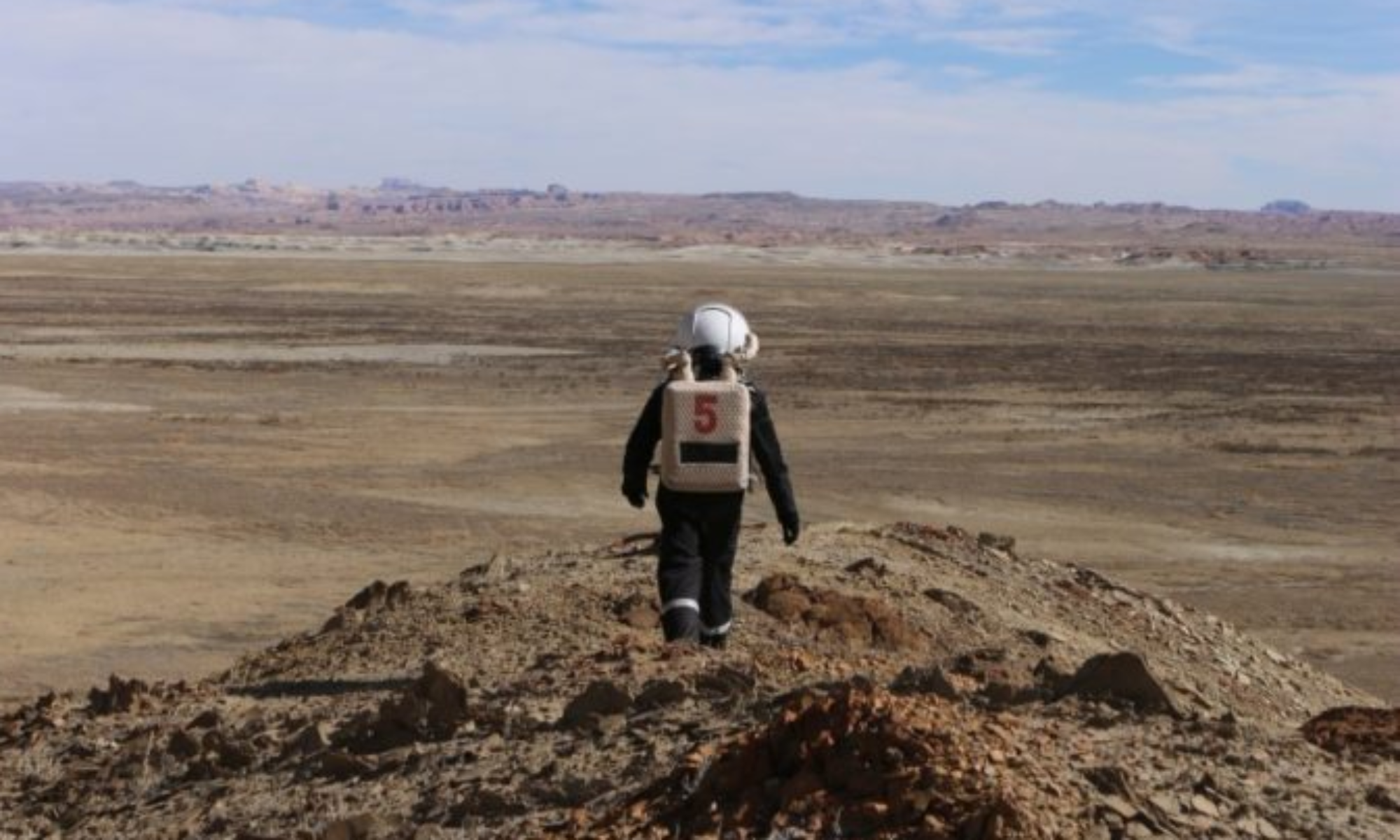
Crew 333 – The Final Chapter: Farewell, Red Planet
This experience has taught us a great deal. First and foremost, we learned the discipline that comes with rigorous reporting, carefully observing our environment, discussing challenges as a team, resolving issues together, and taking the time each day to truly understand one another’s work.
Beyond that, we learned a tremendous amount about ourselves. Being isolated as a group of six in a confined space with limited resources brings you back to something very fundamental, the core needs of human beings. Each of us had the opportunity to grow, to understand one another more deeply, and to discover our own limits.
We also gained a genuine appreciation for what life in space truly entails. Living in a reduced environment gave us a much closer perspective on the reality astronauts face every day. But above all, what we take away from this experience are the bonds we built with one another. We laughed, we cried, we shared stories and moments of pure joy.
In short, this is an experience that will stay with us forever.
Experiments:
This section outlines the progress of the research projects conducted by the crew during our mission.
Zahraa Al-bayati (Health and Safety Officer):
During this MDRS mission, I conducted a speech and language pathology experiment entitled:
“Verbal Communication and Adaptive Strategies in Extreme Confinement: Contribution of Speech and Language Pathology in a Simulated Martian Mission.”
The objective of this study was to investigate how verbal communication evolves during extreme confinement and isolation conditions similar to a simulated Mars mission. Five crew members participated in the study. Data were collected at multiple time points during the mission using:
phonemic verbal fluency tasks
semantic verbal fluency tasks
open-ended communication questions
These measures allowed the analysis of several communication variables, including: verbal fluency; speech rate; pauses and hesitations; discourse organization; clarity of explanations; adaptive communication strategies.
Overall, the results suggest that communication patterns evolved over the course of the mission. Changes were observed in verbal fluency, speech organization, and the use of adaptive strategies. Several crew members demonstrated increased efficiency in communication, including more concise explanations and improved task-oriented discourse. In some cases, mild reductions in lexical fluency were observed, possibly related to cognitive load, fatigue, or confinement effects. Additionally, participants appeared to develop adaptive communication behaviors, such as simplifying explanations, using more direct language, and improving shared understanding during mission-related interactions.
This experiment highlights the relevance of speech and language pathology in extreme environments. Monitoring communication changes during confinement may help optimize crew performance, reduce misunderstandings, and support psychological and operational functioning in future analog and space missions.
Matthias De Groote (GreenHab Officer):
The experiment conducted aimed to evaluate the impact of different soil compositions, including Martian regolith simulant and Utah desert soil, on tomato seed germination. Understanding how plants respond to extraterrestrial or extreme terrestrial substrates is essential for the development of sustainable agriculture systems in future space missions, particularly in Martian environments. Since substrate composition directly influences water retention and nutrient availability, assessing plant responses under these conditions is crucial.
Tomato seeds were selected as a model due to their rapid germination and sensitivity to environmental conditions. The experiment investigated how varying proportions of potting soil, Martian soil simulant, and Utah desert soil affected germination rate and timing.
The experimental setup consisted of six different substrate conditions, each duplicated in two pots, resulting in a total of twelve pots. Each pot was filled with a substrate mixture prepared based on mass to ensure consistency, while maintaining a similar volume across all pots (approximately 2 cm below the rim) due to differences in bulk density between substrates.
The six conditions were defined as follows:
Condition 1 (control): 100% potting soil
Condition 2: 25% potting soil, 75% Martian soil
Condition 3: 10% potting soil, 90% Martian soil
Condition 4: 25% potting soil, 75% Utah desert soil
Condition 5: 100% Martian soil
Condition 6: 100% Utah desert soil
For each pot, 25 mL of water was added and thoroughly mixed with the substrate to ensure homogeneous moisture distribution and prevent water accumulation at the surface. Ten tomato seeds were then evenly distributed in each pot.
To control environmental conditions and limit excessive evaporation, each pot was covered with plastic film and placed inside a white bag. The seeds were sprayed with water regularly and monitored daily until germination occurred. Water was supplied by daily spraying throughout the experiment, and an additional watering of 100 mL per pot was performed on day 6 in response to the difficulties encountered in maintaining sufficient humidity within the substrates.
Germination began to be observed from day 8. The development of the seedlings was then monitored daily until day 12, at which point the germination rate was determined for each pot. While differences in germination rates appeared between the Martian soil, the Utah desert soil, and the potting soil, it remains difficult at this stage to establish clear trends.
Further statistical analyses will be required to assess the significance of these differences and to better understand the impact of substrate composition on seed germination.
Due to the relatively late onset of germination, the experiment could not be extended to the plant growth phase. As a result, no measurements of shoot or root development were performed.
This experiment nevertheless provides preliminary insights into the ability of tomato seeds to germinate in Martian-like and extreme terrestrial substrates, contributing to our understanding of plant establishment under constrained environmental conditions and informing future research on extraterrestrial agriculture.
Joanna Galloway (Crew Journalist):
This experiment investigated the precision of astronauts’ hand gestures in simulated space conditions. Prior to the simulation phase, each participant was asked to sit and replicate eight predefined gestures presented in a video. Their hand movements were recorded using a Tap Strap device, which captures motion and spatial positioning data. This baseline measurement established a reference for comparison with subsequent trials conducted under varying environmental constraints.
During the simulation, participants repeated the same set of gestures under three distinct conditions. The first trial took place inside the science dome on Sol 3. The second was conducted outdoors on Sol 8 using light equipment, and the third on Sol 9 with heavier equipment. These conditions were designed to evaluate the effects of fatigue and glove bulk on gesture precision, with particular attention to how increased physical strain and reduced dexterity might alter movement accuracy.
With the simulation phase now complete, all participants will be asked to perform the gesture sequence once more after returning to baseline conditions. The full dataset, including pre-simulation, in-simulation, and post-simulation measurements, will then be analyzed to assess changes in movement precision and to better understand the impact of environmental and equipment-related factors on fine motor performance.
Matias Ballivian (Crew Astronomer):
As the mission concludes, I reflect on the progress made in both astronomical observations and radio communication research.
On the astronomy side, I continued nightly imaging sessions, taking advantage of the reduced atmospheric density and favorable observing conditions. Over the course of the mission, I successfully captured several high-quality images that represent a clear improvement from the beginning of the rotation. These results demonstrate a better understanding of imaging techniques, including exposure control, tracking, and target selection.
However, I recognize that image acquisition is only part of the process. I am particularly motivated to further develop my post-processing skills, as this remains a key area for improvement. Enhancing my ability to process and refine raw data will be essential to reaching the level of quality I aim for in future missions.
Regarding telecommunications research, I focused on evaluating passive methods to enhance radio communication range during EVA without increasing transmitter power consumption. The two methods investigated were the use of a reflective surface and a tuned loop resonator.
Throughout the mission, I conducted a series of short-range tests to better understand signal behavior in this environment, followed by initial longer-range evaluations. While the experimental setups functioned as intended, the results indicate that both methods primarily improve signal clarity when the transmission is already above the intelligibility threshold. In other words, they enhance signal quality rather than extending the effective communication range. No significant increase in maximum transmission distance was observed.
Further analysis of the collected data is still required to quantify these effects more precisely. Nonetheless, the findings provide useful insight into the limitations and potential applications of passive signal enhancement techniques in EVA scenarios.
Antoine Dubois (Executive Officer / Crew Engineer):
At the end of the mission, my experiment on terrain perception in a Martian analogue environment has been successfully completed. Data collection was carried out across five distinct sites: Compass Rock, Sea of Shells, Green Mars View, Kissing Camel Ridge, and Candor Chasma. Each location was analyzed both through human observation during EVA and via drone-based imagery, allowing for a comprehensive comparison of perspectives.
All planned datasets have been acquired. I now have both the drone imagery and the qualitative assessments from EVA crew members for each site. The next step will consist of a detailed analysis of these data to better understand the differences in perception, particularly in terms of terrain readability, obstacle identification, and geomorphological interpretation.
Preliminary observations already highlight the clear value of combining both approaches. The drone provides a broader spatial understanding and reveals large-scale structures that are sometimes difficult to perceive from the ground, while EVA observations offer finer, more detailed insights into surface features and textures.
This dual approach appears to be highly complementary and reinforces the importance of integrating both human and robotic perspectives for future planetary exploration. Further analysis will aim to quantify these differences and assess how they can contribute to improving navigation, safety, and scientific efficiency in Martian environments.
Marie Jansen (Crew Commander):
In line with the theoretical framework established by Kass et al. (2010) and the Thomas-Kilmann Conflict Mode Instrument, this study aimed to explore how conflict management strategies evolve over the course of a long-duration simulation in isolation and confinement.
At this stage, I am still unable to access or analyze the collected data, as doing so during the mission could introduce bias, given my dual role as both researcher and participant. A full analysis will therefore only be conducted after the completion of the simulation.
Nevertheless, some personal observations can be noted regarding the final phase of the mission. Around Sol 8–9, an increase in interpersonal tensions was perceptible within the crew. However, these tensions did not escalate into persistent conflict, as open discussion and communication appeared to play a key role in easing the situation. This suggests that, despite moments of strain, the crew retained the ability to regulate conflict through dialogue.
Overall, while a comprehensive interpretation of the results remains pending, these observations hint at a dynamic process in which tensions may intensify over time but can still be mitigated through collective communication strategies. A deeper analysis will be necessary to confirm these preliminary impressions once access to the full dataset is possible.