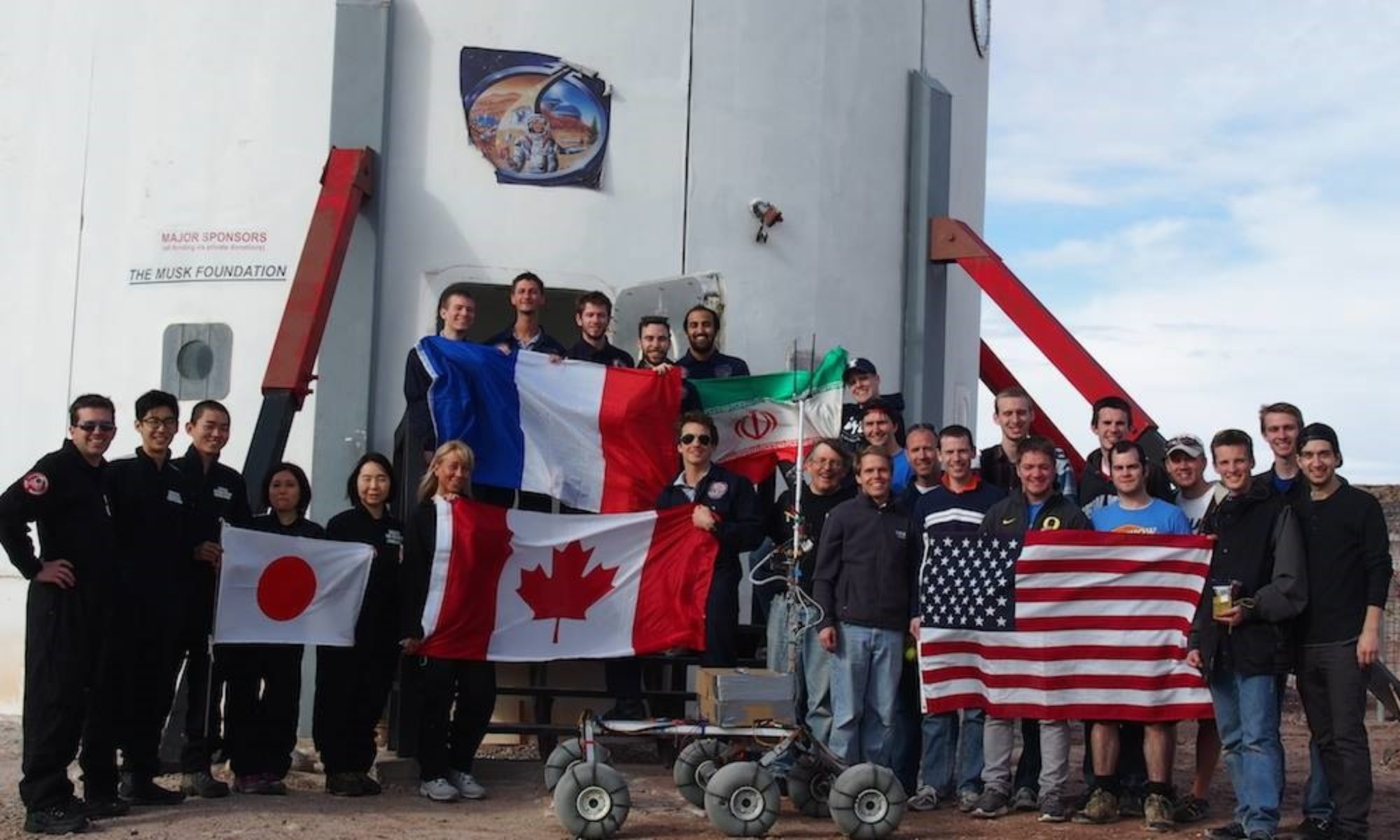

Sol: 1
Summary Title: Arrival on Mars
Author’s name: Andrew Wheeler
Mission Status: Nominal
Sol Activity Summary: Training for sim was all but complete. Instruction for operating rovers was given by mid morning and, after a final crew expedition to the top of Hab Ridge to identify Devil’s Toenails, Crew 291 entered sim at midday and prepared for life on Mars for the next two weeks. Utilizing the skills just learned, Alex, Clare and Rob headed off to Marble Ritual in Spirit and Opportunity to familiarize themselves with the constrictions of space suits in field operations. After an hour and a half, it was Scott, Steve and Andrew’s turn in Curiosity and Perseverance, to experience the joys of EVA with a backpack and helmet. All agreed it was the most fun they had all day.
Look Ahead Plan: Weather dependent, tomorrow will see the deployment of various sensors and initial testing of the rover outside the hab.
Anomalies in work: Nothing to report.
Weather: Low heavy cloud but not threatening rain or snow. Temperature increasing to high single digits Celsius and humidity dropping from 90% to 75% during the day. Faint to no wind.
Crew Physical Status: nominal
EVA 1 with Alex, Clare and Rob to Marble Ritual in Spirit and Opportunity, then EVA 2 with Scott, Steve and Andrew to Marble Ritual in Curiosity and Perseverance.
Reports to be filed: Sol Summary, Journalist Report, Greenhab Report, Operations Report, EVA report, EVA Request(s)
Support Requested: Nothing to request.
Operations Report – January 22nd
SOL: 1 (from 12:00)
Name of person filing report: Scott Dorrington
Non-nominal systems: Greenhab heater
Notes on non-nominal systems: Supplemental floor space heater used in evenings
ROVERS EVA #1
Spirit rover used:
Hours: 242.3
Beginning charge: 100%
Ending charge: 73%
Currently charging: No
Opportunity rover used:
Hours: 156.2
Beginning charge: 76%
Ending charge:
Currently charging: No
Curiosity rover used: Not used
Perseverance rover used: Not used
ROVERS EVA #2
Curiosity rover used:
Hours: 264.4
Beginning charge: 80%
Ending charge: 63%
Currently charging: No
Perseverance rover used:
Hours: 282.2
Beginning charge: 69%
Ending charge: 52%
Currently charging: No
Spirit rover used: Not used
Opportunity rover used: Not used
General notes on rovers:
Rob Hunt in Spirit, as single driver on first EVA – ingress and egress difficulties causing potential damage to rover mirror and potentially to rover.
Summary of Hab operations: put notes here
WATER USE: ??? gallons (no reference
Water (static tank): 448.7 gallons (depth 7.75 in)
Static tank pipe heater (on or off): on
Static tank heater (On or off): on
Toilet tank emptied: yes
Summary of internet: Nominal during comms window
Summary of suits and radios:
Rob Hunt reports the mall stainless steel cables that connect suit collars to frames wobble loose and would either need replacing or a swaging tool to repair each time.
Summary of GreenHab operations: put notes here
WATER USE: 5 gallons
Heater: Off
Supplemental light: Off
Harvest: None
Summary of ScienceDome operations: None
Dual split: Nominal
Summary of RAM operations:
Used tape measure for water measurement
Used pliers and blade knife to attempt repair of stainless steel cable for suit collar.
Took one new stainless steel cable from store, to replace suit collar connector
Took remains of roll of 50mm yellow fabric tape and attached in stripe pattern to Hab stair balustrade.
Summary of any observatory issues: Musk Observatory not yet used
Summary of health and safety issues: Rob Hunt used last of a roll of 50mm yellow fabric tape from RAM and attached in stripe pattern to Hab stair balustrade.
Questions, concerns and requests to Mission Support: None
Journalist Report – January 22nd
A rocky start
So begin the chronicles of Crew 291: the largest Australian cohort ever deployed to the MDRS, comprising Andrew Wheeler (commander), Steve Hobbs, Rob Hunt, Clare Fletcher, Scott Dorrington, and Alexander Tobal.
We arrived at the MDRS the night of Saturday 20 Jan 2024 – believing ourselves late, but actually a day early. This was a nice surprise for us but a lousy one for Sergii at Mission Control, who nevertheless came out to show us around the habitat and to our quarters. It’s fair to say that the facility exceeded expectations, with its domed, utilitarian architecture immediately immersing us in a Martian mindset. Andrew, aka “Commandrew”, demonstrated his humility and nobility of leadership by sacrificing the commander’s room (with its own porthole!) to a certain crew journalist.
Having arrived in darkness, the Martian terrain had hitherto been shrouded from us. However, dawn revealed the true spectacle of our surrounds: a vast, primordial, alien landscape of ruddy plains and slopes, set against monolithic cliffs, ridges and plateaus featuring spectacular strata and defining the horizon in every direction. Stones and boulders of every shape, size and colour littered the ground, or jutted from larger formations to give them otherworldly silhouettes. The rock nerds in our crew (that is to say, all of us now) were fascinated by the surreal geomorphology and spent our first morning taking photographs.
On Sunday the 21st we began our induction. Sergii led us through comms and EVA procedures, including a demonstration of the station’s impressive EVA suits. This was followed on the morning of Monday the 22nd by rover training. We spent some additional time climbing Hab Ridge and exploring the enormous plain beyond (and its sea of interesting fossils and minerals), bordered to the west by the imposing Skyline Rim.
This was our last chance to do so as carefree visitors… because from exactly 12:00 hours local time on the 22nd, we were ‘in sim’ – i.e., under conditions intended to simulate the lived experience of being on Mars. No contact with the outside world, barring a two-hour comms window from 19:00-21:00. No excursions from the habitat without appropriate EVA gear and a 5-minute stint in the airlock (upon both exit and entry). It was time to look, think and act like Martians.
Our EVAs began almost immediately with a pair of back-to-back, three-person, ninety-minute EVA training excursions. Both teams followed similar routes to nearby ‘Marble Ritual’, in rovers and on foot, to test suit ergonomics and comms (and to further explore and document the terrain). Barring a few minor technical hiccups, primarily in regards to our comms equipment, these excursions went smoothly and successfully.
These technical successes are not what the crew will remember from our first EVAs however. Rather, we will remember the sheer adventure of it all – the sense of childlike glee that overcame even the most stoic and professional members of the crew as, for ninety minutes apiece, we fulfilled our dreams of becoming Martians.
The final revelation of the day was something far less expected – that dehydrated fruit (i.e., strawberries and blueberries, NOT rehydrated) would become our biggest vice. That stuff is mana.
Highlights of the day: EVAs (and rover roving fun), fossil-spotting on Hab Ridge, dehydrated fruit, Scotty’s ‘meteor-wrong’ pun, Steve’s spectrometer worked flawlessly, general awe.
Lowlights of the day: Spider removal, Rob’s hilltop dancing, emptying the toilet holding tank, jetlag, an unnamed crewmember’s glasses now belong to Mars.
Sol 2 awaits.
– Alexander Tobal, Crew 291
GreenHab Report – January 22nd
GreenHab Officer: Scott Dorrington
Environmental control: heater off (broken), fan off, door closed
Average temperatures:
10:02: 57.6 F, 75%
13:00: 71.4 F, 65%
16:27: 60.6 F, 54%
17:00: 56.7 F, 62%
18:22: 49.5 F, 77% (space heater turned on)
19:07: 51.1 F, 84%
Hours of supplemental light: 0 hrs (inside hab previous night)
Daily water usage for crops: 5 gallons
Daily water usage for research and/or other purposes: 0 gallons
Water in Blue Tank (200 gallon capacity): 180 gallons (starting from ~185 gallons)
Time(s) of watering for crops: 12:00 mist, 16:30 water + mist
Changes to crops: None
Narrative:
Today was the first official sol as greenhab officer, however duties started the previous day during our induction. Prior to our arrival during the changeover from previous crew, we learned that the greenhab heater is non-operational. The majority of plants were moved into the first level of the hab, taking up space around the engineering airlock and next to the EVA comms. The plants spent the whole night and next sol (sol 0) in the hab, with artificial light. I gave my first watering in the evening of sol 0, using 2 gallons. I tried to minimize water leakage onto the floor of the hab, cleaning up any puddles with paper towels. At midday on sol 1, I commenced the migration of plants back to the greenhab. I aimed to judge how long it would take, so as to decide if I want to continue to move them back and forth from greenhab to hab every sol until the heater is fixed. I started with the tomatoes, moving 6 plants into the engineering airlock, out into the tunnels before sealing the airlock. I then shuttled the plants to the greenhab door, then inside. This was followed by a second trip to move the remaining 6 tomato plants. Transporting the tomatoes took around 30 minutes. Once all in, I gave the tomatoes a good misting and inspection. Tomato #9 was looking a little sadder than the rest, with smaller leaves and not so many fruits. I noticed this plant was close to the hab gas heater the first night, so may have had some heat stress.
The Great Plant Migration was interrupted by our scheduled training EVA to Marble Ritual, and was recommenced at 4:30 pm with cucumbers and remaining plants. This was done in one trip through the airlock. I then did my first watering, giving 5 gallons between all the plants. I experimented with several of the watering cans to find one that I liked. In the evening, I visited the greenhab a few times to log temperatures, and turned on the floor space heater around 6pm. I checked an hour later and the temperature had gone up slightly. I will keep monitoring temperatures this evening and might migrate the plants back into the hab if the temperature is too cold. During some quick research during comms window, I found advise to keep tomatoes above 55 F to avoid blossom drop. Back in the hab while writing reports, I found a little spider crawling around in the games cupboard. After discussing with crew how we would respond on Mars, it was decided to relocate the “Spider on Mars” to the greenhab. He is now enjoying his new environment amongst the red cabbages.
Harvest: None
Support/supplies needed: Advice on status of the hab heater. Also, any recommendations re daily migrating plants between greenhab and hab until the heater is fixed.
EVA Report – January 22nd
EVA # 1
Author: Clare Fletcher
Purpose of EVA: Training EVA to Marble Ritual to test EVA suits, comms, mobility, driving.
Start time: 1200
End time: 1330
Narrative: At 1200 our sim began with Rob, Clare, and Alex undertaking the first EVA. We were a bit like kids in a candy store and were both overwhelmed and enthusiastic about stepping foot onto Mars for the first time. We already had a comms issue as Alex came over faint on the radio, but as we could hear him and Mission Control could too, we decided to proceed with the EVA. At Marble Ritual we tested our dexterity by trying to pick up rocks that were in baskets over head height and then by climbing up some hills. We went up to a ridge behind the alligator shaped rock (as Aussies, we want to dub it ‘crocodile rock’). We took a few photos as well as taking some geology field drawings, though kept having to stop as we had other comms issues occurring (we’ve learned a lot about how to secure our headsets better).
Destination: Marble Ritual N518750, E4250900
Coordinates (use UTM WGS 84): N518750, E4250900
Participants: Rob Hunt, Clare Fletcher, Alexander Tobal
Road(s) and routes per MDRS Map: Cow Dung Rd 0110
Mode of travel: Spirit and Opportunity, some walking
Mission Plan – January 21st
Crew 291 – Expedition Boomerang III
Jan 21st – Feb 3rd, 2024
Crew Members:
Commander: Andrew Wheeler
Health and Safety Officer: Steve Hobbs
Crew Scientist: Clare Fletcher
Crew Engineer and Green Hab Officer: Scott Dorrington
Crew Astronomer and Medical support: Rob Hunt
Crew Journalist: Alex Tobal
Mission Plan:
Expedition Boomerang 3 is an all Australian crew tasked with exposing a new generation of scientists, engineers, technicians and communicators to Mars analogue conditions. Procedures and techniques for surface operations will be investigated through the deployment of a variety of environmental, topographical and spectral sensors at a variety of distances from MDRS. Simultaneously, geological features will be visited to update their co-ordinates and, along with hardware associated with MDRS, inspected for preservation as historical objects/locations. Utilization of the solar observatory for monitoring of solar activity (weather dependent) will be undertaken and all activities documented to record difficulties encountered, solutions determined and improvements recommended so as to inform a Mars Society Australia design for analogue habitat.
Crew Projects:
Title: Geological mapping and sensor deploy
Investigators: Andrew Wheeler, Clare Fletcher, Steve Hobbs and Scott Dorrington, with full-crew participation
Objectives: The mission objectives are to revisit geologically interesting locations, deploy sensors to characterize mineralogy, locate them in the topography for navigation purposes and characterize the sites for preservation.
Description: Environmental sensors will initially be deployed within the immediate vicinity of the MDRS complex to allow calibration of the instruments. These will be later relocated to more remote sites of geological interest. Simultaneously, various means of navigation using topographic features will be investigated. Locations already recorded in GPS will be revisited with further investigation of the historical significance, preservation state and conservation strategies.
Rationale: Environmental monitoring at locations of significance for ISRU on Mars is vital for surface operations. Machinery can be affected by temperatures, dust levels and incoming radiation and the effectiveness of sensors for these roles need testing in analogue situations.
EVAs: A minimum of 4 EVAs are required, with more targeted.
Title: Monitoring Solar activity
Author: Rob Hunt
Objectives: The MDRS solar observatory will be utilized for the daily monitoring of solar activity.
Description: Daily observations of solar activity will be undertaken throughout each sol to record the surface conditions of the sun.
Rationale: With the sun entering a period of solar maximum, daily observations of solar activity are vital to satellite and surface operations on Mars.
EVAs: None required.
Title: Investigations for establishment of MARS-Oz in Australia.
Author: Alexander Tobal
Objectives: This project is focused on collecting observations of how analogue astronauts operate under simulated conditions and how the MDRS hab setout influences operations and if improvements can be incorporated into the MARS-Oz design.
Description: Using observations and descriptions of procedures and techniques, conclusions for improvements in habitat design can be made.
Rationale: MDRS is a first generation analogue design that can inform construction of the proposed MARS-Oz habitat.
EVAs: Not required.
Crew 291 Bios, Photos, Mission Patch – January 21st
Crew 291 – Expedition Boomerang 3
Jan 21 – Feb 3, 2024
Crew Members:
Commander: Andrew Wheeler
Health and Safety Officer: Steven Hobbs
Green Hab Officer & Crew Engineer: Scott Dorrington
Crew Astronomer: Rob Hunt
Crew Scientist: Clare Fletcher
Crew Journalist: Alexander Tobal

Andrew Wheeler (Commander): Andrew is a senior geologist for a geology, surveying, and engineering consultancy, supervising exploratory drilling programs and mentoring graduate and junior geologists on site. He has also served in similar roles in projects around the world. Andrew has served as a member for Crew 214 and 215 at the Mars Desert Research Station in Utah in 2019, commanding 215. He also led an expedition to FMARS in July 2023. He will serve as commander for Crew 291 at MDRS in early 2024. He has a B App Sci in Applied Geology (QIT Queensland Australia), Post Graduate Diplomas in Science (Earth Science) and Education (UQ Queensland Australia), and collaborates in research into Martian geology.
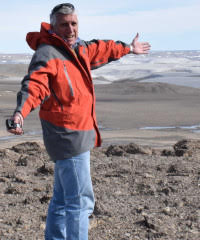
Steven Hobbs (Health and Safety Officer): Dr Steven Hobbs has a Master’s in Space Systems Engineering with a focus of developing hyperspectral sensors for deep space applications. Coupled with his PhD in Geographic Information Systems and Remote Sensing, he has actively researched Martian geomorphology, Earth-based analogues and surface processes. Additionally, Steven is investigating the utility of low-cost sensors and robotics, testing them in near-space environments, to inform the next generation of Moon and Mars exploration. This research has included trials of sensors in near-space, with high-altitude balloon flight performance comparing favourably with on-orbit sensors. Steven is a member of Mars Society Australia and has published three books. He is currently authoring a book on Martian remote sensing.
Scott Dorrington (Green Hab Officer & Crew Engineer): Scott Dorrington is a postdoctoral researcher with interests in astrodynamics, space mission design, space resource utilization, and space sustainability. He is currently a postdoctoral researcher in the Space Enabled group at the MIT Media Lab, working on the development and implementation of the Space Sustainability Rating. He is also involved with experimental design and operations planning of spaceflight hardware projects, having deployed microgravity experiments on suborbital launches, and passive sensors on a lunar rover. He is also involved with the Zero Robotics program, helping high school students develop code to control the Astrobee free-flying robot on the International Space Station.
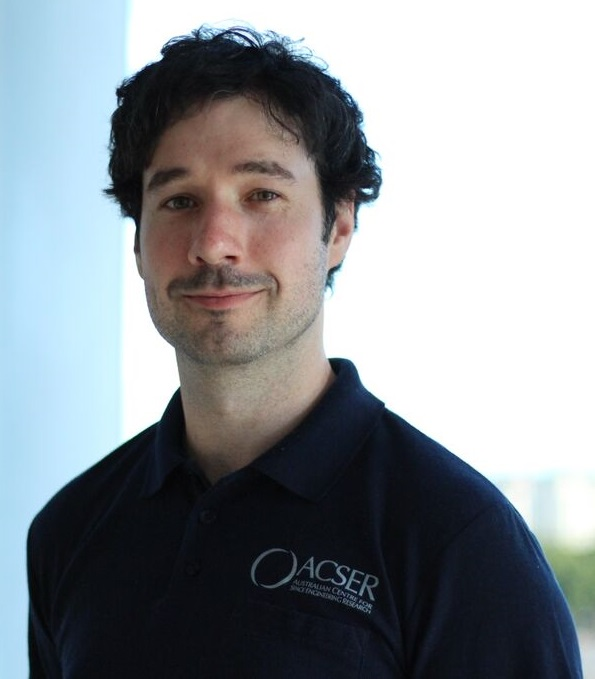
Rob Hunt (Crew Astronomer): Rob is a translational scientist who is broadly skilled, educated and experienced in a range of fields and endeavours. With backgrounds in biology, astronomy, space science, scientific research, agriculture, land use, teaching, construction, food production, swimming teaching, SCUBA diving, and genealogy, he most enjoys the discovery of new, and dissemination of existing, knowledge. He conducts a small astronomy/space outreach business, travelling regional and urban Australia to deliver hands-on stargazing and rocketry events to schools, isolated communities and private groups. For nearly three decades, Rob lived off-grid amongst 30m tall eucalypts in the highlands of SE Australia. He designed, drafted plans, and built an energy-efficient adobe home with small hobby farm, fabricating and installing all facets of the project including utilities. He has decades of experience as a stay-at-home parent in this off-grid environment. As resource and logistics person, Rob has also travelled overland from Johannesburg to London. Rob’s first expedition to MDRS is as Crew Astronomer and Medical Support. He was looking forward to operating the Musk Observatory’s solar telescope to capture images of solar activity however inclement weather now dictate that Rob uses his time to improve the productivity of other team members’ programs, and their experience at MDRS by providing logistical, domestic, manual, and technical support for the full range of team activities.
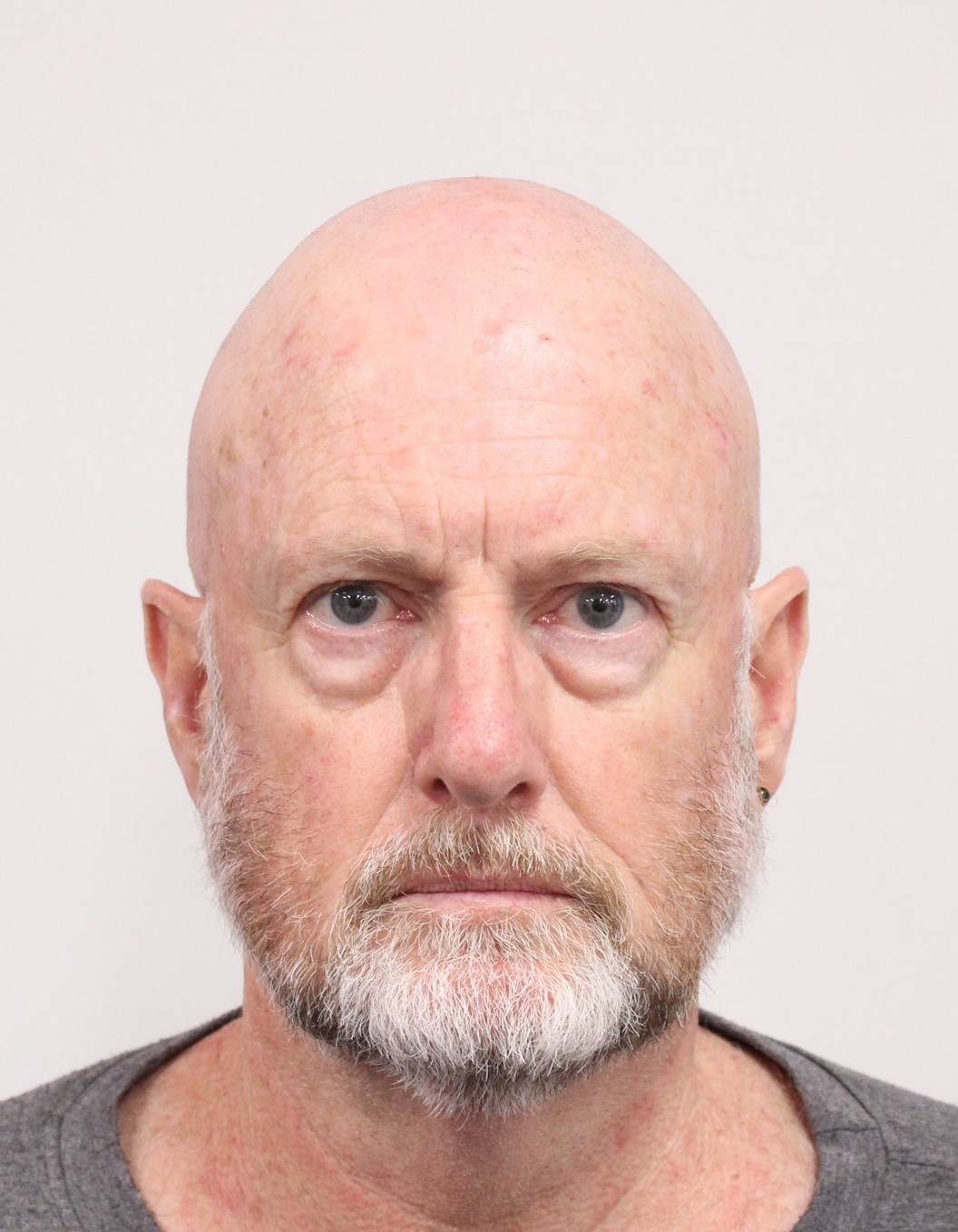
Clare Fletcher (Crew Scientist): Clare Fletcher (they/she) is a PhD candidate at the University of New South Wales’s Australian Centre for Astrobiology in Sydney, Australia. Their PhD focuses on exogeoconservation of Mars – understanding important geological sites and features, particularly potential evidence of life and palaeoenvironments, and how we can best protect them while allowing continued exploration of Mars. Clare has previously completed an MPhil which focused on creating a roadmap for the geoconservation of the oldest evidence of life on Earth – 3.5 Gya stromatolite fossils in the Pilbara region of Western Australia, which have been studied by space agencies in preparation for Mars missions such as Mars2020 Perseverance. Clare is a member of the Mars Society of Australia, the Australian Centre for Astrobiology, and the IAA Moon Farside Protection Permanent Committee. They have worked as a writer for SpaceAustralia.com and helped run social media accounts for the Australian Centre for Astrobiology. Clare has presented their work at the UN COPUOS Legal Subcommittee Meeting in 2023 and at various conferences across Australia. Clare also teaches courses in astrobiology and science communication, as well as various earth and environmental sciences courses, at the University of New South Wales.
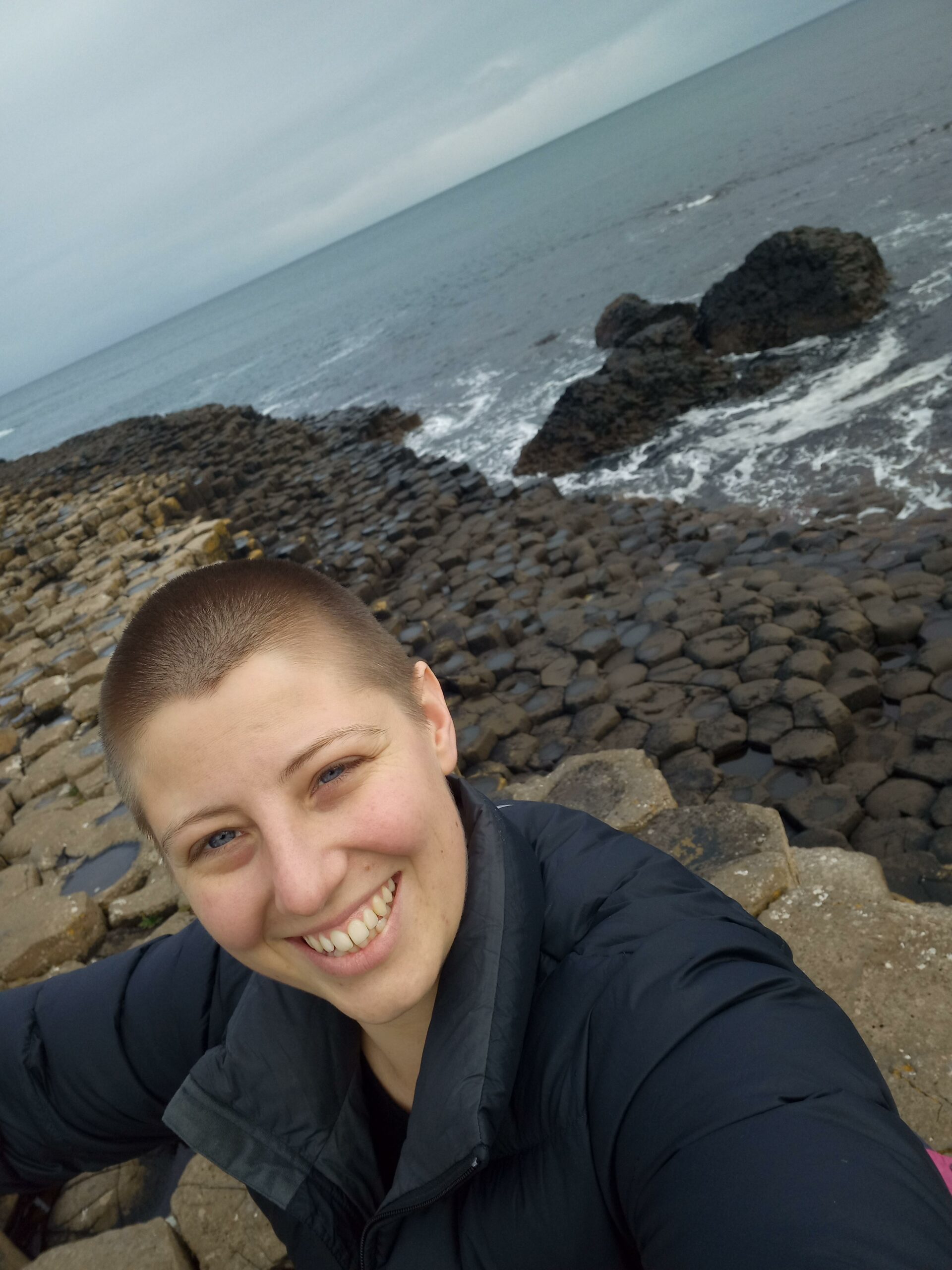
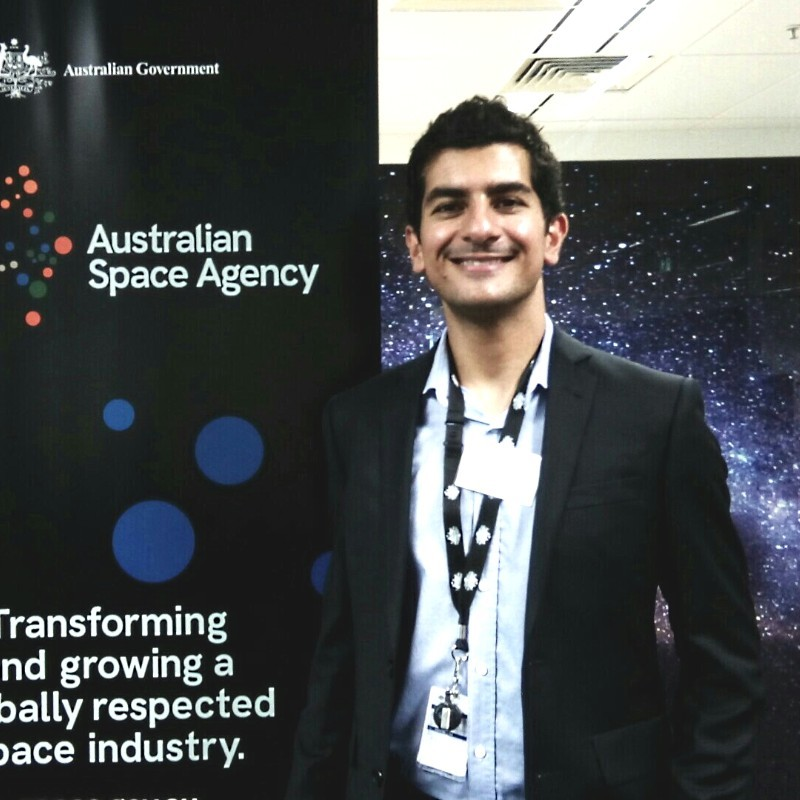
Alexander Tobal (Crew Journalist): Alexander is a Mars Society Australia director and Australian public servant with a background in biology and biomedical science. His current job role involves the design of strategic foresight techniques to help government departments ‘future-proof’ their activities, and he has previously worked for groups like the Australian Space Agency and the Office of the Chief Scientist. Alexander aspires to become a successful science fiction author and/or interplanetary nomad (both seem equally likely). In the meantime, as crew journalist, he plans to collect feedback that will inform the design and construction of a Mars analogue facility in Australia.
HSO beginning of the mission checklist – January 21st
HSO BEGINNING OF MISSION CHECKLIST 2023-2024
Submitted by: Steven Hobbs
Crew: 291
Date: 21 Jan 2024
Part 1: Using the attached Safety Equipment Inventory, locate, test and confirm operation of all safety equipment. List any equipment not found and/or missing:
Part 2: Locate and confirm the emergency escape routes in the Hab are functional and clear:
-
Stairs: Confirm
-
Emergency window: Confirm
-
Commander’s window: Confirm
Part Three:
Inventory First Aid kit and note what needs to be refilled:
Neomycin antibiotics 6 (4 used)
First aid burn cream 8 (2 used)
Plastic bandages 8 (17 used)
Ibuprofen 23 (27 used)
Heartrate monitor, Pulse oximeter and forehead temperature thermometer checked ok.
Note any safety issues: Nil
Note any health/environmental issues: Dead batteries in lanterns in RAM
Note any missing or recommended health and safety supplies: Nil
Safety Equipment Inventory
|
HAB Upper deck |
HAB Lower deck |
RAM |
GreenHab |
ScienceDome |
Rovers |
|
|
CO monitor |
OK |
OK |
OK |
OK |
OK |
|
|
Escape ladder |
OK |
|||||
|
Eyewash |
OK |
|||||
|
Fire blanket |
OK |
OK |
OK |
|||
|
Fire extinguisher |
OK |
OK |
OK |
OK |
OK |
|
|
First Aid |
OK |
OK |
||||
|
Intercom |
OK |
OK |
OK |
OK |
||
|
Nightlight |
OK |
OK |
||||
|
Propane alarm |
OK |
OK |
||||
|
Radios (Channels 10 and 22) |
OK |
OK |
OK |
OK |
OK |
|
|
Smoke alarm |
OK |
OK |
OK |
OK |
OK |
|
|
Tow rope |
OK |
Supplemental Operations Report – January 21st
Date: 1/21/2024
Name of person filing report: Sergii Iakymov
Reason for Report: Routine
Non-Nominal Systems: Perseverance rear view mirror, Crew car, GreenHab heater
Power system:
Solar: Nominal.
SOC Last 24 hours: Max 47%; Min 23%; Avg 38.2%.
VDC Last 24 hours: Max 54.22V; Min 41.8; Avg 47.47V.
Generator run time: 4775.1 hours.
Propane Readings:
Station Tank: 70%
Director Tank: 70%
Intern Tank: 87%
Generator Tank: 58%
Water:
Hab Static Tank – 530 gallons
GreenHab – 185 gallons
Outpost tank – 400 gallons
Science Dome – 0 gallons
Septic Tanks emptied: No
Rovers:
Sojourner rover used: No.
Hours: 196.2
Beginning Charge: 100 %
Ending Charge: 100 %
Currently Charging: Yes
Notes on Rovers: Perseverance parking brake non-functional and rear-view mirror cracked.
ATV: ATV’s Used: None. Nothing to report.
Cars:
Hab Car used and why, where: To Hanksville for supplies. Need to be serviced.
Crew Car used and why, where: To Grand Junction and back
General notes and comments: Crew car water pump replaced and oil changed.
Summary of Internet: All nominal.
EVA suits and radios:
Suits: All nominal
Comms: All nominal
Campus wide inspection, if action taken, what and why: All nominal.
Summary of Hab Operations: UV lamp in water filter needs to be replaced. Pending.
Summary of GreenHab Operations: Heater is broken and new parts have been ordered.
Summary of SciDome Operations: All nominal
Summary of Observatories Operations: Weather stripping repair in robotic observatory is pending.
Summary of RAM Operations: All nominal.
Summary of Outpost Operations: Intern trailer heater needs to be picked up from Grand Junction.
Summary of Health and Safety Issues: All nominal.
Journalist Report – January 15th
Journalist Report
Nicole Chan, Crew 290 Journalist
01.15.2024
Sol 8
Today we got back into our normal routine. With an EVA planned this afternoon, the crew started the day with some slices of bread from yesterday. We all remarked that it was a bit more moist than previous iterations, making the bread softer and nicer to eat. With some raspberry jam and peanut butter, the crew had a wonderful breakfast and got to work. Rebecca (Chopper) began transferring knowledge of the pH meter from yesterday’s ScienceDome session. Madelyn (Melon) used the time to check geological guides for suitable sampling sites around the region of Kissing Camel Ridge, the destination of today’s EVA.
The crew suited up around 1200 and went on a rover ride to the Ridge. We all had fun donning our new and improved flight suits with our Project MADMEN mission patches! (It was a great bonding activity and yet another first for me which was super exciting.) They noted plenty of worthy sites to sample on the way there, so they made notes to CAPCOM, which is managed by Anna (Roots). Many pictures of hills with multicolored layers of deposits followed. As they settled on a site, the EVA crew, Melon, Anja (Freebee), and Ben (Funk), began the multi-step site processing. Melon and Funk focused on collecting soil samples and taking various measurements at the site (pH, temperature, ATP, etc.). Freebee collected more radar samples of interesting terrain with REMI. After returning to the Hab, Chopper went to the ScienceDome to process those samples to keep the data consistent.
Today also saw the continuation of Roots’ study of the crew’s glove dexterity. We were tasked with grabbing and changing our hold on various small objects (washers, nuts, caps, and screws) with and without gloves. Additionally, we also tied and untied a series of knots. It was a fun challenge and we’re all glad to participate in the study for Roots. The most impressive factor is that she had developed the protocols for this study (as well as the materials to carry out the tests) all during our rotation. Talk about resourcefulness! We look forward to the results from this dexterity study. Our frustrations during the tests also informed us of possible changes to our EVA equipment and gear to make the manual manipulation more efficient.
We all enjoy getting back into the groove of things at the station. Although our days are busy and sometimes tiring, we work productively and wind down in team-bonding activities at night. Speaking of, we had a great time learning more about each other during last night’s powerpoint presentations. We covered a span of topics and had many laughs. I look forward to more of these night time conversations as we come closer together as a crew.
Photo of the Day: 290-01_15_2024 science rocks.JPG
You must be logged in to post a comment.