
Sol Summary – April 9th

Crew 314 Sol Summary Report 09-04-2025

Sol: 09-04-2025

Summary Title: Getting into a rhythm

Author’s name: Arnaud de Wergifosse (crew executive officer)

Mission Status: ongoing

Sol Activity Summary:

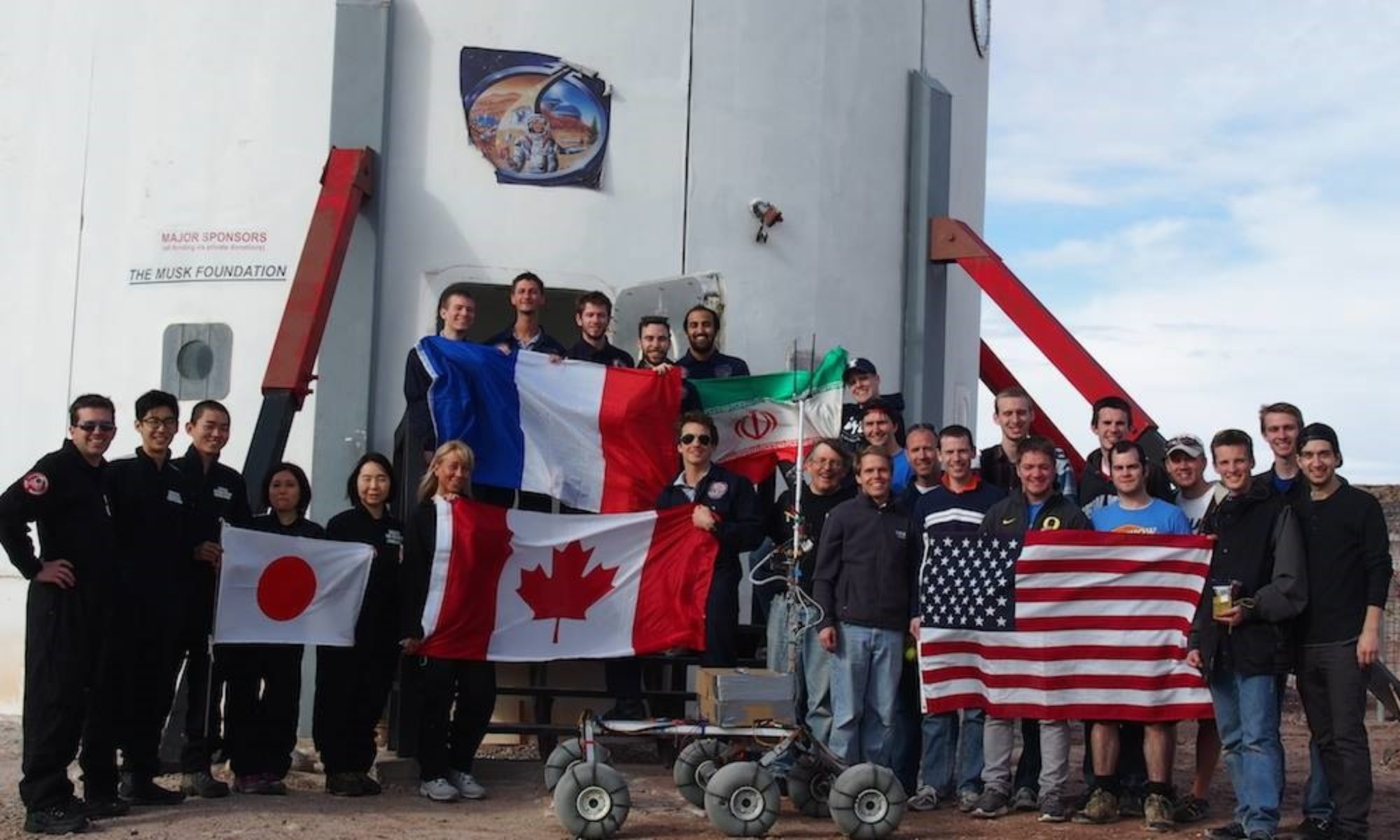
The day began with breakfast prepared by Odile, our Health & Safety Officer. A few crew members then headed out on an EVA focused on fossil hunting. Although no fossils were found, the outing allowed for team photos and a check of previously deployed equipment, all of which remained in place and fully functional.

Back at the habitat, Arnaud began data collection for the ongoing experiment with Béatrice, who took over later in the day after returning from the EVA. Antoine confirmed that the dust collectors in the field were still working properly.

On the science part:

Bérengère, our GreenHab Officer, checked that all equipment for applying environmental stress to arbuscular mycorrhizal fungi (AMF) was functioning properly. She also prepared the culture pots for a multi-day experiment launching later that evening and completed the GreenHab report.

Batoul continued her microbiological experiments by inoculating Bacillus thuringiensis (with and without soil) on Petri dishes, and Escherichia coli in a 96-well plate. Both were exposed to UV-C light as part of her research.

Meanwhile, Arnaud communicated with an academic collaborator to refine the experimental protocol and obtain necessary labeling materials. He also contributed to outreach efforts by sending photos and videos to one of the project sponsors.

On the technical and logistical side, Arnaud assisted Antoine with repairing a toilet leak and fixing a bicycle handlebar.

In the afternoon, several crew members took part in a Crew Resource Management (CRM) simulation led by Odile. Béatrice acted in the scenario, and Louis also participated.

Physical activity was a big part of the day: Louis completed a demanding 1-hour-and-20-minute cycling session, while Béatrice, Odile, and others joined in a group workout.

Despite some end-of-day fatigue, everyone contributed to writing the daily reports. A final highlight: Bérengère finished crafting scoubidous for each member of the crew.

Look Ahead Plan: One EVA is scheduled in the morning to carry out Antoine’s experiment. Throughout the day, we will continue working on our individual experiments, including full participation in Louis’ experiment, which focuses on user experience measurement of a portable communication device in an ICE (Isolated, Confined, and Extreme) environment. Béatrice and Arnaud will also continue their research while collecting data using their wearable devices.

Anomalies in work : No problem was discussed today. All experiments went well.

Weather: Sunny without clouds during the morning and the afternoon (Temperature between 39° and 83°F during the night and the day respectively)

Crew Physical Status: All crew members were feeling fine today, no health issue.

EVA : The crew departed from the station at 9:10 AM with two rovers: Opportunity (Driver: Louis, Passenger: Antoine) and Perseverance (Driver: Odile, Passenger: Béatrice), as Spirit had not fully charged overnight.

Their mission was to inspect equipment located at the intersection of Galileo Road and Cow Dung Road. En route, they made a brief stop to observe a group of deer crossing nearby.

The crew continued along Cow Dung Road to reach the Special Region, where they assessed the area as a potential site for future equipment installation. During their exploration, they stayed within 500 meters of the rovers.

After completing the inspection, they retrieved the rover at 10:10 AM on Cow Dung Road and proceeded to the intersection with Brahe Highway 1572, a location they had not been able to visit during EVA #4 where they used the drone to conduct a reconnaissance of the area.

The team began their return to the station at 10:47 AM, switching drivers as follows:

Antoine took over as the driver of Opportunity, with Louis as the passenger. In Perseverance, Béatrice drove while Odile was the passenger.

They arrived back at the MDRS at 11:15 AM and initiated the 5-minute repressurization process in the airlock, officially concluding the EVA.

Reports to be filed:

Sol Summary, Journalist Report, Greenhab Report, Operations Report, Crew Photos, EVA Report, EVA Request

Support Requested:

Crew requested the printing of labels crucial for one of their experiments.

Sol Summary – March 28th

Morning Briefing
The day began with a briefing on the mission objectives and safety protocols. Today’s EVA focused on searching for signs of life on Mars and identifying an optimal site for a new habitat to be built. Students utilized scientific instruments to analyze soil and rock samples while also assessing terrain stability, radiation exposure, and resource availability for future habitat construction. Today’s EVA ended in a simulated electrocution that led to cardiac arrest in one of the team members.

Cardiac Arrest Response and CPR in Space Environments
Objective: Perform an emergency medical response to a cardiac arrest scenario in a simulated EVA environment.

Teams identified and responded to a simulated astronaut experiencing cardiac arrest.

Students practiced performing CPR under simulated Martian gravity conditions, incorporating modifications for effectiveness in reduced gravity.

Automated external defibrillator (AED) protocols were reviewed and applied in the field.

Communication strategies were tested to ensure clear relay of patient status and intervention steps between EVA teams and the Hab.

Debriefing and Lessons Learned
Following the EVA, students participated in a debriefing session where they discussed key takeaways, challenges faced, and strategies for improvement. The session reinforced the importance of quick medical decision-making, teamwork, and adapting life-saving techniques for extraterrestrial environments. Students also discussed medical futility and the ethical challenges of losing a crewmember.

End of Week Reflection and Movie Night
To close out the week, students gathered for a movie night, providing a chance to reflect on the skills they developed and the challenges they tackled throughout the training program. The event fostered camaraderie and offered a well-deserved break after an intense week of mission simulations.

Sol Summary – March 24th

Objective: The primary goal of today’s mission activities was to provide students with hands-on experience in the challenges of medical care and engineering problem-solving during extravehicular activities (EVAs) in a Mars analog environment. Through simulated scenarios, students applied wilderness first aid principles and engineering design concepts to real-time mission challenges.

Morning Briefing: The day began with a briefing on the mission objectives and safety protocols. Students were divided into EVA teams and designated specific roles, including medical officers, engineers, and communications specialists. The briefing included an overview of EVA procedures, emergency response strategies, and the environmental hazards associated with the simulated Martian terrain.

Simulated EVA Activities:
EVA Objective 1: Medical Emergency Response
Assess and stabilize an injured astronaut in a remote location.
Teams navigated through rugged terrain to reach a simulated casualty.

Students applied wilderness first aid, including spinal precautions, wound management, and transport strategies.

Effective communication with mission control was emphasized to relay patient status and request assistance.

EVA Objective 2: Engineering Challenge – Equipment Repair
Identify and repair a malfunctioning habitat life-support system component.
Students conducted a diagnostic assessment of a simulated life-support failure.

Teams employed problem-solving strategies to fabricate and implement temporary repairs using available resources.

The challenge tested the integration of engineering skills with mission-critical thinking under time constraints.

Debriefing and Lessons Learned
Following the EVAs, students participated in a debriefing session where they discussed key takeaways, challenges faced, and strategies for improvement. The session reinforced the importance of teamwork, adaptability, and interdisciplinary collaboration in space mission scenarios.

Conclusion
Today’s mission simulation successfully provided an immersive educational experience, highlighting the intersections of medicine and engineering in space exploration. Students gained valuable hands-on experience in responding to medical emergencies and troubleshooting technical failures, preparing them for future roles in space medicine and engineering fields.

Sol Summary – March 25th

Objective
The primary goal of today’s mission activities was to provide students with hands-on experience using a litter in the field to rescue a patient with a simulated broken femur. Students applied wilderness first aid principles and engineering design concepts to real-time mission challenges, including fixing communications and responding to an off-nominal situation.

Morning Briefing
The day began with a briefing on the mission objectives and safety protocols. Students were divided into EVA teams and designated specific roles, including medical officers, engineers, and communications specialists. The briefing included an overview of EVA procedures, emergency response strategies, and the environmental hazards associated with the simulated Martian terrain.

Simulated EVA Activities

Medical Emergency Response and Stretcher Transport
Objective: Assess, stabilize, and transport an injured astronaut using a stretcher while coordinating between separated groups.
Teams navigated through rugged terrain to reach a simulated casualty.

Students applied wilderness first aid, including spinal precautions, wound management, and transport strategies.

A stretcher was used to safely transport the patient, requiring coordinated teamwork between two separated groups.

Effective communication with mission control and between field teams was emphasized to relay patient status and coordinate movement.

Engineering Challenge – Communications Antenna Placement and Relay
Objective: Identify, repair, and place a communications antenna in a higher location to improve signal strength while practicing complex communications relay.
Students assessed the terrain to determine the optimal elevated location for the communications antenna.

Teams worked together to transport and securely install the antenna at the selected site, ensuring structural stability and optimal signal transmission.

The challenge tested the integration of engineering skills with mission-critical thinking under time constraints.

Students practiced structured communication techniques to relay complex messages between the separated field teams and the Hab, ensuring clarity and accuracy in mission-critical updates.

Debriefing and Lessons Learned
Following the EVAs, students participated in a debriefing session where they discussed key takeaways, challenges faced, and strategies for improvement. In this EVA, students learned the importance of team structure and dynamic re-structuring to meet the needs of the mission and dynamic medical emergencies. The role of clear and precise communication in high-stakes situations was particularly highlighted as a vital skill for future space missions.

Sol Summary – March 26th

Morning Briefing
Unlike previous days, today’s EVAs were student-planned, incorporating a robotic dog into their mission execution. Teams outlined their objectives, focusing on medical response and robotic-assisted transport.

Robotic Dog-Assisted Medical Transport and Emergency Response
Objective: Utilize a robotic dog to carry a medical payload and assist in responding to medical emergencies.
Students deployed the robotic dog with a medical payload to navigate terrain and deliver supplies.

Teams responded to simulated medical emergencies, including an elbow break and an ankle sprain, implementing appropriate stabilization techniques.

The robotic dog was integrated into patient transport logistics, enhancing efficiency and reducing astronaut exertion.

Effective coordination between human team members and the robotic assistant was emphasized.

Emergency Response to Solar Particle Events
Objective: React swiftly and effectively to an incoming solar particle event while ensuring crew safety.
Students monitored simulated space weather updates and identified warning signs of solar activity.

Teams executed emergency sheltering procedures, demonstrating quick decision-making under time constraints.

The robotic dog assisted in transporting critical supplies to designated safe zones.

Communication protocols were tested to ensure seamless information relay between EVA teams and the Hab.

Debriefing and Lessons Learned
Following the EVAs, students participated in a debriefing session where they discussed key takeaways, challenges faced, and strategies for improvement. The session reinforced the importance of teamwork, adaptability, and interdisciplinary collaboration in space mission scenarios. The integration of robotic assistance was evaluated for its effectiveness in medical transport and emergency logistics.

Conclusion
Today’s mission simulation successfully provided an immersive educational experience, highlighting the intersections of medicine, robotics, and engineering in space exploration. Students demonstrated exceptional planning and execution of their EVAs, responding effectively to medical emergencies and environmental hazards. The exercises reinforced critical skills necessary for future roles in space medicine, robotics, and engineering fields.

Sol Summary – March 17th

Crew 309 Sol Summary Report 17Mar2025

Sol: 1

Summary Title: First day of work

Author’s name: Co-Commander A

Mission Status: Nominal

Sol Activity Summary:

  • This morning Co-Commander A and Scientist completed an EVA while the remainder of the crew worked on tasks in the hab. In the afternoon, Engineer and Medic completed an EVA, followed by a final EVA completed by Co-Commander B and GreenHab.
  • The team is adjusting to life on Mars. We encountered a number of technical issues and are working to learn our crew responsibilities. Despite these challenges, the team remains optimistic.

Look Ahead Plan: We will be conducting two EVAs tomorrow in the morning and afternoon

Anomalies in work:

  • Solution for eye tracking device 681 is to use an external battery pack while they are on EVA so that it doesn’t deplete and turn off. The MC external battery packs need a lot of time to charge, so we are using Jesus.
  • This is not a possibility for the device 691 because it does not have an external charging port. The solution for this one is to add the battery as late as possible. The battery packs are dead right now, but Jesus is using his personal.
  • The depressurization door opened, need to close it more securely.

Weather: Sunny and windy, 43F / 70F

Crew Physical Status: Nominal

EVA: 3 EVAs completed

Reports to be filed: Sol Summary, Journalist Report, GreenHab, Operations Report,

Support Requested: None

Sol Summary – March 18th

Crew 309 Sol Summary Report 18Mar2025

Sol: 2

Summary Title:

Author’s name: Co-Commander A

Mission Status: Nominal

Sol Activity Summary:

  • This morning commander A and crew engineer went on their 2nd EVA of the week. Today was especially windy and so the crew was mainly upstairs to keep warm because the heaters were struggling to keep up. Following lunch the crew noticed the smell of propane down stairs and began investigating the heater. We determined that the high winds were affecting the heating system. The high winds also knocked down a safety ladder which the crew had to secure. Eventually we had to shut off the heater for a few hours and just use a small space heater upstairs. As the winds began to slow we were able to turn the heat back on and our second EVA, which was delayed by the weather, was completed successfully. In the evening we had a good dinner and conversed about lessons learned from the day.

Look Ahead Plan: We will be conducting two EVAs tomorrow in the morning and afternoon

Anomalies in work:

  • The heating system was set to 70 and then 72 but the hab stayed consistently at 67. We believe this is due to the strong winds. An hour later it has risen to 68 but has not reached 72. Upon examination, the heating system is not consistently blowing hot air. Current time is about 10:00 AM.
  • Crew smelled a propane smell, and a gas alarm went off. Engineer used a gas detector and no leaks were detected. Crew examined the HVAC system and found an error code blinking. The diagnosis is that the excessive winds are affecting the pressure switch of the HVAC causing it to turn on and off. This diagnosis explains the HVAC not staying continuously on until target temperature is reached and the propane smell. Current temperature is set to reach 72 degrees, but the temperature is at 67. Winds are at about 30 mph and should be less tonight. Current time is about 1:00 PM.
  • Crew communicated with Mission Support to replace the HVAC filter. Crew has replaced the air filter for the HVAC. Current time is about 2:45 PM.
  • The propane smell persisted and became substantial at 3:00 PM. We are turning the HVAC off and using the space heater on the green/low setting.
  • Around 5:30 PM, the wind reduced and the crew turned the HVAC system back on. We have experienced and has had no issues going

Weather: Windy, 27F / 48F

Crew Physical Status: Nominal

EVA: 2 EVAs completed

Reports to be filed: Sol Summary, Journalist Report, GreenHab, Operations Report

Support Requested: None

Sol Summary – March 19th

Crew 309 Sol Summary Report 19Mar2025

Sol: 3

Summary Title:

Author’s name: Co-Commander A

Mission Status: Nominal

Sol Activity Summary:

  • Commander B and crew engineer started the day by performing and EVA. The crew medic continued work on our robot meant to transport medical supplies. The crew is continuing to experience issues with the sensors we’re supposed to wear during EVAs so the crew scientist and engineer began troubleshooting. In the afternoon the GreenHab officer and Medic completed an EVA.

Look Ahead Plan: We will be conducting two EVAs tomorrow in the morning and afternoon

Anomalies in work:

  • The Tobbii eye-tracking glasses disconnected after 30 minutes on EVA 6. Engineer and Scientist are troubleshooting why this may be. Only theory is that the glasses occasionally stop recording when they are out of range of the computer’s Wi-Fi.
  • Fuzzy part of the mic was having difficulty staying attached to the microphone. It fell off mid-EVA but EVA 6 was able to find the fuzzy component and bring it back to the Hab.
  • For EVA 7, we are experimenting with hooking up the eye-tracking glasses with the external battery to the portable laptop to see if we can extend eye tracking recording for at least one participant.
  • Update: the heating issue is resolved now that there are no longer excessive winds.
  • Accidentally made 6x the amount of onions than intended. Read instructions in the future.

Weather: Sunny, 53F / 29F

Crew Physical Status: Nominal

EVA: 2 EVAs completed

Reports to be filed: Sol Summary, Journalist Report, GreenHab, Operations Report

Support Requested: None

Sol Summary – March 20th

Crew 309 Sol Summary Report 20Mar2025

Sol: 4

Summary Title:

Author’s name: Co-Commander A

Mission Status: Nominal

Sol Activity Summary:

  • Commander A and B went on an EVA in the morning. The crew scientist and engineer continued troubleshooting the eye tracking equipment and think they have found a solution, but they are unable to implement it due to a lack of an ethernet cable on Mars. The entire crew continued working on the mission vlog throughout the day. In the afternoon the Greenhab and science officer went on and EVA. Martian activity was high today. A malfunction of the wifi system delayed crew reports by 2+ hours.

Look Ahead Plan: We will be conducting three EVAs tomorrow in the morning and afternoon

Anomalies in work:

  • The Tobbii eye tracking glasses are now not connecting to either computer at all. Scientist is troubleshooting.
  • We found a potential default setting which may be shutting the Tobii controllers down when it starts to go low on the battery. An ethernet cable needs to be used to connect the controllers. The app may also be out of date. We also were able to reconnect the glasses, the default password needed to be used.
  • We tried to use the Tobii glasses without an internal battery but just with the external battery, this approach was not effective.

Weather: Windy, 61F / 26F

Crew Physical Status: Nominal

EVA: 2 EVAs completed

Reports to be filed: Sol Summary, Journalist Report, GreenHab, Operations Report

Support Requested: None

Sol Summary – March 21st

Crew 309 Sol Summary Report 21Mar2025

Sol: 5

Summary Title: Final Day

Author’s name: Co-Commander A

Mission Status: Nominal

Sol Activity Summary:

  • We conducted 3 EVAs today. GreenHab and Engineer went in the morning, commander A and Medic in the afternoon, and commander B and Scientist last. The crew began the cleaning process completing the RAM, GreenHab, and Food Inventory tasks this evening. Simulation ended after dinner and the crew was able to explore some of the Martian terrain outside of our EVA suits.

Look Ahead Plan: We will be packing up and heading home in the morning.

Anomalies in work:

  • During prep for our second EVA of the day, we determined that the helmet had become detached from the spacesuit worn by crew member one. Engineer, Medic, and Commander A were able to repair the suit for the remainder of the EVAs. A more permanent solution will be required for future missions.

Weather: Windy, 34F / 62F

Crew Physical Status: Nominal

EVA: 3 EVAs completed

Reports to be filed: Sol Summary, Journalist Report, GreenHab, Operations Report, Mission Summary

Support Requested: None

Copyright © The Mars Society. All rights reserved. | Main Site