Sol Summary – March 11th

Report title: Sol Summary Report
Crew #: 330
Position: Crew Commander
Report prepared by: Gaspard THIEULIN
Date: 11/03/2026
Sol: 24

Summary Title: Getting ready for Earth

Mission Status: Going great, 2 days left
Sol Activity Summary: Once again today we had a lot of work to do. In the morning we had a specially intense physical activity session. It could be very hard to return to Earth’s gravity after a few years between weightlessness and Mars’s lighter gravity, so astronauts should work harder on the way back to rebuild muscle mass.

The rest of the morning saw the crew working hard on their remaining tasks, crucially we had to finish building the SupaeroMoon rover for this afternoon’s EVA. Because we had to 3D print every piece of the rover, the timing to test it in the desert is very close.
For lunch, we prepared quite an inventive meal with the few remaining supplies for our mission. Even with reduced ingredients we manage to eat plenty and tasty food, which feels rewarding each time!

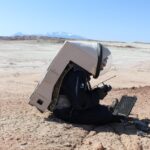
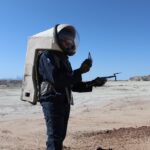
In the afternoon, the EVA team used the RAM as a temporary depressurized module, to test and troubleshoot the SupaeroMoon rover. The rover didn’t meet its performance objective, but the EVA was a success from our point of view, as we could conduct the tests without any issue on our end.

We kept gathering data for the Orbital Architecture and NeuroErgo experiment and will keep doing so until the end of the mission. We have to anticipate the end of the mission, and put back the station in order for the next crew so we have to find the perfect trade-off between maximizing science and sleeping the next few nights.

Finally, the crew journalist wants to shoot as many scenes as possible before leaving the station, as he doesn’t want to miss any single part of the mission for his upcoming documentary.

We kept making progress on the assessment of our entire mission, taking surveys and writing reports on everything we did during this last month.

Look Ahead Plan: Tomorrow will be our last full sol in the MDRS. We will dedicate every bit of our energy to the final tasks ahead of us. We will conduct our last EVA to bring back the atmospheric experiments to be packed up on our departure.

Anomalies in work: N/A

Weather: Sunny

Crew Physical Status: Physically fit and well

EVA:
EVA 21 conducted with success
EVA 22 to be planned for packing the atmospheric experiments

Reports to be filed:
Journalist report
Greenhab report
Operations report
Astronomy report

Support Requested: None

GreenHab Report – March 11th

Report title: GreenHab Report
Crew #: 330
Position: Greenhab officer
Report prepared by: Félix Marguet
Date: 11-03-2026
Sol: 24

Environmental control (fan & heater): Yes
Average temperatures (last 24h): 79.8°F
Maximum temperature (last 24h): 104.3°F
Minimum temperature (last 24h): 68.8°F
Average humidity (last 24h): 16.4%
Maximum humidity (last 24h): 23.9%
Minimum humidity (last 24h): 7.7%

Hours of supplemental light: 5h30

Daily water usage for crops: 4gal
Daily water usage for research and/or other purposes: 0.6 gal
Water in the Tank (160 gal useful capacity): 116 gallons remaining
Time(s) of watering for crops: 6pm

Changes to crops: N/A
Harvest: N/A

Support/supplies needed: N/A

Journalist Report – March 11th

Report title: Journalist Report
Crew #: 330
Position: Journalist
Report prepared by: Adrien Saugnac
Date: 11-03-2026
Sol: 24

Journalist Report Title: Rover on Mars

Yesterday evening, Adèle led us through a meditation session in the mezzanine before going to bed. This helps reconnect with our senses and step away from our thoughts to return to the present moment.

This morning, Adèle organized a cardio workout session to start the day off well and wake everyone up. A typical morning at MDRS begins with physiological data collection by Julien for the Core Data experiment. After that, we have the workout followed by breakfast. Then, those who have EVA will prepare while the others start their experiments for the day.

For the first time since the start of the mission, we had EVA in the afternoon. It’s more pleasant to go out in the morning because our suits keep us very warm, and the sun can quickly make the outing very physical. However, this morning, Lou and Julien had to finish mounting and preparing the SupaeroMoon rover before testing it outdoors at 2 PM. It was assembled at 1 PM, and after eating, Lou, Julien, and I went outside in front of the station to test the rover. Usually, we use the SAS decompression system of the HAB (our habitat), but today we used the RAM to access the power outlets and computers. Unfortunately, we were unable to connect the computer to the rover and couldn’t test its various features. Over the next two days, we will try to fix this issue.

In the meantime, Gaspard and Adèle worked on the end-of-mission report focusing on the human aspect. This is an area we chose to focus on this year, and our HSO Adèle did a lot of research on this topic and proposed many discussion workshops around these subjects.

Today was another filming day for the documentary. We filmed the rover, interviews with Célia and Julien, the lunch cooking, and Félix and Adèle made a VLOG for the Orbital Architecture experience.

Tonight, we enjoyed the last evenings in the station together.

Crew Bios and Mission Patch – March 29th

Crew Biographies
Crew #333
Position: Commander
Report prepared by: Marie Jansen
Date: 29-03-2026
Sol: 0

We are a team of six students from UCLouvain, united by a shared academic and personal interest in space science and the exploration of Mars. Our diverse educational backgrounds provide an interdisciplinary framework through which we approach the study of planetary environments, enabling us to integrate concepts from computer science, engineering, geology, and related scientific fields. This collaborative perspective allows us to examine complex challenges associated with extraterrestrial exploration in a systematic and rigorous manner.

We aim to establish meaningful connections between our respective fields of study while contributing to the broader scientific understanding of Martian systems. In particular, we seek to explore key questions related to planetary conditions, habitability, and the technological requirements for sustained exploration. By engaging with current methodologies and building upon existing scientific literature, our work is intended to both reinforce foundational knowledge and generate insights that may inform future investigations in planetary science.

Ultimately, this project represents not only an academic endeavor but also an opportunity to develop critical research skills and foster interdisciplinary collaboration.

Marie Jansen – Crew Commander
Psychology student

I am a final year student in clinical adult psychology. I hold the role of mission commander and am conducting research on conflict management within a group in a confined environment. Curious by nature and drawn to ambitious projects, I am particularly fascinated by space and what it reveals about human psychology. Participating in the MDRS is for me an opportunity to combine scientific rigor with my love for new experiences.

Article: Bishop, S. L., Kobrick, R., Battler, M., & Binsted, K. (2010). FMARS 2007: Stress and coping in an arctic Mars simulation. Acta Astronautica, 66(9–10), 1353–1367. https://doi.org/10.1016/j.actaastro.2009.12.014

Matias Ballivian – Crew Astronomer
Engineering student

I am pursuing a Bachelor’s degree in Electromechanical Engineering at the Louvain School of Engineering (EPL) and will serve as astronomer for the Arsia Crew 2026 mission. I will conduct an experiment on passive methods to extend communication range by building an LC resonant circuit and a reflective surface, then testing their effect during EVA by comparing signal strength and range with and without the system, aiming to evaluate a simple, low-power solution for improving communication reliability in remote environment

Antoine Dubois – Crew Executive Officer & Crew Engineer
Geographical Sciences Graduate & Biology student

I hold a Master’s degree in Geographical Sciences from UCLouvain and have since pursued additional training in biology and ecology to broaden my interdisciplinary approach to environmental research. I currently serve as Executive Officer, while also taking on engineering responsibilities, building on my previous experience as Crew Engineer during an earlier mission.

My work now focuses on the comparison of terrain perception between ground-level observations during EVA reconnaissance and aerial perspectives acquired through drone imagery. This approach aims to better understand how scale, angle, and mobility influence the identification of geomorphological features and areas of scientific interest.

Joanna Galloway – Crew Journalist
Computer Science student

The crossover between technology and space is profound, as each continuously drives the advancement of the other. Technology enables us to explore and understand outer space in greater depth, while the discoveries we make in space, in turn, help us improve and innovate our technological capabilities. Space exploration, especially the ongoing focus on Mars, is a crucial area of study that pushes the boundaries of what we can achieve and accelerates the development of new tools, systems, and methods. In this project, I will take on the role of the Crew Journalist, where I will document findings and conduct a series of experiments focused on testing gesture-based interaction within this extreme and unfamiliar environment. This is a continuation of previous research conducted in this MDRS.

Article: https://dl.acm.org/doi/10.1145/3743712

Zahraa Al-bayati – Crew Health and Safety Officer
Speech and language therapist student

Throughout my academic journey, I have explored how humans express, adapt, and understand one another. My studies in speech and language pathology have deepened my curiosity about how communication functions across different contexts and how it might transform beyond Earth.

After working at the Euro Space Center, the mysteries of space and human adaptation became a true passion. I discovered how scientific exploration can bring people together around shared challenges and discoveries.Through this mission I will focus on how verbal communication evolves during a simulated Martian mission, particularly under conditions of isolation, stress, and fatigue. I aim to observe changes in speech fluency, identify adaptive communication strategies used by crew members, and explore how simple tools inspired by speech and language therapy could help maintain clear and efficient interactions.

Article: Badam, M. S. R. (2025). The Scope for Audiologists and Speech-Language Pathologists in Space Research: Views and Perspectives. Dil Konuşma ve Yutma Araştırmaları Dergisi, 8(1), 1-11. https://doi.org/10.58563/dkyad-2025.81.1

Matthias De Groote – Crew GreenHab Officer
Biologist, Master student

Currently in the first year of my Master’s degree in organism biology and ecology at UCLouvain, I will take on the role of GreenHab Officer for the Arsia Mission. Fascinated by the development of life in space, I aim to combine this passion with my research by studying the germination of tomatoes in different soils, including desert, martian and potting soil, to see if desert soil can be used a substitute to martian soil and what proportion of organic matter is necessary for ideal germination.

We anticipate that our research will yield significant contributions to the field and provide a foundation for subsequent investigations. Furthermore, we expect that this project will offer substantial opportunities for learning and intellectual development.

Mission Plan – March 29th

Mission Plan Crew 333
Mars Desert Research Station
March 29-April 11

Conflict management and stress in an isolated environment: a study among participants of the MARS project at UCLouvain
Marie Jansen

Objective
The aim of this research is to examine the extent to which conflict management strategies influence their resolution over time. It also seeks to analyze the evolution of these strategies and to compare their use between a terrestrial environment and a confined setting, as well as the influence all of this may have on stress. This study will contribute to a better understanding of how individuals adapt to conflict in contexts of isolation and confinement.

Methodology
Before the simulation:

  • Dutch questionnaire: assessment of usual conflict management styles in daily life

During the simulation (Anonymized online logbook, daily, ~10 min):

  • Brief description of any disagreements experienced during the day
  • Identification of conflict management strategies (Thomas-Kilmann model, Likert scales)
  • Self-assessment and assessment of the other parties involved
  • Additional questionnaire: emotional or cognitive presence of the disagreement at the time of completion

Schedule

  • Data collection every evening for 10 minutes.

Comparative Analysis of Ground-Based EVA and Drone-Acquired Terrain Perception
Antoine Dubois

Objective
To compare terrain perception in a Mars-analogue environment between ground-level observations during EVA and aerial perspectives acquired through drone imagery.

Methodology

  • Field observations during EVA with systematic description of geomorphological features and zones of interest.
  • Drone flights over the same areas to capture oblique imagery.
  • Comparative analysis between human perception and aerial data to identify biases and complementarities.

Schedule

  • EVA every two days on selected sites.
  • Pre-EVA briefing to define objectives and areas of interest.
  • Post-EVA debrief with crew to compare individual perceptions and confront them with drone imagery.
  • Data processing and synthesis between EVAs, with final analysis at the end of the mission.

Verbal Communication and adaptive strategies in extreme confinement: Contribution of speech and language pathology in a Simulated Martian Mission
Zahraa Al-bayati

Objective
To observe how verbal communication evolves during a two-week simulated mission and identify compensatory strategies used by participants to maintain efficiency and group cohesion under stress and fatigue.

Methodology

  • Five adult crew members participate voluntarily with informed consent
  • Audio recordings of daily briefings, team meetings, and EVA planning
  • Short language task (2–3 minutes) every 3–4 days (describe the day or explain a task)
  • Brief self-questionnaire every 3 days (stress, fatigue, communication ease)
  • Observation log of misunderstandings, conversational repairs, and adaptive strategies
  • Participants can withdraw at any time and request data deletion

Schedule

  • Beginning phase: Day 1–2 (baseline recordings)
  • Middle phase: Day 7–8 (mid-mission recordings)
  • Final phase: Day 11-12 (end-mission recordings)
  • Language tasks every 3–4 days throughout the mission
  • Self-questionnaires every 3 days throughout the mission

Passive Methods to Improve EVA Communication Range
Matias Ballivian

Objective
Compare passive methods to increase radio communication range during EVA without increasing transmitter power consumption.
Methodology

  • Directional Antenna Using Reflector Element.
  • Passive RLC networks

Schedule

  • Create the devices as soon as the components arrive at the station
  • Testing on short range EVA communication
  • Testing on long range EVA communication
  • Comparing the results and drawing conclusions on the viability of these methods

Testing gesture-based interaction in an extreme environment
Joanna Galloway
Objective
To analyze the evolution of a defined set of motor gestures performed by an individual over the course of a simulated extreme environment, utilizing a Tap Strap device, and to evaluate the extent to which the wearable equipment influences movement patterns, accuracy, and consistency.

Methodology

  • Use of two Tap Strap, a laptop and an iphone camera
  • Qualitative analysis with the help of a form to fill in after each session
  • 3 Different sessions for each individual

Schedule

  • Initial session in the science dome: Sol 3.
  • Session with light equipment: Sol 7
  • Session with heavy equipment: Sol 11

Assessing tomato germination on different soils and organic matter proportions
Matthias De Groote
Objective
To assess the effects of Martian soil simulant and organic matter on the germination and early growth of tomatoes (Solanum lycopersicum), and to compare its performance with desert soil and a control substrate.

Methodology

  • Prepare different substrate conditions (Martian soil simulant, desert soil, control substrate, and mixtures).
  • Use replicated pots for each condition to ensure experimental reliability.
  • Sow 10 seeds in each pot.
  • Monitor seeds daily to record germination rate and timing.
  • Select a subset of plants after germination for continued growth.
  • Measure stem length, root length, root development, and fresh biomass at the end of the experiment.
  • Schedule:
  • Initial setup and sowing at the beginning of the experiment.
  • Daily monitoring of germination until emergence.
  • Daily monitoring of plant growth after emergence.
  • Final measurements, data collection, and analysis at the end of the experiment

Supplemental Operations Report – March 28th

Date: 3/28/2026
Name of person filing report: Brett Bennett
Reason for Report: Routine
Off-Nominal Systems: Hab outer shell. GreenHab hydrant.

Power system: Nominal.
Current generator hours: 1447.0

Propane:
Station Tank: 54%
Director Tank: 70%
Intern Tank: 72%
Generator Tank: 78%
Propane refill completed March 25.

Water:
Hab Static Tank: 480 gallons
GreenHab: 160 gallons
Outpost tank: 480 gallons
Septic Tanks emptied: No
Following identification of an underground leak in the vicinity of the hydrant outside of the GreenHab on March 20, Mission Support traced the leak to a depth of approx 24 inches both at the hydrant base and at the apparent leak location. Mission Support was not successful in finding the source of the leak; however, future work will need to uncover the plumbing line and close the leaking joint, accounting for a winding path that the leak takes to the surface. Leak intensity is directly tied with hydrant function, and indications point to a source within 2 feet of the hydrant base and possibly at the base itself. Having determined that the leak was below 2 feet, work was ceased on March 27 in preparation for crew 333, as the frost line may be up to 30 inches deep. Until leak closure, water input to the location will remain shut off at the water manifold on L-Deck.

Rovers:
Sojourner rover used: Yes, for hauling yard tools to GreenHab.
Hours: 226.7
Beginning Charge: 100%
Ending Charge: 100%
Currently Charging: Yes
All other rovers in nominal condition and fully charged.

Cars:
Hab Car used and why, where: Multiple trips to Hanksville for supplies.
Crew Car used and why, where: Replacement vehicle is still being sourced.
General notes and comments: The station will be operating with the hab car only until crew car function is replaced.

Internet: Nominal.
EVA suits and radios: Nominal. All connectors for Block 2 helmet bracket-harness connections were replaced on March 24.
Suits: Nominal.
Comms: Nominal.
T-Echo EVA-link: Nominal.

Campus wide inspection, if action taken, what and why: Hab outer shell shows ongoing wear.

Summary of Hab Operations: Nominal. Additional projects:

Hab toilet: New toilet tank sensors continue to work well in normal toilet operation.

U-Deck HVAC fan: U-Deck fan continues to operate nominally with new power and control connections.

Thermostat: New smart thermostat has been programmed to control both the central HVAC unit and U-Deck fan. It uses parallel heat/cool control with the furnace and fan respectively. The new system configuration continues to work well.

Summary of GreenHab Operations: Nominal.
Summary of SciDome Operations: Nominal.
Summary of Observatories Operations: Nominal.
Summary of RAM Operations: Nominal.
Summary of Outpost Operations:
Director trailer: Nominal.
Intern trailer: Nominal.

Supplemental Operations Report – March 21st

Date: 3/21/2026
Name of person filing report: Brett Bennett
Reason for Report: Routine
Off-Nominal Systems: Hab outer shell.

Power system: Nominal.
Current generator hours: 1446.0
Routine 2-month service conducted on March 15 at 1444 hr.

Propane:
Station Tank: 42%
Director Tank: 32%
Intern Tank: 52%
Generator Tank: 68%
Propane service contacted for refill and anticipated March 24.

Water:
Hab Static Tank: 280 gallons
GreenHab: 111 gallons
Outpost tank: 480 gallons
Septic Tanks emptied: No
GreenHab external hydrant developed an upstream underground leak this week, located approximately 16 in from the hydrant base. Water input to the location has been shut off temporarily at the water manifold on L-Deck. Mission support will be assessing the source of the leak this week.

Rovers:
Sojourner rover used: Yes, daily in support of Crew 331 EVAs.
Hours: 226.7
Beginning Charge: 100%
Ending Charge: 100%
Currently Charging: Yes
All other rovers in nominal condition and fully charged.

Cars:
Hab Car used and why, where: Multiple trips to Hanksville for supplies.
Crew Car used and why, where: Replacement vehicle still being sourced.
General notes and comments: The station will be operating with the hab car only until crew car function is replaced.

Internet: Nominal.
EVA suits and radios: Nominal. Several replacement loop connectors required for Block 2 helmet bracket-harness connection.
Suits: Nominal.
Comms: Nominal.
T-Echo EVA-link: Nominal.

Campus wide inspection, if action taken, what and why: Hab outer shell shows ongoing wear.

Summary of Hab Operations: Nominal. Additional current projects:

Hab toilet: Toilet tank has been modified to include a permanently mounted tank rinser directly adjacent to a new fill level sensor suite. Upstream plumbing modified to include inline shutoff valve, allowing for ongoing sensor rinsing as part of crew toilet SOP. New fill sensors mirror original fill levels and are designed to gather data from the tank exterior. New sensor control board has replaced the original and provides fill data to hab dashboard. Tank shell modified to accept new plumbing. Plumbing line anchor locations modified to accommodate water hammer effect of toilet valve operation. Data cable includes metallic wrap as a rodent deterrent. Enzymatic treatment used following sensor placement as part of tank dump cycle, and will also be added to toilet SOP.

U-Deck HVAC fan: New 120V electrical lines run in flexible non-metallic conduit from L-Deck breaker panel to fan control board. Conduit is routed from the top of the panel to the L-Deck ceiling, then to the northeast to a penetration near the galley pantry. Routing continues vertically to the U-Deck ceiling rim and finally to the fan location. The same conduit carries new 24V control wiring from the fan to the U-Deck thermostat. Standard and low voltage lines use a junction box directly above the breaker panel, providing a breakpoint for modification.

Thermostat: Existing smart thermostat entered lockout mode during Crew 331 sol 1 and was replaced with the previous model, restoring function. During fan control tie-in (described above), a fault was detected in the furnace control board. Once a new board has been sourced, function of the U-Deck fan and a new smart thermostat will be confirmed.

Summary of GreenHab Operations: Nominal.
Summary of SciDome Operations: Nominal.
Summary of Observatories Operations: Nominal.
Summary of RAM Operations: Nominal.
Summary of Outpost Operations:
Director trailer: Nominal.
Intern trailer: Nominal.

Summary of Health and Safety Issues: Nominal.

Journalist Report – March 19th

Journalist Report
Crew #331
Position: Medical Lead
Report prepared by: Arian Anderson
Date: 19-03-2026
Sol: 4
Journalist Report Title: Sol 4

Today’s sol began with an unexpected EVA, as the entire crew jumped into action upon receiving a distress call from a crashed spacecraft. Training quickly gave way to execution, and the team transitioned into search and rescue mode, coordinating efforts to locate and recover three injured astronauts. All were successfully retrieved and treated for their medical conditions, demonstrating the crew’s growing ability to employ all the skills they have been learning and practicing to respond decisively and effectively to the complex, highly dynamic scenarios that occur in the challenging Martian environment.

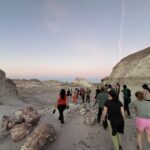
Following the morning’s operations, the crew returned to skill development with focused training in ultrasound techniques, expanding our diagnostic capabilities for use in remote and resource-limited environments. As the sun set over the Martian landscape we have called home this past week, the crew took time to reflect together during a group walk outside the habitat. With one sol remaining, we look ahead to the conclusion of our mission with confidence, a strong sense of camaraderie, and a deepened appreciation for the integration of medicine, engineering, and operations in enabling exploration.

Journalist Report – March 18th

Journalist Report
Crew #331
Position: Medical Lead
Report prepared by: Arian Anderson
Date: 18-03-2026
Sol: 3
Journalist Report Title: Sol 3

Today’s sol continued with a combination of lectures and field-based exercises. Lectures focused on toxicity and environmental exposures, as well as behavioral health and cognitive performance factors in long-duration spaceflight. These topics highlighted the complex and often subtle risks crews may face, reinforcing the importance of early recognition, sound judgment, and sustained physical and psychological performance in isolated environments.

During EVAs, the crew deployed in three teams to test prototype automated medical decision-making assistants in the field. Each system was tasked with helping identify and guide responses to unexpected medical scenarios. All three tools performed successfully, supporting crews in recognizing emergent conditions, guiding interventions, and stabilizing affected crewmates. The exercise demonstrated the potential for decision-support technologies to enhance safety and responsiveness during exploration missions, underscoring our mission’s focus on integrating medicine, engineering, and operations into a unified system for exploring the complex environment of Mars.

Copyright © The Mars Society. All rights reserved. | Main Site