Sol Summary – February 07th

Crew 240 Sol Summary Report 07Feb2022

Sol: 7

Summary Title: Getting back in gear

Author’s name: Clément Plagne

Mission Status: Nominal

Sol Activity Summary: Following a week spent toying with the original mission planning to adjust to varying EVA times and duration, and a weekend of rest breaking the rhythm, the most important part of starting this second of three weeks is getting a strong rhythm back and sticking to the plan. With a day heavy with an EVA, several human sciences experiments to perform, 3D printing to start, and a lot more, timekeeping was of the essence.

Fortunately for us, everything went smoothly – the EVA went without an issue (and I’ve got to add, seeing crew members up on Hab Ridge from the inside is always fun), there have been massive upswings for the work of Maxime, our astronomer, who is now busier than ever, and we still managed to fit our zillion activities well enough so that our HSO could have us get a small meditation session before heading out to write reports.

Look Ahead Plan: A slightly less busy day tomorrow, with some leeway to have some more relaxing activities during the afternoon. Another crack at the North Ridge with Pierre’s updated and well processed 3D data. Finally fixing the missing piece of one of our atmospheric study experiments so we can take it out in the field at last.

Anomalies in work: None to report

Weather: Fair and warm.

Crew Physical Status: crewmember who had hurt themselves in a fall are doing better, with some bruises

EVA: One performed, went smoothly.

Reports to be filed: Sol Summary, Astronomy Report, Operations Report, EVA Report, EVA Request, Journalist Report, Crew Pictures, HSO Report

Support Requested: None in particular. Thanks for the salt!

Crew Photos – February 6th

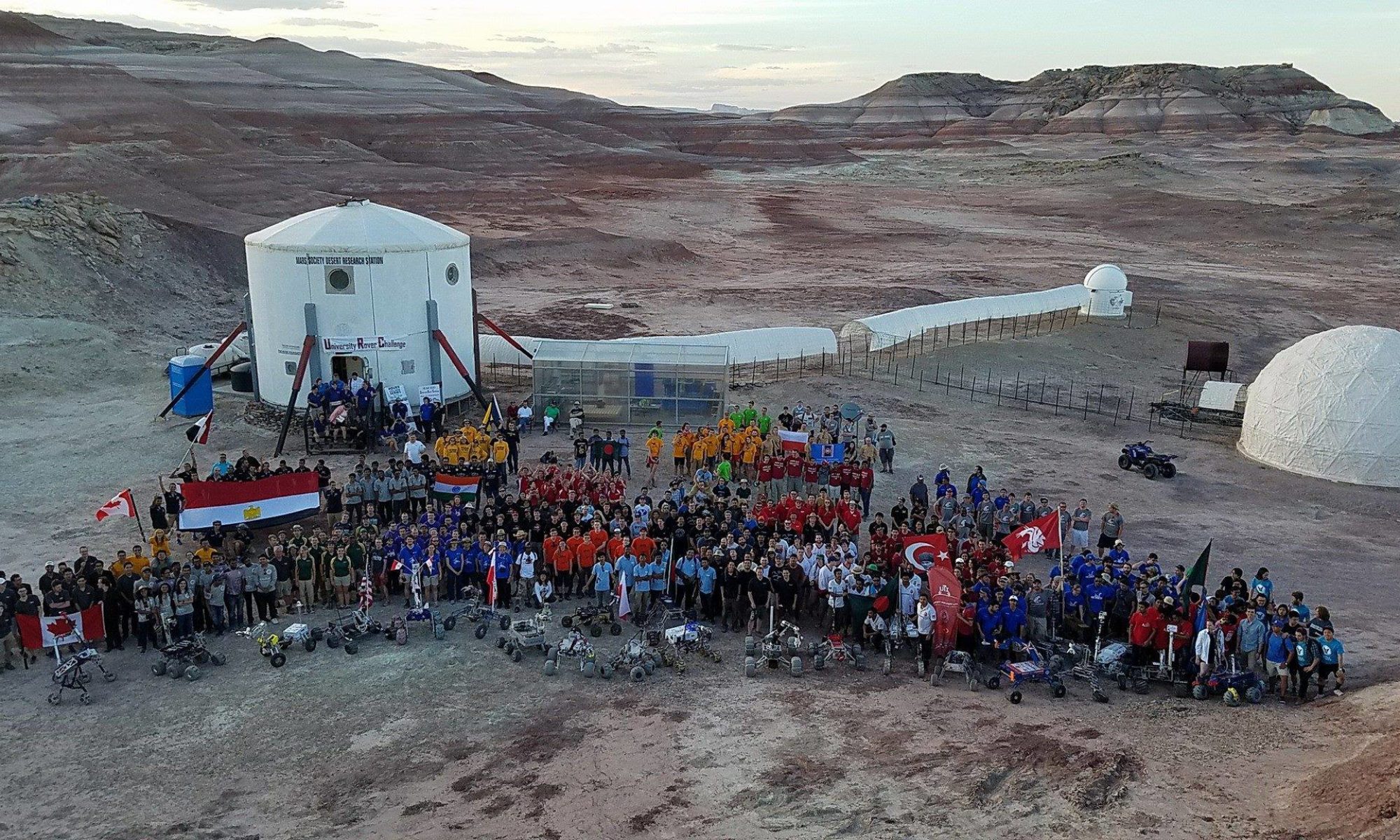
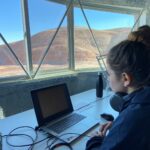
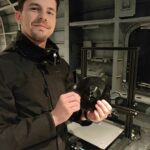
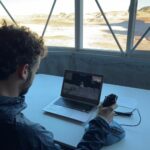
Only 4 pictures today, and I apologise for it – Sundays are quiet-ish
here and pictures end up low on the priority list. Besides, it’s too
early for pizza pictures, sadly. We can try to improvise something last
minute if absolutely necessary, but I’m afraid this’ll have to do.

Journalist Report – February 6th

Sol 6: Focus on: Human Factors – Preparing for future crewed mission to Mars
Author : Pierre Fabre

Hi everyone! Today is the second episode of “Focus on”, our format in which we focus on our scientific experiments! In this episode, we are going to focus on some experiments managed by Marion and François, related to the field of Human Factors! I can’t wait to tell you more about those cool experiments, but first, as always, I will talk to you a bit about our Sol 6 on Mars!

Today was definitely not the most exciting day of the mission, but I can still manage to find something to tell you!

First thing, it was Sunday! Sunday is supposed to be a real rest day during the mission, but as we are on Mars, there are still things to do!

This morning Clément and Julie had to perform a short EVA to change the battery of the LOAC, our outdoor experiment I mentioned in a previous report. In fact, we have to change the battery every day when we go on EVA, so Sunday is not an exception. We can’t afford to lose precious data. To give our EVA team strength and motivation, we made pancakes with maple syrup, which is without a doubt the favourite breakfast of the crew!

This afternoon, the tasks were split within the crew. One part of the crew was in charge of cleaning the Hab. It is important to keep the Hab clean as we spend a lot of time in it.

In the meantime, the other part of the crew was performing a human factor experiment created by the University of Lorraine (but Francois will tell you more about that in the « Focus on » part of the report).

I almost forgot to keep you updated about the 3D printing of the custom funnel! They did it! Our amazing team managed to make the 3D printer work and after a stressful afternoon of waiting for the final result, this is it! We are really happy, mostly Julie who will be able to recycle water more efficiently. Our engineers can’t wait to design and print new pieces!

As you can see a Sunday on Mars is not exactly the same as on Earth, we still have to do a bit of work! But it is very pleasant to stay later in bed, skip the workout and work less than during the week!

Moreover, tonight we eat pizza! This will be the first time and I can’t wait to taste it! We will also try to finish our reports earlier tonight to watch a movie all together on the couch, like a real Martian family! We still have to decide which movie and I hope there will be no fight (I personally hope for an extended version of Lord Of The Rings but I doubt that everybody will be down for it).

Now it is time for the part everyone has been waiting for (at least we are going to pretend for the storytelling as I can’t have your live feedbacks). This is what we talked about with Marion and François:

“- Hi guys how are you today?

– We are doing well, got to sleep in today since it is Sunday and have some pancakes for breakfast. So let’s say our day started well!

– Ok, so today we are here to talk about Human Factors experiments. Marion, can you explain why Human Factors are particularly relevant in the MDRS context?

– Human factors experiments are important for future crewed missions to Mars as we need to be able to understand how humans will react to being on another planet, with a particular group of individuals in a confined space for an extended period of time. Being at MDRS is as close as we can get to being on Mars and particularly when it comes to confinement and isolation, it is quite representative. By performing these experiments on crews at MDRS, we can study, analyse the results and draw conclusions that can be applicable to future missions to Mars. If we can predict the adverse effects of being on Mars then we can better prevent them and support the astronauts on their journey.

– François, can you explain what is the aim of the experiment created by the University of Lorraine?

– This experiment was created with researchers from the University of Lorraine and studies the psychological and physiological evolution of crews during their mission. We answer questionnaires that study the evolution of our emotions, the group dynamics and our relationship with our workload. We also perform tests that study our focus, our memory and our attention. For example, one test has shapes of different sizes and colour show up quickly on the screen before our eyes. We have to press a button when the same shape appears twice consecutively. This may seem very simple but this task lasts 15 minutes. It is without a doubt the most rigorous and tiring task. Another test consists in observing a sequence of numbers. When the current number on the screen is the same as the second to last, we have to press the button. This requires a lot of focus as well as good memory. Finally, we cut some hair samples before and after the mission. Indeed, the cortisol present in human hair is telling of the level of stress the person is under. This experiment allows to understand better how humans react to confinement and stress. This will be helpful for future crewed missions or even just prolonged confinement.

– Ok so cool! I can assure whoever is reading this that the “shape test” is very tiring! And what about your experiment Marion? What is Teleop?

– TELEOP is a tele-operated rover experiment created by the human factors department of ISAE-SUPAERO. It is currently also in use in the SIRIUS-21 mission in Russia. The experiment puts its subject behind the joystick of a rover on the Moon. The subject has several tasks to complete in a certain amount of time. These include tasks such as picking up samples from the lunar surface, driving it to the lunar lander and docking with the latter to give the sample for analysis. The subject is not just under time pressure but also needs to make sure that the rover still has enough battery and does not fall or flip as the task will fail. Each task is performed in three different positions, standing up, sitting down and laying on one’s stomach. The goal of this experiment is to study the effect of body position on performance as well as the effect of fatigue on the subject. It is expected that the subject would probably worsen its performance throughout the mission due to fatigue but there could also be an increase in performance as the subject learns to use the rover over time. Only the results will be able to tell us how our ability to tele-operate rovers evolves during an analog mission.

– I truly love this experiment, it is so cool! Thank you for your time, it was really cool to hear about those two really interesting experiments!”

This concluded this second episode of “Focus on”! I hope you enjoyed it and that you learned something! Stay tuned for the next episode of “Focus on” and see you in my next report!

EVA Report – February 6th

Crew 240 EVA Report 06Feb2022

EVA # 7

Author:Clément Plagne

Purpose of EVA: Replacing battery on LOAC atmospheric experiment

Start time: 11:05

End time: 11:32

Narrative: All went quickly and nominally, no issues to remark.

Destination: Crossing between Cow Dung Road and Entrance Road

Coordinates (use UTM NAD27 CONUS): 518 300, 425 0500

Participants:Clément Plagne, Julie Levita

Road(s) and routes per MDRS Map: Entrance Road, Cow Dung Road

Mode of travel: Opportunity, foot

Astronomy Report – February 6th

Astronomy Report

Name: Maxime

Crew: 240

Date: 06 feb 2022

MDRS ROBOTIC OBSERVATORY

Robotic Telescope Requested (choose one) MLC-RCOS16

Objects to be Imaged this Evening: M51, M42, NGC1499

Images submitted with this report: none

Problems Encountered: all the images are black with the MLC telescope, I don’t understand why.

MUSK OBSERVATORY

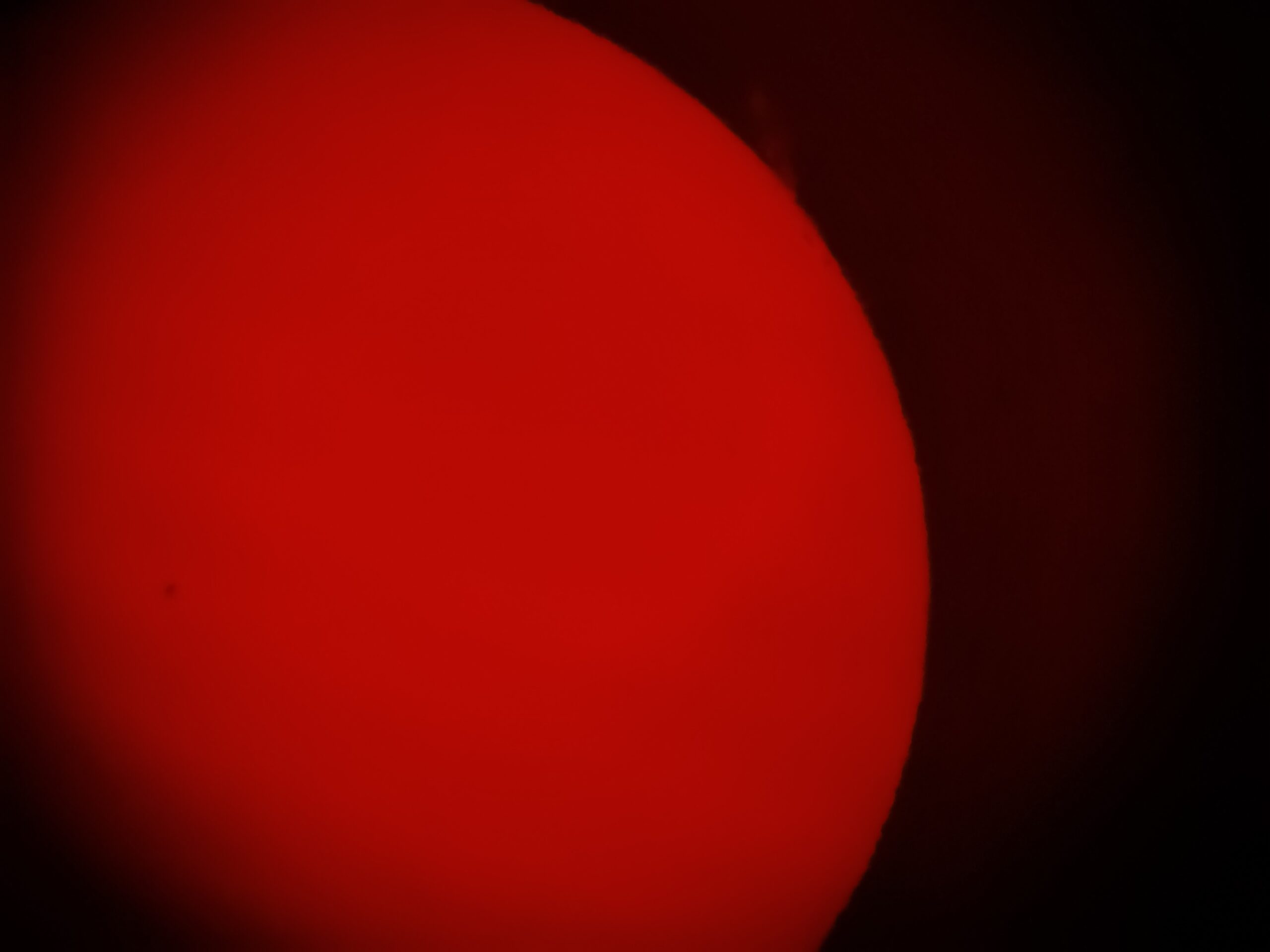
Solar Features Observed: one flare

Images submitted with this report: one, taken with my camera on the ocular

Problems Encountered: the dome is still stuck.

Operations Report – February 6th

Crew 240 Operations Report 06-02-2022

SOL: 6

Name of person filing report: François Vinet

Non-nominal systems: NA

Notes on non-nominal systems: NA

ROVERS

Spirit rover used: no

Hours: 154.3

Beginning charge: NA

Ending charge: NA

Currently charging: left uncharged, handled by Atila

Opportunity rover used: yes

Hours: 83.5

Beginning charge: 100%

Ending charge: 98%

Currently charging: left uncharged, handled by Atila

Curiosity rover used: no

Hours: 165.9

Beginning charge: NA

Ending charge: NA

Currently charging: left uncharged, handled by Atila

Perseverance rover used: no

Hours: 226.8

Beginning charge: NA

Ending charge: NA

Currently charging: left uncharged, handled by Atila

General notes and comments: NA

Summary of Hab operations:

WATER USE: 33 gallons

Water (static tank): 296 gallons

Water (loft tank): 25 gallons

Water Meter: 0155529.8 units

Static to Loft Pump used – yes

Static tank pipe heater (on or off): on

Static tank heater (On or off): on

Toilet tank emptied: yes

Summary of internet: NA

Summary of suits and radios: NA

Summary of GreenHab operations:

WATER USE: 12 gallons at 1pm

Heater: On

Supplemental light: On

Harvest: 75g cherry tomatoes

2g basil

Summary of ScienceDome operations:

Dual split: off

SOC: 74% at 7.00pm

Summary of RAM operations: NA

Summary of any observatory issues: NA

Summary of health and safety issues: The 2 new headsets were received.

Questions, concerns and requests to Mission Support: NA

Sol Summary – Feb 6th

Crew 240 Sol Summary Report 06Feb2022

Sol: 6

Summary Title: A well deserved rest

Author’s name: Clément Plagne

Mission Status: Nominal

Sol Activity Summary: All of us slept in except myself, who woke up at 5am to take advantage of the night’s extra data to download data for Maxime’s remote astronomy observations. Fortunately for me, I went right back to sleep for a couple of hours. Unfortunately for Maxime, the literal gigabytes of data we’d accumulated were of no use, as the telescope had issues and only recorded noise. It was with great luck that he at least managed to catch a few images of the Sun during the day while the Musk telescope was pointed the right way.

Days are seldom fully idle however, and we still got a small routine EVA done for battery change, finally achieved or first 3D printed objects, and a part of the crew spent the afternoon doing questionnaires and tests for the work we do with two French universities. Nevertheless, it was still overall a fairly relaxing day, and we’re looking forward to pizza night for dinner.

Look Ahead Plan: Pizza night for dinner. (also, using the 3D printed piece for the water recycling and printing new pieces that we had in our backlog). Scheduling some remote astronomy observations that will hopefully function well.

Anomalies in work: Issues with the remote observations made at the observatory in New Mexico – of 6 observations made, none of them had functional data, possibly owing to an issue with the dome or the sensors.

Weather: Fair.

Crew Physical Status: A crewmember had a fall in the stairs between lower and upper deck, and got away with some bruises and pain but nothing major, very fortunately.

EVA: One, very efficient, only to switch batteries on an atmospheric science instrument.

Reports to be filed: Astronomy report, Science Report, EVA Report, EVA request, Operations Report, HSO Report, Sol Summary, Journalist Report, Crew Photos

Support Requested: None

Astronomy Report – February 5th

Astronomy Report

Name: Maxime Jalabert

Crew: 240

Date: 05 feb 2022

MDRS ROBOTIC OBSERVATORY

Robotic Telescope Requested (choose one) MLC-RCOS16

Objects to be Imaged this Evening: m 63, m 43, m 36

Images submitted with this report: none

Problems Encountered: none

MUSK OBSERVATORY

Solar Features Observed: none

Images submitted with this report: none

Problems Encountered: same problem, the dome is sill stuck

Journalist Report – February 5th

Crew 240 Journalist Report 05Feb2022

Author: Pierre Fabre

Sol 5: Interview with: HSO – How to take care of a crew?

Hi everyone! Welcome back in this new report for the second episode of « Interview with ». In today’s episode, we are going to talk with Julie Levita, our HSO about her and her role in the crew.

But first, let me talk to you a bit about our Sol 5 on Mars.

First, I think it is worth to notify that this morning we didn’t workout to, I quote our HSO: « let our bodies rest until the beginning of a new week of workouts ».

I think it was a good call and everyone truly appreciated to sleep a little later. In fact, this week was quite exhausting for everyone and we were all quite tired lately (at least I was).

Moreover, it was important to rest to be ready for today’s EVA, which was long and physically demanding. Maxime, François, Marion and Clément went for an exploration of Candor Chasma, a big canyon in the surroundings of the station. On Earth, someone would probably call that EVA a hike, a hard one maybe. But on Mars, with the spacesuit and all the constraints we have already talked about in previous reports, it was a real challenge. They have spent 3 hours and a half outside, exploring the maze inside the canyon. When they came back, they were exhausted and everyone went for a nap after lunch. Despite all of that, I would have wanted to go with them so bad. I’m sure you will understand if you take a look at the pictures they took there, the canyon looks so good! But there has to be someone at the Hab just in case something happens to them. I really hope I will have the opportunity to see this canyon with my own eyes next time.

This afternoon despite how tired they were, Francois and Maxime spent all their time in the RAM trying to make the 3D printer work. Remember last time I told you that we needed this 3D printer working to print a custom funnel to allow Julie to recycle water. While I was interviewing Julie at the lower deck of the Hab, they worked very hard and at the end their perseverance paid off. They succeeded. They managed to print their first test piece. Tomorrow, they will be able to print the piece for Julie, which will make her task of recycling water way easier.

In fact, Julie has no time to lose, she is very busy creating workouts and activities for the crew as a good HSO. Talking about that, let’s see what we talked about this afternoon:

“-Hi Julie! How are you today?

-Super good, thank you! I’m glad to do this interview with you!

-Me too! Can you introduce yourself briefly for those who don’t know you yet?

-Ok let’s do this. My name is Julie Levita, I’m an engineering student at ISAE-SUPAERO. During my gap year I have performed two internships in the Space Surveillance Awarness domain. I’ve been very fond of team sports for a long time and I’ve played handball at national level. Currently I’m the crew’s 240 HSO (Health and Safety Officer).

-Yes, regarding that, can you explain a bit what is the role of the HSO in a crew?

-For me the HSO role has three main components.

The first one deals with the physical health of the crew. I have to take care of injuries, symptoms and those kinds of things. At MDRS, the motto is “Safety first”. Most injuries occur because of lack of sleep, dehydration or low sugar. A good HSO has to make sure everyone takes care of themselves. Due to Covid I also have to monitor the crew members temperature and oxygen rate.

The second component is related to the mental health of the crew. We live in a station without contact with the outside world, with limited resources in water and food which can be hard for some people to deal with. It is important to implement good habits that make us feel better. Every day, I organize workouts, meditation sessions and team building games. A good HSO also has to listen to his crew mates and be there for them if they feel bad.

And last but not least, safety is the most important task for an HSO. Security is the priority at MDRS, even more important than the simulation. This task is shared with the crew’s engineer who makes sure very often that every alarm in the station is working properly, that we have enough water and enough energy. The procedures are here to avoid dangerous situations as much as possible. I, with the help of the commander, have to make sure that we follow them well. But sometimes unexpected situations occur and we have to decide whether or not break the simulation because the situation is no longer under control. Those are hard questions to answer and we have to agree as a crew on what to do before the situation even occurs.

-And why did you want to be the crew’s HSO?

-They are many reasons.

First, I have a first aid certification and this training taught me how to react quickly in case of an emergency.

At the time I was playing handball, I witnessed many injuries that are typical of what could occur during an EVA. With time, I have learned to evaluate the gravity of an injury and in some cases I learned how to cure it or make it hurt less.

I think the main reason is the human aspect of the job. I care for people and I like to listen to them and try to understand how they feel. Moreover, I feel close to every member of that crew so it is all the more important for me that everyone feels good.

-Ok last question. What is your favourite part of the job?

-As I told you before, my main job is to prepare the activities for the day. I love workouts, it is a good way of starting the day feeling energized. Moreover, it is important to do sport when you have to live in small spaces like in the station. I also like when we do relaxation all together at the upper deck. I definitely feel the positive impact on how I feel and my crew mates make the experience even cooler by taking it very seriously. But what I like the most are the games we play together at night. Those are really pleasant moments and I like to think that the crew is becoming more of a team each time. And to be perfectly honest, the positive feedbacks from my crewmates make me very happy.

-Those feedbacks are well deserved Julie; you do an excellent job as HSO. I love all the activities you make us do and I want to thank you personally for the energy you put in making us feel better each day. “

This concluded this cool interview with Julie. I hope you enjoyed it! The interviews from the other crew members are coming soon so stay tuned!