Journalist Report – April 27th

Journalist report sol 7

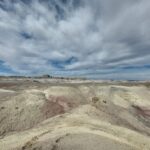
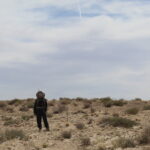
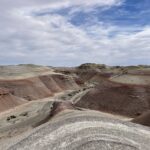
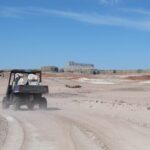
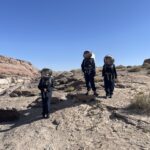
Each report brings more of the same nouns—rocks, drones, photos, bread, monolith—but even a day off of EVAs for the Journalist can’t prevent strange events from making their way into the report. An early EVA sent our Engineer and Commander out for another Monolith triangulation session with various compasses; beyond getting more information, they also found small Monolith-like rocks near their perch. Whether those were offerings, representations, or offspring, we’re not sure. Our Engineer went on a second EVA with our HSO in the afternoon. It was a journey in high winds during the traveling portions. The goal was to 3D scan some rocks and take photos, and once up at the Overlook things seemed to stagnate—no “new rocks,” per se, so no scanning—before becoming strange. A van of aliens parked some distance away eventually approached the crew, letting them know their back tire had been stuck in a hard-dirt divot. (This despite their rented van company being called "Escape Camper Vans.") They needed help; conveniently for simulation’s sake, the rovers weren’t enough to haul them out, so Mission Support was called and dispatched. Allegedly the van-life aliens are going to donate to the Mars Society out of gratitude for the haul—someone should keep an eye on this.

The crew Journalist finished some Terran work, set up her soil desiccation project’s lab stage, and prepared a dinner she admittedly was not confident would be good until it was complete: a simple congee with peas and corn, topped with soy-glazed Spam. (While she was worried Spam “Lite” would be inferior to regular Spam, she’s been pleasantly surprised at the dupe.) The HSO had also made our best loaf of bread yet with apples and spices.

After eating, the crew completed their sixth 100cameras module, which revealed more about the broad arcs of our lives. And, for the third day in a row since a kind but firm warning by our Commander, we’ve used a respectable amount of water and should be in the clear by the end of the mission, knock on wood.

We’re realizing that we need to start finishing projects, collecting results, executing final goals for dinners, and preparing to tear down the GreenHab.

Sol Summary – April 27th

Crew 315 Sol Summary Report 27-04-2025

Sol: 7

Summary Title: A Sol In The Life

Author’s name: Michael Andrews, Crew Engineer

Mission Status: Nominal

Sol Activity Summary:

The Phoenix team is now in the second half of their mission on Mars. I have to admit: I am quite excited that the Crew Engineer has been assigned to write the Sol Summary for Crew 315 only on sols that are prime numbers so far. And yes, I will be writing sol 11’s summary as well!

We awoke to egg cups for breakfast. I normally am not a fan of mushrooms (apologies to HSO Koi and Journalist Saavedra-Buckley who have fungi-focused research both on Earth and Mars) but Artist Gagnon found a way to prepare them in a way that even I enjoyed.

The first EVA involved Commander Laude and I taking the off-road path to Lith Canyon and climbing various ridges to get a good view of the Monolith for his project. I had never started watching
2001: A Space Odyssey” until last night after much cajoling from the crew, so I didn’t understand the significance of this object until recently. This additional compass heading would allow us to better triangulate its position and find the best location on our Martian map to approach the Monolith via HSO Kois’ drone. At the end of our EVA, we noticed that several small stone towers had been constructed along the tallest Lith Canyon ridge, which Commander Laude explained as being tributes to the main Monolith to enrich his story. Now I am a man of science and don’t believe in any of that, but I do want to claim credit for their name: Miniliths™.

After a short nap, I geared up for EVA #13 with HSO Koi. We aimed to go to Skyline View, a relatively far area from the MDRS station. It didn’t provide many interesting views or progress on scientific objectives, but it made up for it with an interesting story. The MDRS region is surrounded by public land and we often encounter other humans on Mars that we refer to as “aliens”. At Skyline View, we noticed a van parked in the vicinity and later realized it was stuck in the Martian regolith. The drivers approached us looking for help, and although I knew we didn’t have enough torque to extract them, HSO Koi communicated the issue to CapComm who leveraged Mission Support to help. If I was an alien stranded on Mars, I don’t know if I’d be more relieved to see Crew 315’s Health and Safety Officer and Crew Engineer for rescue.

After another 100camera module, we began reflecting on the day and writing reports. A recent topic of conversation has become our water consumption, as we were originally consuming more than 40 gallons of water per day. Commander Laude gave us some good tips to conserve water, and we have been making significant strides ever since. I, for one, am excited that the crew eagerly awaits figures from my Operations Report.

Speaking of eagerly awaiting, the crew is excited to watch the finale of “2001: A Space Odyssey”. Good night Earth!

Look Ahead Plan: The team will resume their normal rhythm of two EVAs a day, with all crew members participating in the EVAs. We are beginning to close in on the final objectives of our individual projects. GreenHab maintenance tasks are beginning to subside as we prepare the area for teardown. The crew has an impressive collection of delicious leftovers and is starting to determine which meals should be repeated before the end of sim.

Anomalies in work: No serious anomalies, but the Crew Engineer has a collection of small repair projects that don’t impact mission viability that will be addressed in the coming days. These are further detailed in today’s Operations Report.

Weather: Today was our windiest day yet! Temperatures ranged from 56 to 64 F, and skies were consistently cloudy. Winds were southwesterly at 17 mph, gusting up to 32 mph at times. Winds never violated EVA abort criteria, but they were constantly monitored throughout the day.

Crew Physical Status: All members healthy

EVA:

· EVA 12: Commander Laude and Engineer Andrews scaled the ridges at Lith Canyon to take additional compass readings of the Monolith. We also observed multiple mini Monoliths on the ridge that were erected by humans.

· EVA 13: Engineer Andrews and HSO Koi traveled to Skyline View to take rock samples and photos for the Crew Artist. At our EVA location we were approached by tourists in a van that had gotten stuck in the soft sand. We radio’ed Mission Support to intervene.

Reports to be filed: 2 EVA Requests, 2 EVA Reports, GreenHab Report, Operations Report, Journalist Report, Crew Photos

Support Requested: None

Journalist Report – April 12th

Journalist report for the 12 april 2025
Author: Batoul Tani

Today’s operations were marked by a successful EVA, carried out despite strong winds and slightly reduced visibility. The crew proceeded cautiously and managed to explore the region as planned. Additionally, the team used a geological hammer to investigate the terrain and search for potential fossil remains, adding a valuable scientific component to the excursion.
In the Science Dome, Batoul, our Crew Journalist, reached an important step in her microbiological work. Her first sets of bacterial cultures have now completed their treatment phase. She closely monitored the samples throughout the process and will obtain her first results tomorrow, which will help evaluate bacterial survival under simulated Martian conditions.
Bérengère, our GreenHab Officer, dedicated time to plant care and environmental control in the greenhouse. Despite the intense heat inside the GreenHab during the hottest part of the day, she was able to tend to the crops and ensure optimal conditions for plant growth.
For the rest of the crew, the day was relatively calm in terms of experimental activity, with most projects requiring only routine monitoring. Daily tasks were carried out as scheduled, ensuring continuity of data collection and system maintenance. We took advantage of the bad weather to shoot videos for our social media.
Sadly, as the sky was cloudy and the winds were too strong, we didn’t make any observations with the musk observatory.
Overall, the day unfolded smoothly, balancing field exploration and laboratory work, and setting the stage for new results in the coming days.

Operations Report – April 12th

Crew 314 Operations Report 12-04-2025

SOL: 6

Name of person filing report: Antoine Dubois (Engineer)

Non-nominal systems :

The tunnels have been checked.

Notes on non-nominal systems :

Tunnels: We carried out a complete check of the tunnels due to the wind speed and 11 cable ties have been replaced. The 100 pack of cable ties (11 inch) is empty.

ROVERS

Spirit rover used: /

Hours: (before EVA)/

Beginning charge: (Before EVA) /

Ending charge: (On return from EVA, before recharging) /

Currently charging: yes

Opportunity rover used: Not used

Hours: /

Beginning charge: /

Ending charge: /

Currently charging: yes

Curiosity rover used: EVA#8

Hours: 307.6

Beginning charge:100

Ending charge: 59

Currently charging: No

Perseverance rover used: EVA#8

Hours: 318.7

Beginning charge: 100

Ending charge: 58

Currently charging: No

General notes on rovers: Has Opportunity been checked out regarding the battery ? It seemed to lower quickly during our previous EVAs as mentioned yesterday in our report.

Summary of Hab operations : Today in the Hab, we dedicated time to cooking, socializing, making progress on our experiments and advancing our individual reports. We also did some physical exercise to maintain our shape. In addition, we filmed a few videos for our social media channels. To wrap up the day, we held our regular team meeting to review our progress and plan the tasks ahead.

Water Use (please use both methods to estimate water usage)

Time of measurements (collect data for the same time window): 7 p.m.
1) Per formula (see notes): 13.20 gallons
2) Smart Home Dashboard (see notes): 17.30 gallons

Water (static tank, remaining gallons): 344.02 gallons (per formula) & 355.68 gallons (Smart Home Dashboard)

Static tank pipe heater (on or off): off

Static tank heater (on or off) : off

Toilet tank emptied (no or yes): no

Summary of internet: Research for experiments, languages learning and music listening

Summary of suits and radios:

Suits EVA#8 : 7, 8, 9 and 10

Radios EVA #8 : 3, 4, 6 and 7

Summary of GreenHab operations: put notes here:

I watered all the plants with water in which I added 2 teaspoons of Miracle-Gro (I finished one small bag) per 2 gallons of water.

The door of the GreenHab was left open for 7 hours 50 minutes (11.10 am to 7 pm) to reduce the temperature inside (maximum of 102.7 °F).

I watered and checked the seeds of the 3 small rectangular black pots (sprouts of China Rose radish) with the new cultures (Kale, Arugula and cress). The seeds of sprouts of China Rose radish (which were in water to initiate germination) were sown in a small rectangular black pot and I added a label.

I removed plants in the square blue pot because they were at the end of their life.

I cleaned the floor of the GreenHab.

WATER USE: 8.75 gallons

Heater (On or Off): Heater on (setup temperature = 72°F)

Supplemental light (hours of operation): 7-10 pm

Harvest (name, weight in grams): 1 rainbow cherries and 1 spring onion

Summary of ScienceDome operations: put notes here

Check the condition of plantain seedlings and watering

Check Petri dishes for arbuscular fungi spore germination

Shooting videos explaining our experiments for our social networks

Isolation of AMF spores

Inoculation of Esherichia coli

Inoculation on petri dishes of Bacillus Thuringiensis with soils

Treatment of treated dishes

Dual split (Heat or AC, On or Off): Off

Summary of RAM operations:

At 9:20 a.m., the Crew Engineer took 2 zip ties and a dark ribbon to repair equipment in the field if needed. However, no repair was necessary, and all materials were returned to their place.

We shot some videos explaining our experiments for our belgian social network during the afternoon.

At 7:10 p.m., we took 11 cable ties in the RAM to fix the tunnel.

Summary of any observatory issues: None, weather conditions were not good enough, too many clouds and strong winds making it unsafe.

Summary of health and safety issues: Everyone was in good health today, with no issues reported. There were no safety concerns to note.

Questions, concerns and requests to Mission Support:

A request was submitted to Mission Support to assist the crew in closing the main entrance door, which had suddenly slammed open due to strong winds and became stuck. Thanks to Mission Support’s prompt intervention, the issue was successfully resolved.

Can we have a new pack of 11 inch cable ties ? The package was emptied during the tunnel check.

Since some of the canned goods and food supplies (such as eggs, coffee, etc.) were already partially used upon our arrival, would it be possible to receive a resupply?

EVA Report – April 12th

Crew 314 EVA Report 12-04-2025
EVA # 8
Author: Bérengère Bastogne (Greenhab Officer)
Purpose of EVA: We will head to the Sea of Shells where we will conduct a drone exploration and use the hammer to search for fossils. On the return journey, we will also stop at the intersection of Galileo Road and Cow Dung Road to inspect Antoine’s equipment.
At those two stops, the crew will stay within 1 mile from the rovers.
Destination: The furthest point of the EVA will be the Sea of Shells. We will then head back at the MDRS to make a second stop at the intersection of Galileo and Cow Dung Road.
Start time: 9:30am
End time: 11:32am
Narrative:
Today’s EVA was carried out under hotter weather conditions compared to previous sols and some wind (around 15mph wind gusts). The crew departed the Hab at 09:44 with two rovers, heading toward the Sea Shells region to continue geological sampling.
At 09:52, the team passed Cowboy Corner and reached the intersection with Brahe Highway at approximately 10:00. At that point, the communication signal was extremely weak, and the team was unable to establish contact with CapCom.
By 10:10, the EVA team arrived at the Sea Shells site. Although the signal improved briefly, the area’s terrain quickly descended, resulting in another loss of signal. The team proceeded with their sampling task despite this challenge.
At 10:27, wind conditions were recorded: gusts reaching 16 mph with a steady wind of 4 mph coming from the west. The crew completed their work and began the return to the rovers at 10:56, but they were not able to fly the drone given the high winds.
They reached Brahe Highway again at 11:01, where communication was re-established. By 11:07, they returned to Cow Dung Road. A driver switch took place: Odile and Béa took over for the next leg of the journey.
The crew arrived at the site of Antoine’s experiment at 11:16 to perform a brief inspection. After a short stop, they returned to the rovers at 11:20 and switched drivers once again, this time Louis and Béa taking the wheel.
The EVA concluded with the rovers returning to the MDRS at 11:24. Decompression procedures were initiated immediately upon arrival and completed by 11:32.
This EVA allowed for critical fieldwork in multiple locations despite some signal challenges. The efficient management of time and logistics ensured the mission goals were achieved safely and effectively.
Destination: The furthest point of the EVA will be the Sea of Shells. We will then head back at the MDRS to make a second stop at the intersection of Galileo and Cow Dung Road.
Coordinates (use UTM WGS 84):
First stop : Sea of Shells (4255500N,516500W)
Second stop : Intersection Galileo Road and Cow Dung Road (4252250N, 519000W)
Participants: Antoine Dubois (Engineer), Béatrice Hollander (Commander), Odile Hilgers (HSO), Louis Baltus (Astronomer)
Road(s) and routes per MDRS Map: The EVA will begin on Moonwalk Road, then proceed along Cow Dung Road 0110. From there, we will follow Brahe Highway to the Overlook, and then take Copernicus 1575 Highway to reach the Sea of Shells. For the return trip to the MDRS, we will retrace the same route in reverse.
Mode of travel: Driving and walking

GreenHab Report – April 12th

Crew 314 GreenHab Report 12-04-2025
GreenHab Officer: Bérengère Bastogne
Environmental control (fan & heater):
Heater on (setup temperature = 72 °F)
Fan on (to keep the temperature below 94 °F)
Average temperatures (last 24h): 87.7 °F
Maximum temperature (last 24h): 102.7 °F
Minimum temperature (last 24h): 72.7 °F
Hours of supplemental light: 7-10 pm
Daily water usage for crops: 8.5 gallons
Daily water usage for research and/or other purposes: 0.25
Water in Blue Tank (200 gallon capacity): 144.85 gallons
Time(s) of watering for crops: 20 min
Changes to crops: The seeds of sprouts of China Rose radish (which were in water to initiate germination) were sown in a small rectangular black pot and I added a label.
I removed plants in the square blue pot because they were at the end of their life.
Narrative: I watered all the plants with water in which I added 2 teaspoons of Miracle-Gro (I finished one small bag) per 2 gallons of water.
The door of the GreenHab was left open for 7 hours 50 minutes (11.10 am to 7 pm) to reduce the temperature inside (maximum of 102.7 °F).
I watered and checked the seeds of the 3 small rectangular black pots (sprouts of China Rose radish) with the new cultures (Kale, Arugula and cress). The seeds of sprouts of China Rose radish (which were in water to initiate germination) were sown in a small rectangular black pot and I added a label.
I removed plants in the square blue pot because they were at the end of their life.
I cleaned the floor of the GreenHab.
Harvest: (include which crop and mass in grams) 12 rainbow cherries and 1 spring onion
Support/supplies needed: None

Journalist Report – April 11th

Journalist report 11 Apr 2025
Author: Batoul Tani

Today marked another productive sol for the crew at the Mars Desert Research Station (MDRS), as we continued to advance our scientific objectives under simulated Martian conditions.
Early in the day, a scheduled EVA was carried out under relatively high temperatures. The mission had two primary goals: to collect soil samples from the designated Special Region for Bérengère’s GreenHab experiment, and to inspect and maintain the external equipment for Antoine’s ongoing engineering project. Despite the heat and communication challenges encountered during the EVA, both objectives were successfully accomplished, and the team returned safely to the Hab on schedule.
Bérengère continued her role as GreenHab Officer by planting a new set of fast-germinating crops, like radish sprouts, arugula, cress, and other leafy greens, to monitor early growth patterns in a controlled Martian analog environment. She also continued regular maintenance activities, including watering and development tracking of existing plants.
Meanwhile, Antoine focused on retrieving meteorological data from his external sensor array. This data is vital for assessing environmental variability and ensuring operational safety, particularly in preparation for future EVAs. His engineering experiment also includes long-term monitoring of equipment performance under field conditions similar to those on Mars.
In the Science Dome, Batoul, our crew journalist and science communicator, dedicated the afternoon to creating a new experiment simulating the effects of Martian microgravity.
Throughout the day, our daily scientific protocols continued without disruption. Each crew member follows a rigorous schedule, contributing to a wide range of interdisciplinary experiments that reflect the collaborative and multi-faceted nature of analog missions.
After a productive and challenging day, the crew came together for a group workout session to unwind and relieve the physical and mental tension that had built up throughout the day. It was a moment of camaraderie and relaxation, providing the team with a much-needed break after a day filled with intense tasks and valuable experiences.

Sol Summary – April 2025

Crew 314 Sol Summary Report 11-04-2025

Sol: 5

Summary Title: Life Between Red Dust and Blue Skies

Author’s name: Arnaud de Wergifosse (Crew executive officer)

Mission Status: ongoing

Sol Activity Summary: Early in the day, an EVA was carried out to collect soil samples for Bérengère’s GreenHab experiment and to check on the equipment for Antoine’s ongoing engineering project. Both tasks were completed successfully, despite the hot conditions outside.

Back in the station, Bérengère planted new seeds in the GreenHab: radish sprouts, arugula, cress, and other fast-growing greens. She also took time to water the existing plants and monitor their development.

Meanwhile, Antoine downloaded the meteorological data, crucial for tracking environmental changes and ensuring the safety of future EVAs.

Batoul, our journalist, spent the afternoon programming a new experiment which simulates the effects of Martian microgravity.

Our daily scientific protocols continue steadily, as each team member follows their assigned experiment schedules with precision and focus.

Life at the MDRS is a constant balance between routine and the unexpected, and today was a perfect example of that.

Look Ahead Plan: One EVA is scheduled in the morning to conduct Antoine’s experiment. Throughout the day, we will continue working on our individual experiments. Béatrice and Arnaud will carry on their research while collecting data with their wearables and with a questionnaire about stress and sleep evaluation. Louis will continue his work in the Observatory.

Anomalies in work: None was notified.

Weather: Sunny without clouds in the morning and the afternoon. Temperatures varied between 44°F and 90°F for the lowest and highest temperatures of the day.

Crew Physical Status: Everyone was in good health today, with no issues reported.

EVA: The EVA team exited the Hab at 09:31 after a 5-minute decompression. Batoul and Odile took Curiosity, while Bérengère and Antoine drove Opportunity. The team passed Cowboy Corner and arrived at the Special Region by 10:05, where they collected two soil samples for Bérengère’s experiment.

Due to poor signal near the region, contact with CapCom was unsuccessful until arrival at the site. Afterward, the team skipped the Overlook due to battery considerations (Opportunity at 58%) and reached the Galileo Road & Cow Dung Road intersection by 11:15. There, they inspected Antoine’s equipment and deployed the drone for additional data.

On the way, they retrieved a fallen rover camera piece. The return began at 11:34 with a driver switch, and the rovers were parked at the Hab by 11:41. Decompression ended at 11:47, marking a successful and efficient EVA.

Reports to be filed: Sol Summary, Journalist Report, Greenhab Report, Operations Report, Crew Photos, EVA Report, EVA Request, Astronomy Report.

Support Requested: Crew requested from the mission support to bring them packages needed for the crew journalist’s experiment