
Mission Plan – January 1st

Crew 272 – Purdue Redusters
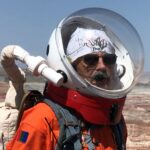
Crew Commander: Kshitij Mall (India/USA)
Executive Officer/Chief Scientist: Ariel Black (Canada/USA)
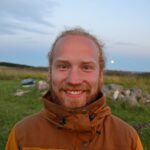
Crew Engineer: Mason Kuhn (USA)
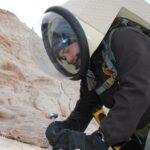
Crew Geologist: Adriana Brown (USA)
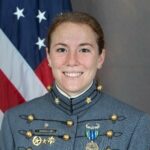
Health and Safety Officer: Megan Rush (USA)
Crew Journalist: Kenneth Pritchard (USA)
Green Hab Officer: Madelyn Whitaker (USA)

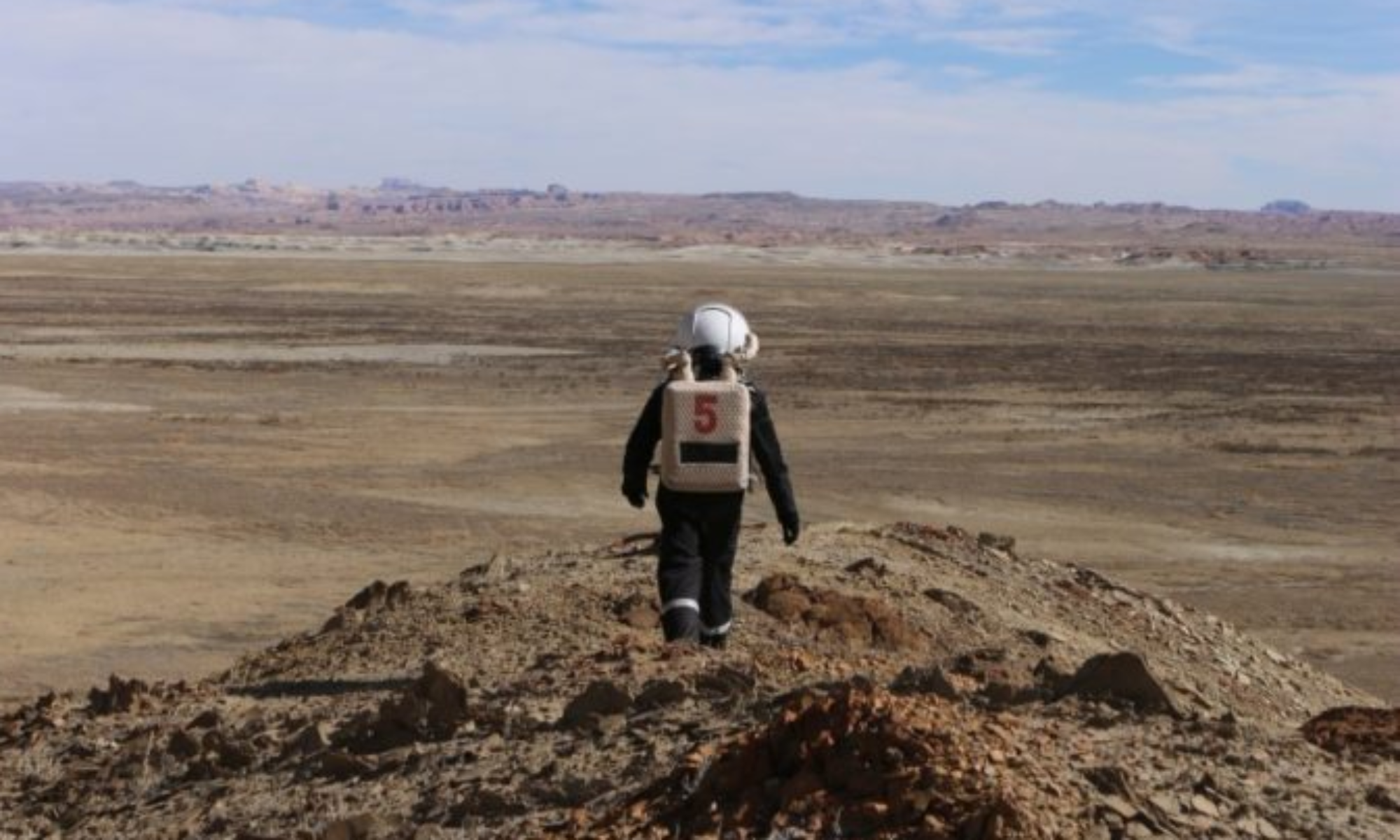
MDRS Crew 272 is a multidisciplinary group of engineers and scientists hailing from the cradle of astronauts, Purdue University, who are all passionate about Mars exploration. The crew’s priority will be to advance the state-of-the-art research in different fields of current interest pertaining to Martian missions including communications, search and rescue missions using drones, additive manufacturing, plant growth on Mars, and human factors. Below is a detailed summary of projects during the mission.

Title: Radio Direction Finding for Communication on Mars
Crew Member: Kshitij Mall
Objectives: The main objective is to expand upon the research conducted by Dr. Justin Mansell during Crew 186 rotation and improve upon the transmitter-receiver system to have better communication at Mars between astronauts on EVAs and their habitat. Additional intent is to use the existing MDRS HAM, if possible, to improve the communication at Mars.
Description: This project aims at looking at the improved transmission system comprising two Microfox 15 transmitters and Yagi Uda antenna receiver system. Idea is to place transmitters at two different spots, one at the hab and another at another safe location to help identify the roundabout latitude and longitude of a particular location using Yagi Uda antenna
Rationale: Mars doesn’t have a magnetic field for compass to work and won’t have a GPS system right away. For communication on Mars we’ll have to look at other options.
EVAs Required: One EVA to place the transmitter and then test the new two transmitter communication.

Title: Paleoclimate Reconstruction of the Near-MDRS Environment
Crew Member: Adriana Brown
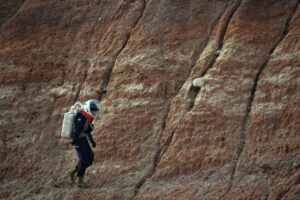
Objectives: Field observation and sampling of inverted paleochannels, analysis of paleoflow indicators, and interpretation of changes in depositional environments near Kissing Camel Ridge and Candor Chasma.
Description: This project aims to begin a paleoclimate reconstruction of the environment near MDRS, with a specific focus on changing depositional environments and ancient fluvial processes and how these are reflected in the stratigraphy.
Rationale: Understanding ancient fluvial processes is integral to better understanding the climatic and habitability history of Mars. Many features near MDRS, especially inverted paleochannels, such as those proposed by Clarke and Stoker (2011), are excellent Martian analogs that can provide important information through sedimentary stratigraphy and structures.
EVAs Required: At least one to Candor Chasma and to Kissing Camel Ridge.

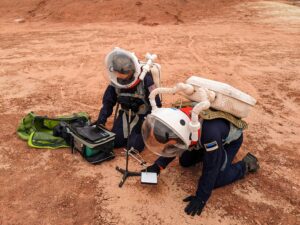
Title: Navigation, Scouting, and Search & Rescue Using a Drone
Crew Member: Mason Kuhn
Objectives: The navigational objective is to explore areas of interest and routes to them for safe passage on foot, by a rover, or both. The scouting objective is to find new areas of interest for the geologist and any other crew member who is looking for a specific area, formation, or other items. The objective of search and rescue will be to compare the time taken to locate a ‘lost’ astronaut using the drone’s technology and on foot.
Description: Navigational EVA’s will be conducted as needed and upon request by other crew members who are looking for an aerial view of the path they will take. Media will be collected using the drone camera and shared with the crew members. Scouting EVA’s will be conducted also as needed, and it is expected to scout for different formations for geology areas of interest. This will be done to investigate other areas that might not be planned to visit. While navigation and scouting are used more to help other crew members, S&R will be the main focus of this research with quantifiable data. Time trials will be conducted 2+ times (as time allows) and compared in order to prove which method of S&R is more efficient.
Rationale: Astronauts on Mars will experience dust and windstorms which could pose a risk to their lives, no matter whether they are out of the HAB or ‘safely’ inside of it. There are other possible weather-related risks, or an astronaut could possibly forget their way back to the HAB. In any of these scenarios and likely some other scenarios, search and rescue will be required to save the astronaut’s life.
EVAs Required: Minimum 2 S&R EVAs to collect data, Minimum 1 Navigational EVA (more if needed), Minimum 1 Scouting EVA (more if needed)

Title: The Effectiveness of 3D Printing in a Mars Analog Environment
Crew Member: Megan Rush
Objectives: Test to see if plastic 3D printed tools work just as well as metal tools in a remote environment where it can be hard to plan for events that may require the use of these tools.
Description: A 3D printer was brought to MDRS to print models of rock hammers, shovels, wrenches, screwdrivers, and other tools. These tools will be brought on a geological EVA and used in the field to see how well the plastic performs its intended job.
Rationale: It is hard to plan ahead for events in a remote environment. If a hammer on Mars breaks, and if there are no extras, then astronauts would have to wait a long time for a resupply, which is wasted time. Using a 3D printer in this environment would allow for unlimited extras at a lower cost and shorter time.
EVAs Required: At least one in conjunction with geological EVAs.

Title: Human Adaptation to the Mars Desert Research Station Environment
Crew Member: Arly Black
Objectives: Assess how humans adapt physically and mentally to confined, isolated, and extreme environments, and assess whether air quality in the hab and spacesuits can be correlated to astronaut performance.
Description: Research involves daily touch-based, computer administered cognitive performance tests, evaluating spatial orientation, vigilance, and mental workload. Additional research will study the physiology of participants before, after, and throughout the mission via a smart tracker FitBit device worn around the wrist. Participants will also be required to fill out daily personal survey about their perceived mood, health, sleep, workload, and crewmember conflicts to see how the mission is affecting perceived mental and physical states.
Rationale: Stressors such as high workload, sleep restriction, circadian misalignment, team dynamics, confinement, isolation, and extreme environments can threaten the ability of astronauts to sustain high levels of cognitive performance over prolonged periods of time. There are few data points about the physical and mental strain astronauts experience on real long-term space exploration missions. As the conditions analog crew members will face replicate those of off-world environments, this is a key study from which to gather information to inform future real-life missions.
EVAs Required: None

Title: Analysis of Plant Efficiency, Yield, Microbial Diversity with Application of Astrobiome Fertilization Cocktails in Daikon Radish
Crew Member: Madelyn Whitaker
Objectives: Validate main claims of Astrobiome performance in Martian analog, analyze photosynthetic efficiency of samples, effects of wilting on shelf life, gain data on plant performance from analog participants
Description: Test effects of applied concentration gradient on physical characteristics of Daikon radish (1) by applying recommended Astrobiome dose at a 2^n scale. Visually analyze effects of harvest, refrigeration on samples with and without fertilization (2). Gain data, crew testimony of performance of plants (3). Samples at the root, shoot, as well as the substrate, will be frozen in RNA-Later for transcriptomics and analysis.
Rationale: Astrobiome is a prospective fertilizer for use in closed environment agriculture for future lunar and Martian mission. This study aims to validate and quantify the claims of product performance in terms of increased yield, quality, and other characteristics on Daikon radish. Additional introduction of contamination into the experimental design allows for simulation of bacterial presence in closed inhabitation, and further analysis of the bacterial community in these plant systems can provide information on root and bacterial relationships in these systems. It would be beneficial how the microbiome interacts with the plant root system and contributes to overall growth of a model plant other than that with which it was tested; microgreens are often less intensive and more nutrient dense.
EVAs Required: None

Title: Smart Scheduling and Objective Prioritization on a Martian Mission
Crew Member: Kenny Pritchard
Objectives: Autonomously prioritize, schedule, and accomplish crew tasks. Respond to distractions with minimal disruption to the schedule. Qualify the implicit challenges of accomplishing science objectives among the habitat responsibilities and environmental hazards of Martian missions.
Description: This project is effectively a case study of our ability to complete objectives during our rotation. The understanding we gain could inform decisions related to scheduling and smart autonomous planning in future missions to MDRS or other Martian habs.
Rationale: While a wealth of knowledge and experience regarding crew scheduling has been developed on ongoing space missions, future Martian missions will face new challenges. The increased communication delay alone has the potential to cause activity interruptions to a mission where every minute counts. Martian crews will not have immediate access to the indispensable advice of Mission Control — they will need to operate with a degree of independence previously untested.
EVAs Required: None
Final Mission Summary – Crew 271


Crew 271 – Mars Society

Crew Commander: Marc Levesque (United States)

Executive Officer/Crew Astronomer: Cesare Guariniello (United States/Italy)

Crew Engineer/Health and Safety Officer: Sergii Iakymov (Ukraine)

Crew Geologist/Journalist: Helen Eifert (United States)

Crew Medical Researcher/Green Hab Officer: Alicyn Grete (United States)

Crew Researcher: Andres Käosaar (Estonia)


MDRS 271 was a Mars Society crew, self-named I.M.A.R.S. (International Mars Analog Research Simulation), was comprised of a diverse group of individuals representing four countries, providing an international flavor to the mission. Three members were veterans of past MDRS missions, while three were MDRS rookies. The crew’s priorities were to maintain all MDRS facilities, vehicles, and equipment in a safe and operable condition and to complete geological, astronomical, psychological, medical, and operational projects.

Prior to the mission, the crew met for 10 video sessions to organize and prepare themselves for their stay at MDRS. These meetings provided an orientation to the station, expectations for accommodations and living conditions, additional simulation protocols beyond those outlined in the MDRS Handbook, and expedition behavior characteristics derived from several sources. For a crew assembled from individual applications, the latter topic was vitally important to establish a cohesive and cooperative effort immediately upon arrival at MDRS. As was proven during the commander’s two previous missions, this set of expedition behaviors allowed this crew to work and live together and support each other extremely well throughout the duration of this mission. This also assisted in the completion of all planned projects and for achieving the safe and effective operation of the station that had been established as priorities for the mission. From this commander’s perspective, I could have not asked for a better crew.

A brief summary of crew project accomplishments follows, with a full description found in the Crew 271 End of Mission Science and Operations Report.


Titles: Coping Strategies for Long-Duration Space Exploration (Study 1); Team Challenge Resolution Mechanisms in Isolated and Confined Space Analog Mission Through Ethnographic Methods (Study 2) 

Crew member: Andres Käosaar

The data gathering for the projects well very well – the members of Crew 271 patiently filled in my surveys, and there seemed to be no missing data points. While there weren’t too many overtly observable coping strategies or team challenge resolution mechanisms executed, there were some instances that were noted for further analysis. Due to the individual profiles of the Crew 271 members and the overall resemblance to a potential real long-duration space exploration team (i.e., culturally and professionally diverse crew very interested in human spaceflight), the data are good, and the sample has high validity. While unable to access all the data collected from surveys and journals, I’m quite hopeful and optimistic regarding the potential findings and conclusions from the studies.


Title: Drying trends of a clay-rich surface

Crew member: Helen Eifert

The goal for this particular experiment was to observe the drying trends of a clay-rich surface for a longer period of time following controlled wetting of the surface to understand chemically bound water trends better. This contributes to the overall understanding of how water may be retained, persevered, and detected on Mars. A location was selected north of the Hab for an experiment to measure drying trends of a clay-rich and Mars-like surface over the course of the MDRS mission. The initial wetting of the experiment was conducted on Sol 4, and the immediate drying trends were measured for an additional two hours following saturation of the surface on this first EVA using an ASD FieldSpec3. Return EVAs were conducted on Sol 5, Sol 6, and Sol 9 for an additional two measurements each day. On the last day of measurement, a dry sample was collected from a nearby site to get initial water content and an additional sample was collected from the experiment site, which still appeared damper than its surroundings. The two samples collected were returned to the Science Dome for loss on ignition analysis. The spectral data was post processed and will be plotted and analyzed to be used to supplement the findings of prior field campaigns. This work is in preparation for publication in the late spring 2023.


Title: Geology – Samples for In-Situ Resource Utilization

Crew member: Cesare Guariniello

Three long-distance EVAs collected samples in the area of Barrainca Butte (black vesicular igneous rocks, conglomerates, and light-colored mudstone), Candor Chasma (Summerville formation: red mudstone and sandstone with cross-cutting gypsum veins), and Skyline Rim (Dakota conglomeratic sandstone and Mancos Shale samples). Samples were weighted and processed in the oven in the Science Dome, then weighted again to ascertain water content. The samples will be shipped to Purdue University for further spectroscopic analysis to identify geotechnical properties for ISRU via remote sensing. In particular, spectra will be studied for indicators of water content and bulk size.


Title: Astronomy

Crew member: Cesare Guariniello

Robotic Observatory: After adjusting the MDRS-14 telescope, multiple observations were taken when the sky was clear. The most notable was M42 (Orion Nebula). Other objects that were sampled are M1 (Crab Nebula), M3, M31 (Andromeda Galaxy), M97, M101 (Pinwheel Nebula), Rosette Nebula, Barnard 33 (Horsehead Nebula). The Astronomy Support will work further on the telescope focus.

Musk Observatory: The sky was hazy or cloudy on most sols. One observation of the Sun was performed towards the end of the mission. This allowed the whole crew to participate in a solar observation. One photo of a group of sunspots with visible umbrae and penumbrae was captured and processed.

Title: Analog Mars Crew Evaluation of a Uniplanar External Fixation Training Module

Crew member: Alicyn Grete

The purpose of this project was to verify whether Martian analog crew members could use an offline, self-assessed module, and locally reproducible 3D printed bone simulation models to become confident and competent in performing external fixation procedures to manage open tibial fractures in an austere environment without access to specialist support from Mission Control. The first two days were spent having participants take a pre-learning confidence survey and complete the training materials and video. Over the next four days, each participant successfully completed a skills test, achieving a go ahead on each competence objective and verifying their work with self-assessment photos. Afterwards, each participant completed a post-learning survey and received Medical Makers certificate and memorabilia to commemorate their accomplishment. These results suggest that my hypothesis was correct: the Tibial Fracture Fixation Training Module can provide analog space crew members with the confidence and competence necessary to teach themselves a new surgical skill. I will be submitting an abstract to present this research at the West African College of Surgeons Conference in Togo this spring, and I am working on an article to submit to Aerospace Medicine and Human Performance journal.


Title: MDRS Engineering Projects

Crew member: Sergii Iakymov

During Crew 271 all 11 EVA suits were inspected for their power systems, and especially wiring connections, charging hardware, and rechargeable batteries. Issues were identified, changes were made to equipment, and recommendations made for better suit maintenance by future crews. A second project evaluated MDRS power consumption at the request of Mission Support by evaluating active station electrical devices. A spreadsheet of the station components and power consumption was created and sent to Mission Support.


Title: Radio communications system maintenance

Crew member: Marc Levesque

A maintenance check was conducted on the new MDRS radio repeater, and its antenna was raised to improve reception between the Hab and EVA teams, since communication gaps were discovered by crews this season. Communications checks during Crew 271 validated this problem, and a recommendation is made to relocate the repeater to the North Ridge. It is also recommended to re-establish Communications Officer duties on each MDRS crew, with those duties most likely assigned to the Crew Engineer to insure proper radio usage and battery recharging.


The I.M.A.R.S. crew would like to extend its appreciation to Dr. Robert Zubrin and Dr. Shannon Rupert for the opportunity to participate in a mission at MDRS and hope that we performed in a manner befitting the safe and effective operation of the station while contributing to the long term goal of human exploration and colonization of Mars.


Submitted by:

Marc Levesque

Crew 271 Commander

Supplemental Operations Report – December 31st

Supplemental Operations Report 31-DEC-2022

Name of person filing report: Shannon Rupert
Reason for Report: Routine/ Last day of 2022!

Non-nominal systems: Power system, toilet, cabinet door under sink in Hab

Action taken for non-nominal systems: See notes below for toilet and power system. The cabinet door might not be replaceable and if it isn’t we will go forage through the storage and see if there is an extra one in the cabinets for the ScienceDome

Generator: Running from about 8 pm to 8 am. The generator was repaired on Thursday. The problem was the governor, which had lost a small plastic pin and as a result was unstable and the vibration of the engine was causing the surging. How crazy! We also needed the oil pressure sensor changed as it was faulty and we had the bushings replaced because they would have needed it soon. The technician was great and spent a lot of time showing us what things were commonly needed and how to replace them. I am very grateful to not have to worry every night about losing power! The oil pressure sensor will be mailed to us, but it is easy to replace. He did not have one with him.

Solar— Nominal but we have had some cloudy days and since the generator currently won’t charge the batteries, we have had to use the generator more hours than normal.

Solar— SOC Last 24 hours:
Max 100
Min 44
Avg 65.9
Power system notes: I reprogramed the router so SOC can again be monitored remotely. Yay, me!

Propane Reading, station tank – 73 % (all propane tanks were filled on Tuesday, the 27th, in anticipation of the storm

Propane Reading, director tank— 83 %
Propane Reading, intern tank— 81 %
Propane Reading, generator— 73 %

Ethanol Free Gasoline – 0 gallons

Water (static tank) – 550 gallons
Water in GreenHab – not noted gallons
Water in ScienceDome: 0 gallons
Water (Outpost tank) – 400 gallons

Hab toilet tank emptied: See crew operations reports. On the 31st, I did flush the tank three times: 1. Filled it up and emptied what was left from the crew. It smelled. 2. Added a bottle of dish soap and 5 gallons of hot water and emptied. 3. Filled it with fresh water and emptied, then added water and digester so it is usable. Each time I emptied it I still heard the glub, glub, meaning something is still wrong (how do you think my very professional words?)

Sojourner rover used: yes
Hours: not noted
Beginning charge: 100
Ending charge: 100
Currently charging: yes
Notes on rovers: nothing to report

ATV’s Used: (Honda, 350.1, 350.2, 300): none
Reason for use: n/a
Oil Added? no
ATV Fuel Used: 0 Gals
# Hours the ATVs were Used today: 0
Notes on ATVs: Nothing to report

HabCar used and why, where? Yes, to town
CrewCar used and why, where? Yes, to town and to Grand Junction

Luna used and why, where? No
General notes and comments: Nothing to note

Summary of internet: Nominal. HughesNet is being moved from my trailer and will be reinstalled in the Hab for crew use during simulation.

Summary of suits and radios: See crew operations reports.

EVA COMMS: Further changes to the COMMS system did not improve signal. They were: all radios with larger antenna, a rover mounted unit, and extending the repeater antenna by an additional eight feet. The decision was made to reinstall the system on the North Ridge, which was where it was when we tested it last season. Crew 271 did find a route to the top of the ridge, but it is going to take a huge effort to move it. We will do this as soon as we can, but it may be awhile before everything comes together.

Campus wide inspection, if action taken, what and why? RAM exterior needs some repainting.

Summary of general operations: It was so strange to have two external people on site in one week to work on systems. The crew mentioned this and I hadn’t thought about it, but I think I’m so lucky to have found people who can help when we really need it. We had the generator technician and then the electrician and the off-grid guy.

Summary of Hab operations: One of the bean bag chairs broke and the crew threw it away although I had planned to send it back. One of the two doors on the kitchen cabinet under the sink broke and is scheduled to be repaired tomorrow. We noted several things needing attention during the two week period at the end of January when we have no crew. The electrician was also briefed on where and what we wanted done with outlets, etc. He will determine where electrical rewiring needs to be done. The off-grid guy studied the power system and we shall see if he can solve the mystery of why the generator and the inverters won’t get along.

Summary of Outpost operations: General cleanup in preparation for upgrading deck.

Summary of GreenHab operations: Supplemental light 10-2 pm.

Summary of ScienceDome operations: Standing desk was returned from the Hab.

ScienceDome Dual Split: on at 65 degrees overnight (when I remember).

Summary of RAM operations: We have a lot of used oil to recycle.

Summary of any observatory issues: Both observatories were used by Crew 271 and some issues were reported to Peter.

Summary of health and safety issues: Nothing to report

Questions, concerns, supplies needed and requests: Happy New Year and welcome to Donald Jacques, our new Site Manager, who arrived at MDRS this evening in his big black bus!

Supplemental Operations Report 31-DEC 2022

Supplemental Operations Report 31-DEC-2022

Name of person filing report: Shannon Rupert

Reason for Report: Routine/ Last day of 2022!

Non-nominal systems: Power system, toilet, cabinet door under sink in Hab

Action taken for non-nominal systems: See notes below for toilet and power system. The cabinet door might not be replaceable and if it isn’t we will go forage through the storage and see if there is an extra one in the cabinets for the ScienceDome

Generator: Running from about 8 pm to 8 am. The generator was repaired on Thursday. The problem was the governor, which had lost a small plastic pin and as a result was unstable and the vibration of the engine was causing the surging. How crazy! We also needed the oil pressure sensor changed as it was faulty and we had the bushings replaced because they would have needed it soon. The technician was great and spent a lot of time showing us what things were that would commonly need replaced and how to replace them. I am very grateful to not have to worry every night about losing power! The oil pressure sensor will be mailed to us, but it is easy to replace. He did not have one with him.

Solar— Nominal but we have had some cloudy days and since the generator currently won’t charge the batteries, we have had to use the generator more hours than normal.

Solar— SOC Last 24 hours:

Max 100

Min 44

Avg 65.9

Power system notes: I reprogramed the router so SOC can again be monitored remotely. Yay, me!

Propane Reading, station tank – 73 % (all propane tanks were filled on Tuesday, the 27th, in anticipation of the storm

Propane Reading, director tank— 83 %

Propane Reading, intern tank— 81 %

Propane Reading, generator— 73 %

Ethanol Free Gasoline – 0 gallons

Water (static tank) – 550 gallons

Water in GreenHab – not noted gallons

Water in ScienceDome: 0 gallons

Water (Outpost tank) – 400 gallons

Hab toilet tank emptied: See crew operations reports. On the 31st, I did flush the tank three times: 1. Filled it up and emptied what was left from the crew. It smelled. 2. Added a bottle of dishsoap and 5 gallons of hot water and emptied. 3. Filled it with fresh water and emptied, then added water and digester so it is usable. Each time I emptied it I still heard the glub, glub, meaning something is still wrong (how do you think my very professional words?)

Sojourner rover used: yes

Hours: not noted

Beginning charge: 100

Ending charge: 100

Currently charging: yes

Notes on rovers: nothing to report

ATV’s Used: (Honda, 350.1, 350.2, 300): none

Reason for use: n/a

Oil Added? no

ATV Fuel Used: 0 Gals

# Hours the ATVs were Used today: 0

Notes on ATVs: Nothing to report

HabCar used and why, where? Yes, to town

CrewCar used and why, where? Yes, to town and to Grand Junction

Luna used and why, where? No

General notes and comments: Nothing to note

Summary of internet: Nominal. HughesNet is being moved from my trailer and will be reinstalled in the Hab for crew use during simulation.

Summary of suits and radios: See crew operations reports.

EVA COMMS: Further changes to the COMMS system did not improve signal. They were: all radios with larger antenna, a rover mounted unit, and extending the repeater antenna by an additional eight feet. The decision was made to reinstall the system on the North Ridge, which was where it was when we tested it last season. Crew 271 did find a route to the top of the ridge, but it is going to take a huge effort to move it. We will do this as soon as we can, but it may be awhile before everything comes together.

Campus wide inspection, if action taken, what and why? RAM exterior needs some repainting.

Summary of general operations: It was so strange to have two external people on site in one week to work on systems. The crew mentioned this and I hadn’t thought about it, but I think I’m so lucky to have found people who can help when we really need it. We had the generator technician and then the electrician and the off-grid guy.

Summary of Hab operations: One of the bean bag chairs broke and the crew threw it away although I had planned to send it back. One of the two doors on the kitchen cabinet under the sink boke and is scheduled to be repaired tomorrow. We noted several things needing attention during the two week period at the end of January when we have no crew. The electrician was also briefed on where and what we wanted done with outlets, etc. He will determine where electrical rewiring needs to be done. The off-grid guy studied the power system and we shall see if he can solve the mystery of why the generator and the inverters won’t get along.

Summary of Outpost operations: General cleanup in preparation for upgrading deck.

Summary of GreenHab operations: Supplemental light 10-2 pm.

Summary of ScienceDome operations: Standing desk was returned from the Hab.

ScienceDome Dual Split: on at 65 degrees overnight (when I remember).

Summary of RAM operations: We have a lot of used oil to recycle.

Summary of any observatory issues: Both observatories were used by Crew 271 and some issues were reported to Peter.

Summary of health and safety issues: Nothing to report

Questions, concerns, supplies needed and requests: Happy New Year and welcome to Donald Jacques, our new Site Manager, who arrived at MDRS this evening in his big black bus!

Crew 271 Operations Report 26-12-2022

Crew 271 Operations Report 26-12-2022

SOL: 8

Name of person filing report: Sergii Iakymov

Non-nominal systems: Kitchen sink cabinet hinge, headset #3

Notes on non-nominal systems: 1) We inspected the malfunctioned sink hinge and found out that the hinge came off because wood around it was softened by moisture. We will have to put it back and use a small amount of silicon to compensate for the increased size of a hole due to softening. Please advise if this will be acceptable? 2) We also have found a root cause for moisture under the sink. There is no silicone between sink and countertop and water goes underneath if it accidently dropped on the countertop. We do recommend silicon after the mission is finished, so it has time to dry.

ROVERS

Spirit rover used: Yes

Hours: 205.2

Beginning charge: 100%

Ending charge: 77%

Currently charging: Yes

Opportunity rover used: Yes

Hours: 109.7

Beginning charge: 100%

Ending charge: 77%

Currently charging: Yes

Curiosity rover used: No

Hours: 217.8

Beginning charge: 100%

Ending charge: N/A

Currently charging: Yes

Perseverance rover used: No

Hours: 252.5

Beginning charge: 100%

Ending charge: N/A

Currently charging: Yes

General notes on rovers: None

Summary of Hab operations:

WATER USE: 26.14 gallons

Water (static tank): 324.54 gallons

Static tank pipe heater (on or off): On

Static tank heater (On or off): On

Toilet tank emptied: No

Summary of internet: Nominal

Summary of suits and radios: Headset #3 did not function during pre-EVA check, it is being investigated by the crew commander. We will advise once we know a cause for its malfunction.

Summary of GreenHab operations:

WATER USE: 9 gal

Heater: On

Supplemental light: plugged

Harvest: 75 grams of beans

Summary of ScienceDome operations: used for the Grete project.

Dual split: On

Summary of RAM operations: N/A.

Summary of any observatory issues: N/A.

Summary of health and safety issues: None

Questions, concerns and requests to Mission Support: 1) Station computer moved to RAM to be picked up. 2) Station Ham radio placed into a black rolling cabinet. 3) White table from the lower deck moved back into the Science Dom.

Crew 271 Sol Summary Report 26-12-2022

Crew 271 Sol Summary Report 26-12-2022

Sol: 8

Summary Title: Back at work

Author’s name: Marc Levesque, Commander

Mission Status: Nominal

Sol Activity Summary: The crew resumed its project activity schedule by completing one EVA to Candor Chasma for Guariniello’s geology project. Grete’s project also saw completion of a major phase by certifying the remaining crew members in the tibial fracture fixation procedure.

Look Ahead Plan: Two EVAs are planned. The first will be to the Moon Overlook area for Guariniello’s geology project, the second to complete Grete’s project with a simulated field injury near the Hab.

Anomalies in work: None

Weather: Warmer and sunny

Crew Physical Status: Good

EVA: Two

Reports to be filed: Sol Summary, Operations, Journalist, GreenHab, EVA report, and EVA Requests.

Support Requested: None

Supplemental Operations Report 17-DEC-2022

Supplemental Operations Report 17-DEC-2022

Name of person filing report: Shannon Rupert

Reason for Report: Routine/crew changeover

Non-nominal systems: Hab toilet has something wrong and it is not emptying correctly.

Action taken for non-nominal systems: We will be investigating tomorrow

Generator: Running from about 8 pm to 8 am. We looked into some of the issues surrounding the autostart last weekend and as usual, the power system decided to seek revenge. The router is showing as SOC connect for the generator but the online data is only showing VDC. Sooooo…. We need to figure out which parts of the system need reprogrammed.

ScienceDome Dual Split: on at 65 degrees overnight

Solar— Nominal (see generator notes for some issues with the power system as a whole)

Solar— SOC Last 24 hours:

Max

Min

Avg not showing the way it is currently operating

Propane Reading, station tank – filled Friday %

Propane Reading, director tank— filled Friday %

Propane Reading, intern tank— Filled Friday %

Propane Reading, generator— Filled Friday %

Ethanol Free Gasoline – 0 gallons

Water (static tank) – 550 gallons

Water in GreenHab – 200 gallons

Water in ScienceDome: 0 gallons

Water (Outpost tank) – 550 gallons

Hab toilet tank emptied: Yes, it has been emptied every two days this week as there is a blockage.

Sojourner rover used: no

Hours: not noted

Beginning charge: 100

Ending charge: 100

Currently charging: yes

Notes on rovers: nothing to report

ATV’s Used: (Honda, 350.1, 350.2, 300): none

Reason for use: n/a

Oil Added? no

ATV Fuel Used: 0 Gals

# Hours the ATVs were Used today: 0

Notes on ATVs: Nothing to report

HabCar used and why, where? Yes, to town and on SWB field trip to Salt Wash

CrewCar used and why, where? No. It has been in Grand Junction.

Luna used and why, where? Yes, to town

General notes and comments: Camera with alarm (to alert us to trespassers) was installed on the side of the Hab but was too far away to trigger the alarm so we are moving it soon to the old HughesNet mount near the GreenHab

Summary of internet: Nominal.

Summary of suits and radios: See crew operations reports.

Campus wide inspection, if action taken, what and why? Nothing to report

Summary of general operations: Conduit work delayed

Summary of Hab operations: As noted above the toilet has a problem that we need to investigate. I ordered a new humidifier for the upper deck. The one we had was not operational nor was it one I purchased.

Summary of Outpost operations: I broke one half of the handle to the output on my trailer’s wastewater pipes because it was frozen. It is still usable. Sergii’s hot water to the bathroom froze last night. It’s been very cold for this early in the season. I’m also using my wall unit to supplement the heat in my house.

Summary of GreenHab operations: Shade cloth was removed. Supplemental light 10-2 pm. Tomatoes all moved to the bed frame. We transplanted the ones from the herb garden into pots as they were not thriving. We removed some of the snow peas to do this, and I replanted snow peas in the herb garden. I thinned the carrots and we replanted microgreens in one of the two raised beds. We also replanted cilantro in clay pot bottoms as they grow better than way. Tomorrow I will clear out the cilantro pot and plant another microgreen.

Summary of ScienceDome operations: Used all week for SWBU. I will be removing the broken microscopes and taking them to WA for replace. One of the teachers who was here for SWBU has donated a new microscope that I will pick up in SLC as soon as possible.

Summary of RAM operations: Added a spark plug gap measuring device and a new ratchet handle to the tools.

Summary of any observatory issues: Nothing to report

Summary of health and safety issues: Nothing to report

Questions, concerns, supplies needed and requests: n/a

Crew 271 Bios

Marc Levesque: Crew Commander (United States)

Marc served as Crew Commander for MDRS 216 and 265, continuing his lifelong interest in space exploration. His previous space-analog experience was as a member of a winter-over crew at the U.S. South Pole Station in Antarctica where he coordinated logistics during his year-long stay. He later provided science support at McMurdo Station for two austral summers. An avid hiker and climber for decades, he currently serves as a Search and Rescue Incident Commander for New Mexico State Police, managing missions for lost, stranded, and injured individuals in remote locations. He is also a licensed amateur radio operator and was a certified Wilderness First Responder, EMS First Responder, and volunteer firefighter for many years. Prior to his retirement, Marc was a self-employed professional in geographic information systems (GIS), working on local, state, and federal projects. A lifelong learner, educator, and trainer, he is an adjunct faculty member at Western New Mexico University and holds MS and BA degrees in the education field.

Cesare Guariniello, PhD: Executive Officer/Chief Scientist (United States/Italy)

Cesare is a Research Scientist in the School of Aeronautics and Astronautics in Purdue University. He holds two Master’s degrees, in Automation and Robotics Engineering and in Astronautical Engineering, from the University of Rome “La Sapienza,” and a PhD in Aeronautics and Astronautics from Purdue University. His research ranges from System-of-Systems design and architecting to space applications, cybersecurity, and defense and includes projects with NASA, the US DoD, and the US Navy. Cesare recently expanded his research in the field of Earth Sciences, where he is pursuing a Master’s degree in Planetary Geology. He is a senior member of IEEE and AIAA and a member of INCOSE. Outside work, Cesare enjoys a wide variety of activities. He represented Purdue University in various fencing collegiate tournaments and served as coach of Purdue Fencing Club. He is a licensed amateur radio operator, a private airplane pilot, a sailboat racer, and holds five scuba diving certifications. In 2017, he began participating in analog missions at MDRS, where he spent four missions with roles including Crew Geologist, Crew Astronomer, Executive Officer, Health and Safety Officer, and Commander.

Sergii Iakymov: Crew Engineer/Health and Safety Officer (Ukraine)

Sergiiis a professional aerospace engineer and space enthusiast and currently serves as Assistant Director of the Mars Desert Research Station. He has a lifelong dream to become an astronaut and join human efforts to explore and colonize space. To this end, he was one of the MarsOne 100 candidates selected to colonize planet Mars. As a professional, he has experience in design, manufacturing, and project management, supporting many projects including an Internet satellite constellation. He is also a passionate explorer of the world as a hiker, runner, swimmer, adventurer, astrophotographer, and certified scuba diver. Sergii holds a Master’s degree in Avionics and Bachelor’s degree in Aviation and Astronautics.

Helen Eifert: Crew Geologist (United States)

Helen Eifert is a PhD candidate in planetary science at Northern Arizona University in Flagstaff, AZ and expects to complete her degree in 2024. She holds a B.S. in geology from St. Lawrence University. Drawing from her field experience in undergraduate, Helen now studies water shaped surfaces of Mars through field analogs in Antarctica, Iceland, Mexico, and the U.S. desert Southwest. She combines field work with a remote sensing skillset developed throughout graduate school and internships with NASA and the USGS. Outside of research, Helen is a professional athlete in Ultimate Frisbee and has won gold with the U24 USA National Team in 2019. She founded the first professional Ultimate team in the state of Arizona in 2020, The Arizona Sidewinders, and helped start the Western Ultimate League where they compete. She competes in strongman and powerlifting competitions and is an avid outdoors person, ski instructor, and outdoor guide. She loves puzzles, board games, and her two dogs, Odo and Dax.

Alicyn Grete: Crew Biologist/Crew Journalist/GreenHab Officer (United States)

Originally from Niceville FL, Alicyn is a cadet at the United States Military Academy studying Life Science. After graduation from West Point, she will attend medical school and become an Army physician. At West Point, Alicyn plays Division 1 softball, leads a Bible study through Officers Christian Fellowship, and volunteers with the tutoring program. Alicyn is pursuing a career in Army medicine to implement research discoveries in austere environments. As a 2020 Stamps scholar, Alicyn has researched the medical applications of 3D bioprinting and helped develop an affordable bubble BPAP respiratory device for use in rural Africa. She is currently conducting research with Medical Makers to test the effectiveness of an offline training module and 3D-printed bone model to teach people to conduct emergency tibial surgery in austere environments, such as during a deep space mission. Alicyn intends to continue her research in austere medicine to provide the most-needed care to the areas of greatest need.

Andres Käosaar: Crew Researcher (Estonia)

Andres Käosaar is a Doctoral Student in the Industrial-Organizational Psychology program and a Graduate Research Assistant at the University of Central Florida. He holds a BA and MA in Psychology from the University of Tartu, Estonia, EU. His research focuses on team dynamics in Isolated, Confined, and Extreme (ICE) environments, with the main interest in astronaut and polar teams. His goal is to support the human space exploration endeavor by helping to understand the teamwork-related and psychological hurdles associated with long-duration space exploration missions. Outside of his research, he can be found enjoying the outdoors through rock climbing, surfing, mountaineering, or other activities that allow a close connection with nature.

Crew 271 Mission Plan 18-DEC-2022

Crew 271 – Mars Society

Crew Commander: Marc Levesque (United States)

Executive Officer/Chief Scientist: Cesare Guariniello (United States/Italy)

Crew Engineer/Health and Safety Officer: Sergii Iakymov (Ukraine)

Crew Geologist: Helen Eifert (United States)

Crew Researcher: Andres Käosaar (Estonia)

Crew Biologist/Journalist/Green Hab Officer: Alicyn Grete (United States)

MDRS Crew 271 is a diverse group of individuals selected from individual applications. Three members (Levesque, Guariniello, and Iakymov) are veterans of previous MDRS missions, while three others will be MDRS rookies. The crew’s priority will be to maintain all MDRS facilities, vehicles, and equipment in a safe and operable condition and to complete the wide variety of planned projects. Below is a detailed summary of projects during the mission.

Title: Uniplanar External Fixation Training Module Evaluation

Crew member: Alicyn Grete

Objectives: Test whether MDRS crew members will be able to use the provided educational module to teach themselves a new surgical skill and to complete the training module with the simulator based entirely on the module accessed through a provided Raspberry Pi device and the material preloaded on that device.

Description: The results of this study will be used to judge the quality of the modules, not the clinical competence of the MDRS crew members. MDRS crew members will test the modules by using the training module to learn, practice, and gain competence in an unfamiliar surgical skill. For the participant, this process will include:

A. Filling out a pre-learning “Clinical Confidence Assessment” to document their pre-training level of experience with the clinical skill being trained;

B. Constructing their own simulator from the clinical skill module instructions;

C. Completing the training module with the simulator based entirely on the module accessed through a provided Raspberry Pi device and the material preloaded on that device;

D. Completing a self-administered test included in the training module to assess their readiness to perform this surgical skill; and

E. Filling out post-training assessment questionnaires.

A 3D printer, filament, personal protective equipment, gloves, surgical drill, modular external fixation hardware, training materials, supplies, and equipment will be provided for the research.

Rationale: Astronauts on deep space missions are at significant risk of sustaining fractures due to trauma and bone loss that occurs during long duration spaceflight. This research demonstrates that Martian analog crew members can use a 3D printed bone simulation models to become confident and competent in performing modular external fixation procedures in an austere environment and without access to specialist support from Mission Control.

Titles: Coping Strategies for Long-Duration Space Exploration (Study 1) and Team Challenge Resolution Mechanisms in Isolated and Confined Space Analog Mission Through Ethnographic Methods (Study 2)

Crew member: Andres Käosaar

Objectives: The purpose of both studies is to better understand the role that emotion and coping strategies have on team dynamics within Isolated, Confined, and Extreme (ICE) environments.

Description: Study 1 relies on self-reported data gathered via questionnaires, journal entries, and interviews for exploring the relationship between different coping mechanisms and team-level dynamics. Study 2 relies on in-situ observations and discussions with the crew for understanding the connections between different stressors and challenges with individual- and team-level outcomes.

Rationale: These studies explore several aspects that have not received a lot of attention in behavioral studies of ICE teams (i.e., the effect of emotion regulation and coping mechanisms on team dynamics and the influence of character of a stressor on individual and team). Understanding these mechanisms better will help to understand important aspects of human behavior for long-duration space missions.

Title: Collection of clay, shale, and hematite samples

Crew member: Cesare Guariniello

Objectives: Continue the past activity of sample collection for evaluation of potential In-Situ Resource Utilization (ISRU) material.

Description: Continuing research from the past two years, samples will be collected to be studied in terms of mineralogy and geotechnical properties. If allowed to carry portable spectrometer, will conduct in-place reading of collected samples. Experiment designed to evaluate water content and bulk size.

Rationale: ISRU will be important to reduce the amount of material transported to Mars

EVAs required: Three to four

Title: Messier and other space objects for outreach

Crew member: Cesare Guariniello

Objectives: Continue astronomy outreach by showing the majesty of some of the most spectacular deep sky objects.

Description: This project was started before this mission and is the continuation of astronomy work from a previous mission. The goal is to observe (and later filter and color) planetary nebulas and other interest objects.

Rationale: Inspire people to become interested not only in the utility but also in the beauty of space.

EVAs: None

Title: Drying trends of a clay-rich surface

Crew member: Helen Eifert

Objectives: Supplement active research constraining the thermophysical properties and drying trends of Mars-analogous surfaces in order to better detect moisture remotely on Mars.

Description: Collection of spectral data using an ASD field spectrometer (FieldSpec4) of a designated surface that has been saturated. The spectrometer will be set up in place to capture the drying trends of a clay-rich surface over time to better understand the influence of time and composition on specific absorption features.

Rationale: Provide a clay-rich end member to existing experiments of drying trends of Mars-analogous surfaces.

EVAs: One long and two to three short ones to collect additional measurements in the following days (can be tacked on in support of other EVAs after taking the first single measurement).

Title: Station maintenance and upgrades

Crew member: Sergii Iakymov

Description: This project will undertake the following activities:

1) EVA suits inspection and testing. During this season, MDRS team have encountered some issues with power systems of the suits. An inspection will be conducted of existing wiring, switches, batteries, and chargers for a root cause analysis to resolve any issues.

2) EVA airlock timer prototype. Currently all crews use timers on personal devices for a the five minute depressurization/pressurization cycle before and after EVAs. This activity will assemble and program a timer prototype to test during the mission to determine if it is easier to use a timer in the EVA airlock and the best location for it.

3) Compatibility test for new WiFi network and Internet of Things (IoT) devices. This phase will test IoT devices in the new WiFi6 network for the possibility of integration of a Smart Home system into the MDRS campus.

Title: Radio communications system maintenance

Crew member: Marc Levesque

Description: This project will conduct a maintenance check on the recently-installed MDRS radio repeater and extend the antenna mast to expand radio coverage. It will also undertake communication checks during crew EVAs to test the effectiveness of the higher antenna and monitor handheld radio battery consumption to determine the optimal recharging interval.

EVAs: Several, mostly in conjunction with other project-related EVAs.

Submitted by:

Marc Levesque

Crew 271 Commander