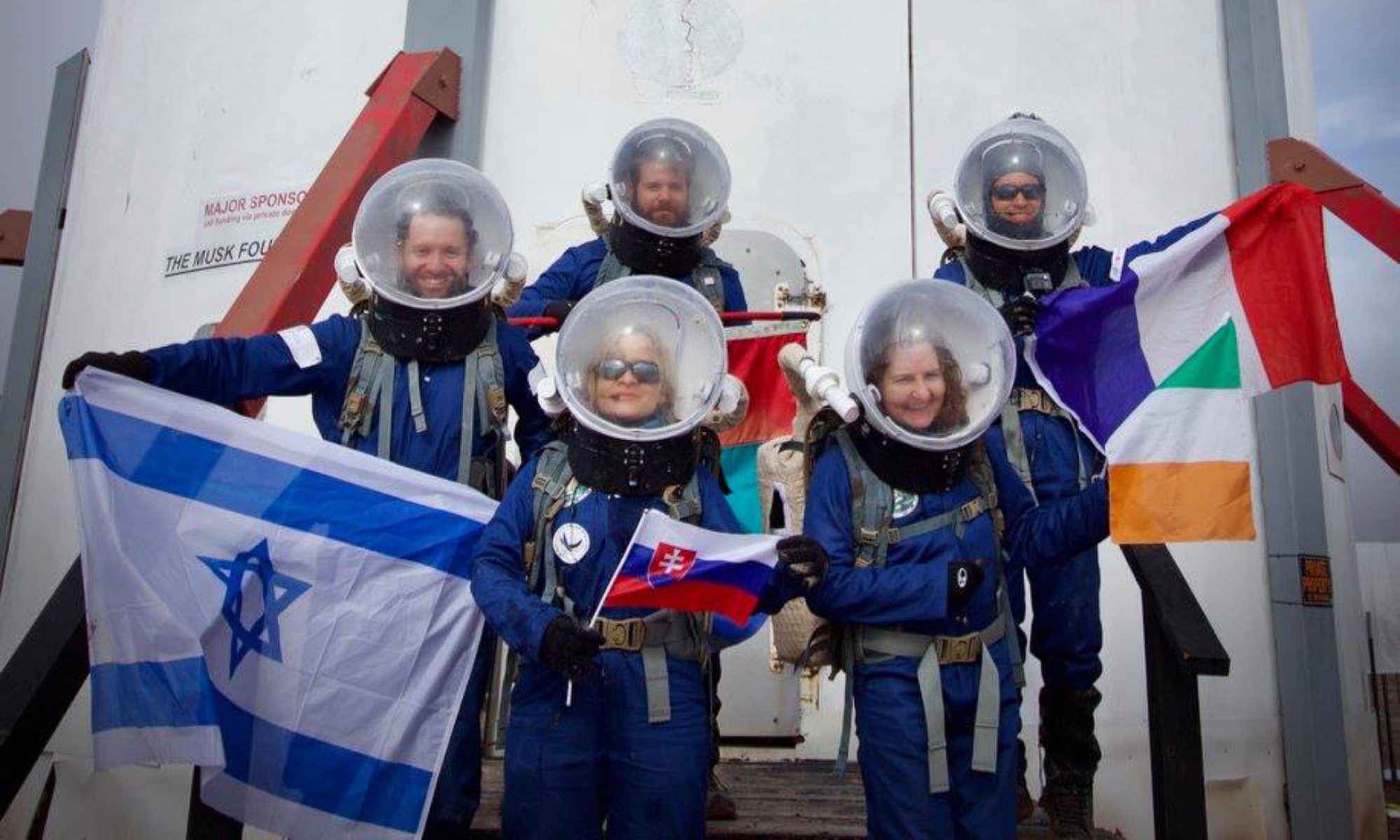
Journalist Report – March 21st

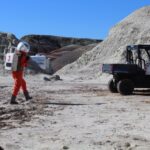
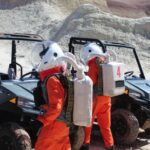
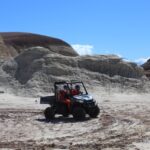
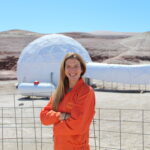
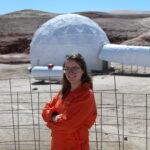
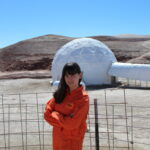
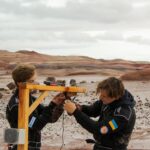
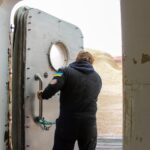
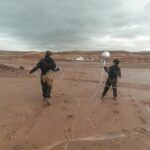
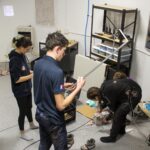
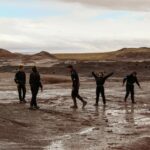
What a great day at MDRS! We wrapped up our simulation last night when our colleagues from University of Colorado arrived. We spent the morning in the Science Dome telling the rest of the team about our time in Sim and what we learned in our pilot studies with our neurophysiological sensors. We took time this afternoon to scout several locations on the rovers, and it was amazing to see the dinosaur fossils with the rest of the team. We ran our final study of the trip this afternoon: We had two team members head out on an EVA and they were wearing fNIRS brain measurement devices and eye tracking glasses. We collected their brain and eye tracking data while they navigated to a waypoint near Kissing Camel rock. We collected what is called ‘hyperscanning’ brain data, which is where you look at the brain synchronization between teammembers; in general team members who are working well together (high in team cohesion) will have more synchronization patterns. We wrapped up our day with a delicious pasta dinner and brownies in the Hab. The Sim team heads home tomorrow. Next up is the Univ Colorado field course at MDRS. Thanks for a wonderful sim experience, MDRS! We learned a ton and are already talking about our next trip back!

Leanne Hirshfield, Emily Doherty, James Crum, and Marta Čeko

EVA Report – March 20th

EVA # 3
Author: Leanne Hirshfield
Purpose of EVA: 1) A short EVA to Marble Ritual with Commander equipped with neurophysiological and behavioral sensors to assess range of sensors and data quality during EVA-related movement (e.g.,walking, riding in rover, standing still on Mars). The Health and Safety Officer supported the Commander throughout the EVA. The task included travel to Marble Ritual and then walking to find one waypoint within 300 meters of Marble Ritual. Commander reported observations from waypoint and collected one biological sample to bring back to the Hab.
Start time: 10:30
End time: 11:45
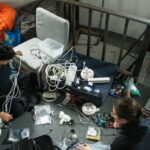
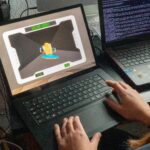
Narrative: Suits (2 and 7) and Radios (1-2) fully charged before leaving and plugged in upon return. Arrived to Marble Ritual around 10:40 AM, and ran sensor testing study outlined below. Arrived back on site around 11:45 AM. Both depressurized before entering the Hab. Perseverance Hours (before EVA): 169. Beginning charge: 100%Perseverance ending charge: 82%. Perseverance plugged in upon return. EVA #3 was a huge success! We learned a lot about the process of collecting eyetracking and fNIRS data out on EVA. We brought the data acquisition laptops with us and ran through our study protocols pretty seamlessly. Things we learned: everything is harder to do on EVA: from sensor troubleshooting to simple breath holding studies (breath holding results in a lovely hemodynamic response in the brain that we can measure with fNIRS). Very little room for experimenter error if we want to collect actual field data in the future. Emily was able to quickly convert our walkie talkie communications into transcripts with WhisperAI, and our review of the discourse suggests that this would be a rich source of team cohesion and team processes data that we could apply NLP techniques to in future collections. Good stuff and very much a learning experience!
Destination: One location: between the HAB and Marble Ritual.
Coordinates (use UTM WSG 84): 518250,4251000
Participants: Leanne Hirshfield (Commander) and James Crum (Health & Safety)
Road(s) and routes per MDRS Map: Cow Dung Road, North direction, and then walking within a 300 meter radius around Marble Ritual.
Mode of travel: Driving and walking

EVA # 4
Author: Emily Doherty
Purpose of EVA: 1) A farther EVA to Pooh’s Corner with Crew Engineer equipped with neurophysiological and behavioral sensors to assess range of sensors and data quality data quality during EVA-related movement (e.g.,walking, riding in rover, standing still on Mars).. The Journalist will support the Crew Engineer throughout the EVA. The task will include travel to Pooh’s Corner and then walking to find one waypoint within 300 meters of Pooh’s Corner. Flight Engineer will report observations from waypoint and collect one biological sample to bring back to the Hab.
Start time: 14:15
End time: 15:45
Narrative: Decided to venture to Marble Ritual instead of the original planned Pooh’s Corner due to a delayed start. Upon arrival to Marble Ritual, we spent about 30 minutes troubleshooting our sensor equipment. We then spent about an hour testing the range and feasibility of the sensors in high sunlight conditions. We arrived back at the Hab around 15:45 and depressurized before entering.
Destination: One location: between the HAB and Marble Ritual.
Coordinates (use UTM WSG 84): 518250,4251000
Participants: Marta Čeko (Engineer) and Emily Doherty (Journalist)
Road(s) and routes per MDRS Map: Cow Dung Road, North direction, and then walking within a 300 meter radius around Marble Ritual.
Mode of travel: Driving and walking

Operations Report – March 20th

SOL: 3
Name of person filing report: Emily Doherty
Non-nominal systems: None
Notes on non-nominal systems: None
ROVERS
Spirit rover used: No
Hours: (before EVA)
Beginning charge: (Before EVA)
Ending charge: (On return from EVA, before recharging)
Currently charging:
Opportunity rover used: Yes
Hours: 169
Beginning charge: 100
Ending charge: 82
Currently charging: yes
Curiosity rover used: No
Hours:
Beginning charge:
Ending charge:
Currently charging:
Perseverance rover used: Yes
Hours: 285
Beginning charge: 100
Ending charge: 77
Currently charging: no
General notes on rovers: none
Summary of Hab operations: none
WATER USE: 59 gallons
Water (static tank): 334 gallons
Static tank pipe heater (on or off): On
Static tank heater (On or off) On
Toilet tank emptied: no
Summary of internet: N/A
Summary of suits and radios: All in working order.
Summary of GreenHab operations: watered plants lightly, due soil being mostly moist already. Shade is down.
WATER USE: 3 gallons
Heater: On
Supplemental light: On
Harvest: 57g Parsnips
Summary of ScienceDome operations: none
Dual split: Heat or AC, Off
Summary of RAM operations: (Tools used, work done): none
Summary of any observatory issues: None
Summary of health and safety issues: None
Questions, concerns and requests to Mission Support: None

Journalist Report – March 20th

On Mars, crew 294 embarked on a day filled with scientific exploration and collaboration. Venturing into the rugged Martian terrain, we diligently tested a range of sensors designed for noninvasive neuroimaging and peripheral physiological monitoring, braving the heat of the sun. Our efforts aimed to enhance understanding of human physiology in extraterrestrial environments, crucial for long-duration space missions. After a productive day of fieldwork, the crew rendezvoused with visiting colleagues for a communal dinner, sharing insights and camaraderie beneath the Martian sky, fostering a spirit of cooperation in their shared quest for knowledge and exploration.

Emily Doherty

Journalist Report – March 20th

EVA # 3
Author: Leanne Hirshfield
Purpose of EVA: 1) A short EVA to Marble Ritual with Commander equipped with neurophysiological and behavioral sensors to assess range of sensors and data quality during EVA-related movement (e.g.,walking, riding in rover, standing still on Mars). The Health and Safety Officer supported the Commander throughout the EVA. The task included travel to Marble Ritual and then walking to find one waypoint within 300 meters of Marble Ritual. Commander reported observations from waypoint and collected one biological sample to bring back to the Hab.
Start time: 10:30
End time: 11:45
Narrative: Suits (2 and 7) and Radios (1-2) fully charged before leaving and plugged in upon return. Arrived to Marble Ritual around 10:40 AM, and ran sensor testing study outlined below. Arrived back on site around 11:45 AM. Both depressurized before entering the Hab. Perseverance Hours (before EVA): 169. Beginning charge: 100%Perseverance ending charge: 82%. Perseverance plugged in upon return. EVA #3 was a huge success! We learned a lot about the process of collecting eyetracking and fNIRS data out on EVA. We brought the data acquisition laptops with us and ran through our study protocols pretty seamlessly. Things we learned: everything is harder to do on EVA: from sensor troubleshooting to simple breath holding studies (breath holding results in a lovely hemodynamic response in the brain that we can measure with fNIRS). Very little room for experimenter error if we want to collect actual field data in the future. Emily was able to quickly convert our walkie talkie communications into transcripts with WhisperAI, and our review of the discourse suggests that this would be a rich source of team cohesion and team processes data that we could apply NLP techniques to in future collections. Good stuff and very much a learning experience!
Destination: One location: between the HAB and Marble Ritual.
Coordinates (use UTM WSG 84): 518250,4251000
Participants: Leanne Hirshfield (Commander) and James Crum (Health & Safety)
Road(s) and routes per MDRS Map: Cow Dung Road, North direction, and then walking within a 300 meter radius around Marble Ritual.
Mode of travel: Driving and walking

EVA # 4
Author: Emily Doherty
Purpose of EVA: 1) A farther EVA to Pooh’s Corner with Crew Engineer equipped with neurophysiological and behavioral sensors to assess range of sensors and data quality data quality during EVA-related movement (e.g.,walking, riding in rover, standing still on Mars).. The Journalist will support the Crew Engineer throughout the EVA. The task will include travel to Pooh’s Corner and then walking to find one waypoint within 300 meters of Pooh’s Corner. Flight Engineer will report observations from waypoint and collect one biological sample to bring back to the Hab.
Start time: 14:15
End time: 15:45
Narrative: Decided to venture to Marble Ritual instead of the original planned Pooh’s Corner due to a delayed start. Upon arrival to Marble Ritual, we spent about 30 minutes troubleshooting our sensor equipment. We then spent about an hour testing the range and feasibility of the sensors in high sunlight conditions. We arrived back at the Hab around 15:45 and depressurized before entering.
Destination: One location: between the HAB and Marble Ritual.
Coordinates (use UTM WSG 84): 518250,4251000
Participants: Marta Čeko (Engineer) and Emily Doherty (Journalist)
Road(s) and routes per MDRS Map: Cow Dung Road, North direction, and then walking within a 300 meter radius around Marble Ritual.
Mode of travel: Driving and walking

Crew biographies, Photos and Mission patch – March 17th

Leanne Hirshfield
Dr. Leanne Hirshfield’s research explores the use of non-invasive brain measurement to passively classify users’ social, cognitive, and affective states in order to enhance usability testing and adaptive system design. She works primarily with functional near-infrared spectroscopy (fNIRS), a relatively new non-invasive brain imaging device that is safe, portable, robust to noise, which can be implemented wirelessly; making it ideal for research in human-computer interaction. The high density fNIRS equipment in Hirshfield’s lab provides rich spatio-temporal data that is well suited as input into deep neural networks and other advanced machine learning algorithms. A primary tenet of Hirshfield’s machine learning research involves building and labeling large cross-participant, cross-task fNIRS training datasets in order to build robust and generalizable models that can avoid overfitting and succeed in ecologically valid environments outside the lab.

Marta Čeko
Dr. Marta Čeko’s research explores brain mechanisms of pain and negative affect in health and disease. She combines computational modeling with neuroimaging, behavioral data and multiple types of physiological data to develop predictive and generalizable brain and physiology-based models of aversive processing and regulation.

James Crum
James is a postdoctoral research fellow at the Institute of Cognitive Science. More specifically, he is a cognitive neuroscientist at SHINE Lab. He uses multimodal methods (e.g., fMRI, fNIRS, deep-learning, etc.) in ‘real-world’ and lab-based paradigms to investigate the neurocognitive mechanisms supporting cognitive security (i.e., how the brain defends against information-based threats). This research is supported by the Department of Defense’s Multidisciplinary University Research Initiatives (MURI) Program.

Emily Doherty
Emily is a third-year PhD student in computer and cognitive science working in the SHINE Lab. Her research explores human-AI teaming using multimodal methods (non-invasive neuroimaging, natural language processing, machine learning) in varied contexts spanning from education to extreme environments. She is particularly interested in the design of equitable AI that not only enhances cognitive capabilities but also broadly serves society.

Sol Summary – March 15th

Sol: 26
Summary Title: A New Chapter
Author’s name: Marie Delaroche, Crew Commander
Mission Status: Nominal
Sol Activity Summary:
There was definitely a strange vibe when the Crew awoke this morning. Everything was done for the last time: taking our daily measurements, going through our last workout session… But the rest of the Sol did not go according plan. We were supposed to dismantle and retrieve the atmospheric instruments during an EVA this morning. Due to rain and snowfall, conditions were deemed unsuitable to perform this last EVA. The station was also placed in “low power” mode, as the solar panels struggled to keep up.
After finishing wrapping up our experiments, taking our last tests and writing our final reports, we broke sim at 4 PM to dismantle the atmospheric instruments. A seagull flew and circled above us as we worked, welcoming us home, as if we were back from a long journey at sea!
Look Ahead Plan:
We will complete and send the checkout list tomorrow morning. At what time can the HabCar be placed in front of the Hab so that we can start loading it? We plan to leave tomorrow at 12:00. We will fill the tank of the CrewCar in Grand Junction, park it at the Day’s Inn, and give the keys at the front desk.
Anomalies in work: EVA Suits 6,7,9
Weather: Rain, low 0°C, high 5°C
Crew Physical Status: Nominal
EVA: NA
Reports to be filed: Sol Summary, Journalist’s Report, GreenHab Report, Operations Report, Photos (6-8 pics), Mission Summary, Food Inventory, Mission Science Report
Support Requested: NA

End Mission Research Report – March 15th

[category science-report]

Name of person filing report: Yves Bejach

Crew293 has completed their one-month-long rotation in the MDRS, conducting experiments while simulating life on Mars. We have done everything we could to make this simulation as accurate and relevant as possible. The current report aims to give the reader an understanding of what has been achieved.
This report is organized as follows:
– Overview of all the experiments conducted during our mission, as found in the Mission Plan sent on Sol1, reminded here for clarity, and updated with the experiments’ final status.

Physics
Two experiments from the French National Center of Scientific Research (CNRS) have been performed at the MDRS for several years already. We are planning to gather additional data for this season as well. These activities will require EVAs.
· LOAC (Light Optical Aerosol Counter): LOAC is an optical aerosol counter, measuring the concentrations of different particles in the air and classifying them by size.
Related EVAs: Two EVAs planned for the first week to install the device. Then, every two days, the batteries will have to be changed and the data will have to be collected. The latter procedures can be part of other EVAs. One final EVA conducted SOL26 to retrieve all the instruments.
External points of contact: Jean-Pierre Lebreton and Jean-Baptiste Renard, CNRS.
Point of contact within the crew: Lea Bourgély, Leo Tokaryev.
· Mega-Ares: Mega-Ares is a sensor precisely measuring the electric field and the conductivity of the air. It is the little brother of Micro-Ares, the only payload of the Schiaparelli lander (ExoMars 2016). This year we also installed a wind-mill that will give us aditionnal data.
Related EVAs: Same as LOAC.
External points of contact: Jean-Pierre Lebreton and Jean-Baptiste Renard, CNRS.
Point of contact within the crew: Lea Bourgely, Leo Tokaryev.
Status: The instruments have been installed north of the Station, between the Hab and Marble Ritual. They have been collecting data since then. These data are retrieved every two days or so, when we change the batteries that power them. Data samples were regularly sent to the PI for reviewing. The instruments worked properly for most of the mission, gathering atmospheric information that will be sent to the PI when we return to Earth.

Technology
Technology demonstrations are planned, one of them being the continuation of the two last missions of ISAE-Supaero (Crew 263 and 275). They are based on technologies developed by the French Space Agency (CNES) and its health subsidiary (MEDES).
· AI4U: AI4U is an AI tool designed to help and assist astronauts in their daily tasks (environmental measurements, voice recognition). The aim is to test this AI assistant in real or close-to-real scenarios.
Related EVAs: None.
External points of contact: Gregory Navarro and Laure Boyer, CNES.
Point of contact within the crew: Mathurin Franck.
Status: The first week was dedicated to the setup and troubleshoot of the software. Crew293 tested it out during Week2 and Week3. All raw data has been sent to the PI at the end of Week3 and a more detailed report will be sent after the mission.
· Echofinder: Onboard the ISS, ultrasound scanners are teleoperated by trained specialists. As we travel further away from Earth, communication delays will increase and teleoperated devices will no longer be usable. The goal of Echofinder is to enable autonomous ultrasound acquisition sessions without any knowledge in medicine and any communication link with an experienced sonographer. The Echofinder tool uses augmented reality and an AI to help the operator capture usable imagery of the subject’s organs.
Related EVAs: None.
External point of contact: Aristée Thévenon, MEDES.
Point of contact within the crew: Yves Bejach.
Status: Acquisition sessions have started on Sol 2 and have been conducted approximately every two Sols. The crew member conducting the session is taking notes on everything that goes well or not with the software, and the setup and is taking ultrasound images that are to be analyzed to see if Echofinder is efficient. Although there were more and more technical difficulties, sessions continued to take place until Sol25. Data will be sent to the PI after our return with a detailed report and we’ll meet with them to discuss the results.
· Photogrammetry: Re-conducting an experiment started by last year’s crew (Crew 275) which aims to determine how a 3D map created thanks to drone photogrammetry could improve an EVA crew’s performance during an outing.
Related EVAs: Three EVAs per week, starting the second week. The first one’s goal is to create the 3D map and decide where to position checkpoints on a designated area (one area per week). For the 2nd and 3rd ones, the EVA team will go to each checkpoint, having prepared the EVA using the standard 2D and 3D map respectively.
External point of contact: Alice Chapiron, ISAE Supaero student (Crew275)
Point of contact within the crew: Yves Bejach
Status: Started on Sol8 with an EVA aiming to create a 3D map of the East flank of North Ridge. Once the map was successfully created, two teams went out on different EVAs to go through designated checkpoints as efficiently as possible, having prepared with the 3D map and a classic 2D map respectively. The same procedure has been done Week2 in Candor Chasma and Week4 in Kissing Camel Ridge. Data has started to be processed; they will be discussed with the PI when we return to Earth. A detailed report is also in preparation to be sent to SpaceshipFR and Parrot, that lend us the drone we used.
· Neuroergonomy: Experiment aiming to evaluate the importance of vision compared to other senses in our perception of space.
Related EVAs: None
External point of contact: Maelis Lefebvre, ISAE-Supaero
Point of contact within the crew: Leo Tokaryev
Status: Tests have been conducted every Thursday and Friday since the beginning of the mission. Data will be sent to the PI after our return to Earth.

Human factors
Human factors experiments are arguably the ones that benefit the more from taking place during an analog mission.
· Orbital Architecture: Measure of the stress of analog astronauts and of the influence of environmental parameters on the stress using Polar bands bracelets, sleep monitoring using Dreem headbands, questionnaires, evaluation of the position of the analog astronauts in the station, and environmental measurement (temperature, humidity, etc.).
Related EVAs: None.
External point of contact: Michail Magkos, KTH.
Point of contact within the crew: Lise Lefauconnier.
Status: The Crew has been conducting cognitive assessments regularly since the beginning of the mission. In parallel, we were carrying Polar bands that monitored our heart rate, and location tracking chips. All data will be sent to the PI after our return, with our daily activities performed and a sample of our Core Data (weight, oximetry, blood pressure…).
· MELiSSA:The MELiSSA project (Micro-Ecological Life Support System Alternative) is a European projected led by the European Space Agency (ESA) aiming at developing a highly circular and regenerative life support system for space missions. The ALiSSE methodology (Advanced Life Support System Alternative) was developed as part of the project to provide an impartial evaluation tool of each technology system, including mass, energy and power, efficiency, crew time, crew risk, reliability, and durability. The proposed activity within the MELiSSA project focuses on the operational aspects of preparing recipes from higher plants and aims for a preliminary evaluation of the "crew time" criterion.
Related EVAs: None
External point of contact: Blandine Gorce, ESA
Point of contact within the crew: Mathurin Franck
Status: The Crew could try every planned recipe, with only the last one not possible because the resupply couldn’t provide everything that was needed. A detailed report has been written about every downfall and great things of each recipe as well as a global report. They will be sent to the PI after the mission.
· Trace Lab: The purpose of this research is to better understand the role that emotion and coping strategies have on team dynamics within ICE (Isolated, Confined, Extreme) teams. The findings from this study will aid in the understanding of the role of affect within teams operating in ICE conditions – something that has been highlighted as being important by researchers, Antarctic expeditioners, and astronauts. Experiment conducted in collaboration with Trace Lab, University of Florida.
Related EVAs: None
External point of contact: Andres Kaosaar
Point of contact within the crew: Marie Delaroche
Status: The Crew has been filling out daily and weekly questionnaires since the beginning of the mission and until the end. All questionnaires will be sent to the PI after the mission.
· AMI – Anomalies Monitoring Interface: Software allowing random anomalies to occur within the station to simulate problems that could happen in a real environment and see how we could react. The main goal is to improve the simulation.
Related EVAs: Potential emergency EVAs in case of depressurization. It is worth noting that such emergencies cannot be mistaken for real ones, as it is not problem that can occur within our earthly MDRS.
External point of contact: Quentin Royer, ISAE Supaero student (Crew275)
Point of contact within the crew: Marie Delaroche
Status: The beta version of AMI has been running since Week2, enabling the Crew to monitor the power distribution of the station and handle alarms and malfunctions. An emergency EVA occurred on Sol24 to repair the tunnel to the Science Dome that had been damaged by the wind, enabling us to test the interface all the while performing a meaningful action outside the station. The PI was in contact with the Crew by email throughout the mission, exchanging back and forth on upgrades. A detail report will be written and discussed to improve the software for future missions.
· Timepercept: Subjective time perception in confined environments, such as isolation or imprisonment, often leads to a distortion of time experience. The phenomenon is significant in understanding the psychological effects of confinement and has implications for mental health management in isolated or controlled settings like space missions or solitary confinement. Experiment conducted with the University of Krakow.
Related EVAs: None
External point of contact: Mateusz Daniol
Point of contact within the crew: Erin Pougheon
Status: The Crew has been conducting tests twice a day – in the morning and in the afternoon – since the first morning to the last evening of the rotation. Data will be sent to the PI, as well as the baseline data collected during the two weeks prior to the mission and the two weeks following the end of our rotation.
· Miss U: Technology demonstration aiming to see the impact on moral. Subjects will see videos of their close ones while facilitators stimulate their other senses to immerge the subject as most as possible in the situation.
Related EVAs: None
External point of contact: Cathline Smooth
Point of contact within the crew: Lea Bourgely
Status: Weekly questionnaires were filled since Week1. Beginning Week3, the subjects watched the videos recorded by their closed ones, filling questionnaires after each sessions as well. Data will be sent to the PI after the mission.

Outreach
· Media: Several articles and interviews in French newspaper and on radio
· Scientific mediation: We, like all Supaero Crews that came before us, try to share our passion for space and science in general by engaging in intervention in middle and high school. This year, we developed with high-schoolers a 3-step project around growing food on Mars.
Related EVAs: One as early as possible to retrieve some martian soil in which to plant radish seeds.
External point of contact: None
Point of contact within the crew: Mathurin Franck
Status: The plantation of cress has been made early on; it grew for a while but then it died out. We tried again in the Science Dome this time, where it’s not as hot but it didn’t grow as well. Results were regularly shared with the students.