
Operations Report – March 13th

Report title: Operations Report

Crew #: 330

Position: Crew Engineer

Report prepared by: Lou Goiffon

Date: 13-03-2026

Sol: 26

Non-nominal systems: The seal of the kitchen sink is malfunctioning, leak of water under the sink that dripped in the Lower Hab

Notes on non-nominal systems: N/A

ROVERS

Spirit rover used: No

Hours:

Beginning charge:

Ending charge:

Currently charging: YES

Opportunity rover used : No

Hours (Before EVA):

Beginning charge:

Ending charge:

Currently charging: YES

Curiosity rover used: No

Hours (Before EVA):

Beginning charge:

Ending charge:

Currently charging: YES

Perseverance rover used: Yes

Hours (Before EVA):

Beginning charge:

Ending charge:

Currently charging: YES

General notes on rovers: N/A

Summary of Hab operations:

Water Use (see notes): 51.07 gal/d

Main tank level (remaining gallons, see notes): 145 gallons

Main water tank pipe heater (ON or OFF): OFF

Main water tank heater (ON or OFF): OFF (seasonal choice)

Toilet tank emptied (NO or YES): NO

Summary of internet: downlink 327.93 Mbits/s, uplink 21.79 Mbits/s, ping 20 ms

Summary of suits and radios: N/A

Summary of GreenHab operations:

Water use: 4 gallons

Heater (ON or OFF): ON

Supplemental light (hours of operation): 6pm-8:30am

Harvest (name, weight in grams): Radish microgreens, 250g

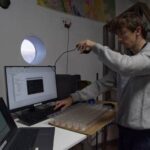
Summary of Science Dome operations: Human factors experiment conducted

Dual split (Heat or AC, On or Off or Automatic): Automatic

Summary of RAM operations: Cleaned up

Summary of any Observatory issues: N/A

Summary of health and safety issues: N/A

Questions, concerns and requests to Mission Support: N/A

Mission Summary – March 13th

Report title: Mission Summary
Crew #: 330
Position: Crew Commander
Report prepared by: Gaspard Thieulin
Date: 13-03-2026
Sol: 26

Overview:

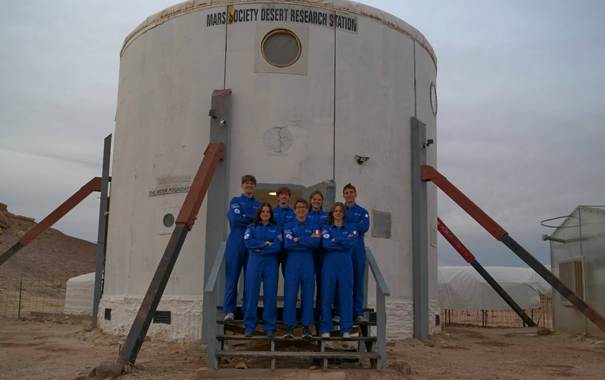
Crew 330 was composed of 6 students from ISAE-SUPAERO (an engineering school in Toulouse, France) and their commander, research engineer for the Spaceflight Institute.

From the 16th of February 2026 to the 13th of March 2026, we lived in isolation for 26 Sols in the MDRS, working 6 Sols and resting during Saturdays. We conducted 15 scientific experiments on diverse subjects.

Our mission is a success on our primary mission objectives, and we bring back as much scientific data as possible from our experimentations, to be analyzed when we return to France with the researchers who support us.

Crew:

Adèle LADAGNOUS (Health and Safety Officer), Aerospace engineering student at ISAE-SUPAERO (Toulouse, FRANCE)
Célia PARNAUD–AMY (Astronomer), Aerospace engineering student at ISAE-SUPAERO (Toulouse, FRANCE)
Lou GOIFFON (Engineer), Aerospace engineering student at ISAE-SUPAERO (Toulouse, FRANCE)
Adrien SAUGNAC (Journalist), Aerospace engineering student at ISAE-SUPAERO (Toulouse, FRANCE)
Félix MARGUET (GreenHab Officer), Aerospace engineering student at ISAE-SUPAERO (Toulouse, FRANCE)
Julien BESSON (Mission Scientist), Mechanical Engineer (McGill University, CANADA), Master student in Aerospace engineering at ISAE-SUPAERO (Toulouse, FRANCE)
Gaspard THIEULIN (Commander), Aerospace Engineer (ISAE-SUPAERO, FRANCE), Research Engineer at the Spaceflight Institute (Toulouse, FRANCE)
Mission Narrative:

One main objective of our mission was to ensure the social cohesion of the crew, and the well-being of every member during the whole duration. Particularly from the work of the HSO, we implemented specific methods and tools to avoid conflicts and solve them quickly, efficiently and sustainably. The Commander paid special attention to balance the workload throughout the mission, between achieving the very ambitious scientific goals and managing the tiring effects of the mission itself. This specific goal was achieved with spectacular results, as we suffered extremely few internal conflicts and solved them in depth when they arose. Despite the long duration of our mission (double the usual in the MDRS), we kept the social cohesion of our crew at its highest point during the whole mission, and the dynamics of the group evolved toward a sustainable equilibrium during this last month. While everyone in the crew faced various difficulties, we stood together in the harder times, supporting each other to overcome every issue.

The addition of Yoga and Meditation sessions during the mission had a positive impact on the morale and the sleep quality of the crew. We also noticed the positive impact of an afternoon nap on the most tiresome days of the mission.

No medical incident arose during the mission, and everyone stayed fit and healthy for the whole duration. The physical activity sessions were followed by everyone almost every day, with each crew member exceptionally skipping one or two sessions because they felt too tired.

Water Usage (average): 14 L / CM / day

We ate a diversified menu every day, utilizing fully the food supplies we were given and the kitchen appliances available at the MDRS.

Documentary and Outreach

One other objective of our mission was public outreach, giving our followers a better look at what we do inside the MDRS. The whole crew contributed to this effort, by giving conferences and animating workshops in French schools and in New York before we left for Utah. While we were in isolation, we also filmed content for the schools we have a partnership with, answering their questions about space exploration and our simulation. The Crew Journalist, Adrien, had an even more ambitious project for outreach: filming a documentary, which is going to be shown in “La Cité de l’Espace” in Toulouse. Shooting a 90 minute documentary is not an easy task, and we tried to include as many moments from the mission as possible. The documentary is going to show “behind the scenes” of our usual external communication, alternating between the “every sol” life in the station, our scientific activities and filmed explanations of what is a Martian analog mission. The documentary will also display the preparation of the mission, as well as the outcome when we get back to France.

EVA Summary:

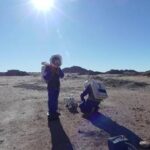
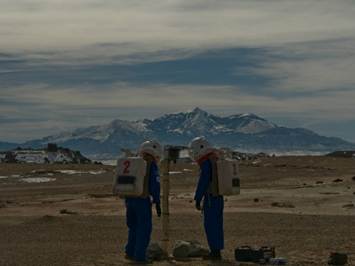
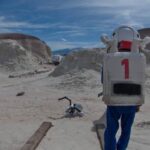
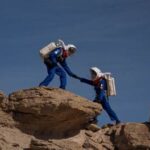
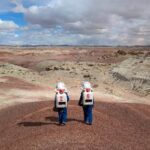
The Crew 330 performed 21 EVAs in total, including two training EVAs to Marble Ritual on Sol 1. Taking full advantage of the human presence on the ground, we conducted many experiments outside and conducted plain exploration whenever we had the time. Using the MDRS rovers, and the wonderful agility of the human body, we could explore on a larger surface than all robotic explorers could, improvise our route and access places that could seem inaccessible to most wheel-based rovers. Here is the distribution of each EVA’s purpose:

Training Exploration Atmospheric experiments Photo-grammetry Stratigraphy SupaeroMoon
EVA #01 X
EVA #02 X
EVA #03
EVA #04 X
EVA #05 X X
EVA #06 X
EVA #07 X X
EVA #08 X X
EVA #09 X
EVA #10 X
EVA #11 X X
EVA #12 X
EVA #13 X X
EVA #14 X
EVA #15 X X
EVA #16 X
EVA #17 X
EVA #18 X X
EVA #19 X
EVA #20 X X
EVA #21 X
EVA #22 X X
TOTAL 2 9 9 6 2 2

Only the EVA#03 was cancelled, due to strong winds measured before the EVA Team went outside.

All EVAs were successful in their main objective and there wasn’t any incident during EVAs that could have required the early return of the crew to the station. Despite some EVAs starting later than planned, mostly because of delays in the preparation, all EVAs were finished before their planned ending time.

Most EVAs were conducted with a team of three crew members, while the other four stayed working in the station, occasionally a team of four exited the station to support the more complicated EVA tasks. Communication between the EVA teams and the station was always ensured by at least one crew member in the Hab, and this communication worked better than before thanks to the radio relay on North Ridge. Specifically, the communication between the team and the Hab was lost on EVAs where the team lost visual contact with North Ridge, for instance when they entered deep terrain like Candor Chasma or went behind Camel Kissing Ridge. The range of the radios could also be an issue when going as far as the “Special Region”.

Repairs and upgrades to the station:

  • The Water heater was removed (seasonal decision)
  • We closely monitored the state of the tunnels, threatened by some heavy winds during our stay. We leave the tunnels in great shape, with all necessary zip ties installed and no puncture to report.
  • The toilet tank was emptied on Sols xx, xx and xx. The sensor for the level of the tank doesn’t seem to work at all. We did an inspection and we couldn’t see any visible issue with the wiring.
  • The clean water feeding white tube for the toilet is leaking from a small puncture, after the valve between the white tube and the blue tube. We have identified the root of the issue:

o Due to a very strong hammer effect in the hard blue tube, it moves “forward” from its intended position (it even seems to have ripped a fixation on the wall before our mission).

o Once the tube has moved too far from its position, it creates a heavy bend on the white tube connected to the toilet. The bend has punctured the white tube over time.

o We managed the issue with a new procedure: we keep the valve before the white tube closed at all times, except when we are pressing the toilet pedal. The very few drops of clean water are wiped with a dry cloth.

o The white tube could be replaced or repaired with a replacement tube fitting.

  • The water tank sensors have been repaired
  • An inside lock has been placed on the observatory door for the astronomer to close it from the inside, it is a removable addition
  • The opening mechanism of the observatory dome has been repaired (the wooden piece used as end of course was falling apart)
  • 4 backpack batteries have been replaced
  • The GPS battery has been replaced
  • The communication kit N°2 is not working (see operation report to see the trouble shooting)
  • The bed step for the 3rd room from the right has been screwed back

Summary of GreenHab Activities:

During these four weeks, the plan was to help grow the GreenHab by planting new seeds adapted to the other plants nearby and to take care of the one which was already here.
When we arrived, the coriander and fennel were pretty dehydrated at the bottom and many flowers were growing at the top. At the mid-mission, our botanist decided to cut the top flowers to re-boost the leaves which are our main point of interest. Despite the fact that the flowers contribute to making the GreenHab nice with colors, it was draining too much water and preventing the bottom leaves from growing.

We had various kinds of weather, and some days were really hot. When it was the case, two waterings were mandatory. The sun was pretty aggressive between 11AM and 4PM so the waterings were usually either at 10AM or 4-5PM. On average, our botanist used 4 gallons a day.

Regarding experiments, our botanist continued the space tomatoes in Martian regolith experiment and kept sending photos to the person responsible for the experiment. He watered them several times with distilled water.

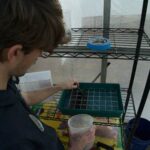
Another experiment he wanted to do was the microgreens experiment. He followed the protocol with broccoli and radishes seeds. The broccoli seeds didn’t grow but it was successful regarding the radishes. He managed to harvest 90g the first time and 250g the second time. The micro-green were very tasty and well appreciated by the crew. The crew also harvested several basil and fennel leaves, and he tried to regrow the coriander.

For his botanist project, he didn’t have the attendance result. The cress seeds never saw the light of day during our mission. The experiment is on the shelf just on the left of the entry if the next crew wants to keep monitoring it.

He also planted radishes, cucumbers on the left of the big blue box. The growth of the garden beans and lettuce was particularly remarkable.

Our botanist also had an innovative idea: planting flowers for each member of the crew. The flowers didn’t bloom in time, but the Crew 330 let them to the next crew. They are spread in 7 pots which are named after the 7 members of the crew.

Summary of Scientific activities:

See the dedicated end of mission Science report.
GreenHab Report – March 13th

Report title: GreenHab Report
Crew #: 330
Position: Greenhab officer
Report prepared by: Félix Marguet
Date: 13-03-2026
Sol: 26

Environmental control (fan & heater): Yes
Average temperatures (last 24h): 88.5°F
Maximum temperature (last 24h): 116.6°F
Minimum temperature (last 24h): 69.7°F

Average humidity (last 24h): 15.3%
Maximum humidity (last 24h): 24.12%
Minimum humidity (last 24h): 6.7%

Hours of supplemental light: 5h30

Daily water usage for crops: 4gal
Daily water usage for research and/or other purposes: 0.6 gal
Water in the Tank (160 gal useful capacity): 111 gallons remaining
Time(s) of watering for crops: 10AM

Changes to crops: N/A
Harvest: 250g of radish microgreens and some basil and fennel leaves

Support/supplies needed: N/A

Journalist Report – March 13th

Report title: Journalist Report
Crew #: 330
Position: Journalist
Report prepared by: Adrien Saugnac
Date: 13-03-2026
Sol: 26

Journalist Report Title: Landing on Earth

This sol 26 is the final day of the MDRS Crew 330 mission. A mix of many emotions is swirling as we prepare to end the simulation in just a few minutes.

Today, we packed away all our experiments and cleaned the station. Next week, MDRS Crew 331 will take over, and we are leaving the station for them in the same condition we received it.

This day marks the end of an extremely rewarding year of preparation and 26 highly intense mission sols. We have shared many moments and emotions that will stay with us for the rest of our lives.

We have been simulating a Martian mission for a month now. We haven’t stepped outside without a spacesuit; we eat freeze-dried (dehydrated) food; we have no access to communication with our loved ones; we regulate our water usage. Tonight, we will put an end to all of that and resume our lives back on Earth.

We are deeply grateful to everyone who was involved in our mission.

Research Report – March 13th

[category science-report]

Mars Desert Research Station
Mission Science Report

Crew 330
Feb16 2026 – Mar14 2026

Crew Members

Commander: Gaspard THIEULIN
Health and Safety Officer: Adèle LADAGNOUS
Astronomer: Célia PARNAUD–AMY
Engineer: Lou GOIFFON
Journalist: Adrien SAUGNAC
GreenHab Officer: Félix MARGUET
Crew Scientist: Julien BESSON

Crew 330 Mission Science Report
MDRS, Friday, March 13th, 2026

Produced by: Julien Besson, Crew Scientist, julien.besson.mdrs330

Crew 330 has almost completed its four-week stay at MDRS, conducting experiments while simulating life on Mars. The current report aims to give the reader an understanding of what was achieved during the mission and what could not be done.

This report is organized as follows: overview of all the experiments conducted during our mission, as found in the Mission Plan sent on Sol 2, reminded here for clarity, and updated with the experiments’ status at the end of the mission.

Name: Light Optical Aerosol Counter (LOAC)

Type: Atmospheric Physics

Crew: Lou (Crew Engineer)

Description: This experiment, conducted since 2019 by ISAE-SUPAERO crews, is conducted by the French National Center of Scientific Research (CNRS). It involves EVA operations, aiming to install and maintain LOAC, an optical aerosol counter that measures and classifies airborne particles by size. It allows the building of atmospheric models to trace aerosol composition and distribution over time.

Related EVAs: #4, 5, 6, 8, 11, 12, 15, 18, 20, 22

Status: LOAC was installed East of Marble Ritual on sol 4, then displaced West of Marble Ritual on sol 7. The batteries have been charged and changed every two to three days and the data collected when each swap was performed. The instrument seemed to behave correctly, but researchers are investigating potential issues with collected data. LOAC has been brought back to the station during the last EVA, on sol 25.

Name: Field mill / Weather station

Type: Atmospheric Physics

Crew: Célia (Crew Astronomer)

Description: This experiment involves two different instruments which allow us to analyze environmental conditions. The field mill is used to measure the local electric field, providing insights into atmospheric electrical activity, while the weather station records precise atmospheric parameters at the Mars Desert Research Station, contributing to a comprehensive understanding of local weather conditions.

Related EVAs: #4, 5, 6, 8, 11, 12, 15, 18, 20, 22

Status: The instruments were installed East of Marble Ritual on sol 4, then displaced West of Marble Ritual on sol 7. The batteries have been charged and changed every two to three days and the data collected when each swap was performed. The instruments seemed to behave correctly, but researchers are investigating potential issues with collected data. The instruments have been brought back to the station during the last EVA, on sol 25. We have downloaded the data from the MDRS weather station: wind speed, gust, direction, temperature and humidity. This data will complete the information from the LOAC instrument to analyze the dynamics between dust and wind in the Utah desert.

Name: Core Data

Type: Physiology

Crew: Julien (Crew Scientist) & Lou (Crew Engineer)

Description: This ISAE-SUPAERO MDRS crews initiative aims to collect physiological datasets for human factors research. In addition to daily physiological data recording, including body temperature, weight, ECG, oximetry, blood pressure alongside sleep and stress questionnaires, this study includes water monitoring and environmental measurements. Its purpose is to ensure comprehensive data collection while minimizing redundancy, enhancing the reliability and applicability of the research and allowing data standardization between our crews.

Related EVAs: No EVA

Status: The crew took daily physiological data (oximetry, systolic and diastolic blood pressures, temperature, weight, muscular mass, fat mass, heart rate, nerve health…). The crew also filled a daily sleep diary every morning and a weekly sleep questionnaire. Everyone was wearing a Withings smartwatch to collect sleep, stress and heart rate data all day long. Data will be transferred to all researchers involved in research related to human factors.

Name: Neuroergo

Type: Human Factors

Crew: Adèle (Crew HSO) & Julien (Crew Scientist)

Description: This experiment, related to Core Data and developed by researchers from ISAE-SUPAERO, aims to investigate how cognitive workload and brain activity are affected by an isolated, confined and extreme environment, such as the one encountered during an analog mission at MDRS. Every three days before, during and after the mission, each participant will perform various cognitive tasks, including resting-state recording, N-back tests and the Multi-Attribute Task Battery (MATB), a computer-based simulation asking to manage several simple tasks at the same time (such as monitoring gauges, responding to alerts and performing basic control actions), while wearing a dry-electrode electroencephalography (EEG) helmet.

Related EVAs: No EVA

Status: After spending the first few sols debugging software issues, the experiment has been running since sol 5. Every crew member completed six or seven sessions of the experiment during the mission. More sessions might occur once the mission is over.

Name: Orbital Architecture

Type: Human Factors

Crew: Adèle (Crew HSO) & Félix (Crew GreenHab Officer)

Description: This study aims to quantify stress levels in analog astronauts using chest-bands, smartwatches, position sensors, questionnaires and cognitive tests. It investigates the impact of environmental factors such as privacy, temperature and humidity on stress levels, in order to design future Lunar and Martian stations to improve astronauts’ cognitive performance. This research has also been performed by Marcus Wandt aboard the International Space Station as part of the Axiom-3 mission.

Related EVAs: No EVA

Status: The IPS (Internal Position System) has been deployed during the first two sols of the mission. Since sol 2, we have been collecting daily data from the IPS as well as from the polar band that each crew member was wearing. We have also been conducting cognitive assessments every two to three days in the Hab, the Science Dome or the GreenHab: each crew member completed around nine sessions. Last but not least, each crew member filled in a short questionnaire every day at the end of the afternoon.

Name: TwinS2

Type: Human Factors

Crew: Julien (Crew Scientist)

Description: This project, developed by the French National Center of Scientific Research (CNRS) and the University of Toulouse, aims to develop and test non-invasive methods to monitor human physiological and cognitive performance in real time, enabling the creation of a digital twin. Since researchers can analyze up to 6,000 different parameters by studying voice recordings, they are looking into developing a software which could diagnose disease as early as possible. Crew members will record voice messages daily, which will be analyzed using machine-learning tools to infer variations in human performance, allowing researchers to assess and refine their software, which could be used during future long-term space missions to monitor astronauts’ physical and mental health.

Related EVAs: No EVA

Status: All crew members recorded a four- to five-minute-long message on a daily basis, either in their bedroom or in the Science Dome, to share how they felt during the day. We did not record our conversations for a few hours during the mission in the end.

Name: Trace Lab

Type: Human Factors

Crew: Adèle (Crew HSO) & Julien (Crew Scientist)

Description: This study, designed by researchers from the University of Central Florida, consists of self-administered questionnaires exploring individual and collective adaptations to isolated, confined and extreme environments. It examines their psychological, social, emotional and occupational impact, providing insights into human resilience and well-being in space-like settings.

Related EVAs: No EVA

Status: Every crew member filled a daily questionnaire about individual and social adaptations. A weekly questionnaire about team dynamics was also filled out on Sundays and on the last day of the mission.

Name: AMAIA

Type: Technology

Crew: Adrien (Crew Journalist)

Description: AMAIA, developed by SpaceshipFR of the French Space Agency (CNES), is a life support artificial intelligence designed to assist astronauts in their daily tasks, such as environmental monitoring and emergency procedures, enhancing both efficiency and safety in the station. It is integrated with station sensors, including environmental sensors and monitoring devices, enabling seamless data exchange. Working as a stand-alone application, AMAIA also allows astronauts to ask questions to a chatbot, to upload documents on a local drive and to manage their planning.

Related EVAs: No EVA

Status: After spending a few days debugging some technical issues, the technology demonstration worked well. The crew could use a local Drive to share all necessary documents, while the AI chatbot was helpful to translate reports in English and get some recipes for our freeze-dried food. The planning tool still needs to be improved. The home assistant couldn’t be set up, as additional instructions from the researchers were required.

Name: Simulation Fidelity Enhancement

Type: Technology

Crew: Gaspard (Crew Commander) and Lou (Crew Engineer)

Description: Based on feedback from previous crews, this technology demonstration is based on proof-of-concept small computer programs aiming to enhance the fidelity of the simulation. Connected to AMAIA, it includes an airlock pressurization timer, simulated station systems monitoring and involves voluntary crew feedback sessions to investigate how analog environments could be improved to prepare for future missions.

Related EVAs: No EVA

Status: The airlock pressurization timer has been successfully installed by the crew engineer. Two brainstorming sessions have also been organized to discuss the crew’s main technical issues and identify potential improvements to the simulation.

Name: Unplanned Procedure Training

Type: Technology

Crew: Gaspard (Crew Commander)

Description: This activity aims to provide training on simulated unplanned maintenance procedures. The objective is to test and improve on-board training sessions by playing out maintenance tasks such as a station pressurization issue. It also includes voluntary crew feedback sessions aiming to improve the protocols we follow during station operations.

Related EVAs: No EVA

Status: Questionnaires and crew feedback have been gathered to pinpoint the needs of a MDRS Crew and start to design an onboard training session for a future mission. The training and assessment sessions have not been conducted during this mission.

Name: Photogrammetry

Type: Technology

Crew: Adrien (Crew Journalist) & Lou (Crew Engineer)

Description: Building on measurements from previous years, this study, done with the support from Parrot, involves nine EVAs coordinated with atmospheric physics EVAs. It focuses on testing the added value of having 3D terrain maps for EVA preparation and exploration, assessing their benefits for checkpoint identification and location during extravehicular activities. The research compares scenarios with and without prior familiarization with 3D maps to evaluate their impact on navigation and mission efficiency.

Related EVAs: #7, 10, 11, 13, 15, 16

Status: The first part of the experiment took place during the second week of the mission. The crew successfully mapped a small part of Compass Rock using a Parrot Anafi AI drone. Two teams then explored the area using 2D and 3D maps to monitor the differences in performance. A second site, North Ridge, was studied during the third week of the mission, requiring three additional EVAs. The performance of each orienteering team has been recorded and the data will be analyzed after the mission. The demonstration of the procedure and technologies for this experiment has been a success and we might conduct this experiment again with future missions to expand the data collected.

Name: Stratigraphy

Type: Geology

Crew: Félix (Crew GreenHab Officer) & Célia (Crew Astronomer)

Description: This experiment, conducted by the Research Institute of Astrophysics and Planetology (IRAP), involves EVAs coordinated with photogrammetry EVAs. It focuses on testing stratigraphy through drone imagery, aiming to identify geological samples using these pictures. The goal is to train the drone to capture images of entire stratigraphic layers for improved geological analysis, allowing us to detect sites of potential interest and collect additional data during future human exploration missions.

Related EVAs: #13, 20

Status: The experiment was performed twice during the second half of the mission. Two EVAs were scheduled to analyze two sites, North Ridge and Mellow Mushrooms, resulting in the creation of drawings detailing rock layers and the collection of samples which will be analyzed in France using the LabEx.

Name: LabEx

Type: Technology

Crew: Célia (Crew Astronomer)

Description: This experiment, conducted by researchers from the Marseille Laboratory of Astrophysics, Research Institute of Astrophysics and Planetology and ISAE-SUPAERO, involves 3D printing a spectroscope at the station. It will be used to perform spectroscopy on rock samples, in order to analyze light reflection to identify them.

Related EVAs: No EVA

Status: The LabEx has been successfully 3D printed and assembled. The software installation was performed, and the solar spectrum was studied. Samples will be analyzed once the team is back in France.

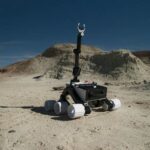
Name: SupaeroMoon

Type: Robotics

Crew: Lou (Crew Engineer) & Julien (Crew Scientist)

Description: This project, performed in collaboration with SupaeroMoon, another ISAE-SUPAERO student club developing technology for lunar exploration, aims to 3D print and use an operational rover at MDRS. It involves testing a robotic arm for sample retrieval and remote-control navigation, evaluating camera and mapping methodologies and exploring the feasibility of simple autonomous navigation during an EVA.

Related EVAs: #21, 22

Status: 3D printing of all parts was completed during the first three weeks of the mission. Rover assembly was performed early during the last week of the mission. After a first inconclusive attempt, the crew could make the rover work during the last EVA. It could move forward, backward and make a turn. Two out of the four joints of the robotic arm were also behaving as expected. Last but not least, the load cell assembly allowed us to weigh several rock samples. Overall, the crew will be able to provide a lot of feedback based on how the assembly and the operations of the rover were conducted.

Name: Martian Regolith Experiment

Type: Botany

Crew: Félix (Crew GreenHab Officer)

Description: This experiment, performed in collaboration with the Paris Natural History Museum, aims to compare the growth of watercress between eight different substrates. Temperature, humidity and images will be acquired automatically using a system relying on a Raspberry Pi. It will also assess the feasibility of using vegetable waste to make the substrates more fertile.

Related EVAs: No EVA

Status: The crew botanist has spent the first ten sols of the mission fixing the Raspberry Pi computer allowing to monitor temperature and humidity while taking pictures of the plants growing. Several types of substrates have been prepared, and cress seeds were planted halfway through the mission. The plants have not come out yet, as the mission ends.

Name: Astronomy Project

Type: Astronomy

Crew: Célia (Crew Astronomer)

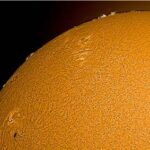
Description: This project, led by Célia, our Crew astronomer, is the continuity of the astronomy project performed by Crew 311. Solar observations will be made to track the position of sunspots over the duration of the mission, with the goal of improving our ability to predict solar flares and coronal mass ejections (CMEs). Since sunspot activity is closely linked to these larger solar events, accurately tracking their position over time is essential. A comprehensive database of sunspot movements can contribute to forecasting CMEs, which pose serious risks to satellites, Earth-based infrastructure and astronaut safety.

Related EVAs: No EVA

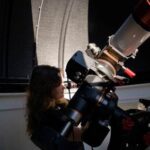
Status: The crew astronomer has been able to complete one astronomy session during the first half of the mission, gathering first pictures of sunspots. The weather was not favorable during the first week, while the dome did not open as expected until the end of the second week. Another session was completed during the second half of the mission to take more pictures and start building a database.

Name: Exploration EVAs

Type: Exploration

Crew: All crewmates

Description: As we are part of the very few humans to ever walk on Mars, we are planning to explore the surroundings of the station, relying on our rovers to get on uncharted terrain. These extravehicular activities will hopefully extend our knowledge of Mars surface and perhaps lead to new discoveries.

Related EVAs: #5, 8, 9, 13, 14, 17, 18, 19, 20

Status: Three exploration EVAs have been performed, respectively at Compass Rock, Cowboy Corner and Kissing Camel, during the first half of the mission. Six additional exploration EVAs have been conducted during the second half, to explore North Ridge, Candor Chasma, Tharsis Montes, Special Region, Hab Ridge and Mellow Mushrooms.

Name: Public Outreach

Type: Education

Crew: All crewmates

Description: This project aims to engage with students across France in order to spread interest in space and science. Before the mission, many outreach activities have been conducted. Moreover, students are also engaged during the mission: students from one school are working on emergency EVA procedures, while students from another high school design tools that will be 3D printed and used during the mission.

Related EVAs: No EVA

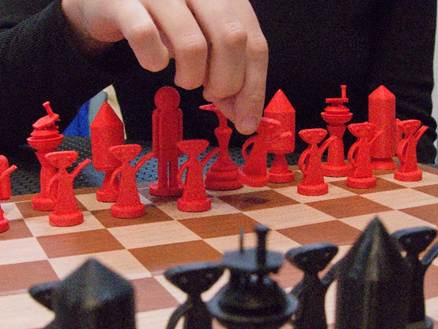
Status: The crew has been recording videos to answer students’ questions received by email during the communication windows. Moreover, a chess game and a sound amplifier designed by high school students specializing in modeling were 3D printed in the station.

EVA Report – March 31st

Report title: EVA Report
Crew #: 333
Position: Journalist
Report prepared by: Joanna Galloway
Date: 31-3-2026
Sol: 2

EVA #: 4

Purpose of EVA: An outing for Antoine’s research. The goal is to observe the landscape from an astronaut’s perspective and then capture video footage and photos with the drone.

Start time: 01:56 PM
End time: 4:06 PM

Narrative: Started decompression at 01:56 PM, The Crew unplugged Curiosity and Opportunity which charged over lunch time and took Perseverance and Spirit towards Compass Rock, departing from the MDRS at 2:04 PM, they arrived at Campus Rock at 2:15PM. There Antoine flew the drone to take some pictures and videos for his research, then he made the team complete a form. At around 2:48 pm the door to the station swung open because of the high wind force, the crew made its way back to the station to shut it and drove back to Campus Rock around 3:06pm.

They arrived back to the terrain at 3:17 pm to continue Antoine’s experience. Where they walked toward the recorded site to better understand the terrain. Then, they returned to their rovers at 3:55pm and arrived back at the station at 4:06pm. Decomp started at 16:07pm back

Destination per MDRS Map: Compass Rock
Destination Coordinates (use UTM WGS 84): 519900E 4263000N

EVA Participants:
Antoine, Executive officer (Team lead)
Marie, Commander
Matias, Astronomer

Road(s) and routes per MDRS Map: Cow Dung road and Galileo road

Mode of travel: Driving and walking

Journalist Report – April 1st

Report title: Journalist Report
Crew #: 333
Position: Crew Journalist
Report prepared by: Joanna Galloway
Date: 01-04-2026
Sol: 3

Journalist Report Title (if applicable): A Quiet Place

Unfortunately, we woke to powerful winds sweeping across our little corner of Mars, forcing us to postpone the morning EVA until late afternoon. With plans shifted, the crew embraced the unexpected pause and settled into a slower, more relaxed start to the day. Breakfast was a comforting spread of granola and fresh smoothies, enjoyed over an easy conversation about the upcoming Artemis II launch and what it represents for the future of exploration. Joanna spent the late morning guiding each crew member through the Science Dome, carefully beginning her experiment. Everyone performed admirably and took time to thoughtfully complete her questionnaire afterward. They played board games and entertained themselves until lunch, which was a simple but satisfying meal of tuna and rice, prepared by Zahraa.

By mid-afternoon, we received the green light to proceed with our EVA at 5 p.m., leaving us a bit of time to unwind with a movie. As 4 p.m. approached, however, we gathered together for something far more significant: watching the launch of Artemis II. It was a remarkable moment witnessing history unfold back on Earth while we continued our own simulation here on Mars. At last, it was time for the EVA. Antoine, Zahraa, and Matias ventured out to complete the mission, while Marie remained inside as CapCom, guiding them throughout. They returned safely to the habitat, greeted by the comforting aroma of a warm chili sin carne prepared by Joanna and Matthias. The evening promises to carry the same calm, cozy energy as the rest of the day, we’re going to wind down together on the couch, sharing another film as the Martian winds continue to whisper outside.

Sol Summary – April 1st

Report title: Sol Summary Report
Crew #: 333
Position: Crew Commander
Report prepared by: Marie Jansen
Date: 01-04-2026
Sol: 3

Summary Title: Worked day

Mission Status: going great, today was more chill

Sol Activity Summary:

We woke up at 7:00 AM today, then had smoothies with granola for breakfast. In the morning, we conducted Joanna’s research and worked on our personal projects. The EVA was postponed to this afternoon so we took more time for ourselves, playing board games and chatting. We also planned our recruitment video for Belgium. For lunch we had rice which was very filling. We watched a movie to digest and then watched the Artemis rocket launch. At 5:00 PM the EVA crew departed to finish Antoine’s experiment and capture some footage for the video. Meanwhile the rest of the crew cooked dinner. For the evening, the plan was dinner, a movie and a little chat.

Look Ahead Plan:

For tomorrow we need to film the video, also go out for our crew’s promotion and continue our experiments. We have planned to wake up a little later tomorrow to rest as the team is quite tired.

Anomalies in work:

None just a maus on Mars

Weather:

Very windy with a little rain. It was cold today but manageable with a sweater.

Crew Physical Status:

The crew is tired but doing well. One crew member is exhausted due to a mouse on Mars.

EVA:

The EVA went well, the crew was a bit cold but otherwise doing fine.

Reports to be filed:

  • Sol Summary
  • Operations Report
  • Greenhab Report
  • Journalist Report
  • Astronomy Report
  • EVA Report
  • EVA Request
  • Daily photos

Support Requested: None

Astronomy Report – April 1st

[category  astronomy-report]

Report title: Astronomy Report
Crew #: 333
Position: Crew Astronomer
Report prepared by: Matias Ballivian Ascarrunz
Date: 01-04-2026
Sol: 3

MDRS ROBOTIC OBSERVATORY
Robotic Telescope Requested: MDRS-WF
Objects to be Imaged this Evening: M81 Bode Galaxie
Images submitted with this report: None
Problems Encountered: In skynet there is a MOUNT ERROR.

MUSK OBSERVATORY
Solar Features Observed: N/A
Images submitted with this report: N/A
Problems Encountered: N/A