
[category science-report]
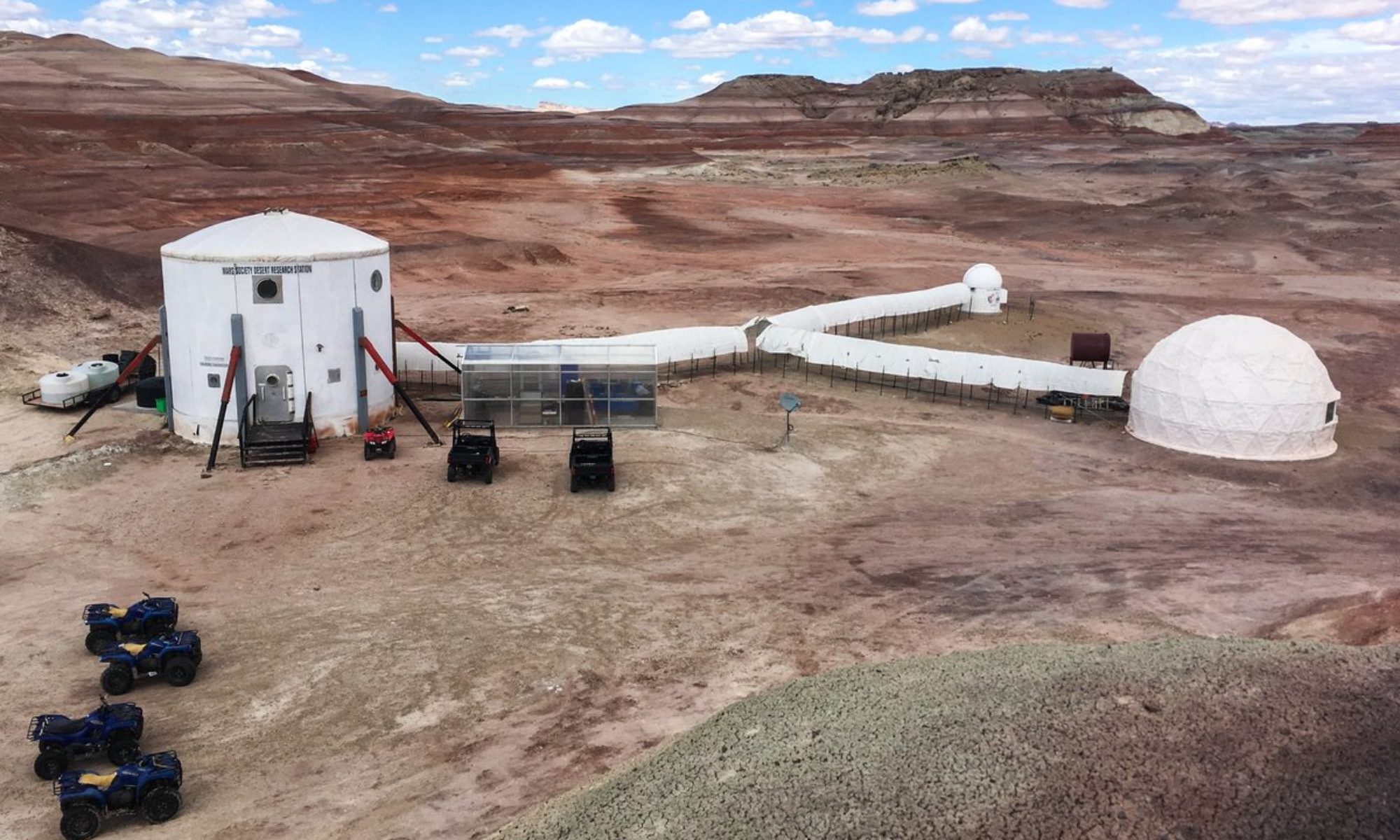
Mars Desert Research Station
Mission Science Report
Crew 330
Feb16 2026 – Mar14 2026
Crew Members
Commander: Gaspard THIEULIN
Health and Safety Officer: Adèle LADAGNOUS
Astronomer: Célia PARNAUD–AMY
Engineer: Lou GOIFFON
Journalist: Adrien SAUGNAC
GreenHab Officer: Félix MARGUET
Crew Scientist: Julien BESSON
Crew 330 Mission Science Report
MDRS, Friday, March 13th, 2026
Produced by: Julien Besson, Crew Scientist, julien.besson.mdrs330
Crew 330 has almost completed its four-week stay at MDRS, conducting experiments while simulating life on Mars. The current report aims to give the reader an understanding of what was achieved during the mission and what could not be done.
This report is organized as follows: overview of all the experiments conducted during our mission, as found in the Mission Plan sent on Sol 2, reminded here for clarity, and updated with the experiments’ status at the end of the mission.
Name: Light Optical Aerosol Counter (LOAC)
Type: Atmospheric Physics
Crew: Lou (Crew Engineer)
Description: This experiment, conducted since 2019 by ISAE-SUPAERO crews, is conducted by the French National Center of Scientific Research (CNRS). It involves EVA operations, aiming to install and maintain LOAC, an optical aerosol counter that measures and classifies airborne particles by size. It allows the building of atmospheric models to trace aerosol composition and distribution over time.
Related EVAs: #4, 5, 6, 8, 11, 12, 15, 18, 20, 22
Status: LOAC was installed East of Marble Ritual on sol 4, then displaced West of Marble Ritual on sol 7. The batteries have been charged and changed every two to three days and the data collected when each swap was performed. The instrument seemed to behave correctly, but researchers are investigating potential issues with collected data. LOAC has been brought back to the station during the last EVA, on sol 25.
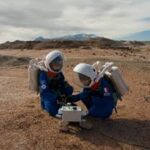
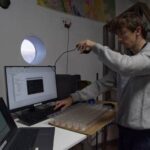
Name: Field mill / Weather station
Type: Atmospheric Physics
Crew: Célia (Crew Astronomer)
Description: This experiment involves two different instruments which allow us to analyze environmental conditions. The field mill is used to measure the local electric field, providing insights into atmospheric electrical activity, while the weather station records precise atmospheric parameters at the Mars Desert Research Station, contributing to a comprehensive understanding of local weather conditions.
Related EVAs: #4, 5, 6, 8, 11, 12, 15, 18, 20, 22
Status: The instruments were installed East of Marble Ritual on sol 4, then displaced West of Marble Ritual on sol 7. The batteries have been charged and changed every two to three days and the data collected when each swap was performed. The instruments seemed to behave correctly, but researchers are investigating potential issues with collected data. The instruments have been brought back to the station during the last EVA, on sol 25. We have downloaded the data from the MDRS weather station: wind speed, gust, direction, temperature and humidity. This data will complete the information from the LOAC instrument to analyze the dynamics between dust and wind in the Utah desert.
Name: Core Data
Type: Physiology
Crew: Julien (Crew Scientist) & Lou (Crew Engineer)
Description: This ISAE-SUPAERO MDRS crews initiative aims to collect physiological datasets for human factors research. In addition to daily physiological data recording, including body temperature, weight, ECG, oximetry, blood pressure alongside sleep and stress questionnaires, this study includes water monitoring and environmental measurements. Its purpose is to ensure comprehensive data collection while minimizing redundancy, enhancing the reliability and applicability of the research and allowing data standardization between our crews.
Related EVAs: No EVA
Status: The crew took daily physiological data (oximetry, systolic and diastolic blood pressures, temperature, weight, muscular mass, fat mass, heart rate, nerve health…). The crew also filled a daily sleep diary every morning and a weekly sleep questionnaire. Everyone was wearing a Withings smartwatch to collect sleep, stress and heart rate data all day long. Data will be transferred to all researchers involved in research related to human factors.
Name: Neuroergo
Type: Human Factors
Crew: Adèle (Crew HSO) & Julien (Crew Scientist)
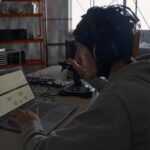
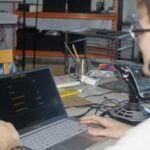
Description: This experiment, related to Core Data and developed by researchers from ISAE-SUPAERO, aims to investigate how cognitive workload and brain activity are affected by an isolated, confined and extreme environment, such as the one encountered during an analog mission at MDRS. Every three days before, during and after the mission, each participant will perform various cognitive tasks, including resting-state recording, N-back tests and the Multi-Attribute Task Battery (MATB), a computer-based simulation asking to manage several simple tasks at the same time (such as monitoring gauges, responding to alerts and performing basic control actions), while wearing a dry-electrode electroencephalography (EEG) helmet.
Related EVAs: No EVA
Status: After spending the first few sols debugging software issues, the experiment has been running since sol 5. Every crew member completed six or seven sessions of the experiment during the mission. More sessions might occur once the mission is over.
Name: Orbital Architecture
Type: Human Factors
Crew: Adèle (Crew HSO) & Félix (Crew GreenHab Officer)
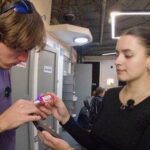
Description: This study aims to quantify stress levels in analog astronauts using chest-bands, smartwatches, position sensors, questionnaires and cognitive tests. It investigates the impact of environmental factors such as privacy, temperature and humidity on stress levels, in order to design future Lunar and Martian stations to improve astronauts’ cognitive performance. This research has also been performed by Marcus Wandt aboard the International Space Station as part of the Axiom-3 mission.
Related EVAs: No EVA
Status: The IPS (Internal Position System) has been deployed during the first two sols of the mission. Since sol 2, we have been collecting daily data from the IPS as well as from the polar band that each crew member was wearing. We have also been conducting cognitive assessments every two to three days in the Hab, the Science Dome or the GreenHab: each crew member completed around nine sessions. Last but not least, each crew member filled in a short questionnaire every day at the end of the afternoon.
Name: TwinS2
Type: Human Factors
Crew: Julien (Crew Scientist)
Description: This project, developed by the French National Center of Scientific Research (CNRS) and the University of Toulouse, aims to develop and test non-invasive methods to monitor human physiological and cognitive performance in real time, enabling the creation of a digital twin. Since researchers can analyze up to 6,000 different parameters by studying voice recordings, they are looking into developing a software which could diagnose disease as early as possible. Crew members will record voice messages daily, which will be analyzed using machine-learning tools to infer variations in human performance, allowing researchers to assess and refine their software, which could be used during future long-term space missions to monitor astronauts’ physical and mental health.
Related EVAs: No EVA
Status: All crew members recorded a four- to five-minute-long message on a daily basis, either in their bedroom or in the Science Dome, to share how they felt during the day. We did not record our conversations for a few hours during the mission in the end.
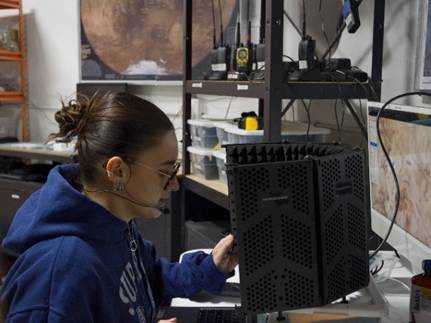
Name: Trace Lab
Type: Human Factors
Crew: Adèle (Crew HSO) & Julien (Crew Scientist)
Description: This study, designed by researchers from the University of Central Florida, consists of self-administered questionnaires exploring individual and collective adaptations to isolated, confined and extreme environments. It examines their psychological, social, emotional and occupational impact, providing insights into human resilience and well-being in space-like settings.
Related EVAs: No EVA
Status: Every crew member filled a daily questionnaire about individual and social adaptations. A weekly questionnaire about team dynamics was also filled out on Sundays and on the last day of the mission.
Name: AMAIA
Type: Technology
Crew: Adrien (Crew Journalist)
Description: AMAIA, developed by SpaceshipFR of the French Space Agency (CNES), is a life support artificial intelligence designed to assist astronauts in their daily tasks, such as environmental monitoring and emergency procedures, enhancing both efficiency and safety in the station. It is integrated with station sensors, including environmental sensors and monitoring devices, enabling seamless data exchange. Working as a stand-alone application, AMAIA also allows astronauts to ask questions to a chatbot, to upload documents on a local drive and to manage their planning.
Related EVAs: No EVA
Status: After spending a few days debugging some technical issues, the technology demonstration worked well. The crew could use a local Drive to share all necessary documents, while the AI chatbot was helpful to translate reports in English and get some recipes for our freeze-dried food. The planning tool still needs to be improved. The home assistant couldn’t be set up, as additional instructions from the researchers were required.
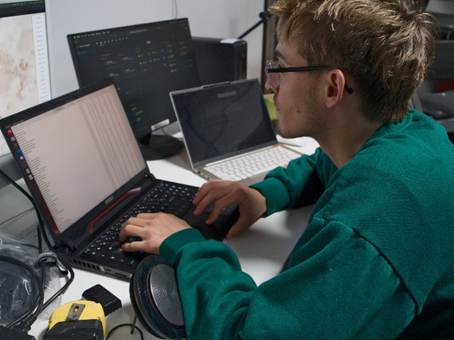
Name: Simulation Fidelity Enhancement
Type: Technology
Crew: Gaspard (Crew Commander) and Lou (Crew Engineer)
Description: Based on feedback from previous crews, this technology demonstration is based on proof-of-concept small computer programs aiming to enhance the fidelity of the simulation. Connected to AMAIA, it includes an airlock pressurization timer, simulated station systems monitoring and involves voluntary crew feedback sessions to investigate how analog environments could be improved to prepare for future missions.
Related EVAs: No EVA
Status: The airlock pressurization timer has been successfully installed by the crew engineer. Two brainstorming sessions have also been organized to discuss the crew’s main technical issues and identify potential improvements to the simulation.
Name: Unplanned Procedure Training
Type: Technology
Crew: Gaspard (Crew Commander)
Description: This activity aims to provide training on simulated unplanned maintenance procedures. The objective is to test and improve on-board training sessions by playing out maintenance tasks such as a station pressurization issue. It also includes voluntary crew feedback sessions aiming to improve the protocols we follow during station operations.
Related EVAs: No EVA
Status: Questionnaires and crew feedback have been gathered to pinpoint the needs of a MDRS Crew and start to design an onboard training session for a future mission. The training and assessment sessions have not been conducted during this mission.
Name: Photogrammetry
Type: Technology
Crew: Adrien (Crew Journalist) & Lou (Crew Engineer)
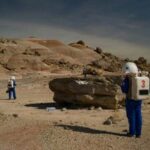
Description: Building on measurements from previous years, this study, done with the support from Parrot, involves nine EVAs coordinated with atmospheric physics EVAs. It focuses on testing the added value of having 3D terrain maps for EVA preparation and exploration, assessing their benefits for checkpoint identification and location during extravehicular activities. The research compares scenarios with and without prior familiarization with 3D maps to evaluate their impact on navigation and mission efficiency.
Related EVAs: #7, 10, 11, 13, 15, 16
Status: The first part of the experiment took place during the second week of the mission. The crew successfully mapped a small part of Compass Rock using a Parrot Anafi AI drone. Two teams then explored the area using 2D and 3D maps to monitor the differences in performance. A second site, North Ridge, was studied during the third week of the mission, requiring three additional EVAs. The performance of each orienteering team has been recorded and the data will be analyzed after the mission. The demonstration of the procedure and technologies for this experiment has been a success and we might conduct this experiment again with future missions to expand the data collected.
Name: Stratigraphy
Type: Geology
Crew: Félix (Crew GreenHab Officer) & Célia (Crew Astronomer)
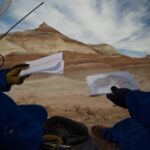
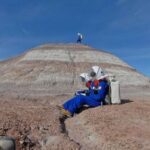
Description: This experiment, conducted by the Research Institute of Astrophysics and Planetology (IRAP), involves EVAs coordinated with photogrammetry EVAs. It focuses on testing stratigraphy through drone imagery, aiming to identify geological samples using these pictures. The goal is to train the drone to capture images of entire stratigraphic layers for improved geological analysis, allowing us to detect sites of potential interest and collect additional data during future human exploration missions.
Related EVAs: #13, 20
Status: The experiment was performed twice during the second half of the mission. Two EVAs were scheduled to analyze two sites, North Ridge and Mellow Mushrooms, resulting in the creation of drawings detailing rock layers and the collection of samples which will be analyzed in France using the LabEx.
Name: LabEx
Type: Technology
Crew: Célia (Crew Astronomer)
Description: This experiment, conducted by researchers from the Marseille Laboratory of Astrophysics, Research Institute of Astrophysics and Planetology and ISAE-SUPAERO, involves 3D printing a spectroscope at the station. It will be used to perform spectroscopy on rock samples, in order to analyze light reflection to identify them.
Related EVAs: No EVA
Status: The LabEx has been successfully 3D printed and assembled. The software installation was performed, and the solar spectrum was studied. Samples will be analyzed once the team is back in France.
Name: SupaeroMoon
Type: Robotics
Crew: Lou (Crew Engineer) & Julien (Crew Scientist)
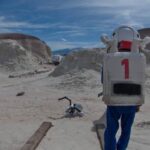
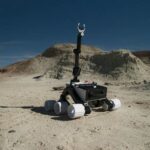
Description: This project, performed in collaboration with SupaeroMoon, another ISAE-SUPAERO student club developing technology for lunar exploration, aims to 3D print and use an operational rover at MDRS. It involves testing a robotic arm for sample retrieval and remote-control navigation, evaluating camera and mapping methodologies and exploring the feasibility of simple autonomous navigation during an EVA.
Related EVAs: #21, 22
Status: 3D printing of all parts was completed during the first three weeks of the mission. Rover assembly was performed early during the last week of the mission. After a first inconclusive attempt, the crew could make the rover work during the last EVA. It could move forward, backward and make a turn. Two out of the four joints of the robotic arm were also behaving as expected. Last but not least, the load cell assembly allowed us to weigh several rock samples. Overall, the crew will be able to provide a lot of feedback based on how the assembly and the operations of the rover were conducted.
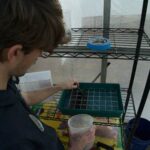
Name: Martian Regolith Experiment
Type: Botany
Crew: Félix (Crew GreenHab Officer)
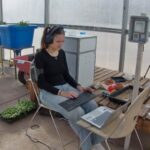
Description: This experiment, performed in collaboration with the Paris Natural History Museum, aims to compare the growth of watercress between eight different substrates. Temperature, humidity and images will be acquired automatically using a system relying on a Raspberry Pi. It will also assess the feasibility of using vegetable waste to make the substrates more fertile.
Related EVAs: No EVA
Status: The crew botanist has spent the first ten sols of the mission fixing the Raspberry Pi computer allowing to monitor temperature and humidity while taking pictures of the plants growing. Several types of substrates have been prepared, and cress seeds were planted halfway through the mission. The plants have not come out yet, as the mission ends.
Name: Astronomy Project
Type: Astronomy
Crew: Célia (Crew Astronomer)
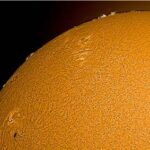
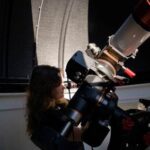
Description: This project, led by Célia, our Crew astronomer, is the continuity of the astronomy project performed by Crew 311. Solar observations will be made to track the position of sunspots over the duration of the mission, with the goal of improving our ability to predict solar flares and coronal mass ejections (CMEs). Since sunspot activity is closely linked to these larger solar events, accurately tracking their position over time is essential. A comprehensive database of sunspot movements can contribute to forecasting CMEs, which pose serious risks to satellites, Earth-based infrastructure and astronaut safety.
Related EVAs: No EVA
Status: The crew astronomer has been able to complete one astronomy session during the first half of the mission, gathering first pictures of sunspots. The weather was not favorable during the first week, while the dome did not open as expected until the end of the second week. Another session was completed during the second half of the mission to take more pictures and start building a database.
Name: Exploration EVAs
Type: Exploration
Crew: All crewmates
Description: As we are part of the very few humans to ever walk on Mars, we are planning to explore the surroundings of the station, relying on our rovers to get on uncharted terrain. These extravehicular activities will hopefully extend our knowledge of Mars surface and perhaps lead to new discoveries.
Related EVAs: #5, 8, 9, 13, 14, 17, 18, 19, 20
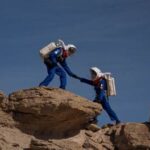
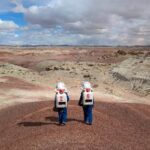
Status: Three exploration EVAs have been performed, respectively at Compass Rock, Cowboy Corner and Kissing Camel, during the first half of the mission. Six additional exploration EVAs have been conducted during the second half, to explore North Ridge, Candor Chasma, Tharsis Montes, Special Region, Hab Ridge and Mellow Mushrooms.
Name: Public Outreach
Type: Education
Crew: All crewmates
Description: This project aims to engage with students across France in order to spread interest in space and science. Before the mission, many outreach activities have been conducted. Moreover, students are also engaged during the mission: students from one school are working on emergency EVA procedures, while students from another high school design tools that will be 3D printed and used during the mission.
Related EVAs: No EVA
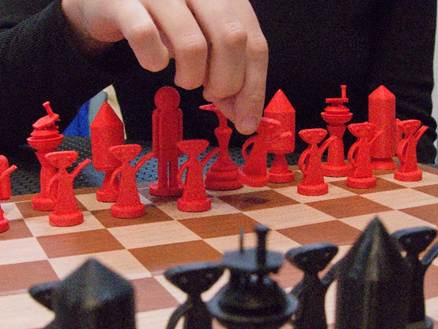
Status: The crew has been recording videos to answer students’ questions received by email during the communication windows. Moreover, a chess game and a sound amplifier designed by high school students specializing in modeling were 3D printed in the station.
You must be logged in to post a comment.