GreenHab Report – December 21st>

Report title: GreenHab Report
Crew #: 325
Position: Green Habitat Officer
Report prepared by: Adrianna Capitola Waterford
Date: 21Dec2025
Sol: 6

Environmental control (fan & heater): Operating
Average temperatures (last 24h): 76
Maximum temperature (last 24h): 89
Minimum temperature (last 24h): 73
Hours of supplemental light: 0
Daily water usage for crops: 0.25 gal
Daily water usage for research and/or other purposes: Hydroponics
Water in the Tank (160 gal useful capacity): 157 gallons remaining
Time(s) of watering for crops: 18:30
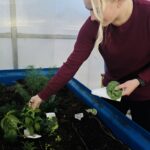
Changes to crops: More microgreens planted and crop beds have been revived from the previous crew.
Narrative: Hydroponics system is still being monitored.
Harvest: None
Support/supplies needed: None

Research Report – December 20th

[category science-report]

Mid-Mission Research Report

Crew 325 – Aether
Dec 15th, 2025 – Dec 27th, 2025

Crew Members:
Commander and Crew Astronomer: Dr. Cesare Guariniello
Crew Scientist: Ellenah del Rio
Crew Engineer: Morgan McCoy
Health and Safety Officer: Isabella Levine
Green Hab Officer: Adrianna Waterford
Crew Journalist: Saranya Ravva

Crew Projects:

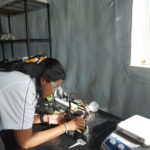
1. Title: Photovoltaic Dust Removal Techniques for Sustained Martian Power Generation
Author(s): Ellenah Del Rio
Current status: Over the past week, I iterated the solar-panel dust/tilt experiment from a more complex multi-sensor concept into a field-ready, low-power Arduino + RTC data logger that reliably records panel output offline at set intervals.I successfully collected logged datasets at Kissing Camel Ridge across multiple elevations (1382 m “high”, 1344 m “low”, and ~1333 m), with consistent 25° vs 45° panel comparisons captured in the ADC readings. Preliminary results suggest a strong elevation-linked performance shift and an angle sensitivity that warrants broader testing (initial runs indicate larger drops at lower elevations and that “flatter” tilt angles may outperform steeper ones depending on sun geometry). Field operations revealed key reliability constraints: the circuit needs a more permanent, secured mount (one panel detached/broke and a wire partially disconnected), and transport/packaging must be improved for steep terrain and repeat deployments.

Future work: Next steps are to run an all-day logging campaign to capture changing solar incidence angles, redesign the housing for durability and safe carry, and expand the test matrix to at least five tilt angles to identify the best-performing strategy over time.

2.Title: Microbial Burden and Contamination Risk on High-Contact Surfaces in the MDRS Habitat
Author(s): Isabella Levine
Current status: I am also collecting salivary samples each night to measure pH as an indicator of crew physiological stress. In parallel, I give a brief behavioral survey daily to all crew members to assess behavioral trends throughout the mission. Environmental conditions within the habitat are being monitored using three carbon dioxide sensors placed in different locations, which are continuously collecting CO₂ data to characterize air quality and fluctuations over time.
Future work: Salivary pH data and daily behavioral survey responses will be compiled and analyzed to identify potential trends over time and associations with environmental conditions. Carbon dioxide sensor data will be reviewed to evaluate spatial and temporal variations within the habitat and to explore potential relationships between air quality, physiological measures, and behavioral responses.

3.Title: Microbial Burden and Contamination Risk on High-Contact Surfaces in the MDRS Habitat
Author(s): Isabella Levine
Current status: So far, I have prepared agar plates and streaked bacterial samples collected from high-contact surfaces within the habitat. Bacterial growth has been monitored over an initial 48-hour period and will continue to be observed for the remainder of the mission to track changes in microbial presence over time.
Future work: Over the next phase of the mission, I will continue monitoring of bacterial growth and document any changes in colony density and morphology. This dataset will be combined with that from the Contamination projects and used to assess how environmental and biological factors interact within an isolated habitat environment.

4. Title: Feasibility of Cable based Infrastructure creation in Martian Conditions
Author(s): Morgan McCoy
Current status: Project has been set up and needs more trials in the field for further testing. Two trenches have been dug and timed in different locations and under different fatigue levels. Pre-fabricated cable has been implemented by two different people and timed. In-situ cable creation has been trialed and timed, with some difficulties.
Future work: Next week holds more trials of in-situ cable creation with more members of the team being timed.

5.Title: Non-Contact Thermal Imaging for Structural Health of Martian Habitats
Author(s): Saranya Ravva
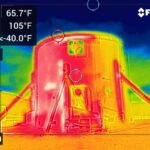
Current status: In two separate EVAs, thermal imaging was conducted on the Habitat, Science Dome, and GreenHab units to evaluate their structural and insulation performance using a non-contact nondestructive evaluation approach. Construction material details for each unit were obtained in advance to inform appropriate emissivity selection, and environmental conditions were recorded to calibrate the thermal camera settings. Thermal data were collected during recent EVAs, capturing exterior wall surfaces where possible.
Future work: Ongoing work focuses on detailed image analysis taken both outside and inside of different units and hoping to acquire additional datasets under cloudy conditions to reduce solar loading effects.

6. Title: Simulated Microgravity Germination: A Proof-of-Concept for Bioregenerative Life Support Systems (BLSS)
Author(s): Saranya Ravva
Current status: Seed germination experiments were initiated using agar-based media for the Random Positioning Machine (RPM), with adaptations made to the experimental setup after identifying mechanical interference between large Petri dishes and the RPM motor. Smaller Petri dishes were successfully implemented, and experiments are established in the Science Dome, with control samples maintained in the GreenHab for temperature comparison. Additional samples were placed in vertical and horizontal orientations to investigate growth directionality under simulated microgravity. The system is being monitored regularly, and I also fixed the rig anytime I saw the 3d printed parts being stuck or getting slightly eroded.
Future work: Future work includes transferring germinated seeds to the GreenHab and quantifying growth differences relative to controls along with working to fix the RPM motion for any more controlled samples.

7. Title: Aerospace Evaluation of Training, Health, and Environmental Readiness
Author(s): Adrianna Waterford
Current status: I have begun longitudinal tracking of 20 physiological and behavioral biomarkers to assess stress and fatigue in an isolated, controlled, extreme environment. These data are being extracted from a Garmin wearable device.
Future work: The remainder of my time in the habitat will be dedicated to completing a machine learning pipeline that analyzes these biometric data and generates actionable recommendations for analog astronauts.

8.Title: Autonomous Hydroponic Resource Optimization System
Author(s): Adrianna Waterford
Current status: I have established and initiated a hydroponic garden within the habitat and am actively monitoring system resource usage, including power consumption (voltage) and water utilization.
Future work: Continuing monitoring the system to identify potential improvements.

9.Title: Remote sensing for ISRU
Author(s): Cesare Guariniello
Current status: I collected clay samples at Compass Rock and Somerville Outlook, and basalt samples on the way to Barainca Butte. These samples will be shipped back for further analysis.
Future work: I plan to collect samples in two or three other regions of MDRS.

10.Title: Photo astronomy with the MDRS WF and Solar Observatory outreach
Author(s): Cesare Guariniello
Current status: After supporting the robotic observatory repairs, led by mission support and the MDRS chief astronomer, I submitted the first three observations, with very good results on Horsehead Nebula and Flaming Nebula
Future work: I plan to begin using the Solar Observatory, if the sky clears up.

Sol Summary – December 20th

Report title: Sol Summary Report

Crew #: 325

Position: Crew Scientist

Report prepared by: Ellenah del Rio

Date: 20Dec2025

Sol: 5

Summary Title: Pizza Day Every Day

Mission Status: Nominal

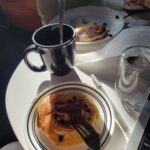
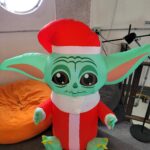
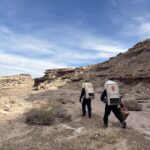
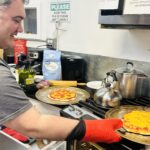
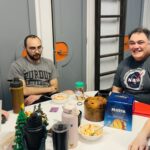
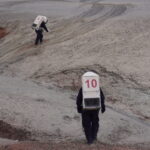
Sol Activity Summary: Today began in the habitat with preparations for the EVA and steady momentum on internal mission tasks. Before the EVA team departed, Isabella and Saranya worked on educational outreach materials connected to the Honours College and the Amelia Earhart Leadership Towards Space Careers Program. Meanwhile, Cesare put on his chef hat once again and began preparing pizza dough and brioche bread, continuing what is quickly becoming his most delicious MDRS tradition. Further, Ellenah volunteered to make chocolate-chip pancakes. The EVA into Candor Chasma was successful, with the team hiking 30 minutes into the canyon before selecting an optimal site to set up experiments. While Morgan excavated a 5 m trench (≥15 cm deep) for his study, Ellenah deployed her solar-panel logging experiment, recorded elevation, and worked through intermittent Arduino disconnections (progressing from 4/30 to 14/30 to 16/30 logs) before resolving the issue and completing a full 30/30 logging run. Adrianna sustained morale throughout by playing upbeat music (including “Dancing Queen” and “Funky Town”), which the team appreciated during the longer setup period; Morgan connected prefabricated cables and initially struggled with wiring but completed setup in roughly an hour. After Morgan’s trial, the team scouted for an additional site for Ellenah’s readings, then returned to the rovers and drove back to the Hab. On return, the EVA crew was welcomed with de-suiting support, a quick debrief on landscape and objectives, and a lighthearted morale boost: an inflated Grogu placed in the living room. Today was also hot shower day for the EVA participants, which they seemed to enjoy immensely, followed by personal time and a few well-earned naps. The evening regrouped around dinner as Cesare set up a full assembly line of toppings and produced five pizzas (margherita, meat lovers, mushroom, pepperoni, and potato), leaving enough leftovers for tomorrow’s lunch. Saranya stepped briefly to the science dome to reassemble her RPM experiment after some rig components loosened. The crew then settled in to draft reports and reflect while completing the mid-mission summary, ending the day in a calm, productive atmosphere. After communications close, we might have a movie night, unless our tired bodies request some early bedtime. Yet another wonderful day giving our contribution to the future of Mars exploration.

Look Ahead Plan: One more EVA tomorrow, and more work on our research projects.

Anomalies in work: None.

Weather: Clear and warm.

Crew Physical Status: Everybody is doing great.

EVA: Today we had a long and successful EVA to Candor Chasm.

Reports to be filed: Sol Summary, Journalist Report, Greenhab Report, Photos (6-8 images), Operations Report, EVA 6 Report, Astronomy Report, EVA 7 Request, mid-mission Research Report.

Support Requested: None.

Operations Report – December 20th

Report title: Operations Report
Crew #: 325
Position: Engineer
Report prepared by: Morgan McCoy
Date: 20Dec2025
Sol: 5

Non-nominal systems:
Toilet Tank Level Sensor
Notes on non-nominal systems:
Toilet Tank level sensor has shown 2/3 full for ~2 days, despite being emptied yesterday
ROVERS
Curiosity rover used: EVA #6 Ellenah Del Rio & Addriana Waterford
Hours: 339.0
Beginning charge: 100%
Ending charge: 44%
Currently charging: NO
Perseverance rover used: EVA#6 Morgan McCoy
Hours: 386.3
Beginning charge: 100%
Ending charge: 57%
Currently charging: NO
General notes on rovers:
N/A
Summary of Hab operations:
Water Use: At 5PM measured 17 inches in water – 39.1 gallons used
Main tank level: 301.8 gallons calculated with spreadsheet
Main water tank pipe heater: ON
Main water tank heater: ON
Toilet tank emptied: NO
Summary of internet:
Nominal
Summary of suits and radios:
EVA #6 – Suit 8 – Morgan McCoy – Start 12.8 Volts End 12.6 Volts
EVA #6 – Suit 9 – Ellenah Del Rio – Start 13.5 Volts End 12.7 Volts
EVA #6 – Suit 10 – Addriana Waterford – Start 13.7 Volts End 12.5 Volts
Summary of GreenHab operations:
Adrianna Waterford monitored hydroponics system and harvested Basil for Pizza
Water use: 1 gallons
Heater: On
Supplemental light: 0 hrs
Harvest: Basil, 10 grams
Summary of ScienceDome operations:
Checks on running experiments by Saranya Ravva, Adrianna Waterford, Isabella Levine
Dual split: HEAT
Summary of RAM operations: N/A
Summary of any observatory issues: N/A
Summary of health and safety issues: N/A
Questions, concerns and requests to Mission Support:
Salt forcooking

Operations Report – December 25th

Report title: Operations Report
Crew #: 325
Position: Crew Engineer
Report prepared by: Morgan McCoy
Date: 25Dec2025
Sol: 10

Non-nominal systems:
Notes on non-nominal systems:
ROVERS
Curiosity rover used: EVA #11 – Morgan McCoy & Isabella Levine
Hours: 341.1
Beginning charge: 100%
Ending charge: 40%
Currently charging: NO
Opportunity rover used: EVA #11 -Saranya Ravva
Hours: 239.1
Beginning charge: 100%
Ending charge: 39%
Currently charging: No
General notes on rovers:
Nominal
Summary of Hab operations:
Water Use: 40.01 Gallons/day
Main tank level: 164 Gallons
Main water tank pipe heater: ON
Main water tank heater: ON
Toilet tank emptied: YES
Summary of internet:
Nominal
Summary of suits and radios:
EVA #11 Suit 8 – Morgan McCoy – Start 13.1 Volt, End 12.2 Volt,
EVA #11 Suit 9 – Isabella Levine – Start 13.3 Volt, End 12.2 Volt,
EVA #11 Suit 10 – Saranya Ravva – Start 12.8 Volt, End 12.2 Volt,
Summary of GreenHab operations:
Addriana Waterford: Hydroponics system is still being monitored. Flower beds have been weeded and prepped for incoming crew. Inventory is complete and has been sent.
Water use: 1 gallons
Heater: ON
Supplemental light: 0 hours
Harvest (name, weight in grams): N/A
Summary of ScienceDome operations:
Dual split: Heat
Summary of RAM operations: None
Summary of any observatory issues: None
Summary of health and safety issues: None
Questions, concerns and requests to Mission Support: None

GreenHab Report – December 25th

Report title: GreenHab Report
Crew #: 325
Position: Green Habitat Officer
Report prepared by: Adrianna Capitola Waterford
Date: 25Dec2025
Sol: 10

Environmental control (fan & heater): Operating
Average temperatures (last 24h): 72
Maximum temperature (last 24h): 75
Minimum temperature (last 24h): 70
Hours of supplemental light: 0
Daily water usage for crops: 1 gal
Daily water usage for research and/or other purposes: Hydroponics
Water in the Tank (160 gal useful capacity): 154 gallons remaining
Time(s) of watering for crops: 16:30
Changes to crops: None
Narrative: Hydroponics system is still being monitored. Flower beds have been weeded and prepped for incoming crew. Inventory is complete and has been sent.
Harvest: None
Support/supplies needed: None

Journalist Report – December 24th

Report title: Journalist Report
Crew #: 325
Position: Crew Journalist
Report prepared by: Saranya Ravva
Date: 24Dec2025
Sol: 9

Journalist Report Title (If Applicable) : A Landscape That Refuses to End
Mars Trivia Question, answer at the end of the report:
What is the largest volcano and mountain in the solar system, and why is it found on Mars?
Sol 9 began before sunrise. I woke up early so I could capture thermal images of the habitat, science dome, and GreenHab before any solar loading affected the surfaces. I moved quietly, careful not to disturb anyone sleeping. The early start paid off. I was able to capture all angles, especially regions with visible surface damage, which will allow me to perform a more complete structural assessment. By the time I settled into my seat at 8:00 a.m., I felt satisfied with the data I had collected.
That calm focus quickly turned into a joyful surprise when Cesare played my favorite Carnatic music piece as the wake-up song: Endaro Mahanubhavulu. It felt grounding and deeply personal, and for a moment, Mars felt very close to home.
Everyone soon gathered in the living room and around the dining table, preparing quick breakfasts and coffee. Since we had an earlier EVA scheduled, the communications window felt especially precious. Some of us went straight into productive mode, downloading resources, sending messages, and wrapping up tasks before heading out.

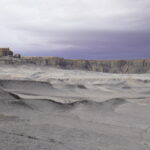
Adrianna, Ellenah, and I suited up for the EVA, starting with some additional thermal imaging near the habitat before setting out in the rovers toward Sea of Shells, also known as The Moon. This rover ride quickly became one of my favorites so far. Cold air swept across my face as I drove along the bumpy terrain. The sky shifted between blue and purple, and the landscape ahead felt distinctly extraterrestrial.
None of us had been to this location before. Isabella navigated while I drove, and we followed instructions from crew members who had visited earlier. Until we arrived, we were not entirely sure we were in the right place. But once the seashell fossils and distinctive terrain came into view, there was no doubt. We had arrived.
I brought my DSLR camera along and took landscape photographs of the area. When I reviewed the images back at the habitat, I was genuinely mesmerized. It had been a long time since a landscape stopped me in my tracks the way this one did.
We returned to the habitat with time to spare. The sky had turned cloudy, creating ideal conditions for additional thermal imaging. That decision paid off. I was able to clearly identify heat signatures associated with structural cracks on the habitat. Seeing those signatures appear on the thermal map was incredibly exciting, and I am looking forward to performing detailed post-analysis. Isabella and Adrianna also collected extensive Garmin biometric data during the EVA for their project.
Back inside, the atmosphere shifted toward celebration. With Christmas energy in the air, we went straight into cooking mode. We made black bean patties, potato soup, and biscuits, and morale rose immediately. After eating, some of us relaxed together while others took personal time.
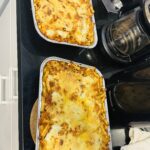
Later in the evening, Cesare put on his chef hat once again and prepared baked ziti that was nothing short of phenomenal. As if that was not enough, he brought out Motta Il Panettone cake from Italy, which felt incredibly fancy and indulgent. Mars may be remote, but tonight felt rich in every sense.
The biggest surprise of the day came next. We were told we could make brief phone calls. After nearly ten days of isolation, hearing voices of family from outside the mission, beyond mission control, is going to feel surreal and emotional. It was a reminder of how far we are, and how connected we still remain.
Trivia Answer:
The largest volcano and mountain in the solar system is Olympus Mons, located on Mars. It grew to an enormous size because Mars lacks plate tectonics, allowing volcanic eruptions to occur in the same location for millions of years, combined with the planet’s lower gravity, which supports taller structures.

Sol Summary – December 24th

Report title: Sol Summary Report
Crew #: 325
Position: Crew Scientist
Report prepared by: Ellenah del Rio
Date: 24Dec2025
Sol: 9

Summary Title: Fossils, FLIR, and Festive Feasting
Mission Status: Nominal
Sol Activity Summary: Another rich and memorable sol, with strong science output, a successful EVA, and a well-earned dose of comfort back at the Hab. Before sunrise, Saranya quietly conducted thermal imaging of the habitat, science dome, and GreenHab to avoid solar loading, capturing all sides, including areas with visible wear, to support later structural assessment. The crew began the morning around 0800 with a special wake-up song: Endaro Mahanubhavulu, which set a warm tone for an early start. With an earlier EVA on the schedule, the crew moved efficiently through breakfast and the comms window, making the most of the time for planning and coordination. Ellenah, Adrianna, and Saranya suited up for the EVA and began with additional thermal imaging before departing in the rovers toward the “Sea of Shells” (the Moon). Isabella navigated while Saranya drove, following guidance from crew who had previously visited. Saranya also documented the site with her DSLR, capturing standout landscape imagery. The team returned to the Hab and under cloudier conditions Saranya completed more thermal imaging and identified heat signatures consistent with structural cracks for follow-up analysis, while Isabella and Adrianna collected substantial Garmin biometric data for their project. Back at the Hab, the crew prepared lunch. Cesare continued the culinary streak with baked ziti and an Italian Motta Il Panettone cake. Ellenah spent time biking while Morgan cleaned the lower Hab and checked suit status; later, Ellenah, Isabella, and Adrianna relaxed together on the bean bags and watched the new season of Percy Jackson, followed by naps and personal time. The day ended on a high note: the crew received the opportunity to make brief phone calls, an especially meaningful connection after nearly ten days of isolation beyond Mission Control.

Look Ahead Plan: One more EVA tomorrow (hopefully), and more work on our research projects.

Anomalies in work: None.

Weather: Partly Cloudy.

Crew Physical Status: Everybody is doing great.

EVA: Today we had a long and successful EVA to the Sea of Shells.

Reports to be filed: Sol Summary, Journalist Report, Greenhab Report, Photos (6-8 images), Operations Report, EVA 10 Report, EVA 10 Request.

Support Requested: None.

Copyright © The Mars Society. All rights reserved. | Main Site