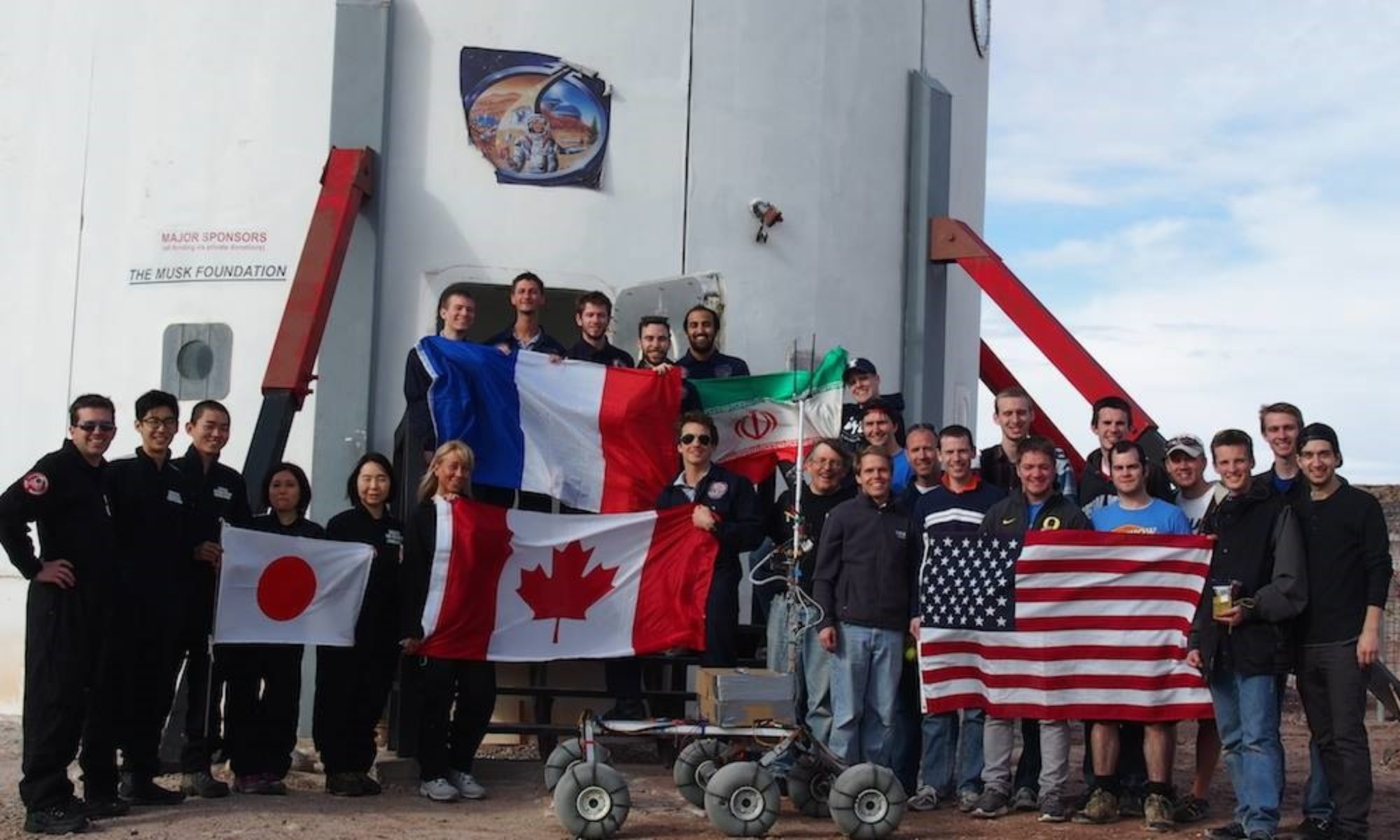

Mid-mission Research Report – April 12th

[category science-report]

Mid mission report – Crew 314

Crew 314 – First Days on Mars: Adapting, Exploring, and Connecting

Crew 314 officially landed on the surface of Mars on April 6, 2025, at noon Earth time. Upon arrival, we quickly familiarize ourselves with the station and, after a restorative night’s sleep, began working on our respective experiments and preparing for the first EVAs.

The first two sols were particularly intense, filled with a fast-paced sequence of reports, extravehicular activities, experiment setup, station tasks, and the necessary adjustments to the Martian simulation lifestyle. A bit of confusion surrounding reporting procedures during these initial days added to the challenge, but the crew quickly adapted and found its rhythm.

Over the following three sols, although the schedule remained full, we were able to manage our tasks more efficiently. This allowed us to take moments to truly appreciate the experience of living and working on “Mars”: admiring the stunning landscape, sharing moments of team bonding through cooking, card games, and informal discussions.

These early days have laid the groundwork for a cohesive, resilient, and motivated crew, ready to make the most of the mission ahead.

Experiments:

This section provides an overview of the current status and recent developments in the various research projects being conducted by the crew. Each experiment continues to evolve in alignment with its objectives.

Odile Hilgers (Health and Safety Officer):

As Health and Safety Officer for this analog Martian mission, I am leading a series of six medical simulations designed to assess crisis management and team coordination in an isolated and confined environment. These scenarios are inspired by realistic medical emergencies and are adapted to the operational constraints of life in a Martian habitat. The program is structured to gradually increase in complexity and immersion: the first two simulations serve as training exercises, the next two are designed as Earth-based medical scenarios, and the final two will simulate emergencies occurring on Mars. Each simulation unfolds in three phases: a briefing, during which participants receive clinical background on the patient, including medical history and the story of the present illness; the simulation itself, involving three role-players and three observers; and finally, a 30 to 45-minute debriefing session centered around Crisis Resource Management (CRM) principles. During the debrief, all participants complete the Ottawa Global Rating Scale (Ottawa GRS), providing a structured evaluation of team performance. So far, three scenarios have been conducted, all taking place inside the Hab, both on the upper and lower decks. Data analysis will be conducted once all six simulations are completed, in order to evaluate behavioral patterns, decision-making processes, and overall team efficiency in high-stress situations.

Bérengère Bastogne (GreenHab Officer):

The experiments conducted at the Mars Desert Research Station are part of my doctoral thesis. The main objective is to evaluate the impact of Martian environmental stresses – UV radiation (A, B and C), temperature (hot-cold cycles), gravity and substrate (regolith) – on arbuscular mycorrhizal fungi (AMF). These fungi are obligate symbionts that associate with plant roots and can supply them up to 80% of total phosphorus and nitrogen. As one of the most important mutualistic microorganisms for global food production, AMF are essential elements to be considered for the development of future colonies on Mars.

Understanding how AMF respond to environmental conditions is critical. Since they are closely associated with plants, any parameter affecting spores could impact essential AMF functions and indirectly impact plant growth and plant health. However, despite their crucial role, little is known about how these environmental stresses affect these microorganisms. Therefore, expanding our knowledge in this area is crucial.

My research is divided into two experiments. The first aims to study the effects of these stresses on spore germination. The second focuses on the ability of spores, after exposure to stresses, to associate with plant roots.

The initial step involved estimating the number of spores in 10 g soil (to prepare for the first and second experiments). I then exposed the soil – containing spores – in Petri dishes or Falcon tubes to different conditions for 48h. For the germination study, approximately 10 g of soil (containing 30-40 spores) was used per condition. For the root association study, I used 10 g per condition, with six replicates.

To test the substrate stress, I isolated spores from 6x10g of soil and transferred them into regolith. The environmental conditions were applied as follows:

Temperature: Petri dishes were placed outside (near the entrance of the ScienceDome)

Gravity: Falcon tubes were attached to the Random Positioning Machine (RPM) – placed in the ScienceDome at room temperature

UV: Petri dishes were placed under a UV lamp in the ScienceDome at room temperature

Substrate: Spores were placed in Petri dishes filled with regolith, kept in the ScienceDome at room temperature

Control: Petri dishes were placed in the ScienceDome at room temperature without any added stress

After 48h, for the germination study, I isolated spores from the soil samples exposed to the different conditions. Then, to prevent contamination in subsequent steps, I disinfected the spores using various solutions. Once disinfected, I placed four spores on each membrane, which was then folded in half twice. The membranes were then buried in a moistened soil mix within Petri dishes and incubated in the ScienceDome at room temperature.

For the second experiment, I mixed the stressed soils (post-48h exposure) with a soil mix in small pots. After moistening, I transplanted ten plantain seedlings (germinated in the greenhouse approximately one week earlier) into each pot. All pots were labeled and placed in the ScienceDome at room temperature.

On Wednesday 16 April, I will assess spore germination and viability by transferring each membrane to a a separate Petri dish and adding a drop of methyl thiazolyl diphenyl-tetrazolium bromide (MTT) to each spore. Since MTT is photosensitive, I will cover the Petri dishes with aluminium foil and keep them in the ScienceDome at room temperature. After 24h, I will observe the germination and viability of each spore.

On Thursday 17 April, I will evaluate the association between AMF spores and plant roots. All plantain seedlings will be harvested and stained using a series of treatments (bleach, vinegar and ink) at 70°C (oven). After staining, I will observe each seeding roots under a microscope to determine whether there is any point of contact between the AMF and the roots.

During the EVAs, I collected soil samples to identify the AMF species present in the Utah desert soil, depending on their characteristics. If time permits, I will expose the spores found in these samples to the various stress conditions for 48h, then assess their viability with MTT.

Batoul Tani (Crew Journalist):

As part of the microbiological experiments conducted during the MDRS mission, I have been investigating the resistance of two bacterial species, Escherichia coli and Bacillus thuringiensis, to various environmental stressors that simulate Martian surface conditions. These include UV-C radiation, temperature fluctuations, and the potential protective effect of native soil samples.

During the initial phase of the mission, I dedicated my time to the preparation of culture media, including LB broth and agar plates in Petri dishes, to ensure consistent and sterile growth conditions throughout the experiments.

For Escherichia coli, I carried out two main exposure experiments. The first consisted of an 8-hour exposure to UV-C light to evaluate the bacterium’s tolerance to high doses of ultraviolet radiation. The second experiment involved placing the bacterial cultures outdoors for 48 hours, exposing them to natural day-night cycles and ambient temperature fluctuations. These conditions aimed to simulate the thermal variations that would be encountered on the Martian surface. Over the next few days, I intend to monitor the potential development of biofilm structures under these stress conditions, as biofilm formation can serve as a protective survival mechanism in harsh environments.

For Bacillus thuringiensis, I implemented a similar 8-hour UV-C exposure protocol, with an additional variable: the presence or absence of soil collected from the Cowboy Corner site. This was done to explore the potential shielding effect of local soil against radiation. The samples were also subjected to either stable or cyclic temperature conditions to assess how thermal fluctuations interact with UV stress and soil protection. In the upcoming days, I will perform a comparative analysis of colony-forming units (CFUs) to quantify survival rates across the different experimental conditions.

These experiments aim to contribute to our understanding of microbial resilience in analog Martian environments, which has implications for both planetary protection and the feasibility of microbial-based life support systems.

Louis Baltus (Crew Astronomer):

The first experiment I am conducting during the MDRS simulation is centered on developing a solar weather monitoring system using the Musk Observatory. The objective is to design a tool that could one day be deployed on Mars to monitor solar activity and protect astronauts from potentially harmful radiation.

However, the experiment faced delays during the initial phase of the mission. Due to a lack of sufficient prior training and self-education on the telescope’s operation, I was unable to use the observatory effectively for the first several days. This resulted in a significant setback to the planned data collection schedule.

Yesterday, I was finally able to perform my first imaging session with the telescope. This marked a critical step forward, but it also became apparent that the data acquisition process is far more time-consuming than anticipated. Given the remaining time in the mission and the complexity of the equipment, I have decided to focus exclusively on capturing high-quality solar images for the rest of the rotation. The full exploitation and analysis of this data will be carried out after the mission concludes.

Unfortunately, today’s weather conditions were unfavorable, with high winds and heavy cloud cover making telescope operations nearly impossible. Despite this, I remain optimistic. With continued practice and clearer skies in the coming days, I expect my proficiency to improve significantly, allowing for better and more frequent image acquisition.

The second experiment, conducted under the supervision of a professor from UCLouvain, investigates astronaut-computer interaction (ACI) via gesture-based controls—an area that has seen very limited study to date. The goal is to evaluate the practicality and cognitive workload associated with using wearable gesture recognition systems in analog Martian conditions.

Two commercial devices, the TapStrap and TapXR, are being evaluated. Both allow users to input commands via a predefined set of 16 finger gestures. These gestures are intended to serve as an alternative to conventional interaction methods, especially in scenarios where gloves, mobility constraints, or interface limitations would hinder performance.

A baseline data collection session was completed before the mission under standard Earth conditions. During the simulation, I am conducting two test sessions with a participant to measure gesture memorization, recognition accuracy, and production time:

The first session took place on Sol 4, with the participant wearing normal indoor clothing. The session was completed without incident, and all necessary data was recorded.

The second session is scheduled for Sol 8, during which the participant will wear a full astronaut suit. This test will simulate extravehicular activity conditions and allow us to assess how the suit’s physical constraints—such as limited dexterity and sensory feedback—affect gesture-based interaction.

As the experimenter, I am responsible for guiding the participant through the testing protocol and recording all performance metrics. The comparison between the pre-mission, Sol 4, and Sol 8 sessions will provide valuable insights into the feasibility of gesture-based controls for future space missions.

The findings from this study are expected to inform the development of more ergonomic and intuitive human-computer interfaces tailored for constrained environments such as the surface of Mars.

Antoine Dubois (Crew Engineer):

As part of my experiment, I aim to measure sediment transport in an arid environment analogous to that of Mars. The primary objective of this study is to assess wind-driven erosion dynamics and to draw lessons applicable to the protection of structures built on Mars, where extreme climatic conditions and a thin atmosphere suggest a slow but continuous process of erosion.

In the field, I have installed dust collectors at three different heights — 10 cm, 20 cm, and 30 cm — in order to observe variations in particle size distribution depending on their transport height. This approach will help identify whether certain grain sizes are more likely to be transported at specific altitudes, which could have practical implications for the design and durability of Martian infrastructure.

To complement these measurements, I have also deployed a data logger to record local environmental conditions, along with a sensor under each dust collector that measures soil moisture, temperature, and electrical conductivity. These parameters will help me better understand how soil conditions influence sediment movement.

The collected samples will later be analyzed using three different sieves (2 mm, 500 µm, and 250 µm), allowing me to classify the particles by size and create detailed granulometric profiles for each height. These analyses will provide valuable insights into aeolian transport mechanisms in desert environments and their applicability to Martian conditions.

At the midpoint of the mission, all instruments are functioning properly, and the first samples will be collected within a day or two. Initial wind speed and direction data have also been retrieved from the computer available in the HAB. By the end of the mission, this experiment is expected to yield useful and relevant results for research on the adaptation of human infrastructure to the Martian environment.

Béatrice Hollander and Arnaud de Wergifosse (Crew Commander and Crew Executive Officer):

The primary objective of this joint study is to evaluate the effects of a dietary supplementation combining a probiotic (Lactobacillus helveticus) and an amino acid (glycine), compared to a placebo, on stress levels as well as sleep quality and duration. Physiological data have been collected nightly, including heart rate, heart rate variability, total sleep time, and sleep quality, using scientifically validated wearable devices (Oura rings®). Given the highly similar living conditions among crew members during the nighttime period, this timeframe is particularly suitable for such data collection.

To account for potential confounding variables, additional physiological measures such as skin body temperature and oxygen saturation are also monitored. In parallel with these objective physiological indicators, participants completed three self-report questionnaires providing a subjective, behavioral perspective. These instruments assess perceived stress levels (Perceived Stress Scale-10), daytime sleepiness (Epworth Sleepiness Scale), and satisfaction with sleep over the preceding week (PROMIS sleep disturbance).

Furthermore, all crew members engage in a daily session of cardiac coherence—a controlled breathing technique consisting of 5-minute cycles of respiration, characterized by inhaling for 5 seconds and exhaling for 5 seconds. This practice is included to assess its potential effects on stress regulation and sleep, as well as any interaction it may have with the proposed supplementation.

Preliminary trends suggest possible intra-individual variations. Some crew members appear to experience improved sleep duration during the mission compared to their baseline data collected prior to the simulation. However, no significant intergroup differences have been observed at this stage. The majority of the crew has responded positively to the cardiac coherence practice, reporting reductions in stress levels both during and after the sessions.

To date, no significant differences have been identified between the supplementation and placebo groups. In other words, the dietary supplement does not yet appear to exert a notable influence on the measured outcomes.

Sol Summary – April 12th

Crew 314 Sol Summary Report 12-04-2025

Sol: 6

Summary Title: Under the Martian Gusts

Author’s name: Arnaud de Wergifosse (Crew Executive Officer)

Mission Status: ongoing

Sol Activity Summary: Despite strong winds and slightly limited visibility, an EVA was successfully conducted today to explore the region. The mission proceeded with caution and allowed for valuable observations of the surrounding terrain.

In the science dome, our crew journalist, Batoul, observed the completion of treatments on her first bacterial cultures. She is expecting her initial results tomorrow, which will mark an exciting milestone in her microbiology experiments. Bérengère, our GreenHab Officer, was able to tend to the plants despite the high temperatures inside the greenhouse, ensuring they remain in good condition.

Overall, it was a relatively calm day for most of the scientific projects, aside from the daily routine experiments which continued as planned.

Look Ahead Plan: One EVA is scheduled in the morning to conduct Bérengère’s experiment at Sea of Shells. Throughout the day, we will continue working on our individual experiments, including a CRM simulation in the afternoon involving the whole team for Odile’s experiment. Béatrice and Arnaud will carry on their research while collecting data with their wearables.

Anomalies in work: None was notified.

Weather: The day was partly cloudy both in the morning and afternoon, with occasional wind and gusts reaching up to 39 mph. Temperatures fluctuated between 47°F and 88°F throughout the entire day.

Crew Physical Status: Everyone was in good health today, with no issues reported.

EVA: Under warmer weather conditions and moderate wind gusts (~15 mph), the crew departed the MDRS at 09:44, heading toward the Sea of Shells for geological sampling and a check on Antoine’s experiment. Despite intermittent signal loss—particularly upon arrival at the Sea of Shells at 10:10—the team successfully completed their tasks. Wind conditions peaked at 16 mph during the outing.

After returning to Brahe Highway at 11:01 and re-establishing communication, the crew made a second stop at the intersection of Galileo and Cow Dung Road to inspect field equipment. The EVA concluded with a safe return to the Hab at 11:24, followed by decompression ending at 11:32.

This EVA successfully met all scientific and operational objectives despite communication and weather-related challenges.

Reports to be filed: Sol Summary, Journalist Report, GreenHab Report, Operations Report, EVA Report, EVA Request, Crew Photos, Astronomy Report.

Support Requested:

A request was submitted to Mission Support to assist the crew in closing the main entrance door, which had suddenly slammed open due to strong winds and became stuck. Thanks to Mission Support’s prompt intervention, the issue was successfully resolved.

Since some of the canned goods and food supplies (such as eggs, coffee, etc.) were already partially used upon our arrival, would it be possible to receive a resupply?

EVA Report – April 12th

Crew 314 EVA Report 04-13-2025

EVA # 9

Author : Odile Hilgers

Purpose of EVA : Driving to the Sea of Shells to get some soils for Berengère’s experiment, and on the way back, stopping at the intersection of Galileo Road and Cow Dung Road to check Antoine’s equipment.

Start time : 9:32am

End time : 11:50am

Narrative :

Four crew members participated in today’s EVA. Among them was our GreenHab Officer, Bérengère Bastogne, who is currently conducting an experiment involving fungi and requires soil samples from various Martian locations. Today, she collected a sample from the Sea of Shells, a place where an ancient ocean once lay—now long gone. Yet, if one lets their imagination wander, it is still possible to envision waves dancing gently in the wind. Joining her was Antoine, our Crew Engineer, who needed to verify whether his installation had withstood the violent winds from the previous day.

After donning their suits and completing the standard five-minute decompression, the crew exited the MDRS at 09:37. They split into two teams: Béatrice drove Opportunity with Antoine as her passenger, while Bérengère drove Curiosity with Arnaud—today’s EVA leader—riding as her passenger. Shortly after departure, Mission Support informed us that the crew was driving a bit too fast and reminded them to reduce their speed in order to conserve the rovers’ battery life.

At 09:42, the crew made contact to report that they had reached the intersection of Galileo Road and Cow Dung Road. At 09:53, they turned left onto Brahe Highway, and at 09:57, they checked in again to determine their distance from the intersection with Copernicus Highway—they were approximately 250 meters away (about 0.15 miles).

No further radio contact was made after that point; however, the crew’s position was continuously tracked via GPS. They arrived near their intended destination at 10:20 and began exploring the surrounding area, collecting two soil samples for Bérengère’s experiment. Concerned about Opportunity’s battery level—down to 57%—they decided to park the rover slightly earlier than initially planned. They also deployed the drone to capture aerial photographs of the canyon.

The crew left the Sea of Shells at 11:20. They attempted to contact CapCom at 11:26, but the signal was very weak, and no communication was possible until 11:40.

At 11:40, they reached the intersection of Cow Dung Road and Galileo Road, where they checked Antoine’s equipment. They briefly reported their activities : Antoine drove Opportunity until they reached Galileo Road, after which Béatrice resumed driving. Arnaud remained the driver of Curiosity for the entire return trip.

Destination : Sea of Shells (4256500N, 517000W)

Coordinates (use UTM WGS 84):

First stop : Sea of Shells (4256500N, 517000W)

Second stop : Intersection Galileo Road and Cow Dung Road (4252250N, 519000W)

Participants : Antoine Dubois (Engineer), Béatrice Hollander (Commander), Bérengère Baltus (Greenhab), Arnaud de Wergifosse (Executive Officer)

Road(s) and routes per MDRS Map : Moonwalk Road, then Cow Dung Road 0110. Turning at Brahe Highway to Overlook, and then Copernicus 1575 Highway to reach Sea of Shells.

Mode of travel : Driving and walking.

Operations Report – April 13th

Crew 314 Operations Report 13-04-2025

SOL: 7

Name of person filing report: Antoine Dubois (Engineer)

Non-nominal systems :

The number of cable ties have been checked.

Notes on non-nominal systems :

Cable ties: There are 4.5 packs of 50 zip ties (24"), approximately 50 zip ties (8"), and around 15 zip ties (6") in storage.

ROVERS

Spirit rover used : /

Opportunity rover used: EVA # 9

Hours: 215.8 (0.8 used).

Beginning charge: 100%

Ending charge: 44%

Currently charging: No

Curiosity rover used: EVA # 9

Hours: 308.3 (0.8 used)

Beginning charge: 100%

Ending charge: 65%

Currently charging: No

Perseverance rover used: /

General notes on rovers: /

Summary of Hab operations: Today in the Hab, we dedicated time to cooking, socializing, making progress on our experiments and advancing our individual reports. We also did some physical exercise to maintain our shape. During the afternoon, the fourth medical simulation took place, included in Odile’s experiment. To wrap up the day, we held our regular team meeting to review our progress and plan the tasks ahead.

Water Use (please use both methods to estimate water usage)

Time of measurements (collect data for the same time window): 7 p.m.
1) Per formula (see notes): 17.90 gallons
2) Smart Home Dashboard (see notes): 16.56 gallons

Water (static tank, remaining gallons): 326.11 gallons (per formula) & 339.12 gallons (Smart Home Dashboard)

Static tank pipe heater (on or off): off

Static tank heater (on or off) : off

Toilet tank emptied (no or yes): no

Summary of internet: Research for experiments, languages learning and music listening

Summary of suits and radios:

Radio : 3, 4, 5 et 6.

Suits : 7, 8, 9 et 10.

Summary of GreenHab operations: put notes here

I watered all the plants with water.

The door of the GreenHab was left open for 8 hours and 15 minutes (9.10 am to 5.25 pm) to reduce the temperature inside (maximum of 108.3 °F).

I watered and checked the seeds of the 3 small rectangular black pots (sprouts of China Rose radish) with the new cultures (Kale, Arugula and cress).

I removed Arugula plants because the plants were too old to be eaten.

I cut the dead branches of the tomato plants and tied up the overhanging branches.

I added stakes with a sticky paper to try to catch the drosophila present in the GreenHab.

I tied up the dill branches with a rope and tried to separate the different cultures (basil, dill, parsley, spring onions, chives, garlic) in the big blue pot.

I cleaned the floor of the GreenHab.

WATER USE: 9.5 gallons

Heater (On or Off): Heater on (setup temperature = 72 °F)

Supplemental light (hours of operation): 7-10 pm

Harvest (name, weight in grams): 6 spring onions, 8 rainbow cherries and 6 g of parsley

Summary of ScienceDome operations: put notes here

Check the condition of plantain seedlings and watering

Inoculation of soil samples (from the EVA) with spores of arbuscular fungi

Application of different stress (UV, gravity, temperature and control) conditions to soil samples (from EVA)

Batoul still made notable progress, adding a colored marker to each of her samples for future identification and analysis

Dual split (Heat or AC, On or Off): Off

Summary of RAM operations: We picked up the food cans and counted the number of cable ties at 5 p.m.

Summary of any observatory issues: The solar observatory was used in the morning. In the afternoon, cloud cover prevented further observations.

Summary of health and safety issues: Everyone was in good health today, with no issues reported. There were no safety concerns to note.

Questions, concerns and requests to Mission Support: Food requested by the crew was provided by the mission support

GreenHab Report – April 13th

Crew 314 GreenHab Report 13-04-2025
GreenHab Officer: Bérengère Bastogne
Environmental control (fan & heater):
Heater on (setup temperature = 72 °F)
Fan on (to keep the temperature below 94 °F)
Average temperatures (last 24h): 89.7 °F
Maximum temperature (last 24h): 108.3 °F
Minimum temperature (last 24h): 71.2 °F
Hours of supplemental light: 7-10 pm
Daily water usage for crops: 9.5 gallons
Daily water usage for research and/or other purposes: 0 gallon
Water in Blue Tank (200 gallon capacity): 135.35 gallons
Time(s) of watering for crops: 30 min
Changes to crops: I removed Arugula plants because the plants were too old to be eaten.
Narrative: I watered all the plants with water.
The door of the GreenHab was left open for 8 hours and 15 minutes (9.10 am to 5.25 pm) to reduce the temperature inside (maximum of 108.3 °F).
I watered and checked the seeds of the 3 small rectangular black pots (sprouts of China Rose radish) with the new cultures (Kale, Arugula and cress).
I removed Arugula plants because the plants were too old to be eaten.
I cut the dead branches of the tomato plants and tied up the overhanging branches.
I added stakes with a sticky paper to try to catch the drosophila present in the GreenHab.
I tied up the dill branches with a rope and tried to separate the different cultures (basil, dill, parsley, spring onions, chives, garlic) in the big blue pot.
I cleaned the floor of the GreenHab.
Harvest: (include which crop and mass in grams) 6 spring onions, 8 rainbow cherries and 6 g of parsley.
Support/supplies needed: None

Journalist Report – April 15th

Today’s mission was marked by several key moments, blending science, daily routines, and an emergency scenario.
The day started with an EVA (extravehicular activity) for Bérengère, our GreenHab Officer. She headed out into the field to collect soil samples for our lab analyses. The outing, under clear skies and mild temperatures, went smoothly and allowed us to gather several promising samples.

The night was anything but quiet: a medical emergency simulation was conducted to test our responsiveness under extreme conditions. Despite the darkness, fatigue, and noise, the crew did their best to react efficiently. Odile, our Health and Safety Officer, suddenly woke us up by sounding a training alarm, marking the start of the drill. This test highlighted both our ability to handle stress and a few areas where we can improve our night-time coordination.

In addition to her fieldwork, Bérengère also carried out her tasks in the greenhouse: watering, monitoring plant growth, and managing money as the team’s treasurer.

Sol Summary – April 15th

Crew 314 Sol Summary Report 15-04-2025

Sol: 9

Summary Title: Sound the Alarm: Emergency Simulation Protocols on Mars

Author’s name: Arnaud de Wergifosse (Executive Officer)

Mission Status: Ongoing

Sol Activity Summary: Today’s mission blended scientific work, routine duties, and a high-stress emergency drill. The day began with a successful EVA by Bérengère, the GreenHab Officer, who collected soil samples under favorable conditions. That night, the team underwent a surprise medical emergency simulation, testing their coordination and stress response in challenging conditions. Bérengère also managed greenhouse tasks and handled the team’s finances. The day’s events were captured in photos showing moments of action, fatigue, and camaraderie.

Look Ahead Plan: Tomorrow, two EVAs are scheduled. The first will take place in the morning, during which Bérengère will collect soil samples from both Candor Chasma and Green Mars View, as the samples gathered today were of poor quality. The second EVA is planned for the afternoon and will involve exploring the area around Skyline Rim to take photographs and document the terrain. The crew will also continue to work on their experiment.

Anomalies in work: None was notified today.

Weather: Partly cloudy in the morning and in the afternoon. Temperatures varied between 42°F and 77°F during the entire day

Crew Physical Status: Everyone was in good health today, with no issues reported.

EVA: The EVA team began decompression at 9:34 AM and exited the Hab by 9:39 AM. After a short walk north of the Science Dome, they identified a new site for Antoine’s experiment and completed equipment setup by 10:20 AM. The crew then resumed their journey using Curiosity (driven by Antoine with Odile) and Perseverance (driven by Béa with Bérengère). A brief communication stop was made at 10:46 AM before reaching Green View. The return trip began at 11:48 AM with a switch in drivers. The team safely arrived at the MDRS at 12:12 PM, and decompression was completed by 12:20 PM. The EVA was successfully conducted without incident.

Reports to be filed: Sol Summary, Journalist Report, GreenHab Report, Operations Report, EVA Report, EVA Request, Astronomy Report.

Support Requested: /

EVA Report – April 15th

Crew 314 EVA Report 15-04-2025

EVA #12

Author: Antoine Dubois (Crew Engineer)

Purpose of EVA: The aim of this EVA was to identify and evaluate a new measurement site for Antoine’s science experiment. After leaving the station, the crew headed north on foot around the science dome to explore a potential site. The purpose of this site evaluation was to determine whether the area presented the conditions required for collecting data on movements or environmental variables essential to Antoine’s research. The EVA also included a traverse of the rover to Green Mars View, which enabled the team to recover soil samples for Bérengère’s experiment.

Start time: 9:34 a.m.

End time: 12:15 p.m.

Narrative:

The EVA team began decompression procedures at 9:34 AM, with the process completed by 9:39 AM. At 9:40 AM, the crew started walking, contouring the Science Dome to head north in search of a new measurement site for Antoine’s experiment.

At 9:53 AM, the team stopped and began setting up equipment at coordinates 425100, 518000 (Utah region). The setup phase concluded at 10:20 AM, after which the crew returned to the rovers.

At 10:27 AM, Curiosity rover was driven by Antoine, with Odile as passenger, while Perseverance was driven by Béa, with Bérengère as passenger.

At 10:46 AM, the team made a short stop in a special region to establish communications before continuing on the road toward Green View.

At 11:48 AM, the crew left Green View to return to the station. This time, Odile drove Curiosity with Antoine as passenger, and Bérengère drove Perseverance, with Béa as passenger.

The crew arrived safely at the station at 12:12 PM, concluding a successful EVA. A 5-minute depressurization process began at 12:15 PM.

Destination: Green Mars View

Coordinates (use UTM WGS 84):

MDRS – collection site: 4251000N, 518000W

Green Mars View : 520500N, 4257000W

Participants: Odile Hilgers (HSO), Bérengère Bastogne (Greenhab), Antoine Dubois (Engineer), Béatrice Hollander (Commander)

Road(s) and routes per MDRS Map: We will leave the MDRS via Moonwalk Road, then follow Cow Dung Road 0110 until we reach Green Mars View

Mode of travel: Driving and walking

GreenHab Report – April 15th

Crew 314 GreenHab Report 15-04-2025
GreenHab Officer: Bérengère Bastogne
Environmental control (fan & heater):
Heater on (setup temperature = 72 °F)
Fan on (to keep the temperature below 94 °F)
Average temperatures (last 24h): 85.3 °F
Maximum temperature (last 24h): 99.5 °F
Minimum temperature (last 24h): 71.1 °F
Hours of supplemental light: 7-10 pm
Daily water usage for crops: 10.5
Daily water usage for research and/or other purposes: 0.25
Water in Blue Tank (200 gallon capacity): 114.1 gallons
Time(s) of watering for crops: 10 min
Changes to crops: None
Narrative: I watered all the plants with water.
The door of the GreenHab was left open for 4 hours and 20 minutes (2.00 am to 6.20 pm) to reduce the temperature inside (maximum of 99.5 °F).
Repair of pink sprinkler (broken top).
Harvest: (include which crop and mass in grams) 126 g of basil
Support/supplies needed: None

Operations Report – April 12th

Crew 314 Operations Report 15-04-2025

SOL: #8

Name of person filing report: Antoine Dubois (Engineer)

Non-nominal systems :

Arnaud repaired a watering can.

Notes on non-nominal systems :

The watering can was worn and repaired with tape.

ROVERS

Spirit rover used:

Hours: /

Beginning charge: /

Ending charge: /

Currently charging: yes

Opportunity rover used: /

Hours: /

Beginning charge: /

Ending charge: /

Currently charging: yes

Curiosity rover used:

Hours: 309.3 (used 0.9)

Beginning charge: 100%

Ending charge: 56%

Currently charging: no

Perseverance rover used:

Hours: 320.0 (used 0.9)

Beginning charge: 100%

Ending charge: 60%

Currently charging: no

General notes on rovers: /

Summary of Hab operations: Today in the Hab, we began our day with the fifth medical simulation, which was a bit different from the previous ones as it took place at the end of the night to introduce stress-inducing conditions. Afterward, we dedicated time to cooking, socializing, making progress on our experiments, and advancing our individual reports. We also engaged in some physical exercise to maintain our fitness. To wrap up the day, we held our regular team meeting to review our progress and plan the tasks ahead.

Water Use (please use both methods to estimate water usage)

Time of measurements (collect data for the same time window): 6 p.m.
1) Per formula (see notes): 20.51 gallons
2) Smart Home Dashboard (see notes): 20.92 gallons

Water (static tank, remaining gallons): 282.46 gallons (per formula) & 298.70 gallons (Smart Home Dashboard)

Static tank pipe heater (on or off): off

Static tank heater (on or off) : off

Toilet tank emptied (no or yes): no

Summary of internet: Research for experiments, languages learning and music listening.

Summary of suits and radios:

Suits : 7, 8, 9 and 10.

Radios : 3, 4, 5 and 7.

Summary of GreenHab operations: put notes here

I watered all the plants with water.

The door of the GreenHab was left open for 4 hours and 20 minutes (2.00 am to 6.20 pm) to reduce the temperature inside (maximum of 99.5 °F).

Repair of pink sprinkler (broken top).

WATER USE: 10.75 gallons

Heater (On or Off): Heater on (setup temperature = 72 °F)

Supplemental light (hours of operation): 7-10 pm

Harvest (name, weight in grams): 126 g of basil

Summary of ScienceDome operations: put notes here

Treatment of Bacillus thuringiensis

Watering plantain plantlets

Dual split (Heat or AC, On or Off): AC, ON

Summary of RAM operations: /

Summary of any observatory issues: No observation today.

Summary of health and safety issues: Everyone was in good health today, with no issues reported. There were no safety concerns to note.

Questions, concerns and requests to Mission Support: /