
EVA Report – April 7th

Crew 279 EVA Report 07-04-2023

EVA # 5

Author: Agnès Dekeyser, Crew Executive Officer

Purpose of EVA:

EVA will be focused on conducting a number of experiments that will help us better understand the conditions on Mars. The crew will be exposing bacteria to the MDRS environmental conditions and comparing the results with their analog staying inside the MDRS. This will give us valuable insights into how microorganisms react to the harsh Martian environment and how we can potentially use this knowledge to support future human exploration of Mars.

Additionally, we will be launching a meteorological balloon to take some measurements of atmospheric pressure and temperature. These measurements will help us to better understand the weather patterns on Mars and how they may impact future missions to the planet.

Finally, we will begin our reportage with the parameters tested during the previous EVA. This will allow us to document our findings and share them with the scientific community back on Earth.

Support will be necessary for the installation of the balloon and especially the inflation of it. Which increases the number of people needed to 4.

Start time: 9h06

End time: 11h54

Narrative:

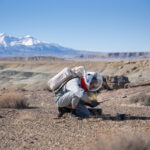
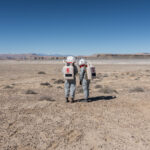
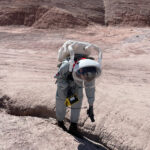
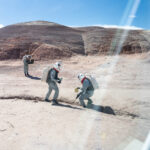
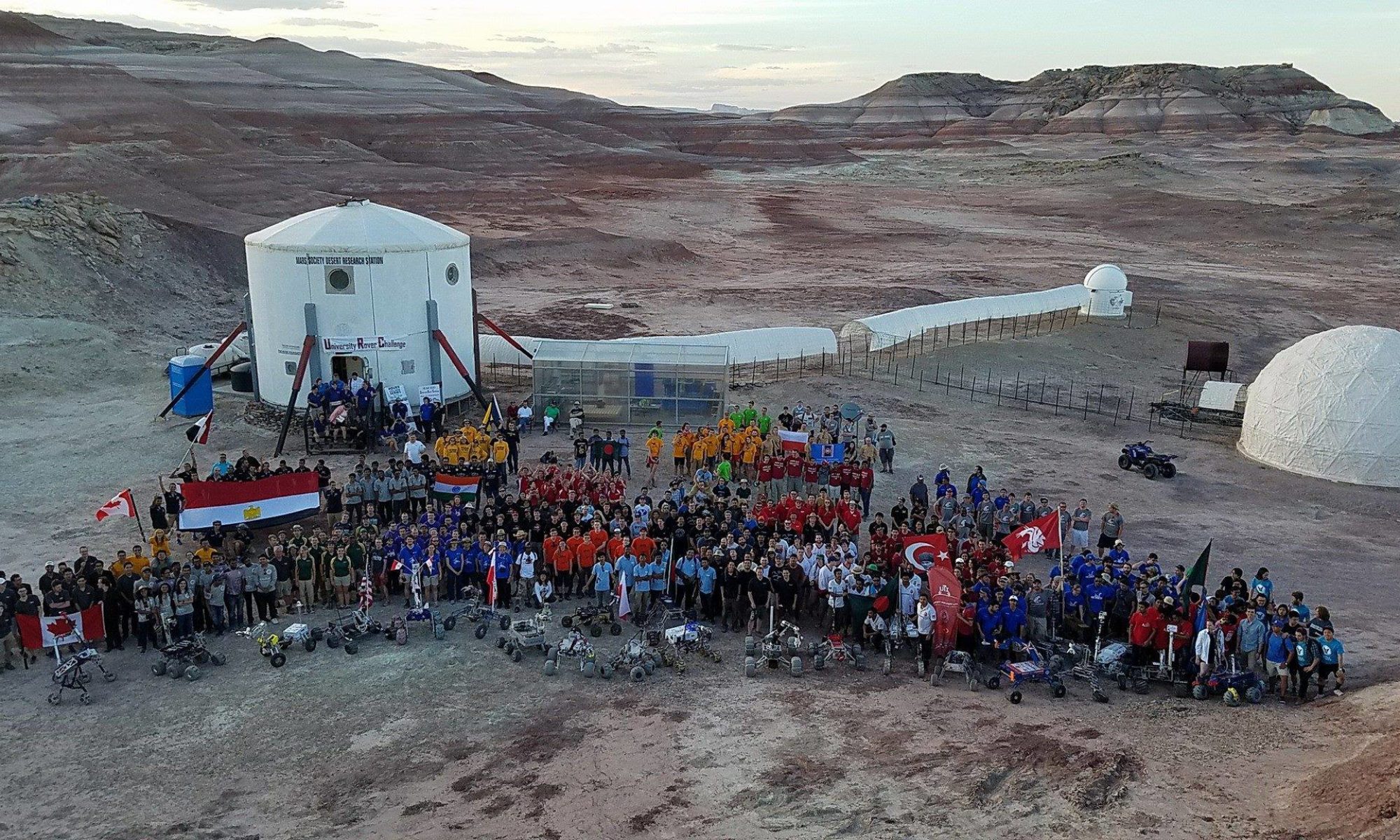
The crew began their journey with a sunny day and a lot of material to carry. Once everything had been loaded into the rovers, the crew drove to their mission destination. Once at North Ridge they had to wait a bit before beginning their mission because of the presence of Martians at the place of their stop. Once the Martians left the place, the crew began their ascent. They walked a little bit all around the North Ridge to find the best way to arrive at the top.

Once at the top, bacteria in their cuvette were placed at the more suitable place to stay for several days. They were attached to a rack with a sign mentioning “Please do not touch”. After that, the cuvettes were oriented to face the sun at any time of the day. One big rock was also placed on top of the rack to make sure that it won’t move during the next few days of exposure to Mars environmental conditions.

Several pictures were taken during the brave ascension of the crew with the heavy material. Once at the top, the crew took a few minutes to observe the view and take pictures despite the short time available due to the work needed to launch the meteorological balloon.

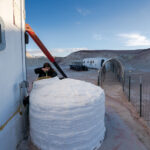
Then, the most ambitious part began : the meteorological balloon was filled with helium and closed very carefully as explained by the manufacturer. One martionaut was holding the balloon while the others were closing the opening using a colson. The latter were covered by tape to prevent them from scratching the ball. The cord was then attached to the opening with several nodes. The opening was folded in two and closed again using colson and tape. The sensor was then attached using the same cord and the balloon was dropped in the air. Some videos and pictures of the launching were taken for the reportage.

Bacteria and the balloon with the sensor attached to it will stay there until the next visit in two days to collect data and check bacteria.

The crew climbed down and took some pictures again before picking up the rovers. Once at the MDRS, they reported the parameters of the four rovers and made a last video of the entry of the crew in the airlock for the reportage.

Destination: North Ridge, because this is the place that the authorities (Utah Division of Aeronautics) have granted us to place our balloon.

Coordinates (use UTM WGS 84): 518500 E, 4251750 N

Participants: Agnès (XO, EVA Leader), Ioana (Engineer), Aglaé (Journalist), Gwen (Astronomer)

Road(s) and routes per MDRS Map: Cow Dung Road 0110 to the cross with Gateway to Candor

Mode of travel: Driving on Cow Dung Road 0110 to the cross with Gateway to Candor then walking to the North Ridge.
Journalist Report – April 7th

CREW 279 – Journalist Report – 07APR2023

Journalist Report : Aglaé Sacré, Crew journalist
SOL 5 : The balloon is in the air!

This morning after a good breakfast, part of the team warmed up with a little sport session to start the day. The EVA can begin.

After several days of preparation of her bacteria, Agnès was able to go and place her bacteria in the Martian environment during the EVA.
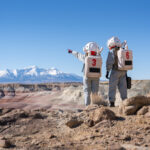
We also placed a balloon that will collect meteorological data to bring data to the experiments. We went up to North Ridge to have a view of the balloon from the station.

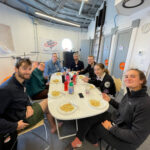
Back at the station, a nice plate of chili con carne was waiting for us, spicy but perfect to get our strength back! Our Health and Safety Officer even concocted some beautiful and delicious cookies for us!

This afternoon, our astronomer was able to make his first solar observations, so excited to see the results as the simulation progressed!
During this time, we enjoyed playing games and we took the challenge of the MARS puzzle present in the station.

On the program of our evening, a good couscous and especially a game night to spend an evening all together.

EVA Report – April 6th

Crew 279 EVA Report 06-04-2023

EVA #4

Author : Gwenaël le Bussy, Crew Astronomer

Purpose of EVA:

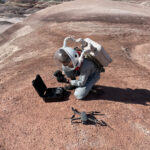
After testing the 2 software for Augustin’s drone, he chose one. To test how the drone reacts to relief, he intends to go to Kissing Camel Ridge to do a mapping of 250m by 229m at low altitude. This place will serve as the first test for low altitude flight. Then he will go to White Rock Canyon where he will do the same thing but with relief on both sides. This time the map will be 250m by 310m. The drone will make a first flight between 20 and 50 meters above sea level to map any obstacles and then a second flight at low altitude. He will need support to launch the drone and to always have a visual view of the drone when Augustin sees the view of the drone through his phone.

The experiment is to see how a drone can be useful to find regions protected from radiation (either for extremophile bacteria or for astronauts themself). To do this, Kissing Camel Ridge W gives a good area with a lot of relief. Then canyon in general can be an interesting place to look for since the water has dragged the rock and potentially offer cavities giving protected area from

Gwen will also test a new reportage camera and focus on obturation time. A fourth person will be needed as technical support, especially for microphone tests (If we hear well on Gwen’s camera). If all these tests are ok, they will start the report.

Start time: 9:13 am

End time: 12 am

Narrative:

First, we went to the Kissing Camel Ridge W (KCRW) ; beginning at 100% battery for both rovers, we ended up with 84% for Spirit and 85% for Curiosity for the 1.01 mile drive. Both rovers were on « M » drive mode and the drive was smooth without speeding. Such consumption seems strange to us and we have a few hypothesis for that behaviour :

Battery consumption is not linear and the first pourcentages are consumed faster
When the battery is « cold » the rover consumes more
Maybe driving mode should be switched to « F » for long distances.
Arriving at KCRW, Augustin started the mapping with the drone while Gwen was testing some settings for best audio and video for reporting. During the mapping, the drone crashed on top of KCRW and the EVA crew had to recover it ; with the approval of the Hab, we started ascending KCRW. Because of the terrain, the EVA crew had to pass by the South side of the KCRW to climb on top. This side of the ridge is in fact in the opposite way the Hab and we lost communication between members of the EVA. Gwen communicated the problem to the Hab then the EVA crew members switched to Channel 2 for communicating on the ridge. In fact, this choice cuts communication with the Hab and we had to inform them. We continued ascending the ridge, reached the top and found the crashed drone. Hopefully, the drone was reparable and Augustin was able to continue the mapping of KCRW.

On top, Gwen was able to communicate again with the Hab (by switching to channel 1) and transmitted all the necessary information to the EVA crew who stayed on Channel 2. Because of the crash, we lost a lot of time and decided with the Hab control to stay on KCRW for the all EVA instead of going to White Rock Canyon after. This allowed Augustin to finish the mapping of KCRW.

At 11:15 AM, the EVA crew decided to start the descent to the rovers by the same route as the climb to avoid risky choices and injuries. The crew returned in time to the Hab after reporting the parameters of the four rovers.

Destination: Kissing Camel Ridge W

Coordinates (use UTM WGS 84): 518000 E, 4249500 N

Participants: Gwen (EVA Leader)(Astronomer), Ttele (HSO), Antoine (Commander), Augustin (GreenHab officer)

Road(s) and routes per MDRS Map: Cow Dung Road 0110

Mode of travel: Drive for a first stop between Kissing Camel Ridge W and E then walking along side of the north face of Kissing Camel Ridge W. Then climbing on top of KCRW

Sol Summary – April 6th

Crew 279 Sol Summary Report 05-04-2023
Sol: 4
Summary Title: An interesting and explosive journey
Author’s name: Agnès Dekeyser, Crew Executive Officer
Mission Status: Nominal
Sol Activity Summary:
The whole crew woke up after a really good night of sleep and shared some pancakes and bread for breakfast. Four of them were then getting ready for their EVA with the means of drone mapping and a reportage places. First, Kissing Kamel Ridge W followed by White Rock Canyon. After a little accident with the drone which needed some repairs, the crew lost some time and had to come back without attaining second place. In the meantime, our crew astronomer made some tests with his camera and microphone, coming back with some nice pictures and videos. After small modifications, the parameters tested should be ready for the reportage.
After a good warm lunch and a small card game, the crew members were ready to continue their own experiments going from analysis of data to 3D printing or cultivation of bacteria.
At the end of the afternoon, they were disturbed by a small issue in the science dome. It seems that the solar power system got overcharged a little and the crew had to exhaust it a little bit.
Look Ahead Plan:
The crew will continue working on their own experiments by the means of several EVA’s.
Tomorrow, the crew will expose bacteria to the MDRS environmental conditions and compare the results with their analog staying inside the MDRS. They will also launch a meteorological balloon in order to take some measurements of atmospheric pressure and temperature. Finally, they will begin their reportage with the parameters tested during the previous EVA.
In the MDRS, they will analyze the data and get prepared for the next EVA’s for radioactivity measurements, drone mapping, and monitoring of the weather balloon.
Anomalies in work: Power system overloaded by power of sun. Need to be handled.
Weather: Sunny, high 11°C/52°F, low -6°C/21°F
Crew Physical Status: Nominal
EVA: See above
Reports to be filed: Journalist report, Greenhab report, Operations report, EVA report, EVA request
Support Requested: None

GreenHab Report – April 6th

GreenHab Officer: Augustin Tribolet
Environmental control: Open during day and heater during night
Average temperatures: 82.2 F
Hours of supplemental light: N/A
Daily water usage for crops: 10.5 gallons
Daily water usage for research and/or other purposes: N/A
Water in Blue Tank: 149.2 gallons
Time(s) of watering for crops: 13:30, 19:30
Changes to crops: N/A
Narrative: General watering and maintenance of plants and crops was done, no new planting was performed. The door was left open in the afternoon.
Harvest: 500 g tomatoes
Support/supplies needed: Is it possible to have suggestions on what is best to plant at this stage of the year?

Journalist Report – April 6th

CREW 279 – Journalist Report – 06APR2023

Journalist Report, Aglaé Sacré, crew journalist

SOL4: The drone flies!

This morning 4 members of the crew went to Kissing Camel Ridge to do a second mapping via a drone. After climbing for several minutes, they were able to enjoy a 360 degree view of the surrounding area.
During this time, the team in the base maintains constant contact with the team members outside.

After the meal, we gathered around a board game to spend some time together before starting the afternoon and the experiments.
We were able to get the images of the first mapping, the one of the station. We are very happy with the result and we can’t wait to see the next images.

Gwenaël, our astronomer, took out his camera during the EVA to capture some beautiful views and great moments!

The afternoon was rather relaxing. Due to a problem in the Science Dom, we had to put some experiments on hold. Some of us took the opportunity to relax and read a book, while others, including our engineer who is conducting an experiment on the benefits of music on astronauts’ stress, played several pieces of music on the ukulele! A great relaxing afternoon!

As every evening we submitted our reports and sent our EVA request for tomorrow. Tomorrow morning, Agnes will go to deposit her bacteria so that they can live in Martian conditions!

After a good dinner, our Health and Safety Officer once again invited us to participate in a team building evening in order to end the day together in a good atmosphere!

Sol Summary – April 5th

Crew 279 Sol Summary Report 4-5-23

Sol: 3

Summary Title: When the experiments come out of the box

Author’s name: Antoine de Barquin – Crew Commander

Mission Status: Nominal

Sol Activity Summary:

The day started well with a good smell of pancakes to wake us up after our evening team building on Sol 2. We made small games in order to reinforce the group spirit. The excitement to start the day was at its peak. It’s the big day to start the EVA experiments after the 2 training sessions. We did our first EVA of 3 hours to work on our experiment. It took place around the MDRS and we had 2 objectives for the expedition. Two members of the crew were working on the crew scientist experiment which consists in measuring the radiation with a scintillator at different predefined points. The rest of the group was working on a 3D mapping of the base with a drone for the GreenHab Officer experiment.
The first 3D printer tests in the RAM were a success. This marks the beginning of the astronomer’s experiment using the printer.
The rest of the crew continued to work on the experiments already underway in the base.
Look Ahead Plan:

In Sol 4 we will take an EVA to Kissing Kamel Ridge W and White Rock Canyon to perform a low-level mapping of the area with the drone. Augustin and Thomas will be able to start linking their experiments and matching the radiation measurements with the 3D mapping to create an interactive view.

Anomalies in work:
A headset needs to be repaired
Weather: Sunny and cold, low -3°C/27°F, high 8°C/46°F
Crew Physical Status: Optimal
EVA: See above
Reports to be file: Sol Summary, Operations Report, Journalist Report, GreenHab Report, Astronomer report

Support Requested: None at this time.

Operations Report – April 5th

Crew 279 Operations Report 05-04-2023

SOL: 3

Name of person filing report: Ioana Dimitrova

Non-nominal systems: robotic observatory and suit number 8

Notes on non-nominal systems:

Robotic observatory: awaiting for a solution from the manufacturer

Suit number 8: Problem is being assessed by crew engineer (details in Summary of suits and radios)

ROVERS

Spirit rover used: no

Hours: 213.9

Beginning charge: 100%

Ending charge: 100%

Currently charging: yes

Opportunity rover used: no

Hours: 119.7

Beginning charge: 100%

Ending charge: 100%

Currently charging: yes

Curiosity rover used: no

Hours: 226.9

Beginning charge: 100%

Ending charge: 100%

Currently charging: yes

Perseverance rover used: no

Hours: 260.1

Beginning charge: 100%

Ending charge: 100%

Currently charging: yes

General notes on rovers: none

Summary of Hab operations: Music influence on stress experiment was conducted. Planning of all menus for all Sols to quantify correctly.

WATER USE: 9,77

Water (static tank): 422,6

Static tank pipe heater (on or off): off

Static tank heater (On or off): off

Toilet tank emptied: no

Summary of internet: used from 14:00 to 21:00 for experiments and reports

Summary of suits and radios:

Following yesterday’s problems with helmet fogging up on Suit 8, Engineer tested voltage every 20 min, here are the results:

time

20 min

40 min

60 min

80 min

100 min

120 min

Voltage

13,6 V

13V

12,89 V

12,7 V

2,93 V

2,1V (left ventilator turned off)

The EVA’s could last 3h, so it is not normal to have this kind of power loss at one hour and 40 min. I think the battery needs changing. The suit will not be used until a solution is found for changing the battery.

Radios charging nominal. Headset number 5 plastic headband got detached from earphone during EVA, the plastic bond broke. Comms still worked, we were still able to communicate. Engineer reattached the two parts with superglue in the afternoon and the headset is now entirely functional.

WATER USE: 10.5

Heater: Off

Supplemental light: Off

Harvest: none

Summary of ScienceDome operations : 3D printer reconstruction finished. Bacteria was put in liquid environment culture to be able to be exposed to another environment soon.

Dual split: Heat or AC, Off

Summary of RAM operations: 3D printer tested and print of other test parts will be started tonight. Headset number 5 fixed in the RAM.

Summary of any observatory issues: see above for robotic observatory. Solar observatory not used for cloudy skies. The New Mexico observatory was not open so we got black pictures. See observatory report for more details.

Summary of health and safety issues: none

Questions, concerns and requests to Mission Support:

Is it normal that when you ignite the stove in the Hab kitchen only on one stovetop, the other stovetops also give out a spark?