Astronomy Report – February 22nd

[category  astronomy-report]

Astronomy Report

Name: Léa Bourgély

Crew: 293

Date: 22/02/2024

MDRS ROBOTIC OBSERVATORY

Robotic Telescope Requested: MDRS WF

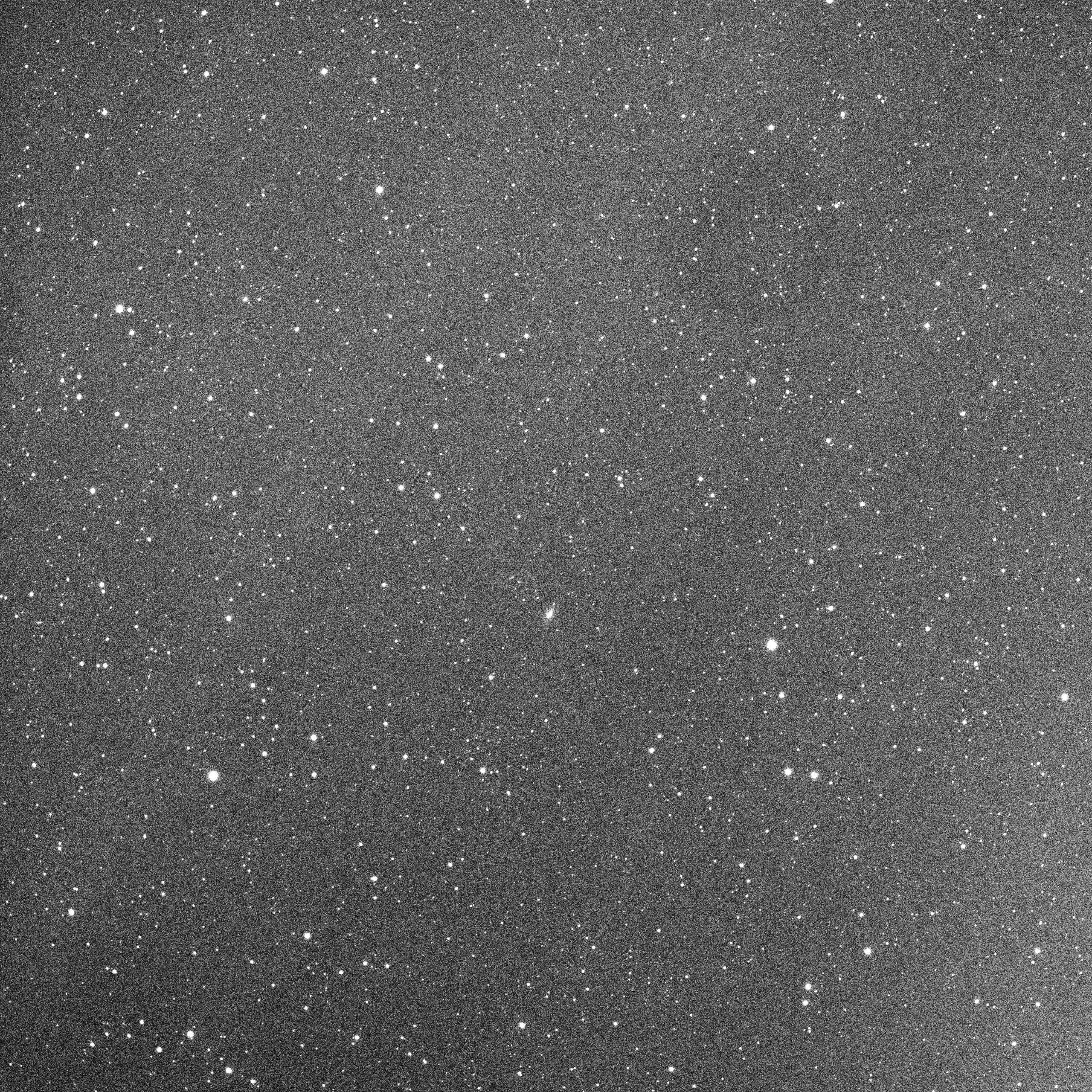
Objects to be Imaged this Evening: NGC 2268

Images submitted with this report: None

Additional Notes:

It was a first try just to run a test. The settings are wrong and the image is not exploitable.

Sol Summary – February 22nd

Crew 293 Sol Summary Report 22-02-2024

Sol: 4

Summary Title: First clouds upon the Crew

Author’s name: Marie Delaroche, Crew Commander

Mission Status: Nominal

Sol Activity Summary:

This morning, the second EVA team tasked with installing the remaining atmospheric devices (the Field Mill and a weather station) left the station at 9:15. The team successfully installed a weather station which is now synchronized with a tablet inside the Hab. The data collected by the weather station will be used to determine how the measurements taken by the atmospheric instruments are influenced by wind speed, wind direction, humidity, etc.The rest of the EVA went smoothly, apart from a malfunction with the Field Mill.

One EVA crewmember started noticing an issue with the airflow of their suit as the EVA crew was approaching the airlock. Once inside, they felt their suit was no longer ventilated, and quickly asked the crew to take off their helmet, which they did immediately; sim was broken for safety purposes. The crewmember sat down and had difficulty breathing, as they had been breathing accumulated CO2. The entire crew reacted to the situation perfectly; we called Mission Support, and provided all the correct first aid elements. Mathurin checked their oximetry level, which was back to normal after they went back to the Hab. Once the situation was under control, Leo and Marie performed measurements on the ventilation battery and noticed that the battery level had dropped below 8V, after 3h30mins of use.

After re-reading previous emails between Mission Support and Crew 292, we realized the faulty suit (suit 6) was also reported to have battery issues, and that the battery had already been replaced before. We will make sure that the problem does not occur again by testing every suit (see Operations Report for details on the tests) to identify the ones that might be faulty.

The Crew spent the early afternoon resting after an eventful morning; we then spent time training with the AMI interface, and troubleshooting sensors.

Look Ahead Plan:

Tomorrow will be dedicated to various activities, most notably preparing videos for the schools linked to our outreach program, continuing the EchoFinder experiment, and troubleshooting hardware for Orbital Architecture.

An EVA to retrieve and fix the malfunctioning Field Mill is scheduled on Sol 6.

Anomalies in work: EVA Suit #6

Weather: Sunny, High 15°C, Low 5°C

Crew Physical Status: One crewmember had trouble breathing at the end of the EVA. They have fully recovered.

EVA: Deployment of two Atmospheric Instruments, the Field Mill and a weather station.

Reports to be filed: Sol Summary, Journalist’s Report, GreenHab Report, Operations Report, Photos (6-8 pics), EVA Reports (1), HSO Report

Support Requested: NA

EVA Report – February 22nd

Crew 293 EVA Report 22-02-2024

EVA # 4

Author: Marie Delaroche (HabCom)

Purpose of EVA: Deployment of two Atmospheric Instruments, the Field Mill and a weather station.

Start time: 9:16

End time: 12:25

Narrative:

9 :11 : Begin depressurization

9:16 : Exiting airlock

Opportunity Hours : 164.2

Opportunity Battery : 100%

Perseverance Hours : 284.4

Perseverance Battery : 95%

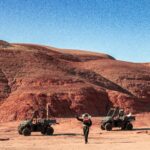
9:20 : Moving rovers, loading field mill support system into Opportunity, securing it with tethers.

9:27 : Testing robustness of tether setup

9:30 : Loading Perseverance

9:34 : Rovers loaded, leaving Hab

9:36 : Arrived at weather station site

9:47 : Securing weather station mast into the ground

9:49 : Call from Mission Support reminding the crew to close the RAM Airlock when going out on EVA. This was acknowledged and understood.

9:59: Weather station operational, synchronized with in-Hab tablet

10:01 : Leaving weather station site, returning to rovers

10:05 : Rovers in route

10:09: Arrived at atmospheric instruments EVA site

10:38 : Securing Field Mill mast; dealing with electrical issue.

10:51 : Field Mill secured, moving to MegaAres to perform tests and finish securing the instrument.

11:03: First screw secure, three screws left

11:19 : Starting data collection from LOAC

11:24 : LOAC data retrieved, switching to Mega Ares

11 :34 : Mega Ares fully deployed

11: 50 : Potential issue with Field Mill, performing checks.

12:08 : Decision to leave EVA site. The issue will be fixed during a future EVA.

12:19 : Rovers back at Hab

Perseverance : 61%

Opportunity :72%

Journalist Report – February 22nd

SOL 4: First clouds upon the Crew

“Well, I must endure the presence of two or three caterpillars if I wish to become acquainted with the butterflies. It seems that they are very beautiful.” – The Little Prince, Antoine de Saint-Exupéry

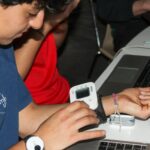
Each morning when we wake up, we take what we call “Core Data”. These measurements are diverse: we weigh ourselves with an impedance meter, which records a large data spectrum such as weight, the detail of muscular weight and fat weight, an electrocardiogram, and others. We also record our tension and corporal temperature. Oximetry data are taken with an oximeter, placed at the finger’s tip. While we take a turn on each measurement device, we fill sleep questionnaires and time perception tests on our computers. The aim is to record these Core data all along the mission, to then provide them to researchers who conduct human factor studies. There are seven of us in the station, and we all must take all the measurements, so the recording takes a little bit of time. But, at this point, we are starting to get used to the procedure and to be very efficient: we managed to take all the measurements and to fill our questionnaires in less than 20 minutes!

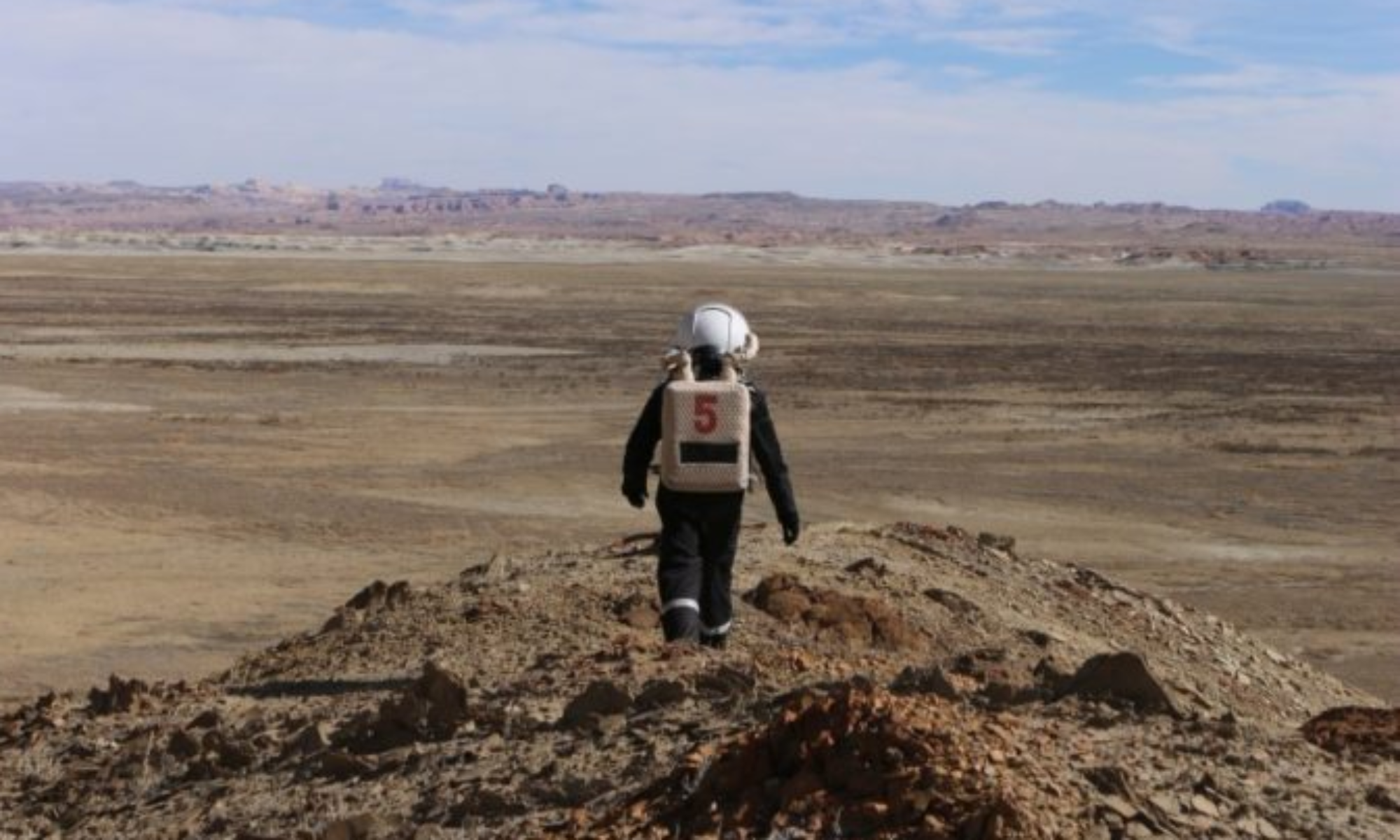
After that, what’s better than another deployment EVA for the atmospheric instruments? Leo and Léa went on the EVA with Lise to deploy the last two instruments: a weather station and a field mill. Combined to LOAC and Mega Ares, deployed yesterday, these instruments will provide complete and precise data regarding the atmosphere and electric field. As part of the study, the CNRS researchers are interested in the earth’s desert. For us, participating in this study is interesting both for the scientific purpose and for the Martian life simulation, giving us opportunities to perform EVAs. This atmospheric physics’ experiment was brought to the station for several years by other ISAE-SUPAERO MDRS Crews, so researchers can record a large amount of data, necessary to their scientific publications. The deployment did not go as well as yesterday… Indeed, due to strong rays from the Sun on Mars, some of the devices’ electric cables melted… After three and a half hours of EVA, our astronauts came back to the station, even though the problem wasn’t solved.

Just before the end of re-pressurization of the airlock, one of the EVA team members noticed that their ventilation system was not working nominally. They quickly asked to take off their helmet, and the sim was broken for safety purposes. The accumulation of expired CO2 in their helmet caused them difficulty to breathe. The entire crew reacted to the situation perfectly; we called Mission Support and provided all the correct first aid. Mathurin checked their oximetry level, which was back to normal after their difficulties. Once the situation was under control, Leo and Marie performed measurements on the ventilation battery and noticed that the battery level had dropped below 9V… We will make sure that the problem does not occur again by testing every suit to identify the ones that might be faulty. Everything is back to normal, even though we were all a bit shaken, and the affected EVA team member felt much better during the afternoon.

During the afternoon, each Crew member worked on their experiments, Mathurin took care of the GreenHab and three astronauts performed the “Tilt” experiment, provided by the Neuroergonomy department of our school. The objective is to test the way we control a little shuttle which must pass obstacles, whether we are seated or laid down. We are testing two different points of view: third or first person. The aim is to study our perception and our orientation. Every Crew member will participate in this experiment, with one session per week and per person during the entire mission.

Operations Report – February 21st

Crew 293 Operations Report 22-02-2024

SOL:3

Name of person filing report:Leo Tokaryev

Non-nominal systems: Hammer

Notes on non-nominal systems: One hammer with an elastic head was unfortunately broken during the EVA of this morning.

ROVERS

Spirit rover used: No

Hours: (before EVA)

Beginning charge: (Before EVA)

Ending charge: (On return from EVA, before recharging)

Currently charging:

Opportunity rover used:No

Hours:

Beginning charge:

Ending charge:

Currently charging:

Curiosity rover used: Yes

Hours: 268.7

Beginning charge:100%

Ending charge:68%

Currently charging:Yes

Perseverance rover used: Yes

Hours: 284.3

Beginning charge:93%

Ending charge:68%

Currently charging:Yes

General notes on rovers:none

Summary of Hab operations: put notes here

WATER USE: 3.8 gallons

Water (static tank): 417.5 gallons

Static tank pipe heater (on or off):On

Static tank heater (On or off):On

Toilet tank emptied: no

Summary of internet: none

Summary of suits and radios: all suits and radios were functional for the EVA

Summary of GreenHab operations: put notes here

WATER USE: 6 gallons

Heater: On

Supplemental light: automatic control 22h-2h

Harvest: 3grams of basil

Summary of ScienceDome operations: none

Dual split: Heat or AC, On

Summary of RAM operations: (Tools used, work done) some work will be performed this night to prepare tomorrow’s EVA

Summary of any observatory issues:

Summary of health and safety issues:

Questions, concerns and requests to Mission Support:

1) We were wondering if the water consumption sheet was functioning well. The sheet says that we used 3.8 gallons of water today, but after our calculations it should be a lot more (8L for dishes, at least 2L for hygiene, 10L at least for drinking so it should be at least 5 gallons…) I know that the sheet is not precise especially in the first few inches because of the geometry of the water tank, but isn’t this difference too big?

2) About yesterday’s question: what is an UPS? Is there a particular charging port that we should use in the science dome in order to not lose power during the power source switch? Could you explain more about how we could fix this problem? Thank you!

EVA Report – February 21st

Crew 293 EVA Report 21-02-2024

EVA #003

Author: Léa Bourgély

Purpose of EVA: Deployment of the first set of Atmospheric Instruments

Start time: 9:30

End time: 11:56

Narrative: The EVA objectives were to deploy the atmospheric instruments at the chosen site.

9:30am entered the RAM

Curiosity : 268.7h, 100%

Perseverance : 284.3 93%

9:55am arrived at the closest point of the site, unloading the atmospheric instruments from the rovers

9:57am arrived at the atmospheric instrument site

11:28am Mega-Ares end, turn to LOAC

11:31am LOAC leds are checked + MegaAres uploading data

11:35am packing up

11:40am taking pictures

11:45am

57% perseverance

68% curiosity

Before 12:00pm rovers have been plug back

11:51am come back to the RAM

Destination: Location between the Hab and Marble Ritual

Coordinates (use UTM WGS 84): 518300, 4251000

Participants: Léa Bourgély, Erin Pougheon, Leo Tokaryev

Road(s) and routes per MDRS Map: Exited the Hab through the RAM Air Lock, drove the driveway to Cow Dung Road 0110 to the north until the crew reached Marble Ritual.

Modes of travel : Curiosity Rover and Perseverance Rover, and walk within a radius of 500m .

GreenHab Report – February 21st

Crew 293 GreenHab Report 21-02-2024

GreenHab Officer: Mathurin FRANCK

Environmental control: (heater, fan, door open?) Heater turning on automatically

Average temperatures: around 70°F- 80°F

Hours of supplemental light: 22h-2h

Daily water usage for crops: 6G

Daily water usage for research and/or other purposes: None

Water in Blue Tank (200 gallon capacity): 174.9 gallons –

Time(s) of watering for crops: 10:30am 6:36pm

Changes to crops: None

Narrative: /

Harvest: (include which crop and mass in grams) : 3g of basil

Support/supplies needed: None

Mathurin FRANCK

Journalist Report – February 21st

SOL 3: Story of an EVA

“He had decided, the night before, that he would be as much an adventurer as the ones he had admired in books.” – The Alchemist, Paulo Coelho

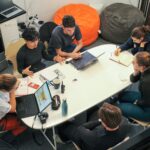
In the morning of Sol 3, The ambient concentration is almost palpable. We know that today, we’ll have a lot of work: we are going out on an EVA in the Martian atmosphere to deploy the atmospheric instruments. The experiment will provide data to researchers about the atmosphere, concentration and size of particles in the air, and electric field. The instruments are fragile and difficult to build. This is a high stakes EVA. We gather in the Upper Deck. The seven of us are seated around the table, listening to Léa, the EVA leader. She sent an EVA request yesterday during our Coms Window, approved by Mission Support. She takes us through every step of the EVA. Leo and I, who are part of the EVA Crew, are listening carefully to what we’ll have to do. Mathurin will be our HabCom: he’ll stay in the station, and we will be communicating with him throughout the EVA to make sure we don’t forget any steps of the deployment. Lise, Yves and Marie are here too, their help might be useful in case a problem occurs.

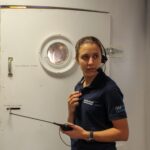
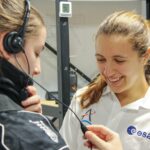
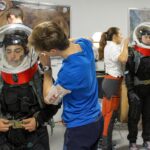
Once the explanations are understood by everybody, we go down to the Lower Deck. The EVA starts in 30 minutes, and we must equip three astronauts. We’re going to use Suits number 2,5 and 6. They are checked to see if there are no and if they are powered. This morning, after our daily sport session, we decided to wear warm and comfortable clothes. Over them, we put on our black space suits, protecting us from the hostile Martian atmosphere. We are helped by the rest of the crew to get equipped. There are a lot of steps, they are all very important: we want to be as protected as possible outside of our base. Marie is helping me put on my harness, useful to store and maintain a radio and a location tracker. On my right, I see that Yves has already equipped Léa with her full COMS kit. Each Crew member has one kit, containing all the necessary equipment to communicate while being on an EVA. It has a radio, a microphone, a headband to keep the microphone in place, and a wipe to clean our helmets. Nearby, Lise has just finished equipping Leo with Suit 5, well secured and resembling a large backpack, and she’s putting his helmet on just after cleaning it. When it is well adjusted, she closes the helmet. We are all three equipped the same way, a pair of gloves hermetically closing our equipment for the next three hours. Mathurin and the three astronauts test communications, and Mathurin informs Mission Support of the beginning of the EVA; the countdown has officially started.

Even though we’re aware of the importance of the mission and well-focused to succeed, the mood is still joyful. With the first aid kit, water and all the required equipment, we’re heading towards the airlock. We are happy to perform this EVA together, after such a long preparation. We’re communicating with our HabCom through radio, in English. After five minutes of depressurization, we can go out and tread the Martian soil. We drive slowly with two rovers, loaded with the atmospheric instruments, to go to the chosen deployment site.

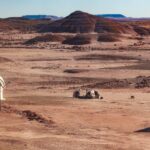
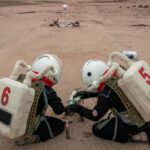
Once we arrive on the site, we take out all the equipment from the trunk of the rovers. There are two instruments, and a lot of steps to deploy each one. Leo and Léa are screwing the supporting rods together, I am maintaining the mast. We spend 30 minutes on the first screw. With gloves and suits, everything is slower and harder, small pieces kept falling from our hands. For the next screws, we are a bit faster. The first instrument, Mega Ares, is deployed. We try to sink fixations in the ground, to make Mega Ares resistant to Martian winds. But we have a problem: Martian soil is way harder than we thought… At each step, we keep the HabCom informed of what we’re doing. Then, when the supporting rods are finally in place, we move towards the second instrument, LOAC. This time, we just have to fix it to the ground, but it is not working well… We choose to prevent LOAC from falling thanks to rocks that we found nearby. Everything seems well attached, we make some tests on the instruments, and everything is nominal. We take a picture to send to researchers during the COMMS window. We are very happy, the pressure starts to slowly alleviate. We had no problems, or few, to which we found solutions thanks to good teamwork. We drive back with our rovers towards the station.

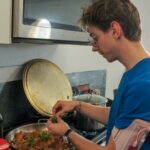
During the five minutes of the recompression in the airlock, I smile behind my helmet, proud and glad of how well the EVA went. We join the rest of the Crew, waiting impatiently on the other side of the airlock door. They all have a huge smile on their faces, and they are welcoming us back with a little bit of food and water, we appreciate it a lot. They help us to take off our equipment, we eat. This EVA was long and challenging, with precise and technical actions to perform. We are exhausted but we laugh while recounting our misadventures. We debrief all together while eating a ratatouille cooked for lunch. Proud, happy, relieved: the day can continue with calmer activities, like the successful setup of the AMI platform!