
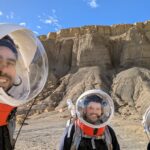
Crew 306 Sol Summary Report 27-12-2024
Sol: 05
Summary Title: Shower Day!
Author’s name: Jesus Meza
Mission Status: Active. All systems are nominal.
Sol Activity Summary:
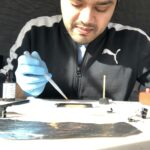
The crew woke up at 07:00. At 08:00 we had cereal for breakfast and a quick stretching session before EVA prep at 09:00. EVA 06 to Skyline Rim was scheduled for 09:30 so that the EVA team could make it in time to catch low winds for DRONE flights, as higher winds were expected in the afternoon. Elizabeth led Rod and Ryan on the EVA Team. While Jesus and Keegan ran coms. The EVA team had time to perform five flights in the Amazonis Planitia. Elizabeth collected EMF of the area and collected two soil samples from the base of HAB ridge for Jesus to analyze at the HAB. The EVA team made it back to HAB at 13:00. For lunch, the HAB team made a mac-and-cheese casserole with a side of crispy potatoes. The crew then split off for research and work tasks. Adriana harvested some over-ripe arugula and herbs to make a pesto. Ryan worked on getting everyone through VR test. Jesus worked on processing samples collected on EVA 5 and EVA 6 in the science dome. The crew took showers throughout the day and is now happy and clean.
Look Ahead Plan:
Jesus, Keegan, and Ryan will head to Eos Chasma on EVA 07 to analyze the Iron content of the soil and look for hematite. Meanwhile the HAB team will take turns providing coms while working on their research and mid-mission report.
Anomalies in work: None.
Weather: Morning was cloudy and cold with temperatures around 32 degrees F. The temperature increased to 48 degrees F by midday. Skies remained cloudy for most of the day with light rain at approximately 17:00.
Crew Physical Status: Crew is happy and clean.
EVA:
Elizabeth, Rod, and Ryan completed EVA 06 to Skyline Rim. The team performed 5 DORNE flights and took Li-DAR scans of the Amazonis Planitia. Elizabeth was able to collect two soil samples from the base of the rim and took ambient magnetic data of the area. All objectives of EVA 06 were met.
Reports to be filed:
Sol Summary, Journalist Report, Greenhab Report, Operations Report, Crew Photos, EVA Report. EVA request.
Support Requested: None.
Crew 306 Operations Report 27-12-2024
SOL: 05
Name of person filing report: Keegan Chavez
Non-nominal systems: None
Notes on non-nominal systems: None
ROVERS
Spirit rover used: No
Hours: (before EVA):
Beginning charge: (Before EVA):
Ending charge: (On return from EVA, before recharging):
Currently Charging: Yes
Opportunity rover used: No
Hours: (before EVA):
Beginning charge: (Before EVA):
Ending charge: (On return from EVA, before recharging):
Currently Charging: Yes
Curiosity rover used: No
Hours: (before EVA):
Beginning charge: (Before EVA):
Ending charge: (On return from EVA, before recharging):
Currently Charging: Yes
Perseverance rover used: No
Hours: (before EVA):
Beginning charge: (Before EVA):
Ending charge: (On return from EVA, before recharging):
Currently Charging: Yes
General notes on rovers: None
Summary of Hab operations: crew performed VR cognitive tests under supervision of HSO, shower day!
Water Use (please use both methods to estimate water usage)
Time of measurements: 12/26/2024 1700 – 12/27/2024 1700
1) Per formula: 42.4775 gal
2) Smart Home Dashboard: 46.7 gal
Water (static tank, remaining gallons): 337.6125 gal (per formula)
Static tank pipe heater (on or off): On
Static tank heater (on or off): On
Toilet tank emptied (no or yes): yes
Summary of internet: nominal internet usage
Summary of suits and radios: suits 1,4,6 were used for EVA, radios were all operational and are fully charged
Summary of GreenHab operations: GreenHab Officer: pruned cucumber leaves, removed tomatoes side shoots, watered plants and floor to increase humidity, harvested arugula and basil; Commander: took water to Science Dome to wash rocks
WATER USE: 4.26 gal
Heater (On or Off): On, automatic
Supplemental light (hours of operation): 1700 – 2200
Harvest (name, weight in grams): Arugula 189g, Basil 24g
Summary of Science Dome operations: GreenHab Officer: sealed leaks in mushroom feeding apparatus, cleaned mushrooms under fume hood using hydrogen peroxide, began sealing CO2 containers to attaching tubes and silicon epoxy; Commander: analyzed rock and dirt samples from EVA 06, processed samples from EVA 05 using water, rock hammer and mortar and pestle
Dual split (Heat or AC, On or Off): On, automatic
Summary of RAM operations: GreenHab Officer: moved clamp to Science Dome, clamp was returned; Commander: moved rock hammer to Science Dome to grind rock samples
Summary of any observatory issues: No issues.
Summary of health and safety issues: GreenHab Officer: used 1 disposable face mask to use during mushroom handling in Science Dome
Questions, concerns and requests to Mission Support: none
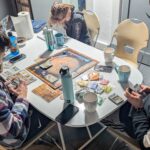
Crew 306 Sol Summary Report 30-12-2024
Sol: 08
Summary Title: Search
Author’s name: Jesus Meza
Mission Status: Active. All systems are nominal.
Sol Activity Summary:
The morning started at 07:00 with another free-range breakfast. Nothing weird this time, just peanut butter sandwiches or oats. At 09:00 we began stretching, and at 09:15 we began EVA prep. Elizabeth led EVA 08 along with Adriana and Jesus back to Eos chasma for a search and rescue of her phone and EMF measurements. At the HAB, Rod ran coms for the EVA team while Keegan and Ryan recovered from their own trip to Eos yesterday. The EVA team headed straight for to the end of Eos following the tracks left behind by the team on EVA 07. Along the way they stopped to search around DRONE sites for the missing equipment, and Jesus searched for new hematite samples. Adriana was just happy for the walk as her work in the greenhab and with her mushrooms keeps her at the HAB for consecutive sols. The phone was found near the mouth of Eos… and Jesus and Adriana got to witness the majestic site of a green mars. The EVA team made it back to the HAB at 14:13. Ryan and Keegan had prepared a succulent meal of cheddar vegetable soup with cous-cous. The afternoon was slow, with the EVA team recovering from the long trek to Eos. The team is happy to have concurred the chasma… but I don’t think any of us want to go back any time soon. For dinner we are having black bean burgers. I think we are on out tenth loaf of bread? We lost count after we baked two loafs yesterday for the tuna melts.
Look Ahead Plan:
Keegan will lead Ryan and Rod south down cow-dung road to take DRONE scans around Barrainca Bute and White Rock Canyon. The rest of the team will recover from our trip to EOS and continue research at the HAB. Jesus has many samples to extract iron from and will attempt to reproduce the solar cell results from Sol 7.
Anomalies in work: None.
Weather: Skys were clear with abnormally warm temperatures in the morning approximating 40 degrees F. The high temperature was 50 degrees F. The day has been rather windy, with average winds of 15 mph, and gust up to 25 mph.
Crew Physical Status: One crew member has a blister on their toe from today’s EVA. We will make sure they rest before going on their next EVA.
EVA:
Elizabeth, Adriana, and Jesus went back to Eos Chasma for EMF measurements, search for hematite samples, and to search for a missing phone. No new hematite samples were found, but areas that had previously been un-explored were covered more thoroughly. The phone was found at the end of the chasma. Only two of the EVA objectives were met, 1 finding the phone, and 2 searching for hematite. No EMF data was collected due to time constraints.
Reports to be filed:
Sol Summary, Journalist Report, Greenhab Report, Operations Report, Crew Photos, HSO report, EVA Report, and EVA request.
Support Requested: We would like special permission to connect to the permanent wifi to watch the new-years countdown tomorrow outside of coms.
Crew 306 Operations Report 30-12-2024
SOL: 08
Name of person filing report: Keegan Chavez
Non-nominal systems: Septic tank overflow sensor
Notes on non-nominal systems: Around 22:00 on Sol 07 the overflow sensor went off while the tank fill sensor indicated a level of only ¾ full, the tank was emptied but the overflow sensor continued to stay on, the battery from the overflow sensor was removed, around 11:00 on Sol 08 the battery was re-attached and the alarm has not sounded, currently the sensor is working properly
ROVERS
Spirit rover used: Yes
Hours: (before EVA): 260.2
Beginning charge: (Before EVA): 100
Ending charge: (On return from EVA, before recharging): 73
Currently Charging: Yes
Opportunity rover used: No
Hours: (before EVA):
Beginning charge: (Before EVA):
Ending charge: (On return from EVA, before recharging):
Currently Charging: Yes
Curiosity rover used: No
Hours: (before EVA):
Beginning charge: (Before EVA):
Ending charge: (On return from EVA, before recharging):
Currently Charging: Yes
Perseverance rover used: Yes
Hours: (before EVA): 298.8
Beginning charge: (Before EVA): 100
Ending charge: (On return from EVA, before recharging): 88
Currently Charging: Yes
General notes on rovers: none
Summary of Hab operations: Operations were nominal
Water Use (please use both methods to estimate water usage)
Time of measurements: 12/28/2024 1700 – 12/29/2024 1700
1) Per formula: 26.14 gal
2) Smart Home Dashboard: 29.44 gal
Water (static tank, remaining gallons): 255.925 gal (per formula)
Static tank pipe heater (on or off): On
Static tank heater (on or off): On
Toilet tank emptied (no or yes): yes
Summary of internet: nominal internet usage
Summary of suits and radios: suits 3,4,5 were used for EVA, radios were all operational and are fully charged
Summary of GreenHab operations: GreenHab Officer: watered plants, 1 pea pod has died, prepared potting plants for sunflowers, added tomato cages to tomato plants, harvested cucumbers, cilantro and dill
WATER USE: 7 gal
Heater (On or Off): On, automatic
Supplemental light (hours of operation): 1700 – 2200
Harvest (name, weight in grams): cucumbers: 310g, cilantro: 10g, dill: 10g
Summary of Science Dome operations: GreenHab Officer: fed mushrooms, took temp measurement of mushrooms, took images of mushrooms, refilled humidifier from spicket in tunnels
Dual split (Heat or AC, On or Off): On, automatic
Summary of RAM operations: Commander: none
Summary of any observatory issues: No issues
Summary of health and safety issues: Geologist developed a blister on their foot during EVA 08, HSO treated blister with band-aids; power cable leading from GreenHab to outside of tunnel system could be a safety concern if it gets caught under the door frame, no actions have been taken at this time
Questions, concerns and requests to Mission Support:
Crew 306 GreenHab Report 30Dec2024
GreenHab Officer: Adriana Sanchez
Environmental control (fan & heater): Heater and fan on automatic at 94 and off at 82
Average temperatures (last 24h): 82.2
Maximum temperature (last 24h): 94.8
Minimum temperature (last 24h): 69.6
Hours of supplemental light: 1700 – 2200
Daily water usage for crops: 7 gallons
Daily water usage for research and/or other purposes: None
Water in Blue Tank (200-gallon capacity): 146.74 gallons
Time(s) of watering for crops: 9:15am, 4:40pm
Changes to crops: None
Narrative: Today was a very productive day in the GreenHab. I swept and got 6 pots ready for sunflower sprout transplants. One of the peas didn’t make it, I am going to wait for the other peas’ sprouts to get stronger before transplanting another one. I noticed that two tomato plants were missing tomato cages so I put tomato cages on them. There were 3 ready cucumbers so I harvested those and some cilantro for tonights dinner. Yesterday we harvested dill for dinner.
Harvest: 10g of Dill, 301g of Cucumber. 10g of Cilantro
Support/supplies needed: None
Stepping Stones
“A hero is one who knows how to hang on for one minute longer.” – Norwegian proverb
It is no secret that colonizing Mars is hard, but despite that, the idea of a Martian settlement has been discussed for a little while now. Mars One was perhaps the first organization to seriously propose a permanent human colony in the Red Planet. From its announcement in 2012 to its bankruptcy in early 2019, it is estimated to have received tens of millions of dollars. But maybe even more impressive is the number of people that applied for a one-way ticket in a journey that would last several months: 165,000 candidates. What, then, draws so many hopeful dreamers towards this collective vision?
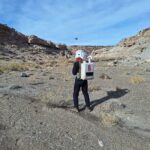
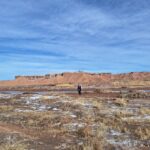
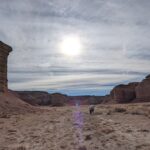
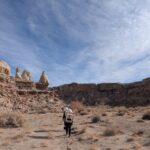
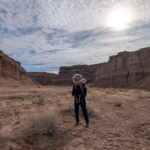
For us from Crew Montes, Mars is a more than a dream. It is a testament of the best of our abilities, and Sol 7 was an illustration of why that is the case. Today, Mr. Fix It, Genie and I set out on an EVA to the same spot that others from the crew explored yesterday: Eos Chasm. This 4h30 EVA tested our mental and physical capabilities to their fullest, where we conducted five flight tests with the drone, sampled plenty of geodes and analyzed the subsurface soil for magnetic activity. Such an abundant and stunning region convinced us that we were in the right place, but we had already been warned by our crewmates that Mars wouldn’t be kind in this journey.
As we hiked further in the Chasm looking for more precious data, the path got progressively more appealing, making us not want to turn back until we got to the very end. Unlike yesterday’s EVA, the three of us could see the sight of magnificent pyramid-like structures on the horizon, and much like a mirage, for an entire hour we were hypnotized by the idea of reaching them. Meanwhile, the sun on our faces, the weight on our back, and the poor radio comms on our chest were all slowly draining our energy. The way back would not be easy, but Montes has no quitters.
After reaching the pyramids, we got an unexpected gift: an active flowing river would welcome us offering an unexpected break to the desertic dryness that surrounded us for hours. Our stop there would be short, though. After collecting our samples, we would have a mere 1h30 to get back to the hab. A time window that could be used for an entire Disney movie suddenly fell into our laps like a humongous challenge. No time for breaks anymore.
The arduous experience of hiking back was something that we all from Crew Montes shared. More specifically, one question seemed to have independently haunted each and every one of us: Why do it? Why keep going? After each step, we all asked ourselves the question of why we even bother with this laborious task, and why becoming an astronaut would appeal to anyone in the first place – let alone dozens of thousands of people.
One could argue that the many perks of becoming an astronaut – exploring the unknown, experiencing otherworldly moments like the overview effect, seeing what no one else saw before, or even being the first person to kick a soccer ball in a different planet – would be enough reasons to make it all worthwhile. These expectations, though, can quickly fall short in an environment where nothing works your way. The process is always a lot slower than it seems when you don’t have the equipment, internet, dexterity, human support, food, and many other catalysts to your success. Add that to the fact that messing up once might not have an escape route, and you might well be left with no motivation in a tough situation. There must be another reason to keep going.
I think the answer is actually hidden in plain sight. In other words, the experience IS the motivation. All it takes to beat the hardest, most demanding challenges a person can ever undertake is to take one more step. A step after another, little by little – but no stopping. One cannot stop moving forward. On Mars, refusing to stop can not only be the difference between life and death, but is also a representation that you are rising to the occasion, and preparing to what is coming next. In my own personal view, that is the secret recipe to becoming the Martian Ubermensch – the ultimate superhuman concept idealized by the philosopher Friedrich Nietzsche in the 19th century. If such an idea truly exists, taking the next step is the only way to achieve our wildest dreams.
We made it back just in time to the comfort of our hab – or, more precisely, with a 2-minute delay. Next time, we need to be better prepared so those minutes are not a concern. Lucky for us, this entire experience is already the preparation we needed. If one thing should be remembered from today, is to stand up and walk. Keep moving forward. You’ve got two good legs, so use them. In the words of Paul Carus, "No one saves us but ourselves. No one can and no one may. We ourselves must walk the path."
Hermit out.
Crew 306 Sol Summary Report 29-12-2024
Sol: 07
Summary Title: Sunflower
Author’s name: Jesus Meza
Mission Status: Active. All systems are nominal.
Sol Activity Summary:
The morning started at 07:00 with crepes for breakfast. The crew skipped morning meditation and stretching in favor of using the time to prep for EVA 08, a long trek towards the end of EOS Chasma. Keegan led the EVA team, with Rod and Elizabeth tagging along for DRONE flights and ambient magnetic data. At the HAB, Ryan ran coms for the EVA team and administered VR cognitive test to the rest of the HAB crew. Adriana fed her mushrooms and set up a humidifier in the grow tent to encourage healthy growth. Jesus used the hematite samples collected from Hab Ridge on EVA 05, to create our first Martian solar cell. The device was partially successful as it produced 0.5 V, but only briefly. These results have yet to be re-re-produced and verified. The EVA team performed five DRONE flights at three different sites within the chasma before heading towards the mouth where it meets the river. The team collected a soil sample here to analyze the iron content. The team made it back to the HAB two minutes behind schedule at 14:32. For lunch, Adriana prepared Jambalaya and mashed potatoes. The crew then spent the afternoon recovering from EVA’s and finishing up VR studies. For dinner we are having tuna sandwiches. The highlight of the day is a beautiful sunflower Adriana picked from the greenhab.
Look Ahead Plan:
Weather permitting, Elizabeth will lead Adriana and Jesus back to Eos Chasma to take EMF data of a spot deeper in the chasma. A secondary objective is to rescue a phone that was left behind somewhere near the second half of the chasma. Jesus will continue to look for hematite samples in the riverbed.
Anomalies in work: None.
Weather: Skys were clear with morning temperatures near 29 degrees F. The day warmed significantly with a high of 53 degrees F.
Crew Physical Status: Crew is happy and well.
EVA:
Keegan, Rod, and Elizabeth traveled to Eos Chamsa to take Li-DAR scans of the riverbed and EMF data near the entrance at the start of the chasma. The team performed a total of five DRONE flights at three different sites within the chasma, before tracking down to explore the end of the chasma where it meets the river. A soil sample was collected here for iron extraction at the HAB. The team made it back safe and sound two minutes behind schedule at 14:32.
Reports to be filed:
Sol Summary, Journalist Report, Greenhab Report, Operations Report, Crew Photos, EVA Report, and EVA request.
Support Requested: The crew has seen some evidence of a rodent in the HAB. No food has been chewed, but there are a few droppings underneath the cabinets, and up in the loft. It’s uncertain if these are new, or old. We will keep an eye out.
You must be logged in to post a comment.