
Journalist Report – January 10th

MDRS Crew 202, Journalist Report

Sol 12 – 01/10/2018

Name the space movie (or show) given the following quote. Answer at the end of the Report:

If we ain’t out of here in ten minutes, we won’t need no rocket to fly through space!

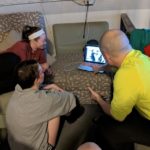
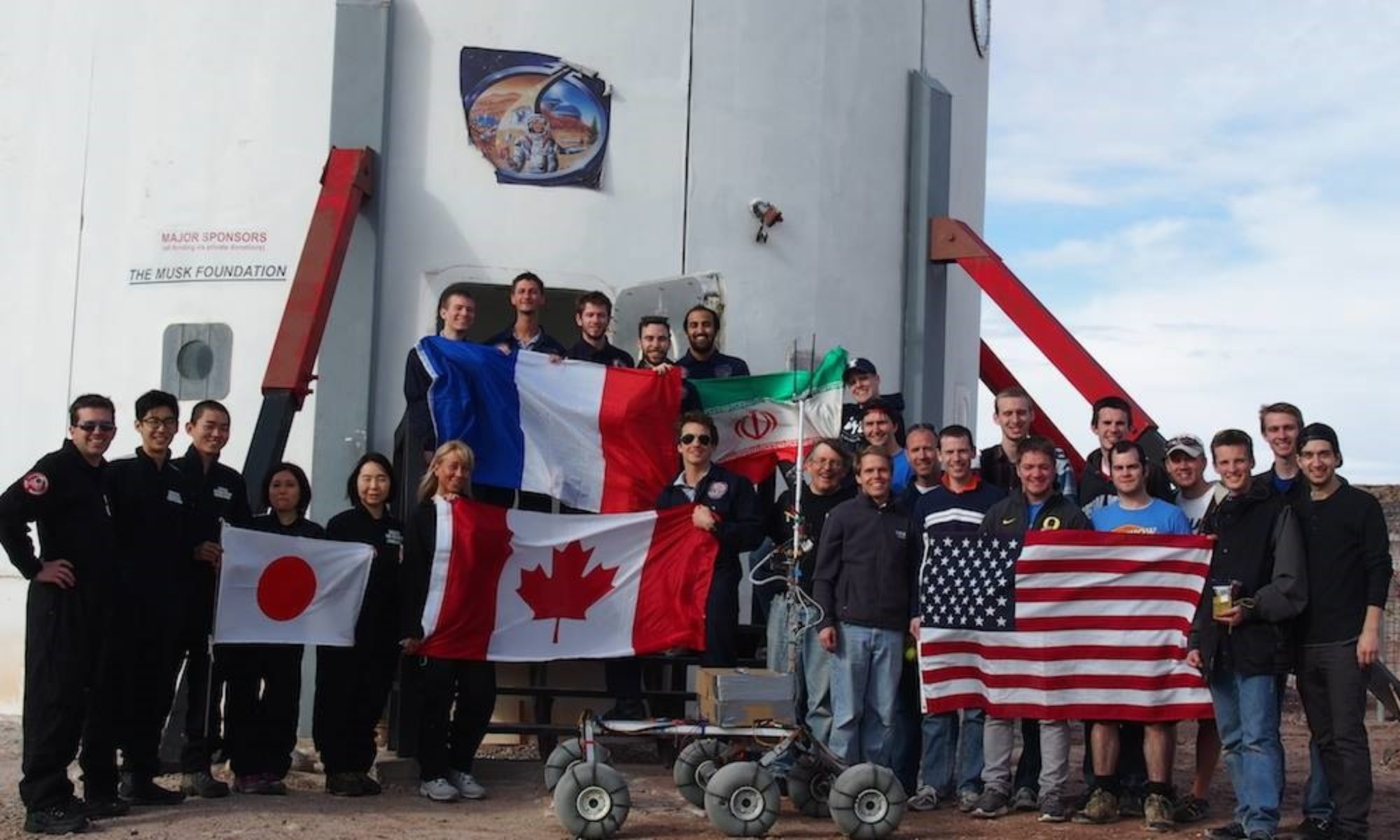
Lights! Camera! Action! It was an exciting day here at Mars Desert Research Station (MDRS). We saw other people for the first time in two weeks, and these Earthlings were out of this world! A television crew from CBS Innovation Nation visited us to talk about the amazing work being done by The Mars Society at MDRS and our wonderful crew! We toured our guests through the MDRS campus, showing off our cozy home, the golf ball shaped Science Dome, and our colorful Green Habitat. Alie Ward, science correspondent, led the Crew through the limelight as the behind the scenes team of Stephanie, the producer, Andy, the cameraman, and Nate, the audio technician, ensured the story of the Crew and our temporary home was told in the best possible shots. We were very proud to show off all the work we have accomplished these past two weeks and it is incredibly rewarding to see others excited to be here!

At first, it is very strange having a camera in your face. The television crew came with all the gadgets and gear – a large shoulder camera, standalone lights, and even a boom mic. There is positioning, re-positioning, mic checks, and sound check claps. We needed to fit a lot of information in a short period of time. It was Go, Go, Go, Go! Through all the chaos though, the television crew made everything feel comfortable and easy. The hardest part of the day is when the cameraman would turn to you with his huge camera lens and ask “Could you repeat what you just said?”. Your brain simply stops and any words you have ever said escapes your memory. As you scramble to remember what English is, the camera starts rolling again and it’s showtime! This journal is purposefully short. No spoilers here (even though every journal is essentially a spoiler). Tune into CBS Innovation Nation to get an inside look at the Mars Desert Research Station! We can’t wait to see the final cut!

It is setting in that our time here is almost over. Our lives back on Earth feel eons away, but tomorrow is our last simulation day. We must prepare for the next crew to take over our home and carry on the research that is necessary to successfully make humans a multi-planet species. The next few days will be a whirlwind as the new crew moves in Saturday and we say our final goodbyes Sunday morning. It is hard to believe this adventure is almost over. Tomorrow will be bittersweet.

Movie (or Show) Answer: Alien

EVA Report – January 10th

Crew 202 EVA Report 10-Jan-2019

EVA #11

Author: Cesare Guariniello

Purpose of EVA: Collect radiometric measurements

Start time: 12:49

End time: 14:35

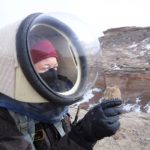
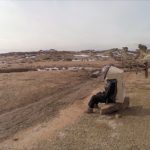
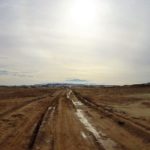
Narrative: The EVA left late, after the morning was spent showing our work and research to the guests. We drove north to the intersection of Cow Dung Rd and Galileo Rd, where we parked the vehicles and walked west, where we took radiometric readings of the environment and studied the rock formations close to a seasonal water stream. The crew demonstrated the work we do in the field, and let the guests share the difficulties of our mission. Due to the time window submitted in the EVA request, the crew did not further explore the area to the East and came back to the habitat.

Destination: Area west of the intersection of Cow Dung Rd and Galileo Rd

Coordinates (use UTM NAD27 CONUS): E518950, N4251975

Participants: Cesare Guariniello (CMD), Denys Bulikhov (EXO), Jake Qiu (HSO), Alexandra Dukes (JOU), Guest

Road(s) and routes per MDRS Map: Cow Dung Rd

Mode of travel: driving and walking

Vehicle used: Spirit, Curiosity, ATV 350.1

Operations Report – January 10th

Crew 202 Operations Report 10-JAN-2019

SOL: 12

Name of person filing report: Kasey Hilton

Non-nominal systems: Battery in suit #9

Notes on non-nominal systems: Battery in suit #9 was also very low after the EVA; Suit was checked to make sure the connections were proper and plugged in; I will check the voltage in morning once the battery has had time to charge

Generator (hours run): 17hr 52min; Turned on last night (09Jan2019) at 15:15; Turned off this morning (10Jan2019) at 9:07; Turned on tonight (10Jan2019) at 16:05

Solar SOC – Turned on (09Jan2019) 82%; Turned off (10Jan2019) 100%; Turned on (10Jan2019) 84%

Diesel Reading – 70%

Propane Reading – 35%

Ethanol Free Gasoline – Not in use

Water (auxiliary tank) – Not in use

Water (static tank) – 50%; 245 gallons

Auxiliary to Static tank transfer – No

Gallons transferred: Not applicable

Water in GreenHab – About 55%; 165 gallons

Water (loft) – At level marker 12

Static to Loft Pump used – Yes; At 19:53 to refill tank

Water Meter: 01399491

Toilet tank emptied: Yes, stinky as always ://

Deimos rover used: No, still not functional

Hours: Not applicable

Beginning charge: Not applicable

Ending charge: Not applicable

Currently charging: Not applicable

Sojourner rover used: ASSIGNED TO DIRECTOR

Hours: Not applicable

Beginning charge: Not applicable

Ending charge: Not applicable

Currently charging: Not applicable

Spirit rover used: Yes

Hours: 66.8

Beginning charge: 100%

Ending charge: 72%

Currently charging: Yes

Opportunity rover used: No, brakes are still not working correctly

Hours: 45.6

Beginning charge: 100%

Ending charge: 100%

Currently charging: Yes

Curiosity rover used: Yes

Hours: 69.0

Beginning charge: 100%

Ending charge: 89%

Currently charging: Yes

Notes on rovers: Brake fluid in Opportunity was replaced but the brakes are still not functioning properly

ATV’s Used: 350.1 (Honda, 300, 350.1, 350.2, 350.3)

Reason for use: Needed an extra person on an EVA for film crew

Oil Added? No

ATV Fuel Used: Fuel is about one inch from the top after EVA

# Hours the ATVs were Used today: 1hr 46min

Notes on ATVs: Nothing to report

HabCar used and why, where? Not used

CrewCar used and why, where? Off site

General notes and comments: Nothing to report

Summary of internet: Nothing to report

Summary of suits and radios: Battery in suit #7 had to be replaced again because the voltage was still very low after being sufficiently charged. Battery in suit #9 was low after the EVA as mentioned in “Non-nominal systems”; Suit will be checked after charging to see if the battery needs to be replaced or not

Summary of Hab operations: Hab ceiling still leaks every once and a while; Due to ice on the outside but should be gone in the next day or two

Summary of GreenHab operations: Nothing to report

Summary of ScienceDome operations: Nothing to report

Summary of RAMM operations: Nothing to report

Summary of any observatory issues: Nothing to report

Summary of health and safety issues: Nothing to report

Questions, concerns and requests to Mission Support: What are the average lifetime of a space suit battery? Suit #7 and #9’s batteries were just replaced a few days ago but are already below 12 V after a sufficient charge.
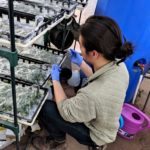
Greenhab Report – January 10th

Crew 202 Greenhab Report 10-Jan-2019
Greenhab Officer:
Jake Qiu

Environmental Control:
Heating
Cooling w/ ambient air (1hrs)

40% Shade Cloth on
80% Shade Cloth on

Average Temperatures:
Low: 23.9°C
High: 38.0°C

Hours of Supplemental Light:
5

Daily Water Usage of Crops:
10.5 gallons

Water in Blue Tank (gallons):
58%, 175 gallons

Times of Watering for Crops:
0716
1616
1737

Changes to crops:
* Sunflowers, radishes, and savory mix leaves looking great
* Tomatoes continuing to have satisfactory progress
* Spinach pots look to be dying (may need to re-plant new pots)
* Cress looking lackluster
* Other crops display same progress

Narrative:
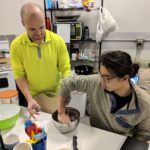
Watered plants throughout the day as needed. Used fertilizer (miracle glow) on microgreens.
Everything looking satisfactory for the most part.

Experiment Results:
Date: SOL12 Crew 202 (SOL14 overall)

Watered all 21 trays as needed.

Watered Crew 201 experiments

Harvest:

Support/Supplies Needed:

Sol Summary – January 10th

Sol: 12

Summary Title: Getting close

Author’s name: Cesare Guariniello

Mission Status: Nominal. The crew is ready to wrap up their projects and prepare their return to Earth

Sol Activity Summary: this morning after breakfast we had visitors from our pale blue dot. A few guests visited us, to learn about our research projects and the importance of analog missions for the exploration of Mars. The crew followed us during our work, in our daily life, and in our EVA. Due to the footage of our work at MDRS, the EVA started later than planned. Meeting earthlings was a little anticipation of the experience we will have once back on Earth. Until this visit, we did not fully realize how isolated we have been. After sharing some of our daily routine with our guest, we went back to our life as Martians, and spent the afternoon working and cleaning the habitat.

Look Ahead Plan: Tomorrow we will have one last, short EVA to walking distance from the habitat, to pick the last geological samples. We will also wrap up our research projects, clean the whole campus, and prepare to meet crew 203

Anomalies in work: None

Weather: Sunny and warm

Crew Physical Status: In good health

EVA: The Commander, Executive Officer, Crew Journalist, Health and Safety Officer, and one guest had an EVA in the area west of the intersection of Cow Dung Rd and Galileo Rd

Reports to be filed: Sol Summary, Operations Report, Greenhab Report, EVA report, EVA request, Astronomy Report, Journalist Report

Support Requested: None

Journalist Report – January 9th

MDRS Crew 202, Journalist Report

Alexandra Dukes, Crew Journalist

Sol 11 – 01/09/2018

Name the space movie (or show) given the following quote. Answer at the end of the Report:

I’m just a simple man trying to make my way in the universe.

Aromas of basil, tomatoes, and pesto are filling the habitat tonight as our Italian born Commander crafts homemade pizza for a crew movie night. With 3 days to go before our departure, we are making the most of the dehydrated ingredients that are left in the pantry. Freshly made pizza dough and a choice of tomato or pesto base with previously dehydrated mozzarella cheese, sausage, chicken, and fresh basil from the Green House come together to make a special treat that future Martians would be able to craft and enjoy. A well-deserved meal after the long duration Extra-Vehicular Activity (EVA) our Commander, Geologist, Engineer, and Executive Officer made to Lith Canyon today.

Lith Canyon is an incredible expanse of deep red canyons and high piled beige rock formations. Our Executive Officer was especially excited after returning from this EVA! He found an area with a high amount of radioactivity. A spot he has been looking for since his first EVA on Sol 3! On each EVA, our Executive Officer carries a black briefcase from which he pulls out a funny looking tan box with 80’s styled stickers and a coiled wire hooked to what appears to be a karaoke microphone. This device measures the radioactivity of an area, an important measurement for future crews on Mars. Astronauts are exposed to high levels of radiation in space travel to the point where NASA sets a threshold for the amount of radiation an astronaut can absorb in their career before having to retire.

While on Mars, the Martian atmosphere is thin and the astronauts will be exposed to cosmic radiation while on the surface. Cosmic radiation cannot be avoided, but we can attempt to decrease the amount of radiation the astronauts are exposed to by identifying areas on the Martian surface where there is a higher amount of radiation. The work performed by our Executive Officer investigates the feasibility of taking radioactive measurements during an EVA, while wearing a big bulky suit, trying to press tiny buttons and write down numbers in large, padded gloves.

Microgreens, geology, and radiation are all important scientific aspects of learning how to survive on the Red Planet, but what about the psychological aspects? During this incredibly risky endeavor, how can we ensure the crew is psychologically prepared? A second research project being pursued by our Executive Officer is investigating if stress affects the amount of risk astronauts are willing to accept when making decisions during an EVA. On average, people who make decisions under stress tend to make riskier decisions. EVAs will be a high-risk activity while on the Martian surface. Every movement will need to be practiced, calculated, and precise to ensure the safety of the crew. The increased risk of decision making by the crew due to stress could be the difference between a successful day and a tragedy.

Stress is a biological response to unknown situations. Short duration stress is what we’re most familiar with. The adrenaline rush of fight or flight. The stress our Executive Office is most interested in, though, is the long duration stress. If our brain stays in fight or flight for more than a half hour, it starts preparing the body to experience stress for an extended period of time by releasing a hormone called cortisol. Cortisol remains in your body for almost an hour after the stressful event and can be measured in our spit. Using a combination of games whose software measures our aversions to risk and a machine that measures the cortisol levels of our spit, our Executive Officer hopes to answer the question of whether stress causes the crew to make riskier decisions. These tests are given to the crew after an EVA and considered a “natural” stressor. A simulated “lab” test is also performed in the habitat, requiring the subject to stick their hand in 2 degrees Celsius water for 2.5 minutes. If you have never jumped in a river in Antarctica, your hand after 30 second begins to feel pain. The next minute is spent going from pain to numb, and after staring at the clock for the last minute, you feel much more awake and alert as the adrenaline rushes through your veins. Luckily, your hand warms up in time to play the stress games and not fumble through the buttons. Our Executive Officer’s wonderful research on radiation and stress will work to improve crew survivability in future Mars missions. Great job Executive Officer! We can’t wait to see the results of your work!

Movie (or Show) Answer: Star Wars: Episode II – Attack of the Clones

EVA Report – January 9th

Crew 202 EVA Report 9-Jan-2019

EVA #10

Author: Denys Bulikhov (EXO)

Purpose of EVA: Collection of geological samples and ambient radiation readings

Start time: 10:30
End time: 13:17

Narrative: Jake Qiu (HSO) was replaced with Ellen Czaplinski (GEO) due to primary geological intent of this EVA. EVA 10 took Cow Dung Rd north towards the Lith canyon until Spirit rover hit 60% of battery charge (Curiosity was at 65%). After that crew left the rovers and walked towards the canyon for approximately 0.8 miles. EVA 10 crew passed outside the dinosaur quarry and came out to the canyon from the west.

Here they collected radiation readings and geological samples. They looked for ways to get to the bottom of the Lith canyon, however, due to wet mud the descent was aborted. Right outside the quarry, EXO found the spot on the side of the larger formation where the ambient radiation level was almost 10 times higher than anywhere around MDRS area so far (12-16 uR/h on average around MDRS compared to the high 127 uR/h at this spot).

Samples were not collected however due to proximity to dinosaur quarry.

After that EVA 10 crew walked back to the rovers and came back to the Hab.

Destination: Lith canyon
Coordinates: N518800, E4256500

Participants: Cesare Guariniello (CMD), Denys Bulikhov (EXO), Kasey Hilton (ENG), Ellen Czaplinski (GEO).

Road(s) and routes per MDRS Map: Cow Dung Road.

Mode of travel: Driving and walking

Vehicles used: Spirit and Curiosity.

With best regards,
Denys Bulikhov

[end]

Astronomy Report – January 9th

Crew 202 Astronomy Report 09-Jan-2019

Crew Astronomer: Cesare Guariniello

MDRS ROBOTIC OBSERVATORY

Robotic Telescope: MDRS-WF

Objects Viewed: IC405 (“Flaming Star”) and Rosette Nebula. One exposure each of 180s in Blue, Green, and Luminance. One exposure of 240s in Red. One exposure of 300s in H-alpha

Problems Encountered: none

Greenhab Report – January 9th

Crew 202 Greenhab Report 09-Jan-2019
Greenhab Officer: Jake Qiu

Environmental Control:
Heating
Cooling w/ ambient air (1hrs)

40% Shade Cloth on
80% Shade Cloth on

Average Temperatures:
Low: 26.1°C
High: 36.7°C

Hours of Supplemental Light: 5

Daily Water Usage of Crops: 12 gallons

Water in Blue Tank (gallons): 61%, 185.5 gallons

Times of Watering for Crops:
0743
1133
1205
1421
1646
1806

Changes to crops:
* 1 pot of sugar pea pods starting to look worse
* Tomatoes seem to be better on the top rack of tier bench
* Onions looking better
* Romaine Lettuce newly planted
* 1 pot of mustard white-looking powder on topsoil
* Other plants have same progress

Narrative:
Watered plants throughout the day as needed. Planted new romaine lettuce. One pot of the mustard has a white-looking powder that has formed today (not sure if it’s a concern).

Experiment Results:
Date: SOL11 Crew 202 (SOL14 overall)

Watered all 21 trays as needed.

Watered Crew 201 experiments – the majority is growing well

Harvest: 1g – Basil

Support/Supplies Needed:

Copyright © The Mars Society. All rights reserved. | Main Site