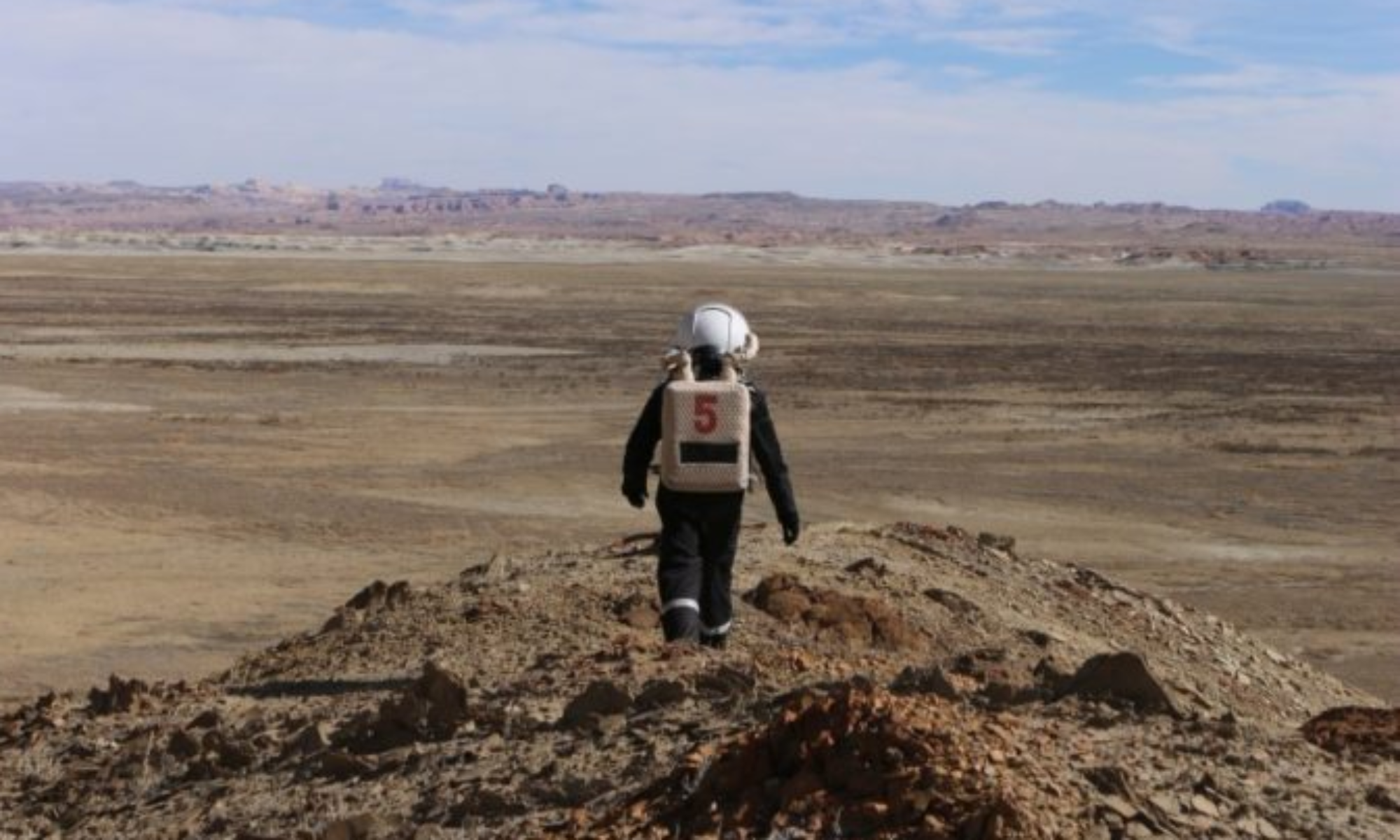

Research Report – December 29th

Astronomy Report

Name: Dylan Dilger
Crew: 236
Date: 12/29/2021

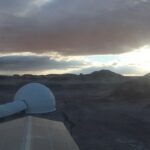
MDRS ROBOTIC OBSERVATORY

Robotic Telescope Requested (choose one): Montana Learning Center

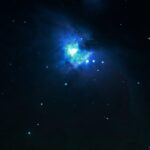
Objects Viewed: IC434 (Horsehead Nebula), M95, M96, NGC2244 (Rosette Nebula), M51, M42, M78, Almach
Problems Encountered: None

MUSK OBSERVATORY
Solar Features Observed: None
Problems Encountered: None

Greenhab Report – December 29th

GreenHab Officer: Vladimir Zeltsman

Environmental Control: Around 17% Humidity
Average Temperatures: 78degrees
Hours of Supplemental Light: 7 hours
Daily Water Usage For Crops: 7 gallons
Daily Water Usage For Research and/or Other Purposes: None
Water In Blue Tank: 158 Gallons
Times Of Watering For Crops: 9:30 am
Changes to Crops: None
Narrative: None
Harvest: 2g Wheat Grass, 1g Thai hot peppers, 5g parsley
Support/supplies needed: None

Sol Summary – December 27th

Crew 236 Sol Summary Report 27-DEC-2021

Sol: 8

Summary Title: Three Cheers for Mancos Shale!

Author’s name: Kasey Hilton

Mission Status: Nominal

Sol Activity Summary: The day started with an early wake up so the crew could get out the door for an EVA. Executive officer, Cesare, has been chasing a kind of rock called a Mancos shale for the last four years and we were going to get it today on EVA if it was the last thing we did. And we did just that! Cesare’s face lit up like a Martian Christmas tree as we entered the area near Copernicus Hwy that held the precious rock. After returning to the Hab, just about everyone knocked out for an afternoon nap. After waking up, I continued working on my outreach projects, which includes answering questions for an elementary school class and making a MDRS cookbook. We’re ending the night with fresh-out-of-the-oven brownies and Apollo 13.

Look Ahead Plan: EVA scheduled for tomorrow afternoon/morning. There’s a small chance of snow in the afternoon!

Anomalies in work: No anomalies in work

Weather: Partly cloudy, windy, temperatures in the 30s

Crew Physical Status: Nominal

EVA: EVA to the moon overlook and the Morrison and Mancos shale boundary was a success. Multiple samples of gypsum and Mancos shale were collected for a research project.

Reports to be filed: Operations Report, GreenHab Report, EVA Report, EVA Request, Health and Safety Report, Sol Summary, and Journalist Report (with photos)

Support Requested: None

Operations Report – December 27th

Crew 236 Operations Report 27-DEC-2021

SOL: 8

Name of person filing report: Pavithra Ravi

Non-nominal systems: None

ROVERS

Spirit rover used: Yes

Hours (before EVA): 146.9

Beginning charge (Before EVA): 100%

Ending charge (On return from EVA, before recharging): 64%

Currently charging: Yes

Opportunity rover used: No

Hours: N/A

Beginning charge: N/A

Ending charge: N/A

Currently charging: Yes

Curiosity rover used: Yes

Hours: 156.3

Beginning charge: 100%

Ending charge: 71%

Currently charging: Yes

Perseverance rover used: No

Hours: N/A

Beginning charge: N/A

Ending charge: N/A

Currently charging: Yes

General notes and comments: The front door got stuck in the wood and
had to be freed with a crowbar. The outer door has once again been
secured with a rope (held in place by the closed inner door).

The toilet has been successfully repaired (thank you!).

Summary of Hab operations: Nominal

WATER USE:

Water (static tank): approx. 239 gallons

Water (loft tank): 54 gallons

Water Meter: 01541216 units

Static to Loft Pump used – yes or no: Yes. It was filled from 28 to 54
gallons at about 19:30 today.

Static tank pipe heater (on or off): On

Static tank heater (on or off) Off

Toilet tank emptied (no or yes): No

Summary of internet: Nominal

Summary of suits and radios: Nominal

Summary of GreenHab operations: Nominal

WATER USE: 10 gallons were used today. This leaves about 272 gallons
in the tank.

Heater (on or off): On

Supplemental light (on or off): On

Harvest: Cucumber (132 g) and Basil (less than 1 g)

Summary of ScienceDome operations: Nominal

Dual split, Heat or AC (on or off): off

Summary of RAM operations: Tools used, work done

Nothing used. Everything taken (zipties, wrench, Teflon tape) from the
RAM has been returned.

Summary of any observatory issues: Nothing new to report.

Summary of health and safety issues: Nominal

Questions, concerns and requests to Mission Support:

None
EVA Report – December 27th

Crew 236 EVA Report 27-DEC-2021

EVA # 8

Author: Kasey Hilton

Purpose of EVA: Collection of samples from region D and Mancos Shales from Copernicus Hwy for analysis of water content and analog for rocks found in Gale Crater

Start time: 9:00

End time: 13:00

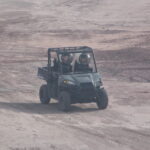
Narrative: EVA prep started around 8:30 and the group going on EVA was in the airlock at 9:02. Shortly after, the two pairs climbed in Spirit and Curiosity and headed towards region D using Cow Dung Rd and Brahe Hwy. About 30 minutes later, the group reached the moon overlook (region D) and parked the rovers to start walking down Copernicus Hwy in search of gypsum and Mancos shale. At the intersection of Brahe Hwy and Copernicus Hwy, the group found multiple samples of gypsum. Further down Copernicus Hwy and closer to the boundary walls, the group found samples of Mancos shales. Cesare (XO) was particularly excited about the mancos shale because he had been trying to find some for the last four years without any luck. The group turned around and walked back along Copernicus Hwy until they reached the rovers. They arrived back at the Hab at 11:46, happy that the research objectives they set out to accomplish had been achieved.

Destination: Region D and the Morrison and Mancos Shale boundary on Copernicus (2 stops)

Coordinates (use UTM NAD27 CONUS): N4254000, W515575

Participants: Kasey (CMD), Cesare (XO), Dylan (ASTRO), Pavi (ENG)

Road(s) and routes per MDRS Map: Cow Dung Rd north to Brahe Hwy, Brahe Hwy west to Copernicus Hwy, south on Copernicus Hwy

Mode of travel: Driving to the west side of Region D and walking down Copernicus Hwy

Greenhab Report – December 27th

GreenHab Officer: Vladimir Zeltsman

Environmental Control: Around 17% Humidity

Average Temperatures: 78degrees

Hours of Supplemental Light: 7 hours

Daily Water Usage For Crops: 10 gallons

Daily water Usage For Research and/or Other Purposes: None

Water In Blue Tank: 172 Gallons

Times Of Watering For Crops: 10 am

Changes to Crops: Cut dead leaves of the cucumbers and zucchinis and sprayed the leaves with soapy water

Narrative: small spider mite infestation that I am taking care of. It seems that they are only on the cucumbers and zucchinis.

Harvest: 132g Cucumber, <1 g basil

Support/supplies needed: None

Journalist Report – December 26th

Hi Mission Support,

This Journalist Report had a large typo, which I have now remedied. The fixed report is below, sorry for the inconvenience!

Journalist Report
Ben Durkee, Crew 236 Journalist

Sol 07

At 9 AM sharp we were roused from our sleep by Lionel Richie singing "Easy Like Sunday Morning," one of my selections for the daily wake-up songs. Unfortunately, this morning was anything but easy.

We could barely hear Lionel’s dulcet tones over the violent sound of the Hab being relentlessly battered by gale force winds. We were expecting some powerful gusts today, but this was a non-stop barrage of angry Martian atmosphere that peaked at a speed of 42 mph. At one point, it sounded like something massive was banging on the roof right above my loft. I am not ashamed to say that I retreated to the Hab common area and continued my work there.

On the cliffs of England, there is a unique species of seabird called Guillemots. They’re able to fly, but at random intervals they shed their flight feathers, rendering themselves temporarily flightless. So every time they leap from the cliffs, it’s a coin toss on whether or not they’re going for an unplanned swim. As a result, their anatomies have essentially evolved to become avian beanbags so they can bounce down the cliffs on a botched takeoff and reach the bottom unscathed.

Usually when I come down from my loft, I am as elegant as Rapunzel descending from her tower. He is beauty, he is grace. Not today. Today I was a Guillemot. One that lost the coin toss.

We continued our morning as planned, hoping that the weather would clear in time for our EVA slot. While we toiled away, the sky grew more and more ominous, as if it were laughing at our optimism. Suddenly, the entire Habitat shook and a thunderous bang rang out, the result of some unknown impact.

Kasey and I flew down the stairs to investigate and sure enough, the front airlock door had been blown open by the unyielding wind. And just to add insult to injury, as we peered through the peephole we saw hundreds of icy bullets propelled into the airlock. Hail on Mars. Great. Meteorologically fascinating, but equally threatening to our collective livelihood. Now not only was our planned EVA scrubbed, but an emergency EVA to shut the front airlock would also have to wait. Before we had time to fret about all this, Tyler frantically scrambled out of the bathroom, jarred by the noise. It was just about the funniest thing I’d ever seen, and added some well-needed levity to an otherwise starkly serious situation.

The pressure differential should have held the door shut, but we weren’t taking any chances, so we reinforced the inner front airlock door. When only a single piece of metal separates you from a rapid decompressive demise, you don’t roll any dice.

We remained sheltered in the Habitat for quite some time, and the raging dust storm eventually subsided. Our outdoor visibility returned, and we assessed the damage. A little bit of cosmetic harm to the Hab’s paint, but everyone was safe and all systems were still functional. A win in my book.

The rest of the day was relatively uneventful, but I think we all took that as a blessing after the trauma of the morning’s occurrences.

We’re all set to do our EVA tomorrow instead, and the forecast looks considerably better. Regardless, I think after today’s action we can handle anything this big ball of dirt throws at us!

Science Report – December 26th

Crew 236 Science Report 26-DEC-2021

Crew Scientist – Tyler Nord

Science Report

Vladimir:

Vladimir is investigating the optimization the habitat’s space and assessing alternate locations for habitat placement. With respect to the space optimization, Vladimir has completed taking measurements and photographs, as well as sketching the habitat. Thus far on EVA, he has scouted two locations near Galileo Road for habitat feasibility; one of which held potential. He still has two additional locations to evaluate on future EVAs: Candor Chasma and Toothy Ridge.

Pavi:

Pavi is investigating the effect of uncertainty in food and water consumption on the station’s robustness. Resource (food/water) consumption rates cannot be assumed to be constant and naturally vary with respect to a crew’s daily needs and activities. This project entails the monitoring of daily food and water consumption rates of the crew (using mass) over the two week period. A percentage uncertainty of consumption can calculated based on the variation of food/water consumed over the period of the mission. A system dynamics model with an agent-based controller is being implemented on AnyLogic 8 PLE to assess how long the station could ‘survive’ with levels of uncertainty observed during this crew (and uncertainties much higher, out of curiosity), if extended over a period of two years.

Tyler:

Using a Flir One Pro IR system, I am conducting thermal images of the habitat to identify locations of heat loss to the surrounding atmosphere, which lead to excessive power usage for heating. Before entering simulation, I collected thermal readings of the habitat at night, and I plan to do the same during the day on a future EVA. I have also collected interior thermal images of the Hab.

In addition to the Hab research, I am also taking thermal images of the surrounding landscapes at different levels of solar exposure to quantify the thermal inertia of the soil and rocks. I have scanned the Barainca Butte region early in the day, so intend to return at a later time of day on a future EVA and conduct moring and afternoon scans of one additional region.

Dylan:

Dylan is utilizing robotic observatories and a solar observatory to produce images of a plethora of celestial objects. These images will be used to increase interest in the mission and space exploration in general. These color images of nebulas, open star clusters, galaxies, double stars, and the Sun are not only beautiful to look at but also show the variety that our universe has to offer and inspire the next generation to help delve deeper into humanity’s knowledge of the cosmos.

Cesare:

Cesare is working on hydration of Martian analog rocks. Due to EVA cancellations, he collected only four rocks in the first week, but they show a good variety. The Barainca Butte area offered sandstone and mudstone from upper layers, but also an igneous rock. Cesare weighted the rocks as collected in the field, then soaked the rocks for 36 hours and weighted them again. The sandstone shows the highest percentage increase in weight, with hard compact mudstone/siltstone showing almost no water absorption. Then, Cesare cycled the rocks for one hour in the lab oven at 400 degrees Fahrenheit. All rocks had a final weight slightly lower than the original weight at collection, and again the sandstone showed the widest change in weight.

Copyright © The Mars Society. All rights reserved. | Main Site