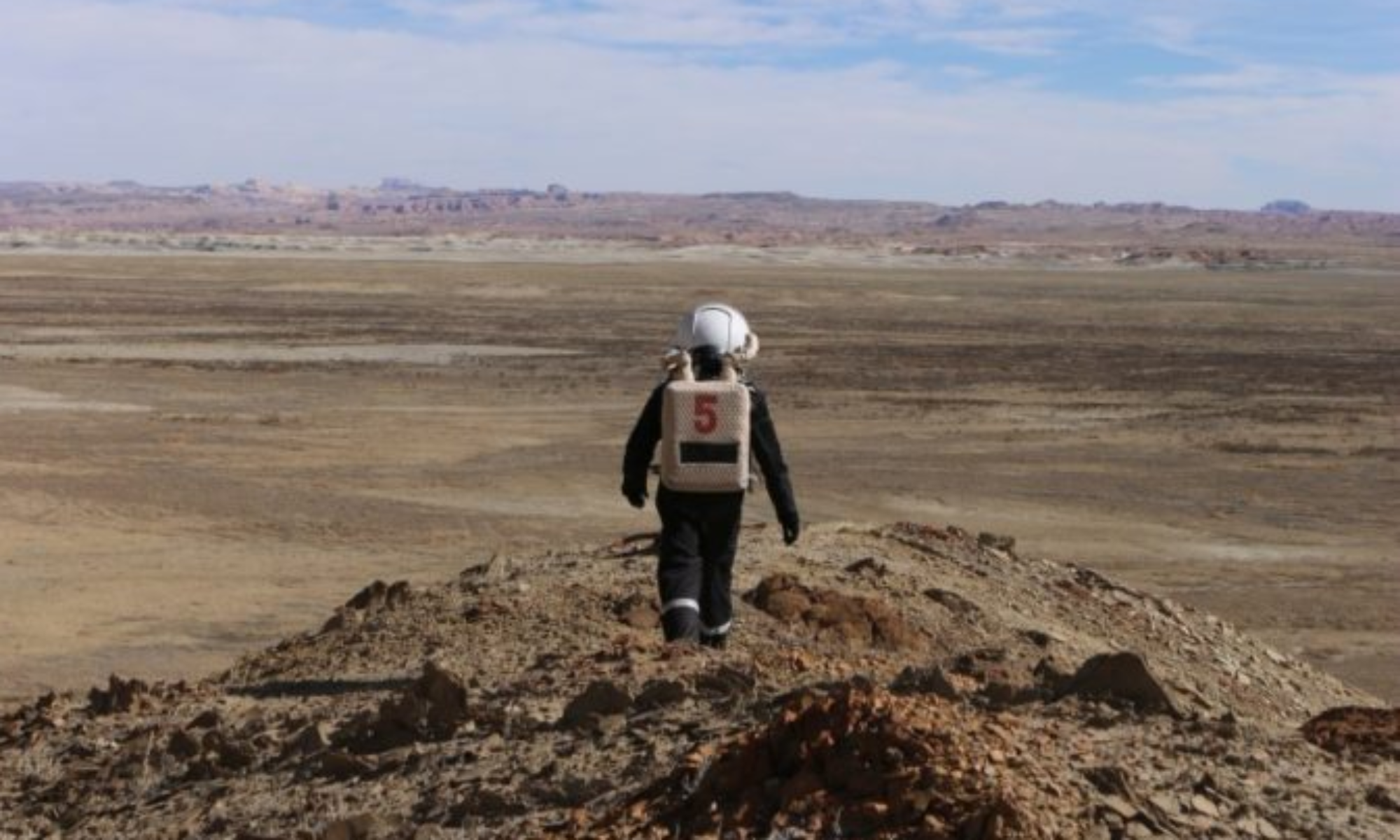

Final Mission Summary – Crew 226

Mission Summary Crew 226- Team Colombia

Description

From January 16th to the 30th, 2022, the second Colombian Mars Simulation Analog Mission took place in the MDRS. The team got integrated by Colombian students, researchers, and professionals in the areas of Science, Engineering, and Technology strongly related to the aerospace field. Among others, some challenges the mission crew encountered were to go through confinement and isolation in this habitat for 15 days, on a diet based on dehydrated food, and limitations on the use of water and communications.

The Colombian main crew, Crew 226, includes:

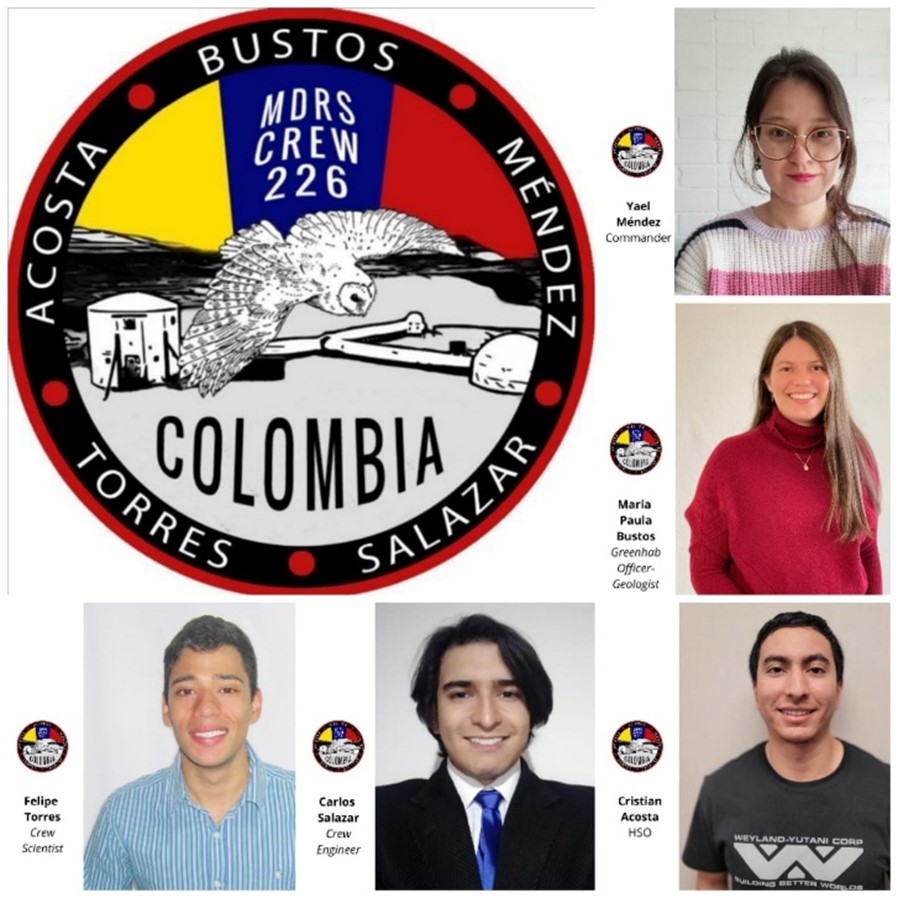
  • Felipe Torres, Mechanical Engineer from Universidad Nacional de Colombiawith the position of Crew Scientist.
  • Carlos Salazar, Mechatronic Engineer candidate for a master’s degree in Engineering– with the position of Crew Engineer, both from the Universidad Nacional de Colombia.
  • Cristian Acosta, Aerospace engineer for Blue Origin, with the role of Health and Security Officer.
  • Maria Paula Bustos, Geologist and Master’s student in Geodesy and Geoinformation Science -Technische Universität Berlin, with the position of Greenhab Officer and Crew Geologist.
  • Yael Méndez, Microbiologist, from Universidad de los Andes and Master’s student in Geosciences from Universidad Nacional de Colombia with the position of commander.

The Crew Organizer is David Mateus, a Mechatronic Engineer and Master’s student in Space Studies at the University of North Dakota.

The main line of work is related specifically to the areas of expertise of the crewmembers, developing projects following years of studies and preparation, and, as it usually happens in space exploration, collaboration with teams left back on Earth. The second line is about the interest in developing outreach projects in Colombia. Our country does not have a well-developed space field, and these kinds of opportunities provide a platform to develop several types of outreach activities, from general to specialized public.


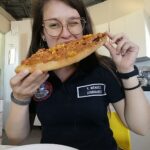
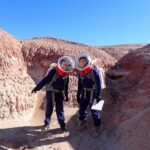
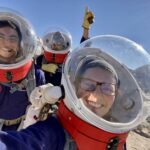
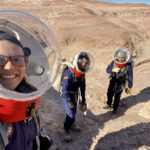
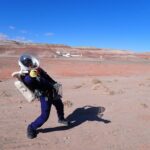
Mission patch and personal photos
EVA Summary

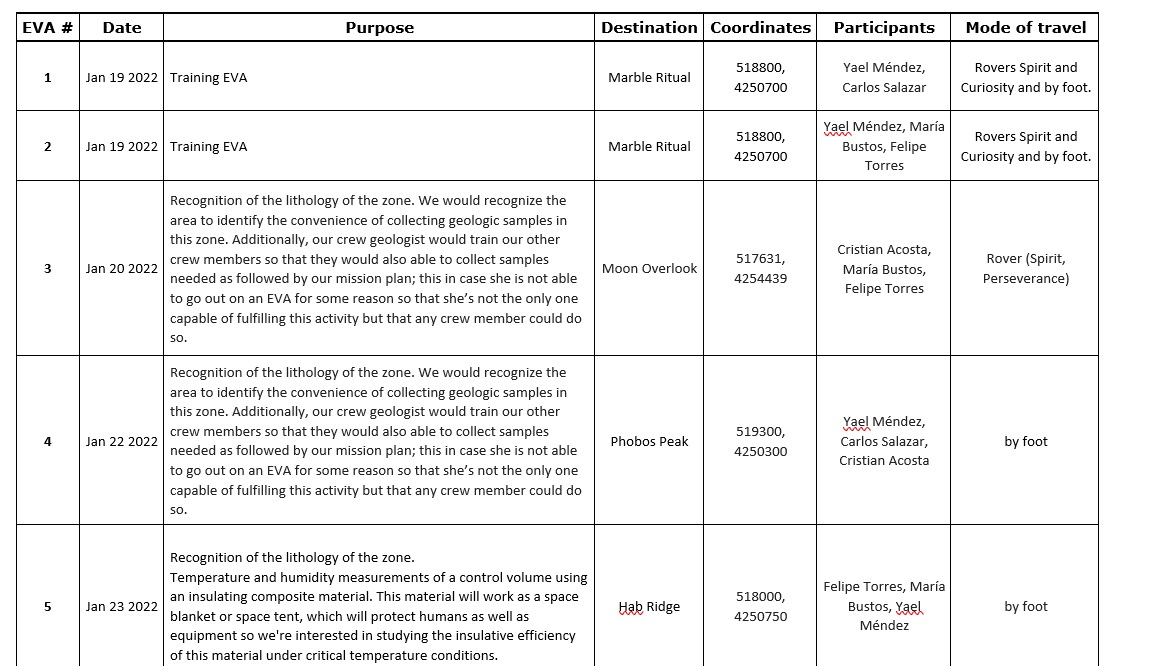
The crew executed a total of 8 EVAs during the 2 weeks period at the MDRS. Appendix 1
Operations Summary

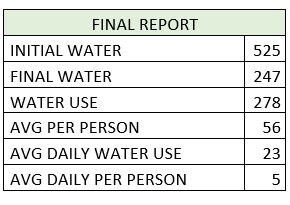
Water consumption was monitored daily as well as the status of charge of batteries powered by the solar panel system. All mechanisms functioned nominally throughout our mission except for the energy system which controllers failed one day before ending simulation.
Health and Safety Summary

The overall health for crew 226 during the mission was good. No one developed any severe illness or injuries while at MDRS which was always great to see. Nonetheless, the following symptoms developed among the majority of the crew members at different times: coughing, sneezing, headaches, chills, sore throats, and acid reflux. Aside from the acid reflux, these symptoms were manageable with specific vitamins and medicines and never worsened after appearing. The only minor injury sustained by a crew member was that of the rolled ankle which saw inflammation. But with rest, pills, and creams, both the inflammation and pain went away and recovery was speedy. Another note was that of personal hygiene and although the crew has not taken a shower in 12 days, they have been very good with using facial wipes and other personal hygiene products to stay relatively clean throughout the mission.

Green Hab Summary

The green-hab was received on the 18th of January 2022. Several kinds of plants such as cherry tomatoes, herbs, carrots, lettuce, micro-greens, peppers, and cucumbers were already planted on our arrival. During the two-week rotation we harvested the following:
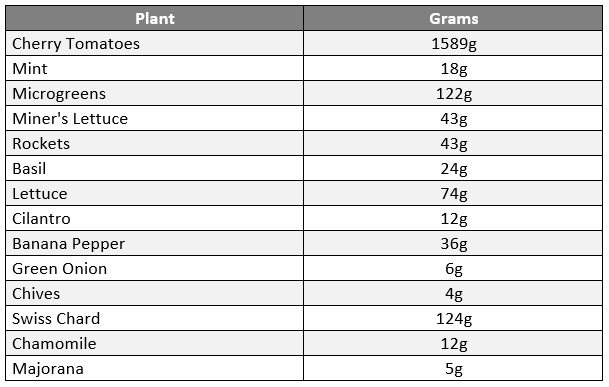
Additionally, the following was planted: lettuce, microgreens, chives, lemon balm, cilantro, and red bunching onion. Some of them are already growing and are expected to be harvested in the following weeks.


Research results

Carlos SALAZAR (Crew Engineer)

Project Title: 3D Mapping for rovers using point cloud stitching and Kinect

Description: Build a system that gets point clouds taken with a 3D camera on an element like the Kinect sensor and joins them together to make a 3D map of the environment and locate itself in it. The following tasks have been defined:

  • Get the points clouds using Kinect and point cloud library
  • Process the point clouds taken
  • Check and validate point cloud stitching algorithms
  • Check and validate point cloud matching algorithms
  • Integrate the developed modules


Methodology: The method of research selected for this project is going to be experimental, the samples taken with the sensor will be taken mainly in indoor areas or in a controlled environment, a portion of the solution will use methods from the point cloud library PCL using example point clouds. The idea is to check if those methods work with our samples and how a correct integration of all the modules can be made, identifying its weak points to propose and evaluate ways to improve them.

Preliminary Results:  A lot of pictures for structure from motion were taken during an EVA, some processing is needed to turn them into point clouds. The Kinect was used in the hab and the samples will be used to test the algorithms that will be developed later.


Maria Paula BUSTOS (Crew Green Hab Officer)

Project Title: Classical music and the growth of plants at MDRS


Description: Evaluate the growth of cherry tomatoes and mint plants in the station under the sound of the classical music of Johan Sebastian Bach by exposing these plants daily to Bach’s songs and comparing them to a control group that is not going to be exposed to this music, and determine if Bach songs have an impact in the rate of growth of these plants in the MDRS Green-hab.


Methodology: 1) Select two cherry plants and two mint plants that were cultivated at the same time and exposed to the same conditions during the last weeks and measure the size of its leaves and the number of fruits and flowers they have. 2) Expose daily for three hours one mint plant and one cherry plant to Bach songs. 3) Measure daily the size of the leaves and the number of fruits and flowers of each of the plants exposed to classical music and the ones not exposed (control group). 4) compare results and determine if the exposure to Bach classical music affects the growth of tomato cherry and mint plants in the research station.


Results: We performed experiments in which we daily exposed two cherry tomato plants to Bach’s classical music for three hours. We exposed one of the two plants (Plant A) to the music at a distance of 1cm, while the other one (Plant B) was exposed to the music 7 meters away. After two weeks we found out that plant A, grew less in terms of new fruits and flowers compared to plant B. We cannot conclude that music was the only factor that could have influenced the growth of the plant since there were also a lot of insects that infested plant A. Further research with more controlled parameters should be performed in order to have concluding remarks regarding music exposure and plant growth.


Felipe TORRES (Crew Scientist)

Project Title: Feasibility of using bo-PET films to build an emergency Space Tent.

Description: Analysis of the insulating efficiency of a biaxially oriented polyethylene terephthalate (bo-PET) film in order to determine the feasibility of building an emergency space tent for EVAs in Mars and other aerospace applications using this material.

Methodology: Take measurements of Humidity and Temperature using a DHT11 sensor and Arduino. These measurements will be taken on different control volumes outdoors both with and without the thermal insulation provided by our material. To consider meteorological factors, these measurements will be taken at different times of the day and at different locations around the station. The insulative material will then be tested on different crew members, by providing a protective layer with the material and the body temperature will be measured with and without this insulative layer.

Results: Bo-Pet films provide considerable protection against critical temperature conditions. At high temperatures, the material is able to reduce temperature inside the control volume due to its high light reflectivity, avoiding temperature to rise considerably. In contrast, at low temperatures, the material maintains heat inside the control volume; while it doesn’t increase temperature, it prevents that the volume reaches extremely low temperatures in the absence of sunlight. In terms of relative humidity, bo-PET film increases the relative humidity inside the control volume, which is convenient for the dry environments found on Mars. Figure 1
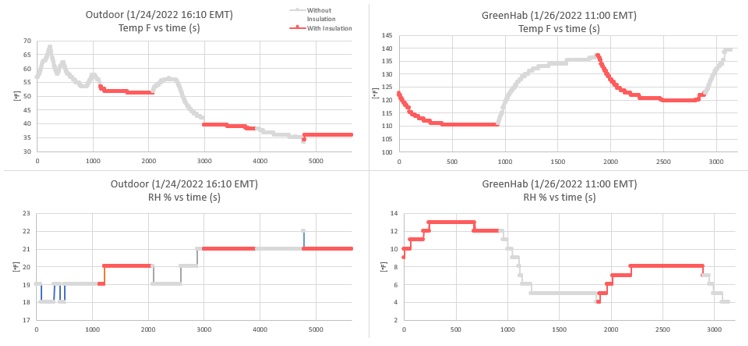
Figure 1. Temperature and Relative Humidity measurements with and without insulation.


Yael Natalia MÉNDEZ (Commander)

Project Title: Clays identification through reflectance spectrometry and Raman spectroscopy.

Description: This project seeks to use Mars Desert Research Station (MDRS) to analyze the impact that clay variations have, and recognize their mineralogy through laboratory techniques (reflectance spectrometry and Raman spectroscopy), and compare that with the instruments applied in the perseverance rover.

Methodology: Collect samples of different types of clays found in the MDRS and they will be process in Colombia by Grupo de Caracterización Tecnológica de Minerales at Universidad Nacional de Colombia.

Preliminary Results: Zones’ geological description and lithology recognition, Clay samples collection to be processed in Colombia.
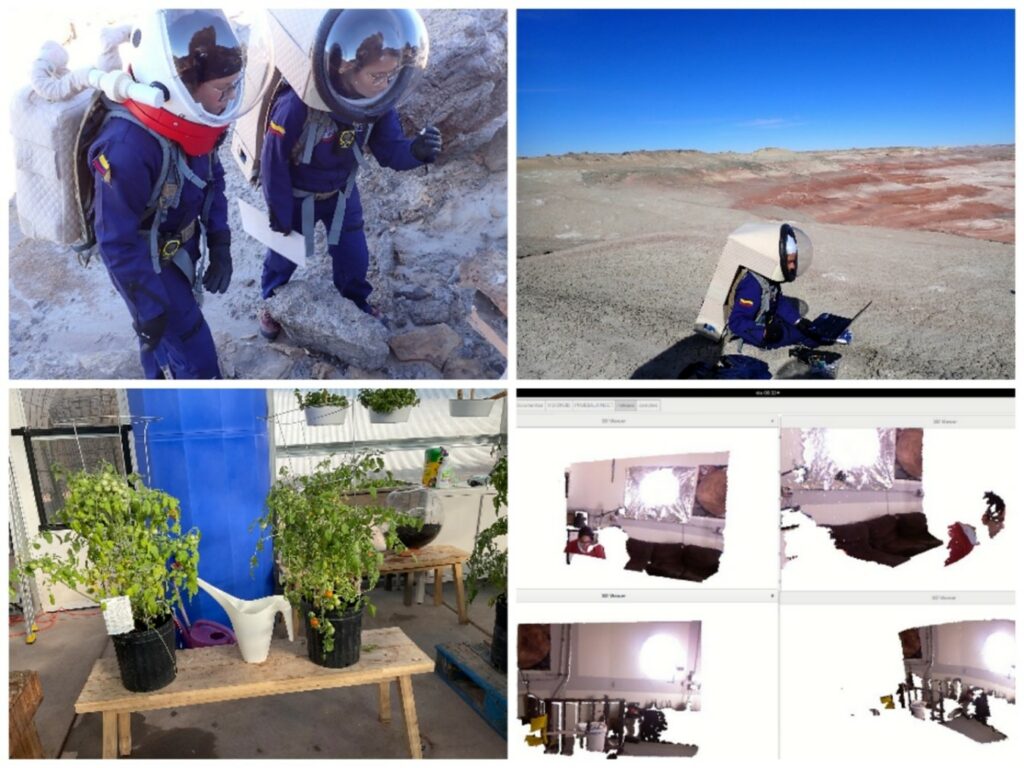
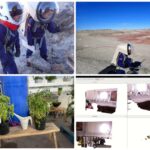
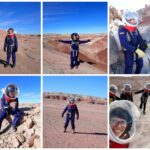
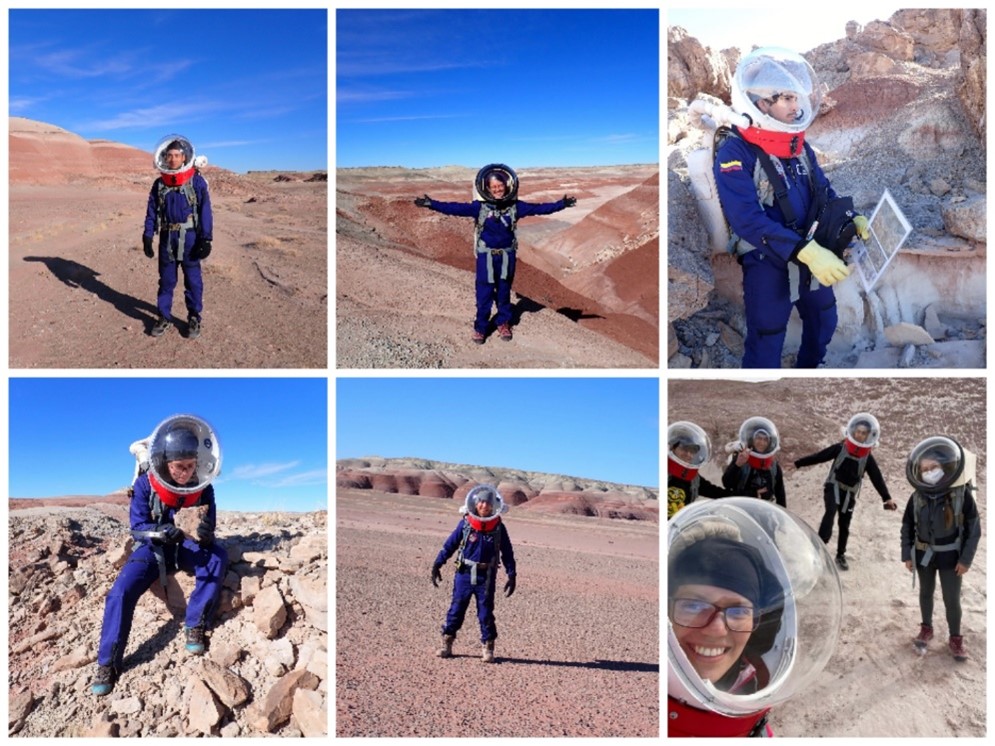
Figure 2. Upper left: Recognition of zone’s lithology. Upper right: Temperature and Humidity measurements. Lower left: Green Hab and music experiments. Lower right: Hab 3D imaging.


Acknowledgments

MDRS Crew 226 wants to acknowledge and thank all the people and institutions that made this possible. It’s been a two-year-long process that required a significant amount of effort from several people. We would like to start by thanking The Mars society, in the head of its president, Dr. Robert Zubrin, as well as Director Dr. Shannon Rupert, and Atila Meszaros, who made us feel safe and welcomed. We would also like to thank all the Capcom officers who were ready to take our reports and comments. And also, all the people behind the scenes working actively to make this possible, but surely helped us make our mission smoother and wonderful.

Appendix 1
Crew Photos – January 28th

Hello Atila and Mission Support Team,

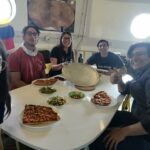
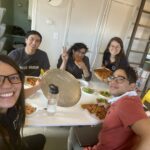
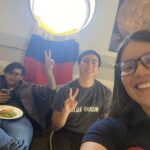
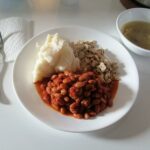
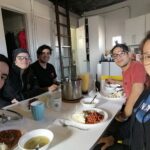
Here we show our daily photos. We share the collages we made for our mission report, some pictures of our lunch, doing some cleaning and the stars.

Best regards,

Carlos Salazar
Crew Engineer crew 226

Journalist Report – January 28th

Journal Report Sol 11 – 28Jan2022

Crew 226

The night sky is a beautiful sight to gaze upon and it was precisely what Cristian and Maria Paula saw late at night early Friday morning. The time was 12:30 am and the temperature was -6° C but that didn’t matter because they could not pass out on the opportunity to witness the Milky Way galaxy. Betelgeuse and the big dipper were some of their favorites to stare upon amongst the millions of other stars visible in the void.

This morning has been a little melancholic. We all are already mesmerized about all the experiences together on Mars.

Today at noon we officially ended our simulation. We started to get ready to get back to Earth, Felipe made some breakfast, the menu: Eggs with Spam, it was good. Then we started checking the SOC level since there was a power issue yesterday and Atila gently asked us to do so. During that time we did some cleaning, commander Yael started writing the mission summary report and asked us to share some info about our projects.
At around 10 am we were all working on the final details of our research results to finish the Mission Summary Report.
After that, Felipe and Maria Paula made lunch, he made a pizza and she made a delicious salad made with ingredients from the green-hab. Felipe also made a chocolate mousse for dessert that is in the freezer right now, I know that it will be delicious.

We watched a soccer match, Colombia vs Peru, for the 2022 Qatar World Cup Qualifiers. We were all super excited because both teams were tied in points and it would be a decisive win. Also, our dear friend Atila is Peruvian so we all had him in our minds during the game. Colombia dominated the game, but we all know it’s not about who dominates the game, it’s about which team scores the most goals… 1-0 win for Peru. Congrats Atila and Sebastian!

We played some thumb war and did some arm wrestling, Cristian is pretty strong!

Later on, we started doing the food inventory and some more cleaning to get the Hab ready and squeaky clean for the next crew rotation.

Bye-bye Mars, until next time…

Sol Summary – Jan 28th

Sol: 11

Summary Title: Goodbye Mars

Author’s name: Yael Méndez- Commander

Mission Status: The entire crew is happy to return to Earth, however, we will all miss living on Mars.

Sol Activity Summary: The crew got up early to prepare the station for the next rotation. We had pizza and salad for lunch to celebrate the end of our simulation.

Look Ahead Plan: Back home.

Anomalies in work: None.

Weather: Sunny in the morning and afternoon.

Crew Physical Status: Nominal

EVA: None

Reports to be filed: Sol Summary, Operations Report, Daily photos, Journalist Report, Crew 226 Food and Supply Inventory, Mission Summary Crew 226

Support Requested: None

Operations Report – January 28th

SOL:11

Name of person filing report: Carlos Salazar

Non-nominal systems: Power System

Notes on non-nominal systems: The power system is working but the batteries do not seem to be charging with solar power, Atila asked us to monitor it during the morning.

Spirit rover used: No

Hours: 153.7

Beginning charge: 100%

Ending charge: 100%

Currently charging: yes

Opportunity rover used: No

Hours: 82.9

Beginning charge: 100%

Ending charge: 100%

Currently charging: Yes

Curiosity rover used: No

Hours: 165.4

Beginning charge: 100%

Ending charge: 100%

Currently charging: yes

Perseverance rover used: no

Hours: 226.5

Beginning charge: 100%

Ending charge: 100%

Currently charging: Yes

General notes and comments: none

Summary of Hab operations:

WATER USE: 30 gallons

Water (static tank): 207 gallons

Water (loft tank): 40 gallons

Water Meter: currently 0155243.5

Static to Loft Pump used – yes

Static tank pipe heater (on or off): on

Static tank heater (on or off) on

Toilet tank emptied: No. It will be done before leaving

Summary of internet: nominal

Summary of suits and radios: nominal

Summary of GreenHab operations:

WATER USE: 11 gallons

Temperature: 100.3°F

Heater: On

Supplemental light: Yes

Harvest: 399g Cherry Tomato, 74g Swiss Chard

Summary of Science Dome operations:

SOC: 81%

Summary of RAM operations: none

Summary of any observatory issues: none

Summary of health and safety issues: none

Questions, concerns and requests to Mission Support: none

Crew Photos

Hello Sebastián and Mission Support Team

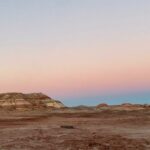
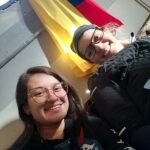
Here we share our daily photos, we show today`s dusk, our lunch, a photo of Commander Yael and María Paula, and some pictures we took during EVA.

Best regards,
Carlos Salazar

Operations Report

SOL:10

Name of person filing report: Carlos Salazar

Non-nominal systems: Power System

Notes on non-nominal systems: The power issue was solved by Atila and Sebastián. Atila asked us to check the level every 30 minutes, so we will be watching as requested.

Spirit rover used: No

Hours: 153.7

Beginning charge: 100%

Ending charge: 100%

Currently charging: yes

Opportunity rover used: No

Hours: 82.9

Beginning charge: 100%

Ending charge: 100%

Currently charging: Yes

Curiosity rover used: No

Hours: 165.4

Beginning charge: 100%

Ending charge: 100%

Currently charging: yes

Perseverance rover used: no

Hours: 226.5

Beginning charge: 100%

Ending charge: 100%

Currently charging: Yes

General notes and comments: the charge needs to be checked since we don’t know if the power issue changed the current value of charge of the rovers

Summary of Hab operations:

WATER USE: 20 gallons

Water (static tank): 257 gallons

Water (loft tank): 32 gallons

Water Meter: currently 0155200.2

Static to Loft Pump used – yes

Static tank pipe heater (on or off): on

Static tank heater (on or off) on

Toilet tank emptied: no

Summary of internet: the internet didn’t work during the power issue as expected, but it is okay now.
Summary of suits and radios: The spacesuits seem to be okay and charging after the issue as well as the radio chargers

Summary of GreenHab operations:

WATER USE: 11.6 gallons

Temperature: 99.5°F

Heater: On

Supplemental light: Yes

Harvest: 3g Chamomile, 2g Mejorana

The status of the plants need to be checked tomorrow to see how affected they are after the power issue, the uv lights had to be turned on manually, right now the other systems seem to be working fine

Summary of Science Dome operations:

SOC: 96% at 7:30pm

Summary of RAM operations: none

Summary of any observatory issues: none

Summary of health and safety issues: none

Questions, concerns and requests to Mission Support: We will be alert if something new happens with the power system and talk with Atila if needed.

EVA Report

Crew 226 EVA Report 27-01-2022

EVA #: 8

Author: Maria Bustos, Felipe Torres

Purpose of EVA: Recognition of the lithology and geological description of the zone. Collection of clay samples.

Start time: 10:00 am

End time: 2:00 pm

Narrative:

The crew headed to Phobos Peak by foot. The crew geologist was leading this EVA as the main purpose was to describe some geological features of the zone.

The description is as follows:

Station 1.

Coordinates (UTM): 0519285X, 4250233Y

Orientation of the rock: 200°SW /6°NW

The outcrop was made of some sandstone beds surrounded by regolith. A lot of weathering was observed in the zone.

Station 2.

Coordinates (UTM): 0519076X, 4250379Y

Orientation of the rock: 182°S / 3°E

The outcrop depicted some clays surrounded by regolith. The clays had some metallic minerals which appear to be pyrite or chalcopyrite.

Station 3.

Coordinates (UTM): 0518607X, 4250091Y

Orientation of the rock: 314°NW / 28°SE

The outcrop showed some clear lamination of white clays in between a brownish regolith.

Station 4.

Coordinates (UTM): 0518549X, 4250489Y

Orientation of the rock: 232°SW/ 27°SE

Some beds were observed outcropping out from the floor with a clear laminar bedding. The rocks were classified as sedimentary of very fine grains.

Destination: Phobos Peak

Coordinates (use UTM NAD27 CONUS): 519300, 4250300

EVA Participants: Cristian Acosta, Maria Bustos, Carlos Salazar

Road(s) and routes per MDRS Map: MDRS Entrance Road

Mode of travel: by foot

Felipe Torres, Crew Scientist

Journalist Report

Journalist Report 27Jan2022
Maria Paula Bustos
Green-hab officer/ Crew Geologist Crew 226

Today was a very unique day on Mars. We had a sleepover in the attic of the hab, we all slept together as if we were friends from many years ago. We are always laughing and laughing, and that’s starting to scare me because I feel I will miss all of them so much when I come back to Earth. We all live in different countries and I know we are not going to meet in years. I have not ended my mission on Mars and I’m already starting to feel the melancholia of missing my crew.

While the rest of the crew had breakfast, I watered all the plants in the green-hab. I love these plants so much.. Yesterday I planted a lot of them and some are already growing, they are so small and cute. I will miss them so much!

After breakfast, came the most exciting part of the day: EVA! I went out with Cristian and Carlos to analyze some geological outcrops at Phobos Peak. We arrived at our destination by walking. We walked for more than two hours while singing a lot of songs (Sorry Commander Yael, Crew Scientist Felipe, Atila and Sebastián for hogging the radios with our terrible singing).

The wind during the EVA was so strong that we all had a hunch that something bad would happen… and guess what? It happened.

The station ran out of power while we were watching Shrek. We felt as if we were on Mars, it was the moment at which I felt maximum vulnerability! We started to store water and pack our basic things in case we needed to leave the station. Fortunately, the power came back just after dusk and we were able to remain at the Hab. I’m so happy about this because I’ll be able to go out tonight and stargaze.

Sol Summary

Sol: 10

Summary Title: Mars, the inhospitable red planet

Author’s name: Yael Méndez- Commander

Mission Status: A day to carry out tasks on the station and to continue learning about the Geology of Mars. After a power failure, it got restored at 7 pm.

Sol Activity Summary: We started the day with a breakfast of oatmeal with fruits. We visited again Phobos Peak to take some samples of clays and sands. We experienced a power failure on Mars.

Look Ahead Plan: End SIM and preparing our trip back to Earth.

Anomalies in work: SOC Power failure.

Weather: Sunny and Windy in the morning and afternoon.

Crew Physical Status: Nominal

EVA: One EVA realized

Reports to be filed: Sol Summary, Operations Report, EVA Report, HSO Report, Daily photos, Journalist report

Support Requested: None

Copyright © The Mars Society. All rights reserved. | Main Site