Report title: Journalist Report
Crew #: 325
Position: Crew Journalist
Report prepared by: Saranya Ravva
Date: 24Dec2025
Sol: 9
Journalist Report Title (If Applicable) : A Landscape That Refuses to End
Mars Trivia Question, answer at the end of the report:
What is the largest volcano and mountain in the solar system, and why is it found on Mars?
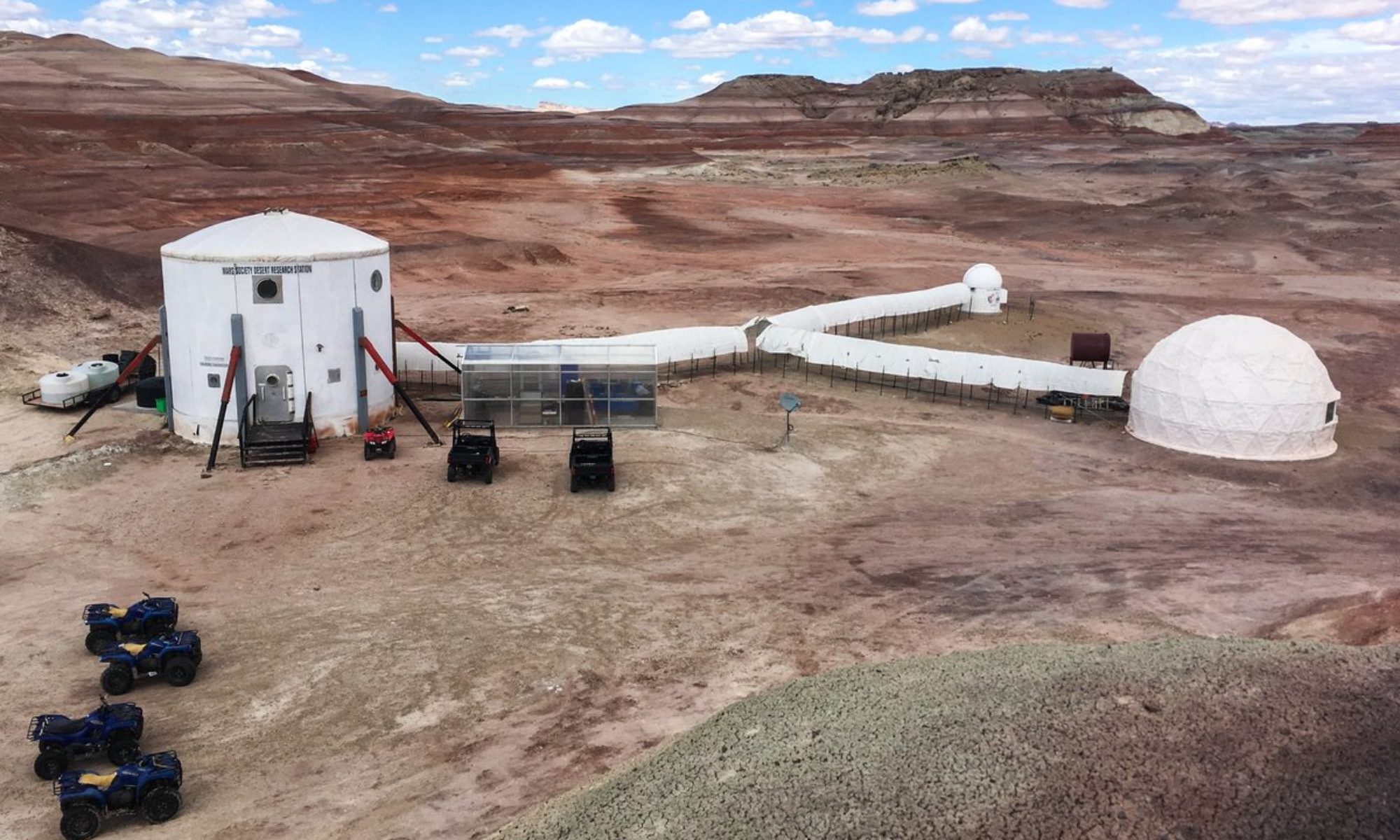
Sol 9 began before sunrise. I woke up early so I could capture thermal images of the habitat, science dome, and GreenHab before any solar loading affected the surfaces. I moved quietly, careful not to disturb anyone sleeping. The early start paid off. I was able to capture all angles, especially regions with visible surface damage, which will allow me to perform a more complete structural assessment. By the time I settled into my seat at 8:00 a.m., I felt satisfied with the data I had collected.
That calm focus quickly turned into a joyful surprise when Cesare played my favorite Carnatic music piece as the wake-up song: Endaro Mahanubhavulu. It felt grounding and deeply personal, and for a moment, Mars felt very close to home.
Everyone soon gathered in the living room and around the dining table, preparing quick breakfasts and coffee. Since we had an earlier EVA scheduled, the communications window felt especially precious. Some of us went straight into productive mode, downloading resources, sending messages, and wrapping up tasks before heading out.
Adrianna, Ellenah, and I suited up for the EVA, starting with some additional thermal imaging near the habitat before setting out in the rovers toward Sea of Shells, also known as The Moon. This rover ride quickly became one of my favorites so far. Cold air swept across my face as I drove along the bumpy terrain. The sky shifted between blue and purple, and the landscape ahead felt distinctly extraterrestrial.
None of us had been to this location before. Isabella navigated while I drove, and we followed instructions from crew members who had visited earlier. Until we arrived, we were not entirely sure we were in the right place. But once the seashell fossils and distinctive terrain came into view, there was no doubt. We had arrived.
I brought my DSLR camera along and took landscape photographs of the area. When I reviewed the images back at the habitat, I was genuinely mesmerized. It had been a long time since a landscape stopped me in my tracks the way this one did.
We returned to the habitat with time to spare. The sky had turned cloudy, creating ideal conditions for additional thermal imaging. That decision paid off. I was able to clearly identify heat signatures associated with structural cracks on the habitat. Seeing those signatures appear on the thermal map was incredibly exciting, and I am looking forward to performing detailed post-analysis. Isabella and Adrianna also collected extensive Garmin biometric data during the EVA for their project.
Back inside, the atmosphere shifted toward celebration. With Christmas energy in the air, we went straight into cooking mode. We made black bean patties, potato soup, and biscuits, and morale rose immediately. After eating, some of us relaxed together while others took personal time.
Later in the evening, Cesare put on his chef hat once again and prepared baked ziti that was nothing short of phenomenal. As if that was not enough, he brought out Motta Il Panettone cake from Italy, which felt incredibly fancy and indulgent. Mars may be remote, but tonight felt rich in every sense.
The biggest surprise of the day came next. We were told we could make brief phone calls. After nearly ten days of isolation, hearing voices of family from outside the mission, beyond mission control, is going to feel surreal and emotional. It was a reminder of how far we are, and how connected we still remain.
Trivia Answer:
The largest volcano and mountain in the solar system is Olympus Mons, located on Mars. It grew to an enormous size because Mars lacks plate tectonics, allowing volcanic eruptions to occur in the same location for millions of years, combined with the planet’s lower gravity, which supports taller structures.