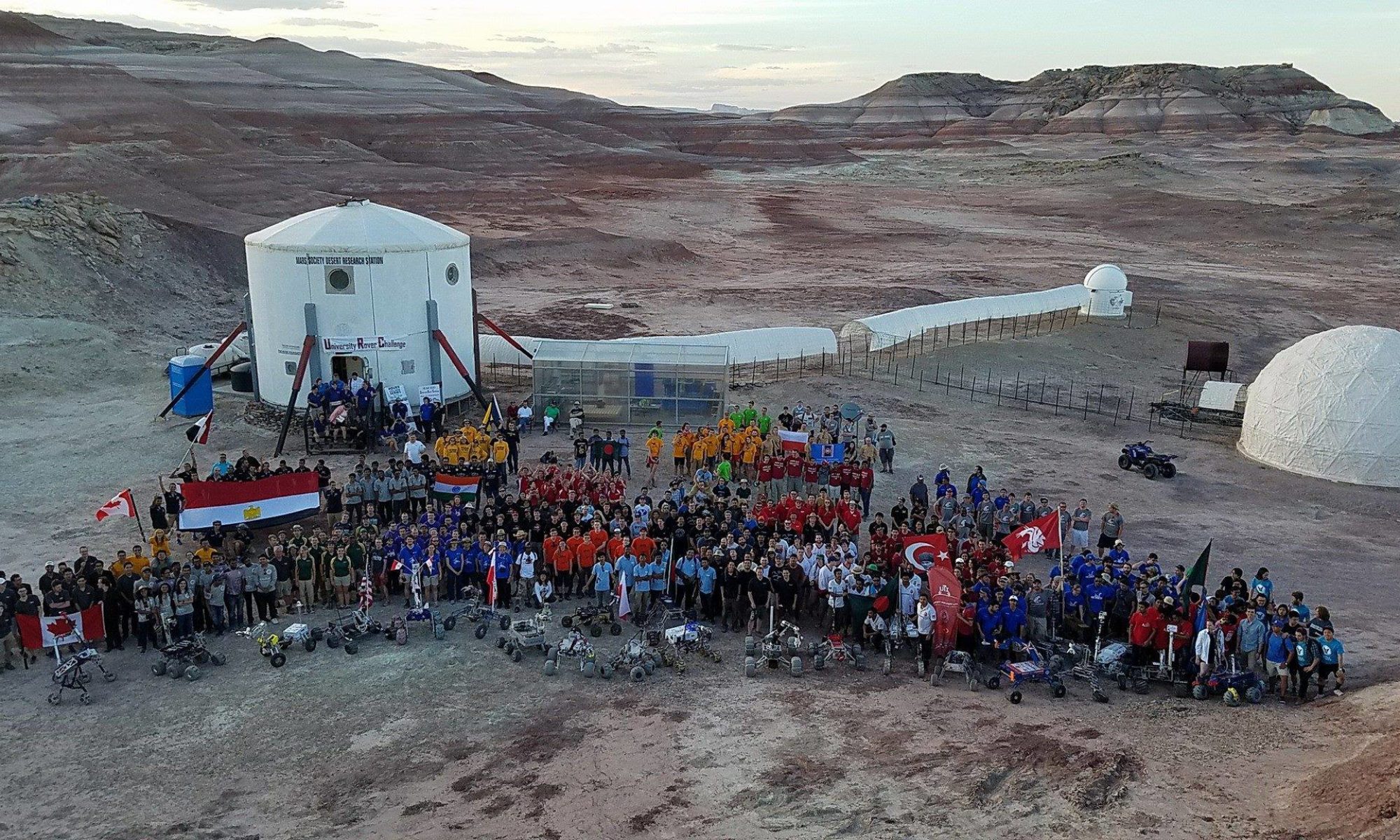

GreenHab Officer: Scott Dorrington
Environmental control: heater off (space heater on overnight), fan on in afternoon, door closed
Average temperatures:
08:52: 57.6 F, 59%
14:16: 127.6 F, 13%
14:39: 100.9 F, 10%
17:21: 57.6 F, 27%
17:47: 55.2 F, 47%
18:29: 51.1 F, 62%
Hours of supplemental light: 21 hrs (lights on most of day, turned off 3 hrs in afternoon)
Daily water usage for crops: 6.5 gallons
Daily water usage for research and/or other purposes: 0 gallons
Water in Blue Tank (200 gallon capacity): 147.5 gallons
Time(s) of watering for crops: 08:52 mist, 14:16 water + mist, 17:30 mist
Changes to crops: None
Narrative:
The greenhab was buzzing with activity this morning with visits from Rob, Clare, Alex and myself. We woke the plants with a nice misting and some tunes from Kylie Minogue. Together, we inspected the plants and did some pruning of the tomato plants, pinching off some small branches and leaves in hopes of promoting more nutrients to the fruits. We also performed a rotation of the tomatoes. Following advice from crew 290, I have commenced a rotation regiment of the tomato plants, with rows of tomatoes being moved inwards. The inner row of tomatoes are moved to the floor, and the others moved inward. I find this gives more room for watering, before moving the floor tomatoes to the outer wall of the greenhab. Following the morning EVA, I returned to the greenhab at 2pm accompanied by Clare again. The sun had finally come out during our EVA, and we returned to find it quite toasty in the greenhab at 126 F. This seemed like a very large number. Not being native users of Fahrenheit, we made a note to look up during comms window what this translated to in Celsius (53 C!!!!). We immediately turned the fan on and disconnected the lights. This brought the temperatures down to a more reasonable 100 F within a few minutes. The fans were left on, continuing to cool the greenhab. We commenced the daily watering of the plants, along with another rotation of the tomatoes. This was accompanied by some more chill Aussie tunes from Busby Marou. We noticed a spider in the greenhab – possibly one of those that were released over the last two sols. A further inspection of the herbs revealed some surprise peas!!! We counted at least three peas. The crew was very excited about this discovery. We noticed another pea vine crawling along the soil, which we gently coaxed back up around a stake. Clare and I returned to the greenhab in the evening to turn on the heater and harvest some of the herbs for tonight’s dinner. The red cabbage and kale plants were looking nice and thick – we got a good harvest from them of 57g and 38g. We added some basil and dill to balance out the salad. Lots of fresh greens to balance out tonight’s dinner of spam and cheese pizza! The salad was received from the crew with great relish. Certified fresh!
Harvest: 14g basil, 21g dill, 38g kale, 57g red cabbage,
Support/supplies needed: None
EVA Report – January 24th
EVA # 5
Author: Clare Fletcher
Purpose of EVA: Go to notable peaks visible from the Hab for two purposes. Firstly, to investigate wayfinding methods on Mars by identifying notable features from the Hab, then seeing if we are able to identify them on a map, find them, and plot them, as well as photograph them from multiple angles for future Crews to wayfind. The dual purpose of this EVA is to look for evidence of life found in the form of endoliths, concretions, and possible gypsum or fossils (but not to remove them), to see if remote planning is adequate for geoconservation of important features.
Start time: 0950 (planned start 0930, but delays in suiting up)
End time: 1255 (planned 1300, rushed back to make it in time)
Narrative: EVA 5 was a dual-purpose EVA – wayfinding and looking for evidence of life to test how to balance exogeoconservation with the search for evidence of life on Mars. Our wayfinding was very successful! We had identified a notable peak from the Hab that we had dubbed ‘The Beehive’ and based on our bearing from the Hab to it, thought it was the peak immediately to the East of Phobos Peak on the MDRS map. We found our way to The Beehive easily, though found the terrain between Cow Dung Rd and The Beehive and Phobos Peak to be difficult to walk through as it was very soft and sandy or powdery in locations. We also noted coming back that there were notable landmarks we had passed on the way out that allowed us to find our way back more easily. We think we might name some of these features and provide GPS co-ordinates for future Crews to better understand how to get to Phobos Peak and The Beehive. On the other hand, our search for evidence of life struggled. While there was plenty of lichen around, identifying endoliths, gypsum, concretions, or fossils was very tricky. Some samples were taken, and upon further inspection we may have stumbled upon sampling the correct material, though not without first taking photos in-situ and a GPS co-ordinate. In future, it would be helpful to have teaching examples for all Crew members going on the EVA, so they are able to know what they are looking for to help on the EVA. However, all the EVA participants were actively looking for all these features and were additionally helpful, identifying material that did get sampled. All in all, a success and a good learning experience!
Destination: The hill to the East of Phobos Peak, and Phobos Peak. Parking rover at Pooh’s corner (518900, 4251200) and walking within 1km radius of the rover to 519600, 4250450.
Coordinates (use UTM WGS 84): 519600, 4250450 (rovers parked at 518900, 4251200)
Participants: Clare Fletcher, Scott Dorrington, Alex Tobal
Road(s) and routes per MDRS Map: Exit Hab via main airlock, take driveway to Cow Dung Rd 0110. Take Cow Dung Rd 0110 to Pooh’s Corner. Walk from Pooh’s Corner to hill East of Phobos Peak and Phobos Peak.
Mode of travel: Driving and walking
Crew Photos – January 23rd
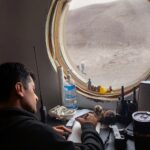
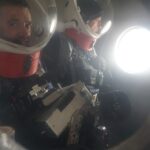
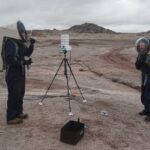
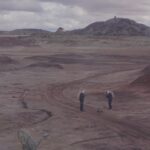
Sol Summary – January 23rd
Sol: 2
Summary Title: First Sol of Operations
Author’s name: Andrew Wheeler
Mission Status: Nominal
Sol Activity Summary: Our first full sol on Mars saw an overcast day breaking to let the sun shine through – at least for a moment – before returning to complete overcast. Following breakfast of oatmeal, toast, juice and coffee, preparations for the day of EVAs commenced. These involved the deployment of environmental sensors outside the science dome and testing of traction at various slope angles of a robotic rover also outside the main hab. Inside the hab, the plants in the greenhab were regularly tended and experiments in baking bread and combining varieties of freeze dried foods were undertaken. The regular monitoring of systems within the hab is becoming a routine for all crew under the responsibility of Scott the engineer and resultant time pressures appear to be easing.
Look Ahead Plan: Weather dependent, tomorrow will see an EVA to test the physical endurance of astronauts whilst walking fully suited and continued testing of the robot rover along with a stand alone rover wheel outside the hab.
Anomalies in work: Nothing to report.
Weather: Low cloud and early showers clearing later with clouds thinning during the afternoon. Temperature increasing from low to high single digits Celsius and humidity decreasing from 80% to 60% during the day. Faint to no wind.
Crew Physical Status: nominal
EVA: EVA 3 with Andrew and Steve to deploy a suite of sensors outside the science dome was cut short when the software failed to link to the system. A rehearsal to set out the equipment was undertaken in it’s stead, whilst the standalone solar logger was successfully deployed. EVA 4 with Steve and Rob (external) and Alex and Scott (internal) saw the operation of the robot rover outside the hab, testing traction on different surfaces at different slope angles.
Reports to be filed: Sol Summary, Journalist Report, Greenhab Report, Operations Report, EVA report, EVA Request(s)
Support Requested: Nothing to request.
Operations Report – January 23rd
SOL: 2
Name of person filing report: Scott Dorrington + Rob Hunt
Non-nominal systems: Greenhab heater, Toilet holding tank indicator
Notes on non-nominal systems: Toilet holding tank indicator still indicating 2/3 full despite emptying yestersol
ROVERS
Spirit rover used: N/A not used
Hours: (before EVA)
Beginning charge: (Before EVA)
Ending charge: (On return from EVA, before recharging)
Currently charging:
Opportunity rover used: N/A not used
Hours:
Beginning charge:
Ending charge:
Currently charging:
Curiosity rover used: N/A not used
Hours:
Beginning charge:
Ending charge:
Currently charging:
Perseverance rover used: N/A not used
Hours:
Beginning charge:
Ending charge:
Currently charging:
General notes on rovers:
N/A not used
Summary of Hab operations:
WATER USE: 21.2 gal
Water (static tank): 427.5 gal. (depth 9 3/8 inches)
Static tank pipe heater: on
Static tank heater: on
Toilet tank emptied: no
Summary of internet: Nominal during comms window
Summary of suits and radios:
Repair of Suit #7. Noticed screw in back ventilation was loose previous day. Opened back to extract screw – found that washer had fallen through the wood backing, no longer gripping. Located larger washer in RAM to add to existing washer. This allowed screw to be tightened. Suit #7 is now operational.
Summary of GreenHab operations:
WATER USE: 6 gallons
Heater: Heater broken. Space heater on overnight.
Supplemental light: On. Left on all day + night
Harvest: 4g parsley, 9g basil, <1g (3 leaves) of sage
Summary of ScienceDome operations: Entered science dome to investigate textbooks
Dual split: Nominal
Summary of RAM operations:
Rob used RAM to fabricate temporary toad/screed tool for Steve’s EVA 4. Tape supplies were very low to start with. All of about 10 different tapes were near the end. Rob used a few inches from each of several types to construct the tool. Suggest we locate/create inventory.
Scott used RAM to locate washers for Suit #7 repair. Explored RAM to familiarize with available tools.
Summary of any observatory issues: Observatory not used. Laptop was charged overnight from Critical (4%) to full.
Summary of health and safety issues:
Dust from sweeping the downstairs floor irritates team members’ noses and lips.
Using can opener incorrectly can result in razor sharp edges on the cans. Teams should understand this hazard.
Steve and Rob returned quite fatigued from EVA 4 so re-hydration was essential. EVA’s need to ensure hydration is addressed.
Static discharge around Hab was noticed and managed regarding electronics.
Falls hazard identified if standing near top of steps to upper level.
Questions, concerns and requests to Mission Support:
Associated with EVA requests. If there is a need for extension of an EVA in the vicinity of the hab when rovers aren’t involved, can we authorize an EVA extension request (e.g. additional 20-30 min)?
Journalist Report – January 23rd
Loafing around
Sol 2 began with more natural beauty – this time in the form of a sunrise that congregated the entire crew around the hab’s upstairs eastern window. Said sun – while small and pallid – stayed visible through the day.
The crew conducted two separate EVAs. The first of these was a practice run to test the deployment of an environmental sensor package. It began as a test of the sensor package itself, which decided it didn’t want to initiate.
This was followed by a more successful second EVA, which sought to test the mobility and traction of Steve’s bespoke rover (current name: "Johan") on different sediments and slopes (up to fifteen degrees). While the limited duration of the EVA prevented testing on all surface materials, the drone performed consistently well. Further EVAs with this drone will likely build on today’s results to explore more surfaces and expanded parameters. On a less serious note, watching Marstronauts operate a tracked rover on faux-Martian soil through the habitat porthole was also really, really special. Congrats to Steve for achieving a lifetime dream.
These EVAs also spawned a useful conversation in the hab about comms jargon and protocol – especially the nuances (or lack thereof) between terms like “copy”, “acknowledge”, “confirm”, “Roger Roger”, and everyone’s favourite: “ten-four”. At one point, we even glimpsed an Unidentified Wheeled Object (spectators who slowed down to watch our second EVA).
Most critically of all, our breadmaking enterprise reached new heights with a stunning herbed loaf from Rob. In combination with some rehydrated butter and Vegemite, it made yesterday’s berry obsession old news. We performed some further culinary experiments, with varying degrees of success.
Highlights of the day: BREAD, rover, morbid anecdotes about aeronautical disasters and animal attacks, Scotty’s 3D visualisation of the habitat’s surrounds, Commandrew’s pun barrage, AC/DC in the Greenhab, Clare’s bolognaise.
Lowlights of the day: Food tins with jagged edges (can opener must be aligned vertically!), our first minor laceration (see last point), mysterious habitat power loss, UWO incursion.
– Alexander Tobal, Crew 291
GreenHab Report – January 23rd
GreenHab Officer: Scott Dorrington
Environmental control: heater off (space heater on overnight), fan off, door closed
Average temperatures:
07:40: 52 F, 71%
08:52: 54.5 F, 72%
11:46: 66.9 F, 52%
12:38: 77.2 F, 45%
15:34: 77.9 F, 42%
16:15: 71.2 F, 46%
17:59: 53.4 F, 75%
19:23: 52.5 F, 77%
Hours of supplemental light: 24 hrs (lights turned on last night and left on)
Daily water usage for crops: 6 gallons
Daily water usage for research and/or other purposes: 0 gallons
Water in Blue Tank (200 gallon capacity): 154 gallons
Time(s) of watering for crops: 07:40 light mist, 12:00 water + mist
Changes to crops: None
Narrative:
During last night’s comms window, we received advice from mission support to leave the plants inside the greenhab for the next few nights, with the space heater running, and the supplemental lights running all day and night. I went out to take a temperature reading at 21:56 following comms window, and found the temperature at 52 F. It seems the heater did manage to warm it up a little from the previous measurement. In the morning, I was eager to get a temperature reading soon after waking to try to catch the coldest temperature. At 7:40am, the temperature read 52 F, indicating that it was likely a constant temperature of 52 F through the night (this matched the indicator on the space heater). Knowing that sunrise was soon to come, bringing warmer temperatures, I commenced the daily dose of music therapy with “Here comes the sun”. I returned to the hab at 8:52am to turn off the space heater and take another temperature reading. While in the greenhab, I commenced an examination of some of the plants. I noticed that cucumbers 1 & 2 had become tangled together – these were gently detangled. At midday, I returned to the greenhab to water the plants. As advised by mission support during induction, the plants were due for some fertilizer. I applied 6 gallons to the plants, mixing in 0.5 cups per gallon of miracle-gro. Around half was given to the tomatoes and cukes. During this midday watering, the plants were treated to another dose of music therapy. This time was some chill Aussie tunes including Lime Cordiale and Spacey Jane. The afternoon saw another misting and dose of music. This time, mixing it up with some rock, featuring AC/DC, Airbourne, Aerosmith and the Darkness. I think the plants enjoyed it – the crew in the hab certainly enjoyed the first airing of Radio Greenhab live from Mars over the comms. In the evening, I returned to the greenhab to turn on the space heater. We also performed our first Martian harvest, getting some basil, parsley, and sage for a nice tomato sauce for tonight’s dinner. During comms window, another spider was relocated to the Greenhab.
Harvest: 4g parsley, 9g basil, <1g (3 leaves) of sage
Support/supplies needed: None
EVA Report – January 23rd
EVA # 3
Author: Andrew Wheeler
Purpose of EVA: Deployment of environmental sensors
Start time: 10:15am
End time: 11:00am
Narrative: Environment monitoring sensors have been brought to MDRS to measure temperature, humidity, air pressure, altitude, dust, organic gases, CO2, magnetic field strength, light intensity, UV and IR intensity and battery/solar panel performance. Before deployment, the sensor suite (encapsulated within a Stevenson Screen (digital equivalent)) needed to be linked into the local area network to allow for calibration. Unfortunately, the device could not access the WiFi and was unable to be deployed at this time. Deployment is to be outside the science dome so that visual monitoring can be undertaken and short range remote access maintained. Instead, the EVA involved a practice run in setting out the equipment and confirming that all were operating (though not recording). This was then dismantled and returned to the hab for troubleshooting. Additionally, a preliminary examination of the ground conditions for EVA #4’s robot deployment was carried out before returning to the hab.
Destination: Outside science dome panoramic windows
Coordinates (use UTM WGS 84): 518228E 4250718N
Participants: Andrew Wheeler (9), Steve Hobbs (8)
Road(s) and routes per MDRS Map: MDRS campus environs.
Mode of travel: Walking
GreenHab Report – January 26th
GreenHab Officer: Scott Dorrington
Environmental control: heater off (space heater on overnight), fan on in afternoon, door closed (open briefly)
Average temperatures:
07:52: 46.8 F, 56%
09:27: 86.7 F, 31% space heater off, light off
10:09: 97.7 F, 20%
10:25: 98.8 F, 17%
10:43: 97.7 F, 17%
11:14: 104.4 F, 16%
11:26: 99.9 F, 12%
11:31: 101.8 F, 14%
12:19: 121.3 F, 10% fan on
12:51: 97.3 F, 11%
13:04: 96.4 F, 11%
13:39: 99.9 F, 10%
13:56: 99.1 F, 10%
14:45: 93.9 F, 10%
15:19: 88.2 F, 11% fan off
16:03: 105.4 F, 14%
16:42: 97.5 F, 17%
18:57: 82.2 F, 21% light on, heater on
Hours of supplemental light: 9.5 hrs (counting from midnight to 9:30am)
Daily water usage for crops: 6 gallons + 0.5 gallons mist
Daily water usage for research and/or other purposes: 0 gallons
Water in Blue Tank (200 gallon capacity): 136 gallons
Time(s) of watering for crops: 9:30 mist, water at 10:30am, water at 13:30, regular misting through the day (at temp log times)
Changes to crops: None
Narrative:
Today was our first sunny day of the mission. The morning visit at 7:50am showed a still chilly temperature of 46.8 F, however I knew from sol 3 that temperatures were likely to climb in the greenhab with the sun out, so planned to diligently monitor the temperatures throughout the day. Today’s music therapy soundtrack was the Eagles, beginning with Tequilla sunrise. I returned to the greenhab at 9:30 to turn off the space heater, and the temperature was a nice 88 F. It was very sunny in the greenhab, made a note to bring sunnies upon return. I returned at 10am to find temperatures up around 97 F. From googling during comms window last night, I found that tomatoes like a temperature around 70 to 90 F, so wanted to keep the temperatures below 100 F through the day. I did some experimenting with opening the greenhab door to try to cool temperatures. This did manage to drop the temperature a few degrees in 15 minutes, but I also noted that this also dropped the humidity (likely from the dry desert air). I tried closing the door and giving a decent misting of the plants, which seemed to raise humidity a bit, but temperatures were increasing again. I decided misting alone was not good enough to raise humidity, so commenced with a morning watering. Rather than give one large watering as done in previous sols, I decided to do 2 gallons at this time, and return for another watering later in the day. I noticed that this prevented much of the water drainage from the tomato plants I was seeing in previous sols. I aim to continue this twice daily watering as I think it will help with water conservation, and might prevent over-soaking the tomato roots. While watering, with the door closed, I monitored the temperatures rising again. I tried this time with the fan, and noted temperatures dropping from 106 to 100 F in a few minutes. But humidity also dropped again. I turned off the fans, and the humidity increased after a few minutes (likely from water evaporating). I returned to the hab, leaving the fan off. I checked back in 50 minutes later to find the temperature had reached 120 F. I turned on the fan again, which quickly brought temperatures back down to 100 F. I also raised the mesh shade cloth on the south wall of the greenhab to try to block some of the heat coming in. The tomatoes were also moved in off the wall during this stage. I left the fan on for much of the afternoon, setting myself alarms to return at regular half hour intervals. The temperatures were consistently in the 90s, and gave regular mistings on each visit. At 1:30pm, I gave another watering of 3 gallons. At this time I also noticed tomato #7 has a fruit that is beginning to turn yellow! This was a welcome surprise, as tomato #7 was looking smaller than the others from the start of our mission. The tomatoes were shuffled around throughout the day to keep them out of direct sunlight. Temperatures remained in the 90s for the next few visits. At 3.20, I found the temperature at 88, and decided to leave the fan off for a bit to try raise the temperature before the sun started setting in the afternoon. In the afternoon, Mission Support radioed confirming delivery of replacement parts for the heater. The heater was fixed, so we should expect some more comfortable overnight temperatures for the plants.
Harvest: None
Support/supplies needed: None
EVA Report – January 26th
Crew 291 EVA Report 26-01-2024
EVA # 9
Author: Clare Fletcher
Purpose of EVA:
Start time: 1330
End time: 1600
Narrative: Our EVA today went back to the same place as EVA 8 to drive our rover around and attain mineral spectra from various targets. We had a few technical issues as our GPS ran out of battery and a few nuts fell off the rover. However, we still had a great success with the rover today and attained some good data. Our studies attempting to find concretions had some success, though limited at this first location. Some gypsum was also attained. We decided we had enough rover charge to make it to the river crossing (the furthest requested point for our EVA), and we had more success finding gypsum and concretions there. As it is Australia Day, we also took some Aussie mascots into the field, so they too could experience Mars research. Overall a successful EVA for #9!
Destination: Tharsis Montes. 518196, 4253742 parking (if battery permits). 518607, 4253884 furthest point. Walking within 700m of the rover (permitting the battery doesn’t run out prior to reaching river crossing).
Coordinates (use UTM WGS 84): 518196, 4253742 parking (if battery permits). 518607, 4253884 furthest point.
Participants: Clare Fletcher, Steve Hobbs, Rob Hunt
Road(s) and routes per MDRS Map: Exit Hab via main airlock. Drive down driveway to Cow Dung Rd 0110. Drive North on Cow Dung Rd 0110 until river crossing.
Mode of travel: Driving and walking.
You must be logged in to post a comment.