Crew 218 Final Mission Summary

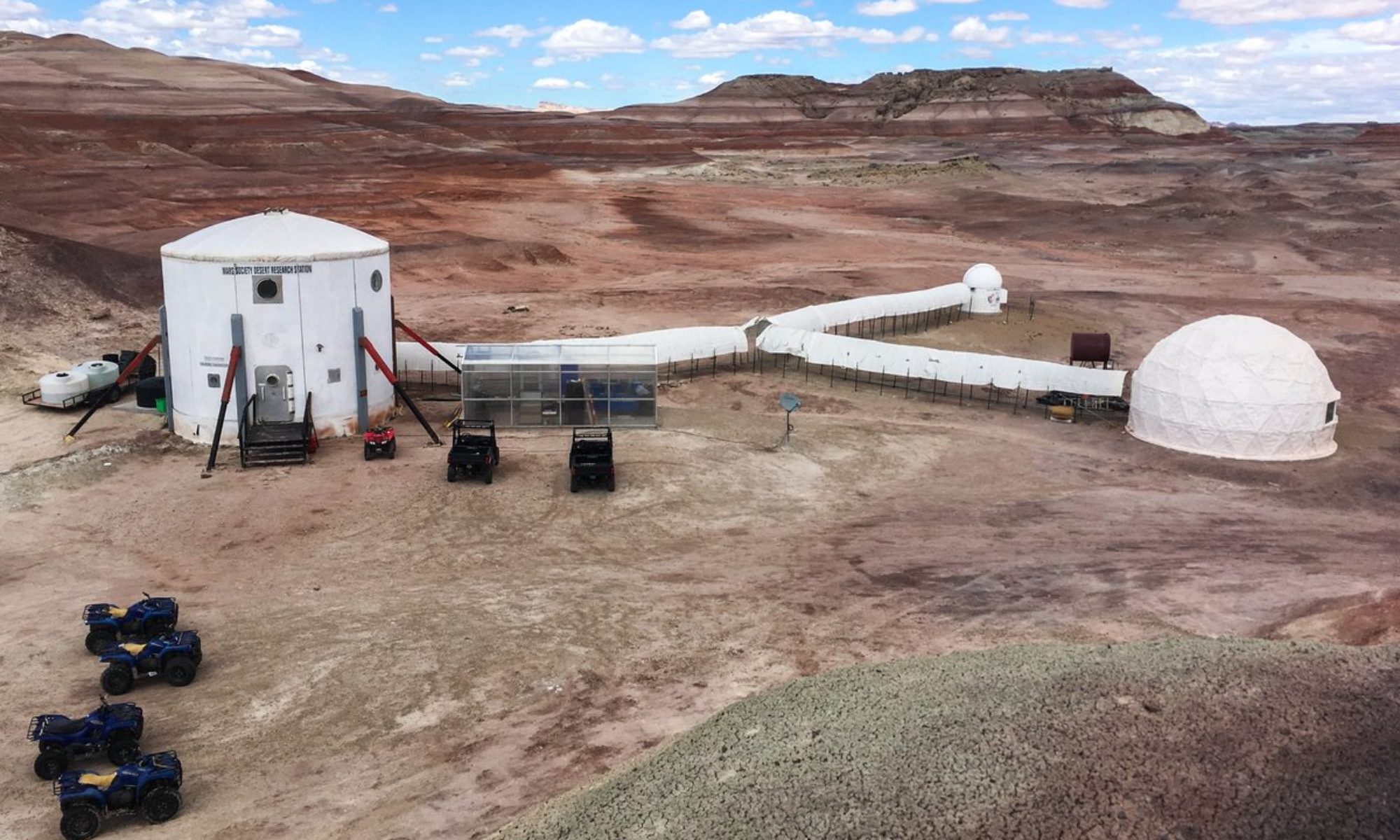
Mars Desert Research Station

Mission Summary

Crew 218 – The Next Giant Leap

Dec 21st, 2019 – Jan 4th, 2020


Crew Members:

Commander and Crew Astronomer: Dr. Cesare Guariniello

Crew Geologist: Pat Pesa

Crew Scientist and GreenHab Officer: Dr. Jonathan Buzan

Health and Safety Officer and GreenHab Officer: Shefali Rana

Crew Engineer: Luz Maria “Luz Ma” Agudelo Urrego

Crew Journalist: Benjamin “Ben” Durkee


Acknowledgements:

The entire Crew of MDRS 218 would like to express their gratitude to the many people who made this mission possible: our deepest thanks to Dr. Robert Zubrin, President of the Mars Society; Dr. Shannon Rupert, MDRS Director and Program Manager, who kept an eye on us and was our hero from 1500 miles away; Atila Meszaros and David Mateus, Assistant Directors, who managed and supported our mission in-situ, and helped us troubleshooting the little problems we encountered; Dr. Peter Detterline, Director of Observatories, who trained and assisted our Crew Astronomer before and during the mission; David Murray, GreenHab Team Lead; Michael Stoltz, The Mars Society Liaison, Media and Public Relations; Scott Davis, responsible for Spacesuits; the Mission Support CapCom who served during our rotation: Abhishek Soni, Bernard Dubb, Andrew Foster, Jeremy Sieker, Michelle Espinoza, Simran Mardhani; Purdue MARS, which initiated the crew selection for this mission; Denys Bulikhov, who was selected as commander and, even when he had to drop because of external reasons, gave me valid and very appreciated support; all the departments and people at Purdue University who supported this mission; and all the unnamed people who work behind the scene to make this effort possible, and who gave us a chance to be an active part of the effort towards human exploration of Mars.


Mission description and outcome:

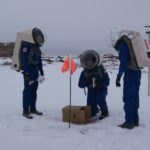
MDRS 218 “The Next Giant Leap” is the third all-Purdue crew at MDRS. This mission encountered different challenges than my previous two experiences, with snow and cold keeping the crew indoors for the first 5 sols and making EVAs much more difficult. The logistics of mission preparation were also different, with two crewmembers being unable to participate to preliminary meetings in person. However, the crew reacted very positively to the adversities, creating strong bonds and always giving each other support in every aspect of the mission. Despite the difficulties, all crewmembers performed to very high standards and provided good work on their research projects, as well as support to projects of the other crewmembers. The morale was always high and is visible throughout our mission pictures, up to the very last day. Even challenges like frozen pipes who forced us to use an alternative pump and carry water upstairs in a chain of pots and containers was experienced like a bonding activity. The research described below touched many aspects of human exploration of Mars, including analysis of outdoor features such as underground structure, weather, and radio emissions, and studies of human factors and the importance of environmental and operational comfort. The crew was also involved in astronomy and outreach through social media, and one of their sol was filmed to be featured in inspirational videos.

Figure 1. MDRS 218 Crew posing in front of the habitat with a Purdue flag. Left to right: Health and Safety Officer and GreenHab Officer Shefali Rana, Commander and Crew Astronomer Cesare Guariniello, Crew Journalist Ben Durkee, Crew Scientist and GreenHab Officer Jonathan Buzan, Crew Geologist Pat Pesa, and Crew Engineer Luz Ma Agudelo Urrego

As commander, I am extremely proud of this crew, which faced adversities with flexibility and patience, and was capable to keep the highest level of fidelity and realism. The crew properly followed safety and research protocols, performed as a tight group, and found an appropriate mix of research activities and personal time, especially when the weather conditions forced us to review some of our goals. The pace kept throughout the mission was also challenging, ranging from slow days in the beginning, where our research activities were limited by the lack of EVAs which were necessary for many of our projects, to days with double EVAs, where the crew performed at very high level of quality and effort. As described in the rest of this summary, the crew collected useful and interesting data during their time at MDRS and has plans for use of the data after the completion of the mission, as well as ideas for laying foundations for further collaboration of Purdue crews with the MDRS program.


Summary of Extra Vehicular Activities (EVA)

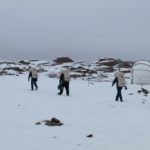
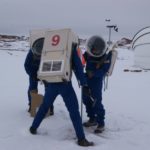
After being trained in the use of rovers and in the safety protocols for EVA, the crew had twelve excursions during rotation 218, two of which being traditional short EVA to Marble Ritual, and the others being mainly along Cow Dung Rd because of the situation of the roads when covered in snow. Therefore, the EVAs were in areas in the Morrison Formation and Dakota Sandstone. The EVA served seven research projects: seismometric analysis of subsurface, radio measurements, collection of geological samples, autonomy for crew EVA, analysis of biometrics, meteorological observation and evaluation of EMU suits. The crew optimized the time on the field, limiting the driving time to less than 15-30% of the entire EVA duration.

1 2 3 4 5 6 7 8 9 10 11 12 Total
Sol 2 2 4 5 6 7 8 9 10 11 12 13
Duration (h:mm) 0:56 0:49 1:16 1:12 2:44 2:04 2:01 2:02 0:36 1:18 1:49 2:07 18:54
Distance (miles) 1.0 1.0 1.0 2.8 7.4 4.0 4.2 5.9 0.2 1.0 5.3 6.0 39.8
% not driving 89% 88% 100% 69% 74% 87% 83% 86% 100% 75% 81% 72%

Table 1. Summary of EVA, indicating Sol of execution, duration, distance covered, and time percentage spent in the field

Figure 2. Three-dimensional view of the EVAs performed by MDRS 218 crew


Summary of GreenHab Activities

Crew GreenHab Officer: Dr. Jonathan R. Buzan

The state of the GreenHab is in excellent condition. Snow peas have struggled during rotation, and the strawberries were eaten by a Martian Field Rodent (caught and released). However, the tomato plants, and cucumber have grown considerably, and the cucumber has flowered. We had nearly daily harvests, regular rosemary bread (until we ran out of flour), spices for sauces and curries, and a large salad for 8 people on December 25th. The GreenHab was multi-functional, providing not only food, but a sense of calm and peace in a small habitat building surrounded by a sea of red and snow-white landscape. Overall, the GreenHab was a great place to learn about taking care of multiple plants and is an excellent opportunity to harvest fresh vegetables.


Science Summary

We had 12 separate projects that covered a range of topics. The vast majority were EVA related and were not started until after the first week due to weather related EVA cancellations. The major indoor project evaluated the temperature in a single stateroom for stressful conditions. The EVA projects measured spatial satellite radio strength, rock sampling of surface and seismic mapping of subsurface stratigraphy, real-time measurements of human bio-physiology, EVA suit stressors, field maintenance, decision making, and weather observations. Overall, each project uniquely highlighted each crewmember’s strengths, and brought light to necessity of bringing humans to the surface of Mars for both scientific and engineering related research.


Research Projects:

Title: Decision Making in support of autonomy for crew EVAs

Author(s): Cesare Guariniello

Description, activities, and results: Continuing a research project started last year, during EVAs events have been suggested to the crew, which had to decide how to act following disruptions or injuries, loss of communication, or environmental difficulties. The crew had to decide whether to continue the EVA, modify the primary objective, proceed to secondary objective, or abort the excursion based on safety of the crew, current status of the mission, achieved partial goals, and potential further acquisition of data. Due to the weather conditions, most EVAs had similar destinations, length, and objectives, therefore only a couple of scenarios have been analyzed. While most situations have an obvious “right answer”, such as major injuries, some of the grey areas are more difficult. Even a small disruption when three astronauts are in EVA with two rovers might require two of them to separate from the third one, which can cause safety issues.

Title: Mars surface weather

Author(s): Jonathan Buzan

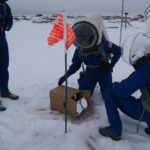
Description, activities, and results: Martian weather observation and prediction are crucial components for evaluating evolving EVA conditions and overall mission safety for a human crew on the surface of the planet. This project took regular measurements during EVAs. 1) Dr. Jonathan Buzan trained crew members in three critical observations for Martian weather prediction: 1) Observe visibility in the four cardinal directions, determining viewing distance; 2) Vertical observations of cloud cover, type, cloud deck height, and visibility; 3) In-situ temperature, humidity, luminosity, and wind measurements were taken. All of these observations become the baseline for the development of weather station instrumentation, and eventually, localized weather predictions. Most notable aspect of field operations was that the weather changed regularly and quickly, which highlights the importance of trained EVA observations and prediction of weather on Mars.

Title: Subsurface structure on Mars

Author(s): Pat Pesa

Description, activities, and results: The goal of the project was to demonstrate the use of instrumentation for structural analysis of potential locations for building on Mars. Several sites in the MDRS area were chosen based on having different stratigraphic layers and were analyzed using seismometric measurements to determine shallow subsurface rock structure. In-situ procedure was setting out a line of geophones to record data after small impacts gathering information on how vibration waves travel through the sub-surface. After the mission concludes the data will be further analyzed at Purdue with professor Dr. Doug Schmidtt. Applications of this data will be better understanding of non-invasive structural testing of Martian surface for building and development for a sustained human presence.

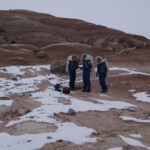
Figure 3. Commander Cesare Guariniello and Crew Journalist Ben Durkee stand on the side of the seismometric sensors, while Crew Geologist Pat Pesa is ready to hit a metal plate with a hammer to generate seismic waves for his experiment of structural analysis of subsurface.

Title: Detecting radio signal strength

Author(s): Ben Durkee

Description, activities, and results: Radiological data was collected on the band of 436 MHz to 438 MHz. Surveys were done in various areas, including directly around the Hab, Cow Dung Rd, Galileo Rd, Kissing Camel Ridge, near White Moon, and more. Preliminary data processing has occurred, and more work is necessary to create the final heatmap of radio signal strength around MDRS

Title: EVA workload analysis

Author(s): Shefali Rana

Description, activities, and results: Feedback was collected from crew for long and short duration EVAs. Variation in score was observed for the exploratory EVAs conducted over a shorter distance versus ones for longer duration where heavier equipment was used for conducting the experiment. Different indicators will be analyzed to identify areas of larger discomfort.

Title: EMU (Extravehicular Mobility Unit) ergonomic assessment

Author(s): Shefali Rana

Description, activities, and results: EMU comfort parameters were scored by the crew for the two suits. There was a difference in score of comfort and ease of egress/ ingress between the two suits (light exploration suit and heavy two-piece suits). Scores also varied among the crew for what concerns ergonomics and ease of use.

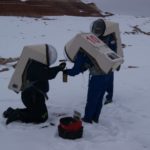
Figure 4. Crew Engineer Luz Ma Agudelo is taking weather observations, while commander Cesare Guariniello points towards North. The ease of donning and using EVA suits was evaluated by the crew after each EVA

Title: Environmental Stresses over MDRS habitat and Crew Members and projection over Martian Terrain Author(s): LuzMa Agudelo

Description, activities, and results: Intending to understand the environmental conditions over Mars Terrain and design habitat structures and instruments that increase the human physical and mental capability, weather observations were performed, and data was collected over the MDRS terrain during Extra-Vehicular Activity (project no. 2). Data was also collected inside the habitat regarding temperature, humidity, wind, and radiation. Preliminary results on the crew engineer bedroom showed the nighttime temperatures with the door close surpassing the threshold of 26.6°C, considered the lower limit for human thermal heat stress, and a nighttime temperature average of 17°C with the door open.

Title: Messier and other space objects for outreach

Author(s): Cesare Guariniello

Description, activities, and results: The rotation saw only two days of clear skies. I managed to perform one day of Solar observations at the Elon Musk observatory, where the Sun did not show any spot or prominence, and one night where M42 (Orion Nebula) and M31 (Andromeda Galaxy) were observed and imaged in the robotic observatory. More observations have been submitted and will be processed after the end of the mission.

Title: Reliability and maintenance

Author(s): Shefali Rana

Description, activities, and results: Reliability of both the habitat structure and the EVA equipment is essential for safety. All equipment has to be installed, maintained and repaired on Mars by the crew and they have to be self-sufficient. For example, the habitat had a failure of the water pump pumping up the water to the tank for daily use. Repair procedure was initiated by crew Engineer. In this project, we simulated failure modes / malfunction of radio and rover during EVAs. Response of affected crew member and adherence / success of repair procedure was studied. This will be used to suggest operational protocols for failure scenarios.

Title: Medical readings in preparation for future crew-wide project

Author(s): Cesare Guariniello

Description, activities, and results: Crew commander wore a Zephyr sensor to monitor heart rate, breathing rate, body temperature, and level of activity 24/7 for three days during the mission. Data will be downloaded and analyzed after the mission, to evaluate areas and times of intense effort, and level of comfort and rest at night. The research project, in collaboration with prof. Barrett Caldwell at Purdue, will be extended to full crews in the future.

Title: Collection of clay and shale samples

Author(s): Cesare Guariniello

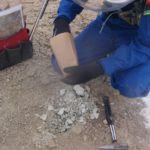
Description, activities, and results: Six samples have been collected for study in laboratory at Purdue. The samples will be evaluated for water content and geotechnical properties. Snow coverage did not allow for further collection.

Title: Media and outreach

Author(s): Ben Durkee

Description, activities, and results: @PurdueMDRS on Facebook & Instagram have been updated with pictures and progress updates every other sol. The posts and pictures are unique from each other and from the journalist reports and photos to make sure the audience is not receiving repeat content from all media. Video of Christmas celebrations needs final editing touches before being uploaded once back in regions of more reliable wi-fi.

Figure 5. Crew 218 spent both Christmas and New Year’s Day at MDRS. Many Earthlings sent Christmas cards to the crew, upon request of the commander. The crew is thankful to the people who sent their thoughts and wishes.

Mars Desert Research Station Crew 218 “The Next Giant Leap”

Journalist Report – January 07th

Journalist Report

Robinson Raphael, Crew 219 Astronomer,

Sol 2,

The Two Tales of the EVA

We are slowly adapting to our new life on Mars! The morning was filled with quiet as we were all tired from the past few days of repairs and moving in but slowly, we gained our strength after some coffee and a pleasant breakfast. A big chunk of the day consisted of two EVA’s. Meanwhile, the rest of the day afterward consisted of catching up on work around the Hab and personal time.

The first EVA started at 8am and it consisted of our CO, HSO, LSO, and GHO. The final destination was North Ridge and if time permitted, they had plans to climb it. Given the weather conditions, the crew proceeded with their journey and all things seemed well, right? Nope. A couple of the crewmembers had to deal with a lot fog in the helmets because of the cold! In the end, the crew did reach North Ridge but did not climb because of the fogging and snow cover. Despite all of it, the first EVA crew was rewarded with hot chocolate when they came back!

The second EVA started at 1pm and it consisted of myself, the XO, the engineer, and our geologist. The final destination was Kissing Camel Ridge E and plans were also made to climb to collect samples at different stratifications, if time permitted. This time around, the fogging issue had been solved and the weather was much better. Prior to heading to Kissing Camels, we set up the optical mount setup that I brought with me to MDRS. It was placed between the Musk Observatory and Robotic Observatory and it is marked with a flag that the Geologist and I made. Speaking of our Geologist, he was able to take some sweet photos of the optics mount. You can also see the mount from the MDRS habitat! A beautiful sight to see when people wake up if I do say so myself! After the mount was setup, we proceeded to drive the rovers to Kissing Camels.

Near Kissing Camel, we were able to collect some cool samples, each with their own interesting features. After collecting the samples, we saw that Kissing Camel had lots of area untouched by snow, so we proceeded to climb up the side of the ridge to collect additional samples. The climb went a bit slower than anticipated since it was my first time doing an EVA of this magnitude, but overall, we did what we came to do. In the end, the second EVA crew was also rewarded with hot chocolate, coffee, and an excellent lunch of tuna salad and pasta prepared by our LSO!

Operations Report – January 07th

Crew 219 Operations Report 07-JAN-2020

Sol: 2

Name of person filing report: Alejandro Luis Perez

Non-nominal systems: N/A

Generator: Run

Hours run: 13.5

From what time last night: 17:00

To what time this morning: 06:30

List of any additional daytime hours when the generator was run: N/A

Solar- SOC% (Before the generator is run at night): 49%

Diesel Reading – 74%

Station Propane Reading- 52%

Ethanol Free Gasoline- N/A

Water (loft tank) (gal) – 50

Water Meter (units)- 0147447,5

Water (static tank) (gal) – 526

Static to loft Pump used – Yes

Water in Green Hab (gal): 204.88

Water in Science Dome (gal): 0

Toilet Tank Emptied – No

Diemos rover used: Still in the Work shop

Hours:

Beginning Charge:

End Charge:

Currently Charging:

Sojourner rover used: Assigned to Director

Hours:

Beginning Charge:

End Charge:

Currently Charging:

Spirit Rover used- Yes

EVA #4

Starting Hours: 123.3

Beginning Charge: 100%

Ending Hours: 123.5

Ending Charge: 67%

Opportunity Rover used: Still in workshop

Hours:

Beginning Charge:

Ending Charge:

Currently Charging:

Curiosity Rover used: Yes

EVA #4

Starting Hours: 129.1

Beginning Charge: 100%

Ending Hours: 129.3

Ending Charge: 71 %

Notes on Rovers: Opportunity and Deimos off-site for maintenance.

ATV’s Used: (Honda, 300, 350.1, 350.2, 350.3): No

Reason for use:

Oil Added? No

# hours the ATV’s were used today:

Notes on ATVs:

Habcar used and why, where? Yes, used to fill static tank by Outpost.

CrewCar used and why, where? No

General Notes and Comments:

Summary of the internet: Nominal

Summary of Suit and Radios: Suits #1 and #7 are fully functional, weak air flow from yesterday’s EVA could have been from the low temperatures. Suit #5 does not work. The multimeter was used to see where power is not being transmitted and found that all connection from battery to circuit board are good. However, there is no power being delivered to the fans. Suit #3 has weak air flow coming from both fans even on full power. Battery testing on Suit #3 will be conducted tomorrow. Red Helmet was fixed by securing the head pad back in place using cable ties. The connector has been placed on the helmet missing a connector, however, there is no gasket for this connector. Also, one of the chargers got disconnected from its connector. This was fixed by soldering the cable back to the connector and this charger is working again.

Summary of Hab: Heating strip is working to keep the pipe from the static tank to loft tank from freezing. However, the insulation looks to be falling apart from the cold temperatures. Also, the cable obstructing the fire escape window has been removed and placed inside the RAM.

Summary of Science Dome operations: Nominal

Summary of Ram operations: Nominal

Summary of any observatory issues: Nominal

Summary of Health and safety issues: Nominal

Questions, concerns, and requests to Mission Support: Requesting Teflon tape for the loft tank feedline, new insulation for the Static tank to Loft tank pipe, and gasket for one of the 2 piece helmet connectors.

Research Report – January 07th

Crew 219 Science Report 07-JAN-20
Crew Science Officer: Hannah Blackburn

1. Biometrics and Neurobehavioral Research

Continued taking sleep and post-EVA logs. Post-EVA biometrics were recorded.

2. UAV

Nothing to report.

3. Dust Mitigation for Optical Mirrors

Optics mount and mirror were placed and marked with high-visibility flag.

4. Astrophotography of Celestial Bodies

Nothing to report.

5. Remediation of Mars Regolith

Regolith samples were placed in petri dishes and left to dry. Algae cells have been counted.

6. Chemical and Mineralogical Composition of the MDRS Site

Samples were taken from North Ridge and Kissing Camel on EVA 3 and 4. Samples were dried in the oven using glass beakers.

7. Protocols for the Discovery of Life on Mars

Samples were taken from North Ridge and Kissing Camel on EVA 3 and 4.

Glassware check out:

10 glass beakers (sizes between 200 and 500 ml) were used to dry regolith samples in the oven, and we will need them for the same purpose tomorrow. One glass pipette was used to measure BG11 media for the regolith remediation project.
Notes and Comments: There are unknown samples in the Science Dome incubator (which is not on) and have been there since the beginning of our sim. They are labeled “CowDung Road Gypsum 12/11” and appear to be a gel-like substance. Picture attached. Please advise on what to do with these samples.

GreenHab-Report – January 07th

Crew 219 GreenHab Report 07-JAN-20

Crew GreenHab Officer: Cynthia Montanez

Environmental control: Heating.

Shade cloth (40% and 30%) on.

Average temperature: 19.2 °C; 22.6 %

Average Max: 24.2 °C, 24.6%

Average Min: 14.3 °C, 18.6%

10:35 A.M.

Floor Unit: 11 °C

Electronic: 15.8 °C

humidity 23%

Max: 25.6 °C; 25%

Min: 10.9 °C; 17%

1:00 P.M.

Floor Unit: 13 °C

Electronic: 18.8 °C

humidity 21%

Max: 25.6 °C; 25%

Min: 19.5 °C; 20%

6:12 P.M.

Floor Unit: 9 °C

Electronic: 14.8 °C

humidity 23%

Max: 21.4 °C; 24%

Min: 12.7 °C; 19%

Hours of supplemental light: Light system 7:00PM-12:00AM.

Daily water usage for crops: ~8.37 Gal.

Daily water usage for research and/or other purposes: N/A

Water in Blue Tank – ~205.13 Gal.

Time(s) of watering for crops:

10:35 A.M.

SEASONAL PLANTING HISTORY:

Change to crops: None.

OTHER NOTES:

1st sprouts: N/A

Harvest: At 6:20 P.M. 4 grams of oregano and 3 grams of marjoram were harvested.

Other: The temperature in the Greenhab was colder than usual.

EVA Report 3 and 4 – January 07th

Crew 219 EVA Report 07-01-2020

EVA #3

Author: Dave Masaitis

Purpose of EVA: Geologic sample collection

Start time: 0903 hrs

End time: 1002 hrs

Narrative: EVA #3 entered the airlock at 0858 hours, and departed the Hab on foot at 0903. The EVA team moved north around the science dome and headed out towards North Ridge. Due to ambient temperature hovering around freezing, only a third of the distance towards North Ridge had been covered before the majority of crew members were reporting excessive visor fogging. CO called a short halt fogging and then resumed movement towards North Ridge. A second short halt had to be conducted just shy of the target sampling area for the same reason. Once on the target area at the base of North Ridge, crew members identified 5 locations to sample from in accordance with the crew geologist’s sample plan. The coring tool provided did a sufficient job of collecting the first sample, but the substrate was so frozen that the EVA team was unable to get the sample back out of the coring tool. CO crested a nearby ridge to reestablish communications with the Hab, and a secondary sampling technique was approved by the crew geologist. The EVA team collected and recorded locations of 10 samples, and then the CO and HSO discussed the plausibility of summiting North Ridge. Both concurred that between ground conditions and the persistent visor fogging being experienced by most of the team would make a summit attempt unsafe, so the EVA team opted to return to the Hab. EVA #3 reached the airlock at 1002 hours, for a total EVA duration of 59 minutes.

Destination: Vicinity of North Ridge

Coordinates: 0518600/4250800

Participants: D. Masaitis (CO), K. Crisman (HSO), H. Blackburn (LSO), C. Montanez (GHO)

Roads and routes per MDRS Map: North from the Hab towards North Ridge

Crew 219 EVA Report 07-01-2020

EVA #4

Author: Nathan Hadland

Purpose of EVA: Sample collection for mineralogy project and deployment of optical mount for dust mitigation project

Start time: 1250 hrs

End time: 1434 hrs

Narrative: EVA #4 initiated a 5-minute decompression at 1250 hours and moved out on foot to the vicinity of the Robotic Observatory. After setting up our experimental optical mount and safety flag to mark its location, we moved back to Curiosity and Spirit. After reporting SOC and hours, we progressed south along Cow Dung Road. We dismounted the rovers just past Robert’s Rock Garden and moved east on foot along the base of Kissing Camel Ridge E. The Crew Geologist identified a site with no snow cover and flat terrain for sample collection. We collected 5 samples in a grid and recorded GPS locations. After sample collection, we found a safe route up the side of Kissing Camel Ridge without snow cover and took 3 additional samples on the side of the formation. We then headed down and returned to the rovers. Curiosity and Spirit proceeded safely back to the Hab at 1428 hours and the EVA crew successfully pressurized in the air lock at 1434 hours.

Destination: Kissing Camel Ridge E

Coordinates: 0518100/4249300 (Kissing Camel Ridge E)

Participants: Nathan Hadland (XO), Abdul Elnagdi (GEO), Alejandro Perez (ENG), Robinson Raphael (ASTRO)

Roads and routes per MDRS Map: South along Cow Dung Road (0110), parked just south of Robert’s Rock Garden and then proceeded east on foot towards Kissing Camel Ridge E.

Mode of travel: Rovers (Spirit and Curiosity) and foot travel

Sol Summary – January 07

Crew 219 Sol Summary Report 07-01-2020

Sol: 2

Summary Title: Research, Research, Research

Author’s name: Dave Masaitis

Mission Status: Nominal

Sol Activity Summary: Sol 2 marks our full plunge into scientific research. With our mission plan published, we spent the day starting and continuing experiments, and conducted two more EVA’s for sample collection. Other features of the day include fresh bread and cobbler by the Lead Science Officer, and whispers of a showing of The Martian after the Comms window.

Look Ahead Plan: Tomorrow holds plans for two more proposed sample collection EVA’s, maintenance on a couple EVA suits, continued sample processing in the science dome, and continuation of our other experiments.

Anomalies in work: None

Weather: Cold and overcast all day, with temperatures below freezing.

Crew Physical Status: Nominal

EVA:

EVA #3 – Geologic Sample Collection near North Ridge (0518600/4250900)

EVA #4 – Geologic Sample Collection around Kissing Camels (0518100/4249300)

Reports to be filed:

Sol Summary
EVA Reports 1 & 2
EVA Requests 3 & 4
Operations Report
GreenHab Report
Research Report
Journalist’s Report
Photos (Including Photo of the Day)

Support Requested:

(Carried over from previous day)

Sundries: Paper towels
Medical: C-Spine needs to be replaces (broken/misshapen)
12x Medium Gauze Pads
Anitbiotic Ointment

Research Report – January 06th


Crew 219 Research Report 06-JAN-20
Crew Science Officer: Hannah Blackburn

1. Biometrics and Neurobehavioral Research

Sleep logs began today. Post-EVA biometrics were recorded.

2. UAV

Nothing to report.

3. Dust Mitigation for Optical Mirrors

A site was selected for the mirror to be placed (between the Musk Solar Observatory and the Robotic Observatory). The optics mount was assembled.

4. Astrophotography of Celestial Bodies

Submitted an observation of the Crab Nebula with MDRS 14. Hopefully we will have clear skies soon.

5. Remediation of Mars Regolith

Samples were collected on EVA 1 and 2.

6. Chemical and Mineralogical Composition of the MDRS Site

Crew members practiced using the geological sampling tool while taking samples for #5. Locations were selected for tomorrow’s EVAs (North Ridge and Kissing Camel).

7. Protocols for the Discovery of Life on Mars

Nothing to report.

Glassware check out:

For the duration of the mission, we will need 10 glass beakers (sizes between 200 and 500 ml) to dry regolith samples in the oven, and one glass pipette to measure BG11 media for the regolith remediation project.