EVA Report

Crew 240 EVA Report 13Feb2022

EVA # 14

Author: Clément Plagne

Purpose of EVA: Replacement of batteries for scientific experiment and installation of two others that weren’t functional at the beginning of the mission.

Start time: 11:05

End time: 12:00

Narrative: All events occurred according to plan, and experiments are well installed and stable but may need to be retrieved in coming days in case of very high winds.

Destination: Crossing between Cow Dung Road and Entrance Road

Coordinates (use UTM NAD27 CONUS): 518 300, 425 0500

Participants: Clément Plagne, Marion Burnichon

Road(s) and routes per MDRS Map: Entrance Road, Cow Dung Road

Mode of travel: Rovers

Crew Photos

Hello,

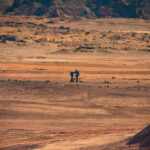
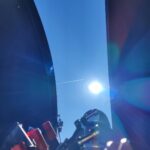
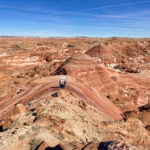
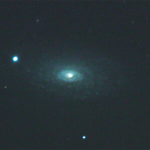
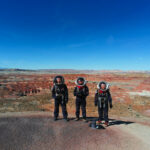
Quiet days often end with little in the way of pictures. Today we have a
picture of our EVA taken from inside the Hab, a couple astronomy-related
ones, the unforgettable hamburger and lastly, our mascot, there to
remind us of an original member of the crew who couldn’t come here with
us in the end.

Journalist Report

Sol 13: Preparation – How to prepare a Mars mission?

Hi everyone and welcome back! In today’s report, we are going to talk about the preparation for a Martian mission.

I’m not going to talk a lot about what happened during this Sol 13 because:

1. It is Sunday, so it is not a very busy day

2. It is Sunday, so I think I deserve to rest at least this afternoon.

However, I can talk to you a bit about what happened this morning.

Even on Sunday, we still have work to do on Mars. We had to change the battery of the LOAC experiment as every day. This time, Marion and Clément heroically volunteered. They took that opportunity to install two other instruments: PurpleAir and the electric field mill. From the window of the Hab, I watched them doing their job and they did it really well. They managed to successfully install those experiments which was not easy with the gloves and the spacesuits. Now, we will start gathering data for the CNRS thank to them.

After this intense morning, at least for them two, we will finally have the lunch everybody has been waiting for since the beginning of the mission: Martian Burgers. Our Commander has already started to cook the buns and I can’t wait to taste those Martian Burgers. We will make the burger patties with rehydrated beef and add some fresh cherry tomatoes from the GreenHab. Even Gordon Ramsay has never tasted something like that. We hope it won’t become an episode of Kitchen Nightmare but we feel pretty confident.

Now let’s talk about the preparation of this Martian mission.

As some of you may already know, we’ve been preparing this mission for two years now. In fact, it was supposed to be one year, but due to Covid, we weren’t able to take off last year but we managed to delay the mission to this year.

Let’s start by the beginning of this adventure. We were chosen for this mission in December 2019. A jury composed by former crew members and professors from ISAE-SUPAERO, studied our profiles and had us take an interview to determine if we would be part of the crew and for which role.

After the selection, we started the preparation of the mission. There were, in my opinion, three main objectives.

Find sponsors and collect funds to pay for the mission. Indeed, the mission has a cost and we had to collect 20000€ to pay for everything. This part was hard because we had no experience in this domain. But we learned. We sent mails to companies, we called them and sometimes they were ready to come on this adventure with us and financially support us. Here is a list of those who accepted to support us. This list does not include those related to experiments, we will talk about them later.

-CNES is the French Space Agency. We have been working with them for outreach for younger people via the Mars Club.

-Parrot, a French drone manufacturer who also lent us two ANAFI drones which we use for my drone mapping experiment.

-The Student Association of our School which accepted to support the project via the Mars Club.

-The Fondation ISAE-SUPAERO, which is very supportive for student projects.

-Sahut-Conreur, a French company interested by the use of 3D printing for metal working applications

-Acticity, an association that acts for education of young people which is a value we strongly share

-Planète Mars, the French branch of the Mars Society. They help popularise the idea of visiting Mars in the future.

-Société générale is a large French bank partner of the Student Association of our school. They are always interested in students projects.

Find experiments to bring with us on Mars. This is a very important component of the preparation. There is no interest in going on Mars if we don’t have relevant experiments to perform there. So we did our research about experiments that would be interesting for our mission and we contacted companies and labs. It was really interesting to exchange with researchers and create procedures for the mission. Thanks to our work, we have a lot of relevant experiments to talk to you about in our « Focus on » episodes. Some labs have also accepted to financially support us to bring their experiments.

-SacLab, a ISAE-SUPAERO’s lab for which we perform the TELEOP experiment

-CNRS for which we gather data with LOAC, PurpleAir, the electric field mill and soon Mega-ARES.

-The University of Lorraine for which we perform, not without pain, the human factor experiment that includes the terrible « shapes test ».

And last objective, but not least: become a real crew. This includes:

-Get to know each other

-Learn to work together

-Learn to rely on the crew

This is really important when you are planning on going to another planet with 6 other people you don’t know yet. For that purpose, we have been meeting every week for two years. Once again, COVID complicated everything and we had to meet most of the times on Zoom. Despite that, I think we still managed to create a team spirit and I think that now we are all very good friends!

This preparation was like a marathon, you have to stay focused during two years and never lose your motivation. The second year, after the rescheduling, was the worst. It was hard to go back on working on a mission that was already prepared. On top of that, the borders between Europe and the USA were still closed so we were starting to work again towards a mission we still didn’t know if we could do. Yet we persevered, and despite the setbacks we’ve made it all the way there on Mars, and in the end that means all the work was worth it. Sure, we’ve all changed a little after a year of delay, either from our experiences of work and studies, or simply in our outlook of what this mission means to us, but the joy of getting to work on a mission we worked so hard for is still the very same.

Astronomy Report

Astronomy Report

Name: Maxime Jalabert

Crew: 240
Date: 13 feb 2022

MDRS ROBOTIC OBSERVATORY

Robotic Telescope Requested (choose one) : MLC-RCOS16

Objects to be Imaged this Evening: M1, M37, M64

Images submitted with this report: None

Problems Encountered: None

MUSK OBSERVATORY

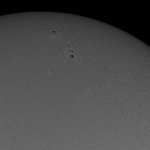
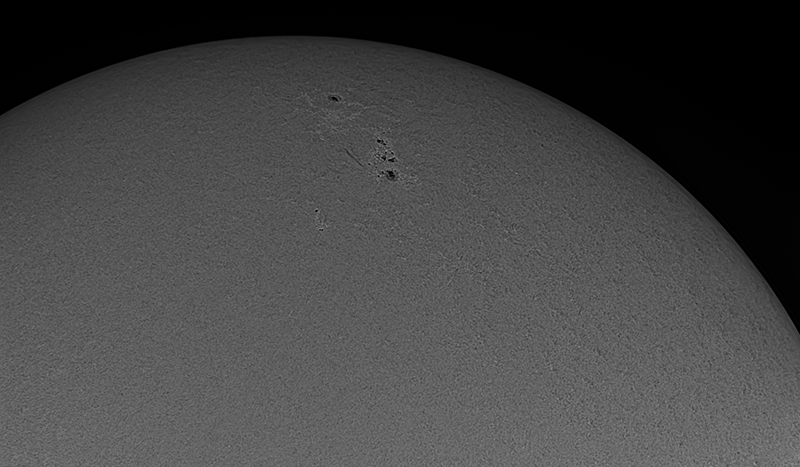
Solar Features Observed: Chromosphere

Images submitted with this report: Sun 220213 Chromosphere

Problems Encountered: /

Operations Report

Crew 240 Operations Report 13-02-2022

SOL: 13

Name of person filing report: François Vinet

Non-nominal systems: NA

Notes on non-nominal systems: NA

ROVERS

Spirit rover used: no

Hours: 156.1

Beginning charge: NA

Ending charge: NA

Currently charging: handled by Atila

Opportunity rover used: yes

Hours: 83.7

Beginning charge: 100%

Ending charge: 97%

Currently charging: left uncharged, handled by Atila

Curiosity rover used: no

Hours: 167.1

Beginning charge: NA

Ending charge: NA

Currently charging: handled by Atila

Perseverance rover used: no

Hours: 227.6

Beginning charge: NA

Ending charge: NA

Currently charging: handled by Atila

General notes and comments: NA

Summary of Hab operations:

WATER USE: 35 gallons

Water (static tank): 200 gallons

Water (loft tank): 20 gallons

Water Meter: 0155795.9 units

Static to Loft Pump used – yes

Static tank pipe heater (on or off): on

Static tank heater (On or off): on

Toilet tank emptied: yes

Summary of internet: NA

Summary of suits and radios: NA

Summary of GreenHab operations:

WATER USE: 12 gallons at 9:30

Heater: On

Supplemental light: On

Harvest: N/A

Summary of ScienceDome operations:

Dual split: off

SOC: 76% at 7.10pm

Summary of RAM operations: NA

Summary of any observatory issues: NA

Summary of health and safety issues: NA

Questions, concerns and requests to Mission Support: one burnable trash is waiting for pickup in the rear airlock. Thank you!

Science Report

Science Report:

3D Printing:

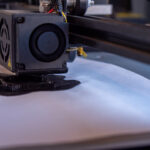
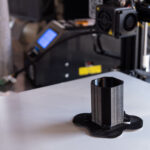
3D printer has been fully repaired. We are able to print pieces for both the water recycling experiment and the atmospheric experiment. We have also been able to show that 3D printing is useful for space missions by taking pictures of small holes on the outside surface of the Hab and creating pieces to fix them (we did not actually put the pieces on the Hab).

Drone Experiment:

We have been able to do a first run of the experiment by having one group climbing North Ridge with the 3D map and another group with only the 2D map and compare them. We have also mapped another site where we will perform another run next week.

Aquapad:

The last 3 Aquapad have shown that the water is safe to drink and the 4th one is currently incubating.

Sleep:

We are still tracking all the calories from our food, our sleep and our physical activity with a Fitbit. We are also still filling out the questionnaires to record how we feel after a night’s sleep.

TELEOP:

Experiment teleoperating a rover on the Moon. We have run the second week of testing for this experiment.

University of Bourgogne:

We are still filling out the daily questionnaires and sent the researchers a first set of recorded answers.

University of Lorraine:

We have just finished up our 4th session for this experiment where they look at our ability to adapt both psychologically and physiologically to Mars.

Water Recycling:

We created a set up with some cardboard, funnel and water containers so as to make it faster.

Toopi Organics:

For the soy beans treated with stabilised and filtered urine from Toopi Organics, they are growing faster than the none treated ones which is great. However, for the spirulina, there was an error in the protocol we were given and the solutions have to be redone.

Atmospheric experiments:

The experiment measuring the size and flow of small particles in the air still works. We installed the PurpleAir device which measures air quality. We also installed an electric field mill experiment which measures electric field around the ground. This one is similar to the MegaAres experiment which we are still trying to get up and running.

Astrophotography:

Not possible to perform the supernovae experiment with the New Mexico telescope so no change here.

Sol Summary

Crew 240 Sol Summary Report 13Feb2022

Sol: 13

Summary Title: Quiet Sundays

Author’s name: Clément Plagne

Mission Status: Nominal

Sol Activity Summary: Compared to last Sunday, this one was definitely more of a calm one. We kept busy, yes – an EVA was done to set up atmospheric experiments that weren’t ready to go out at the start of the mission, and the usual things that have to be done on the daily were managed quite simply – but we all got some rest. I made a mess of the kitchen, but one very much worth it – I’ve gotten a hell of a lot closer to a great Martian Burger than I did last time. The afternoon was spent on playing games, getting a little work done, and before we knew it we had to go hurry back to write our reports.

Look Ahead Plan: Getting back into that final week in full gear.

Anomalies in work: None to be noticed

Weather: Fair

Crew Physical Status: All is well

EVA: One performed quickly and efficiently

Reports to be filed: Sol Summary, EVA Report, EVA Request, Journalist Report, Photos, HSO Report, Operations Report, Science Report

Support Requested: None in particular

Journalist Report – February 12th

Sol 12: Focus on: 3D printing – How to repair or construct things on Mars.

Author : Pierre Fabre

Hi everyone, welcome back for a new episode of “Focus on”! In today’s episode we are going to talk about 3D printing with Maxime. It is going to be super cool!

But, as always, we are going to talk about what happened on Mars during this Sol 12.

First, as today was a Saturday, we didn’t have sports this morning for the same reasons as last week. I think it is worth mentioning it because it felt so good to stay in bed a little longer. Everyone looked happier and smelled definitely better than usual at breakfast.

Then, the day was similar to a week day. On Mars, we work on Saturdays!

We started this day by an EVA. As I told you yesterday, we went back to the Special Region to do drone mapping. This time, Marion and I, who stayed at the Hab yesterday, were part of the team and Maxime was our EVA leader.

We started our EVA, as usual, by changing the battery from the LOAC experiment. Then we made a first stop at the crossroad with Galileo Road. I wanted to map the part of the Hab Ridge situated after the North Ridge for my drone mapping experiment. Everything went well and I will soon have a beautiful 3D map to analyse. I’m starting to be more efficient and confident with the drones and it is very satisfying. Even if I never told you before, I think you can easily imagine that manipulating and operating a drone with a spacesuit and gloves is not easy at all. Next week, we are going to do another round of comparing how my crewmates perform on this terrain regarding whether or not they have the 3D map. The episode of “Focus on: Drone mapping” in which I am going to explain you everything is coming soon so stay tuned!

After this stop, we kept going North with the rovers until reaching the Special Region. It was pretty similar to the description our crewmates gave us, except that in reality it was a lot more impressive and beautiful. We were really amazed by the view we had from the top of the Ridge. I took some really nice drone pictures and videos up there. We will definitely find a way to show you those cool videos when we will be back on Earth I promise, but you can already have a taste with the photos.

It was a 4-hour long EVA, the longest ever made in this crew, and we were very tired when we came back. When we went upstairs after leaving our spacesuits, we had the best surprise you can expect when coming back from an EVA like this. Our lovely crew mates had cooked fried rice, a lot of fried rice. It was the best thing I’ve tasted since my arrival on Mars (yes, better than the famous Martian Pizza). If some of you want the recipe, I can ask my Commander and put it in a next report. (I will probably do it anyway as I will not receive your feedbacks).

This afternoon was a pretty calm one. Some crew members, including me, took that opportunity to take a well-deserved shower. On Mars, we don’t take shower as frequently as on Earth. The average time between two showers in the crew is one week. Now you start to understand why I said before that we usually smell bad at breakfast. As mentioned in the “Focus on: Water on Mars” episode, water on Mars is even more precious than on Earth so we have to use it carefully!

This afternoon, our team of 3D printing engineers, Maxime and François, finally managed to print the piece to assemble the base and the mast of the Mega-ARES experiment. This was a very long journey with lots of ups and downs. Thanks to their hard work, we will soon be able to assemble the experiment during an EVA and start gathering precious data for CNRS.

Talking about 3D printing, it is time to start this new episode of “Focus on” with Maxime! Let’s see what we talked about!

“-Hi Maxime! How are you today?

-Super thank you!

-Maxime, I asked you to do this episode of “Focus on: 3D printing” because you are in charge of a 3D printing experiment. But first let me ask you something. Why is 3D printing relevant for space application?

-As you know, on a space mission we are isolated and it is very difficult to have new objects from the Earth. On Mars, if we break our hammer, we have to wait 6 months before getting a new one. That is why we use 3D printing. We are able to build and replace any objects to optimize our experiments for example. In the International Space Station, there is a 3D printer, and the French astronaut Thomas Pesquet used it to print… a fork!

Moreover, the European Space Agency is working on new printers able to print buildings on the Moon from the lunar regolith. Hopefully, we will be able to see them working at the end of the decade.

-Ok I see, it is very convenient! And now, can you explain what is the objective of your experiment?

-Through the composite repairing in a frugal context we want to demonstrate the relevance of the use of additive fabrication in space applications. This project is held by Pr. Yves Gourinat, professor of Mechanical Engineering and Structures at ISAE-SUPAERO.

In our context of a Martian Life Simulation, we had to choose a printer according to the trio Volume – Mass – Energy, the main parameters of space exploration. Thanks to our school, we are able to use the 3D printer « Creality CR-10 Series V2 » which respects the parameters below.

The first operation consists in repairing an impacted carbon structure. During an EVA, I saw a small impact on our HAB. On Mars, this one can lead to a leak and put us in danger in the station. With the software AutoDesk Fusion 360, I designed a fitting piece and printed it with our 3D-printer with the help of our engineer François. Obviously, we are not allowed to modify the Hab but with this experiment we are able to prove the relevance of a 3D-printer for a space application.

-Ok nice! And do you use the 3D printer for other purposes?

-As I mentioned at the beginning you can use the 3D-printer for many reasons. On our side we used the 3D-printer twice.

Our HSO Julie aka July works on a recycling water experiment and she asked me to participate by printing a specific funnel for her new dispositive named « Dudish » in the memory of our Botanist Raphaël, who couldn’t come to MDRS.

And Clément asked me to print a piece to maintain the mast of the instrument Mega-Ares.

-Wow, so cool! There are so many applications of 3D printing, I’m not surprised that some people want to use it in space application! Maxime, thank you very much for your time, it is a really cool experiment that you have and I enjoyed talking about it with you!”

That’s it for today’s “Focus on” episode I hope you enjoyed it as much as I did! I also hope you learned something about 3D printing. If you like this format, stay tuned because another episode is coming soon!

Operations Report – February 12th

Crew 240 Operations Report 12-02-2022

SOL: 12

Name of person filing report: François Vinet

Non-nominal systems: NA

Notes on non-nominal systems: NA

ROVERS

Spirit rover used: yes

Hours: 155.5

Beginning charge: 100%

Ending charge: 75%

Currently charging: left uncharged, handled by Atila

Opportunity rover used: no

Hours: 83.7

Beginning charge: NA

Ending charge: NA

Currently charging: handled by Atila

Curiosity rover used: no

Hours: 167.1

Beginning charge: NA

Ending charge: NA

Currently charging: handled by Atila

Perseverance rover used: yes

Hours: 227.0

Beginning charge: 100%

Ending charge: 43%

Currently charging: left uncharged, handled by Atila

General notes and comments: NA

Summary of Hab operations:

WATER USE: 27 gallons

Water (static tank): 240 gallons

Water (loft tank): 15 gallons

Water Meter: 0155755.6 units

Static to Loft Pump used – no

Static tank pipe heater (on or off): on

Static tank heater (On or off): on

Toilet tank emptied: no

Summary of internet: NA

Summary of suits and radios: NA

Summary of GreenHab operations:

WATER USE: 12 gallons at 11am

Heater: On

Supplemental light: On

Harvest: N/A

Summary of ScienceDome operations:

Dual split: off

SOC: 72% at 6.10pm

Summary of RAM operations: caulk gun and heat gun used

Summary of any observatory issues: NA

Summary of health and safety issues: NA

Questions, concerns and requests to Mission Support: NA