
Journalist Report – November 21st

Sol 09 Journalist Report 21-NOV-2023

Liz Cole

The morning began with planning EVAs for the last few days of our mission.

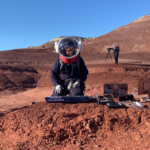
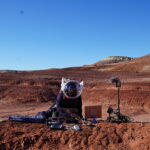
The day’s only EVA ventured south of the MDRS campus to collect samples of three different kinds of soils from three locations, for use in a substrate comparison experiment for plant growth. MDRS 261 mission crew member Cécile Renauld began this work, and soil collection is meant to support the furthering of her experiments at the University of Mons in Belgium.

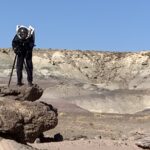
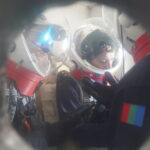
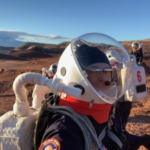
Roger Gilbertson (Crew Commander), Guillaume Gégo (Crew Scientist) and Hugo Saugier (Crew Documentary Filmmaker) used GPS coordinates provided by the previous researchers to find the location for collecting soil. The locations where the first two samples were previously collected were easy to visually identify as only minor erosion and filling in had occurred since the MDRS 261 crew took their samples at this site in April. The third sample had been taken from a stream bed and so was not as easy to identify visually. At each location the astronauts collected and labeled samples, and photographed each before and after digging.

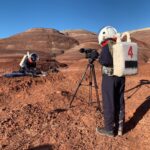
The geologic features provided a great opportunity for Hugo to record content for his documentary. The stunning views and vistas south on Cow Dung road provided a great opportunity for filming the other astronauts traversing the landscape in rovers.

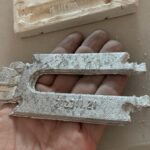
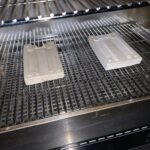
Roger continues his work on making plaster molds for medium complexity metal castings. The second half of the metal casting mold was dried and trimmed. Then both halves were joined, and the first bismuth casting performed. It was removed from the mold successfully, and a second casting was performed.

Liz Cole and Scott Beibin practiced flying a DJI Avata drone in the tunnels between the RAM and the Observatory in advance of taking the drone out on EVA to capture the campus.

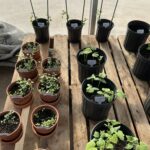
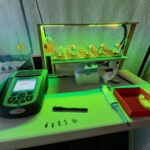
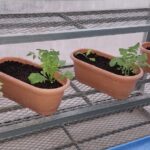
In the Green Hab, Donald "Duckie" Jacques (Crew Executive Officer and Green Hab Officer) planted kale and transplanted peas. With the amount of sprouts rising from his planting work, he hopes to have a small harvest for the Thanksgiving holiday.

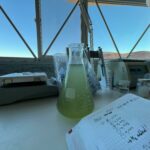
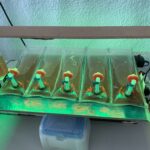
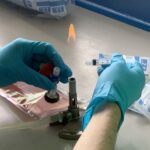
Crew Scientist Guillaume Gégo dried yesterday’s harvest of spirulina in the oven at 75 celsius, to measure the dry weight of the mass of spirulina growing in the bioreactor.

We got a head start on cleaning the mud from the recent rains out of the HAB, in preparation for the deep clean before departure.
GreenHab Report – November 21st

Crew 286 GreenHab Report 21-11-2023

SOL: 9

GreenHab Officer: Donald "Duckie" Jacques

Environmental control: Heater on, fan off, door closed

Average temperatures: 65 F at 6:30 am, 98 F at 10:30 am

Hours of supplemental light: Timer scheduled for 10 pm – 2 am for 4 hours

Daily water usage for crops: 4 gallons

Daily water usage for research and/or other purposes: 0

Water in Blue Tank (200 gallon capacity): 160.6 gallons

Time(s) of watering for crops: 1 gallon for transplanted items at 11 am, 3 gallons for all at 5 pm.

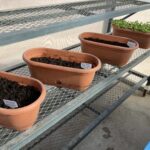
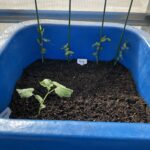
Changes to crops: Tan planter formerly housing peas received Kale. Peas were transplanted into blue tub with cucumber, and also into 3 black pots. (Photos attached)

Narrative: With the number of sprouts rising, I am hoping to be able to harvest a small amount for Thanksgiving.

Harvest: None

Support/supplies needed:

Operations Report – November 21st

Crew 286 Operations Report 21-11-2023

SOL: 9

Name of person filing report: Donald "Duckie" Jacques

Non-nominal systems: Suit #5

Notes on non-nominal systems:

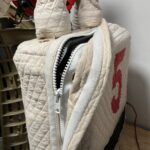
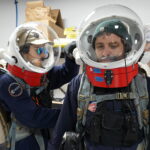
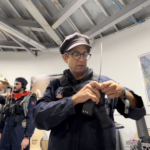
Suit #5 – I noticed during suit prep today a small seam separation in the zipper at one corner. (Photo attached). The team has needle and thread available, if hand stitching is an acceptable repair.

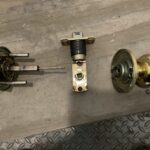
Door knob of the toilet required only dry lubricant to free up operation. Door knob is good as new now. (Photo attached).

ROVERS

Spirit rover used: Yes

Hours: (before EVA) 234.8

Beginning charge: (Before EVA) 100%

Ending charge: (On return from EVA, before recharging) 50%

Currently charging: Yes

Opportunity rover used: Yes

Hours: 144.8

Beginning charge: 100%

Ending charge: 57%

Currently charging: Yes

Curiosity rover used: No

Hours:

Beginning charge:

Ending charge:

Currently charging: Yes

Perseverance rover used: No

Hours:

Beginning charge:

Ending charge:

Currently charging: Yes

General notes on rovers: Nominal

Summary of Hab operations: Mud was cleaned out of the lower hab, stoop, and porch. Toilet door handle repaired, Liz successfully tested Suit 11, 2 persons took showers, Team Interviews continue with Hugo.

WATER USE: 39.2 gallons

Water (static tank): 184 gallons

Static tank pipe heater (on or off): On

Static tank heater (On or off) On

Toilet tank emptied: Yes

Summary of internet: Nominal

Summary of suits and radios: Suit 11 was charged and prepared for Team member Liz to test fit. After donning suit, her impression was positive, noting better fit of pack. She then took a walk via tunnel from Hab to Observatory and back, noting it did feel better, and would be satisfactory for next EVA.

Summary of GreenHab operations: Timer was initialized, and set. Peas in tan planter replaced with greens, and moved to Blue planter and some black pots.

WATER USE: 4 gallons

Heater: On or Off

Supplemental light: On or Off

Harvest: None

Summary of Science Dome operations: Guillaume’s work included harvesting Spirulina, Purple bacteria. Roger poured his casting.

Dual split: Heat or AC, Off

Summary of RAM operations: (Tools used, work done) Roger completed his final preparations of the mold for pour of casting in the Science Dome this afternoon.

Summary of any observatory issues: Nothing to report

Summary of health and safety issues: Liz and I are confident Suit 11 will be a better fit for the next EVA

Questions, concerns and requests to Mission Support: put notes here

EVA Report – November 21st

Crew 286 EVA #8 report 21-NOV-2023

EVA # 8

Author: Roger Gilbertson

Purpose of EVA: To collect samples from three locations, which will be returned to the University of Mons in Belgium, for use in a substrate comparison experiment for plant growth. This is to support work begun by MDRS 261 mission crew member Cécile Renauld. Documentation of the experience was performed by Hugo using professional video and sound recording.

Destination and Coordinates (use UTM WSG 84):

Sample 1: Sandy White Soil (518448.606, 4249652)

Sample 2: Volcanic Soil (518542, 4249696)

Sample 3: Old River Soil, plants close by (518395.702, 4249684)Start time for EVA: 2:50 pm

Start time for EVA: 10:00 am

End time for EVA: 12:30 pm

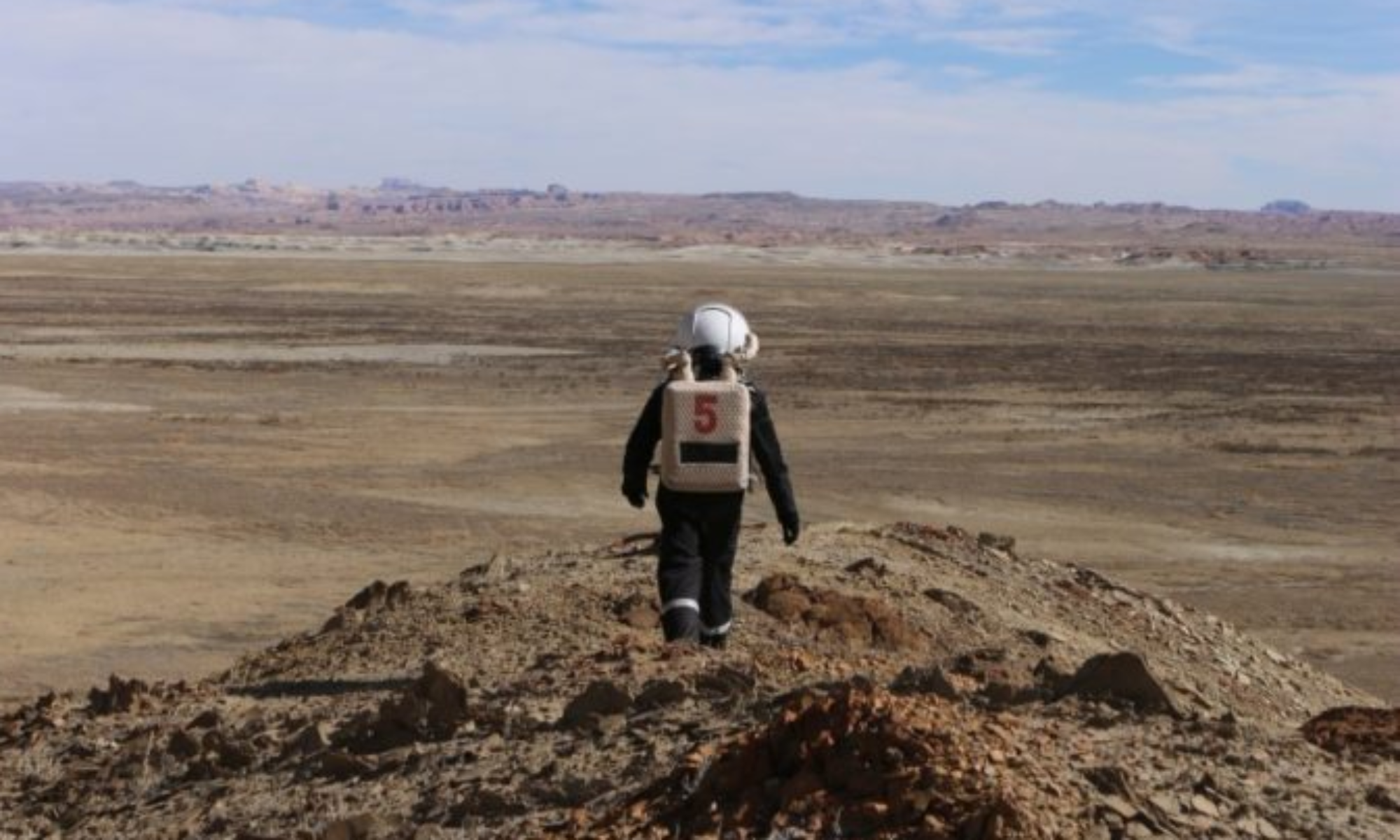
Narrative: We prepared efficiently and exited the airlock at the planned time, driving out of the campus and south on Cow Dung Road. Gee used the iPhone GPS and directed us to stop on the road near the coordinates provided by the previous researchers. We trekked eastward, and located each sampling position with relative ease. The locations where the first two samples were previously collected appeared clearly on the ground, having only received minor erosion and filling in since their April sampling. The third sample, been in a stream bed, were not apparent, but we took samples at the indicated coordinates. At each location we collected and labeled samples, and photographed each before and after digging.

We returned to the vehicles with an hour remaining, and asked for a time extension so that filmmaker Hugo could continue to film content for his documentary, including shots taken by him standing at the roadside and filming as we drove past in the rovers. We continued northwards until we filmed rovers entering the campus, and astronauts entering the airlock. In all, we experienced a perfect day, with wonderful views and vistas.

Destination and Coordinates (use UTM WSG 84):
Sample 1: Sandy White Soil (518448.606, 4249652)
Sample 2: Volcanic Soil (518542, 4249696)
Sample 3: Old River Soil, plants close by (518395.702, 4249684)

EVA Participants:
• Roger Gilbertson
• Guillaume Gégo
• Hugo Saugier

Road(s) and routes per MDRS Map: South via Cow Dung Road south to coordinates indicated above.

Mode of travel: Driving and walking

Vehicles used: Spirit, Opportunity

Journalist Report – November 20th

Sol 08 Journalist Report 20-NOV-2023

Last night Crew Inventor Scott Beibin (Ptelepathetique) performed an original music composition inside the Science Dome to demonstrate the way sound travels on through the Martian atmosphere.

This morning the crew rose before dawn, excited for the early morning’s adventure: an outdoor Ptelepathetique concert just after the glorious Martian sunrise.

It was also the most ambitious EVA our crew had enacted yet. Because this EVA included six people in sim suits and helmets, all carrying cameras, synthesizers, recording equipment and other gear, we used the RAM as a large airlock for the depressurization sequence and exit. This EVA also functioned as a practice scenario of an evacuation or a group migration to a new lander that has arrived nearby.

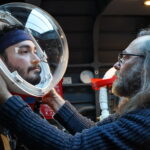
The RAM was the perfect size for our crew. Scott, Liz Cole (Crew Journalist), Hugo Saugier (Crew Documentary Filmmaker), Guillaume Gégo, Roger Gilbertson and Caleb Stein exited with no helmet bumping and then walked to an area by the science dome.

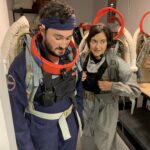
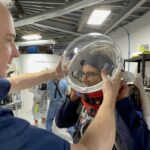
Don got us suited up quickly and we walked to the RAM, carrying our helmets in their cases, donned helmets in the RAM, performed a five-minute depressurization, and greeted the frosty sunny morning.

We walked to the beautiful red hills just north of the Observatory, where Scott performed another concert demonstrating the acoustics of Mars, this time for astronauts in sim suits. Scott Beibin collaborated with audio engineer John Knott to create a filter in a DAW (Digital Audio Workstation) that simulates the way sound travels in the low-pressure CO2-dominated atmosphere of Mars, using data collected by the Perseverance Rover.

Later that morning, Liz captured NERFs of some geological features near the MDRS habitat.

In the Science Dome Guillaume sampled the prolific spirulina growth from Cécile Renauld’s (MDRS 261 scientist and PhD candidate at University of Mons) spirulina bioreactor.

Scott captured a LiDAR scan of the interior of the MASH. The MASH (Mobile Analog Space Habitat) is a converted mobile habitat with heating, cooling, food and water supply, and waste handling, designed and built by Donald Jacques, MDRS Crew 286 Executive Officer and Chief Scientist at Earthseed.

Supplemental Operations Report – November 19th

Date: 11/19/2023
Name of person filing report: Sergii Iakymov
Reason for Report: Routine
Non-Nominal Systems: A tunnel stick on the right from the rear airlock. Director’s trailer heater.

Power system:
Solar: Nominal.
SOC Last 24 hours: Max 100%; Min 63%; Avg 74.5%.
VDC Last 24 hours: Max 59.01V; Min 43.63V; Avg 48.61V.
Generator run time: 4048.8 hours.

Propane Readings:
Station Tank: 70%
Director Tank: 70%
Intern Tank: 71%
Generator Tank: 51%

Water:
Hab Static Tank – 275.5 gallons
GreenHab – 171 gallons
Outpost tank – 430 gallons
Science Dome – 0 gallons
Hab Toilet Tank emptied: No

Rovers:
Sojourner rover used: Yes, around the station.
Hours: 195.7
Beginning Charge: 100 %
Ending Charge: 100 %
Currently Charging: Yes
Notes on Rovers: All rovers serviced and damaged fuse terminals replaced. All EVA rovers got equipped with rear view mirrors.

ATV: ATV’s Used: None. Nothing to report.

Cars:
Hab Car used and why, where: To Hanksville for supplies. Need to be serviced.
Crew Car used and why, where: To Hanksville for supplies.
General notes and comments: All cars awaiting renewed insurance ID.

Summary of Internet: All nominal.
EVA suits and radios:
Suits: All nominal
Comms: All nominal
Campus wide inspection, if action taken, what and why: One tunnel stick on the right from the rear airlock is corroded out at the ground level and needs to be replaced. Repair is scheduled to be done by the end of next week.
Summary of Hab Operations: Nothing to report
Summary of GreenHab Operations: All nominal
Summary of SciDome Operations: All nominal
Summary of Observatories Operations: All nominal.
Summary of RAM Operations: All nominal.
Summary of Outpost Operations: Director’s trailer heater is non operational. New heater will be ordered next week.
Summary of Health and Safety Issues: All nominal.

Journalist Report – November 18th

Journalist Report 18-11-2023 Crew 286 by Liz Cole and Scott Beibin

SOL: 6

An Unintentionally Wet Dress Rehearsal

Morning:

The booster experienced a rapid unscheduled disassembly shortly after stage separation while Starship’s engines fired for several minutes on its way to space

Most of the crew awoke early this morning to watch the successful launch attempt of the second orbital test flight of the fully stacked SpaceX’s ‘Starship Super Heavy’ rocket. The launch resulted in a successful full firing of all engines on both stages – 33 of the Raptor Engines on the Super Heavy Booster 9 and all 6 Raptor Engines on Starship 25 (3 Sea Level and 3 Vacuum Raptor Engines). The Super Heavy Booster and Starship successfully separated after liftoff. During the separation Starship ignited its engines and pushed away. SpaceX stated in a post after the launch that “The booster experienced a rapid unscheduled disassembly shortly after stage separation while Starship’s engines fired for several minutes on its way to space”.

‘Starship Super Heavy’ is the tallest and most powerful rocket ever built by humans. It’s designed to carry large payloads and human crews offworld to the Moon, Mars and beyond. It went further than its predecessor went during its first test flight on April 20, 2023 and can be viewed both as a success and learning opportunity, enabling future opportunities in order to test the system.

Back at Mars Desert Research Station in Utah, Crew 286 engaged in excited breakfast discussions about the progress and learning opportunities from the launch – which carried over into conversations about the terrestrial applications of space research. Guillaume Gégo, MDRS Crew Scientist discussed the benefits of space program research which extends to improving life on Earth, especially in terms of solving global problems of hunger. The purple bacteria currently being grown in his experiment includes the efficient production of necessary nutrients that are not easily accessible to many people on Earth – which is of paramount importance. Additionally discussed were the benefits of space simulations which can be naturally inspiring to kids who dream of becoming astronauts.

Afterwards, planning went into full swing for the afternoon’s EVA.

Afternoon:

The scheduled EVA intended to involve Scott Beibin (crew Artist/Inventor) performing exterior 3D LiDAR scanning of the Mars Desert Research Station complex, including all the structures at the facility, as well as reconnaissance for optimal locations for Scott’s Ptelepathetique ‘Martian Music’ concert scheduled to take place on Sol 7 (November 19), and photography by Andrea Orejarena and Caleb Stein (an artist duo shooting for the New York Times) of personal mementos brought by each astronaut if they were to spend years away from Earth. The EVA was to be filmed by Hugo Saugier, MDRS 286 crew member and documentary filmmaker.

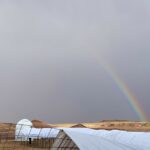
As the four analog astronaut crew members began to exit the airlock, it began to rain, quickly turning the campus into a muddy and slippery red clay mess. The astronauts returned to the airlock to wait it out, however, as the rain poured down with increasing intensity, it became clear that the crew would not be safe traversing in the slippery conditions, and the delicate equipment including LiDAR scanning devices, camera gear, synthesizers, audio gear would not be safe in the rain. After a few more minutes Mission Support stated that weather radar showed rain likely to continue for the duration of the EVA. The crew quickly came to consensus that it was best to abort the mission. I joked that the mission had become a “wet dress rehearsal”.

They re-pressurized in the airlock and returned to the HAB.

The remainder of Scott’s afternoon was spent continuing to perfect detailed plans for his outdoor concert, including a manifest and review of the hardware and processes he will be incorporating into his performance.

In the GreenHab, several of the microgreens have sprouted. Guillaume’s progress with his purple bacteria continued as normal. In the RAM, Roger Gilbertson, Crew Commander, used the oven to dry the first half of the plaster casting mold.

Evening:

Roger, Scott, Hugo and Liz explored logistics, communications, and audio configurations for the seven – person EVA required for the Ptelepathetique concert simulating the acoustics of Mars.