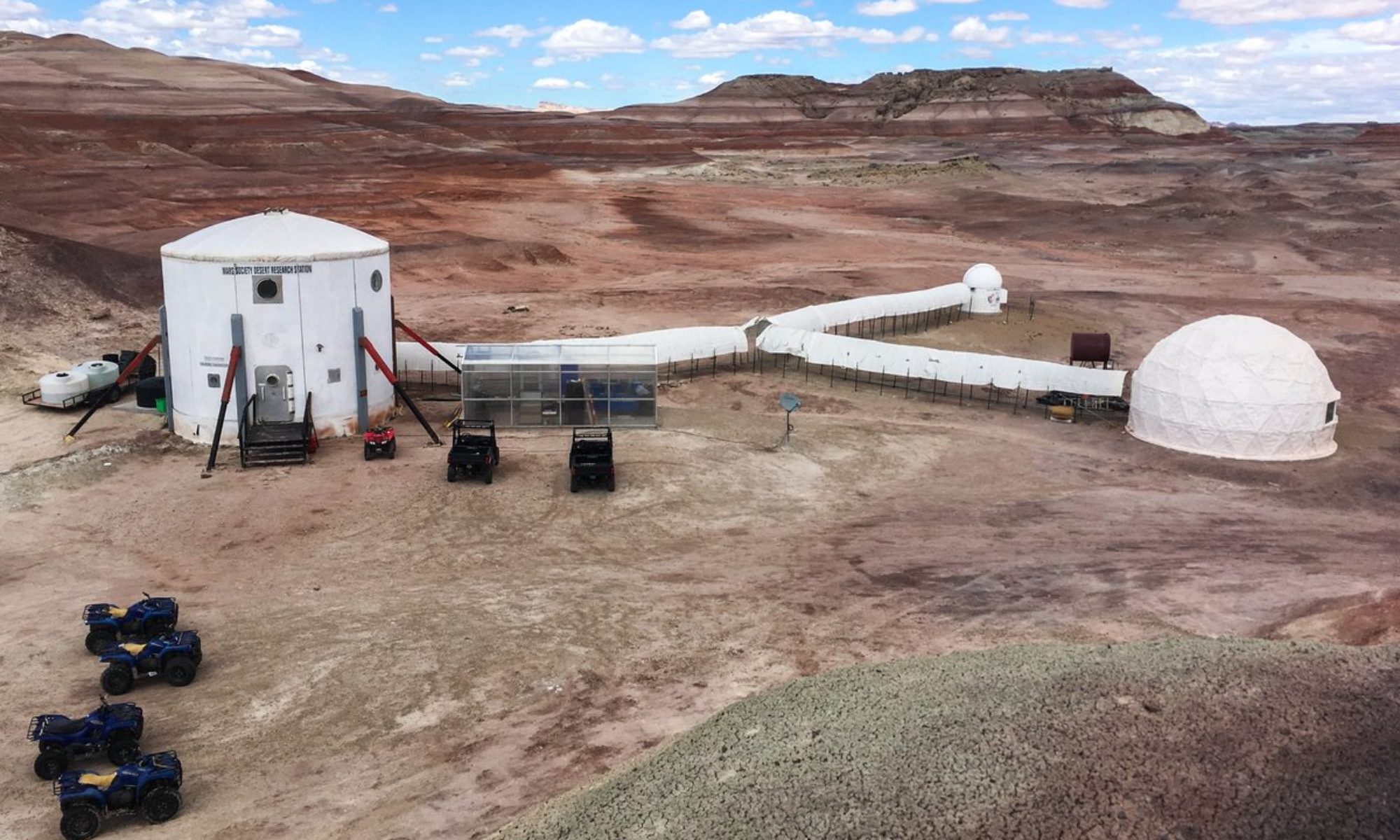

Crew 288 GreenHab Report 17-12-2023
GreenHab Officer: Ryan DeAngelis
Environmental control: Fan on for 1 hour. Heater on. Door kept closed.
Average temperatures: 75-80 degrees
Hours of supplemental light: 10 pm to 2 am
Daily water usage for crops: 7.5
Daily water usage for research and/or other purposes: None
Water in Blue Tank (200 gallon capacity): ___157.5__ gallons
Time(s) of watering for crops: 10 pm (last night), 11 am today
Changes to crops: Trimmed some plants, put tomatoes in cages.
Narrative: Today I did a lot of work in the GreenHab. I started off by checking on the plants in the morning, including watering them. I noticed that the peas are finally shooting up (yay!!!) after planting them three days ago. I harvested some basil for Cesare’s dish of fresh baked ziti for lunch. The cucumbers looked a lot better today, as they had perked up overnight. Lipi helped me put all the tomatoes in cages to encourage their upward growth and support their limbs. Hopefully we’ll see some tomatoes soon! Everything else looked really good.
Harvest: Basil: 4 grams
Support/supplies needed: None!
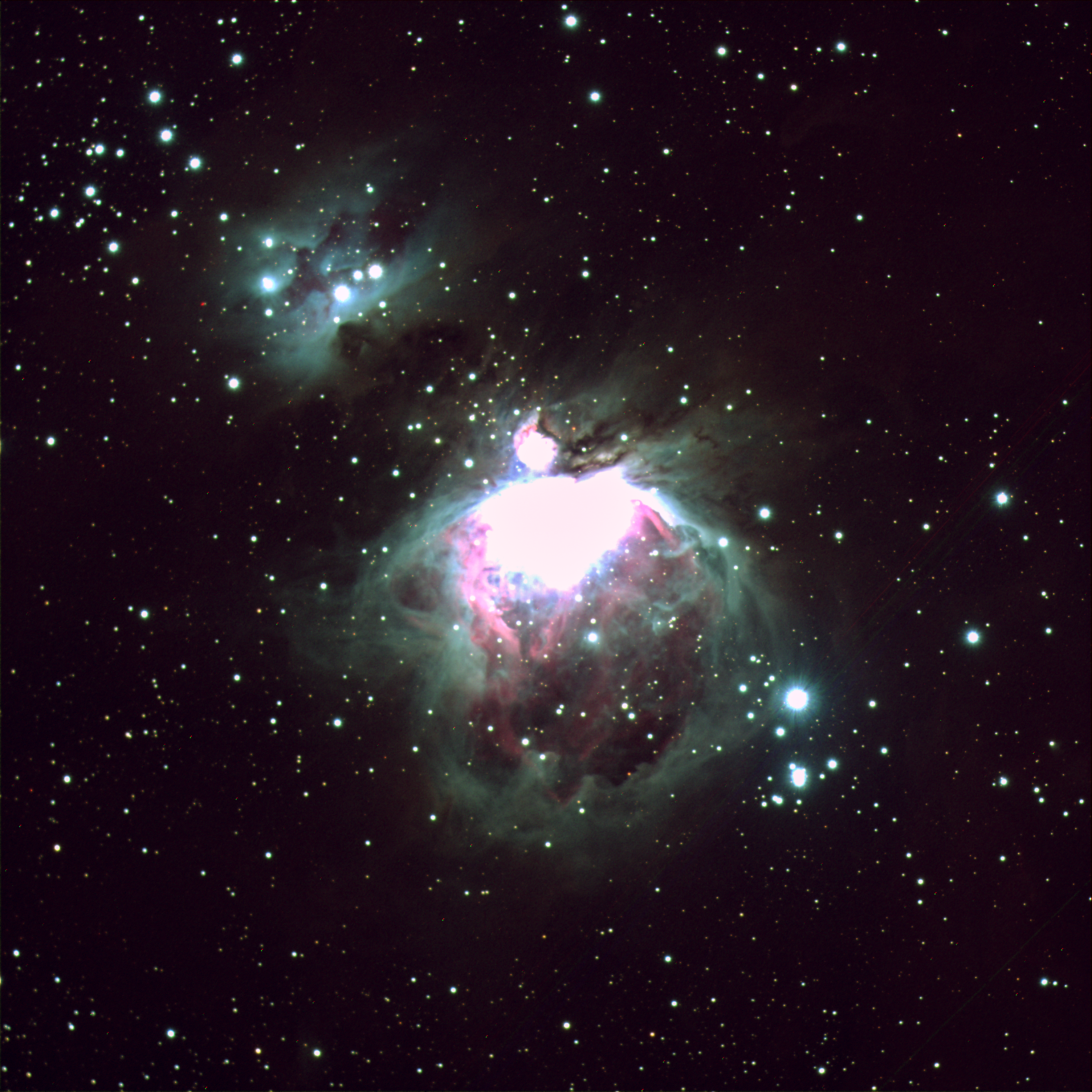
Astronomy Report – December 17th
[category
astronomy-report]
Astronomy Report
Name: Cesare Guariniello
Crew: 288
Date: 17 Dec 2023
MDRS ROBOTIC OBSERVATORY
Robotic Telescope Requested (choose one): MDRS-WF.
Objects to be Imaged this Evening:
Images submitted with this report: M42 (Orion Nebula), imaged with MDRS-WF.
Problems Encountered: None
MUSK OBSERVATORY
Solar Features Observed: None
Images submitted with this report: None
Problems Encountered: None
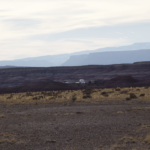
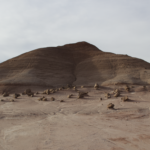
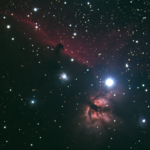
Crew Photos – December 16th
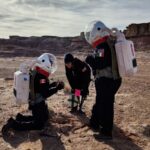
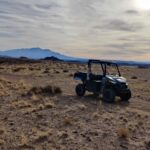
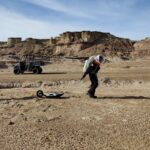
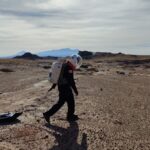
Sol Summary – December 16th
Sol: 6
Summary Title: Sledding on Mars
Author’s name: Jilian Welshoff
Mission Status: Nominal
Sol Activity Summary:
Crew 288 started the day off at 7:30AM for a breakfast of eggs and potatoes with leftover pizza toppings made by Jesus (ENG) and Lipi (JOU). The crew then prepped for another long of EVA, including 4 crew members, Cesare (CMD), Hunter (GEO), Riley (XO), and Lipi (JOU) who were going on EVA #6 to Compass Rock to collect GPR data and geology samples. They made a 100ft x 100ft grid perfectly and got a lot of clear data from the sled that indicated soil moisture in the top 10cm according to initial analysis. They were able to see the Hab from a far distance and enjoyed a joyride on the rovers home.
The crew that stayed behind had a day of maintenance, resewing patches onto flight suits, and repairing holes found in gloves. Jesus (ENG) made it his day’s mission to fix Baby Yoda who is now inflated and watching over the crew. Ryan (GHO) tended to his plants and moved around a couple of tomato plants. Additionally, he and Jilian (HSO) prepared lunch for the crew and did not follow a recipe, but it turned out great!
After returning from EVA, the crew got to enjoy the efforts of Ryan and Jilian. The crew took some time to analyze the data collected and catch up on some reading. Ryan went to the Greenhab again to water the plants. They enjoyed dinner of rice and stir-fried veggies and chicken made by Jesus (ENG) while completing reports and the Mid-mission Research Report.
To finish off the night they watched Galaxy Quest and enjoyed some tea and popcorn to prep for a nice Sunday rest day.
Look Ahead Plan: Create plans for upcoming EVAs and research headway.
Anomalies in work: None
Weather: Beautiful day outside, sunny
Crew Physical Status: Morale is high, and everyone physically is well just sore from EVAs
EVA: Successfully performed EVA #6 to Compass Rock
Reports to be filed: Eva Report, Journalist Report, Greenhab Report, Operations Report, Sol Summary, Astronomy Report, Photos, Mid-mission Research Report
Support Requested: None
Operations Report – December 16th
SOL: 6
Name of person filing report: Jesus Meza-Galvan
Non-nominal systems: All systems nominal.
Notes on non-nominal systems: No non-nominal systems.
ROVERS
Spirit rover used: Yes
Hours: 238.9 (before EVA)
Beginning charge: 100% (Before EVA)
Ending charge: 43% (On return from EVA, before recharging)
Currently charging: No
Opportunity rover used: Yes
Hours: 149.7
Beginning charge: 100%
Ending charge: 51%
Currently charging: No
Curiosity rover used: No
Hours:
Beginning charge:
Ending charge:
Currently charging: Yes
Perseverance rover used: No
Hours:
Beginning charge:
Ending charge:
Currently charging: Yes
General notes on rovers: Rovers are functioning properly.
Summary of Hab operations:
WATER USE: 20 gallons
Water (static tank): 387 gallons
Static tank pipe heater (on or off): On
Static tank heater (on or off): On
Toilet tank emptied: Yes.
Summary of internet: Internet is nominal.
Summary of suits and radios: Suits and radios are nominal.
Summary of GreenHab operations:
WATER USE: 4 gallons
Heater: On
Supplemental light: On
Harvest: No harvest today.
Summary of ScienceDome operations: Science dome used to do office work today.
Dual split: Heat or AC: On
Summary of RAM operations: (Tools used, work done): RAM was used today to build electronics for our station sensors. Tools used were pliers, wire cutters, wire strippers, soldering iron, scissors. A few zip-ties and electrical connectors were used. The space heater was used and unplugged before leaving the RAM. A box of electronics was left on the work bench. Will continue work tomorrow.
Summary of any observatory issues: All systems are nominal.
Summary of health and safety issues: No health or safety issues.
Questions, concerns and requests to Mission Support: None.
Mid-Mission Research Report – December 16th
[category science-report]
Mars Desert Research Station
Mid-Mission Research Report
Crew 288 – Phobos
Dec 9th, 2023 – Dec 23rd, 2023
Crew Members:
Commander and Crew Astronomer: Dr. Cesare Guariniello
Executive Officer: Riley McGlasson
Crew Geologist: Hunter Vannier
Crew Engineer: Jesus Adrian Meza Galvan
Health and Safety Officer: Jilian Welshoff
Green Hab Officer: Ryan DeAngelis
Crew Journalist: Lipi Roy
Crew Projects:
Title: Noninvasive search for water
Author(s): Riley McGlasson
Objectives: Assess near-surface moisture in the top 10 cm of material
Current status: GPR observations were taken during EVAs 3 and 6. During EVA 3 two 3D GPR grids were taken at the turnoff to Watney Road (WR). One of these was a smaller 15’x15’ grid with 3’ spacing above the dry stream bed, which we used to train the rest of the EVA crew in how to conduct GPR surveys. The second WR grid (WR02) was 36’x36’ with 3’ spacing. WR02 encompassed the dry stream bed and adjacent sandy material. Six total 2D transects were also taken at three sample sites at Kissing Camel Ridge. Unfortunately, there was an error with the radar’s survey wheel, so none of these observations are usable. After EVA 3, this error was fixed and more data was able to be collected during EVA 6. During EVA 6 one 100’ x 100’ 3D grid was taken with 10’ spacing just NW of Compass Rock. An additional 2D transect was taken across ~300’ of sandy material in the same region. We confirmed that the survey wheel error was fixed, and initial analysis of the 2D transect produces reasonable velocity values for a damp sandy material. The 3D grid will be analyzed in the coming days.
EVAs: EVA 3 to Watney Road and Kissing Camel Ridge and EVA 6 to Compass Rock
Title: Refining orbital data with In-Situ analysis
Author(s): Hunter Vannier
Objectives: Obtain and determine origin of volcanic rocks in southern field area. Compare grain size predictions from orbital data to in situ analysis. Assess effectiveness of boulder sampling at base of Kissing Camel Ridge in reconstructing its lithology.
Current status: We have obtained spectra and samples of multiple volcanic units (basaltic, andesitic) transported fluvially to the Barainca Butte area and identified a very high concentration of volcanic rocks in that area. Now the samples need to be further characterized (phenocryst populations) and tied to volcanic units in the closest proximity to MDRS, and spectra needs to be obtained for each sample. Boulder and grain size analyses were conducted during two EVAs to the Kissing Camel Ridge, which have been compared to orbital estimates. Some grain-size estimates were accurate, but as expected, subtleties in the orbital data were not appreciated until on foot. The effectiveness of sampling boulders at base was variable, and boulders representing more variability were not observed in orbital data. Additional samples of paleosols were obtained near the base of Kissing Camel W to provide further point of comparison to orbital data.
Spectra and samples have also been obtained within GPR grids to complement the radar data set with spectral and geologic characterization of the top ~5 cm of unique units.
EVAs: Three EVAs have been performed: one to Barainca Butte (volcanic samples), and two to Kissing Camel (boulder, fluvial, paleosol samples)
Title: Remote sensing for ISRU
Author(s): Cesare Guariniello
Objectives: Demonstrate the use of instrumentation for structural analysis of potential locations for building on Mars
Current status: Since multiple spectra and samples have been collected in past missions, this year I am focusing on the search for kaolinite or other non-swelling clays. The largest abundance of these materials has been reported on Skyline Ledge, therefore some samples have been collected from the scree slopes of Barainca Butte and of Skyline Rim. Spectra will be collected at a later time. Another location that will be explored is the Northwestern Region (Brahe Highway to Sea of Shells).
EVAs: Samples for this project specifically collected in two EVAs: Barainca Butte (scree slope from Barainca) and Skyline Rim (material from the upper layers, Mancos Shale)
Title: Semiconductor processing
Author(s): Jesus Meza-Galvan
Objectives: Feasibility study to establish procedures for semi-conductor manufacturing at the station.
Current status: A plan of execution has been established. The project will have two main experiments. The first experiment will determine if oxide growth is possible in one of the lab ovens. Oven #1 has been identified as the best candidate for the experiment. Two sets of silicon samples will be baked at maximum temperature for a total of 8 hours. One set of samples will be baked in the atmosphere, while the second set of samples will be baked in a high moisture environment. To raise the moisture in the oven, a large pan of water will be placed on the bottom rack and will be replenished as needed. For each experimental run, a section of silicon will be broken off after 2 hours, 4 hours, and 8 hours of growth. The oxide thickness will be measured out of sim at Purdue. For the second experiment, a set of silicon samples with a photo-sensitive polymer (photoresist) has been prepared prior to coming to MDRS. A small photolithography set-up is being prepared to expose a microscope calibration pattern onto the photoresist layer. The success of the procedure will be determined by measuring the dimensions of the test pattern against a microscope.
Title: Reducing stress in isolated environment
Author(s): Lipi Roy, Ryan DeAngelis, Jilian Welshoff
Description: IRB approval not yet received
Title: Astrophotography with the MDRS WF and Solar Observatory outreach
Author(s): Cesare Guariniello
Objectives: Produce high-quality photos of deep sky objects and train the crew to the use of solar observatory.
Current status:
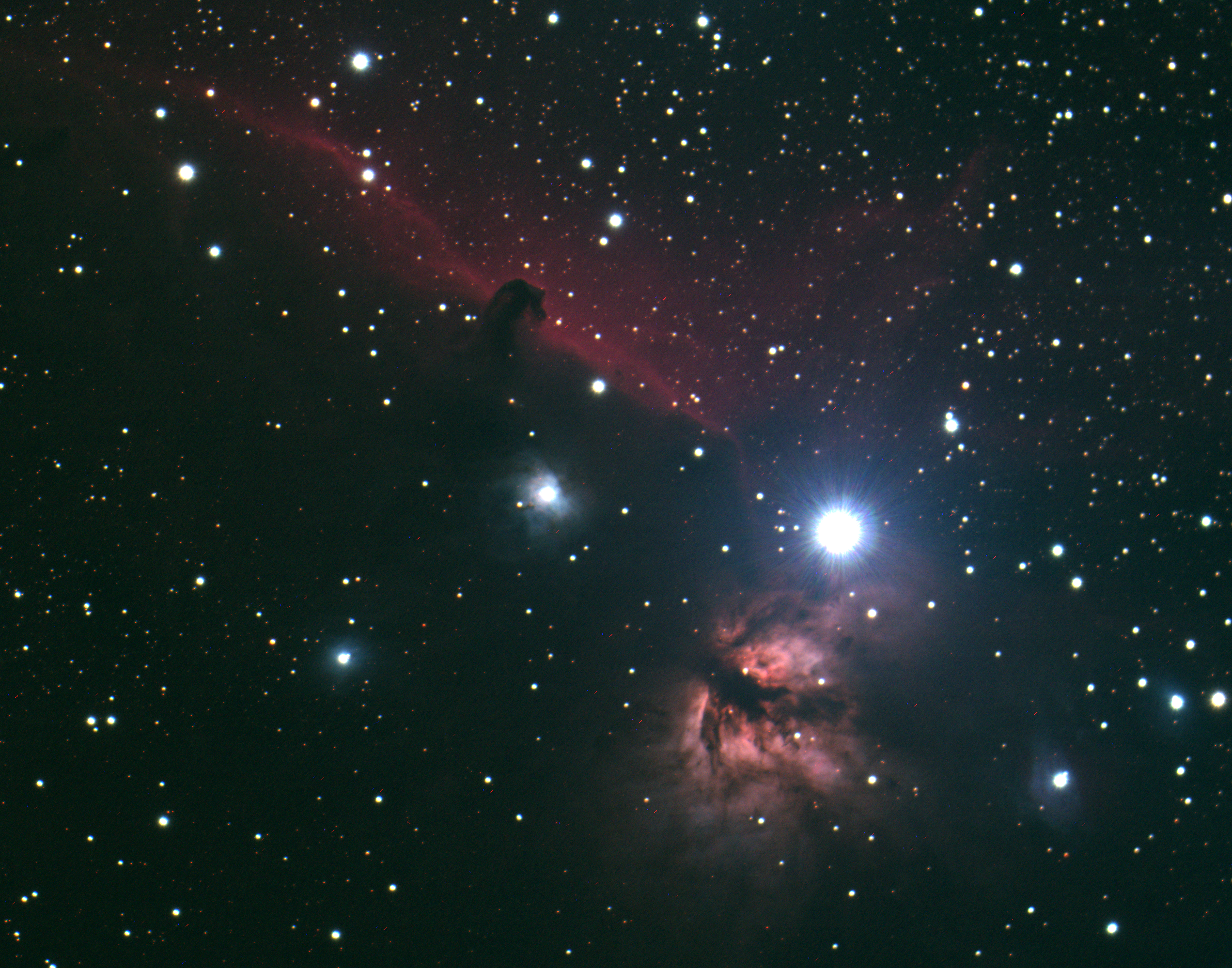
Astrophotography: MDRS-WF produced high-quality photos of M31 (Andromeda Galaxy), Barnard 33 (Horsehead Nebula) and some photos of smaller galaxy with quality that could be improved in postprocessing. WCS data are necessary to align images from the MLC-ROS16 telescope.
Solar Observatory: visual observations on Wednesday with the Crew Engineer and the Journalist. Troubleshot the telescope and the observatory. Following days spent on EVA, with return after suitable time for solar observation.
Title: Station monitoring
Author(s): Jesus Meza Galvan and Jilian Welshoff (proposed by Nathan Bitner – MDRS 289)
Objectives: The goal of this project is to study what campus information is most useful to analog astronauts during missions, as well as how this information is leveraged for day-to-day mission planning.
Current status: The sensor payload is being constructed. Temperature, humidity, VOC, CO2, and dust particle sensors have been integrated with raspberry-pi and battery package. The sensors are being coded by Purdue mission support who will remotely collect environmental data.
Title: Samples transportation with drones
Author(s): Cesare Guariniello
Objectives: Test the use of drones for transportation of samples and instruments
Current status: The transportation has been tested before the mission. During the mission, on Sol 0, the drone automatic homing system did not work. The commander will train a crew member to fly the drone, so as to be able to perform the experiment with one pilot commanding the drone from the habitat to the Hab Ridge, and the other pilot flying the drone back.
EVAs: Exploratory EVA to Hab Ridge.
Title: Chez Phobos
Author(s): Lipi Roy (et al.)
Objectives: Creating new recipes with shelf-stable food at MDRS
Current status: Three new recipes were tried with the shelf-stable food: fried rice with a twist of parmesan, Indian chickpea curry, and potato parathas. Fried rice included rice, freeze dried onions, eggs, bell peppers, oil, soy sauce and a range of spices. Chickpea curry included chickpeas, tomato powder, freeze dried onions, and a range of Indian spices. Potato parathas were a definite hit with the crew, especially as I served them after they came back from a long walking EVA yesterday. They were made by stuffing a mashed potato mixture (with spices) into whole wheat dough balls. They were then flattened and fried in minimal oil. Though leaning towards more calories, the frying adds to the taste of the potato stuffing inside the dough.
Problems faced – The potato parathas, though really liked by everyone, were very difficult to prepare with freeze-dried mashed potatoes. This was because water needed to be added to them and the extra moisture made it very difficult to roll the dough. I had to leave the rolling pin alone and start doing it by hand.
What next? – I will be trying out new recipes and adding on to the list!
Journalist Report – December 16th
Lipi Roy, Crew 288 Journalist
12.16.2023
Sol 06
Driving through the vast expanse of the red desert on our way back, we spot our tiny habitat from miles away. We wonder what it would feel like as a Martian to finally get the sight of their safe abode, while on a perilous mission…
The crew woke up to a spectacular Martian sunrise and to the tunes of ‘The Moon is calling‘. Then, with the help of our crew engineer (and potato expert) Jesus, I quicky whipped up an assortment of fried potato crisps and mushroom-chicken-spam-scrambled eggs. In case you’re wondering about the variety of ingredients, it was all a courtesy of our commander, whose “precise calculations” yesterday resulted in more leftovers than dinner itself.
Ready for the day, Cesare (commander), Riley (XO), Hunter (Crew Geologist), and I commenced on our bumpy drive to Compass rock for some GPR measurements and sample collection. It was a nice learning experience to see how easily the GPR data could be collected using Riley’s magic tool; though I am not sure how much our today’s GPR dragger (Hunter) would agree with that. We then went on to collect rock samples from the area to make the day worthwhile for the crew geologist. In case the mission control is wondering why we request 4.5-hour EVAs every day, it is to factor in the time spent by our geologist getting distracted by rocks. I do hope he is proud of me for correctly identifying petrified wood today!
The EVA crew came back to Jilian’s (HSO) delicious pasta and Ryan’s (GHO) amazing cornbread. It seems Ryan has moved on from following recipes exactly and following his instinct. Great going, Ryan! As a cherry on top to the spectacular day, Jesus (crew engineer) surprised us by reviving the Baby Yoda. Thank you, Jesus! Seems like the crew that stayed behind has been equally productive!
The evening saw some interesting conversations with Ryan trying to prove why Harry Potter is overrated. But seems like he was singled out six to one. Sorry, Ryan. You may be right, but we are too attached to it to agree with you! For dinner, Jesus prepared yummy Spanish rice and fried veggies, which we all had with a side of report writing.
The crew is now waiting eagerly for today’s movie night and a relaxing Sunday!
GreenHab Report – December 16th
Crew 288 GreenHab Report 16-12-2023
GreenHab Officer: Ryan DeAngelis
Environmental control: Heater on automatically, turned fan on for about an hour. Door was kept closed, supplemental lighting turned on 10 pm to 2 am.
Average temperatures: 75 degrees
Hours of supplemental light: 4 hours
Daily water usage for crops: 4 gallons
Daily water usage for research and/or other purposes: None
Water in Blue Tank (200 gallon capacity): __165__ gallons
Time(s) of watering for crops: 1 pm and 5 pm
Changes to crops: Moved a couple tomato plants around to see if it was too hot for them next to the heater.
Narrative: Didn’t do much in way of harvesting and clipping plants today. Mainly just ran the fan to cool down the greenhab at peak warmth.
Harvest: None
Support/supplies needed: None
EVA Report – December 16th
EVA # 6
Author: Riley McGlasson
Purpose of EVA: EVA to obtain a large GPR survey and assess hydration content paired with geologic characterization and sampling.
Start time: 1100
End time: 1530
Narrative: EVA began at 1100 led by Hunter and Riley (out of sim due to broken leg) and joined by Cesare and Lipi. The crew took Spirit and Opportunity rovers north on Cow Dung Road. Spirit started with 100% charge and 238.9 hours. Opportunity started with 100% charge and 149.7 hours. The crew drove north on Cow Dung Road until turning East on Galileo road, which they drove until reaching Compass Rock. At this point the rovers had between 60% and 65% charge, so it was clear that they would not be able to reach Somerville Overlook. On the NW side of Compass Rock they set up a 100 ft by 100ft survey side with 10ft grid spacing for GPR acquisition. After testing that the GPR survey wheel issue was fixed (it was!), the team took an excellent GPR grid that Riley is very much looking forward to analyzing. After taking the GPR survey, Hunter led sampling and spectra collection at 6 sites within the survey region. The team then started to head back to the HAB, pausing whenever Hunter (crew geologist) saw a cool rock or distant rock formation. The team made it back to the HAB with Spirit at 43% charge and 239.4 hours and Curiosity at 51% and 150.4 hours. They began the reentry process for the HAB at 1520.
Destination: Compass Rock and Somerville Overlook (only made it to Compass Rock)
Coordinates (use UTM WGS 84): N522000 E4253000 (planned), N520000 E4252000 (actual)
Participants: Riley McGlasson (Executive Officer), Lipi Roy (Crew Journalist), Cesare Guariniello (Crew Commander), Hunter Vannier (Crew Geologist)
Road(s) and routes per MDRS Map: Drive North on Cow Dung Road until turning east onto Galileo Rd 1104 and driving that until Compass Rock. Walk less than ½ a km to get to GPR site.
Mode of travel: driving and walking (Spirit and Opportunity)
Astronomy Report – December 16th
[category
astronomy-report]
Astronomy Report
Name: Cesare Guariniello
Crew: 288
Date: 16 Dec 2023
MDRS ROBOTIC OBSERVATORY
Robotic Telescope Requested (choose one): MDRS-WF.
Objects to be Imaged this Evening: M42
Images submitted with this report: B33 (Horsehead Nebula) and NGC2023, imaged with MDRS-WF.
Problems Encountered: None
MUSK OBSERVATORY
Solar Features Observed: None
Images submitted with this report: None
Problems Encountered: None
You must be logged in to post a comment.