
Mission Summary – March 15th

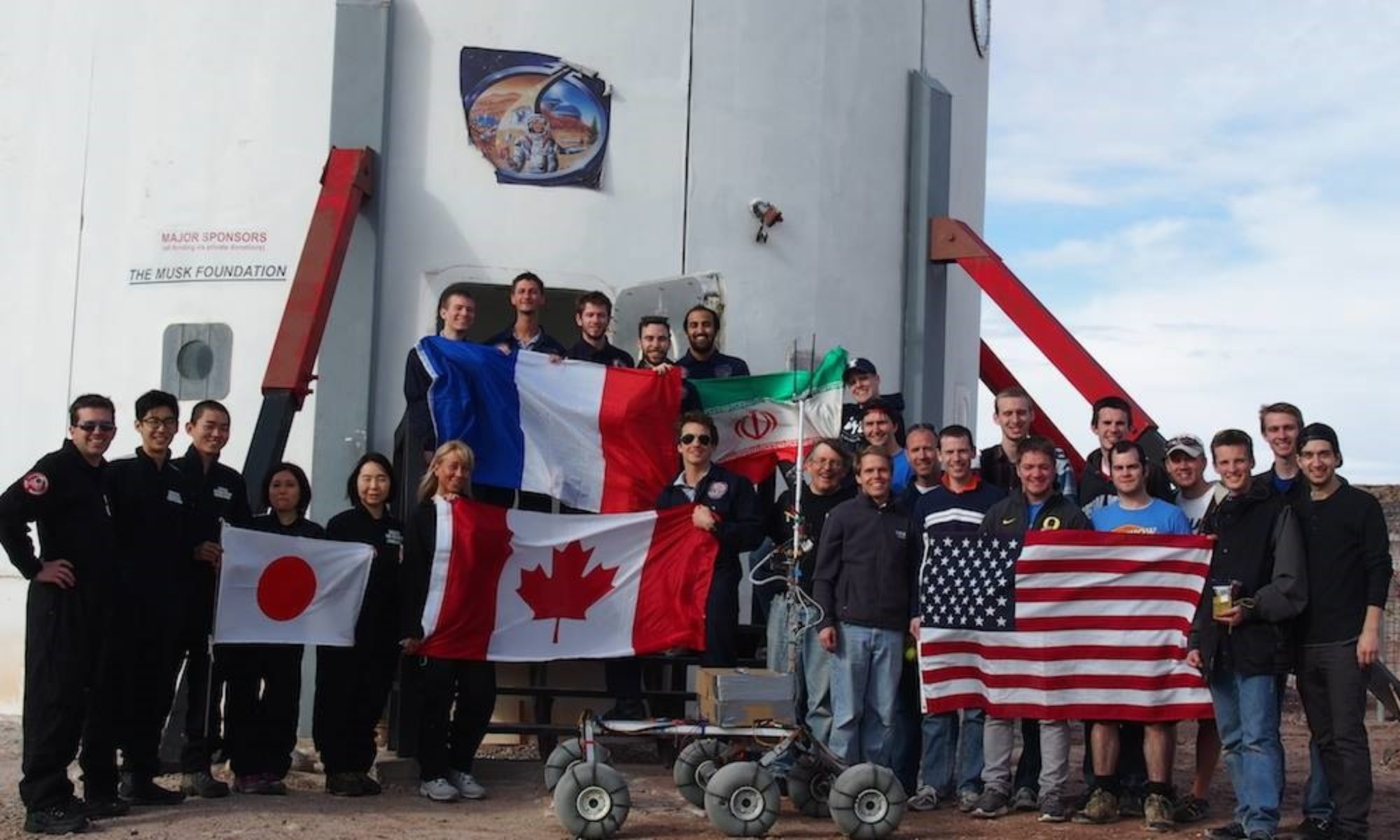
Crew 293 – ISAE-Supaero (France)

Crew Commander: Marie Delaroche
Executive Officer / GreenHab Officer: Mathurin Franck
Crew Journalist: Erin Pougheon
Health & Safety Officer: Lise Lefauconnier
Crew Engineer: Leo Tokaryev
Crew Scientist: Yves Bejach
Crew Astronomer: Léa Bourgély

Introduction
Crew 293’s rotation marks the 10-year anniversary of SUPAERO MDRS missions. For the past decade, 11 student-led crews have made the trip to Mars, passing on their experience every year to a new team. We are very proud to have added to the legacy of the project over the past year, and during our month-long rotation. The mission has been rich in scientific achievement and bonds formed between the members of this Crew. This year, in continuity with Crew 275, our aim was to focus on large-scale human factors experiments, ambitious technological demonstrations, leading a measurement campaign in atmospheric physics, and enhancing the simulation.

Technology Demonstrations
A person lying on a mat looking at a tablet Description automatically generated
AI4U is an artificial intelligence tool designed by the French space agency to assist astronauts in their tasks. This year, new functionalities were tested, using the AI as a way to centralize data. AI4U was connected to environmental sensors strategically placed all over the station, and the Crew evaluated the quality and usefulness of the software by taking part in planned interactions with AI4U.
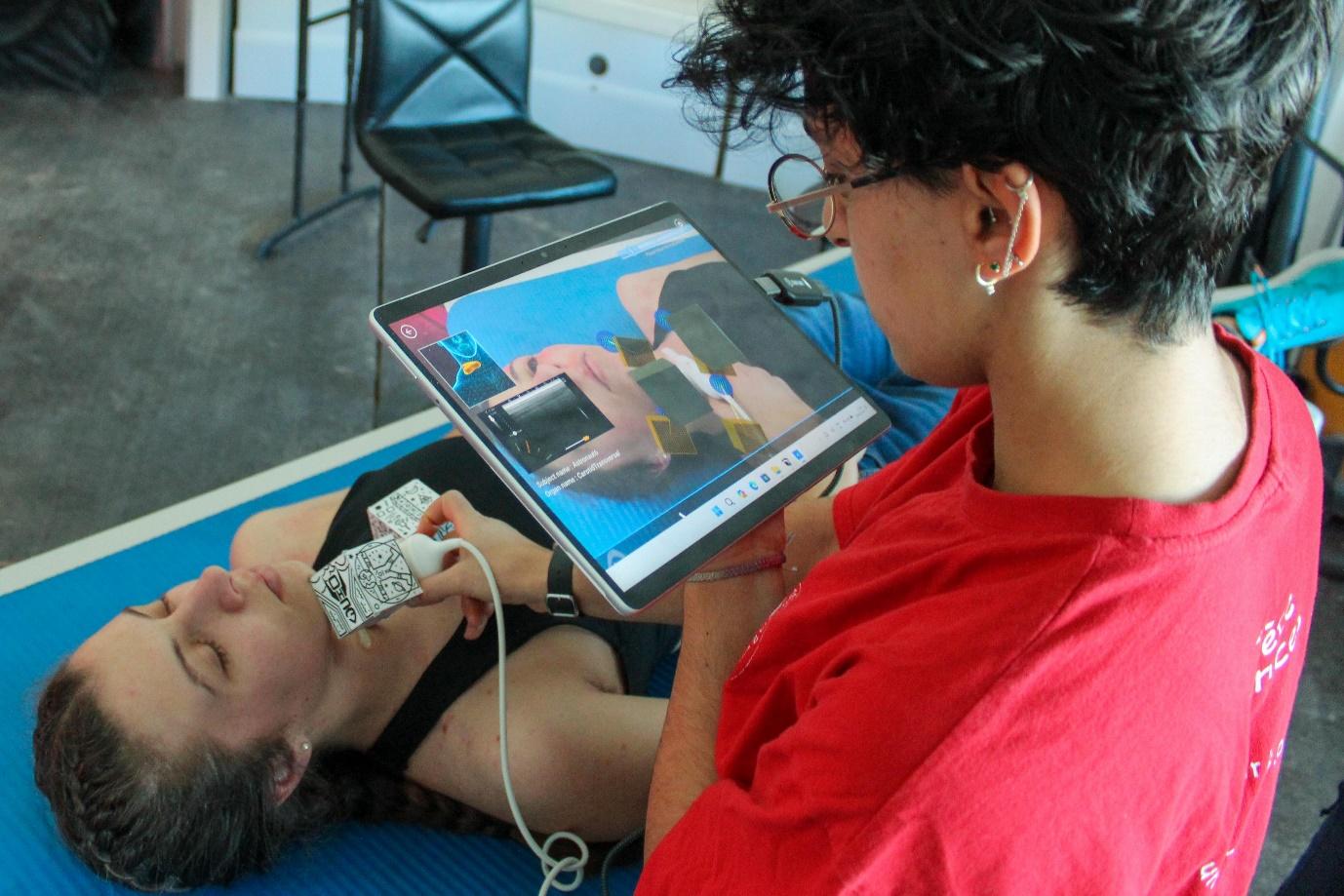
A second experiment with CNES involved artificial intelligence helping astronauts: EchoFinder. EchoFinder is an experiment conducted in collaboration with CNES and MEDES, consisting in testing a protocol for astronauts to perform ultrasounds without any prior training. This experiment has already been conducted in the past by Supaero crews. This year, the aim was to pursue testing of an Augmented Reality interface coupled with an organ detection AI. We have successfully completed the planned sessions: each Crew member performed at least two sessions with our only passive subject. We have had several issues with this experiment two weeks into our rotation, mainly because of hardware malfunctions. After our 4-week mission, we have nevertheless succeeded in providing the researchers with a complete set of data, consisting in detailed reports of each ultrasound session as well as videos of every organ detected. The researchers at CNES will have some elements to evaluate the accuracy of their AI, and how the AR interface can be improved.
Finally, over the course of our rotation, we tested an Anomaly Monitoring Interface (AMI) developed by a former SUPAERO MDRS crewmember. The beta version of AMI has been running since Week2, enabling the Crew to monitor the power distribution of the station and handle alarms and malfunctions. An emergency EVA occurred on Sol24 to repair the tunnel to the Science Dome that had been damaged by the wind, enabling us to test the interface all the while performing a meaningful action outside the station. The PI was in contact with the Crew by email throughout the mission, exchanging back and forth on upgrades. A detail report will be written and discussed to improve the software for future missions. An abstract has been submitted for an IAC 2024 panel.
Exploration : Photogrammetry
LD22lwKbw_WWIkPBQTS-BOb1iGcax6RtenldnspXNmF8LTHaiV4Uficr_yY_2O4aAD71C0oROIVY6fsWe0jLbiVd0uOXFfbA6IW-yCNPY-tbOmQCwRr9th5M2FgtfBb7buPRVc16v0c-k2fwcLKIpQ

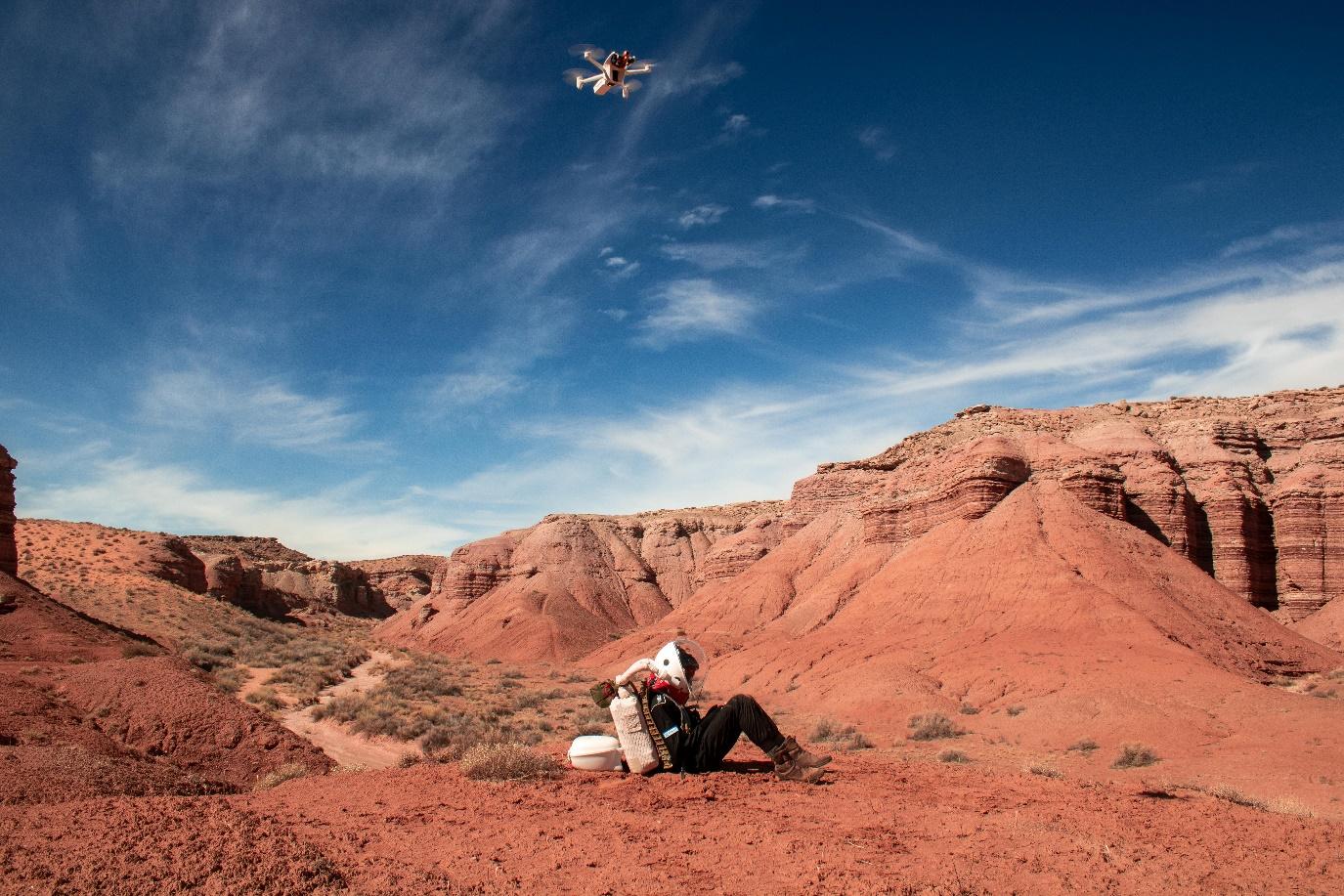
The idea behind the photogrammetry experiment was to compare the efficiency of humans exploring and finding checkpoints in a given area, using either a 2D map or a 3D render. Each data point required a series of three different EVAs. The first one, to map the area in 3D, with a drone using photogrammetry. The two others were meant for the subjects to find pre-defined checkpoints using the 2D map and then the 3D map generated beforehand. The experiment was a success: the Crew performed three iterations of the study, changing parameters (terrain type, team composition, etc.) and collecting enough data to add to Crew 275’s first attempt. As for areas rendered and explored, we count North Ridge, Candor Chasma and Kissing Camel Ridge W. The areas covered were wider, more complex and more impressive in scale compared to last year, as we were able to have access to a better drone. We hope to pass on this experiment to the next Supaero crew, and an abstract has been submitted for an IAC 2024 panel.

Astronomy
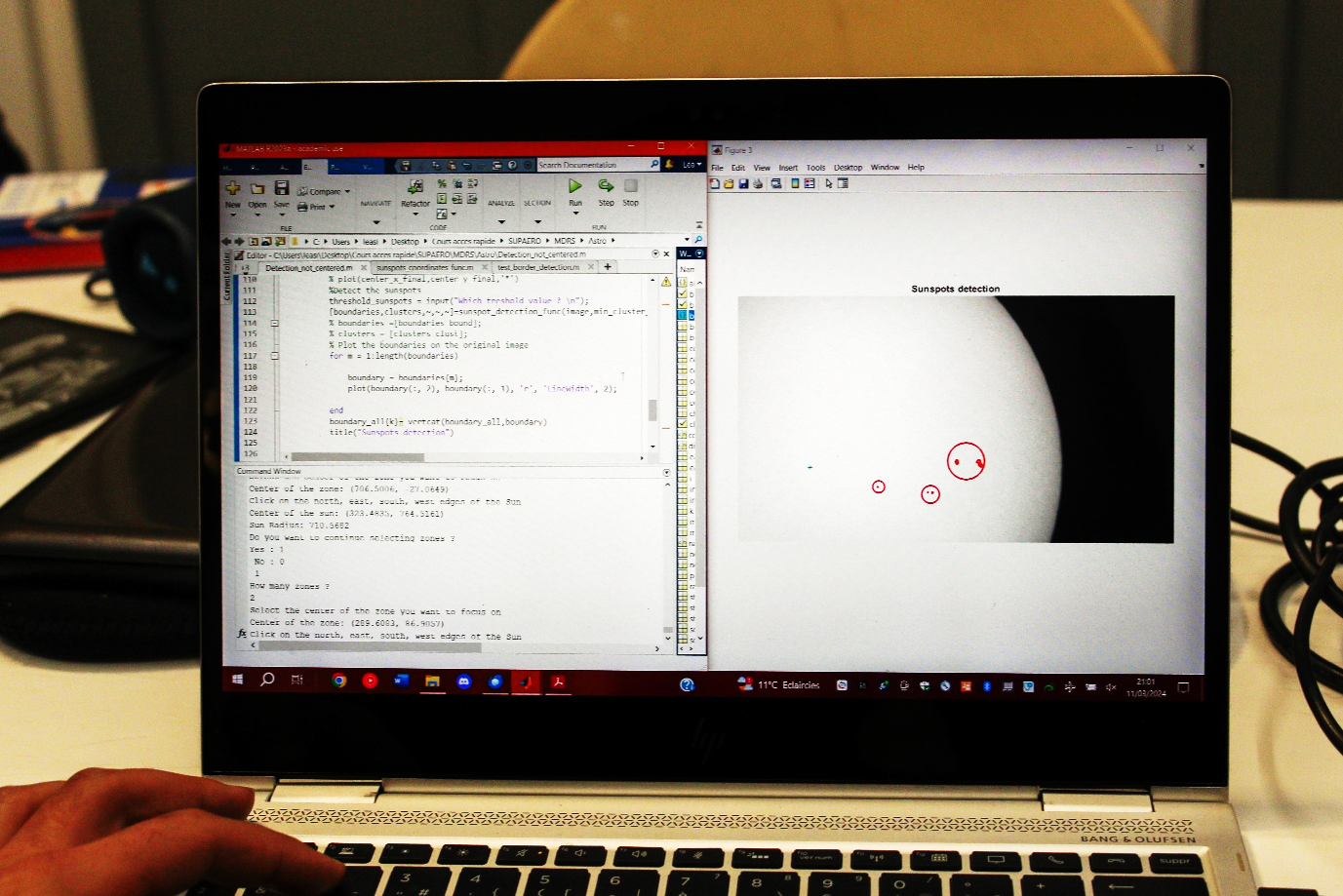
A person using a computer Description automatically generated The Crew Astronomer’s research project was to estimate the speed of sunspots, factoring in the Sun’s rotation. Unfortunately, for the first half of the rotation, the Musk Observatory was not usable. They decided to use the robotic observatory to learn astrophotography. As the MDRS’ robotic observatory was offline, they used the RCOS-16 remotely. At mid-rotation, the Musk Observatory was available and they started to learn how to handle it. They had to deal with issues with the observatory dome, requiring a great deal of troubleshooting. Pictures of sunspots and solar prominences were taken during 6 Sols, then the Crew Astronomer was unable to continue because of cloudy conditions. They worked on improving their MATLAB code to make the necessary calculations from the sunspot pictures; they will actively continue to pursue their project after the end of the rotation.

Human Factors
This year, we mainly took part in three studies pertaining to Human Factors.
Orbital Architecture is a study led by Michalis Magkos, from KTH University. Studying the impact of the architecture of an interplanetary space station on the global psychology of the astronauts is critical to optimizing their performance. For this study, we deployed environmental monitoring sensors throughout the station. Each sensor provided us with information about pressure, temperature, humidity, and luminance. We also set up an Indoor Positioning System to track each crewmember within MDRS. We connected 19 "anchors" spread around the MDRS, consisting in electronic boards remaining at the same location. Each crewmember wore a "tag", which logged its distance to the anchors every 3 to 10 seconds. Each crewmember also wore a smartwatch during the night, in order to monitor their sleep activity. A chestband was also worn to measure ECG, heart rate, and accelerometry.
All 3 aforementioned datasets will be used to correlate the stress level of the astronauts to their location and the environmental conditions. To measure the performance of each crewmember in the different modules, given different environmental parameters and levels of privacy, they all took psychometric tests throughout the mission.
The results generated during our rotation will be compared to those of ESA astronaut Marcus Wandt, who took part in the Orbital Architecture study during his stay in the ISS as crewmember of the Axiom 3 mission.
A person wearing headphones looking at a computer Description automatically generated

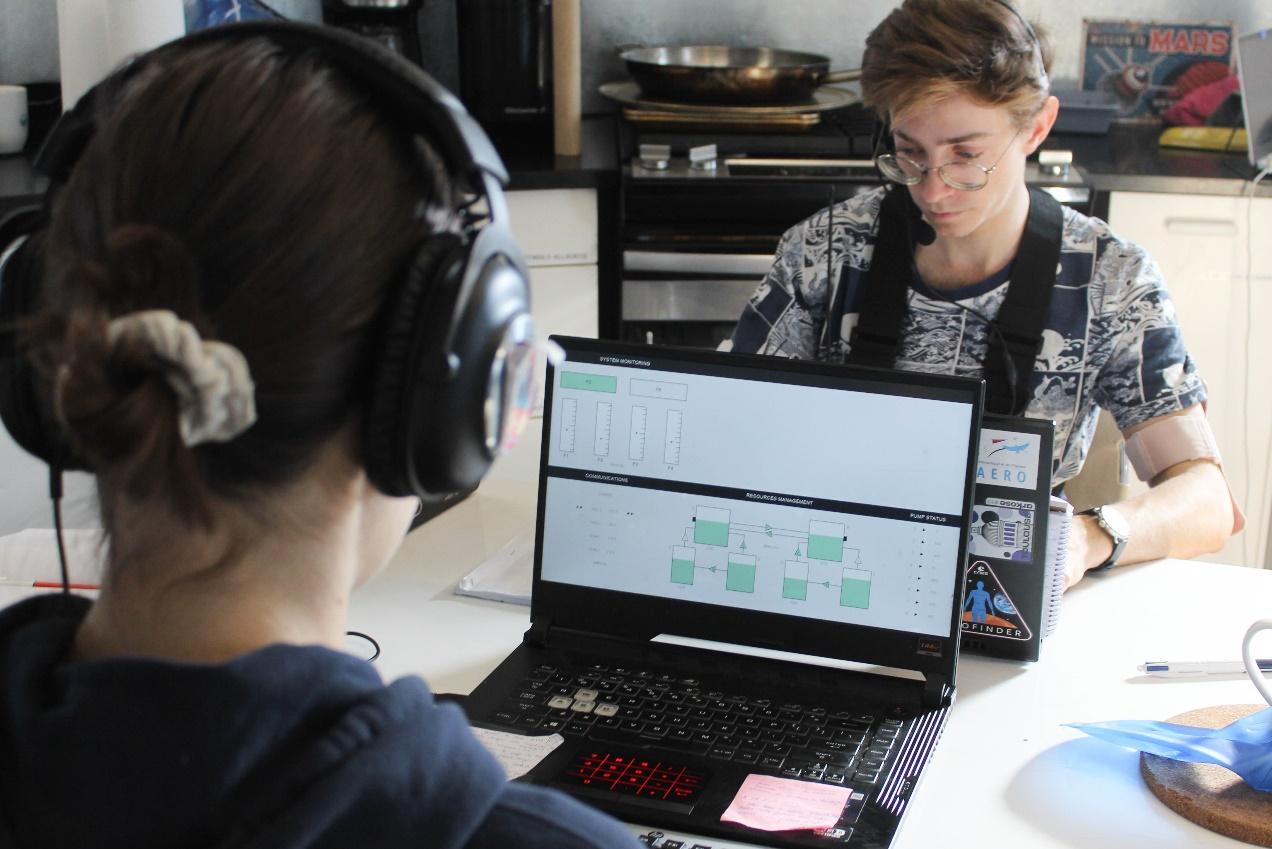
The MELiSSA project (Micro-Ecological Life Support System Alternative) is a European projected led by the European Space Agency (ESA) aiming at developing a highly circular and regenerative life support system for space missions. The ALiSSE methodology (Advanced Life Support System Alternative) was developed as part of the project to provide an impartial evaluation tool of each technology system, including mass, energy and power, efficiency, crew time, crew risk, reliability, and durability. The activity performed by the Crew within the MELiSSA project focuses on the operational aspects of preparing recipes from higher plants and aims for a preliminary evaluation of the "crew time" criterion.

Finally, the Crew participated in a study from the TRACE Lab at University of Florida: The Role of Emotion Regulation Mechanisms and Coping Strategies in Team Dynamics for Long-Duration Space Exploration (ARMs in SAE – Affect Regulation Mechanisms in Space and Analogue Environments). The purpose of this research is to better understand the role that emotion and coping strategies have on team dynamics within ICE (Isolated, Confined, Extreme) teams. The findings from this study will aid in the understanding of the role of affect within teams operating in ICE conditions. The Crew responded to stress questionnaires and journaled daily. The research team will also be provided with our core datasets (see “Monitoring Health and Water Consumption” section).

Atmospheric Instruments measurements campaign
A group of people in a desert Description automatically generated

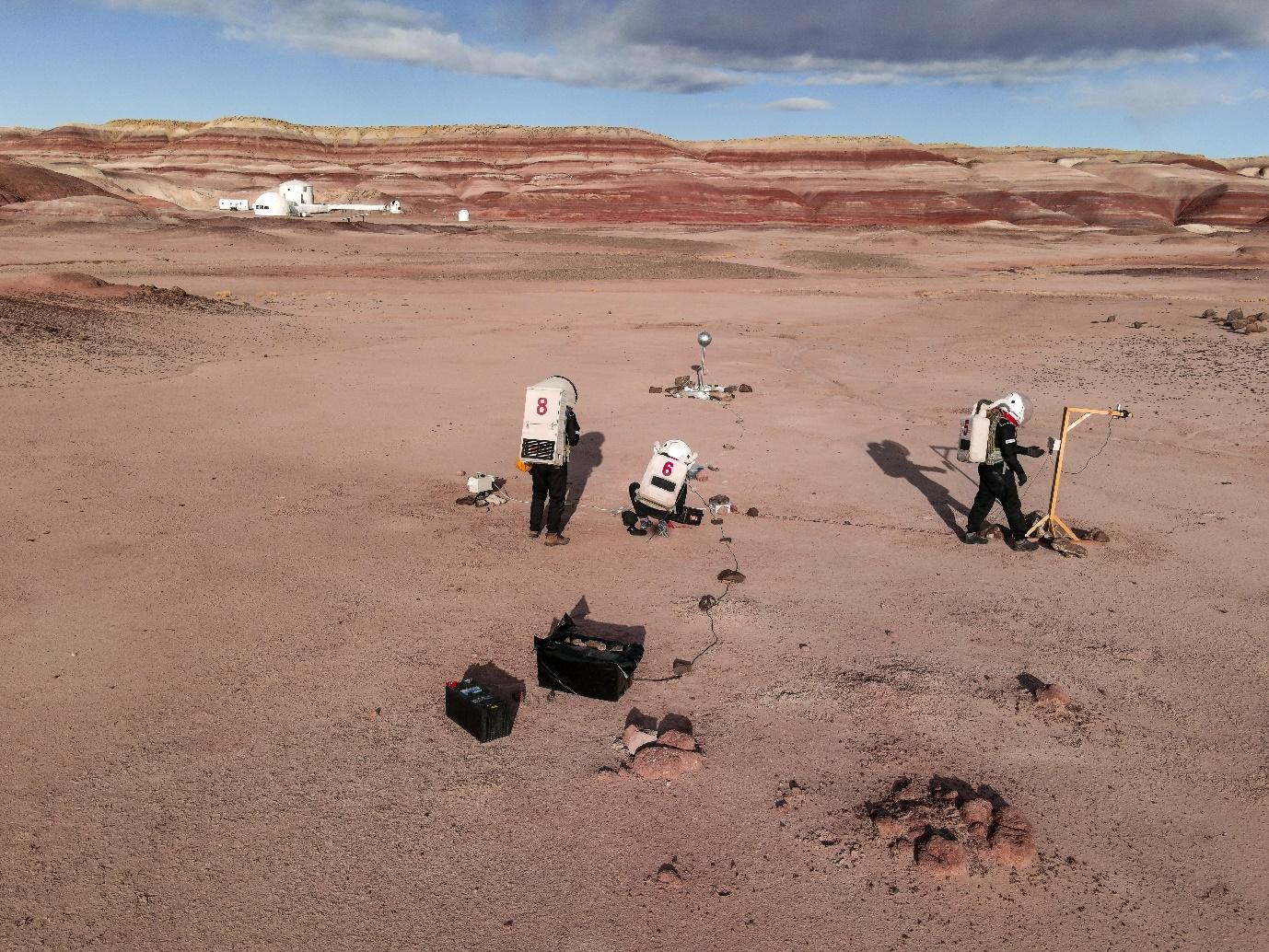
This year’s atmospheric measurement campaign for CNRS researchers was a success. We were generally lucky in terms of weather conditions, and certain modifications made to improve Crew 275’s configuration were successful (centralized single power source, new mast for MegaAres). We mainly measured the electric field (with the field mill and MegaAres), the particle concentration (with the LOAC) and other atmospheric parameters with our weather station, in order to correlate these different parameters. We started the measurements on Sol 3, although we had to perform regular maintenance EVAs to change batteries, and retrieve and reinstall certain sensitive instruments, given the variations in atmospheric conditions.

Monitoring Health and Water Consumption
During the entire mission, the crew monitored their water consumption. The goal was to reduce as much as possible their use of water, while maintaining good hygiene and drinking as much as needed. With this in mind, we categorized our consumption of water and took note of the quantities used throughout the day. This experiment showed us that by being mindful of our use of water, it is possible to considerably reduce consumption. The average water consumption was 38L (10.3 gallons) per day. For a crew of 7, this represents 5.4 L (1.4 gallons) per day per person, which could be reduced even more with specific technologies. The goal set at the end of Crew 275’s rotation, aiming to reduce consumption to less than 5L per person, was therefore almost achieved.
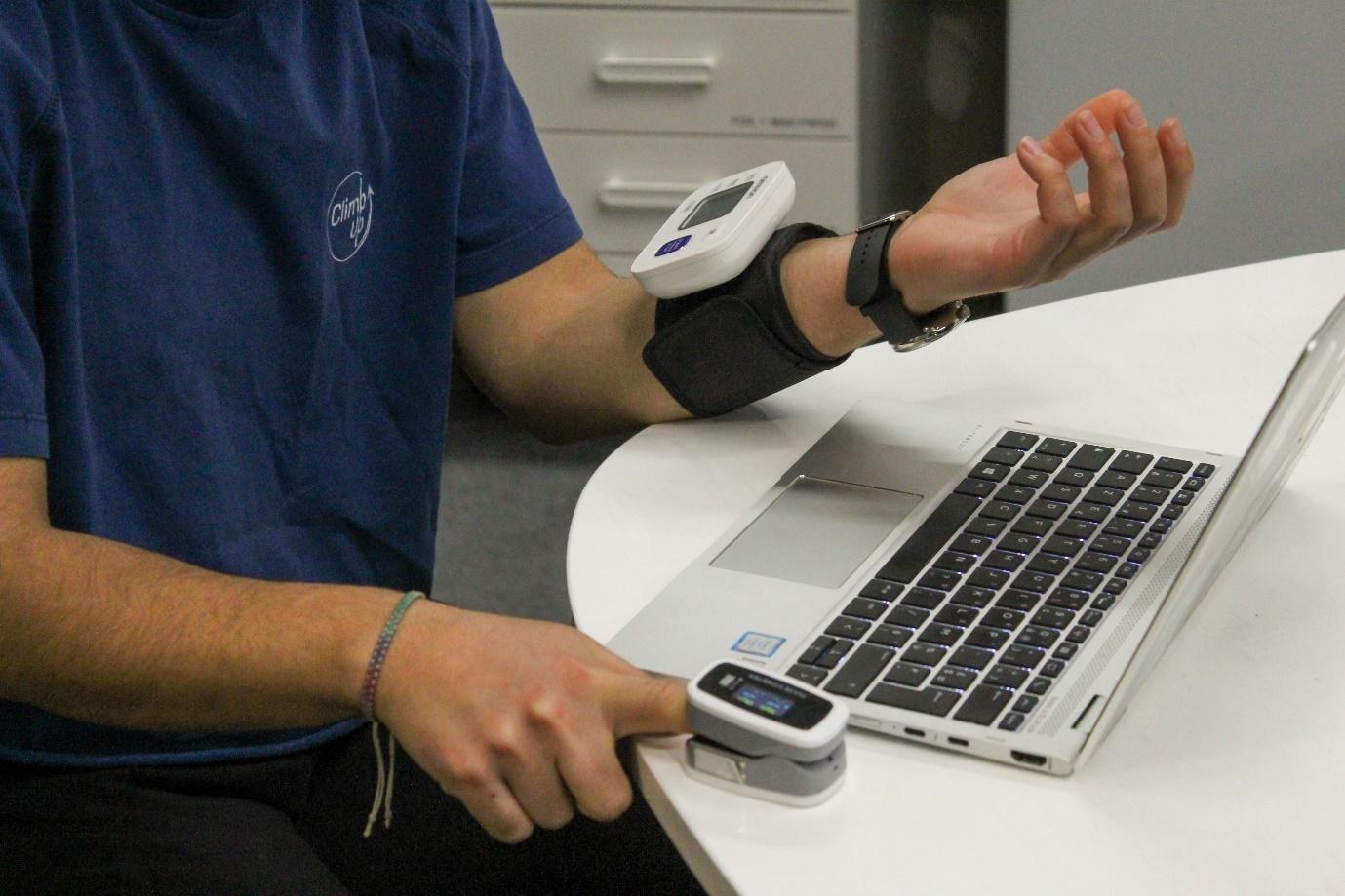
KKEaXp6wsCS9YKYJGGuRk190-UUWB_EZ6zKNi9ozkzoeRjVtBmcm-_hCo8dvOFzYDhv4WhrMxzOlZdKsS56eyOLmnbL10cv9X6CEKffpIE5ObBE8V3bBO-9G-hyc34iJ2n_t2enqiFKIlnjbgorSBw Every morning, we also measured health parameters to keep an eye on the physical and mental health of the crew. To this end, we kept a sleep diary, and monitored weight and body composition, temperature, as well as blood pressure and oxygenation. These “core data sets” will be shared with the Human Factors research teams.
A 30-minute daily workout session was also organized by the HSO to keep all crewmembers in good shape and get them ready for the day, thanks to bonding activities and music.

GreenHab Activities
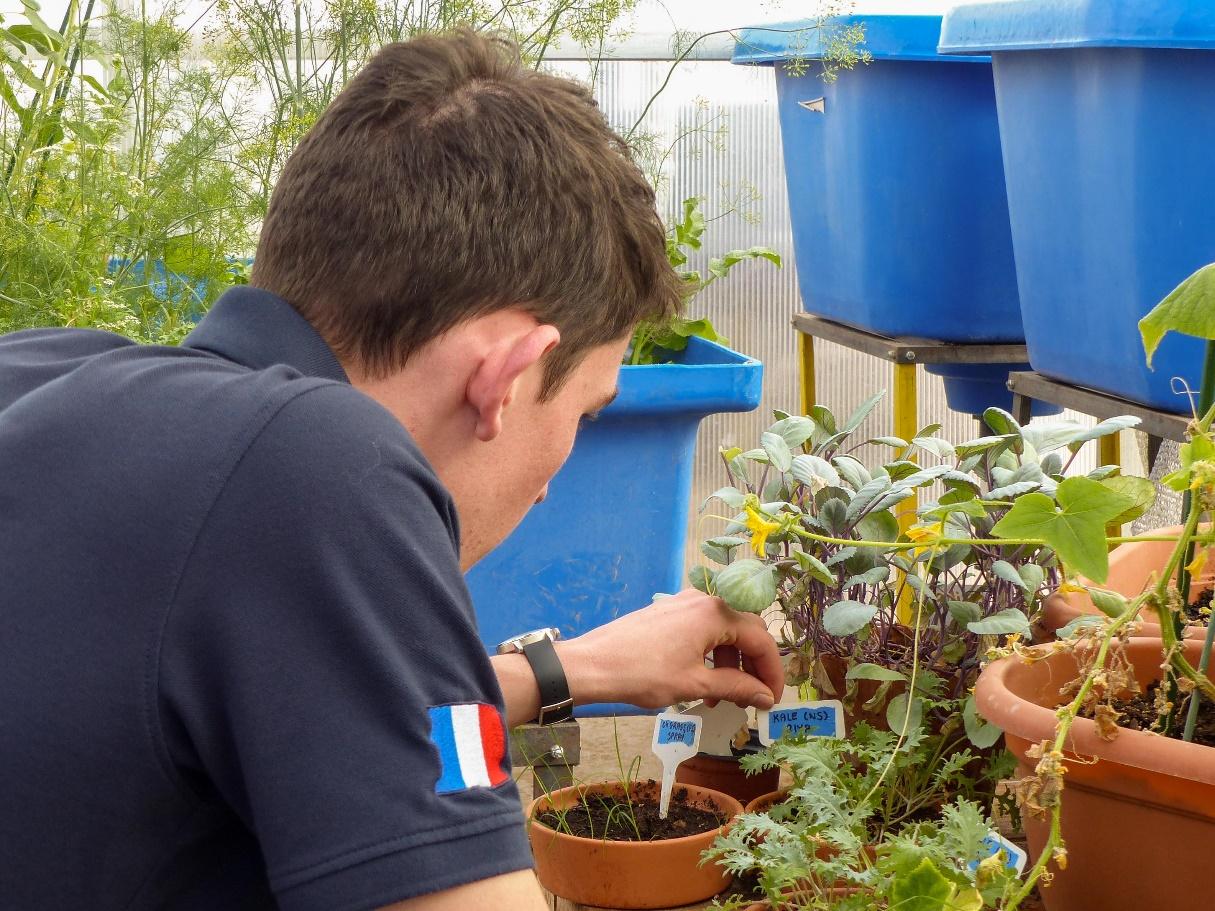
The GreenHab Officer’s aim was to use the GreenHab efficiently, growing plants that are useful and practical for a space mission Crew. During our 4-week mission, they had time to clear the GreenHab, by removing plants that were taking too much space and weren’t consumable. A lot of plants and food was planted before our arrival, but not often transplanted at the right time. The GreenHab Officer took it upon himself to make the necessary transplantations, for example of radishes and cabbage. They also tried to improve the organization of the GreenHab by creating a precise map, to write down everything action performed. This map can be useful for future Crews to know exactly what was planted and where. Some aromatic herbs like basil were planted again because the Crew noticed how much better our meals were when adding them. At the end of our rotation, the GreenHab is now clean and clear, every plant is labeled with its name and the day it was planted.
8u9Hm5N00j5pzWOXymRhmIy0DDF3RIasDFd_EDm389ina8taGHwV4EAxZwAZqTquLIi3gO7nINBPUm926gGeabGosjEKhutvBRanqafq8v9JkqQNZJBxmcTFnL7drH0-CXvtpQUKCrXNRpdYhrweSQ

Outreach
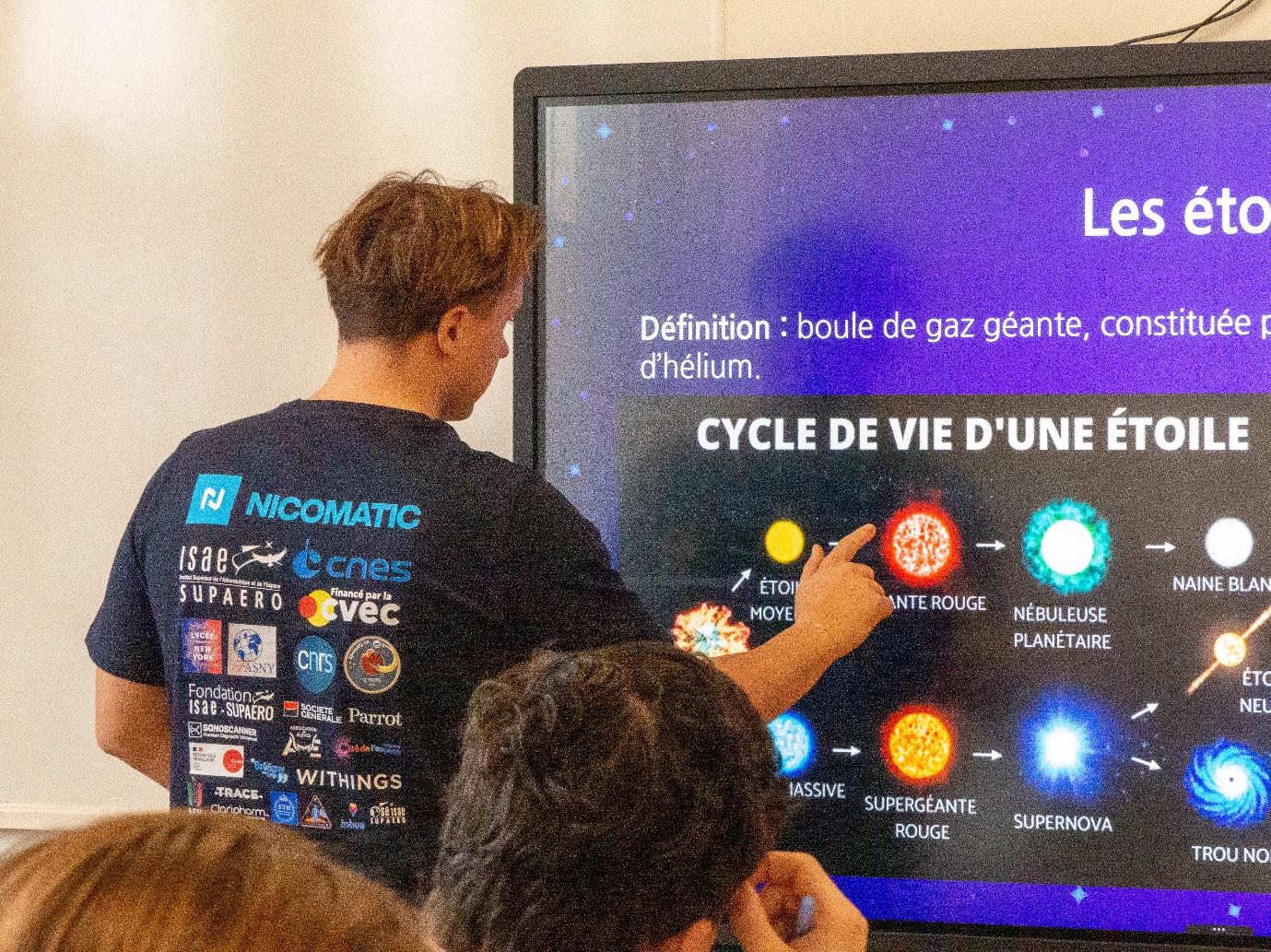
Our objective for this mission from a communications standpoint was first and foremost to reach middle and high school students interested in space and STEM in general. Throughout the entire mission preparation, the crew worked with OSE l’ISAE Supaero, an outreach initiative whose goal is to help students gain access to higher education and to promote STEM careers. During the entire year preceding the mission, we visited classrooms and welcomed students to our university to talk about space exploration and STEM studies. Our goal was to inspire as many students as possible to explore and engage with scientific fields. In this vein, we spent a week at the French and American School of New York (FASNY) and the Lycée Français de New York (LFNY) with 6th and 10th grade students, using games and simple experiments to share our passion for space.
Crew 293 also performed an experiment created with students from various schools during our school outreach interventions, in collaboration with OSE l’ISAE-SUPAERO. This experiment, named "SEEDS OF MARS" by the students, challenged them to answer this question: is it possible to grow plants on the Red Planet, as in the film The Martian? Students choose watercress to test their hypothesis. During our first EVA, we retrieved samples of Martian soil, and we planted watercress in the GreenHab, one pot with Martian soil and another with Earth soil. At mid-rotation, we had a problem because of mold in the soils. So we planted again to have another try at the experiment. At the end of the mission, we collected data related to “SEEDS OF MARS” and we will be presenting their results to the students in a restitution day on the 2nd of April 2024.
JI3cZYseWkFPQofmcm3zXtp9ixOxv78w4HS3vkmgAtv_2WsX5A8E_hzzsHJTJdr_f3czoJdg9to6RhioHLJzBzBeugDF2ipujBvDVupGuWFoycegkwTfPBDDoa1O-wpSTKnxG_QbQzAzZqQrUlVJQg

Journalist Report – March 15th

SOL 26: A New Chapter

“At that point in their lives, everything is clear and everything is possible. They are not afraid to dream, and to yearn for everything they would like to see happen to them in their lives.” – The Alchemist, Paulo Coelho

We started the day knowing very well that it would be our last morning in simulation… We took full advantage of our last workout session, during which Lise compiled all of the Crew’s favorite exercises! All Crew members loved the workout. As it had rained all night, and continued throughout the day, the weather conditions didn’t allow us to perform the scheduled EVA. During this EVA, we wanted to dismantle atmospheric instruments and bring them back to the station, but we couldn’t: the conditions were too muddy. In addition, because of the lack of sunlight, the solar panel providing energy to the station was not efficient enough, so we had to spend the day in the dark, to save electricity! The mood was very different than usual: EVA cancelled, lights off, the end of the simulation getting closer and closer… However, we had a lot of things to do to keep our minds occupied! We took advantage of being all together at the station to start and organize our luggage, to store and clean all the modules. We have a lot of equipment, we have to be careful in not forgetting anything!

Despite all of this, the last sessions of the neuroergonomics experiment and the last cognitive tests took place this morning. It is the end of studies and experiments for Crew 293! We are proud of all the experiments we led and all of the data we managed to generate.

We had fixed 4 P.M as the end of simulation time, to retrieve atmospheric instruments. We opened the airlock: we were officially back on Earth! Wearing our black flight suits to be protected from the mud, we could breathe Earth’s air as much as we wanted. We under-estimated the happiness this recovered sensation would create! But we had no time to lose: the atmospheric instruments were waiting to be dismantled! Kneeling in the wet dirt, we dismantled and brought everything back to the station. In the Lower Deck, we cleaned everything (included ourselves!) and continued putting all of equipment safely away.

Even though the simulation is over, atmosphere is joyful in the station between Crewmembers! It is the end of the mission in the station, but we still have a lot of work to do. Ending the simulation doesn’t mean that the research stops! We still have to handle data, give feedback about results and procedures to researchers, and much, much more… In the end, the end of the simulation is just the beginning of a new chapter for Crew 293!

Operations Report – March 15th

SOL: 26
Name of person filing report: Leo Tokaryev
Non-nominal systems:
Notes on non-nominal systems:
ROVERS
Spirit rover used:no
Hours:
Beginning charge:
Ending charge:
Currently charging:
Opportunity rover used:no
Hours:
Beginning charge:
Ending charge:
Currently charging:
Curiosity rover used: no
Hours:
Beginning charge:
Ending charge:
Currently charging:
Perseverance rover used: no
Hours:
Beginning charge:
Ending charge:
Currently charging:
General notes on rovers:
Summary of Hab operations: put notes here
WATER USE: 10.94 gallons
Water (static tank): 125.1 gallons
Static tank pipe heater (on or off):On
Static tank heater (On or off)On
Toilet tank emptied: no
Summary of internet: none
Summary of suits and radios:
Summary of GreenHab operations: put notes here
WATER USE: 8 gallons
Heater: On
Supplemental light: 22h-2h automatic
Harvest: 284g tomatoes, basil 4g, aneth 24g, cilantro 7g
Summary of ScienceDome operations: none
Dual split: Heat or AC, On
Summary of RAM operations:
1- The battery of suit 7 was changed, so, the next crew should do a 4h test on suits 7 and 9 before using them.
Summary of any observatory issues: none
Summary of health and safety issues: none
Questions, concerns and requests to Mission Support: we left a lot of trash in the rear airlock, since we’re out of sim, we’d like to help you take it out!

GreenHab Report – March 15th

GreenHab Officer: Mathurin FRANCK
Environmental control: (heater, fan, door open?) Heater/fan turning on automatically
Average temperatures: between 70°F- 85°F
Hours of supplemental light: 10pm-2am
Daily water usage for crops: 8G
Daily water usage for research and/or other purposes: None
Water in Blue Tank (200 gallon capacity): 124 gallons
Time(s) of watering for crops: 11:30 am 8:00pm
Changes to crops: /
Narrative: I finish cleaning the greenHab.
Harvest: (include which crop and mass in grams): 284g of tomatoes , 4g of basil, 24g of aneth, 7g of cilantro
Support/supplies needed:

Supplemental Operations Report – March 16th

Date: 3/16/2024
Name of person filing report: Sergii Iakymov
Reason for Report: Routine
Non-Nominal Systems: Hab wall heater, solar observatory, perseverance parking brake

Power system:
Solar: Nominal.
SOC Last 24 hours: Max 100%; Min 43%; Avg 63.1%.
VDC Last 24 hours: Max 59.46V; Min 45.90; Avg 49.55V.
Generator run time: 5422.9 hours.

Propane Readings:
Station Tank: 80%
Director Tank: 81%
Intern Tank: 81%
Generator Tank: 73%

Water:
Hab Static Tank – 530 gallons
GreenHab – 120 gallons
Outpost tank – 350 gallons
Science Dome – 0 gallons
Septic Tanks emptied: No

Rovers:
Sojourner rover used: No
Hours: 197.2
Beginning Charge: 100 %
Ending Charge: 100 %
Currently Charging: Yes
Notes on Rovers: Perseverance parking brake non-functional

ATV: ATV’s Used: None. Nothing to report.

Cars: Hab Car used and why, where: To Hanksville for supplies.
Crew Car used and why, where: Ho Hanksville and Grand Junction by crew
General notes and comments: N/A

Summary of Internet: All nominal.
EVA suits and radios:
Suits: All nominal
Comms: Headset #6 replaced.

Campus wide inspection, if action taken, what and why: All nominal.
Summary of Hab Operations: Wall heater is not functioning. Diagnostic is pending.
Summary of GreenHab Operations: All nominal
Summary of SciDome Operations: All nominal
Summary of Observatories Operations: Solar observatory telescope diagonal is awaiting new part for replacement
Summary of RAM Operations: All nominal
Summary of Outpost Operations: All nominal
Summary of Health and Safety Issues: All nominal

GreenHab Report – March 14th

Crew 293 GreenHab Report 14-03-2024

GreenHab Officer: Mathurin FRANCK

Environmental control: (heater, fan, door open?) Heater/fan turning on automatically

Average temperatures: between 70°F- 90°F

Hours of supplemental light: 10pm-2am

Daily water usage for crops: 8G

Daily water usage for research and/or other purposes: None

Water in Blue Tank (200 gallon capacity): 132 gallons

Time(s) of watering for crops: 10:30 am 8:10pm

Changes to crops: /

Narrative: I cleaned the greenHab.

Harvest: (include which crop and mass in grams): 7 sunflowers for Crew Commander ‘s birthday

Support/supplies needed: /

Journalist Report – March 14th

SOL 25: Happy Birthday Commander!

“He had only one explanation for this fact: things have to be transmitted this way because they were made up from the Pure Life, and this kind of life cannot be captured in pictures or words.” – The Alchemist, Paulo Coelho

On this 25th Sol’s morning, our penultimate day of mission, we performed our penultimate EVA! Marie and Léa went to reach checkpoints placed at Kissing Camel Ridge, with Mathurin who counted their steps between each checkpoint. With the 2D map they had yesterday to prepare the EVA, they had more difficulties than Leo and I with the 3D map, because the topography of the area is complex. However, they managed to find 11 out of the 12 checkpoints, but they took almost one additional hour! During this EVA, the EVA Crew was helped by high schoolers from the CNES’s project PROXIMARS. They helped prepare protocols for both before and during the EVA. They even defined the roads to use with the rovers to reach Kissing Camel Ridge! They analyzed maps to report where the 12 checkpoints were and find the optimal path between them. This last photogrammetry’s EVA marks the end of the experiment inside the station. But Yves still has to handle data in order to analyze results.

During the EVA, there was a huge effervescence inside the Hab! Indeed, a surprise was set up: it was the birthday of Marie, our Commander! Leo, Yves, Lise and I stayed at the station, preparing everything for her return! We decorated the Upper Deck with balloons and confetti, and cooked a cake to surprise her. When the EVA Crew came back to the station, we blindfolded Marie to guide her to her surprise. We sang “Happy Birthday” and offered a bouquet of sunflowers from the GreenHab! Balloons and flowers stayed at the Upper Deck, for the great pleasure of the whole Crew! Marie was very moved and happy to celebrate her birthday with the Crew, in the station, in this unique context! For the rest of the Crew, we were delighted to surprise her and to please our Commander!

During the afternoon, we had to get back to work! We don’t have much time left in the station, we want to use it to contribute to science the best we can, by leading to the end of all our experiments. So we had cognitive tests for the Orbital Architecture experiment and session of the TILT experiment, given by the Neuroergonomic department of our school ISAE-SUPAERO. Marie and I performed a session of the EchoFinder experiment, it was the last one of the mission! Ending experiments one by one made us realize that we are leaving tomorrow … but we still have a lot of work to do!

EVA Report – March 14th

Crew 293 EVA Report 14-03-2024

EVA # 18

Author: Marie Delaroche (Leader)

Purpose of EVA: Photogrammetry exploration EVA with 2D map

Start time: 8:59

End time: 12:25

Suit 1: 13.43V, 2.5 LPM airflow

Suit 6: 13.30V, 2.3 LPM airflow

Suit 8: 13.68V

Narrative:

8:57 Depressurization started

9:02 Depressurization over, out on Mars

Opportunity 167.9H, 100%

Spirit 246.6 75% -> 72% -> change rover

Curiosity 271.8H, 100%

9:07 Leaving campus

9:14 Arrived at Kissing Camel Ridge

10:30 3 checkpoints left

11:04 2 checkpoints left, everything is fine

11:36 1 checkpoint left

12:05 Léa suit malfunctions, helmet off, heading back to the rovers

12:14 Back at the rovers

Curiosity 58%

Opportunity 59%

12:25 Re-pressurization

12:30 End of re-pressurization, EVA Crew back in the Hab

Suit 1: 10.61V, 0.4LPM airflow

Suit 6: 12.39V, insignificant airflow

Suit 8 12.5V

Destination: Kissing Camel Ridge

Coordinates (use UTM WGS 84): 518000,4249500

Participants: Marie Delaroche (EVA Leader), Léa Bourgély, Mathurin Franck

Road(s) and routes per MDRS Map: rover on Cow Dung Road, South direction

Mode of travel: Walking and driving

Vehicles used: Opportunity and Curiosity (Spirit not used, charge level dropped from 75 to 72 % even before we started moving)

Additional notes : NA

Operations Report – March 14th

Crew 293 Operations Report 14-03-2024

SOL: 25

Name of person filing report: Leo Tokaryev

Non-nominal systems:

Notes on non-nominal systems:

ROVERS

Spirit rover used:no

Hours:

Beginning charge:

Ending charge:

Currently charging:

Opportunity rover used:yes

Hours: 167.9

Beginning charge:100

Ending charge:59

Currently charging:yes

Curiosity rover used: yes

Hours: 271.8

Beginning charge:100

Ending charge:58

Currently charging:yes

Perseverance rover used: no

Hours:

Beginning charge:

Ending charge:

Currently charging:

General notes on rovers:

Summary of Hab operations: put notes here

WATER USE: 12.51 gallons

Water (static tank): 125.1 gallons

Static tank pipe heater (on or off):On

Static tank heater (On or off)On

Toilet tank emptied: no

Summary of internet: none

Summary of suits and radios:

Summary of GreenHab operations: put notes here

WATER USE: 8 gallons

Heater: On

Supplemental light: 22h-2h automatic

Harvest: 7 sunflowers

Summary of ScienceDome operations: none

Dual split: Heat or AC, On

Summary of RAM operations:

1- Every suit (from 1 to 9, I didn’t touch the two suits that are on the shelf under suits 7,8 and 9) was equipped with 3 replacement fuses, as discussed yesterday.

2- The battery of suit 9 was changed. We have lots of work to do before the end of the mission, so I won’t be able to test the battery for 4 hours, as with other suits, but the next crew could take care of it.

3- The zip-ties in the tunnel to the science dome were cut and lots of new ones were added on places where they were missing. There are only 2 large zip ties left. Also, there’s a lot of small zip ties in the RAM (the ones that belong to the Mars Society and the crew will also leave some to replace those we used), and some medium zip-ties(long but not large). I recommend buying some more medium size zip-ties, and large ones (those that are used for the tunnels)

Summary of any observatory issues: none

Summary of health and safety issues: none

Questions, concerns and requests to Mission Support:

We have a lot of stuff that we could leave to the next crews, since we won’t be needing it anymore, please tell me if we can leave them in the RAM:

-lots of metal tent stakes

-different types of screws, in their original sorting box

-two chargers for batteries that are functioning well

-lots of AA and AAA batteries

-electric tape, normal tape, foil-covered tape( also, there’s not enough simple black tape for future crews).

Sol Summary – March 14th

Crew 293 Sol Summary Report 14-03-2024

Sol: 25

Summary Title: Cake and Confetti

Author’s name: Marie Delaroche, Crew Commander

Mission Status: Nominal

Sol Activity Summary:

Last Photogrammetry EVA this morning! I left the Hab with the Crew Astronomer and GreenHab Officer, equipped only with some notes taken from a 2D map of Kissing Camel Ridge. We managed to find 11 of the 12 checkpoints; the terrain was much harder to read than previous locations: we spent more than an hour looking for the last two. As we were going to head back to the rovers, the Crew Astronomer’s suit started malfunctioning, sending very little air. The helmet was taken off for safety, and we made our way back to the Hab.

What I did not know, was that while I was out on EVA, the rest of the crew was preparing a surprise birthday party for me! I came back to an Upper Deck decorated with balloons and filled with a scent of cake. I am lucky to be a part of this group of thoughtful and amazing people!

In the afternoon, we started to feel the end of our rotation creep nearer and nearer… some experiments have been officially wrapped up, such as EchoFinder and AI4U. We swap opinions and feelings about what we look forward to on Earth, but also about what we are going to miss about living at MDRS: contributing to science, the intensity of our life here, and most importantly, being with each other.

Look Ahead Plan:

We aim to dismantle and retrieve all atmospheric instruments on Sol 26 (morning), and to break sim at 6 PM.

Anomalies in work: EVA Suits 6, 7 and 9

Weather: Cloudy, Low 1°C, High 12°C

Crew Physical Status: Nominal

EVA: Photogrammetry exploration EVA, Kissing Camel Ridge

Reports to be filed: Sol Summary, Journalist’s Report, GreenHab Report, Operations Report, Photos (6-8 pics), EVA Reports, EVA Request

Support Requested: NA