MDRS Crew 268 was an all-woman international mission sponsored by the Mars Society. Planning for this mission commenced in 2020, so we were excited to arrive at the station on November 13th and begin the journey. Some crew members have had their sights set on MDRS as early as 2012!
Crew
Commander: Dr. Jennifer Hesterman (United States)
Executive Officer/Scientist: Jas Purewal (United Kingdom)
Health and Safety Officer: Elizabeth Balga (United States)
Biologist & Greenhab Officer: Caitlyn Hubric (United States)
Engineer: Judith Marcos (United States)
Journalist: Izabela Shopova (Bulgaria)
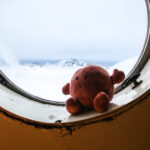
The crew undertook important research and scientific exploration during the mission. We were excited to Beta test Paro, an artificial intelligence therapeutic robot in the form of a baby harp seal. We studied how Paro mitigated feelings of stress and isolation and the data will be useful in supporting research on future analog missions. Half of the crew enjoyed time with Paro during the first week, while the others had access to him during Week 2. We self-reflected on how his presence affected our mental health and emotional well-being.
The Crew Engineer successfully accomplished a carry capacity test with the Pleiades Anchor, designed to help astronauts easily retrieve rock and soil samples without having to bend over or squat. She deliberately pushed the robot to its breaking point, testing its ability to function with an accumulation of debris and on different surfaces. The information gleaned from the experiment will allow her team to improve the device’s design and hopefully travel to the Moon or Mars one day.
The Health and Safety Officer provided training and education on a variety of challenges we might encounter in a remote, austere environment. We also used the Oculus VR goggles for first aid training, and the crew carried out three splinting scenarios. To reinforce these concepts, the crew accomplished two emergency exercises and a tabletop scenario with many lessons learned. Crises included an injury on an EVA and two medical issues within the confines of the station. Follow on crisis leadership and communication training complemented the drills and enhanced learning and skill development.
The crew maximized our available food supply in the station to create healthy meals and maintain our energy level. We bonded during mealtimes, whether sharing our personal life experiences, or enjoying light conversation and laughter. The Crew Biologist harvested microgreens from the Green Hab for fresh salads, which we greatly enjoyed. She also attempted to cultivate edible mushrooms, however they were contaminated with a green mold. As with all research, this situation led to new insights as the biologist observed the speed at which the fungi colonized the substrate. These edible decomposers can be a valuable addition to a colony’s greenhouse for several reasons; not only can they generate food for a crew at a faster rate in comparison to fruits and vegetables, but they can also decompose matter and generate a compost/fertilizer blend to add to the greenhouse soil.
The crew journalist not only created colorful and impactful essays about our 2 week journey, but also successfully developed a simplified, error proof process for daily yogurt making in the station. She used the powdered milk and kitchen utensils already available at MDRS, which demonstrates the feasibility of making the homemade yogurt part of the analog astronauts’ diet. She used lactobacillus bulgaricus (chosen for its benefits for the digestive and immune systems) and the crew enjoyed yogurt in several recipes. She also demonstrated to the crew the simplicity of the process and educated them on the health benefits of yogurt consumption. The crew filled questionnaires, evaluating the quality of the yogurt, its ease of preparation and suitability for analog astronauts missions, which will add to the body of research already available on research of gut health and health benefits of lactobacteria. She also completed a video response to the more than 30 questions from school children from the Bulgarian Space Academy.
The Commander executed a slate of training and education modules and hands-on exercises on group development, leadership, followership and individual growth topics. These strategies will enhance knowledge of self and maximize success working in diverse groups in a remote, austere environment. They are also applicable in our daily lives. Throughout the mission, the crew discussed Tuckman’s five phases of group development – forming, storming, norming, performing and adjourning. Other sessions introduced the crew to a variety of self-assessment tools. Crisis leadership and communications modules complemented emergency exercises. A team building activity using LEGOs reinforced communication and listening skills. The crew also supported the Intertribal Space Conference with a video, and Beta tested the new Space ABC nutrition app which provided menus based on available food items and kitchen appliances. The U.S. crew hosted their foreign colleagues for a Thanksgiving feast and shared their family traditions for celebrating the holiday. Being in an austere, remote environment made us all thankful for family, partners and friends and the abundance of resources in our lives.
Crew 268 successfully accomplished the mission. We enjoyed exploring the stunning Mars-like landscape, incredibly rich sunrises and sunsets, and a star-filled sky at night. We hope our research activities will inform future space missions and will continue pursuing our dreams of living and working on another planet.
To summarize this mission is not an easy task : 3 years in the making, 2 times delayed and a last-minute change of crew. After finally making it to the MDRS, WoMars was so thrilled to finally get to work. It was a privilege to be able to test the robot from the Dronomy company : we look forward to seeing the data. We also tested an amazing deep space communication tool that brought us closer to Earth thanks to Braided Communications Ltd. And we self-reflected and shared our daily emotions as part of a sociology research led by Dr. Popovite.
Some mistakes were made, some paths were difficult to find, but finding ourselves surrounded by these red valleys, with nothing else around us but the station in the distance was an absolutely unique, and dare we say, out of this world experience. Our first meal compared to our last clearly demonstrates our ability to learn and adapt to new ways of feeding our bodies : never would we have thought we could enjoy so much freeze-dried food ! The perfect addition to those meals were the occasional harvest our Crew Biologist brought in from the Green Hab. We much appreciated the fresh microgreens and look forward to eating fresh food soon.
The bond we developed, the work we achieved, the regions we explored made this experience worth every hour of work we put in before coming.
Crew Commander/Cartographer: Marc Levesque (United States)
Executive Officer/Crew Engineer: David Laude (United States)
Crew Engineer/Health and Safety Officer: Sergii Iakymov (Ukraine)
Crew Journalist: Sarah Treadwell (United States)
Mapping Technician: Benino Blanco (Mexico)
Mapping Technician: Isai Licea (United States)
The overall objectives of Crew 265 projects were to assess potential improvements to Mars Desert Research Station operations, increase its media awareness, and assess the quality of station batteries. Projects included testing a new radio communications system, updating the EVA planning map, tracking energy consumption, analyzing equipment device batteries, and increasing social media presence. The crew’s daily priority was to maintain and operate MDRS facilities, vehicles, and equipment in a safe manner. Below is a summary of accomplishments during the mission.
Radio Communications Project
Marc Levesque, Commander/Cartographer
Communications between the Hab and EVA teams normally use small handheld radios on a UHF channel of the General Mobile Radio Service (GMRS). These radios rely upon line-of-sight, radio-to-radio communications, also known as simplex. Previous MDRS crews have noted a loss of communications between the Hab and EVA teams when the latter have traveled into areas beyond hills that block transmissions and reception, a common issue with UHF frequencies and line-of-sight communications in such terrain. The focus of this project was to test a radio system using handheld VHF radios and a cross-band (VHF/UHF) repeater established on North Ridge. This allowed the Hab to continue using the same UHF radios and channel as they normally would, while EVA teams used more powerful VHF handheld radios to transmit and receive through the repeater.
During MDRS 265, the project radio system was tested during 10 EVAs, collecting 60 data points to record voice transmission quality at the Hab on both the VHF radios through the repeater and a UHF GRMS channel via simplex. A simple coding system was developed for quantifying the clarity of radio reception: 3 = Clear and readable, little or no background noise; 2 = Readable with some background noise; 1 = Unreadable; and 0 = No contact. Using GIS, these points were plotted on a digital map for review and analysis. From the preliminary data collected, it was clearly demonstrated that the handheld VHF radios operating through the repeater allowed EVA teams to maintain clear radio communications with the Hab in all areas normally visited by MDRS crews. Additionally, when using high-gain antennas, the VHF radios continued to do so in more remote or deeper areas where there has been poor or no contact with previous EVA teams using UHF radios. A full report with analysis, maps, and recommendations will be provided to the MDRS Station Director once all the data has been further organized and reviewed.
EVA Planning Map
Marc Levesque, Benino Blanco and Isai Licea, Mapping Technicians
The purpose of this project was to update and improve the MDRS EVA planning map to reflect current road conditions, points of interest, and cartographic elements to aid future crews in their EVA planning. During MDRS 265, all major roads and areas were reached by rover or on foot to capture this information. At the end of the mission, the mapping team met with the Station Director to review the information and to plan post-mission cartographic updating. This work builds upon the GIS files initially developed by Henrik Hargitai and others from 2006 to 2016 to create the current EVA map. To leverage time in the field, the mapping project EVAs ran run concurrently with radio communications testing. After a review of the collected data by the Station Director, a map will be generated post-mission for final evaluation.
Smart Home Technologies for an Analog Mars Habitat. Sergii Iakymov, Crew Engineer
The project goal was to implement Smart Home technologies during a Mars analog simulation at MDRS. We studied how automated technologies could improve daily life at the station, how much time it would free up for the crew, and how it would help ground control to collect data from the station. To conduct this study, we used a Smart Home server, control terminal, temperature sensors, humidity sensors, air pressure sensors, door sensors, smart plugs, smart light control, and remote controls.
During the first phase of two days duration, we observed crew dynamics and how they used the station systems. During the second phase, we installed the following:
Upper Deck, one crew quarters: Smart light with multiply remote switches
Upper deck, living area: one Smart bulb, with remote switch
Upper deck, living area: Smart Home server with its own Wi-Fi, access terminal
Lower deck: door sensors on each airlock door
Lower deck: Smart bulbs with remote switches and motion sensors
During phase two, crew training was conducted on how to use Smart Home systems. Feedback from the crew was received and implemented, if possible. At the end of the mission, all devices were removed from the station. An extensive report will be provided after all the data have been reviewed.
Battery Testing
Dave Laude, Executive Officer/Engineer
The many portable devices at MDRS use batteries, all with finite life and various ages, resulting in some device failures for nearly every crew. For this project a battery analyzer was used to test all suspect failed EVA suits and all operating radio batteries. All batteries installed in EVA suits were tested in parallel by charging to full and then running the fans continuously, checking battery voltage at time intervals for up to four hours. Following the tests, labels were attached to each radio battery and suspect EVA suit batteries, indicating a date of test, battery capacity, and “good”, “fair” or “failed”. All results were sent to mission support.
The following tasks were accomplished:
Tested all suspect failed EVA suit batteries. All failed.
Tested all in-situ EVA suit batteries. Two failed.
Tested all radio batteries for capacity and attached result labels. None were in failed condition.
Full results published in Ops Report.
Additional engineering accomplishments:
Made Hab furnace operational on Sol 0.
Guided co-engineer on repairing a suit battery charger and EVA suit charger ports.
Submitted EVA suit design recommendations.
Developed method of accurate non-water contact measurement of static tank remaining water volume.
Social Media Presence
Sarah Treadwell, Crew Journalist
Over the course of the mission, I captured videos and photos of the crew. Some of this content was released during the mission, others are still in the finishing stages of editing and will be released post mission. As part of my crew responsibilities, I also wrote a daily journalist report and submitted official photos gathered from myself and fellow crew members.
I was able to obtain and post a video of a layman’s explanation of our crew’s mission by the Commander Levesque. I didn’t gather quite as many crew interviews as I had originally hoped, particularly from him, but I anticipate following up post sim to add to my project and possibly do a feature piece on our commander.
In terms of writing, I will be submitting some pieces to both Blue Marble Space Institute of Science and to the Mars Society. I hope to particularly focus on the psychological experience of being here, as I don’t know if it’s possible to fully articulate and encapsulate thoughts while in sim, especially for me. I had some unique mental challenges I didn’t expect, and I’m eager to process and write about them.
As of Wednesday, May 4th, these are the analytics I could pull from my socials:
Twitter – Unfortunately I do not have professional analytics yet available to me there, but I estimate approximately 500+ interactions/impressions from posts there. The Mars Society also shared my posts on this platform, which I cannot track.
Instagram – 1,115 impressions, an 83.8% interaction increase since arriving here.
YouTube – 175 views since arrival on videos, with total watching time equating to 5 hours, a 994% increase. (I don’t post there often.)
Facebook – Approximately 1,600 direct impressions. This does not include shares by both individuals and the MDRS Facebook page and the Mars Society social media outlets.
TikTok – over 22,000 video views and nearly 500 new followers since arrival.
There will undoubtedly be more follows/shares/likes as time goes on. I will continue to post videos and pictures post mission. I also have not taken into consideration interactions with my website in these metrics. My hope is to compile post mission a summary written piece, with an emphasis on Marc’s story, to submit to a major publication (ex: Scientific American, National Geographic, Discovery, etc.) with the assistance of Blue Marble Space.
Finally, Crew 265 wishes to express its deep appreciation to The Mars Society for being selected to serve in a mission at MDRS and for the support it received from CapComs and especially Station Director Rupert. It is our hope that we performed well and helped to improve future MDRS operations and media presence.
Crew 245 rotation, planned between April 10th and 23rd, had officially started the simulation on April 12th due to a delay in the delivery of some equipment needed for the experiments and completed the simulation on Friday 23rd morning. During these 10 days of simulation, the crew successfully completed 15 EVAs to perform the targeted experiments and visited several areas in the West, North and East of the habitat.
The SMOPS crew had initially planned 13 experiments, both passive and active, mainly focused on crew monitoring and support, but two of them were cancelled during the mission for several reasons. The experiments can be divided in four main categories: crew health, space suits and monitoring, space support technology and planetary science. For the first category, the crew had performed a spit test for cortisol measurement to estimate two crew members’ stress levels before and after an EVA in which they had to navigate in an area using only a map (a standard and a drone generated one) and a compass. The saliva samples had been collected by the HSO crew and they will be shipped to a laboratory for the analysis. In the second category, crew gear (prototype flight suit and boots) and wearable sensors have been tested to monitor the movements of crew members during EVAs, data have been downloaded after each EVA and it will be delivered to Mars Planet for the post-processing. During the entire mission, each crew member also wore an undergarment for continuous monitoring of physiological parameters (e.g. heart rate, breathing, oxygen level in the blood). The data have been downloaded by the HSO crew that will post-process it after the mission. The crew has also tested some technologies that will support astronaut activities in future missions, such as purification of air from bacteria that had been installed in the upped deck of the habitat. The air purifier also monitored the quality of the air and the measurement will be compared with the manual measurements performed by the crew Engineer with another device every other day.
In the first days of the mission, a satellite communication system has been installed by the crew (an external antenna next to the RAM and a ground station inside the RAM module) during multiple EVAs, however due to the complexity of the system it was not possible to fully troubleshoot the system and connect with the targeted satellite.
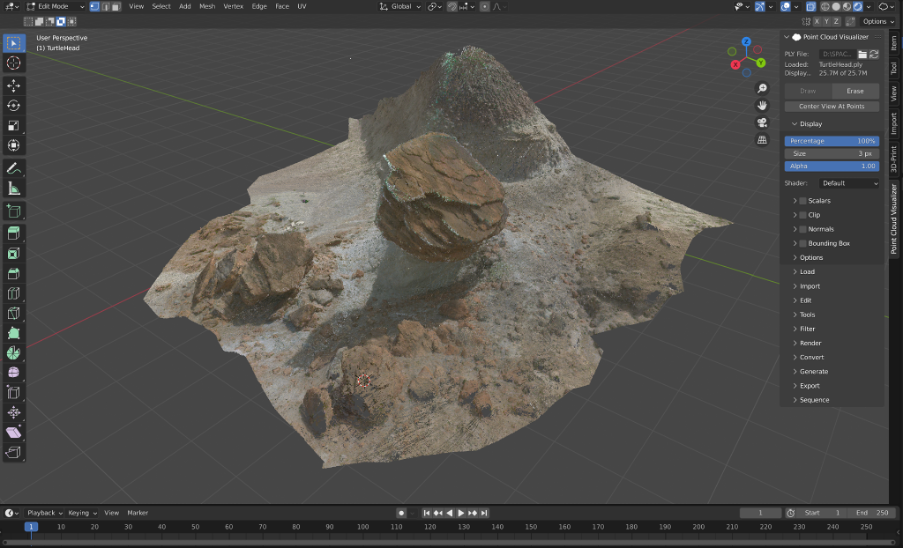
Another tested technology was the 3D scanning of station modules and geological features, data have been collected with the 3D scanner and it will be processed after the mission to generate 3D models of the station and of the geological formations.
The crew also brought a 3D Printer that was used to produce tools in support to other experiments (e.g. a scoop and collection tools for the geological samples) and a drone (a small quadcopter) that was used to map a couple of areas (the station and Tank wash areas). Last but not least, the crew collected and processed twelve geological samples that were processed by the crew scientist that found some magnetic particles and separated them from the main samples. The samples will be shipped to the principal investigator that will assess the origin of the microparticles (if micrometeoroids or simply ferromagnetic material).
Also ten biological samples were collected and the crew scientist had processed them following the principal investigator procedure to extract DNA material that will be further analysed by the researcher after the mission.
Throughout the mission we also performed outreach and filming activities: the crew journalist Benjaman is currently working on a documentary on analogue missions and he filmed the crew performing operations with cameras and drones, but also nice feature of the environment around the station, like a sky timelapse.
Following a hiatus of one year, after our mission had to be pushed back due to Covid, it has truly been a return to form for Supaero crews at MDRS, as we had the chance to perform two larger-scale rotations in a row this Field Season, for a total of six weeks of combined mission time. This is the Mission Summary of the first of those two crews, and the one that had worked – and waited – the longest before setting foot on Mars.
Our Crew
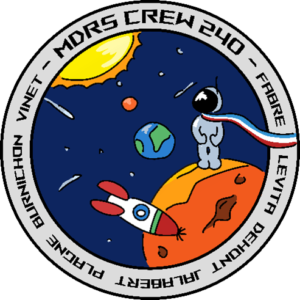
The selection for Crew 240 took place in late 2019, and the Commander was appointed a few months later, following a first assignment as Crew Journalist as part of Crew 223. We all met each other at that time: five fresh-faced, first year Engineering students, without even a bachelor’s degree; a first year Master’s degree student; and a second year Engineering student, just returned from a first mission at MDRS – all studying at the same place, but with different dreams, desires and objectives for the future. Two years on, it’s clear that this group of seven extra motivated people had grown a lot. We’d seen hard work, doubt, successes, hardships, the hurt of knowing that our mission would have to wait, and the strength to go on and move forward anyway. During those two long years of preparing the mission, we had the chance to acquire knowledge and experience, either in our studies, or in our work in a professional setting. Clearly, this time spent on growth has had a huge impact on the way we approached our mission at MDRS.
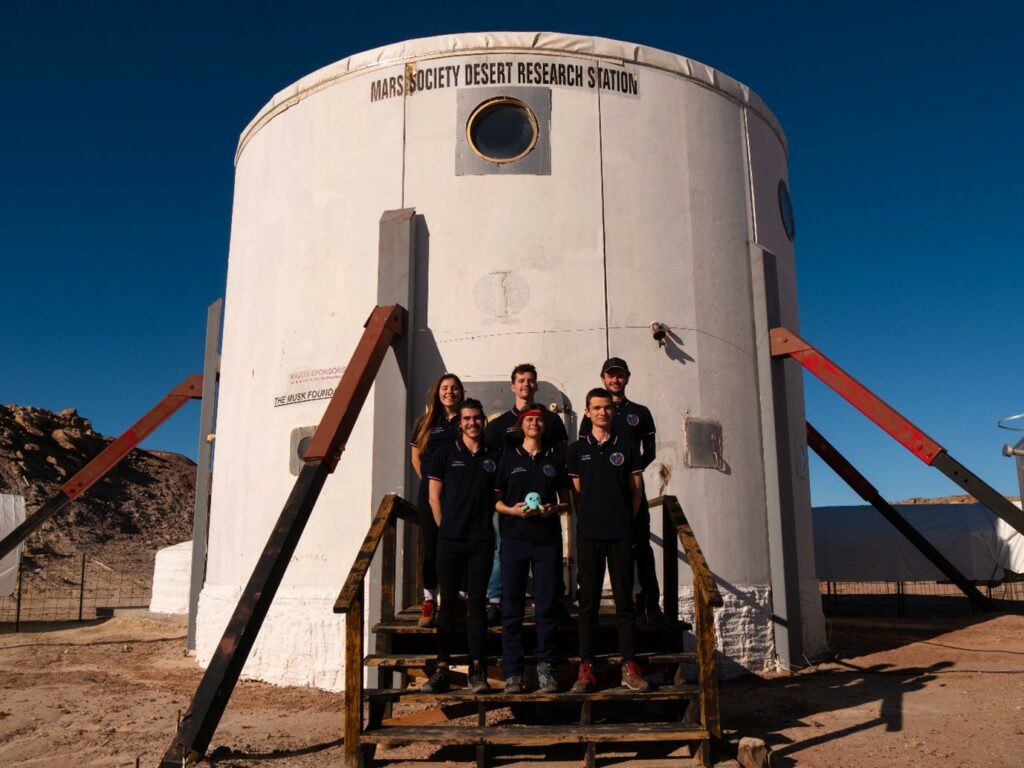
From Top Left: Executive Officer Marion Burnichon ; Crew Astronomer Maxime Jalabert ; Crew Journalist Pierre Fabre ; Commander Clément Plagne ; Health and Safety Officer Julie Levita ; Crew Engineer François Vinet
Yes, I did mention the number seven on that previous paragraph: that’s how many we used to be throughout all the preparation. Raphaël, the seventh crew member, was set to be our GreenHab Officer, and was responsible for the atmospheric experiments we run with French research centre CNRS, amongst other large parts of our work. We had to go on to MDRS without him due to visa issuance problems, and we miss him for many, many reasons, either it be for his hard tireless work and thorough knowledge of his subjects of focus, or simply his never-ending positivity and good spirits. His absence is felt throughout the Hab all the time, and while he can’t technically be considered a member of this crew, all the work he’s put forward for this mission makes him, in our eyes, just as much of a member of our group.
Our Work
Supaero crews benefit from the wealth of experience and prior knowledge gathered during all the rotations our older students or alumni have participated in, and it’s clear that with this experience, Crew 240 has managed to put together a set of scientific content that far exceeds what had been performed in any prior mission by our crews. A strong desire to push towards the most relevant content, that makes the best use of the specificities of the station, and the region around MDRS, has led to a number of brand-new experiments and continued advances on the experiments we had already brought on. This will be an outline of all the work that was performed over these past three weeks.
Human Factors Research
This year has seen an increase on our attempts to research the ways a stay at MDRS influences us physiologically as well as psychologically.
On the technical performance side, one of our longest-running experiments, TELEOP, once again arrived at MDRS under the helm of Crew Biologist Marion, taking advantage of the longer mission time. Developed in-house at the SacLab Laboratory at Supaéro, this experiment was part of the testing regiment of analogue astronauts for the Sirius mission in Russia, and at MDRS we similarly performed regular tests of simulated rover driving on the Moon, testing fatigue in different physical positions to get Earth-level understanding of how weightlessness can influence performance.
In the meantime, an experiment from the University of Bourgogne offered daily questionnaires to assess a large array of psychological reactions to our living situation, and an experiment from the University of Lorraine combined questionnaires with long, extensive sessions on a piece of software designed to assess attentiveness through numerous tests.
These experiments were performed on time, efficiently and in accordance with the protocols given to us by the researchers responsible for these experiments, under the supervision of Crew Engineer François. While many of them were tiring – by design – the crewmembers took it to heart to put in their best efforts so that our scientific partners gather relevant data.
On the topic of physiology, we have continued to study sleep. After Crews 206, 222 and 223 used Dreem headbands to show the relevance of consumer-level hardware applied for scientific data, we have followed on this work by using Fitbit wrist bands to obtain biometric data across the mission, with the goal to study sleep, performance during sports session and EVA, as well as nutrition from before the mission all the way to the post-mission. This, combined with frequent questionnaires on sleep quality and emotional levels, should help us better understand the physiological and psychological effects of a mission like this one.
Lastly, space medicine company SpaceMedex has entrusted us with another consumer-ready biometrics tool, HexoSkin, a skin-tight shirt that measures data during exercise. This helps us gather extra data from our EVAs, data that not only gives us more precise values for the amount of exercise performed, but can also be used for further analysis of our experiment based on performance on EVA. Both the data of the Fitbit wristbands and the HexoSkin have been collected by Crew Scientist Marion, and will be further analysed after the full duration of the experiment.
Atmospheric and EVA Experiments
While most of our time is spent within the confines of the MDRS campus, a lot of the science we perform takes great advantage of the geographical position and geology of MDRS. In the past, our EVAs were focused on maintaining the experiments we stationed outside; this year, additional ideas have given even more solid purpose to our extravehicular activities, and have led to valuable data being collected on both the human side, and also about the area around MDRS.
Like previous years, French research centre CNRS has offered several instruments for field testing, in the Mars-like terrain of MDRS that they believe can bring valuable results and data. Amongst the tried-and-true experiments, LOAC, a LASER-based aerosol particles counter has had another successful run at MDRS. While MegaARES, the Earth-ready cousin of an instrument launched on the Schiaparelli mission to study electric fields on Mars, has unfortunately suffered from technical issues and was eventually not set up, another newcomer, the Field Mill, designed for the same purpose, recovered its first data from the desert during this mission. To complete the set, the PurpleAir air quality instrument was tested for the first time by our crew at MDRS.
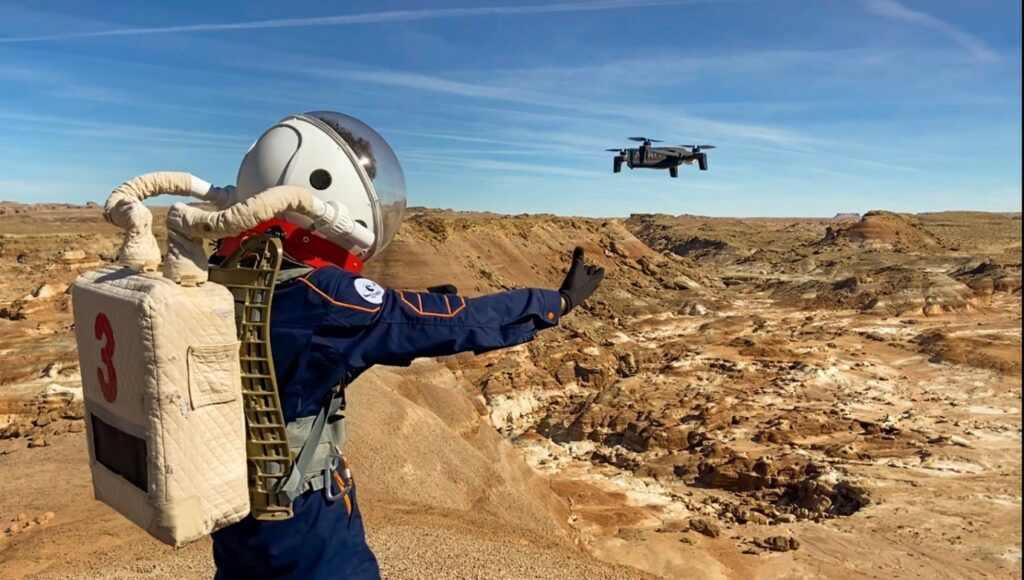
One of the high points of our time spent outside on EVA was based on a partnership with drone company Parrot, who donated consumer drones capable of performing 3D mapping tasks. While the usual maps available to us at MDRS, mission support, and good safety procedures can ensure the good proceedings of our EVAs, we wanted to assess how helpful these 3D maps could be to improve performance and lower fatigue. To this end, one test EVA and two sets of experiment EVAs took place, using 3D maps captured from prior EVAs by Crew Journalist Pierre. While the technical results still need to be processed, there’s a strong feeling that 3D maps are a great help for EVA planning.
Crew Journalist Pierre, using drones for 3D mapping and shots of the areas
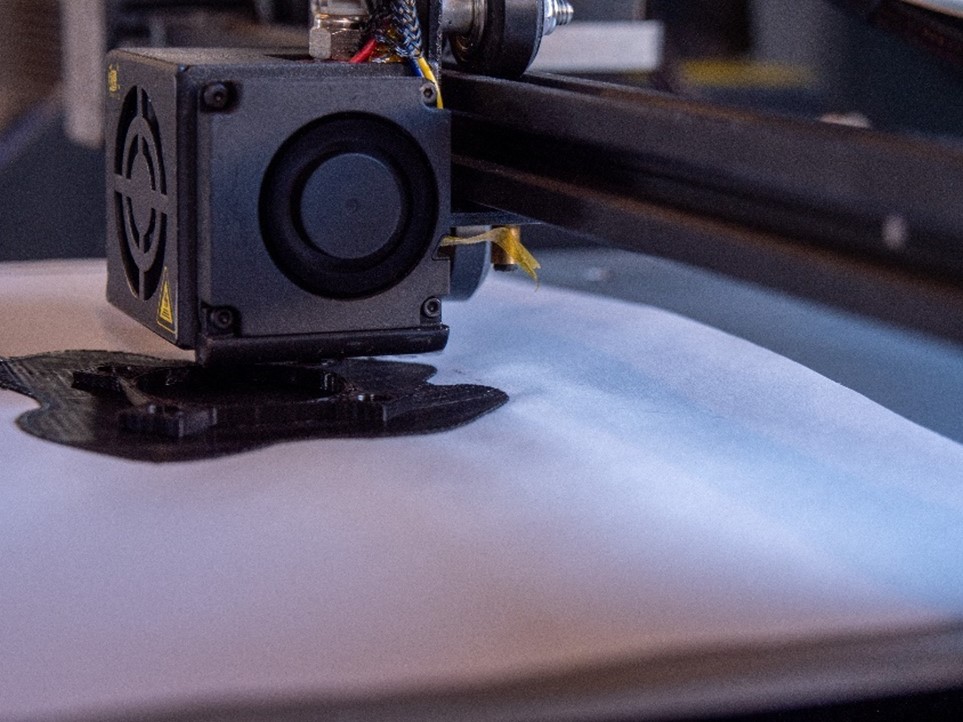
Lastly, a lot of effort was put forward to show the usefulness of 3D printing in situations like this mission, and for future Mars missions, where resources would be scarce, and adaptability was key. In a demonstration that was more focused on outreach and evidencing the vast capacities of these tools, Astronomer Maxime successfully delivered 3D pieces that could technically be created for the repairs to a station or a part of a vehicle, and therefore ensure the integrity of the station.
3D Printing proved of great value to the running of our operations at MDRS
Biology and Botany
With the originally selected GreenHab Officer’s work being taken over by Crew Scientist Marion, there was still work afoot in the botany area, and experiments focused on biology and general water use were plenty during the mission.
Toopi Organics, a company that – among other works – formulates fertilisers based on sterilised and stabilised human waste such as urine, has entrusted us with a technical test of their products. One part of it was based on sprouting soy in a soil that was based to recreate Martian chemical conditions, to analyse the efficiency of their product. Another application was on the growth of a specific alga called spirulina, which showcases rapid growth as well as good nutritional properties, and could prove in the future to be a valuable source of food for astronauts on Mars. While Crew 222 and 223 had successfully grown spirulina, this experiment aimed to take it a step further by analysing the efficiency of fertilisers on growth. While the sprouting was successful – and a first for city dweller and HSO Julie – errors in the protocols handed to us for spirulina have led to difficulties in growing the algae, and we hope that the following crew will have better luck with corrected protocols.
In the meantime, the Science Dome was busy with two experiments. One of them had been brought to the station for the first time by our own Crew 206, and had been previously tested on the ISS by ESA astronauts: named Aquapad. It consists of a self-contained bacterial culture implement, to easily test for water quality. Beyond the work of Crew Scientist Marion proving that water at MDRS is fully safe, this experiment has proven that astronauts with less formal training could easily assess water quality in a station. In the same domain, water recycling has been an important part of our water management strategy, and the use of frugal processes to clean up water has been successfully attempted by HSO Julie, with shower water being filtered and all solids and dirt being precipitated out of the solution, leading to an increase in available water for improving hygiene and comfort amongst crewmembers.
Astronomy
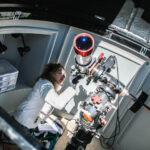
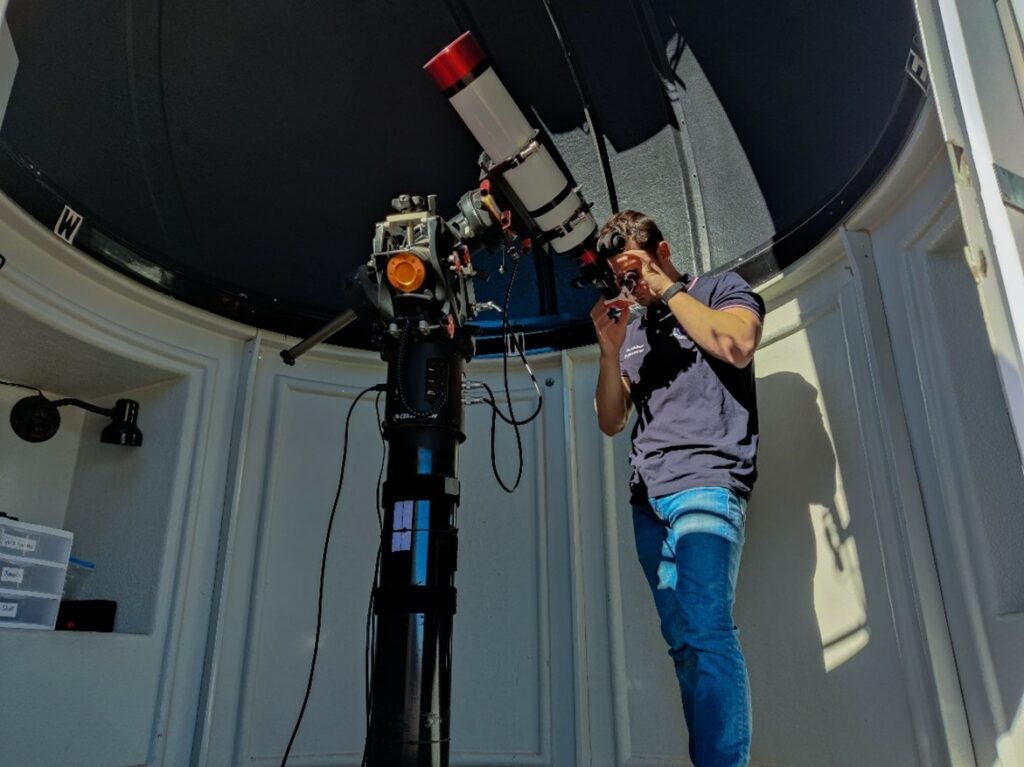
Astronomy suffered from a bit of a slow start, with many issues unfortunately plaguing both solar and night-time observations, and it sadly took some time for our Astronomer, Maxime, to gain the ability to perform, to some extent, his work of observing the skies. He has been able to perform numerous observations of the Sun, many of which showcasing solar activity, as well as a number of takes for astrophotography. Unfortunately, while many captures were attempted for the research project, which focused on detecting supernovae, the data throughput available to us was deemed too high to fully commit to the experiment, and the results will likely be processed far after the mission.
Crew Astronomer Maxime, Observing the Sun
Outreach
As a student association, our job doesn’t only consist of organising the mission, finding scientific partners and sponsors to be able to get to MDRS. For many years now, a lot of our work has also gone towards building an interest in science and space for schoolchildren of all levels in the region around Toulouse. While this is a year-round job for many people, beyond our MDRS crews, having the chance to perform an analogue mission in a place like MDRS is ideal to create content that can appeal to the students we work with, and we have not missed the chance to do so. Under the creative eye and keen sense of logistics of Executive Officer Marion, a large number of videos, either based on the reports of Journalist Pierre about the experiments we work on, or about the general life in the station were created, and will be the subject of a number of YouTube videos that can be showcased for our students directly, and communicated to the teachers in the schools we are partnered with.
Life in the Station
Supaero crews have always had the chance of working together in close contact for a long period prior to their mission, and of sharing numerous experiences as students, leading to them having strong cohesion and a good understanding on how to live together through the time of Sim. This mission was a little different, since we all had to meet through Zoom and were all in different countries for a big part of the mission prep, meaning that a lot of the traditional cohesion sessions done together in Toulouse were missed by all. Still, with two years to get to know each other and work on the same subjects, we arrived in the USA in high spirits and ready to go on to our mission.
Life in the station was, as much as we could get it, well organised and regulated by our daily exercise, EVAs, the regularly scheduled Human Factors experiments, as well as our personal work. HSO Julie was in charge of our daily exercise, and did a fantastic job of getting some movement out of the half-awake bodies in the Lower Deck at 7:30am. Having been lucky enough to have clear skies and, for the most of the mission, very comfortable outside temperatures, the EVAs were performed in the morning, whether they be focused on drone flights, atmospheric experiments or utilisation of 3D maps, leaving the afternoons open for all the other parts of our daily work routine.
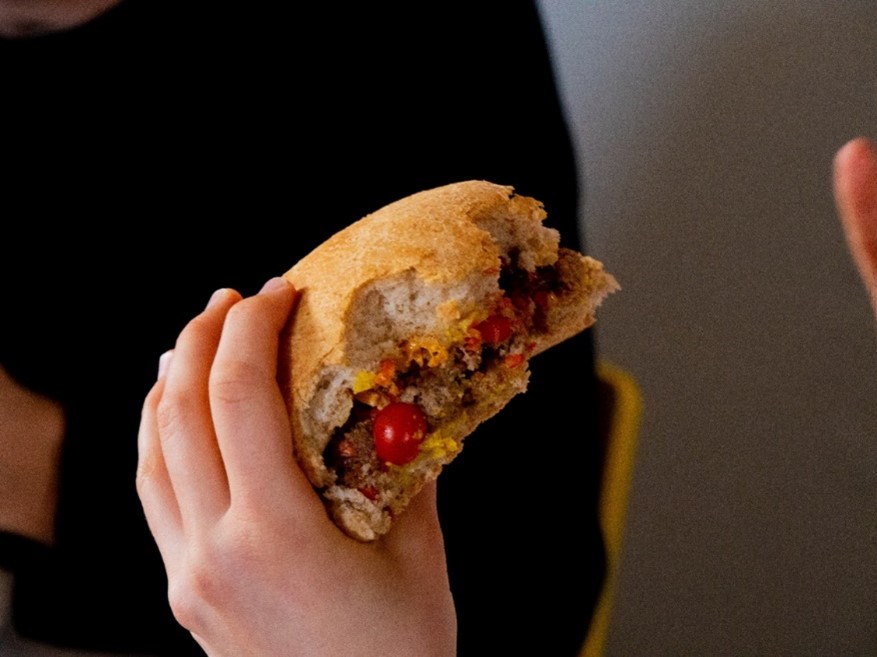
In a rather stereotypical way, good food and nice shared meals were a necessity for this very French crew, and being resourceful with our unusual ingredients was critically important to maintain morale for a group of people where, frequently, a bad meal could be the sign of a bad day. Fortunately, the creativity of every crewmember and the motivation to try to get things to work meant that practically every lunch and dinner were well-enjoyed by all.
In some odd way, mastering the MDRS burger was a high point of the mission.
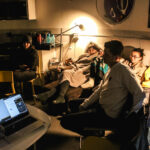
Things can be complicated when your workplace and your home are the same, and especially if your days sometimes end at 9pm by the end of the communications window, and occasionally even later, for our very dedicated Journalist Pierre who worked overtime to get our reports done both in English but also in French for our own little communicators in Toulouse. Fortunately, a number of relaxation, meditation or cohesion exercises set up by our HSO Julie have done a great job of allowing us to cool down after our long, tiring days, and brought some very pleasant windows of calm and quiet amid the hubbub of our eternally busy life. The evenings, when we weren’t simply too tired to go to bed, were spent on games and movies, setting up the good mood for the night and to compensate for what was, very often, some very tired mornings.
Three weeks was a long time to spend on a mission – the days were often long, and yet the mission seemed to end surprisingly quickly. There’s been a build-up of fatigue from the long days, a lot of missing our families and the comfort of modern life, and a definite desire to get back to normal life for a good number of us by the end of the assignment. Yet it was a unique moment that held massive value as a human and scientific experience, and one that will stay in our memories for a very long time. In an odd way, we’ll miss life in the station, even though we’re definitely happy to get back to the life we had.
There are almost too many people to thank for this mission and no good order for them. Thanks to all our scientific partners and sponsors, without whom we couldn’t have gone. Thanks to Shannon, Atila, and all the MDRS staff and CapComs who have been crucially helpful throughout our time in the station. Thanks to our friends and families, whom we can’t wait to hear back from. To Crew 263, we bid you good luck, and a great time at MDRS!
-Commander Clément Plagne and the whole of Crew 240
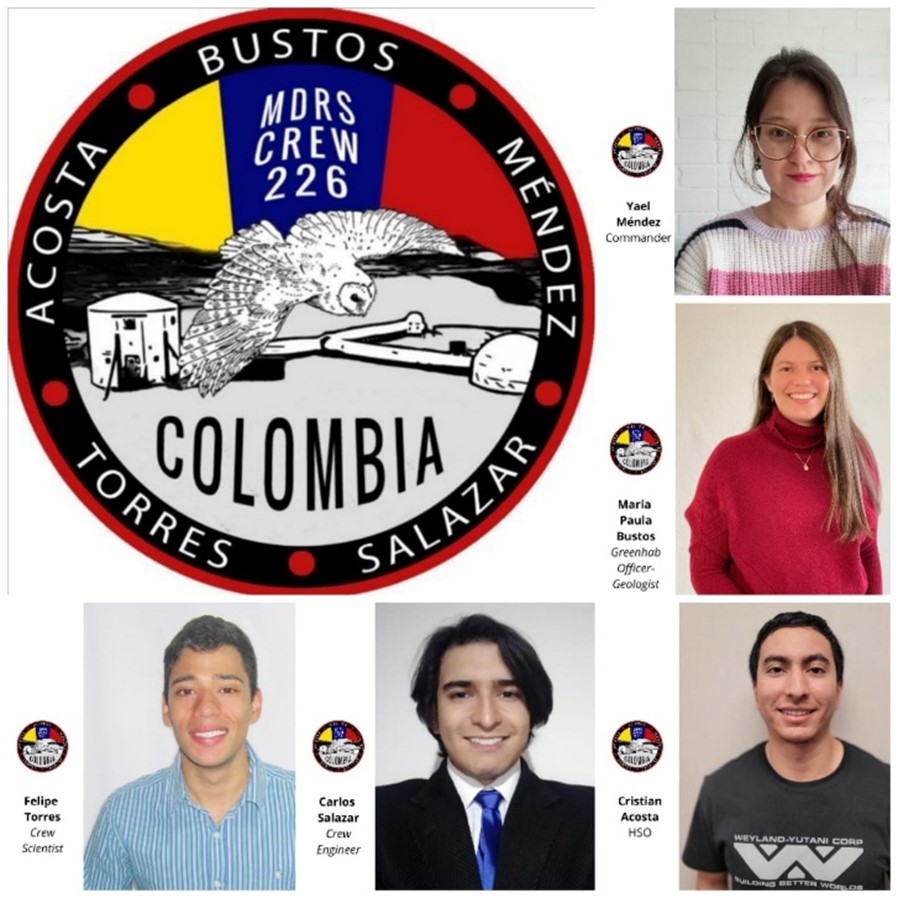
From January 16th to the 30th, 2022, the second Colombian Mars Simulation Analog Mission took place in the MDRS. The team got integrated by Colombian students, researchers, and professionals in the areas of Science, Engineering, and Technology strongly related to the aerospace field. Among others, some challenges the mission crew encountered were to go through confinement and isolation in this habitat for 15 days, on a diet based on dehydrated food, and limitations on the use of water and communications.
The Colombian main crew, Crew 226, includes:
Felipe Torres, Mechanical Engineer from Universidad Nacional de Colombiawith the position of Crew Scientist.
Carlos Salazar, Mechatronic Engineer candidate for a master’s degree in Engineering– with the position of Crew Engineer, both from the Universidad Nacional de Colombia.
Cristian Acosta, Aerospace engineer for Blue Origin, with the role of Health and Security Officer.
Maria Paula Bustos, Geologist and Master’s student in Geodesy and Geoinformation Science -Technische Universität Berlin, with the position of Greenhab Officer and Crew Geologist.
Yael Méndez, Microbiologist, from Universidad de los Andes and Master’s student in Geosciences from Universidad Nacional de Colombia with the position of commander.
The Crew Organizer is David Mateus, a Mechatronic Engineer and Master’s student in Space Studies at the University of North Dakota.
The main line of work is related specifically to the areas of expertise of the crewmembers, developing projects following years of studies and preparation, and, as it usually happens in space exploration, collaboration with teams left back on Earth. The second line is about the interest in developing outreach projects in Colombia. Our country does not have a well-developed space field, and these kinds of opportunities provide a platform to develop several types of outreach activities, from general to specialized public.
Mission patch and personal photos
EVA Summary
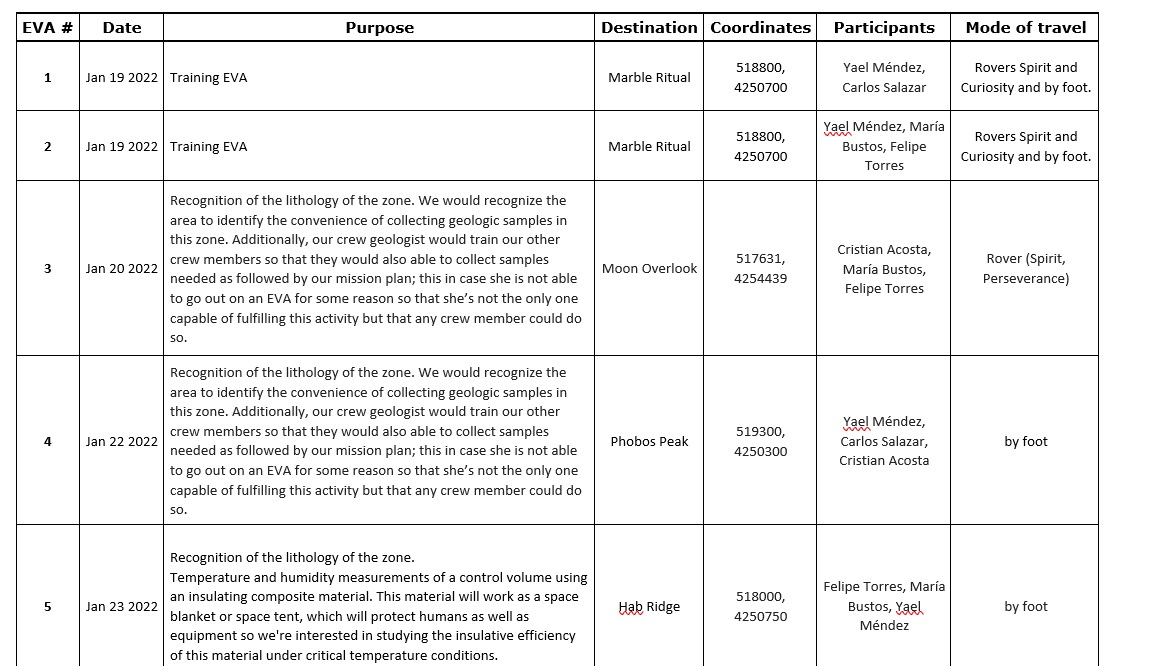
The crew executed a total of 8 EVAs during the 2 weeks period at the MDRS. Appendix 1
Operations Summary
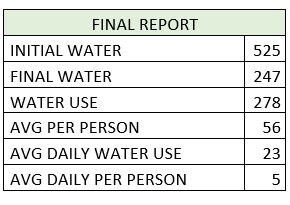
Water consumption was monitored daily as well as the status of charge of batteries powered by the solar panel system. All mechanisms functioned nominally throughout our mission except for the energy system which controllers failed one day before ending simulation.
Health and Safety Summary
The overall health for crew 226 during the mission was good. No one developed any severe illness or injuries while at MDRS which was always great to see. Nonetheless, the following symptoms developed among the majority of the crew members at different times: coughing, sneezing, headaches, chills, sore throats, and acid reflux. Aside from the acid reflux, these symptoms were manageable with specific vitamins and medicines and never worsened after appearing. The only minor injury sustained by a crew member was that of the rolled ankle which saw inflammation. But with rest, pills, and creams, both the inflammation and pain went away and recovery was speedy. Another note was that of personal hygiene and although the crew has not taken a shower in 12 days, they have been very good with using facial wipes and other personal hygiene products to stay relatively clean throughout the mission.
Green Hab Summary
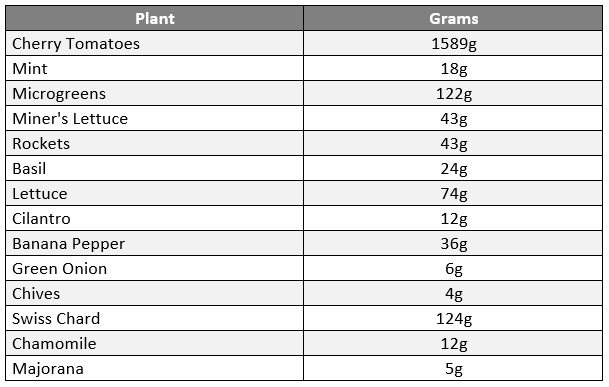
The green-hab was received on the 18th of January 2022. Several kinds of plants such as cherry tomatoes, herbs, carrots, lettuce, micro-greens, peppers, and cucumbers were already planted on our arrival. During the two-week rotation we harvested the following:
Additionally, the following was planted: lettuce, microgreens, chives, lemon balm, cilantro, and red bunching onion. Some of them are already growing and are expected to be harvested in the following weeks.
Research results
Carlos SALAZAR (Crew Engineer)
Project Title: 3D Mapping for rovers using point cloud stitching and Kinect
Description: Build a system that gets point clouds taken with a 3D camera on an element like the Kinect sensor and joins them together to make a 3D map of the environment and locate itself in it. The following tasks have been defined:
Get the points clouds using Kinect and point cloud library
Process the point clouds taken
Check and validate point cloud stitching algorithms
Check and validate point cloud matching algorithms
Integrate the developed modules
Methodology: The method of research selected for this project is going to be experimental, the samples taken with the sensor will be taken mainly in indoor areas or in a controlled environment, a portion of the solution will use methods from the point cloud library PCL using example point clouds. The idea is to check if those methods work with our samples and how a correct integration of all the modules can be made, identifying its weak points to propose and evaluate ways to improve them.
Preliminary Results: A lot of pictures for structure from motion were taken during an EVA, some processing is needed to turn them into point clouds. The Kinect was used in the hab and the samples will be used to test the algorithms that will be developed later.
Maria Paula BUSTOS (Crew Green Hab Officer)
Project Title: Classical music and the growth of plants at MDRS
Description: Evaluate the growth of cherry tomatoes and mint plants in the station under the sound of the classical music of Johan Sebastian Bach by exposing these plants daily to Bach’s songs and comparing them to a control group that is not going to be exposed to this music, and determine if Bach songs have an impact in the rate of growth of these plants in the MDRS Green-hab.
Methodology: 1) Select two cherry plants and two mint plants that were cultivated at the same time and exposed to the same conditions during the last weeks and measure the size of its leaves and the number of fruits and flowers they have. 2) Expose daily for three hours one mint plant and one cherry plant to Bach songs. 3) Measure daily the size of the leaves and the number of fruits and flowers of each of the plants exposed to classical music and the ones not exposed (control group). 4) compare results and determine if the exposure to Bach classical music affects the growth of tomato cherry and mint plants in the research station.
Results: We performed experiments in which we daily exposed two cherry tomato plants to Bach’s classical music for three hours. We exposed one of the two plants (Plant A) to the music at a distance of 1cm, while the other one (Plant B) was exposed to the music 7 meters away. After two weeks we found out that plant A, grew less in terms of new fruits and flowers compared to plant B. We cannot conclude that music was the only factor that could have influenced the growth of the plant since there were also a lot of insects that infested plant A. Further research with more controlled parameters should be performed in order to have concluding remarks regarding music exposure and plant growth.
Felipe TORRES (Crew Scientist)
Project Title: Feasibility of using bo-PET films to build an emergency Space Tent.
Description: Analysis of the insulating efficiency of a biaxially oriented polyethylene terephthalate (bo-PET) film in order to determine the feasibility of building an emergency space tent for EVAs in Mars and other aerospace applications using this material.
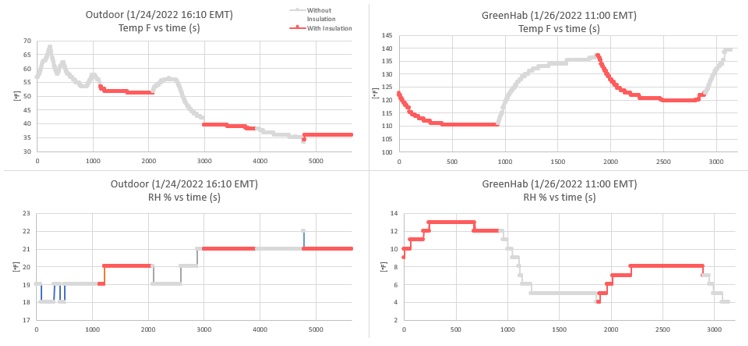
Methodology: Take measurements of Humidity and Temperature using a DHT11 sensor and Arduino. These measurements will be taken on different control volumes outdoors both with and without the thermal insulation provided by our material. To consider meteorological factors, these measurements will be taken at different times of the day and at different locations around the station. The insulative material will then be tested on different crew members, by providing a protective layer with the material and the body temperature will be measured with and without this insulative layer.
Results: Bo-Pet films provide considerable protection against critical temperature conditions. At high temperatures, the material is able to reduce temperature inside the control volume due to its high light reflectivity, avoiding temperature to rise considerably. In contrast, at low temperatures, the material maintains heat inside the control volume; while it doesn’t increase temperature, it prevents that the volume reaches extremely low temperatures in the absence of sunlight. In terms of relative humidity, bo-PET film increases the relative humidity inside the control volume, which is convenient for the dry environments found on Mars. Figure 1
Figure 1. Temperature and Relative Humidity measurements with and without insulation.
Yael Natalia MÉNDEZ (Commander)
Project Title: Clays identification through reflectance spectrometry and Raman spectroscopy.
Description: This project seeks to use Mars Desert Research Station (MDRS) to analyze the impact that clay variations have, and recognize their mineralogy through laboratory techniques (reflectance spectrometry and Raman spectroscopy), and compare that with the instruments applied in the perseverance rover.
Methodology: Collect samples of different types of clays found in the MDRS and they will be process in Colombia by Grupo de Caracterización Tecnológica de Minerales at Universidad Nacional de Colombia.
Preliminary Results: Zones’ geological description and lithology recognition, Clay samples collection to be processed in Colombia.
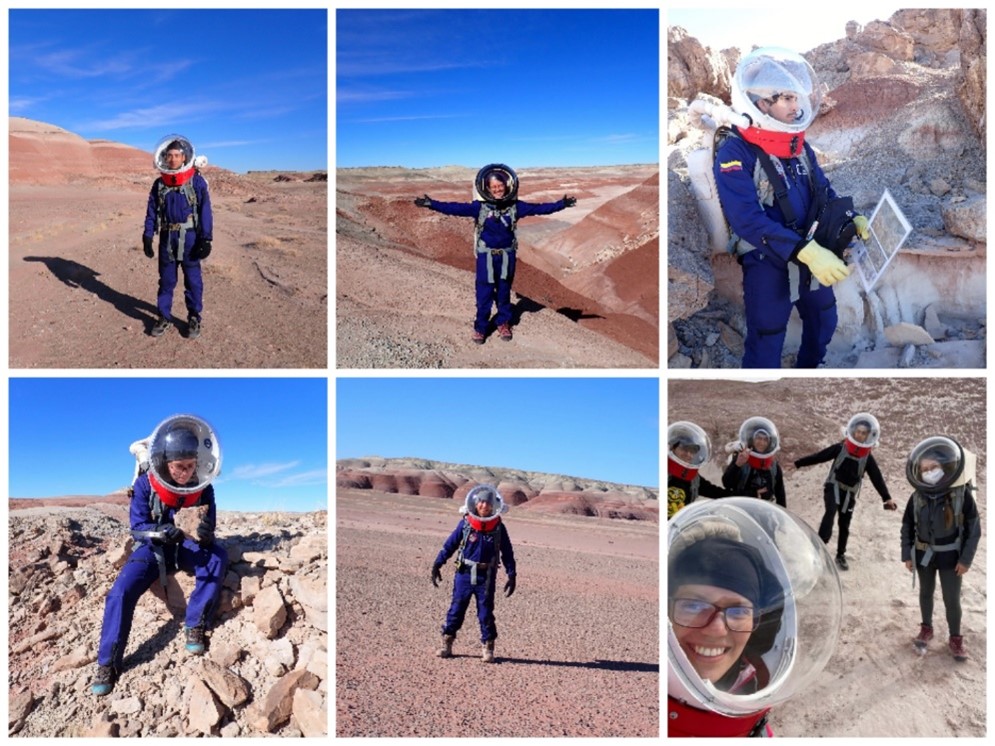
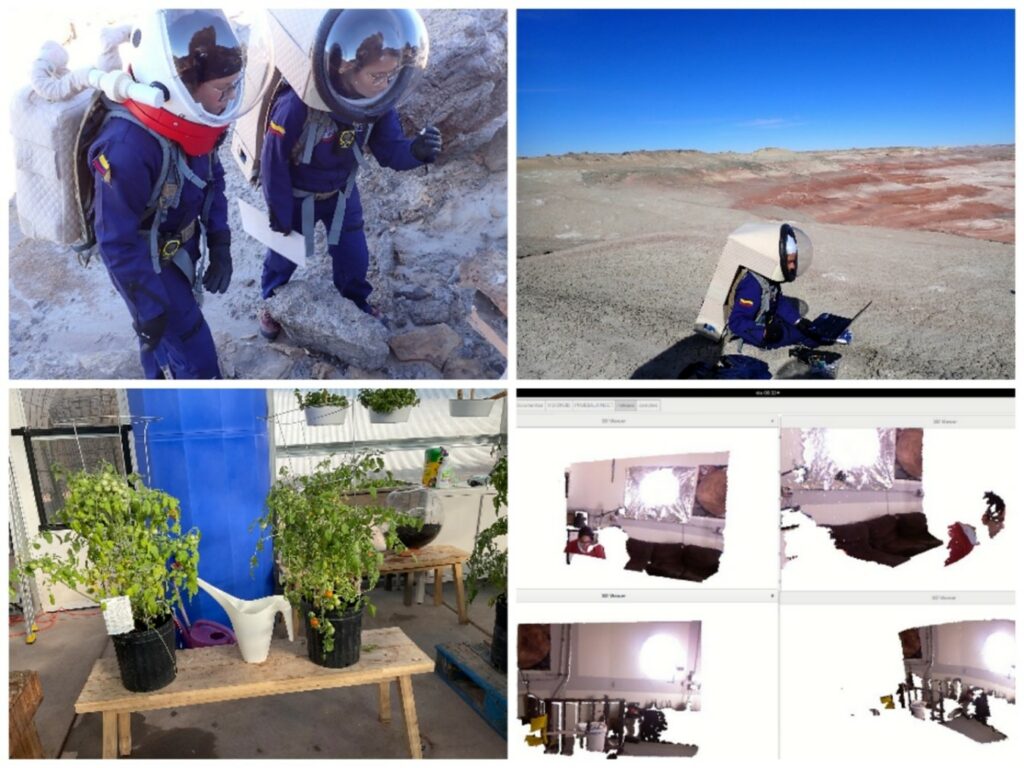
Figure 2. Upper left: Recognition of zone’s lithology. Upper right: Temperature and Humidity measurements. Lower left: Green Hab and music experiments. Lower right: Hab 3D imaging.
Acknowledgments
MDRS Crew 226 wants to acknowledge and thank all the people and institutions that made this possible. It’s been a two-year-long process that required a significant amount of effort from several people. We would like to start by thanking The Mars society, in the head of its president, Dr. Robert Zubrin, as well as Director Dr. Shannon Rupert, and Atila Meszaros, who made us feel safe and welcomed. We would also like to thank all the Capcom officers who were ready to take our reports and comments. And also, all the people behind the scenes working actively to make this possible, but surely helped us make our mission smoother and wonderful.
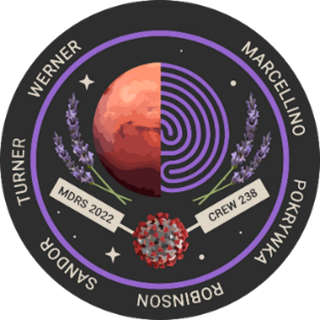
Through hardship, tomorrow to Mars, the Earth always
Crew
Commander: Dr Sionade Robinson
Executive Officer and Journalist: Pedro Marcellino
Health and Safety Officer: Robert T. Turner
GreenHab Officer: Dr Kay Sandor
Artist-in- Residence and Crew Astronomer: Aga Pokrywka
Crew Engineer: Simon Werner.
Acknowledgements
Crew of MDRS 238 would like to thank the Board and members of the Mars Society whose vision for MDRS made our mission possible: Dr. Robert Zubrin, President, Dr. Shannon Rupert, MDRS Director, Atila Meszaros, Assistant Director, Dr. Peter Detterline, Director of Observatories, who trained and assisted our Crew Astronomer before and during the mission; and Bernard Dubb, Johanna Kollewyn, Dani Gamble, Juan Miranda, who in addition to Atila, served as CapCom. We would also like to thank Bharghav Patel for his exceptional ground support, Jason Michaud of Stardust Technologies for engaging us in a VR project in use in several space analogues. Drew Smithsimmons and Rob Brougham Co-Founders of Braided Communications for the training and facilitating use of a new communication technology to address emotional wellbeing in future deep space faring, and Dr Julia Yates of City University of London who will evaluate this first-of-its-kind study. Thanks are also due to Mr Don Mear for receiving and storing many crew packages Grand Junction prior to our arrival. Lastly, enormous gratitude goes to our family and friends for both joining research project and for sparing us not only for our rotation, but the many online weekend meetings over the last two years of preparation.
Mission description and outcome
Crew 238 is a crew of diverse, international, multidisciplinary and experienced professionals, curated by the Mars Society after individual applications in 2019. The average age is 53. Our assigned rotation was for January 2021, but necessarily postponed in the global pandemic. Nevertheless we maintained and developed our focus and once travel and the MDRS re-opened in Autumn 2021, we were on our way.
Our focus throughout has been the wellbeing of future astronauts – both in our individual and joint projects. Our shared objectives were
Maintaining simulation fidelity in all activities, including standard ops, communications, emergency procedures in collaboration with Mission Support
Producing and documenting results on emergency preparedness and responsiveness
Effectively working with External Partners in testing effects of “Braided” communications” vs Latency Governed Messaging on the well-being and emotional response of the crew when communicating with loved ones
Engaging in mindfulness and reflection practices as mitigation strategies for stress conditions
Extensive multimedia journaling for internal MDRS use and external public relations
Welcoming and engaging a visiting journalist arranged by The Mars Society
and
Post mission, generating a portfolio of multimedia assets and creating additional outreach opportunities for media, schools, and other public support of future human travel to Mars.
With the exception of the last objective (ongoing), the crew have successfully completed these shared goals. Data collected in a world-first study Examining the impact of communication latency on crew closeness to loved ones on Earth – Mars Desert Research Station Mission 238: A Small Group Study (IRB-approved) will be analysed by Dr Julia Yates of Department of Psychology at City, University of London on our return. Additionally, it is pleasing to report we have managed our water, internet and food resources efficiently.
But our shared goals are the mere tip of the iceberg when considering work undertaken at MDRS over the last two weeks. Our individual projects have included data collection in Standardized Emergency Response Strategies (SRS), Mars Research Storytelling: Personal and Public Narratives in Mars & Space Research, From Space to Bacterial Colonization, Astronauts’ Coping Strategies in High Pressure Environments and Value creation with an Explorer’s Mindset. Both research work and “HabLife” have been followed by a leading Portuguese national newspaper on a daily basis, demonstrating considerable pubic engagement and outreach expertise of our XO and Crew Journalist.
Physically, crew health, as assessed by HSO Turner, has been robust despite a few minor bumps and bruises expertly dealt with along the way. Our commitment to maintaining simulation and to optimising our time meant we adopted many best practices of successful crew rotations in environments much more demanding than our two week rotation at MDRS. We have actively followed a schedule of work, rest and play. We have eaten breakfast, dinner and almost every lunch together (some surprisingly excellent meals, by the way), we socialised and we made time to reflect on learning, challenges and positive experiences in a daily After Action Review after dinner. We also shared a lot of laughter – and it is important to note laughing together should not be considered a mere passing pleasure. Studies have shown that shared humour is likely to play an important part in selecting the crews that will travel to Mars. Laughter is a valuable interpersonal tool essential to coping with boredom brought about by prolonged periods of isolation, routine and social monotony. It enhances morale and serves an important communication function when expressing frustration or dissatisfaction in a socially acceptable manner, without causing additional stress or conflict. Crews that laugh together have been shown to be significantly more productive and high functioning, as well as likely to remain “intact”, rather than split into cliques and subgroups.
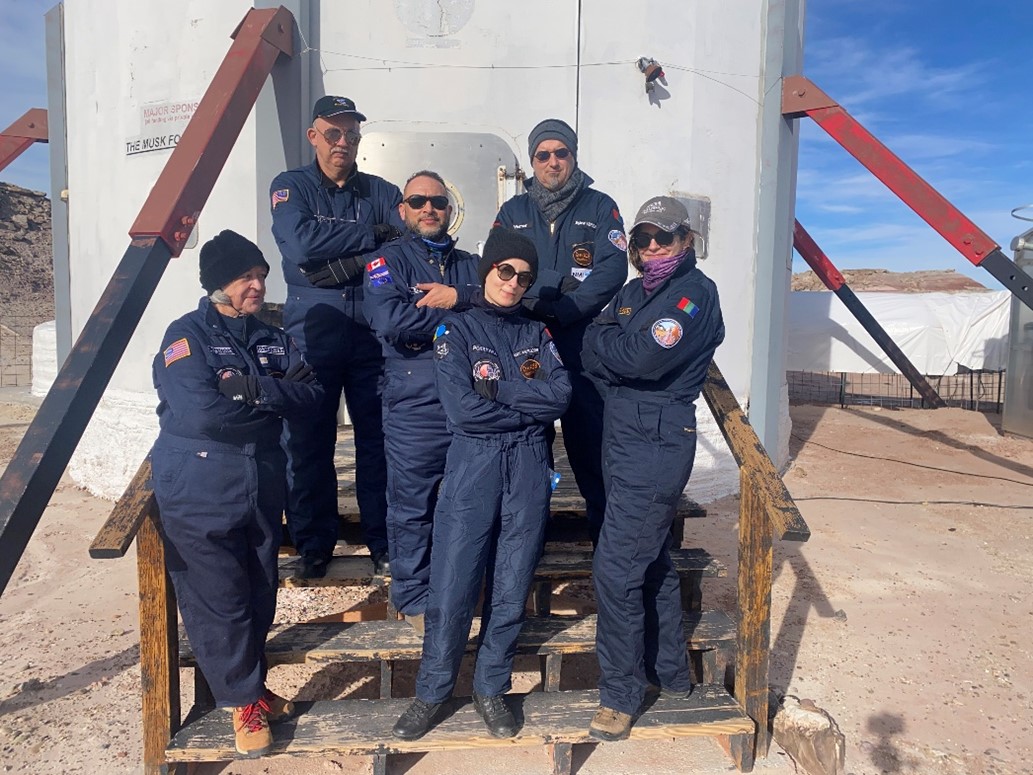
Fig. 1. Left to right, CHO Sandor, HSO Turner, XO Marcellino, Artist Pokrywka, ENG Werner, Commander Robinson.
Science and Research Outcomes on site:
Crew 238 organised around two fundamental research trunks: astronaut mental health and well-being, on the one hand; and public narratives about Mars research, on the other. The former involved all crew members, through our collaboration with the aerospace start-ups Braided Communications, Stardust Technologies, and City – University of London, but also crew member Dr. Kay Sandor, an experienced psychotherapist. The latter touches upon the open-ended research and storytelling work conducted by the artist-in-residence, Aga Prokywka, and XO, Pedro Marcellino who also served as Crew Journalist and documentarian. Research on leadership learning through exploration and expeditions will also be forthcoming (Robinson).
In addition to storytelling and documentary work to be completed and published in mainstream English-language media in Canada and beyond after rotation, XO Marcellino has reported on a daily basis to Observador, one of Portugal’s leading broadsheets, in partnership with one of their science reporters, using Braided’s latency messaging as a core communication tool. Between daily chronicles and the reporter-led pieces, a total of 30 articles were published as a Crew 238 Special Feature, pre-, during, and post rotation. Ten further articles have been published on the European Science Communicators Network, a collective of expert journalists writing on contemporary science topics.
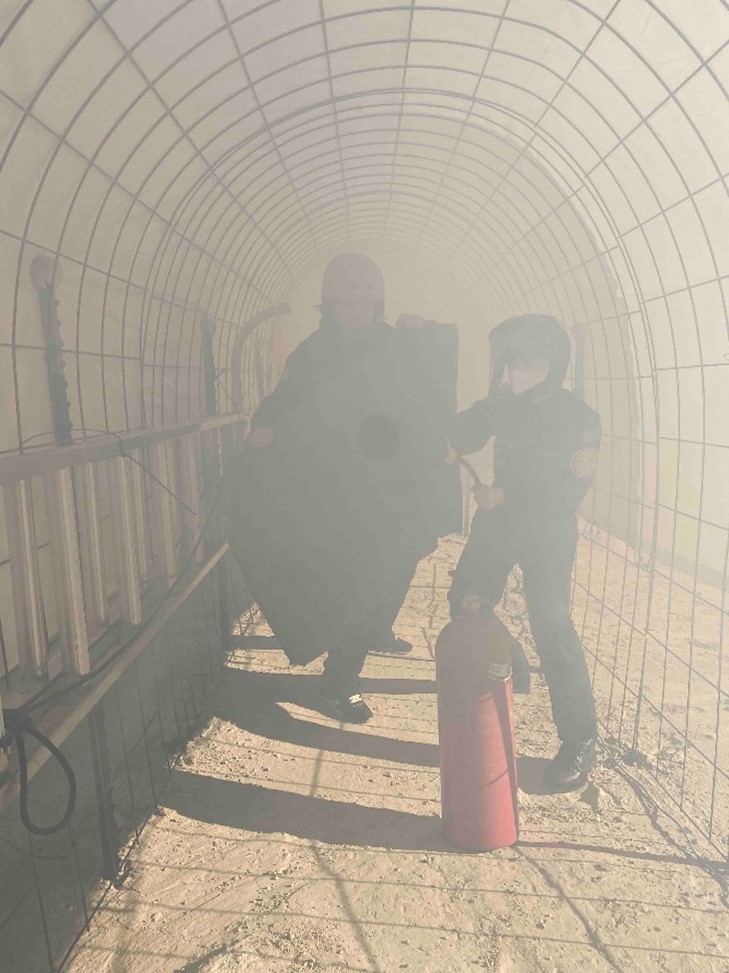
For our research on emergency scenarios, the crew was introduced to firefighting principles on Earth and discussed how these would need to be adapted for emergency response on Mars. Work included a practical exercise using a CO2 fire extinguisher and use of an Curaplex® patient transporter. After introduction to the ARAI principle (Alarm, Response, Analysis, and Information to ‘mission control’), several Mars-related emergency exercises were conducted including a medical emergency during an EVA, with recovery and transport of an astronaut to the HAB, a fire in the RAM airlock with a person trapped, a solar flare event including evacuation of the whole crew to a shelter (Science Dome) and a hull breach scenario within the tunnels.
Fig.3 Robinson and Pokrywka firefighting in simulated emergency exercise.
Lessons learned through these exercises addressed the importance of gathering the crew in a specific place – to immediately see if anyone is missing. As on Earth – firefighting on Mars demands a trained crew who can quickly identify fire source(s) and responses. A significantly faster response time was achieved after practice. The solar flare evacuation event went flawlessly and in a coordinated, calm manner. A tunnel rupture exercise demanded section shutdown and identification of the exact rupture position. Even in daylight it took the responding crew several minutes to identify the distributed ruptures and to “repair” them, when suited up. In terms of learning, we now recommend airlock design allow space for an injured astronaut to be safely transported in supine position and accompanied by at least 3-4 responders. Emergency stretchers or blankets should provide an opening for the life support system. A summary of findings will be written up as a White Paper.
Agnieszka Pokrywka (ART) in her multidisciplinary practice merging art, technology, and natural sciences, focussed on the exploration of invisible to the human eye micro and macro scales of living on Mars. She not only observed several astronomical objects (M 51, IC 434, M 101, IC 1848, IC 1805, Ceres, 104P Kowal, C 2019 L3 ATLAS) with the use of the telescope. She also investigated via the dark field microscope bacterial starters for fermented foods, as well as the samples gathered during EVAs. She was also searching for visual and aesthetic similarities between these images.
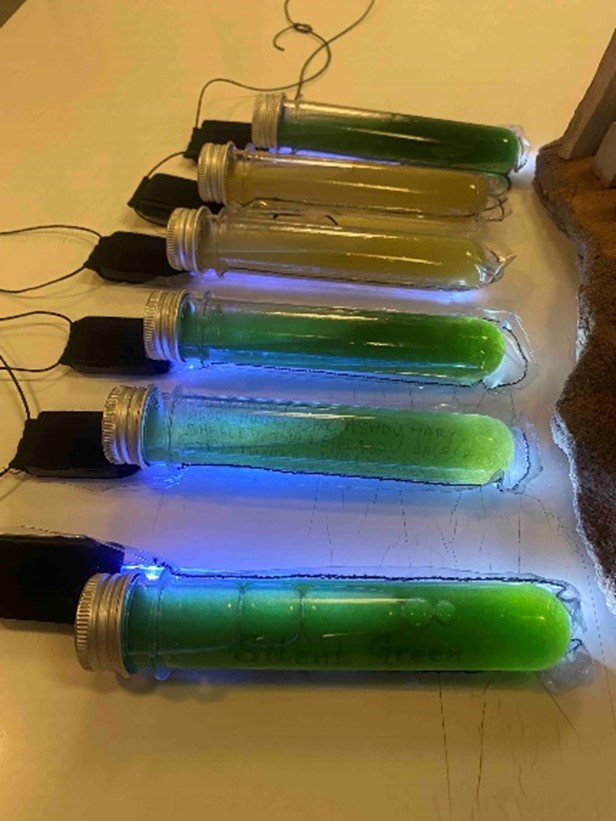
Throughout the mission, Pokrywka was cultivating bacterial starters to enrich the analogue astronauts’ diet with sourdough bread, yogurt, kombucha, and water kefir. She was also cultivating spirulina platensis, a cyanobacteria popularly known as spirulina generating 57g of protein per 100g. Cultivation took place both in a 1 litre vessel in the Green Hab as well as in six mini-bioreactors nurtured by each member of the crew. This experiment aimed to introduce each crewmate to the basics of spirulina cultivation, as well as elements of mindfulness and care. The benefits of growing spirulina this way are not only the production of oxygen and nutrients but also the connection and care for another being which we all seemed to miss during our mission. All the bacterial cultures, without exception, do surprisingly well at MDRS.
Fig 3. Comparing results of mini bioreactors nurtured over three days by crew.
Within the wellbeing research undertaken by Dr Sandor, experiments related to medicinal herbs for inhalation (Lavender Sachet), ingestion (Lavender Biscotti), and teas (Chamomile and Tulsi/Holy Basil), introduced to the crew during evening information and ritual times in our crew kitchen. The purpose of using these medicinal herbs was to reduce stress and anxiety. Informal immediate responses revealed all these activities were relaxing and restorative. Qualitative data about the effects of this activity was gathered before and after these activities and will be analyzed at a later time.
The introduction of the labyrinth as an instrument to reduce stress, relax the body, and quiet the mind was conducted in several stages. First the history of the labyrinth throughout time was outlined. Second, the process of the walk, and finally, the actual drawing of the labyrinth on paper, and then on the Martian (Utah desert) surface were introduced. A smaller 3-circuit labyrinth was attempted, but the Martian surface was very hard and the results were not satisfactory. Another larger temporary 7-circuit labyrinth was successfully drawn on a softer Martian surface. After drawing, the crew, in two separate EVAs, walked the meditative path of the labyrinth to the centre and then took the same path back to the exit. Immediate crew responses included curiousity and intrigue about the experience of walking the labyrinth – and a desire to repeat it. One said he felt like he left the campus as he focused on the path. Another thought it was meditative. Quantitative and qualitative data were gathered before and after the walk were collected and will be analyzed later.
Commander’s Reflection
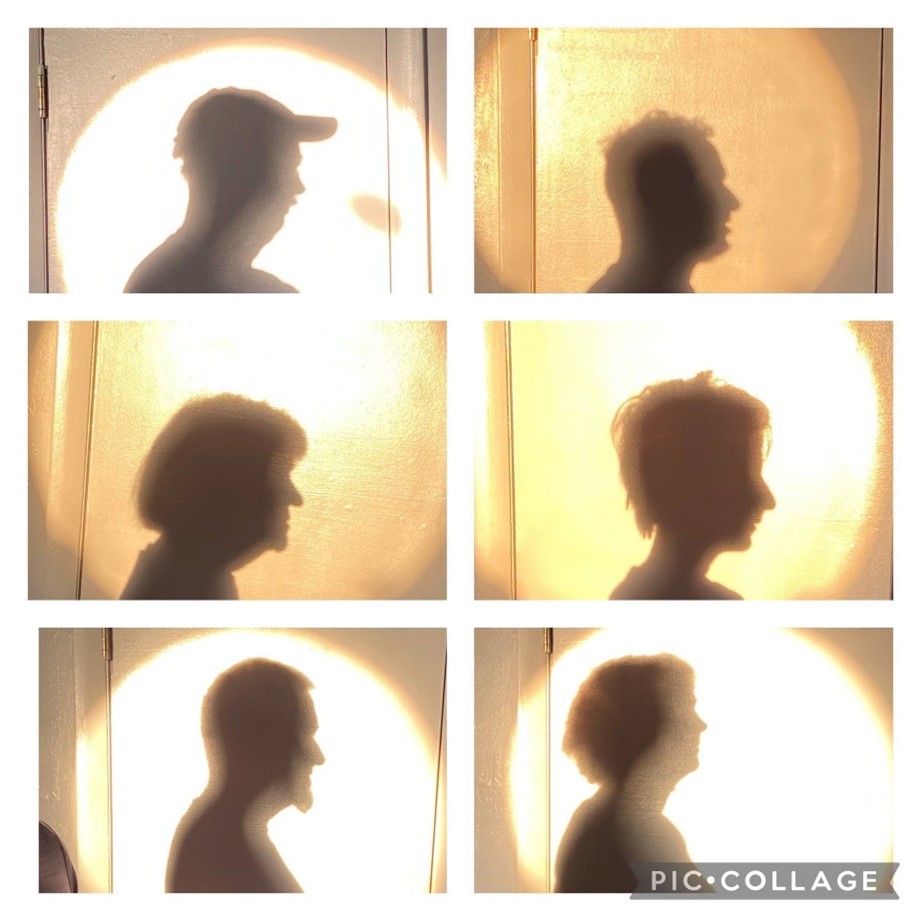
Fig.4: Crew profiles captured in silhouette by morning sunlight on upstairs of Hab wall.
As Commander I would like to conclude by highlighting a challenge that research has already identified for future travel to Mars- that of the Personality Paradox, noted more than twenty years ago by Professor Peter Suedfeld in his paper, The Environmental Psychology of Capsule Habitats (2000). The paradox is this – most volunteers for anything as challenging and unusual as space, undersea habitats, and polar work will score toward the upper end of any scale of thrill-seeking, novelty-seeking, and competence-effectance motivation. In a nutshell, such recruits want adventure and challenge. Yet the reality of missions will often be monotonous, routine, and full of boring tasks. A second factor is that volunteers also tend to be high on the need for personal control and autonomy, whereas capsule life is in fact controlled by environmental requirements and organisational regulations.
The implication of the paradox is that programmes risk recruiting exactly the kinds of people most likely to be unhappy on site. This finding poses questions about what can be done to improve recruitment, orientation, training, or the capsule conditions to diminish the gap? The most promising mitigating strategy is to ensure potential recruits are familiarized with what the experience will really be like by thorough orientation and experience in analogue environments (the value of such locations as MDRS). A second potential area to investigate is the degree to which procedural guidelines can maximize variety, flexibility, and control by the crew rather than base staff. There is clearly much more research to be done in this field.
End. (2000 words approx, excluding titles and labels).
Executive Officer and Health and Safety Officer: Dr. Cesare Guariniello
Crew Scientist: Tyler Nord
GreenHab Officer: Vladimir Zeltsman
Crew Astronomer: Dylan Dilger
Crew Engineer: Pavithra “Pavi” Ravi
Crew Journalist: Benjamin “Ben” Durkee
Acknowledgements
The entire Crew of MDRS 236 would like to express their gratitude to the many people who made this mission possible: our deepest thanks to Dr. Robert Zubrin, President of the Mars Society; Dr. Shannon Rupert, MDRS Director and Program Manager, who managed and supported our mission, and helped us troubleshoot any issues; Atila Meszaros, Assistant Director, who also managed and supported our crew and served as CAPCOM many times during the rotation; Dr. Peter Detterline, Director of Observatories, who trained and assisted our Crew Astronomer before and during the mission; David Murray, GreenHab Manager; Michael Stoltz, The Mars Society Liaison, Media and Public Relations; Scott Davis and NorCal Chapter, responsible for Spacesuits; the amazing and friendly Mission Support CAPCOM who served during our rotation: Bernard Dubb, Andrew Foster, Graeme Frear, Asma Akhter, and MJ Marggraff; Purdue MARS; all the departments and people at Purdue University who supported this mission; Kathy Celestine and Estelle Scott, for writing Christmas cards to the crew; and all the unnamed people, friends, and family, who supported and worked behind the scenes to make this effort possible, and who gave us a chance to be an active part of the effort towards human exploration of Mars.
Mission description and outcome
MDRS 236 “Cradle of Martians” is the fourth all-Purdue crew at MDRS. This mission encountered different challenges, one of the biggest being COVID-19, which delayed the original mission from the 2020-21 field season to the 2021-22 field season. Other challenges included wind and technical malfunctions making EVAs more difficult and non-nominal systems affecting heating and plumbing in the Hab. Even the logistics of the mission preparation was a challenge, with crew members being spread across the United States and even into Europe. However, the crew continuously rolled with the punches and pushed forward with optimistic attitudes. This is what we at crew 236 like to call “making do”. Making do isn’t about merely surviving life on Mars, but using the ups and downs of this Red Planet to revive our spirit of adventure and spontaneity, and to learn and adapt in order to make giant leaps for humankind. As commander, this is what I’m the most proud of my crew for. Their ability and effort to continue living the Martian life with full hearts, smiles on their faces, and a joke or two always up their sleeves. The research and outreach of the crew reflects that attitude. All crew members performed to very high standards and made substantial progress on their research projects and outreach. As described in the rest of this summary, the crew collected useful and interesting data during their time at MDRS and have plans to use the data after the completion of the mission, as well as ideas for laying foundations for further collaboration of Purdue crews with the MDRS program.
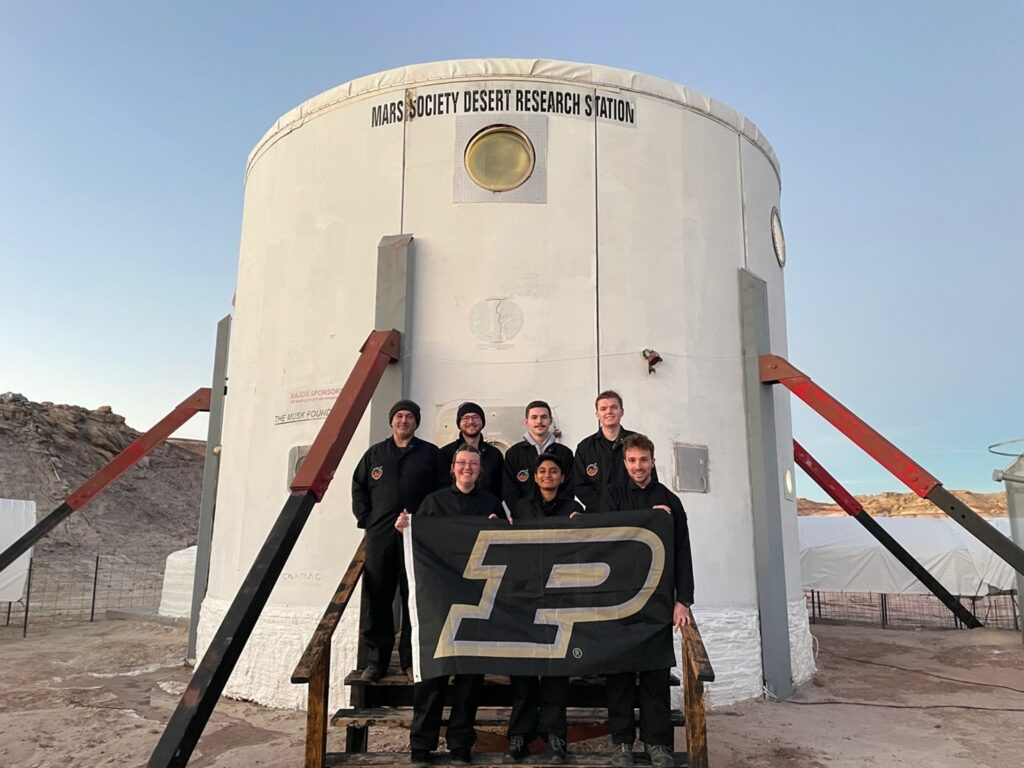
Figure 1. MDRS 236 posing in front of the Hab with a Purdue flag. Left to right: (top row) Executive Officer and Health and Safety Officer Cesare Guariniello, Crew Journalist Ben Durkee, Crew Scientist Tyler Nord, Crew Astronomer Dylan Dilger, (bottom row) Commander Kasey Hilton, Crew Engineer Pavi Ravi, and GreenHab Officer Vladimir Zeltsman
Summary of Extra Vehicular Activities (EVA)
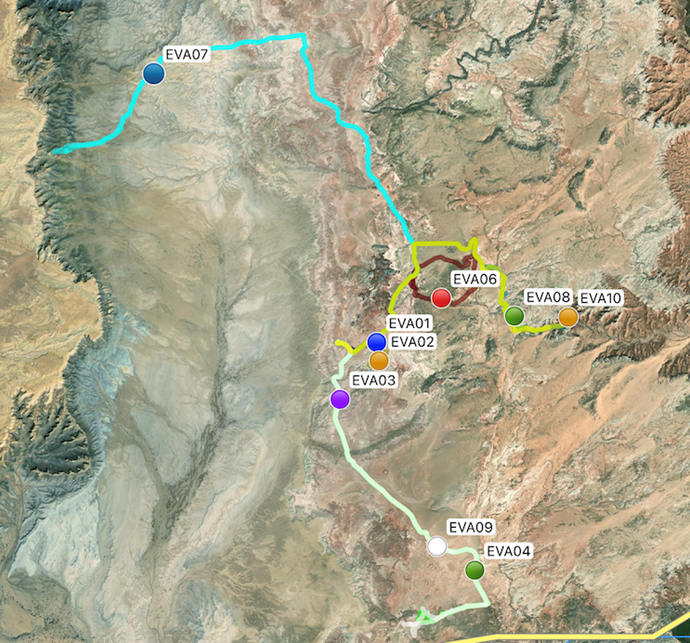
After being trained in the use of rovers and in the safety protocols for EVA, the crew had eleven excursions during rotation 236. Two were training EVA to Marble Ritual, 6 more being successful, and another three being shortened or cancelled due to weather or system malfunctions. The EVA served three research projects: scouting additional habitat locations, collection of geological samples, and heat mapping of geological features. The crew optimized the time on the field, limiting the driving time to less than 22% of the entire EVA duration.
Figure 2. Two-dimensional view of the EVAs performed by MDRS 236 crew
Science Summary
Crew 236 had 10 separate projects that covered a range of topics. Four projects were EVA related and all but one desired EVA was completed. These EVA related projects evaluated additional habitat locations, created heat maps of different geological locations, and categorizing geological samples for use on Mars. The indoor projects evaluated the robustness of MDRS, used the observatories to capture pictures of different celestial bodies, optimized the layout of the Hab, and created content for outreach to the general public and school aged children. Overall, each project uniquely highlighted each crewmember’s strengths, and brought light to necessity of bringing humans to the surface of Mars for both scientific and engineering related research and outreach.
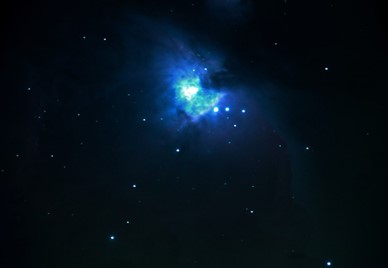
Figure 3. Image taken and processed by Crew Astronomer, Dylan Dilger, of the Orion Nebula (M42)





You must be logged in to post a comment.