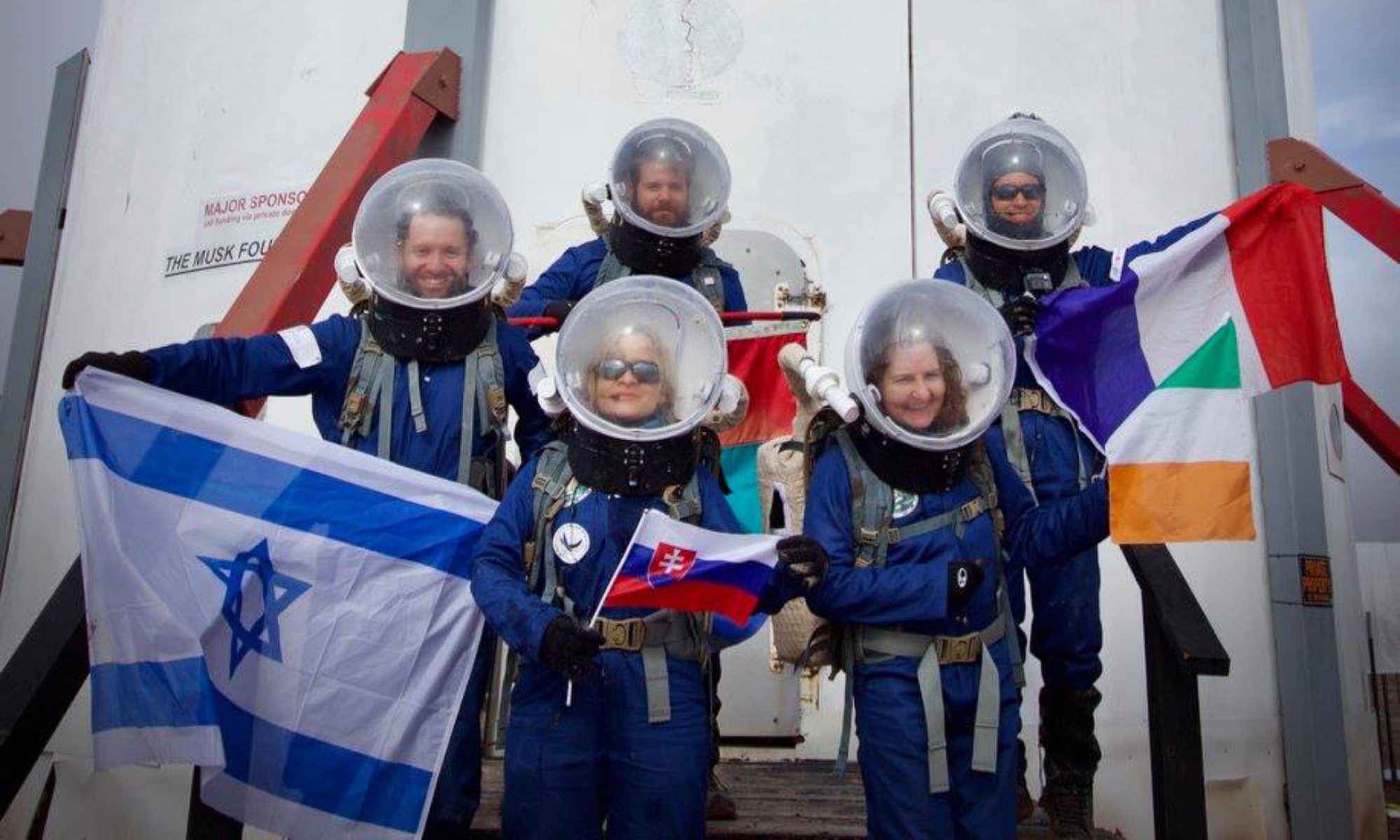


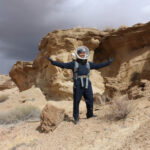
Crew 245 Operations Report 15-04-2021
SOL: 5
Name of person filing report: Shravan Hariharan
Non-nominal systems: Nothing to report
Notes on non-nominal systems: Nothing to report
Generator: Working nominally
Hours run: 7.5
From what time last night: 10:20 pm, SOC 54%
To what time this morning: 5:50 am, SOC 100%
List any additional daytime hours when the generator was run: N/A
Solar— SOC 61% (Before generator is run at night),
Diesel Reading – 50%
Station Propane Reading – 75%
Water (loft tank): 15 gallons
Water Meter: 150350.8 units
Water (static tank): 345 gallons
Static to Loft Pump used – yes
Water in GreenHab: 0 gallons
Water in ScienceDome: 0 gallons
Toilet tank emptied: No
Sojourner rover used: ASSIGNED TO DIRECTOR
Hours: N/A
Beginning charge: N/A
Ending charge: N/A
Currently charging: Yes
Spirit rover used: no
Hours: N/A
Beginning charge: N/A
Ending charge: N/A
Currently charging: yes, in town
Opportunity rover used: no
Hours: N/A
Beginning charge: N/A
Ending charge: N/A
Currently charging: no, in town
Curiosity rover used: no
Hours: N/A
Beginning charge: N/A
Ending charge: N/A
Currently charging: yes, in town
Perseverance rover used: Yes
Hours: 201.8
Beginning charge: 100%
Ending charge: 96%
Currently charging: Yes
Notes on rovers: Nothing to report
ATV’s Used: 350.1
Reason for use: EVA
Oil Added? No
ATV Fuel Used: 1 gallon
# Hours the ATVs were used today: 1.75 (but 0.5 hours of active transit)
Notes on ATVs: Mission Director will monitor and refuel ATVs for duration of mission
HabCar used and why, where?: No
CrewCar used and why, where?: No
General notes and comments: Nothing to report
Summary of internet: Internet is working nominally. Crew is restricting internet usage to the Mission Support window to ensure sufficient bandwidth.
Summary of suits and radios: All radios nominal, all suits currently charging. Suits 3, 4, and 6 used on EVA today and functioned nominally.
Summary of Hab operations: Nothing to report besides nominal crew activities.
Summary of GreenHab operations: Being used to host Crew Botanist botany experiment and Crew Scientist measurements. Crew Scientist sealed leaks in hydroponic garden experiment, and is returning at night to measure hydroponic garden experiment plant growth.
Summary of ScienceDome operations: Used by Crew Botanist to create soil and additive combinations to be used for botany experiments, which were then transferred to the GreenHab. Used by Crew Scientist and XO for soil sampling science. HSO has begun a mini-botany experiment (Space Farmer Dream Kit) in the Science Dome using assistance from the Crew Botanist.
Summary of RAM operations: Nothing to report
Summary of any observatory issues: Nothing to report
Summary of health and safety issues: Nothing to report
Questions, concerns and requests to Mission Support: Nothing to report.
Crew 245 EVA Report 15-04-2021
EVA #4
Author: Shayna Hume, Executive Officer
Purpose of EVA: Science & Operations EVA. Firstly, we wanted to take soil samples at a ridge geological location, and we wanted to identify an emergency shelter location at the same.
Start time: 09:30 nominal.
End time: 12:30 nominal, 11:30 actual after a return from inclement weather.
Narrative: We left for the EVA promptly, Hume and Hariharan on rover and Hernandez on ATV 1. After a brief time, Hume identified a honk behind us, and we were able to pull to the side of the road and notice a “breaking sim” Truck behind us, trying to pass us. They did so. We continued and quickly arrived at the stopping coordinates on the road. We found a smooth path down to what seemed a streambed adjacent to the ridge we were targeting. We immediately identified an emergency shelter location and took notes on it. After that, we found three soil locations on the ridge itself. Upon seeing darker clouds, we immediately began to head back. By the time we were at the vehicles, the wind was extremely high. When we got back into radio range, we found out that the Habcomm had already been asked to emergency return us to shelter. We were back and done with the 5-min airlock duration by approx 11:30.
Destination: Cowboy Corner Local Area
Coordinates (use UTM NAD27 CONUS): 12 S 0518905 UTM 4253147. Enter to this location from 12 S 0518778 UTM 4253192
Emergency Shelter Location: 12 S 0518771 UTM 4253195
Soil Sample #1: 12 S 0518887 UTM 4253145
Soil Sample #2: 12 S 0518884 UTM 4253129
Soil Sample #3: 12 S 0518895 UTM 4253134
Participants: Hume, Hernandez, Hariharan.
Road(s) and routes per MDRS Map: Cow Dung Road North to the stopping point on the road, then walked 400m East to science location. Explored local area around science location.
Mode of travel: Rover and ATV #1. Rover began at 100% battery and 201.3 hours, and went to 96% battery and 201.8 hours.
Nominal is a word from aerospace vernacular that has been slowly but surely permeating my vocabulary.
“All as expected.”
“It’s what we anticipated.”
“This is the intention.”
“This is what is supposed to happen.”
“None of this is a surprise, it’s what we were looking for.”
All just more verbose ways of saying the same thing: nominal. The thing that is planned for.
Nominal is fantastic, because it means that the scenario is perfectly within the confines of what we want. Nominal means that we’re running on time, it means the code is working as intended, it means that the rocket is going to the moon and that the muffins came out of the oven fully cooked.
Today in sim, Mars was anything but nominal.
The first sign that we got anything was wrong was during the collection of regolith (read: dirt) from sample site #2. The clouds that had given us the perfect overcast lighting for a few photos while walking to the science location were now turning darker and more ominous. We kept an eye on them during sample #3, but, if anything, they only got darker. We decided to leave the EVA early and, keeping comms open to make sure no one was falling behind, hiked quickly back to the rovers we had left on the main road through the landscape. As we did, the wind grew.
And grew. Before we knew it, it was hard to even hear each other over the comms. When we were talking, it was becoming harder to hear each other over the howling of the wind. As we scrambled up out of the gorge we had climbed into for samples, we felt the air pushing back on us, creating enough resistance to push us off of our feet.
I’m sure everyone remembers the scene from the beginning of the movie, “The Martian.” I would bet money that the growing storm had jogged in each of us the memory of Mars’ dangerous and planet-wide windstorms, and made us wonder just how much time we had left.
Back in the vehicles, we hightailed it back to the Hab. The entire way back, I was flooring it in Perseverance, only stopping to check several times that the Crew Engineer was still following on the ATV.
When the comms crackled back to life, Habcomm was hailing us. An emergency status had been declared, but they’d trusted us to already be coming back – or else they would have broken sim and come to get us.
But they trusted us, and we made the right call, reading the signs of the environment around us. We got back safely. We got back in time.
For a few minutes, we were truly in a choppy situation. But, none of this was a big deal. In the real world, things are rarely nominal. On Mars, things are never nominal.
It’s important to understand that a key part of any research, any adventure, any field science, and any expedition, that if you expect things to be nominal, you’ll be in for a world of surprise. Things rarely go according to plan, and in fact, the plan is more of a guideline that helps us to understand what to expect.
Part of preparing for any challenge is discussing the off-nominal ahead of time, for knowing what to do in case of an emergency, and for being in a headspace to handle the unexpected. Without an alignment of priorities in a mission, handling the off-nominal becomes a lot harder, because a rapid decision on low information is asked for – and well, humans aren’t known at being the best at that.
But, in our case, we had our priorities. Safety, sim, science. Within EVA’s, 1st emergency shelter, soil sampling, second emergency shelter, any extra samples, photos. We managed to get through the first two of those items, and with the essentials to make this a successful EVA, still made a calm decision to return to the Hab immediately at the first rumor of danger.
Plan for the nominal, expect the off-nominal. Lessons for EVA’s and for life.
Crew 245 Sol Summary Report 15-04-2021
Sol: 5
Summary Title: What is Nominal? / Emergency EVA Return
Author’s name: Shayna Hume
Mission Status: Executive Officer
Sol Activity Summary:
· 07:30-08:30: Blueberry pancakes with Nutella!
· 08:30-09:30: Prep for EVA & filming of prep.
· 09:30-11:15: Crew #2 (Hume, Hernandez, Hariharan) left for EVA #4. On this EVA we intended to visit site #2 – at GPS coordinates on the edge of an interesting geologic ridge. We not only managed to identify a possible emergency weather shelter, but sampled three different locations for soil analysis. We noticed clouds getting darker and started heading back. By the time we got to the vehicles, there was significant (~35mph) wind and we felt hurried by inclement emergency conditions. We got back about an hour ahead of schedule but safely, and felt proud of our handling of the situation.
· 12:00-14:00: Spaghetti & Soup for lunch. Hot chocolate on the side!
· 14:00-17:00: After taking an extra long lunch we separated for work. Commander and HSO went to Science Dome for work, Crew Scientist and XO began to work on soil sampling, Engineer and Botanist were working on misc in the GreenHab and on reports.
· 17:00-19:00: Fried rice for dinner! Attempting to send reports at 7p on the dot today to spend some quality time as a crew offline.
Look Ahead Plan: Tomorrow is EVA #5, where Crew #1 will go to a geographic gully location (site #3). At this time, we are beginning to maintain the botany experiments, move onto thicker gloves for the dexterity study, and begin to analyze the soil from the EVA’s.
Anomalies in work: Emergency weather conditions forced an early EVA return!
Weather: Warm in daytime, around 40 F at nighttime. Extremely high winds 11:00 am onwards.
Crew Physical Status: No issues.
EVA: EVA #4, with EVA crew #2. Report incoming.
Reports to be filed: Operations Report, EVA Report, EVA Plan, Science Report, Commander’s Report
Support Requested: n/a
Crew 245 GreenHab Report – 14APR2021
Green Hab Report
· Regolith Feasibility Study: regolith and Earth soil have been mixed to desired ratios in the Science Dome, and spread into the planting trays. The seeds will be added to the soil at approximately 8:30pm this evening.
· Hydroponic Garden: ongoing hydroponics experiment underway. Beakers have been set under the pipes to ameliorate spillage from leaky pipes. Intention to seal leaks with caulking tomorrow during dedicated botany time. Sealing the leak will reduce water consumption significantly.
o Each pipe currently filled with 2,000mL of water, with approx. 500mL added once today, with an estimate that the same amount will be added midday tomorrow.
· Heater: to be set to 65 degrees F.
Crew 245 EVA Report 14APR2021
EVA # 3
Author: Dylan Dickstein
Purpose of EVA: Discover emergency shelter locations and perform soil sampling.
Start time: 900 MDT
End time: 1200 MDT
Narrative: After spending five minutes in the airlock, the Crew Scientist and Commander got in the Rover Perseverance and the HSO mounted ATV 1. The EVA crew started heading north on Cow Dung Road and found that about 0.5 km north of Pooh’s Corner, communication between the Hab and the EVA crew became noisy with static. Less than 0.5 km further, all communication was lost. The EVA crew decided to turn around and return to reobtain communication. The EVA crew notified the Hab of the loss of communication further north and inquired about a change in destination. The Hab asked OUTPOST for recommendations on whether to proceed or change destination. OUTPOST informed the Hab that loss of communication is acceptable, so long as the EVA team can communicate among each other. The Hab and EVA crew discussed contingency scenarios if the EVA crew did not return by the end of the EVA window. It was settled that phone communication would be used past the window as a safety mechanism to ensure the EVA team is alright. This would be a purposeful break in simulation to maintain the safety of the participants. The EVA crew then continued north and parked the rover and ATV at the edge of the Special Region. The GPS coordinates were marked on the device and were checked against the target. It was found that the EVA crew was southeast of the destination by approximately 0.4 km. The EVA crew set out on foot and identified a potential emergency shelter location on the way. The location was marked on the GPS and the quality of the shelter was determined. The team found a location within 0.1 km of the target and retrieved two sets of soil samples there. An additional potential shelter was found, but time only allowed for a coordinate on the GPS device to be obtained. The EVA crew gave a 1.5x contingency on the return time (e.g. 25 minutes expected, so 38 minutes were allotted for return time). The EVA crew began the return at the start of the 38 minute window. A few stops were made to mark various points on the GPS and check that the EVA crew was holding up well. The Crew Scientist attempted to reestablish communication with the Hab within 2 km of the location where communication was lost previously. Attempts were made every 30 seconds thereafter. About 0.5 km north of the location where communication was previously lost, the Hab returned our call with static. A coordinate was marked in the GPS device. The EVA team informed the Hab about the highlights from the mission and called when the Hab was in sight. Permission was received for entering the “Hab Zone” (Entrance Road), the rover and ATV were parked, rover power cord reattached, tachometer and battery level noted, and permission to enter the airlock received. The Hab let the EVA team know when five minutes elapsed and suits were doffed.
Destination: Gateway to Lith
Coordinates (use UTM NAD27 CONUS):
· Destination: 12 S 0518243.330; UTM 4256029.805
· Emergency Shelter 1: 12 S 0518123; UTM 4255729
· Emergency Shelter 2: 12 S 0518239; UTM 4255852
· Waypoints:
o Soil Sample Location 1: 12 S 0518224; UTM 4255901
o Soil Sample Location 2: 12 S 0518223; UTM 4255924
o Northern Edge of Canyon Bluff (Nearest Road): 12 S 0518176; UTM 4255859
o Location of Hab Communication Reestablishment: 12 S 0519154; UTM 4251928
Participants: Olivia Ettlin (Crew Scientist), Alex Coultrup (Health and Safety Officer), Dylan Dickstein (Commander)
Road(s) and routes per MDRS Map:
· Departure Route: Hab à Road Entrance à Cow Dung Road à Quarry Road à Gateway to Lith
· Return Route: Gateway to Lith à Quarry Road à Cow Dung Road à Road Entrance à Hab
Mode of travel: Rover, ATV, Walking
Crew 245 Operations Report 14APR2021
SOL: 4
Name of person filing report: Shravan Hariharan
Non-nominal systems: Nothing to report
Notes on non-nominal systems: Nothing to report
Generator: Working nominally
Hours run: 7.5
From what time last night: 10:00 pm, SOC 61%
To what time this morning: 5:30 am, SOC 100%
List any additional daytime hours when the generator was run: N/A
Solar— SOC 65% (Before generator is run at night),
Diesel Reading – 45% (estimate)
Station Propane Reading – 70% (estimate)
Water (loft tank): 15 gallons
Water Meter: 150320.8 units
Water (static tank): 380 gallons
Static to Loft Pump used – yes
Water in GreenHab: 0 gallons
Water in ScienceDome: 0 gallons
Toilet tank emptied: Yes
Sojourner rover used: ASSIGNED TO DIRECTOR
Hours: N/A
Beginning charge: N/A
Ending charge: N/A
Currently charging: Yes
Spirit rover used: no
Hours: N/A
Beginning charge: N/A
Ending charge: N/A
Currently charging: yes, in town
Opportunity rover used: no
Hours: N/A
Beginning charge: N/A
Ending charge: N/A
Currently charging: no, in town
Curiosity rover used: no
Hours: N/A
Beginning charge: N/A
Ending charge: N/A
Currently charging: yes, in town
Perseverance rover used: Yes
Hours: 201.3
Beginning charge: 100%
Ending charge: 79%
Currently charging: Yes
Notes on rovers: Nothing to report
ATV’s Used: 350.1
Reason for use: EVA
Oil Added? No
ATV Fuel Used: N/A
# Hours the ATVs were used today: 3 (but 1 hour of active transit)
Notes on ATVs: Mission Director will monitor and refuel ATVs for duration of mission
HabCar used and why, where?: No
CrewCar used and why, where?: No
General notes and comments: Nothing to report
Summary of internet: Internet is working nominally. Crew is mostly restricting internet usage to Mission Support window to ensure sufficient bandwidth.
Summary of suits and radios: All radios nominal, all suits currently charging. Suits 7, 9, and 11 used on EVA today and functioned nominally.
Summary of Hab operations: Nothing to report besides nominal crew activities.
Summary of GreenHab operations: Being used to host Crew Botanist botany experiment, which is now hosted in the GreenHab with seeds to be planted later tonight. Crew Scientist turned off GreenHab heat for the day, and will return to turn on the heat later this evening for hydroponics experiment. Crew Scientist is also returning to GreenHab in order to make hydroponics experiment measurements.
Summary of ScienceDome operations: Used by Crew Botanist to create soil and additive combinations to be used for botany experiment, which were then transferred to the GreenHab. HSO has begun a mini-botany experiment (Space Farmer Dream Kit) in the Science Dome using assistance from the Crew Botanist.
Summary of RAM operations: Nothing to report
Summary of any observatory issues: Nothing to report
Summary of health and safety issues: Nothing to report
Questions, concerns and requests to Mission Support: Nothing to report.
Science Report 14-Apr-2021
· Extremophiles Research
o Collected 2 samples while on EVA, and samples stored in fridge in the Science Dome. Intended to collect 4 samples, so at a later date, a following EVA might need to return to the coordinates of this collection site.
· Hydroponic Garden
o Significant leaking from the compost and H2O (control) pipes. Monitoring with catch buckets underneath. Still unable to measure evaporation due to leak.
o Began to collect data on stalk height and root growth
o Green Hab heater to be turned on at approx. 5pm every evening with temperature set to 65F.
In addition, after this report is sent, Crew Botanist will be planting seeds this evening.
Olivia Ettlin & Julio Hernandez
Sol 4
As much as we like to focus on the astronauts’ out on their daring feats of glory, it’s important to remember – there would be no mission without Houston, waiting to solve any problems.
In the last two days, we’ve learnt the value of “Habcomm” – our name for the crew member in charge of Hab communications to the three-person crew that is on EVA. Having a point person is valuable for many reasons, not in the least that it frees up the responsibility to listen from 1-2 other crew members who can now use that time to conduct science or operations work (or, more shockingly, take a shower).
On our first two practice EVA’s on Sol 3, myself (Executive Officer Hume) and Commander Dickstein acted as Habcomm’s for each other’s EVA’s. When practice EVA Crew #1 forgot our map, rather than scrubbing the mission, Habcomm directed up to the location of the practice science using the map in the Hab and the GPS we had taken with us, as well as a variety of landmarks along the way. When on practice EVA 2, both Hariharan and Dickstein lost their comms due to a drained radio battery, I, as Habcomm, was able to confirm Hernandez’ decision to return to the Hab for safety purposes and kept it touch with practice EVA Crew #2 to ensure their uneventful return.
And that was all done in one morning.
Without Habcomm, there is no authority coming from the Hab itself, no one to check the regulations that the full crew operates by and no way to help the crew out on EVA should alterations need to be made in the planned expedition. They’re a source of both information and decisiveness, helping a crew balance their desire to do science with the prerequisite safety of the sim.
And as we all have drilled into our heads. Safety first, then sim, then science.
Today was the EVA #3, the first science EVA. The crews took on their permanent configurations. Crew #1 is now Dickstein, Ettlin, and Coultrup. Crew #2 is Hume, Hernandez, and Hariharan. The intent was to begin the EVA at 14:00, however due to a prediction for high winds, we gathered together around 22:00 last night and created a new EVA Plan that would begin at 09:00, instead.
The intent of the EVA is twofold. Firstly, it would be the first science mission to our site #1. We chose a region near Lith Canyon, north on Cow Dung Road and a short walking distance along a ridge. In that area, there is a dried up riverbed, with specific geologic importance. The type of regolith we would find there would be useful to both Ettlin’s geological survey and my own astrobiology study, looking at the microorganism distribution we could find. In brief, the protocol is to sample from four different sites, and do the sampling by taking and combining four additional localized mini-samples at each chosen point. In addition to that science, an operations study was going to look for the best possible locations at this scientific site for emergency sheltering during an extreme weather event, such as a Martian dust storm. Identifying and evaluating these sites based on a pre-determined criteria is built into every mission, in order to make sure the crew members are safe, even when out in the field. I’m sure you all remember the beginning of “The Martian.” No Mark Watney’s at MDRS, please!
With these night-before changes made, we woke up on Sol 4 excited to begin our first true expedition. After a hearty oatmeal and rehydrated fruit breakfast, we moved onto the EVA protocol our team designed for our simulation. Although several items are mandatory, such as a five-minute minimum in the airlock prior to exiting the hab, there are significant amounts of personal preference in how above and beyond that the crew will go. Our protocol, as we designed it, is below:
The Protocol
Note: This is our protocol as of the beginning of Sol 4, and is in progress. A final operational protocol for EVA’s will be included in our “Participants’ Handbook” that we are making available online after our mission.
1. Sunscreen up! Mars is bright.
2. Gather all equipment and sterilize as needed. More equipment into airport in container for transport to rover.
a. Map
b. GPS (x2)
c. EVA bag (including emergency medical)
d. 3 radios per participant, 3 extra redundant radios per participant
e. Science Equipment as needed
i. Protocol for Emergency Shelter Identification
ii. Baggies for soil samples as needed
iii. Spade for soil samples
iv. Grid for taking soil samples at each location
f. TP, just in case
g. Water
3. Get into flight suits, use the bathroom, and find your callsign baggie (callsign baggie’s include earpiece, cloth to clean your helmet, and gloves)
4. Medical check with HSO
a. Blood pressure
b. Pulse/Oxygen
c. Temperature
d. Heart Rate
e. Mental Health Check
5. Put on microphone and bandana. Recommendation: put bandana over microphone to ensure snugness and that it won’t fall out on EVA
6. Check comms between both Habcomm/Hab and EVA participants. Radios should be fully charged! Switch out if not.
7. Put on Boots.
8. Planetary Protection Protocol with XO
a. First week is on “minimum requirements” PPP
b. Have you sterilized any equipment used to take soil samples?
c. Use alcohol wipe/sanitizer on bare hands
d. Enter the “clean room” – the room outside of the airlock
e. Shut clean room door
9. Clean EVA helmet as needed using provided spray and your own microfiber cloth.
10. Put on your assigned spacesuit, adjust if needed. Recommendation: make sure bulk of the weight is sitting around your hips, use shoulder straps only to balance.
a. If you are wearing a two-piece, place the collar and lower the helmet, then attach pieces.
11. Turn on spacesuit. Attach airflow tubes to helmet and turn on air flow. Adjust airflow as needed. Reseal Velcro flap.
12. Check comms once again to ensure that they are audible inside the suit with airflow. If needed, turn down the fan and reseal Velcro to ensure audio is clear.
13. Later on, a higher level of planetary protection protocols will be entered here.
14. Buddy check: EVA participants should check everyone’s comms, airflow, Velcro flap being closed, and that no skin is exposed.
15. One member of the Hab crew will let the EVA crew into the airlock and seal it behind them.
16. EVA Protocols
a. Habcomm measures 5 minutes of airlock time
i. Notifications are given at 1 minute, 30 seconds, and 0.
ii. At 1 minute, all non-mission chatter ceases.
iii. A clear indication is given at 0 to exit the airlock.
b. No more non-mission chatter is permitted while Hab is in sight.
c. Record and communicate to the HAB
i. ATV serial number
ii. Rover charge and hours before and after EVA
iii. GPS coordinates at destination
d. Upon return
i. Request permission to enter Hab grounds
ii. Request permission to enter Hab airlock
e. Wait 5 minutes on Habcomm’s clock to open airlock to Hab
f. Clean helmet before putting away
g. Plug in spacesuits to charge
EVA 3
Seems like we thought everything out, doesn’t it?
Five minutes into sim.
“Habcomm, we have a problem.”
After about five minutes, we started losing communications entirely with the EVA crew. There was interference during each attempted communication, but no clear language received. There was no clear way to even know if they were talking to each other or to me.
I attempted basic communication as Habcomm, asking them to repeat vital messages, shorten to keywords, and testing different hand radios for better reception. However, it soon became clear that we had little way to help them. After about ten minutes, the radios suddenly crackled into clarity.
EVA Crew #1 had returned to the local area around the Hab, at a junction named Pooh’s Corner. There, we finally could speak to each other again. They requested help deciding whether to come back or to choose a new location, since it seemed to break the cardinal rule of safety to go out of radio distance.
Our Crew Engineer, Hariharan, who is largely in charge of EVA operations, immediately began looking on the map to identify alternate sites. Since the original site was a riverbed, he wanted to find an equivalent as similar as possible. However… each of the coordinate numbers is about eight digits long, so I quickly returned to the main Hab (from the Science Dome, where I was… dum dum dum… writing this) in order to help him. I noticed a small streambed labeled as a walking EVA only zone, just north of Pooh’s corner to the East. Parking the rover and the ATV on the main road and then walking to the streambed would be not only feasible, but faster, and likely entirely in radio range.
I advised the crew to park at the GPS coordinates for the crossing of the streambed and road, and while they were en route, confirmed with the outpost that switching locations was allowed. Not only was it allowed, but we were able to get confirmation that going out of radio communications due to distance on science EVA’s is not only acceptable, but fairly nominal.
With that in mind, the Commander and I interfaced via radio one last time and decided that EVA Crew #1 should head to the original GPS location near Lith Canyon and the dried riverbed. We also confirmed that they had cell phones on their person (for the ‘gram) in case a true emergency were to come up.
One tenant of life in the sim is that if we have a solution for a problem on Mars, then we can negotiate the rules of the sim. I.e., on Mars, going to the bathroom wouldn’t be an issue… so we are allowed to break sim for that, vs. hazarding a medical infection.
In this case, radios on Mars would clearly be able to go any distance within the bounds of acceptable travel locations, and so, going beyond radio range is a way to negotiate the sim against reality. Should an out-of-sim emergency happen, they have a method with which to contact for help.
Safety first. Check.
Shortly after that, EVA Crew #1 left radio reception once again. Comms were silent for nearly two hours, during which time other report-writing, botanical, and operations activities took place. We also agreed to choose back-up locations for future EVA locations, should any other problems come up, and mapped out using dry erase all of our locations of interest onto the map we keep in the Hab communal area. For a while, all we could do was wait.
Then, at 11:30, the radios crackled back on. We heard chatter first between the EVA crew members, then a call out to Habcomm.
“Commander to Habcomm, permission to enter the Hab grounds?”
The rest, thankfully, was nominal. After confirming visuals on the returning EVA crew, Hariharan, Hume, and Hernandez waited in the clean room of the Hab, and after five minutes, were able to greet the crew and help them spacesuit-down. Soil samples were immediately placed in freezer’s in the Science Dome to maintain their integrity of microbiomes present, and the entire crew was able to gather for both lunch and a debriefing on the EVA.
There is a significant amount of media focus on the astronauts, with Habcomm, or rather, Houston, remaining a more tertiary figure. A mechanical sounding voice over a speaker. Although everyone at NASA and other space agencies knows different, it is easy for a casual viewer to misunderstand the dire need for an effective and efficient Habcomm. Performing an EVA is a risk, no matter whether you do it on real Mars or simulated Mars, and it’s essential for the crew taking on that risk to have the support of the rest of their crew.
During today’s missions, we not only learnt best practices for how to continue being the best Habcomm we can be for our EVA crews as we rotate through the role, but how vital the role is, and how the voices we often only hear over the comms systems in movies are necessary teammates, not only for the desired science and engineering to be accomplished, but also for the safe return of our Martian astronauts.
Fun fact of the day! Our rover’s name is Perseverance!
You must be logged in to post a comment.