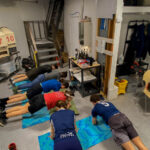
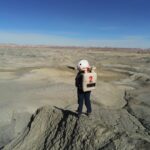
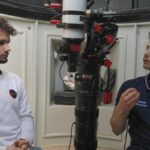
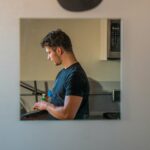
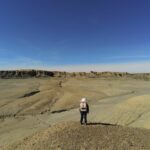
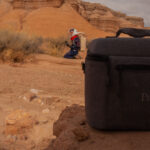
[title Crew Photos – February 14th]
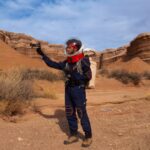
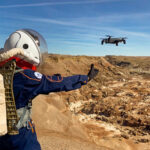
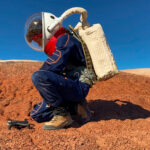
Hello CapCom,
Here are today’s pictures!
Clément
[title Crew Photos – February 14th]
Hello CapCom,
Here are today’s pictures!
Clément
Author: Pierre Fabre
Hi everyone welcome back! In today’s report we are going to talk with Maxime, our astronomer! I’ve been waiting for this episode of “Interview with” for a long time I hope you will enjoy it!
But before starting this cool interview, let’s talk about what happened during this Sol 14 on Mars.
Today was the first day of our last week on Mars. To be perfectly honest today was quite hard. It was the comeback of human factors experiment (and of the terrible « shape test » of the University of Lorraine), but also the comeback of another enemy, the routine. I haven’t talked to you about routine so far but I think it becomes important now. The first reason for this omission is that I try to make the reports I write entertaining so I don’t want to talk to you about the things we do every day. Another reason is that even us, have really noticed the side effect of routine only recently.
At the beginning of the mission, routine was the perfect ally, it allowed us to be efficient in setting all our experiments which took us a long time. Every day was made of new goals: repairing the 3D printer, first mapping with drones, installation of the LOAC experiment, recycle water for the first time, … But now that our experiments are all set, our work is composed of tasks we perform every day mechanically and it is now hard to distinguish one afternoon from another. With all the fatigue accumulated since the beginning of the mission, it is sometimes hard to find the motivation required to work and the need for a nap after a morning of EVA is becoming more present recently. But it also means that we are being more efficient in our work and that we can now afford moments of rest during the day while keeping on doing our job.
Ok now I have to say, at least for the families, that there is nothing to worry about. I think this slump is a quite normal phenomenon after two weeks of mission. We are still motivated to do the job until the end and excited about what we are living on Mars.
I think we still feel as excited as on the very first day before going on an EVA.
This morning for example, we went to the Moon Overlook, it was the first time for Marion and me who stayed at the Hab last time. We were really amazed by the transformation of the landscape in just a couple of minutes of rover. One moment you are on Mars, surrounded by red dunes and suddenly, you teleport and you are on the Moon, everything around you is gray on kilometers. We took some really nice drone shots but they have nothing to do with the drone shots we’ve been taking since our arrival on Mars! This is one way of breaking the routine!
There are still exciting things happening in the station too! Yesterday, Julie tested the 3D printed funnel designed by Maxime and Francois to recycle water more efficiently. This night she recycled 10 times as much water as she usually does thanks to the new funnel. Now we will be able to take showers more frequently and it will definitely make this last week easier for us!
Now it is time to show you what we talked about with Maxime this afternoon! This is the “Interview with: Astronomer”!
“-Hi Maxime, how are you?
-Hi Pierre, well listen after 2 weeks of mission it’s going very well and you?
-I’m fine! Maxime, do you want to introduce yourself for those who don’t know you yet?
-Of course, my name is Maxime Jalabert and I am in my last year of the engineering cycle at the ISAE-SUPAERO engineering school. I have always been passionate about space, I got my first telescope when I was 6 years old and I spent my evenings observing the stars with my father. It was probably those moments that made me want to be an astronaut one day. In high school I was a very involved member of the astronomy club and it was natural for me to continue with higher education. So, after a Bachelor’s degree at Paul Sabatier University in Toulouse I joined the engineering school ISAE-SUPAERO. I had the opportunity to be president of the M.A.R.S club which sends 7 students from the school to the MDRS where we are. As part of an internship, I worked for two months at the Cité de l’Espace as a scientific animator, and last year I was able to design an instrument for measuring the scintillation of stars and satellites from a telescope at the Centre Spatial Universitaire de la Côte d’Azur in Nice. Then, I did an ERASMUS at the University of Stockholm where I followed courses in astrophysics and astronomy. And next semester I’m going to Yale University still in the US to work on space propulsion. As you can see, it was natural for me to apply for this MDRS mission, especially for the role of astronomer.
-Wow, what a background! So, you are the astronomer of this crew, can you explain what is your job during this mission?
-You have to know that Mars does not have a magnetosphere that deflects charged particles from the Sun like the Earth does. My role as an astronomer is therefore to analyse solar activity in order to be able to plan or not plan extravehicular sorties because these charged particles are lethal for us human beings. The shield of the station protects us, but our suits are too thin to provide lasting protection. Strong activity of the Sun results in the presence of visible solar flares on the surface, so my role is to analyse them.
-We didn’t have such issue so far but thanks for protecting us from the Sun! Maxime, you also have an astrophotography project and a research project, can you tell us more?
-Yes, when I’m not on a spacewalk or analysing the Sun I spend my time on these two projects. My research project focuses on the search for supaernovae. The method is simple: for a given galaxy I photograph it several times at different time intervals, I then study the evolution of the luminous flux of the galaxy and if it increases I can then superpose the shots to find the supernova. The method is simple but with about 30 galaxies studied the probability of finding a supernova in 3 weeks is only about 2%. My astrophotography project consists in taking pictures of known objects like the Orion Nebula. After processing, I will use these photos to popularize science, especially in my former high school in my hometown, Limoux. The aim is to transmit my passion for space and maybe even give young students the desire to pursue higher education.
-And what is your favourite project?
-I think I get more pleasure from astrophotography. The infinitely far away has always fascinated me and I still feel a sense of wonder when I see the different pictures taken through the telescopes. Then the idea of transmitting this feeling to people who are more or less sensitive to space through these pictures I find very beautiful somehow.
-Ok I think I understand why. And on another subject, why did you choose to take part in an analog mission?
-The first dream I had as a child was to become an astronaut and to be honest, I still do. So, the MDRS mission was an opportunity to put yourself in the shoes of an astronaut for a certain period of time, while doing some great science. I think, especially the study of human factors in a hostile environment like the Martian environment. In addition to this, we can achieve good communication, always with the aim of raising public awareness of the space world.
-What is your favourite thing about Mars?
-The spacewalks are probably my favourite thing about Mars. The preparation before the spacewalk with the increasing heart rate, the tension when putting on the spacesuits and finally the accomplishment of the opening of the depressurisation airlock with the red Martian desert as far as the eye can see gives me a very strong feeling. Each EVA is a unique experience for me.
-Do you miss Earth sometimes?
-Of course, I miss it, but I think we’ve all prepared for it. On Earth I’m lucky enough to have access to everything in a very short time, whether it’s food we take the car or we walk to the supermarket. If you need information, you get out your phone and look it up on the internet. On Mars that’s not possible, we make do with what we have and it’s quite a challenge when you’ve been lucky enough to live in this societal luxury. I sincerely think that I have taken a step back on my everyday life on Earth and I am happy to have received this sensitivity to our society of overconsumption. Most importantly, I usually talk to my family several times a week and to my friends. Not hearing from them is not easy every day but that’s the part of the game. I really look forward to meeting them at the end of the mission and telling them about this great adventure.”
That’s it for today’s interview, I hope you enjoyed it! The next episode will be “Interview with: Journalist”. I still don’t know how to interview myself but we will come up with something. Stay tuned if you don’t want to miss this next episode of “Interview with”!
title Operations Report – February 14th]
Crew 240 Operations Report 14-02-2022
SOL: 14
Name of person filing report: François Vinet
Non-nominal systems: NA
Notes on non-nominal systems: NA
ROVERS
Spirit rover used: yes
Hours: 156.1
Beginning charge: 100%
Ending charge: 72%
Currently charging: left uncharged, handled by Atila
Opportunity rover used: no
Hours: 83.7
Beginning charge: NA
Ending charge: NA
Currently charging: handled by Atila
Curiosity rover used: yes
Hours: 167.1
Beginning charge: 100%
Ending charge: 66%
Currently charging: left uncharged, handled by Atila
Perseverance rover used: no
Hours: 227.6
Beginning charge: NA
Ending charge: NA
Currently charging: handled by Atila
General notes and comments: NA
Summary of Hab operations:
WATER USE: 22 gallons
Water (static tank): 256 gallons
Water (loft tank): 42 gallons
Water Meter: 0155823.6 units
Static to Loft Pump used – yes
Static tank pipe heater (on or off): on
Static tank heater (On or off): on
Toilet tank emptied: no
Summary of internet: NA
Summary of suits and radios: The fuse of one suit was changed.
Summary of GreenHab operations:
WATER USE: 12 gallons at 8:10am and 8 gallons at 6pm
Heater: On
Supplemental light: On
Harvest: NA
Summary of ScienceDome operations:
Dual split: off
SOC: 72% at 6.45pm
Summary of RAM operations: NA
Summary of any observatory issues: NA
Summary of health and safety issues: NA
Questions, concerns and requests to Mission Support: 3 trashes are waiting for pickup in the rear airlock. Thank you!
Crew 240 Sol Summary Report 14Feb2022
Sol: 14
Summary Title: Comme un Lundi
Author’s name: Clément Plagne
Mission Status: Nominal
Sol Activity Summary: That title’s French for “like a Monday”. Basically a non sequitur to mean that we’re back in the routine. That’s probably the most noticeable part, to me, of having 3 weeks to commit to a mission: after a while, the rush of setting things up, tinkering with them to have them work, running around because all the procedures aren’t yet hard-wired in your brain, it all comes to an end. And then it’s a lot a quiet, a lot of doing the same things the same way, a lot of just chugging along. Most of us end up having more time for themselves, since things run more smoothly. Makes people antsy and a little bored.
In many ways, that’s the big test for long term missions: just doing things, over and over again, waiting for the next day knowing it’ll be the same. And that’s probably the hardest part, likely harder than actually working hard to fix things. Today we went on EVA, took drone shots, tried a little 3D mapping, watered the plants, 3D printed stuff, recycled water, did improvised cookery, nothing we haven’t done a dozen times before. And we’ll do it again tomorrow, because that’s normal. We’ll only have to do it for a week, but some people have to do it for months. It’s hard to know how long we could do it, but a week is fine.
Look Ahead Plan: Well, um, doing it again tomorrow
Anomalies in work: None
Weather: Fair
Crew Physical Status: Fine
EVA: Went nominally
Reports to be filed: Sol Summary, EVA Report, EVA Request, Journalist Report, Crew Pictures, Operations Report, HSO Report
Support Requested: None in particular
[title Crew Photos – February 17th]
Hello Mission Support, CapCom,
Sorry for the belated pictures. When days are very busy, you end up with
either a lot of pictures, or very few. This was closer to the latter,
but we managed to put together quite a few drone-related pictures for today!
Clem
Author: Pierre Fabre
Hi everyone, welcome back for this new report! Today is the last episode of “Focus on” and we are going to talk about my drone mapping experiment with Marion, our crew scientist.
But before, as always, let’s talk about what happened during this Sol 17 on Mars.
This was our last full day on Mars. Tomorrow in the afternoon we will go back to Earth. We will have the end of the afternoon to send messages to our families and friends and discover what happened on Earth during our mission on Mars. We will then eat the burger we’ve been waiting for since the first week of the mission with Atila, the Assistant Director of the MDRS. We are all very excited to come back to Earth but we are starting to realise that we will miss Mars. But we will talk about that in more detail in tomorrow’s report.
This afternoon we kept on filming a lot of videos of our experiments for the videos we will upload on our YouTube channel. This takes a lot of time but this is our last chance to take shots on Mars so we have to be efficient!
The mission is not over yet and some of us went on TELEOP and on the University of Lorraine’s experiment. It was a pleasure, as always. This was not even the last time; we will do those experiments after the mission too just as we did before the mission. Data collected before and after the mission are really important to compare the results.
This morning we performed the EVA for my drone mapping experiment. We went to the Northern part of the Hab Ridge that we had already mapped during a previous EVA. Marion and François tried to follow the itinerary they had prepared before. Tomorrow the rest of the crew will do the same for our last EVA on Mars.
Talking about this experiment, it is time for today’s “Focus on” episode. This time it will be Marion, our crew scientist, who will ask the questions.
“-Hi Pierre! So firstly, why drones? What intrigued you about them and their use?
-Hi Marion! Recently, NASA sent Ingenuity, a helicopter, to Mars and managed to make it fly. This was was not an easy task at all because the atmosphere on Mars is around a thousand times less dense than on Earth which makes it really hard for a helicopter to fight the gravity which is around a third of the Earth’s gravity. Thanks to this tremendous success, we now know that drones can fly on Mars and I thought it would be interesting to investigate their usefulness and explore their potential use cases.
-Alright and so these drones were made by the company Parrot. Can you tell us a bit more about them and what they do?
-Yes sure! Parrot is a French drone manufacturer. They accepted to sponsor us for the mission and in addition to that they lent us two ANAFI drones. I personally love their drones; they are really easy to use and their stability amazes me every time I make them fly.
-What is the general idea behind your experiment? What do you hope to show and what are your hypotheses?
-The general idea is to investigate the potential usefulness of drones for the human exploration of Mars.
The ANAFI drone offers the possibility of creating a 3D map of an area really easily. You first create a double grid mission above the area you want to map with the application Pix4DMapper that generates a flight plan for the drone and instructions on where to take photos. You then upload those photos on the Pix4D software and it generates a very accurate 3D map.
I thought that this possibility could be very useful for marsonauts to better plan their EVAs. I think it is important for marsonauts to take as few risks as possible and to avoid wasting energy during EVAs and maybe drones can help them find the path that best meets those requirements.
I hope to show that using a 3D map during the preparation of the EVA and the drawing of the itinerary makes the EVA less dangerous, stressful and/or physically demanding for my crewmates.
-So, let’s dive deeper here; what is the protocol? How do you carry out this experiment to verify your hypotheses?
-Ok so first we perform an EVA to 3D map an area previously chosen.
Then, I generate the 3D map on my computer with the Pix4D software. Thanks to this map, I define a course with different checkpoints across the area.
After that, I randomly assign my crew mates to two groups: the treatment group and the control group. Every crew member has 15 minutes to draw their itinerary on a map. This itinerary has to check all the checkpoints defined. The difference between the groups is that the treatment group will be able to use the 3D map generated on my computer to help them draw their itinerary. The control group will have access only to the classic 2D map.
Then, every crew member has to come with me during an EVA and do the course for real. The objective for them is to follow as precisely as possible the itinerary they drew without putting them at risk. I follow them from a distance and I don’t talk to them so as not to influence their choices. The others can’t look at the path taken to avoid bias.
After the EVA, they will answer a form to evaluate their level of confidence in their itinerary, their level of stress and how tired they feel. In addition to this data, I will also collect data from their connected watch to have access to their heart beats per minute (BPM) and GPS position during the EVA. Their BPM will give me an idea of how stressed they were and how much efforts they put into reaching the checkpoints.
The GPS position will allow me to see if they followed their drawn itinerary well.
Thanks to the data collected, I hope we will be able to show that those who had the 3D map during the preparation were less stressed during the EVA and less tired after.
For now, we have repeated this protocol on two different areas: the North Ridge and the Hab Ridge. I will analyse the data collected when we will be back on Earth and we will see if drones could be potentially useful for the human exploration of Mars!
-Thank you for this insight into your drone experiment! I am personally very interested in the results; it is definitely relevant for future human exploration missions on Mars.”
That’s it for that “Focus on” I hope you enjoyed it and that you learned things! It was the last episode; I hope you enjoyed the format. As I was mentioning it in yesterday’s report, we will upload on YouTube a series of “Focus on” videos when we will be back on Earth! These videos will be accessible from our website too. Stay tuned if you want to see our “Focus on” videos!
Crew 240 Operations Report 17-02-2022
SOL: 17
Name of person filing report: François Vinet
Non-nominal systems: NA
Notes on non-nominal systems: NA
ROVERS
Spirit rover used: no
Hours: 156.8
Beginning charge: NA
Ending charge: NA
Currently charging: handled by Atila
Opportunity rover used: yes
Hours: 83.8
Beginning charge: 100%
Ending charge: 86%
Currently charging: left uncharged, handled by Atila
Curiosity rover used: yes
Hours: 167.9
Beginning charge: 100%
Ending charge: 84%
Currently charging: left uncharged, handled by Atila
Perseverance rover used: no
Hours: 227.7
Beginning charge: NA
Ending charge: NA
Currently charging: handled by Atila
General notes and comments: NA
Summary of Hab operations:
WATER USE: 47 gallons
Water (static tank): 168 gallons
Water (loft tank): 35 gallons
Water Meter: 0155960.9 units
Static to Loft Pump used – yes
Static tank pipe heater (on or off): on
Static tank heater (On or off): on
Toilet tank emptied: yes
Summary of internet: NA
Summary of suits and radios: The battery of one suit (which was losing power too fast) has been changed thanks to the new batteries received. the cover of one suit is detached (2 rivets dropped). I didn’t find glue or rivet to repair it in the RAM. See picture attached.
Summary of GreenHab operations:
WATER USE: 12 gallons at 8:00am
Heater: On
Supplemental light: On
Harvest: NA
Summary of ScienceDome operations:
Dual split: off
SOC: 74% at 7.15pm
Summary of RAM operations: NA
Summary of any observatory issues: NA
Summary of health and safety issues: NA
Questions, concerns and requests to Mission Support: One trash is waiting for pickup in the rear airlock. Thank you!
Crew 240 EVA Report 17Feb2022
EVA # 18
Author: Pierre Fabre
Purpose of EVA: Standard battery replacement for our atmospheric experiments. Following 3D mapping of the area near Hab Ridge a little North of North Ridge, two EVAs will be performed to check the performance of crew members based on the use of these 3D maps for EVA prep to ascend the mapped area.
Start time: 9:50
End time: 11:43
Narrative: Battery replacements went well as usual, and then the EVA team proceeded to attempt a climb of Hab Ridge as part of an experiment to assess the value of 3D mapping to EVA preparation. Climb went well, and team returned early after all objectives had been met.
Destination: Hab Ridge
Coordinates (use UTM NAD27 CONUS): 518500 4251500
Participants: Pierre Fabre, François Vinet, Julie Levita, Marion Burnichon
Road(s) and routes per MDRS Map: Cow Dung Road
Mode of travel: Rovers, foot
Crew 240 Sol Summary Report 17Feb2022
Sol:17
Summary Title: As the end draws near
Author’s name: Clément Plagne
Mission Status: Nominal
Sol Activity Summary: Mixed feelings in the Hab as to the idea of this being the last full day of sim for the mission. Some melancholy at the idea that the adventure will so soon be over, but also some ecstatic at the idea of coming back to the bustling life of modern days. One thing’s shared equally among all of us: a non-rehydrated meal and a night in a big bed can’t be so bad.
The day was marked by one of the final 2 EVAs, focused once again on observing the efficiency and performance improvements that can be brought on by the use of 3D mapping when planning spacewalks. Inside the Hab, people were busy with their human factors tests, with the quietly focused moments intersected by the recordings of our videos designed to reach out to schoolchildren and show them the science we perform and the life we live inside of the station.
Last time I came back out, a pandemic had overwhelmed the globe while we were in the station. This time can’t be that bad.
Look Ahead Plan: Tomorrow’s gonna be a busy busy day of finishing up these videos, and knocking out the few human factors tests that some of us still haven’t done. Doing Food Inventory and finishing up the Mission Summary will keep everyone else busy before leaving sim at last.
Anomalies in work: None to report
Weather: Fair
Crew Physical Status: All fine
EVA: One, performed nominally
Reports to be filed: Sol Summary, Journalist Report, Photos, EVA Report, EVA Request, HSO Report, Operations Report
Support Requested: None!
Sol 16: Interview with: Journalist – How to share our experience with people on Earth?
Author: Pierre Fabre
Hi everyone, welcome! Today we are going to do the “Interview with: Journalist”. My crewmates have prepared questions for me and I can’t wait to answer them!
But before, as always, let’s talk about what happened during this Sol 16 on Mars.
We are going to do that quickly today because there is not a lot of time left before the end of the communication window – time has caught up to me as I wrote the interview! Moreover, this was a fairly quiet day.
This morning, Maxime, François, and Clément went to explore the South of the station for once. They went to the region called Kissing Camels. According to them, the south is really beautiful in its Martian style. They climbed a ridge and they found a beautiful view. There was a lot of wind today and they were a bit scared that the winds could get high enough to knock over scientific equipment, but the weather stayed true to the forecast in the weather report yesterday, so they had nothing to fear. They also found some petrified wood. I personally don’t know much about that subject but it is really beautiful to see.
This afternoon, Marion, our crew scientist, made a lot of videos about our experiments. Now I can tell you that videos of “Interview with” and “Focus on” will be released on our YouTube channel when we will be back on Earth. I think it will be very interesting. Marion will work on the “Focus on” part and I will do the “Interview with” part, we can’t wait to edit and show you those videos.
Now it is time for the “Interview with”! Clément, as he was the crew’s Journalist two years ago, will start this interview. I hope you will enjoy it!
“Clément: Hi Pierre! How are you today?
Pierre: Fine thank you! It feels a bit weird to be on the other side and become the one who has to answer the questions!
Clément: Ok so first, can you introduce yourself to those who don’t know you yet?
Pierre: I see that you’ve learned the format of the “Interview with”! Ok so, my name is Pierre Fabre and I’m the Crews 240’s journalist! I’m an engineering student at ISAE-SUPAERO. I have done an Erasmus at Escuela Politécnica de Madrid in Data Science and Machine Learning. During my gap year, I’ve done an internship as a research assistant at LAAS-CNRS, a French lab, in control theory on the subject of event-based command for nonlinear systems.
When we come back on Earth, I will do another internship at Safran, in Paris, in Model Predictive Control. For my last year at ISAE-SUPAERO, I want to specialise in control theory and autonomous systems. In my future work, I would like to associate control theory with reinforcement learning for applications that make sense for me, that help people in their daily lives. Apart from that, I love climbing, especially bouldering. I can’t wait for next semester to go to Fontainebleau in Paris which is kind of a paradise on Earth for bouldering.
Clément: Pierre, as you said in your introduction, you are the journalist of this crew, can you explain what is your job.
Pierre: Ok so, basically the journalist has to send a daily journalist’s report to the MDRS’s staff. This implies going to talk to every crew member to ask them how they feel, what they did during the day, how their experiments are doing. These are the basics. In addition to that, I also have to translate my reports into French every day and send them to Earth. Then, our colleagues on Earth post the reports in both languages on our website and they do posts on social media with the pictures.
Julie: Hi Pierre! I wanted to ask you: Why did you choose to apply for the role of Journalist?
Pierre: Hi Julie! That is a good question! I think that Journalist is an important role. It is important for people on Earth because thanks to the reports, they can follow our mission and share this unique experience with us. It is important for the families who want to have news from us and know how the mission goes. But it is also important for us because it allows us to describe how we feel and what we are doing here which is something we can only do through the reports! I felt attracted by this responsibility and in the meantime, I think I kind of like to write and tell stories!
Maxime: Hi Pierre! I wanted to know: What is your favourite part of the job?
Pierre: Hi Maxime! Hmmm, that is a hard one! I think what I like the most is doing the “Interview with” and the “Focus on” formats. I love “Interview with” because it is a really nice opportunity to talk with every crew member one by one. This can seem a little weird but it is true, there are not tons of occasions like that where you are only two in the same room. The interview itself is really cool and I love to share them with you because it allows you to know us better, but the conversations we have off-camera are even better because we can talk honestly about the issues we deal with, how we feel, and sometimes it allows me to help make things better if I can.
I also love the “Focus on” format for the reasons we talked about in yesterday’s report. I think this mission is a really nice opportunity to talk about Mars, Space, and Science in general to a wide audience and I love the idea that some people might learn things reading my reports.
Marion: Hi Pierre! And what is the most difficult part of the job?
Pierre: Hi Marion! Another hard one! I have once again two answers in mind! The first one is the fact that my days are kind of shifted compared to the other crew members. Let me explain. It is hard to talk about what happened during the day before the day is over. I have to wait until the end of the afternoon before thinking about the construction of the first part of the report (the second part, “Interview with” and “Focus on” episodes are made sooner in the day so they are not really a problem).
So, this means that most of the time my work for the first part of the report and the translation starts when my crewmates end their day and start chilling. This can be very frustrating because they seem to enjoy those moments of resting, discussing, laughing and I can’t share those with them.
Another difficult part is the lack of feedback. The only feedbacks are the ones from my crewmates when they want/have the time to read my reports, the ones from the MDRS staff, and the ones from our colleagues on Earth. There are, I hope, more people that read those reports and it is sometimes frustrating not to have their feedback.
François: Hi Pierre! I was wondering where does your inspiration come from?
Pierre: Hi François! Good question! Before the mission, I was really worried about the lack of inspiration, the white page syndrome. Three weeks is a lot and I wasn’t sure I would be able to find interesting topics every day. Moreover, as the days are passing there are fewer things that happen during the day, as we have noticed already, and as a consequence, fewer things to put in my reports. That’s why I created a plan before the mission. Every “Interview with” or “Focus on” episode was scheduled, I knew when I would do reports about Martian Food or Martian House.
This is a relief for me because even if I have nothing to say about the day, I still have something interesting to put in my reports! With that source of stress removed, the inspiration comes quite naturally. To be honest, I don’t think my style of writing requires a lot of inspiration, I just try to talk about what happened during the day in a way that everyone can understand and still enjoy.
Clément: Pierre, you’ve spent the last three weeks or so is our only contact to the Earth, but we didn’t have a lot of access to information from out there. How does it feel to know that in a few days, you’ll be able to see the reaction everyone on the outside has had to your work?
Pierre: Wow! I hadn’t thought about that before you asked, but I guess you know what you are talking about as a former Journalist. Let me think. I am pretty excited to see the reactions to my reports, as I said to Marion, the lack of feedback is sometimes hard to deal with, but I’m also quite nervous about it. I really don’t know what to expect, I don’t even know how many people are reading those reports.
I think it will definitely feel good if I receive positive comments on the work I’ve been putting in those reports but it will feel terribly frustrating if I read constructive comments on how to make my report better because it will be too late to do something about it. The worst scenario would be to discover that no one cares but let’s not think about it! Sorry for that messy answer but this is all I have! “
That’s it for today’s “Interview with”! It was really cool to be on the other side of the interview and my crewmates asked me some really interesting questions! I have good news for you, this was not the last episode of this format. When we will be back on Earth, I will do the last episode with Raphael, our botanist who couldn’t take off with us to Mars! I can’t wait to do this interview; it is important for me to do it!
You must be logged in to post a comment.