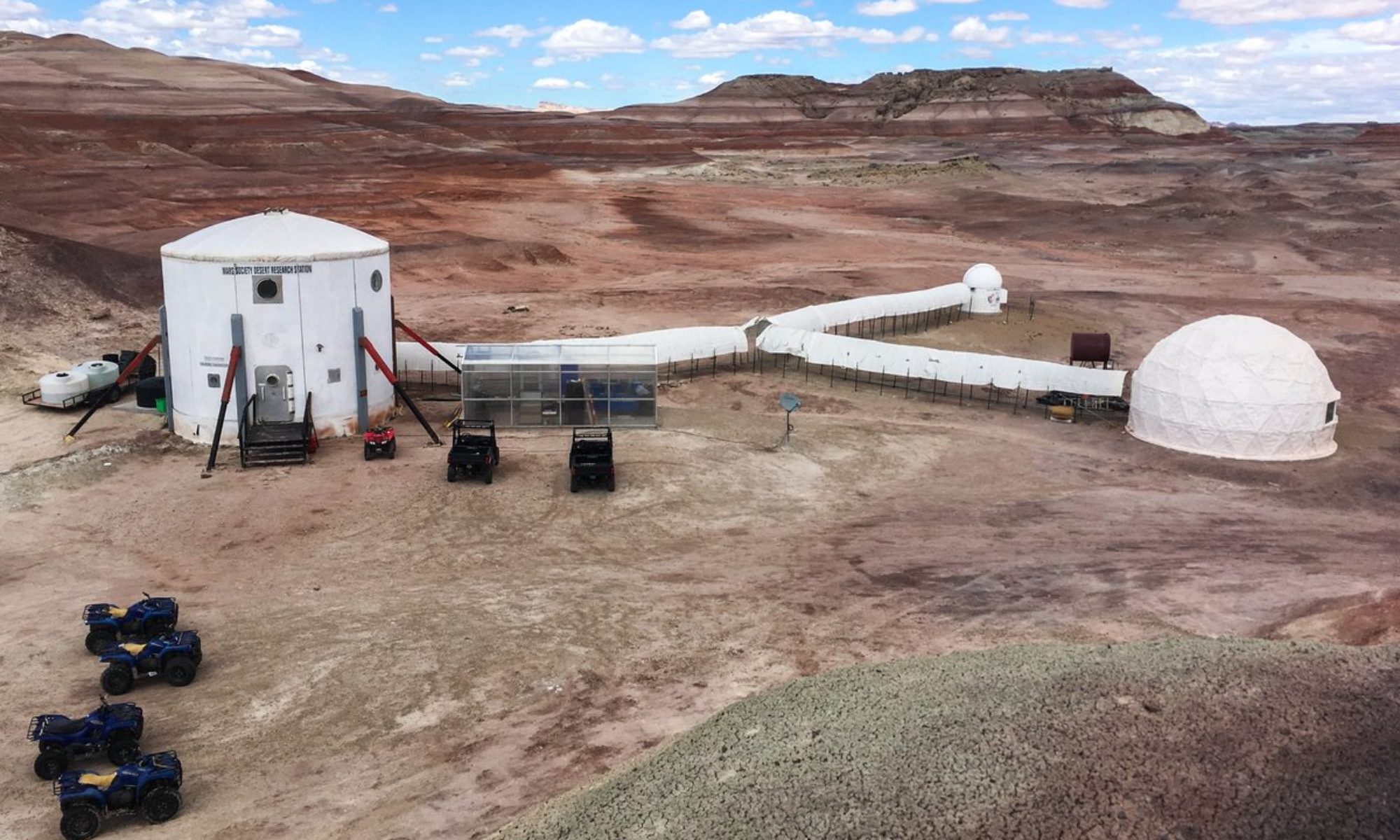

Research Report – April 20th

[category science-report]

Mid-Mission Research Report – Crew 297

Progress of Crew Research Projects:

Title: Simulated Deployment of a Nuclear Power System: Logistics and Operational Challenges
Principal Investigator: Matthew Lynch
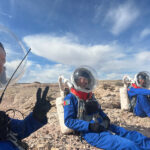
Current Progress: After some initial challenges with coordinating our "hide and seek" strategy of the NPS due to technical errors in converting between GPS datums, the remaining work for this project has had repeated success. Both Teams A & B have each had a successful "seek" EVA twice, using numerous search strategies. So far the most successful strategy has been the "High-point" method, in which seekers ascend local high elevation points and observe their immediate vicinity, repeating until the NPS is found. The second most successful strategy has been the "sweep method" in which EVA members stand a good distance apart (100-200 feet) and sweep through the search area together. Hiding the NPS has also been successful as it has given ample opportunity to study the Martian environment for interesting geological sites, as well as possible excavation sites for the NPS. There also has been two success instances of burying the NPS. Both attempts used the same tools and general method, but had significantly different terrain. Our initial results have shown that the actual excavation rate varies from 30 cubic feet an hour in challenging terrain, to 53 cubic feet an hour in near-ideal terrain. Digging crew’s have utilized a 1-on/X-off work strategy, where 1 crew member works at a time at a rigorous pace, while the remaining crew members rest, frequently switching positions. This has been done with 2 and 4 person crews, a normalization study may be done later to help account for digging rates between crews of different sizes.

Title: Advancing Planetary Mineralogical Analysis: Evaluating the Usability of Portable Gamma Ray Spectroscopy during Martian Operations
Principal Investigator: Sarah Lamm
Current Progress: This research is testing the practicality and feasibility of a portable Gamma-Ray Spectrometer in the field. For this study we are using a RS-125 Gamma-Ray Spectrometer, which is 25.9x 8.1x 9.1cm at 2 kg, with a rubberized grip, and dust protected, one button operation, and sound loud enough to be heard in a helmet over a fan. The assay was set at the standard 120 seconds, reading wt% of radioactive potassium (K), and ppm of uranium (U) and thorium (Th).
Stop 1: At 12S 518065 4250003 we ran initial Gamma-Ray Spectrometer readings of the tan and red regolith. The mounds of this region are unconsolidated fine grain clay minerals with desiccation cracks. The potassium amount in the red regolith was about double of the potassium in the tan region. Based on the Th/U ratio, it shows that the red regolith was oxidized, which makes sense based on the other observations and the red coloring is likely from iron oxides-stained clay minerals. The Th/K ratio indicates that the clay minerals inside both regolith are likely smectite.
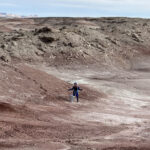
Stop 2: At Robert’s Rock Garden (12S 518278 4249467), further south than Stop 1, we observed conglomerates that were from a higher layer, that had fallen due to lower layers being eroded away. The conglomerates are poorly sorted from gravel to sand size, clast supported, and likely a silica matrix (Figure 1). The K, U, and Th amounts were significantly below the average amount in the previous region.
Stop 3: Further south from Robert’s Rock Garden at 12S 518819 4248714, we found an area that’s regolith looked redder from orbit than the surrounding region. Here we found red and white regolith. The red regolith (Figure 2- left side) had larger desiccation cracks than the white regolith (Figure 2- right side). The K in the red regolith was more than double the white, indicating that the K was likely leached out. The red regolith in this region did have a slightly higher Th/U ratio than the red regolith at Stop #1 indicating that this area likely had higher Redox change.
Gamma-Ray spectrometers seem to be practical as they can be small and durable enough to be used in the field with gloves and a space suit. Furthermore, they can give rapid assays of radioactive material in the field which can be used for determining lithology and past aqueous events but also things like risk of Radon gas for astronauts.

Title: A Toolset for Shared and Long-term Document Management and IT Operations
Principal Investigators: Sean Marquez & Matthew Storch
Current Progress: The WIDGIT project got off to a fast start, as Matt S & Sean were able to accomplish all of the following during our first day at MDRS:
Set up a local WiFi network 100% independent of the Internet
Get the WIDGIT server configured on that independent network, and accessible via NoMachine (as the monitor and keyboard we have available are only useful for rudimentary work)
Finish the configuration of 3 workspace sessions for crewmembers that did not have adequate hardware to run the workspace locally on their own laptops
Clone the notes repo for each of the server-based workspaces
At that point WIDGIT was in a usable state. However, as the mission got into full swing, the crew focused on EVAs and various other required tasks, and were also dealing with several power outages per day. Therefore we could not find enough time to conduct the crew’s WIDGIT training until Sol 4. Even then, only two crew members fully participated in the training while a third participated partially.
As of Sol 5, the two PIs and two other crew members are using the system. In particular, the GreenHab Officer has been pushing GreenHab reports into Dendron. The MDRS Handbook has also been incorporated into Dendron except for the Appendix. An additional use case is to use WIDGIT to write this Mid-mission Summary Report, thereby demonstrating that collaborative workflows can be accomplished on a purely local network.
Use cases for the remainder of the mission include crew members using WIDGIT for research notes and writing the final report. The PIs had originally envisioned additional use cases, such as running the FPrime data collection system for monitoring environmental conditions in the GreenHab on the same fully local network.
However, the reality is that WIDGIT has more overhead in terms of both learning and operations than conventional internet-based tools, and the crew already has an ambitious schedule for EVAs and other research projects. In addition, many other activities (cooking, cleaning, etc. while dealing with power outages) are taking more time than anticipated.

Title: MDRS IOT-Assisted Data Collection Using OSHW & OSS
Principal Investigator: Sean Marquez
Current Progress: Setting up the initial localized IT infrastructure (codename, WIDGIT) was successful as of Sol 1. However, due to the EVA schedule, cooking duties, GreenHab duties, and recurring power outages, there’s been little to no time to set up and configure the environmental sensors needed to collect environmental data from the GreenHab using FPrime. The plan is to continue to attempt to configure the sensors as the mission continues, if time permits.

Title: Use of Sonar for Measuring Water Tank Depth
Principal Investigator: David Laude
Current Progress: This research project would replace acquiring the distance of the static tank opening to the water surface with a ruler, for determining the remaining volume of water, to acquiring via an electronic sonar range finder device, specifically an LV-MaxSonar. The volume can subsequently be determined by the sensor’s output signal measured with a digital voltmeter (DVM) and then entered into a spreadsheet formula that calculates daily water usage and water remaining.
Initial testing on a nearly full tank did expose a problem. Inside the tank, near the top opening, there is a wide hose that spans across much of the top area. This hose interferes with measurement as one would expect. However, the hose lays mostly in the tank half closest to the Hab and placement of the device near the opposite side is all that’s needed for an accurate reading. As the tank lowers, more measurements will be needed to determine if accurate to near empty. Initially I had thought to further develop it, for a subsequent crew assignment, to indicate gallons remaining in a three digit display. However, now seeing the water usage spreadsheet with its input in units of inches, and output in gallons and average use, I believe it best for the final device to output in inches. This would also make it possibly usable with other different sized tanks, assuming different formula parameters.

Title: Robot Competency Self-Assessment at MDRS
Principal Investigator: Nicholas Conlon (at CU Boulder, on Earth – Pawel Sawicki supervising project at MDRS)
Current Progress: Despite suffering a couple of setbacks, the Robot Competency Self-Assessment study, involving Case, is still on track for a successful completion. The primary goal of this study is to understand how future astronauts involved with robotic applications rely on telemetry, map data, and intuition in order to infer how competent a robot will be within a given environment. Thus, fundamentally the goal here is to understand how the crew will utilize the rover, whether or not it is as fully functional as initially intended. One such nonconformance occurred prior to mission start, when the first-person view camera (not used to meet any of this research’s objectives) was not working due to a ssh public key authentication error on the connected Raspberry Pi. This issue persisted through the first set of EVAs. There have been two EVAs involved with Case so far: EVA #5 and EVA #8. EVA #5, occurring on Sol 4, involved fairly nominal operation of the rover. Although the rover would occasionally not reach Points of Interest (POI), this was easily overcome with manual override driving. Using synchronized manual and automated driving sequence, an adequate portion of the EVA area was captured on Case’s GoPro which will be post-processed post-mission to develop "Street view"-like imagery. EVA #8 on the other-hand did not have the same amount of luck, as Case was not able to connect to the local network. Troubleshooting efforts were futile.
Both anomalies of Case are being investigated and have a path forward to resolution. Since Case requires transporting a noteworthy amount of ground support equipment (GSE), local tests around the Hab will be first utilized until trust can be established in the reliability of Case. These local EVAs will allow for more efficient troubleshooting and off-set the missed time of EVA #8. Further, the crew has incorporated the available space on Case’s chassis, attaching a Geiger-Muller Counter which will be used to simulate an approach of the [inert] NPS, and ascertain the radioactivity around the Hab.

GreenHab Report – April 20th

Crew 297 GreenHab Report 20-04-2024

GreenHab Officer: Sean Marquez

Environmental control:
– Heater on (set to 55F)
– Fan on (set to 92F; not accounting for power outages)

Average temperatures: 84F

Hours of supplemental light: N/A

Daily water usage for crops: 4 gal

Daily water usage for research and/or other purposes: 0 gal

Water in Blue Tank: 183 gal

Time(s) of watering for crops: 14:05

Changes to crops: N/A

Narrative: Fan power went out again some time in the afternoon. Based on tests from the prior night, the fan power outages seem to be linked to the HomeAssistant network, which becomes unavailable during power outages. Between HabCom duties, lunch, and dinner preparations, I was unavailable to open the GreenHab door until around 14:04 (at which point the GreenHab atmospheric temperature had reached ~110F), then closed at around 19:25 when the GreenHab atmosphere temperature had dropped to ~80F. Brown/wilting leaves from the radishes were composted.

Harvest:
– 13g of cherry tomato
– 66g of red cabbage
– 147g of radishes
– 177g of kale
– 23g of green onion

Support/supplies needed: Would it be possible to run HomeAssistant on our other local network that is currently configured and powered via the UPS, so as to circumvent vulnerability to power outages? This change is minor and temporary and will be undone before the end of our mission.

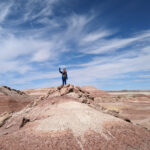
Operations Report – April 20th

Crew 297 Operations Report 20-04-2024

SOL: 6

Name of person filing report: Matt Lynch (Engineer)

Non-nominal systems: Suit 2 (stuck valve), Suit 9 (broken visor), Suit 11 (poor battery life)

Notes on non-nominal systems: The issues with Suit 2 and 9 were already noted before our mission. Suit 2 & 11 repairs are ongoing. The issue with Radio two has been fixed with a new headset.

ROVERS

Opportunity rover used:

Hours: 181.8

Beginning charge: 100%

Ending charge: 48%

Currently charging: No

Curiosity rover used:

Hours: 278.7

Beginning charge: 100%

Ending charge: 39%

Currently charging: No

General notes on rovers: Both rovers seats have been partly repaired with reflective silver metallic tape.

Summary of Hab operations:

WATER USE: 25.4 gallons

Water (static tank): 284.2 gallons

Static tank pipe heater (on or off): off

Static tank heater (On or off): off

Toilet tank emptied: no

Summary of internet: Looking up recipes, downloading entertainment, report formatting methods, catching up on Earthly news

Summary of suits and radios: The battery on suit 6 seemed to drain faster than the others today. While still currently within acceptable performance this should be monitored.

Radios 2,3,4,5, and 6 were used.

EVA Suits 1,4,5,and 6 were used.

Summary of GreenHab operations:

WATER USE: 4 gallons

Heater: Yes

Supplemental light: N/A

Harvest: 13g of cherry tomato, 66g of red cabbage, 147g of radishes, and 177g of kale, 23g of green onion

Summary of ScienceDome operations: NA

Summary of RAM operations: (Tools used, work done): Tools from the RAM have been continually used in suit repair.

Summary of any observatory issues: NA

Sol Summary – April 22nd

Crew 297 Sol Summary Report 22-04-2024

Sol: 08

Summary Title: Mars on Earth Day

Author’s name: Pawel Sawicki

Mission Status: Nominal

Sol Activity Summary:

This morning, half the crew woke up with the Martian sun to prepare for an early EVA start time. Keeping cool prior to the impending peak of the hottest sol of the sim, Lamm and Sawicki set out to survey the grey area (as seen by satellite) between the Sea of Shells and Overlook to gather spectral data. Unfortunately for them, Opportunity was only able to traverse half of Brahe Highway and the rest of the journey was conquered by foot. While the views of Overlook proved to be spectacular, it was also confirmed that the area contained more uranium content than the previously explored lands around MDRS (but still in line with an average amount). As the environment started to heat up, the crew forwent a visit to the Sea of Shells and headed back to the Hab. After conducting their duties today, the crew enjoyed a finger-licking tuna & veggie casserole made by Chef Lynch.

Look Ahead Plan:

Tomorrow there are a couple of EVAs planned. The early EVA crew will look to locate the NPS that was hidden today. The second EVA will continue locally testing Case, with a ground station located inside the comfortable air-conditioned confines of the ScienceDome. During the latter EVA, the crew will monitor Case on the outside and take gamma-ray spectral data of geological formations by the MDRS station.

Anomalies in work:

Suit 11 (fan power substantially decreased mid-EVA): Battery was replaced but the air flow is still less than nominal
Weather:
Morning (data from 0900): calm winds (2 mph), chilly (57F), and sunny with clear skies
Noon: calm winds (4 mph), warm (75F), and sunny with clear skies
Afternoon (1800): moderate winds (19 mph), warm (80F), and broken cloud coverage
Crew Physical Status: Overall crew health is nominal.

EVA: During today’s EVA the crew was able to admire the beauty of the Overlook, but unfortunately the crew was not able to reach the Sea of Shells. Nevertheless, site-seeing is never an objective of any EVA, including today’s. Thus the goals of the EVA (analyzing the geological features of this Northwest area) were completed and the EVA can be deemed a success.

Reports to be filed:

Sol Summary
Journalist Report
GreenHab Report
Operations Report
EVA report (1 EVA)
EVA request (2 EVAs)
Mid-Mission Report
Support Requested: None requested.

EVA Report – April 19th

Crew 297 EVA 7 Report 19-4-2024
      
EVA # 7

Author: Sarah Lamm

Purpose of EVA: Team B for the NPS Project will travel to 300 m northwest of Cowboy Corner (based on the NPS location that Team A had chosen), and search a 250 m radius for the NPS. Once found, we will continued to explore the region for geological exploration.

Start Time: 1:00 PM

End Time: 2:28 PM

Narrative: Crew arrived at the destination about 30 minutes after leaving the Hab. Starting from the north we started looking for the NPS device. After about 20 minutes we located it in a gorge. From there we traveled south stopping to look at dark rock formations. At this point, it was discovered that Suit #11’s batteries were quickly losing charge, and the fan was not blowing as much air. We aborted the remainder of the EVA and headed for the Hab.

Destination: 300 meters NW of Cowboy Corner

Coordinates: 12S 518534 4253152

Participants: Pawel Sawicki (Commander), Dave Laude (Journalist), Sarah Lamm (Geologist)

Road(s) and routes per MDRS Map: Cow Dung Road

Mode of travel: Spirit, Opportunity, and Walking

Journalist Report – April 19th

Crew 297 – Janus 1 Journalist – David Laude

Today’s two EVAs were simply to seek, find, "hide and seek" again, the mock nuclear power system (NPS). Mission support provided a simulated landing site for the NPS. The Crew Commander (not on requested EVA) gave an approximate landing site, which will be within 1000 feet from the real location. This EVA utilized known searching methods to find the NPS. The morning’s EVA team with both Matts and Sean, sought and found it in less than 10 minutes! Once found, it was collected and a new simulated landing site was selected and recorded for the next EVA crew to recover.

Just after 1PM, Pawel, Dave and Sarah headed north on Cow Dung Road on rovers Opportunity (Oppy) and Spirit. The longer drive than usual allowed more time to indulge one’s vision upon a stark, but remarkable landscape of shapes and Marian soil and rock tones. Lacking was any sense of green, except for an occasional small green patch of mineral tainted regolith sometimes found while on foot.

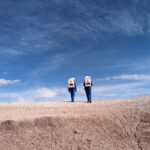
Reaching our destination, we departed our separate ways to cover a broad section of ground, all of us heading south while spreading out and believing we were at the most northern perimeter of the search area. After about 25 minutes of what seemed like a scenic hike where no person had been before, Pawel discovered the NPS. Once found, the crew continued to explore the region for geological interests.

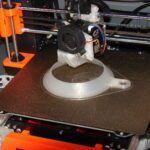
During the afternoon EVA, Sean had gotten a design for a funnel printing on the 3D printer. A funnel was one item of kitchen utility that we didn’t have. The usefulness of such a printer can not be understated for a moderate to long-term space mission. A funnel is only one of a very large variety of objects that are possible to print.

Sol Summary – April 18th

Crew 297 Sol Summary Report 18-04-2024

Sol: 04

Summary Title: stanleY yelnatS tuanortsA

Author’s name: Pawel Sawicki

Mission Status: Nominal

Sol Activity Summary:

Today we opened our eyes to a welcomed Martian morning partially filled with clouds. These clouds proved to be fortuitous during the later EVAs in reducing sun glare on screens and the need for respiration during digging. Today’s EVA was a first for our robotic crewmate Case. Case, roughly the size of its distant Martian cousin, Sojourner, has the intention of helping us take useful Martian imagery for planning purposes of future crews. Today was also the first time we had four crewmates involved in the same EVA and the first true attempt at digging the NPS. Case was able to capture useful imagery of the surroundings, yet, it was not able to take off its metaphorical leash, needing to be monitored constantly and manually driven for a large portion of its adventure. The other two EVA crew mates had great success – digging a hole suitable for the NPS at a rate of 30 cubic feet per hour. Two hours had passed before the rover and related GSE were collected, the hole was filled up, and we started heading back home. When the crew finally recovered from the eventful EVAs they learned about the functionality of WIDGIT and how to incorporate it into their collaborative report writing workflows. FInally, a savory Japanese curry dish was prepared and served by Chef Sean to the delight of the crews’ taste buds.

Look Ahead Plan:

Tomorrow we will have a chock-filled day of EVAs from 0900 to 1600. The first EVA will look to locate the NPS that has thankfully been placed by Mission Support for us. After they successfully find the NPS, they will provide the favor to the second EVA crew of hiding the NPS. The second EVA crew will then attempt to find the NPS with enough time to spare for additional gamma-ray spectral readings of the Martian rocks in the surrounding area.

Anomalies in work:

Suit 5 (ventilation electrical connection): Investigated and likely fixed. To be further examined/tested in the coming days.
GreenHab automated fan: The GreenHab fan powers on when the GH temp reaches 94F, but then shortly thereafter turns off. It power cycles continuously but never reaches its expected rpm.
Suit 4 (collar cable ring missing): Fixed today, will be functionally tested during EVA tomorrow.
ScienceDome: We have noticed a foul chemical smell. Dispositioning.
Weather:
Morning (data from 0900): calm winds (6 mph), chilly (57F), and partially cloudy
Noon: calm winds (3 mph), warm (67F), and sunny
Afternoon (1800): calm winds (8 mph), warm (74F), and broken cloud coverage
Crew Physical Status: Crew health is nominal.

EVA: Nominal EVA. The crew of four involved with the EVA was able to test digging capabilities within their spacesuits and use the rover, Case, to capture MDRS site imagery.

Reports to be filed:

Sol Summary
Journalist Report
GreenHab Report
Operations Report
EVA report (1 EVA)
EVA request (1 EVA)
Support Requested: We have requested that the [inert] NPS be placed by Mission Support at a location of their choosing (though reachable by rover and within a maximum of 15 minutes of walking) in either Candor Chasma, Eos Chasma, Valles Marineris, or Aurorae Chaos for a search and recovery EVA #6 on 19-04-2024. The NPS will be placed in the rear airlock tomorrow night, 18-04-2024 by 1600. Once the inert NPS is hidden, precise GPS coordinates and a photo are requested to be taken to not lose track of the location. These GPS coordinates are then asked to be sent to Pawel.

We also request to have the permission for Opportunity to be plugged in after EVA #6 tomorrow for one hour (1200-1300) between EVAs to extend its range.

GreenHab Report – April 18th

Crew 297 GreenHab Report 18-04-2024

GreenHab Officer: Sean Marquez

Environmental control:
– Heater on (set to 55F)
– Fan on

Average temperatures: 80F

Hours of supplemental light: N/A

Daily water usage for crops: 3 gal

Daily water usage for research and/or other purposes: 0 gal

Water in Blue Tank: 188 gal

Time(s) of watering for crops: 11:30

Changes to crops: Radishes and red cabbages were still looking a bit wilted, but less so than yesterday. Carrots and the two (Riya & Garbanzo) kale plants no longer appear wilted.

Narrative: Fan was on full power at the time of watering, but due to power outages throughout the day, the GreenHab door was purposefully left open again between 16:10 to 19:00 to allow for air flow from the tunnel system to try and prevent the GreenHab from overheating. Brown leaves from cherry tomatoes, kale, and squash were composted. Vines from a squash plant were found strangling a neighboring cherry tomato plant, which then had to be separated and placed along an adjacent trellis.

Harvest:
– 4g cherry tomato

Support/supplies needed: N/A

Operations Report – April 18th

Crew 297 Operations Report 18-04-2024

SOL: 4

Name of person filing report: Matt Lynch (Engineer)

Non-nominal systems: Suit 2 (stuck valve), Suit 9 (broken visor), Radio 2 (likely damaged antenna)

Notes on non-nominal systems: The issues with Suit 2 and 9 were already noted before our mission. The issue with Suit 4 was fixed today. Fixes were attempted with Suit 2, however the two valve components are extremely stuck together. We propose drilling/sawing out the jammed valve, this will destroy the stuck component, but enable us to salvage the remaining pieces and return Suit 2 to functional operation. See below for specifics on Radio 2.

ROVERS

Spirit rover used:

Hours: 251.6

Beginning charge: 100%

Ending charge: 61%

Currently charging: No

Curiosity rover used:

Hours: 278.0

Beginning charge: 100%

Ending charge: 66%

Currently charging: No

General notes on rovers: NA

Summary of Hab operations: 1 bag of non-burnal (NB) trash for pickup

WATER USE: 46.9 gallons

Water (static tank): 333.1 gallons

Static tank pipe heater (on or off): off

Static tank heater (On or off): off

Toilet tank emptied: yes

Summary of internet: Looking up recipes, downloading entertainment, downloading navigation applications, report formatting methods, catching up on Earthly news

Summary of suits and radios: Comms issued occurred with Radio 2 on EVA, diagnostics back at the hab revealed a likely damaged antenna as the cause but we were unable to fully recreate the problems

Radios 1,2,5, and 6 were used.

EVA Suits 1,4,6, and 7 were used.

Summary of GreenHab operations:

WATER USE: 3 gallons

Heater: Yes

Supplemental light: N/A

Harvest: 4g of cherry tomatoes

Summary of ScienceDome operations: A noxious sulfur-like smell has been noted in the ScienceDome, likely coming from the BioReactor experiment being autonomously performed there from a previous crew. This smell was not noticed the first two sols of this mission.

Summary of RAM operations: (Tools used, work done): Wrenches, mallets, and other tools were used in performing Suit repair.

Summary of any observatory issues: NA

Copyright © The Mars Society. All rights reserved. | Main Site