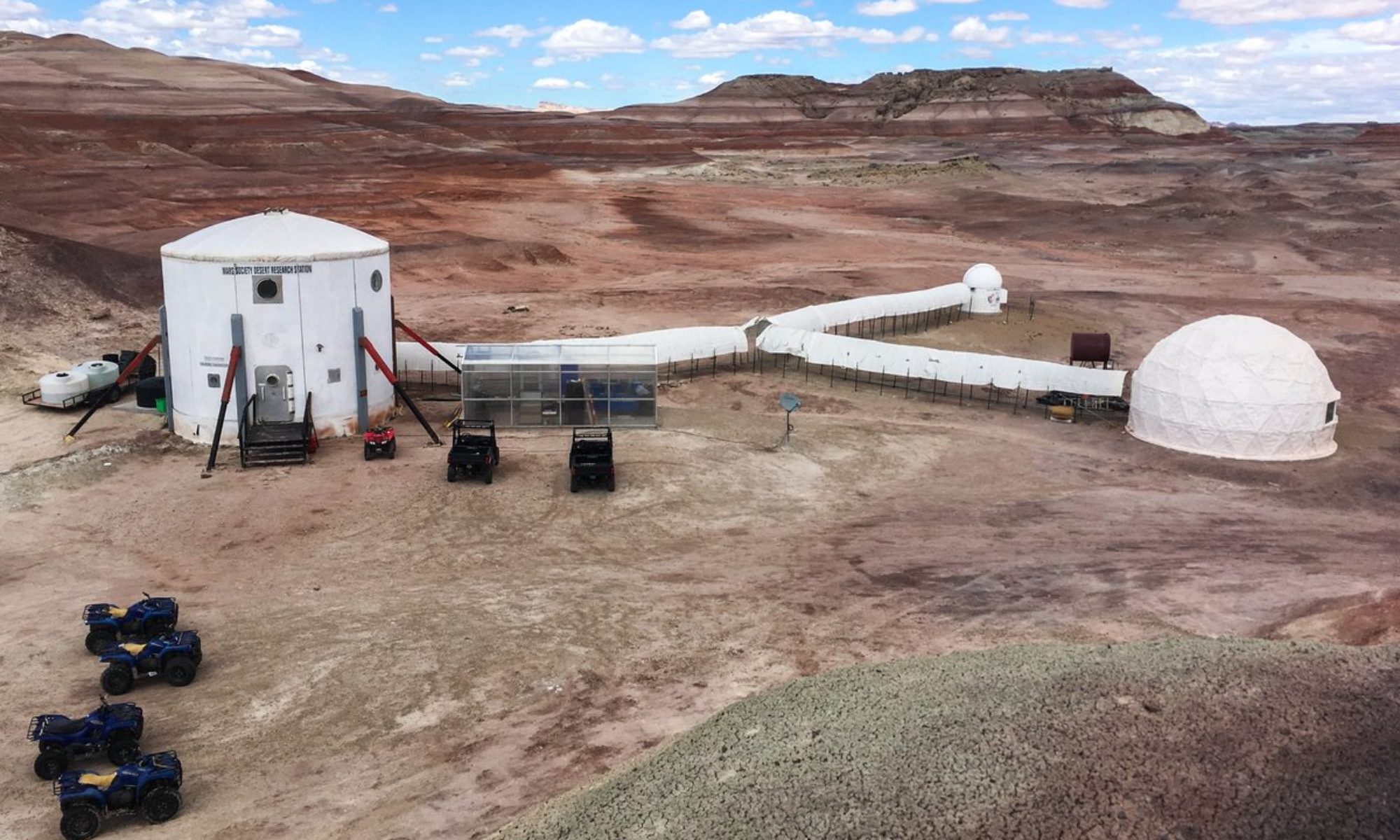

Mars Desert Research Station
Mission Plan
Crew 328
Jan 25 2026 – Feb 7 2026
Crew Members
Commander: Mariló Torres Soto
Crew Engineer and HSO: Aaron Tener
Crew Scientist: Jahnavi Dangeti
Green Hub Officer: Rebeca Gonçalves
Crew Journalist: Tom Bickmore
General Mission Plan
We represent the first generation of Martian colonists. In the preceding years, through a series of unmanned missions, an army of machines and robots have landed on the Martian surface and constructed a life-support habitat, equipping it with the necessary elements and devices to make human life possible there.
Our crew was recruited to establish a settlement on the Red Planet, and, after a long and arduous journey, they are finally safe in the aforementioned facilities.
The pilot commander has successfully completed the first part of the mission, the journey, and now remains in command with the objective of protecting the valuable team of scientists, coordinating communications with Earth, and making operational and safety decisions.
The chief engineer and medical officer will improve the technical conditions in the module and monitor the health of their colleagues; the chief scientist will conduct research with bacteria to create a future breathable atmosphere; the Green Hub officer will initiate the production of food and vegetables in extraterrestrial soil; and finally, the crew journalist will conduct global outreach to raise awareness of the importance of space exploration for the future of humanity.
Main Objectives
– Replicate the same routines and limitations of a hypothetical crew on Mars through daily schedules.
– Perform research in the fields of engineering, astrobiology, geology and communications on the Red Planet.
– Keep the maximum level of fidelity and realism during the simulation, so that the results of the experiments are as reliable as possible.
– Develop emergency procedures and safety protocols.
– Analyze the interaction and coexistence of the group from a neuropsychological point of view.
Crew Projects
As this is a team of professionals, the studies to be conducted do not include titles, descriptions, or methodology.
The astrobiologist will compare the growth of tomato and radish seeds that have been on the International Space Station, subjected to radiation and microgravity, with that of other standard seeds from Earth.
The chief scientist will investigate, at a chemical level, certain types of bacteria found in minerals from the area and will also analyze the effect of the extreme desert environment on the skin of the astronauts in an effort to better protect the epidermis.
The chief engineer objective is to implement the functionality of the station’s systems and devices through improvement proposals and, at the same time, address any health needs of the group and conduct periodic checkups, especially before and after EVAs.
Finally, and no less important, the crew journalist will conduct online broadcasts, media connections, and mass outreach events to gauge the response of young people and learn about their concerns regarding Mars.
As for EVAs, after the first two training sessions for the entire crew, they will proceed successively along these lines: commander assessment and exploration, sample collection, audiovisual documentation, organic and chemical checks, and emergency plan drills.
Leadership Structure, Roles and Responsibilities
Crew Commander – With five successful analogous missions completed and extensive experience as a pilot and aerospace safety specialist, she is ultimately responsible for the expedition, coordinating daily operations and schedules, serving as the main point of contact with Mission Support, making overall decisions, and overseeing the progress of the simulation while prioritizing complete immersion in the performance. The purpose of her participation is to continue her training for future collaborations as a commercial/private astronaut.
Crew Engineer and HSO – Due to an understanding of the safety and emergency procedures, he acts as an Subcommander/Executive Officer, taking over command in the case the Commander is indisposed or otherwise unreachable.
Crew Scientist – In the unlikely case both the CC and HSO are indisposed, leadership role will fall to her, considering her skills and abilities acquired in two previous analog missions.
For EVAs: An effort will be made to place the Commander or HSO on each EVA and that person will take a leadership role for the EVA. Either the commander or the HSO will always remain in charge at the station during EVAs. Neither of them will ever leave the habitat at the same time. They take the role of mission leader and assume leader responsibilities for EVA’s at all times.
Responsibilities for Each Role
Crew Commander focused on tasks related to research and reporting, handling the daily Sol Summary reports and primary point of contact for Mission Support.
Engineer and Health and Safety Officer is the commander’s right-hand man and her trusted support person. As an aerospace engineer, his advice and recommendations are essential and vital. Monitor physical and mental health of crew and report on all health and safety issues as they arise. Ensure First Aid kits, fire extinguishers, fire blankets and other safety devices are in proper working order. Also, monitoring and maintenance of access tunnels., ensuring all communications equipment is working properly prior to EVAs and charging properly post EVAs. Maintenance and cleaning of RAM. Handling of daily operations report.
Green Hab Officer is leading the main and central research of this mission. Monitoring of plant growth in Green Hab as outlined by Green Hab coordinator Ben Greaves, and also the maintenance and cleaning of Green Hab. Of course handling of daily Green Hab reports. She receives assistance from the other crew members in her work if she requests it.
Crew Journalist tracking of daily activities performed by crew members at the station and on EVA. Gathering and cataloguing of all pictures taken by crew members throughout the day and, at the same time, handling of daily Journalist reports.
Crew Scientist maintenance and cleaning of Science Dome ensuring proper use and storage of equipment in the Science Dome. Handling of EVA requests when applicable.
Expected Deliverables
All crew members are expected to perform daily tasks that pertain to the research projects that were accepted. They will strive to make significant progress to be reported at the mid mission mark and have data generation and collection finished by the end of mission date. Data analysis and final reporting can happen post mission.
Crew Performance
Crew members are expected to improve on aspects of daily mission life, such as EVA prep and daily report writing. They will build a daily routine that is a healthy balance between work and relaxation in order to avoid excess stress and burn out while maintaining productivity.
Risk Management and Safety Protocols
The crew is thoroughly familiar with the emergency procedures in case of medical emergencies, fire, power outage and comms failure.
Through briefings and debriefings, the commander ensures the full commitment of the entire team to safety, especially during EVAs.
There is constant monitoring and observation of preventive measures and cautious and prudent actions in order to avoid incidents and accidents.
The MDRS manual is frequently consulted by everyone.
Any health concerns due to environmental factors, such as dehydration, heat exhaustion, extreme cold or others, will take priority over sim.