Mission Summary- December 20th

Mars Desert Research Station

Mission Summary

Crew 305 – Valles

Dec 8th, 2024 – Dec 21st, 2024

Crew Members:

Commander and GreenHab Officer: Hunter Vannier

Executive Officer and Crew Geologist: Ian Pamerleau

Crew Engineer: Spruha Vashi

Crew Scientist: Monish Lokhande

Health and Safety Officer: Peter Zoss

Crew Journalist: Rashi Jain

AD_4nXfHxOpgYmoEUfJwZhkYarSPIAiot7Y4j0S78PNzNPrvof_37AdngoxlY_hYkZaiycWqP-jeGNO5ObM_CY2sPKsm3aedgG3XQIbW2PxV64njaWSd-kMbYIlSM10pXnTNadcUNuJT?key=UDBElswbanx1w2tkCIONab5X

Acknowledgements:

The MDRS 305 crew would like to express their gratitude to the many people who made this mission possible: our deepest thanks to Dr. Robert Zubrin, President of the Mars Society; Sergii Iakymov, MDRS Director, who assisted us with planning and answered many questions in the months prior to the mission, along with support at the end of our mission; Ben Stanley (and Jules), MDRS Analog Research Program Director and David Steinhour, MDRS Site Manager for being invaluable as Mission Support during the mission and addressing both large and small problems during our stay; Mike Stolz for patience and consistent communication regarding media relations; Russ Nelson for preparing us for emergencies; Scott Davis for EVA suit support; James Burk, Executive Director; Peter Detterline, Director of Observatories; Bernard Dubb, MDRS IT coordinator; Dr. Kshitij Mall and the Purdue Mission Support staff; the Purdue faculty who greatly helped us in the selection process of Crews 305 and 306 (Valles and Montes); all the departments and people at Purdue University who supported this mission; and all the unnamed people who work behind the scene

to make this effort possible, and who gave us a chance to be an active part of the effort towards human exploration of Mars.

Mission description and outcome:

MDRS 305 “Valles”, twin of mission 306 “Montes”, is the eighth all-Purdue crew at MDRS. The mission was characterized by excellent research quality that was diverse yet compatible with one another. We had a high level of performance from a professional and a personal perspective. The diverse crew included two women and four men, and represented three countries (United States, India, Canada) as well as various departments at Purdue. Crew 305 is an all-student crew (undergraduate student, PhD students and candidates), showcasing the strength of Purdue student-lead research in the field of space exploration.

Crew 305 performed a wide range of research tasks with a strong geological and human-machine compatibility focus that regularly led to collaborative research efforts, a primary Crew 305 theme. EVAs led crew members to areas of MDRS that yielded numerous high-quality geologic samples and scientific data collection. Crew members were able to observe EVA activities and leave with a better understanding of how machines can be effectively used to help astronauts on Mars. Engineering, health tracking, and botany experiments concerned with Mars exploration were also successfully conducted, including how MDRS operations affected the health and well-being of the crew during versus prior to the mission. The privilege of sending two Purdue crews back-to-back is not lost on us, as multiple experiments will live on during the Crew 306 “Montes” mission to follow.

MDRS’s unique analogue environment and robust campus was both impactful and relevant for Crew 305, as almost every building was in use during the mission. Much of the research conducted here would not have been possible in typical terrestrial environments or in college facilities. This work will directly contribute to PhD dissertations and future conference presentations that, in turn, will no doubt spread awareness about MDRS missions and foster awareness and passion for space exploration.

Mission description and outcome:

MDRS 305 “Valles”, twin of mission 306 “Montes”, is the eighth all-Purdue crew at MDRS. The mission was characterized by excellent research quality that was diverse yet compatible with one another. We had a high level of performance from a professional and a personal perspective. The diverse crew included two women and four men, and represented three countries (United States, India, Canada) as well as various departments at Purdue. Crew 305 is an all-student crew (undergraduate student, PhD students and candidates), showcasing the strength of Purdue student-lead research in the field of space exploration.

Crew 305 performed a wide range of research tasks with a strong geological and human-machine compatibility focus that regularly led to collaborative research efforts, a primary Crew 305 theme. EVAs led crew members to areas of MDRS that yielded numerous high-quality geologic samples and scientific data collection. Crew members were able to observe EVA activities and leave with a better understanding of how machines can be effectively used to help astronauts on Mars. Engineering, health tracking, and botany experiments concerned with Mars exploration were also successfully conducted, including how MDRS operations affected the health and well-being of the crew during versus prior to the mission. The privilege of sending two Purdue crews back-to-back is not lost on us, as multiple experiments will live on during the Crew 306 “Montes” mission to follow.

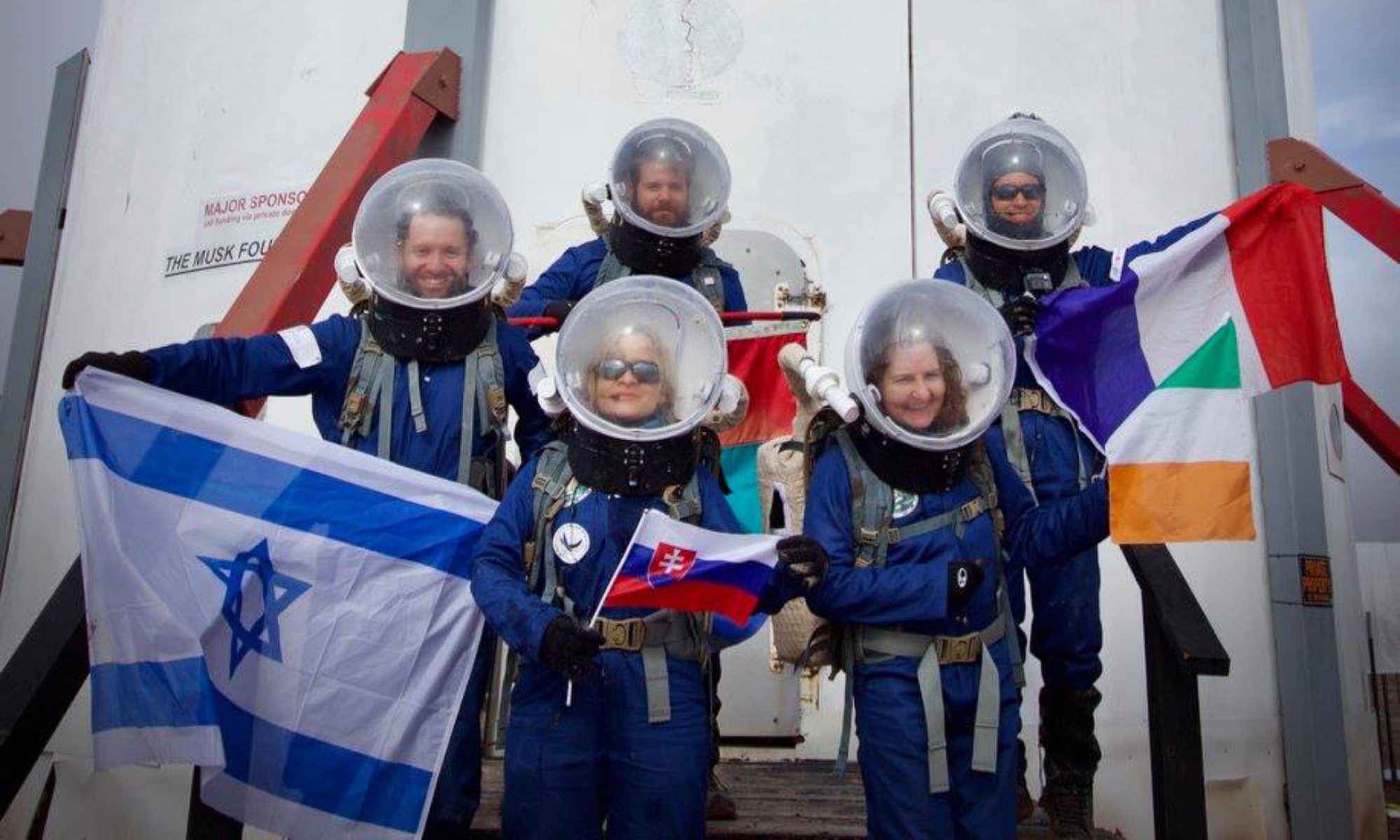
MDRS’s unique analogue environment and robust campus was both impactful and relevant for Crew 305, as almost every building was in use during the mission. Much of the research conducted here would not have been possible in typical terrestrial environments or in college facilities. This work will directly contribute to PhD dissertations and future conference presentations that, in turn, will no doubt spread awareness about MDRS missions and foster awareness and passion for space exploration. Figure 1. MDRS 305 Crew posing in front of the habitat. Left to right: Executive Office and Crew Geologist Ian Pamerleau, Health and Safety Office Peter Zoss, Commander and GreenHab Officer Hunter Vannier, Crew Journalist Rashi Jain, Crew Engineer Spruha Vashi, and Crew Scientist Monish Lokhande.

It has been a pleasure to be commander of this crew, which successfully completed a wide variety of high level research while sharing many laughs along the way. I was particularly impressed by the empathy and major effort crew members committed to help fellow crewmates be as successful as possible with research,

which included a 4-day soldering, wiring, and coding saga. We experienced significant technical challenges, but everyone took immediate action and worked the problems together. At MDRS, the crew properly followed safety and research protocols, performed as a tight group, and used their time productively. Crew 305 expressed genuine interest in learning about the diverse backgrounds and research interests represented by the group, which made for a more meaningful and fulfilling experience.

Figure 1. MDRS 305 Crew posing in front of the habitat. Lef to right: Executive Office and Crew Geologist Ian Pamerleau, Health and Safety Office Peter Zoss, Commander and GreenHab Officer Hunter Vannier, Crew Journalist Rashi Jain, Crew Engineer Spruha Vashi, and Crew Scientist Monish Lokhande.

It has been a pleasure to be commander of this crew, which successfully completed a wide variety of high level research while sharing many laughs along the way. I was particularly impressed by the empathy and major effort crew members committed to help fellow crewmates be as successful as possible with research,

which included a 4-day soldering, wiring, and coding saga. We experienced significant technical challenges, but everyone took immediate action and worked the problems together. At MDRS, the crew properly followed safety and research protocols, performed as a tight group, and used their time productively. Crew 305 expressed genuine interest in learning about the diverse backgrounds and research interests represented by the group, which made for a more meaningful and fulfilling experience.

Summary of ExtraVehicular Activities (EVA)

After being trained in the use of rovers and in the safety protocols for EVAs, the crew had twelve excursions during rotation 305. Two of which were the traditional short EVAs to Marble Ritual, and the remaining EVAs were aimed at gathering data, samples, or observations for one or more crew members’ research. The EVAs reached locations that featured ephemeral streams for measuring and/or paleosol for sampling. Observations were also taken on how machines could aid astronauts taking data in the field. EVA teams thoroughly explored the regions in Candor Chasma, Eos Chasma, southeast of Kissing Camel Ridge (KCR), and east of Hab Ridge (Fig. 2).

While the EVA team was in the field taking data, the rest of 305 were still involved in the EVA. Every Crew 305 member would meet in the lower Hab about 30 minutes before the EVA began to help those gearing up get ready and enter the airlock (and always took airlock photos). During the EVA, in addition to 45-minute check-ins, the comms team back at the Hab would take notes on the EVA team’s movements including time they parked the rovers, time they began the return trip to the Hab, and any additional information. This information was logged in an EVA spreadsheet that we are leaving as a template for future crews to use. The comms team also was able to use the GPS trackers on the EVA team to help them find their desired location in real time. The comms team was able to advise the EVA team on an accessible route into Eos Chasma during EVA 05. Overall, Crew 305 had a very safe and successful time in the field for multiple crew members’ research projects.

Table 1. Summary of EVAs, indicating Sol of execution, the destination of each EVA, time spent walking and taking measurements/ samples/observations, total time, walking distance, and total distance.

EVA

Sol

Destinations

Walking & Activity Time (h:mm)

Total Time (h:mm)

Walking Distance (km [miles])

Total Distance (km [miles])

1

1

Marble Ritual

0:45

1:00

1.32 [0.82]

1.87 [1.16]

2

1

Marble Ritual

1:00

1:15

1.48 [0.92]

2.03 [1.26]

3

2

Candor Chasma

2:45

3:05

3.25 [2.02]

6.25 [3.88]

4

3

Compass Rock/ Candor Chasma

3:10

3:45

4.63 [2.88]

12.08 [7.50]

5

5

Eos Chasma

3:10

3:30

5.41 [3.36]

10.95 [6.80]

6

6

Eos Chasma

2:15

2:45

2.93 [1.82]

11.15 [6.93]

7

7

Zubrin’s Head/ White Rock

Canyon

2:15

2:55

4.46 [2.77]

11.58 [7.20]

8

8

Hab Ridge/

Zubrin’s Head

2:55

3:25

4.42 [2.74]

11.54 [7.17]

9

9

North of Hab

1:25

1:25

2.22 [1.38]

2.22 [1.38]

10

10

South KCR

1:45

2:15

2.40 [1.49]

6.72 [4.18]

11

11

East Zubrin’s

Head/White Rock Canyon

3:25

2:55

3.42 [2.13]

12.92 [8.03]

12

Total

12

Compass Rock

1:15

26:05

1:40

29:55

1.24 [0.77]

37.18 [23.10]

7.96 [4.95]

97.27 [60.44]

AD_4nXdH0BZ174DcQvdKGTqUWEDzCnyf9aZPVdBoApbgwwH7yzjF5ZdZUXdy75MQcW-OLyW1LpAe00zjvVsDu5pIGnLHI_WUd4AEHn_gTQYvIIZx4W5jbWG00XOWTsd-K9G45gvYc8LF?key=UDBElswbanx1w2tkCIONab5XFigure 2. Satellite map of the three regions explored by Crew 305 – Valles. There were 3 EVAs spent in the drainage basin of Candor Chasma (purple pins), 2 in the drainage basin of Eos Chasma (blue pins), and 4 in the drainage basin Southeast of Kissing Camel Ridge (green pins).

Summary of GreenHab Activities

Crew GreenHab Officer: Hunter Vannier

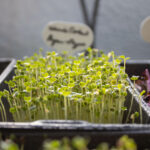
It was truly a pleasure working in the GreenHab and learning how to most efficiently care for its residents, which are all happy and healthy. During the mission, the cucumbers were the most dramatic and required twice-daily watering to prevent wilting. Many cucumbers have appeared over the past two weeks, though they are not mature enough to indulge in before our departure, and cherry tomatoes appeared on our last afternoon. The greatest change to the GreenHab was the transplanting and thinning of tomatoes. Now each pot only has one tomato to ensure healthy growth, proper fruiting, and to improve current and future water efficiency. Two raised beds were refreshed with new soil and planted with six different types of microgreens. These will also have to be enjoyed by future crews. The crew was able to enjoy almost daily use of crops in meals, including sauteed arugula, carrot green salad, regular use of cilantro in a variety of meals, and basil, thyme, and parsley in spaghetti sauce. On our final day, we even got to harvest a cucumber. Aside from the general care of the GreenHab, I was able to successfully carry out a soil moisture monitoring experiment to improve water efficiency for the growth of microgreens (see below in Science Summary section). Below I will share a watering schedule for the current set of crops.

Recommended watering schedule: tomatoes, distribute 2-3 gallons among tomatoes every 2 days; cucumbers, 1 gallon in the morning and 1 gallon in evening; raised microgreen beds, 50 oz per morning; radish and carrot bin, ½ gallon every 3 days; herb raised bed, 1.5 gallons every 5 days.

Science Summary

We had 7 separate projects that covered a range of topics. Some of them were EVA-related, while others were conducted at MDRS campus. Overall, each project uniquely highlighted each crewmember’s strength and expertise, and expanded scientific, engineering, and human factor knowledge to support crewed exploration of Mars.

Research Projects:

1.

Title: Hydraulic Geometry of Ephemeral Streams to Potentially Elucidate Paleoclimate Author: Ian Pamerleau

Description, activities, and results: Ephemeral streams are present around the MDRS campus and carve out the landscape after heavy rain. The hydraulic geometry of these streams mathematically describes how the width and drainage area change as the flow moves up- to downstream. There is a range of values that the hydraulic geometry of rivers tends to fall within, which tells us more about climate, lithology, and sediment load. These values have been established for the more “mature” rivers with constantly flowing water. However, the ephemeral streams at MDRS may not have achieved the values present in the literature. I will test if the ephemeral streams of MDRS hold the same hydraulic geometry in the literature, and if it is able to tell us anything about the climate.

We were able to thoroughly explore the three major areas where I wanted to take stream width measurements: Candor Chasma, Eos Chasma, and the region southeast of Kissing Camel Ridge (KCR) (Fig. 2). My objective was to take measurements of branching tributaries and between said tributaries along a main channel because the drainage area of a channel will substantially increase when the area of another stream is added. We also took three measurements of the stream width at each location a meter or so apart from one another to get an average width of the location.

I have not been able to create a plot of my data yet and am still in the processing stage. The trend I expect to see (i.e., smaller drainage area locations yield smaller stream widths and larger drainage area locations yield larger stream widths) will likely hold based on my observations and preliminary processing. The data may become a bit more complicated when comparing two sections of high drainage area, however, as there seemed to have been some variability in different factors such as lithology, slope, vegetation, etc.. I tried to limit these factors based on the location I chose but it is impossible to fully eliminate them, but I have taken photos of each location we took measurements of to better analyze any anomalies. I will hopefully be able to discuss these results with my undergraduate research advisor (whom I have worked on a geomorphology project with) or a geomorphologist/hydrologist at Purdue and share my findings at a conference once the analysis has been completed.

2.

Title: Effect of Variable Soil Moisture on Microgreen Growth

Author(s): Hunter Vannier

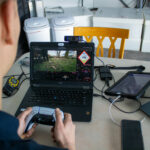
Description, activities, and results: Efficient plant growth is an important element of life at MDRS and will be critical for sustainability if we want to create a self-sustaining presence on other planetary bodies. For this project, I aimed to conduct an experiment that investigated how soil moisture content affects microgreen growth to find efficient watering practices. The established GreenHab infrastructure at the Mars Desert Research Station is an ideal place to conduct this experiment.

Experimental setup: I filled four 3” x 3” potting containers with Miracle Grow potting soil available in the GreenHab. The soil required priming and mixing with water, so the pots started out with some moisture level. In each of the pots, I added 1 g of broccoli microgreen seeds, then covered with a thin layer of soil. Each morning, I would water each pot with a specific quantity of water. Pot 1 received 2 oz water, Pot 2 received 1.5 oz water, Pot 3 received 1 oz water, and Pot 4 received 0.5 oz water. Pot 5 was a control pot and received no water over the duration of the experiment to determine if the ambient moisture conditions in the GreenHab were sufficient to stimulate growth without watering. The soil moisture monitoring system consisted of four capacitive soil moisture sensors (one for each pot) attached to an Arduino Uno R3 microcomputer (Fig. 3). Two measurements were taken in the morning, one prior to watering and one after, and one measurement was taken in the evening via direct connection to a personal laptop while running an Arduino serial monitor code. An initial baseline reading for each was obtained a day after the soil was primed

(prior to seeding). I waited a day after priming to equilibrate the moisture content for each pot. Subsequent measurements were subtracted from these base values for the respective pots.

AD_4nXf1Ke4qlYlkSJfFNiIFrFjE0fxf_yfumwJKdFpZT6a3vDotUh97jPW6aeoSPI6XKvALSQj5YHTK2iDAscHRrHNrlluFHQkyy7JKX_ZqKrRCB4toHFKy0pihkwNm4zmofmlngJRNNA?key=UDBElswbanx1w2tkCIONab5X

Figure 3: The soil moisture monitoring setup. The Arduino Uno is shown in the bottom left of the image, and soil moisture sensors are shown in each pot, labelled 1-4. The image is from the final afternoon of the experiment, December 20. One can see how similar the microgreen growth is in Pots 1-3 despite receiving significantly different water quantities. .

Results from the experiment are shown in Fig. 4. The first day of watering occurred on December 16. Initially, each pot was near the baseline value after the first watering except Pot 1 (2 oz). The 2 oz of water may have been sufficient to saturate more of the soil compared to the other pots. However, by the evening the pots had once again equilibrated. On the morning of Day 2, a sinusoidal pattern developed that persisted for the duration of the experiment, but the moisture of each pot seemed to reach a stable pattern on Day 3 (December 18). Pot 1 (2 oz) displayed the most significant change in soil moisture between morning watering and evening, and it maintained consistently higher soil moisture content than Pots 2-4. Interestingly, the pots ranging from 0.5 to 1.5 oz tend to have somewhat similar soil moisture content, each significantly lower than Pot 1 (2 oz). Pot 4 (0.5 oz) often has a higher soil moisture content than Pots 2 and 3, which is unexpected and may be due to a higher concentration of water being deposited near the sensor when watering, or a slightly different sensor depth. In general, the pots lose moisture at a relatively constant rate during the day and evening. Based on the sensor data alone, it seems that 0.5-1.5 oz of water could achieve similar soil moisture. However, most of the moisture could have remained in the top few cm of soil for Pots 2-4. This is in contrast with Pot 1 (2 oz) where water seemed to consistently saturate more of the soil and to a higher degree. This is an important result because microgreens have shallow roots and can be sustained by soil

moisture content at the surface rather than at depth. Therefore, I conclude that 2 oz of watering for these pots is more than needed to grow the microgreens.

AD_4nXcwJIjvV4RgC7RSGhoRgJ7L8tDUeWW1w6dB6p9bsps4onYNl-nm11nbDAdlUcvugV-WAG24YIb-2ch510wDhyAAB2s8rwfKxDyfPZDOZq2oXLNb9Xg_89BkYMEqXZNN_nKi72h1NA?key=UDBElswbanx1w2tkCIONab5X

Figure 4: Sensor data from the soil moisture monitoring station. The y-axis shows soil moisture values, and the x-axis shows the time of day when measurements were taken. Each colored line represents one of the pots: blue is Pot 1 (2 oz), Pot 2 is green (1.5 oz), grey is Pot 3 (1 oz), and Pot 4 (0.5 oz) is orange. There is a gap because data was not obtained for the Dec. 18 post water measurement.

This assertion is supported by observational evidence of microgreen growth (Fig. 3). The microgreens were first observed to sprout on the evening of December 19. Pot 1 (2 oz) clearly had 4 to 5 times the growth observed in Pot 2 (1.5 oz) and Pot 3 (1 oz). By the morning of December 20, Pots 1-3 clearly had microgreens occupying most of the pot; Pots 2 and 3 had similar amounts of microgreens, and about ¾ that of Pot 1. Pot 4 showed signs of soil disturbance caused by sprouting but the microgreens had not penetrated the surface of the soil. Based on the observed growth rates and soil moisture content, I conclude that 1 oz of water per pot is the most efficient watering practice for the broccoli microgreens. Pot 3 (1 oz) achieved a similar growth rate as Pot 2 (1.5 oz), and though it did not sprout as quickly as Pot 1 (2 oz), a similar level of growth was achieved by the end of the experiment with half the amount of water. A future experiment could be to first saturate each pot with variable amounts of water, then add a similar amount of water to each to see if a larger initial watering could stimulate growth and enable less subsequent watering.

To translate these results to the GreenHab, we can compare the pots to the raised beds that can be used for microgreen growth. The beds are 33.5”x 13” for a total surface area of 435.5 in2 and the pots are 3”x 3” for a surface area of 9 in2. Assuming the same depth, this means ~50 pots would fit in the raised bed, and that to efficiently water the bed it would take 50 oz per day. Throughout my time at MDRS, I have been using at least ~64 oz of water per day for one of these beds and sometimes an additional 30 oz. At minimum, my experiment supports that I could improve efficiency in raised bed watering by ~22%, a significant improvement. I would recommend 50 oz per day for future crews growing microgreens in raised beds. There may be changes in evaporative rates between the beds and pots which should either be calculated or tested.

3.

Title: Sampling Paleosol Sequences for Mars Comparison

Author(s): Hunter Vannier

Description, activities, and results: The goal of this project was to collect samples from at least one exposed paleosol sequence with the intention of bringing it back to Purdue University for spectral and microscopic analyses. Paleosols have been proposed to have been observed on Mars via rover data, and little work has been done to understand their role in sedimentary recycling and retention of past water on the Mars surface. Three paleosol sequences were collected (15 total samples) that represent tens of millions of years of history in the MDRS region. The first two sets were collected on Sol 3 in the interior and just outside Candor Chasma (Fig. 5). The third was collected near Zubrin’s head. Complimentary to the Crew Geologist’s work, river channel sediments were also collected at different locations across MDRS (7 total) with the aim of understanding how paleosols are recycled in the fluvial systems at MDRS, and how composition changes spatially across the field areas.

AD_4nXeAeUquebG3dEygFsGhkd0tICd051yM2BV447GqQU7mPbEm-ZNp_mKJxuV1E9uKXS1i_AGtev3z4RAjqg_Hjt27VRnlbct2ws4yF_zLJaoBEl9lIcvzNclBcooVkdUXEDfCZLaQpQ?key=UDBElswbanx1w2tkCIONab5XFigure 5: Example paleosol exposures observed during EVA 03 in Candor Chasma. Numbers indicate sampling locations within the paleosol sequence. (a) Paleosol sequence ~300 m after the entrance to Candor Chasma. Darker-toned layers indicate higher concentrations of organic material and are consistent with changing water environment. Capping rock is a

conglomerate and sandstone of the Morrison Formation (b) Paleosol sequence just exterior to the Candor Chasma entrance. Note the significant amount of red color compared to (a), indicating a much higher concentration of iron oxides. Cap rock is a fine-grained sandstone that is commonly exposed at ground level through the Compass Rock area.

The samples collected at MDRS will be analyzed in the pursuit of improving our understanding of paleosols on Mars and their relationship to variable climates on Mars. Visible to near infrared spectra, X-Ray fluorescence, and X-Ray diffraction data will be collected to form a preliminary data set to improve context for Mars observations. This data will likely be published at a conference in the next year. This data will also be the basis for a future NASA Solar Systems Working proposal to investigate the MDRS paleosols and river systems in greater detail.

BONUS: we came across sedimentary concretions that are documented in the MDRS Geology Unofficial Handbook. These are very similar to outcrops recently observed in Jezero Crater by the Mars 2020 Rover. See Figure 6 for a comparison.

a

c

AD_4nXdp1e1R7jM9_b6Q1HrLJNAJTC2XYWe5CLhhOHeaaQ48N-EFtjkyGt8TBwKEtNLzr10TvZa0DLqGbLV0wSBdiTxyZxNxSpylb0BWq0qU09FzSFAQwfM3UjB19s5bjUQoZt1nTH81?key=UDBElswbanx1w2tkCIONab5Xb d

Figure 6: Comparison between concretions at MDRS and on Mars. (a,b) Sandstone concretions in the fluvial channel near Zubrin’s Head. (b,c) Concretions observed by the Mars 2020 Perseverance Rover in Jezero Crater near the Bright Angel formation around Sol 1022 (Courtesy Adrian Broz; publicly available images from Mastcam-Z).

4.

Title: Investigating Rover Applications in a Mars Analog Environment

Author(s): Spruha Vashi

Description, activities, and results: The objective of this work was to build a modular rover that can traverse the analog Mars terrain along with crew members on EVA. Testing at MDRS was set to include mobility testing over different sections of terrain, confirming communications and operability, and exploring human-machine teaming capabilities. However, after multiple long days of group efforts at assembly and troubleshooting, the rover, named Hermes, was unfortunately unable to start and be ready for data collection, but is pictured in Figure 7. While this outcome was unfortunate and meant that Hermes could not be tested outside on EVAs, it provided a good insight into major improvements in assembly that can be applied for future testing. Understanding the complex system and its weakest points of failure was not lost, and this information now allows us to ensure a smoother assembly process in future usage.

AD_4nXfZUg-Wh08ej3o2GNaNJaESKQwg7K1XHwmaJ3a_9z2ZN1Sm5hRAPZc3ebpzT6UXGcx0fMb1spMdl3bnvxPlw65K6VnZUrsGkitSJfkinYds35SMiVcugpCXqE5aadoyzYH7NhU_uQ?key=UDBElswbanx1w2tkCIONab5X

Figure 7: Hermes the rover, with electronics and wiring included. Expected weight is 25 pounds, and expected maximum speed is 1.6 meters per second.

Although Hermes was not utilized on EVA, data and observations were still collected to help understand applications of rovers in the analog environment, especially in scenarios where the rover would act as a member of the EVA team. Some main points of investigation were mobility, functionality, communications, teaming strategies, and future design. For mobility, a single tire was taken out on EVA and tested on multiple different terrain types to understand its ability to travel across different terrain. Since the Crew Geologist’s research was primarily working with stream beds, most terrain testing was conducted on or near stream beds to understand the scenario in which the rover would be travelling along with the team while collecting stream bed data. The testing was done by rolling the single tire across 10ft strips of terrain multiple times, with the same downward pressure applied while rolling to simulate the actual rover’s 25lb weight, as seen in Figure 8. The results showed no more than 5 mm of tread depth in the softest terrain tested, compared to 200 mm footprints. In stream beds, the tires showed a clear tread but when hitting denser patches required more effort to get past. On dry and rocky lands, the tires showed no tread but rolled smoothly over different sizes of small rocks. It is still uncertain and unlikely that the rover would be able to traverse across very rocky, winding paths.

AD_4nXdiqt8N82wkuiZlumOLqViU2UjtUz3ZA8C2OQnPYiLNsfeK8ZPa8gq5wexFqS5HEgsy3ac2-5wnp8n-u68u6ewcL17Tt5IJ9Auuejtvk-NYgu7QbW8BvW5i1M3IW_3GWuiSjr2Ehg?key=UDBElswbanx1w2tkCIONab5X

Fig. 8: Image of terrain testing in a stream bed. Three strips of 10ft were identified and marked with flags and the tire was rolled along all three. Tire tracks are seen at each line, note that the found was denser in the center line and thus there are gaps of tracking since the tire slipped at those points.

To understand the functionality and teaming strategies that the rover could possibly adopt once it is functional, qualitative observations were made on certain aspects of data collection that delay operations and could be eliminated with the presence of a rover. For example, it was observed during the Crew Geologist’s stream bed measurements that the travel bag of materials is a hindrance to carry. It was noticed that writing down geological information, data points, and GPS information all takes time, and some of these items can be noted down by an autonomous system that is present, in this case, a rover. On EVA 11, the Crew Geologist was timed while he was taking measurements to understand his efficiency and points of improvement. On average, there was a reduction of about 1 minute of time from the Crew Geologist taking the measurement entirely by himself vs. having an EVA team member help with the measurement. While this confirms the idea that an EVA team will make data collection more efficient, the important note is that regardless of the number of members involved, data recording took 30-45 seconds for every measurement. Data recording was assumed to include notes on geological information, data points, and GPS information. All these items can be autonomized with a rover on hand that can collect and store the data and simplify the measurement process for the crew members. Another point of investigation was the time it takes for the rover to travel alongside a crew member. The specifications of Hermes indicate that its maximum speed would be about 1.6 meters per second, or approximately 3.5 miles per hour. Although Hermes was not actively tested, a measurement was made of comparing a crew member traveling from one data collection point to another at normal walking speed vs a crew member walking at specifically 3.5 mph (estimated to be 2 strides per second). The delay of a travelling rover was found to be 31 seconds and would also be further delayed in the case that the stream bed is very rocky, meaning it must travel on the outside, flatter areas.

The observations made on EVAs clarify future design upgrades of the rover. For example, communications and data recording capabilities, as well as carrying capacities would be the most ideal additions to Hermes at the time. It is hoped that with future usage of Hermes, more scientific applications can be implemented, and the rover can be well versed to work with many different variations of data collection and support the

crew’s research ambitions. Future observations of Hermes in action working in a team of scientists can further identify failure and improvement points for teaming strategies of autonomous systems and astronauts in analog environments, the Moon, Mars, and beyond.

5.

Title: MDRS Monitoring Overlay Sensors

Author(s): Monish Lokhande

Description, activities, and results:

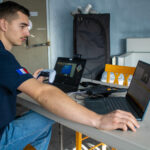
Description: The project was focused on developing a network of Raspberry Pis To measure data from various locations in the habitat to measure the necessary sensor data (CO2, VOC, Air Quality, Temperature and Humidity). This data would be collected and analysed for any possible sudden changes. The “Sensor Packs” would be made to operate independently on batteries.

Activities: A total of two sensor packs were developed inhouse were placed in GreenHab and Lower Hab to continuously monitor the temperature, humidity and CO2 levels. The sensor packs relay the information in the two different types of feeds: Local and Global. The local feed updates every minute to provide real-time data to the crew members in the habitat and can be used by the local crew members to monitor the health of a certain location in the HAB. On the other hand, global feed is used as a transfer of necessary information to a remote ground station. The feed is designed in such a way that it considers the delays inherent in Mars-to Earth communication. To limit the consumption of bandwidth and latency effects, the global feed by default parses the data and sends only the necessary data at regular intervals when everything seems within acceptable range of values. The continuous relay of data for global feed is done when there is a sensor which is not functioning or has faulty values. The sensor modules have the dual functionality to power using battery packs or by a wall power source. This makes it possible to be located at any location in the habitat.

Limitations: The sensor modules had a limitation on the number of sensors because of limitation of data to be published. The CO2 sensors needed calibration to have a reference for correct value calculation and therefore the values had a higher fluctuation.

Results: The sensor modules developed actively monitor data from the GreenHab and Lower Hab successfully. The local dashboard image is given as a reference, which populates with data every minute. If

any sensor has faulty data, there is a corresponding notification sent to the local and global dashboards. Having local and global dashboards help crew members quickly analyse any faults as well as inform the remote ground station of any anomalies that might have occurred. Future applications will include adding a notification in the form of sound or LEDs, to alert which sensors are not working or giving not acceptable values. Another extension will be to include more sensors. The project is being continued by Crew 306 for their research.

AD_4nXedpaHfPgBDDMJXgP3dinZtQybZiPz7w7Sl2N2Yd1t96ZiuFHGbOU6NlQ7gB3CP4gaoshlHbo-ZztFeZx9vTr11HEo0OOprP-A4pKEaTPj1RGcdkBuJqYUJ6XtX9iBvAiq8-0yQvA?key=UDBElswbanx1w2tkCIONab5X

Figure 9a. Local Data Feeds for individual sensors

AD_4nXf1Tp781UQpRTQI7Oio10Cr_DZHH2X_dqyxwxDIXej4I0vrtxwEgpaxFHOjrbr3PFnAuHIbgxRaFiyGriKuoK0OBb2AGu01X-ccrl8GAjhslush30pk2PjeOQkOcGSQviozAugs3w?key=UDBElswbanx1w2tkCIONab5XFigure 9b. Local Dashboard for sensor information

6.

Title: Safety Lessons and Design Requirements on Autonomy for future Martian Habitats Author(s): Rashi Jain

Description, activities, and results:

Description: Mars will have both periods of dormancy and crewed operations. Therefore, future Martian habitats must integrate autonomous systems and design practices that ensure reliable and safe operations in both operational phases of the Hab. The objective of my study is to understand how the different systems work together in a Habitat, identify weak design points and practices, and recommend safety controls and design requirements for future autonomous systems that can ensure both quick decision-making and resilient and safe habitat operations.

Activity: For this, I am studying MDRS habitat design and operations during the 12 Sols that we have at the Mars Desert Research Station from December 8th, 2024 – December 20th, 2024 to: (i) identify and draw out the functional relations between different systems in the Habitat, (ii) analyze how effective are the Habitat systems at maintaining or providing resilience to the anomalies and faults that we face during the mission.

Results: In this report, I include the results from Sol 1 – Sol 6 operations. I am still working on processing the data from the remaining six sols. For Hab, I include results only from Science Dome and the EVA operations. I am still working on processing observations made in the Main Dome, Green Hab, Repair and Maintenance Module, the Tunnels, and the Airlock.

Habitat Design

I toured each section of the Habitat and documented the different design features and resources available in each of those sections. The purpose for this exercise in each Habitat section is to understand the different resources available in each dome and what they enable us to do. It helps us (i) analyze how can or can the equipment and resources available to us both locally in each dome, and throughout the Habitat help us navigate anomalous situations, and (ii) are the current design and resources adequate to interface with autonomous systems? What, if any, should be the design requirements for future robotics or autonomous systems?

This step led to Habitat Systems Functional Relations

Habitat Systems Functional Relations

Relations between different habitat systems at MDRS. The different systems in the Habitat can be categorized into the following seven: power; interior environment; environmental control, life support system, and extra-vehicular activity, food processing, structure, command, control, and communication; and human, robots/safety controls. Here we show only power, but during the time at MDRS these models have also been sketched out for extra-vehicular activity, interior-environment, and command, control, and communication. I am still working on putting together models for other systems listed.

Power System: Figure 10 shows the power system component architecture and relations at the MDRS facility. There are two main sources of power, the solar panels (primary source) that are supposed to generate power and charge the batteries during daylight, and the backup generator (secondary source) that is to provide electricity in case solar panels malfunction, or the batteries run out of charge. Power generated through solar arrays, or the generator goes through a Sequential Shunt Unit integrated within the system which regulates the voltage of generated power. It then goes through a Direct Current Switching Unit (DCSU) which is the first component in the power distribution system. The DCSU determines power flow: i.e. how the power is distributed based on power generated and the integrated algorithm. DCSU interfaces with the batteries using a Battery Charge Discharge Unit (BCDU), whereas it interacts with the downstream loads using Main Bus Switching Unit (MBSU), DC to DC converter unit, that converts voltage to 120 Vdc, and Remote Power Controller Module (tripper box).

AD_4nXe6NcjbCFh-jQtU5ut1XGli-37DxCd2abUxbv-Kd_pcQI25Nl1sZDFGzlM8bZfSD1KJp9IjrQ1EHe3ih9KQyUwbLzN6iaikXWQozDIkxYaP4IqfQRhs-j758IzxUfnTccyISLG5xw?key=UDBElswbanx1w2tkCIONab5X

Figure 10: Power System Component Architecture and Relations at MDRS

With this power system component architecture and relation diagram at MDRS, we built a functionality diagram for individual components. Functionality diagrams are causal relation diagrams that show what the function of each component in the system is and what are the different factors it’s affected by. Figure 11 shows the functionality diagram of the solar panels. The grey circle represents the component itself (solar panel), the blue circle represents the function (generate power), the black circles represent the other systems in the Habitat system that affect either the component or its function (in this case we see that solar panel functions are affected by heating/cooling systems), the yellow circles represent variables and any other factors that influence the component’s function (in this case the solar irradiance affecting the power generative capacity).

AD_4nXdv7fPYmsMD2dHVxrJmGwYBB1-BcQU5pUGecNyzycSUIory2JpAUqNn8xUIff0Xu7qQ5apxYBd7L5sFex72KVln7gEw1ddfQp_uGb1c23kS2ipL2ubM2FJNfoQjg8FCDzdBw6ux3A?key=UDBElswbanx1w2tkCIONab5X

Figure 11: Functionality diagram for Solar Panels

Using these functionality diagrams, we place “T” variables, also known as test variables. These T variables inform the design of where future monitoring systems should be placed. For instance, in case of a solar power, we recommend placing the

Operations summary: I monitored Hab operations, resources usage, and supplies through the 12 Sols and organized the data collected in an Excel sheet.

I use insights from Habitat Design, Systems Functional Relations, and Operations to establish Safety Lessons, and Design Requirements on Autonomy for Future Martian Habitats:

Safety Lessons:

1. Generate in-situ resources: With limited availability of resources available within the Habitat on Mars, we will need to generate in-situ resources. This includes water, oxygen, and fuel reserves. While Crew 305, did not conduct any experiment on in-situ resources: this should be a requirement for future crews as all long-duration mission to Mars will require the crew to become self

sustainable.

2. Make the most of available sources: Mars receives less than half the solar irradiance (590 W/m2) we receive on Earth, therefore every W of power generated here on Earth will have to be adjusted to what will be generated on Mars. It will be important to make the most of the resources available. For solar power, one can add solar concentrators and a controller that rotates the solar panels with solar position, like what happens at ISS.

3. Have a reliable source of reading for the sensors and water tank level: Our crew had two sources of water readings: one from the sensors at Hab, and the other that we got from our calculations. For the six sols I accounted for, the numbers differed anywhere 3.22 gallons – 37.855 gallons. We went with the more conservative estimate to estimate the remaining amount of water available to us. Given the scarcity of resources however, it is advisable to know exactly the amount of resource you have, and a margin of safety to it, than either under-estimate or overestimate.

4. Take an active effort at bringing the systems back to nominal operating conditions as soon as possible. Crew 305 Valles entered the Sim with no solar panel batteries non-functional (the Battery Charge Discharge Unit was broken, as a result of which, the batteries could not store power). This resulted in the crew using solar power in the day as the main source of energy during the day and the backup generator as the main source of energy during the night. In case one or the other failed, the crew would be left without power, which is essential to keep all critical systems running on Martian habitats.

5. Have magnetic self-aligned helmets on EVA suits. While we were a crew of six, with three people going on EVA and three people staying back to help with EVA operations, initial missions on Mars can have a lot of unexpected situations. For e.g. need for a rescue mission, only one person in the EVA/airlock module. It is important that while each crew member has help, they are also independent and able to wear their own space suit with minimal help from the others. One big problem with the two piece suits is the alignment of the helmet

6. Have multiple ports of exit: Cabin depressurization is a big cause of concern on extra-terrestrial habitats, both on Mars and especially on the Moon. In case of cabin depressurization, sections of the Hab will be isolated using airlocks. When this happens it is still imperative that people in other sections of the Habitat are able to safely exit the Hab. While it is not possible to have all EVA equipment in all Hab modules, it is important to limit the number of people in domes at one time and have the adequate number of EVA equipment and an exit airlock in each module.

7. Check for consistency in equipment performance: For the first six EVAs, I calculated the drop in percentage per mile travelled by the rovers (see Table 1). We see that the rovers perform better at preserving battery for longer distances than they do for shorter EVAs.

Table 2: Drop in Percentage per Mile of Rovers for the First Six EVAs.

Drop in percentage per mile travelled.

Miles

Curiosity

Perseverance

Opportunity

Spirit

EVA 1

0.55

20

10.90909091

EVA 2

0.55

10.90909091

9.09090909

EVA 3

3

8

3.33333333

EVA 4

7.45

4.02684564

4.966442953

EVA 5

5.54

6.137184116

5.77617329

EVA 6

8.22

4.501216545

4.62287105

We can use this information to keep track of rover performance, and confidently estimate how much each individual rover can travel before it runs out of charge. Long term tracking of rover’s performance will also help astronauts determine whether a rover needs earlier maintenance or not.

8. Install methods for investigating software bugs: Crew 305 Valles used Astrolink to track the GPS coordinates of the crew while they are out on EVA. One of the EVAs, the Astrolink software, showed four trackers out instead of three. The Hab comms team communicated with the EVA crew if they had an extra-tracker (Astrolink 10) on them. Upon receiving a negative, the crew with the Mission Support established that Astrolink 10 was a digital artifact. Situations like these, however, are getting increasingly confusing with a larger / independent crew. It is important to have methods for investigating software bugs (evaluating what the root cause is) like these and addressing them.

9. Practice concise comms: Currently, aviation pilots use very precise language to communicate with other pilots and the Air Traffic Controller. It is important to establish similar rules for communication

over comms such that everyone is heard clearly without any misinterpretation. Crew 305 progressively improved in their communication while in the Sim.

10. Understand your systems well: It took a while for Crew 305 to realize that the rovers read the total number of hours they have been operational rather than remaining range on the full charge. While the crew was able to accurately figure out in time what the rover reading said (and fortunately it did not lead to any accidents), it is important for the crew to understand the systems they are working with well – to avoid any mis-interpretations that could lead to mishandling data or equipment.

Design Requirements on Autonomy for future Martian Habitats:

1. Add following monitoring systems and add remote access to them in each Hab area. a. Battery charges

b. Power Generated by Solar Panels

c. Temperature Sensors for Generators and Fuel Cells

d. Voltmeters for Sequential Shunt Units

Our functionality models for the power systems revealed that it is important to have the following sensors to track performance of the power systems at any given time. The readings can be output to the Main Dome Computer Unit that tracks all other systems. This is important for both equipment performance tracking and smooth autonomous system integration.

2. Have a running inventory of the Hab and the different resources available.

3. Automate system transitions: 1) and 2) will allow smooth automated system transitions. While the MDRS has very active Mission Support to facilitate these transitions, Mars is not going to have Mission Support. Or the Mission Support will be 20 – 40 minute lag, and won’t be able to provide on-site services.

4. Have functional backup devices that are structurally non-redundant: During the power outage, the Main Dome in Crew 305 relied on an igniter heater that did not rely on the electricity, but instead on propane. This kept the crew warm, even when the electric heating system didn’t work. This highlights that it is important to have back up devices that are functionally redundant, but not structurally redundant.

5. Organize resources and tools for ease of use: Figure 12 shows some of the cabinet space organization in the Science Dome that house different equipment.

AD_4nXfod5Od-HWnKGYduDRDqmj7dIblrl6IGcBFKCcSVbzDtz8tHz9kJTt2A0vo1t8Dy8_gtlfGKIAHogJchfqIq4snxyFyxJTHyAtnVFVlrgShOpR_AESZRjFA31frF36kL-AEdqx6nw?key=UDBElswbanx1w2tkCIONab5XAD_4nXcCjm_bWvVuNKE3ohqHkJd9MM02TL9ZnlODSdX3n0jwV4QYrGv1pizrtgYBTICiDXxHKjFhxpESKKPWkjniwZyQpjNB4bxR0jpB_dAX74tSA6HMArKfLIwuINEdqDHxnWbEcV9Lwg?key=UDBElswbanx1w2tkCIONab5XAD_4nXe07c-CtAqMa4ZX5NY1ZWNJRk8KAwJ3LMaRVO8n3yHmAuzqrhH9gn5Z318W0AKj2G9rSmInbS1mgrl8MginXofU5X6KSqX_EQC92va9cHWvdrysWcZcpCD-9TZyK84bs7mAxYyy?key=UDBElswbanx1w2tkCIONab5X

Figure 12: Cabinet Organization in Science Dome

While this setup is good for a human to work with. They will look around and find out what they need, it is too cumbersome for an autonomous system and will confuse them. Autonomous systems will need a cleaner organization to work efficiently. The best way to currently do this is to use a 3D printer, where you can create custom shelves and cabinets that autonomous systems can easily work around with.

Future work on this will include compiling a list of functionality models for all systems and components I documented at MDRS. These component functionality models will be used to create a digital extraterrestrial habitat model on the Control-Oriented Dynamic Computational Modeling Platform, where we can simulate different disruptions that will be present on Mars that cannot be simulated at MDRS either due to their absence (such as radiation) or for safety reasons.

7.

Title: Wearable-Based Autonomic Activity Profiles for Real-Time Cognitive Performance Monitoring in Spaceflight

Author(s): Peter Zoss

Description, activities, and results: This study will longitudinally quantify individual changes in autonomic nervous system (ANS) status via a wearable sensor in MDRS crew members to understand how our autonomic activity is associated with sequential measures of cognitive performance for predictive model development. Baseline data from the wearable devices will also be used to look at changes while living in analog isolation. The activities planned to be completed at MDRS included cognitive performance testing. This testing was scheduled to take place every other day starting from Sol 1 for a total of 6 testing sessions for each of the crew members.

This human factor project was able to get through all of its data collection period at MDRS. Cognitive performance testing has been completed for all crew members for the planned 6 tests at the MDRS. These tests occurred on Sols 1, 3, 5, 7, 9 and 11. The tests on Sol 3 had to end early due to power failure, resulting in an incomplete test for one crew member and a missed test for another. The cognitive performance test used is called the Cognition Test Battery, and it was administered to the crew via an iPad. The results from this research will be looked at further back in West Lafayette where analysis can be completed.

Journalist Report – December 14th

Last night after dinner and report submissions, Monish surprised us with a fixed Grogu, which he has named Andres. Crew members had mixed feelings about it, but we’ve all learnt our ways to be around it, or behind it. The crew members worked for a little bit, before heading out for stargazing while everyone. It was the Geminid meteor shower. Some crew members saw more stars than others, but it was still fun. The crew headed back to the Hab around 11:00 PM, winded down for a little bit before calling it a day. Fun fact: Crew Journalist is mostly the first one up every morning, unless other people are up as well, and don’t make their way into the leaving room. Today, the Crew Journalist got up at 5:00 AM, and read Life of Pi before she started to document her research thus far on MDRS. It’s been a good book so far; I’d recommend reading it 5/10. Very humbly written. Ian made coffee and oats for breakfast. Spruha and Rashi worked during comms. In the morning we played Spruha and Peter’s songs. It was another EVA Day for Ian, Monish, and Peter. It was Peter’s first long EVA! Hunter, Spruha, and Rashi get to stay back in the Hab and focus on their individual research projects. Spruha worked on getting the rover ready for testing. She is working on the software side of it now. Rashi started documenting her research for the mid-simulation update. At 12:50 PM when the EVA crew got back, everyone had left over spaghetti for lunch. Hunter left for the GreenHab to work on the GreenHab to take care of the plants. The mission support team came to the RAM to provide maintenance to the RAM. Afterwards, Monish went to the RAM to work on his sensors and get some more soldering work done. At 5:00 PM, Monish came back, and Hunter started cooking semi-processed alien meat and fried rice. We are all either relaxing today or working on reports and planning or working towards research for the rest of the days.

Sol Summary – December 14th

Crew 305 Sol Summary Report 14-12-2024
Sol: 6
Summary Title: Smells Like Bacon
Author’s name: Peter Zoss
Mission Status: Active
Sol Activity Summary:
Ian, Peter, and Monish left on an EVA in the morning after breakfast. Spruha, Hunter, and Rashi monitored comms from the HAB during the day. Spruha and Monish spent a lot of time in the RAM working on their research projects. Hunter prepared his famous spam fried rice for dinner; you could smell the food throughout the HAB. The VR headset used for Peter’s research was set up with Beat Saber for some post-dinner fun.
Look Ahead Plan:
The next EVA will be tomorrow, Sol 7. Ian will lead Peter and Hunter to Kissing Camel Ridge for more dry stream measurements. Monish, Rashi, and Spruha will monitor comms from the HAB. Spruha hopes to have her rover fully assembled by the end of the day, and Monish is close to having his sensor network system set up.
Anomalies in work:
None.
Weather:
Today was a chilly one, with lots of clouds blocking the sun.
Crew Physical Status:
Everyone appears in good health.
EVA:
EVA 06 saw another successful trek to Eos Chasma for dry stream channel measurements led by Ian who had Peter and Monish accompanying him. The morning started off cold, but eventually, the sun peaked out for the second half of the trip.
Reports to be filed: Sol Summary, Journalist Report, Greenhab Report, Operations Report, Crew Photos, EVA Report, and EVA Request
Support Requested: None

Research Report – December 14th

[category science-report]

Mars Desert Research Station

Mid-Mission Research Report

Crew 305 – Valles

Dec 8th, 2024 – Dec 21st, 2024

Crew Members:

Commander and GreenHab Officer: Hunter Vannier

Executive Officer and Crew Geologist: Ian Pamerleau

Crew Engineer: Spruha Vashi

Crew Scientist: Monish Lokhande

Health and Safety Officer: Peter Zoss

Crew Journalist: Rashi Jain

AD_4nXeBPYE9h5NzR1l0w8nnWsUJXEmcMokprWGeEa2qvbaJ9CH0juY5WgZ5NGo5jPGYaJK41kZVk5Q-K0PYDKi9_wxC27piZwpUhiBc_eyoPNGl_VazOdP0Blk1eIEjqKGbi809HTWoTFIi70bR2zeX3RA?key=RpLM8OSTkweklrWfr8zyvKoe

Crew Projects:

Title: Hydraulic Geometry of Ephemeral Streams to Potentially Elucidate Paleoclimate

Author(s): Ian Pamerleau

Objectives: The primary question I seek to answer is: What is the hydraulic geometry of ephemeral streams near the MDRS campus?

Current status: We have explored and taken measurements from all the regions of Candor Chasma and Eos Chasma that we could reach within the time and safety limits of an EVA. In Candor Chasma, we were able to get 13 stream width measurements, mostly along the main channel, with a few tributary measurements as well. We obtained 23 stream measurements in the Eos Chasma region, and these ranged in many sizes of tributaries. Some were very narrow, while others had their own canyons that were tricky when it came to finding a safe route into. The reason for measuring different sizes of tributaries is due to their differing drainage area sizes, which ideally will be the dependent variable controlling the stream width. The ephemeral streams around the MDRS campus are only active during flooding events, which can range in size. Therefore, I am being careful to try and take the measurement that represents the highest flooding level that is still within the stream. Things like vegetation, waterfalls, and boulders within the stream path make this somewhat difficult in locations, so we try to find locations in which these features are absent. Future measurements will be required south of Kissing Camel Ridge and the large stream network there, and a few measurements near Compass Rock. With these future measurements as well as the 36 we have now, I should have enough diversity of data to see a trend emerge if there is one (note on 36 measurements, that is a single location where 3 measurements were taken a few meters within each other to create an average).

Secondary Objective: More detailed geologic mapping of the nearby MDRS campus.

With the stream measurements project, paleosols project, and future time being required for the rover project, I have not had time and will likely not have time to conduct any detailed geologic mapping.

EVAs Completed: 2 to Candor Chasma; 2 to Eos Chasma.

EVAs Still Required: 3 to South Kissing Camel Ridge (EVAs 07, 09, 10); 1 to Compass Rock (EVA 11)

Title: Refining orbital data with In-Situ analysis

Author(s): Hunter Vannier

Objectives: The primary question I seek to answer is: How does soil moisture content affect the growth rate of microgreens?

Secondary: Determine the composition of a paleosol sequence near MDRS.

Current status: The microgreen experiment has not been fully successful yet due to issues with wiring a microcomputer and establishing a connection to the soil moisture sensor, but all seed trays and soil have been primed to begin the experiment. I will be working in the RAM to get the moisture sensor working as soon as possible so a week of data can be taken and microgreen growth can be measured. If the soil moisture sensor is not set up by Sunday, I will use the soil moisture sensor in the GreenHab and take manual readings in the morning and the evening and still achieve the desired outcome of the experiment.

For my secondary goal, I have successfully completed the nominal mission of collecting paleosol sequences. Two sequences have been collected and photographed. The first set was obtained ~300 meters into the interior of Candor Chasma and was capped by a large conglomerate unit that is part of the Morrison formation; the conglomerate is abundant throughout the region surrounding MDRS other than directly to the east. The second was capped by a fine-grained grey/yellow sandstone just outside of Candor Chasma. I intend to collect at least one more paleosol sequence near Kissing Camel Ridge before the completion of Crew 305’s mission.

EVAs: Two EVAs have been performed for paleosol research, both to Candor Chasma. The first enabled scouting of paleosol exposures, and the second resulted in two sets of paleosol sequences being sampled, one in the interior (6 samples) and just exterior (4 samples).

Title: Investigating Rover Applications in a Mars Analog Environment

Author(s): Spruha Vashi

Objectives: The primary question I seek to answer is: How can a rover assist humans during EVA processes and what interactions are necessary for the rover-human relationship?

Current Status: As most of the rover was required to be deconstructed to be brought to MDRS, the first task was setting up the RAM with my supplies and redoing the mechanical assembly of the rover. This process took about 1 day with breaks for EVA prep, meals, and other crew responsibilities. Afterwards, the next big step was to work on the electrical system of the rover, which is about 70 percent complete. I hit a roadblock with the integration of a board that is setup incorrectly, and I have had to take almost 1 day to trouble shoot. Throughout this process, I still have kept the crew aware of my timeline and the ideal testing environments I would require once the rover is complete. The aim is to have the rover complete by Sol7, and begin testing on Sol 8, Sol 10, and Sol 11.

EVAs: 3 EVAs have been established. Sol 8 EVA will be to test the rover outside of the Hab and in a short-range distance, Sol 10 will be to test the rover at Kissing Camel Ridge, and Sol 11 will be to test the rover in any other terrains with Rashi observing the functionality for her research.

Title: MDRS Monitoring System

Author(s): Monish Lokhande

Objectives: The primary question I seek to answer is: How can we achieve data efficient communication to ground station?

Secondary: Can we transmit the data to a remote station?

Current Status: One sensor module has been developed and currently being tested to check for analysis of reading for correctness. The sensor module placement is being identified and the readings are being published locally. The module to identify potential errors in readings/ sensor damage has been developed and currently being tested.

The data is being published successfully on a website to analyse and viewable. Global and local pages have been made for crew and ground station accordingly.

Problems faced: Although the sensor module is working, additional tests for validity of the data is required. The publishing of the data to the station and testing locally is harder as simulating errors in measurement needs to be configured.

Next Steps: To add the delay of data relay to the Ground station website. Add a test case where error in data would lead to local update to resolve immediately and ground station update to notify the errors.

Title: Safety Lessons and Lessons for Robotics from a Mars Analog Astronaut Mission

Author(s): Rashi Jain

Objectives: 1. Study Habitat Operations and anomalies and use insights to suggest safety lessons. Assign effectiveness values to different design features, tools, and resources available in the Hab. 2. Identify functional relations within and between different habitat systems that can be used to (i) five crew a better understanding of their system, determine what the best places are for installing monitoring systems, and which autonomous systems can be used to keep habitats safe and operational during uncrewed mission phases.

Current status:

For my first objective:

I have been keeping a record of all Sol’s operations and anomalies. For each anomaly that we’ve encountered thus far, I’ve drawn up Fault Tree Analysis (FTA) and am working on writing safety recommendations on what can be done to mitigate if these failures were to happen on Mars where we would have no Mission Support.

I have also been documenting the use of resources, tools, equipment, and the rovers while they are out on EVAs and will be plotting their performance over our stay here (including performance degradation). These values will be used to model performance in the computational model of the habitat that I am developing for my Ph.D. research that studies performance of the habitat, its systems, and components over long durations (months and years).

For my second objective:

So far, I’ve documented design, tools, and resources in the following areas of the habitat: Science Dome, Upper Deck, Rovers and Martian landscape, and partially the Lower Deck and the RAM. I have completed the functional relations for the power system, and the thermal control system. I will be doing the same for the other areas of the Hab in the upcoming weeks, and complete functional relations for all systems: which includes structures, environmental control and life support systems, and other safety controls.

Once I complete all functional relations, I will use those to determine (i) where monitoring systems should be placed for safe habitats, and (ii) robotic design requirements for autonomous and safe habitat operations.

Title: Wearable-Based Autonomic Activity Profiles for Real-Time Cognitive Performance Monitoring in Spaceflight

Author(s): Peter Zoss

Objectives: This study will longitudinally quantify individual changes in autonomic nervous system (ANS) status via a wearable sensor in MDRS crew members to understand how our autonomic activity is associated with sequential measures of cognitive performance for predictive model development.

Current status: This human factor project is halfway through its data collection period. Cognitive performance testing has been completed for all crew members 3 times at the MDRS. These tests occurred on Sols 1, 3, and 5. The tests on Sol 3 had to end early due to power failure, resulting in an incomplete test for one crew member and a missed test for another. The remaining tests will take place on Sols 7, 9, and 11.

Supplemental Operations Report -December 14th

Date: 12/14/2024
Name of person filing report: David Steinhour
Reason for Report: Routine
Non-Nominal Systems: Power system battery, Curiosity LR tire. Experienced a main generator failure on Dec 11th but it has since been resolved by a technician.

Power system: Solar: The battery bank does not hold charge when the sun is down and low on the horizon. Main generator has been monitored for oil leaks; none or extremely minor leaks observed.

Main generator:
1) Oil, oil filter hanged on 12/9/2024. Generator hours – 7298.6.
2) Current hours – 7381.1

Propane Readings: Refilled on 12/04/2024
Station Tank: 71%
Director Tank: 73%
Intern Tank: 71%
Generator Tank: 47%

Water: Hab Static Tank – 395 gallons
GreenHab – 142 gallons
Outpost tank – 320 gallons

Rovers: Sojourner rover used: Yes
Hours: 207.3
Beginning Charge: 100 %
Ending Charge: 100 %
Currently Charging: Yes
Notes on Rovers: Curiosity left rear tire is airing out.

Cars: Hab Car used and why, where: To Hanksville for supplies. To Torrey for shop towels and Brake Cleaner.
Crew Car used and why, where: To Grand Junction and back to pick up Crew 305
General notes and comments: Sway bar end links or bushings on Crew Car are failing, causing major swaying motion while driving.

Summary of Internet: Internet in the Outpost has been cutting out occasionally for 1-2 minutes at a time. It has restarted and reconnected by itself all but one instance, in which I had to unplug and replug the router in the intern trailer.

EVA suits and radios:
Suits: Suit #2 charging cable is very finicky and did not charge properly last night, regardless of being plugged in. I have found that the best way to ensure it is charging is to keep it in tension in an upwards direction.
Comms: EVA Radio #4 had an issue transmitting on Channel 2 while on EVA, but has since been troubleshooted and found to be fully functional. Will continue to monitor.

Campus wide inspection, if action taken, what and why: Small but growing tear in the tunnel tarp, at the intersection of the science dome and observatory tunnels.
Summary of Hab Operations: All nominal.
Summary of GreenHab Operations: All nominal.
Summary of SciDome Operations: All nominal.
Summary of Observatories Operations: Completed restart of Robotic Observatory. On-site staff worked with Peter Detterline to resolve issues.
Summary of RAM Operations: More small roof window leaks, otherwise nominal.
Summary of Outpost Operations: All nominal.
Summary of Health and Safety Issues: Minor cut experienced by one of the crew on Dec 13th. No further action has been needed, and it has not interfered with any crew activities.

Sol Summary – December 13th

Crew 305 Sol Summary Report 13-12-2024
Sol: 5
Summary Title: The Second Start
Author’s name: Peter Zoss
Mission Status: Active
Sol Activity Summary:
The morning started with a great breakfast prepared by Hunter with potatoes and the leftovers from the night before. Ian, Rashi, and Monish left on an EVA in the morning after breakfast. Spruha sourced some Red Lobster in the form of their cheddar bay biscuit mix for lunch with some soup. During the day, Spruha and Monish were able to get some more work done in the RAM for the projects and Rashi spent some time in the Science Dome. Hunter then prepared a nice Italian dinner for everyone with Ian’s help. The crew might stargaze tonight after reports are submitted to view the meteor shower.
Look Ahead Plan:
The next EVA will be tomorrow, Sol 6. Ian will lead Peter and Monish back to Eos Chasma for more dry stream measurements. Hunter, Rashi, and Spruha will monitor comms from the HAB. Spruha is closer to reassembling her rover. Hunter has been putting in great work to take care of all the plants in the GreenHab and will continue to monitor growth. Monish is
Anomalies in work:
A slight power outage occurred today around 3:45 PM due to cloud coverage affecting the solar power. Switching over to the generator early resolved this though.
Weather:
Today was the warmest so far, with a light breeze reaching up to 9 MPH again.
Crew Physical Status:
Everyone appears in good health.
EVA:
EVA 05 saw a successful trek to Eos Chasma for dry stream channel measurements led by Ian who had Rashi and Monish accompanying him.
Reports to be filed: Sol Summary, Journalist Report, Greenhab Report, Operations Report, Crew Photos, EVA Report, and EVA Request
Support Requested:
None

Journalist Report – December 13th

Last night, we played a game of Coup, worked on our school stuff, and went to bed. This morning, people woke up late, around 8:00 AM. We played Titanium and Three Little Birds for morning music. Hunter, our crew commander, made breakfast which we all ate. Ian, Rashi, and Monish went for EVA 05 on Sol 5. We did EVA 05 at Eos. Ian collected some stream measurements for his research, and Rashi and Monish helped with it. Some content for the social media was also taken during this EVA. Back at the Hab, Peter put computers together for his cognitive testing which would take place from 2 – 5. Spruha worked on the rover, and the Hunter checked off some Green-Hab tasks. Spruha made “Red Lobster” biscuits with garlic butter with some freshly cooked vegetable soup and Apple Cider. The crew came back and enjoyed their meal. We took turns on doing the cognitive testing for Peter. At around 3:45 PM, we lost power again, but it was quickly fixed by Mission Support. Spruha finished her last school assignment and will now be working on setting up Raspberry Pi for her rovers. Ian got done with his Teaching Assistant responsibilities and has planned EVAs for the rest of the stay here. Rashi documented the Science Dome and drew functional mappings of different elements in the Dome and what keeps the Dome going. Monish got done with assembling both his sensor packets, and setting up the website for the two, and will now see how his sensors can communicate with each other. Lastly, before dinner, Hunter and Spruha recorded the Green-Hab for some social media content. Arugula, Basil, Thyme, and Parsley were harvested.

EVA Report – December 13th

Crew 305 EVA Report 13-12-2024

EVA # 05

Author: Ian Pamerleau

Purpose of EVA: Ephemeral stream measurements in Eos Chasma

Start time: 10:05 hr

End time: 13:35 hr

Narrative: Ian led the EVA with Rashi and Monish. Spirit and Opportunity began the day with 257.2 and 197.0 hrs, respectively and 100% battery each. We took Cow Dung Road north until we arrived at a pull off near a tributary that flows into the main Eos channel. At first, we were unsure of our location as the GPS coordinates were not where I expected the entrance to the canyon to be, but we were able to contact the Hab, and Hunter was able to explain that we were at a smaller tributary south of the main channel thanks to our GPS trackers. Because of the support from the Hab, we were able to proceed.

The lithology of Eos Chasma allowed for the streams to create knickpoints (waterfalls) throughout the region. We were able to find a safe slope into the tributary at first, but quickly hit another knickpoint. We doubled back and found a way safely around the dead waterfall and continued along the tributary, getting some measurements along the way. There were some interesting cross bedding units that were exposed along this path; joints had split the rock and allowed another sandstone to lithify within the cracks. We also saw evidence of groundwater sapping along the tributary. Eventually, the stream met up with the main channel. We took some measurements at the junction and continued down the main Eos Chasma. However, we ran into another knickpoint. For this one, we didn’t have time to safely get down and back up, so we turned around and headed to the rovers. There was a slight comms issue with Rashi’s radio, but once she switched from channel 2 to 1, she came through clearly. We took some GoPro footage of our return trip to the Hab on the rovers for later social media use, and at the end of the day, Spirit had 257.9 hrs with 66% battery, and Opportunity had 197.3 hr with 68% battery.

Destination: Eos Chasma

Coordinates (use UTM WGS 84): 518750E, 4252750N (rover stop) and 518691E, 4252792N on foot.

Participants: Ian Pamerleau, Monish Lokhande, Rashi Jain

Road(s) and routes per MDRS Map: MDRS driveway, Cow Dung Road north to a pull off near the stream.

Mode of travel: Rover & walking

GreenHab Report – December 13th

Crew 305 GreenHab Report 13Dec2024

GreenHab Officer: Hunter Vannier

Environmental control (fan & heater): Heater and fan on automatically.

Average temperatures (last 24h): 88.0 F

Maximum temperature (last 24h): 94.5 F

Minimum temperature (last 24h): 78.1 F

Hours of supplemental light: 1700 – 2200

Daily water usage for crops: 9 gallons

Daily water usage for research and/or other purposes: None

Water in Blue Tank (200-gallon capacity): 147 gallons

Time(s) of watering for crops: 9:10 AM, 4:00 PM

Changes to crops: Harvested arugula, thyme, thinned basil, transplanted sunflowers

Narrative: Today the cucumbers were very wilted by the afternoon watering; I’m not sure why some days are better than others for this. The higher water consumption today has to do with the sunflower transplant. There was a pot with 3 sunflowers in it, and I transplanted each into its own pot. A couple look like they’re ready to flower, so I hope the stress of the transplant doesn’t slow that down too much. A tip for using the potting soil in the GreenHab: because of the climate here, the bag of potting soil is very dry. If you put it directly from bag to pot, the soil retains essentially no water, and it drains out the bottom of the pot. I have found by priming the soil, this no longer happens. I dump soil into the wheelbarrow and then pour water on top of it, then stir it with a trowel kind of like making dough. When the soil starts to clump and the water no longer separates from the soil in the wheelbarrow, it is ready to be used for potting. Spruha assisted in the following harvest: ¾ box of arugula to be sauteed as a side for dinner tonight, thyme and parsley for the tomato sauce, and basil to top the spaghetti. The basil is young, but it needed to be thinned for future healthy growth. I also noticed a lot of small flies in the GreenHab hanging out in the raised bed and observed a couple of red mites in the carrots.

Harvest: 156 g arugula, 5 g parsley, 1 g thyme, 2 g basil

Support/supplies needed: none