EVA Report – January 9th

Crew 202 EVA Report 9-Jan-2019

EVA #10

Author: Denys Bulikhov (EXO)

Purpose of EVA: Collection of geological samples and ambient radiation readings

Start time: 10:30
End time: 13:17

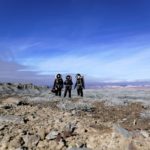
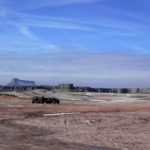
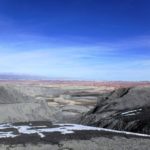
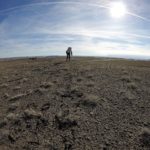
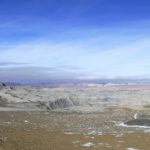
Narrative: Jake Qiu (HSO) was replaced with Ellen Czaplinski (GEO) due to primary geological intent of this EVA. EVA 10 took Cow Dung Rd north towards the Lith canyon until Spirit rover hit 60% of battery charge (Curiosity was at 65%). After that crew left the rovers and walked towards the canyon for approximately 0.8 miles. EVA 10 crew passed outside the dinosaur quarry and came out to the canyon from the west.

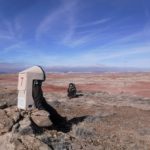
Here they collected radiation readings and geological samples. They looked for ways to get to the bottom of the Lith canyon, however, due to wet mud the descent was aborted. Right outside the quarry, EXO found the spot on the side of the larger formation where the ambient radiation level was almost 10 times higher than anywhere around MDRS area so far (12-16 uR/h on average around MDRS compared to the high 127 uR/h at this spot).

Samples were not collected however due to proximity to dinosaur quarry.

After that EVA 10 crew walked back to the rovers and came back to the Hab.

Destination: Lith canyon
Coordinates: N518800, E4256500

Participants: Cesare Guariniello (CMD), Denys Bulikhov (EXO), Kasey Hilton (ENG), Ellen Czaplinski (GEO).

Road(s) and routes per MDRS Map: Cow Dung Road.

Mode of travel: Driving and walking

Vehicles used: Spirit and Curiosity.

With best regards,
Denys Bulikhov

[end]

Astronomy Report – January 9th

Crew 202 Astronomy Report 09-Jan-2019

Crew Astronomer: Cesare Guariniello

MDRS ROBOTIC OBSERVATORY

Robotic Telescope: MDRS-WF

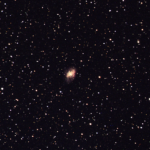
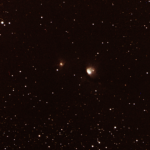
Objects Viewed: IC405 (“Flaming Star”) and Rosette Nebula. One exposure each of 180s in Blue, Green, and Luminance. One exposure of 240s in Red. One exposure of 300s in H-alpha

Problems Encountered: none

Greenhab Report – January 9th

Crew 202 Greenhab Report 09-Jan-2019
Greenhab Officer: Jake Qiu

Environmental Control:
Heating
Cooling w/ ambient air (1hrs)

40% Shade Cloth on
80% Shade Cloth on

Average Temperatures:
Low: 26.1°C
High: 36.7°C

Hours of Supplemental Light: 5

Daily Water Usage of Crops: 12 gallons

Water in Blue Tank (gallons): 61%, 185.5 gallons

Times of Watering for Crops:
0743
1133
1205
1421
1646
1806

Changes to crops:
* 1 pot of sugar pea pods starting to look worse
* Tomatoes seem to be better on the top rack of tier bench
* Onions looking better
* Romaine Lettuce newly planted
* 1 pot of mustard white-looking powder on topsoil
* Other plants have same progress

Narrative:
Watered plants throughout the day as needed. Planted new romaine lettuce. One pot of the mustard has a white-looking powder that has formed today (not sure if it’s a concern).

Experiment Results:
Date: SOL11 Crew 202 (SOL14 overall)

Watered all 21 trays as needed.

Watered Crew 201 experiments – the majority is growing well

Harvest: 1g – Basil

Support/Supplies Needed:

Sol Summary – January 9th

Crew 202 Sol Summary Report 09-Jan-2019

Sol: 11

Summary Title: Beyond the Dinosaurs

Author’s name: Cesare Guariniello

Mission Status: Nominal, the crew is working on the final touches of the part of their projects that has to be conducted at MDRS (some will have to study the data collected here once back on Earth)

Sol Activity Summary: this morning had a session of stretching for the back and shoulders. After breakfast, four crew members went on EVA towards Lith Canyon. Due to the safety protocol concerning the battery charge status of the rover, the crew walked the final part of the road, about 0.8 miles, to the west entrance of Lith Canyon. Walking around the special region (and “beyond the dinosaurs”), the crew studied the features of Lith Canyon from the northwestern wall. The condition of the west entrance did not allow the crew to hike down into the canyon.

After collecting radiometric data, the EVA crew walked back to the rover and drove the long road to the habitat, to join the remaining crew.

The afternoon was spent working, cleaning, making pizza dough, and resting. Tonight we are preparing a pizza and board games night.

Look Ahead Plan: Tomorrow we will host a CBS crew that will grab footage of our work here. We plan to have an EVA, as well as work on our research projects

Anomalies in work: None

Weather: Cloudy and warm

Crew Physical Status: Tired and in good health

EVA: The Commander, Executive Officer, Crew Geologist, and Crew Engineer had an EVA in the area of west Lith Canyon

Reports to be filed: Sol Summary, Operations Report, Greenhab Report, EVA report, EVA request, Astronomy Report, Journalist Report

Support Requested: None

[end]

Operations Report – January 9th

Crew 202 Operations Report 09-JAN-2019

SOL: 11

Name of person filing report: Kasey Hilton

Non-nominal systems: Hab ceiling leak; Suit #7 battery

Notes on non-nominal systems: The Hab ceiling is leaking over the couch area this morning but stopped in the afternoon, most likely due to the extra moisture from the melting snow; The battery in suit #7 was very low after the EVA and the fans were barely blowing; The suit is going to charge overnight and I will check the battery voltage again in the morning

Generator (hours run): 17hr 3min; Turned on last night (08Jan2019) at 16:33; Turned off this morning (09Jan2019) at 9:36; Turned on tonight (09Jan2019) at 15:15

Solar SOC – Turned on (08Jan2019) 80%; Turned off (09Jan2019) 100%; Turned on (09Jan2019) 82%

Diesel Reading – 70%

Propane Reading – 37%

Ethanol Free Gasoline – Not in use

Water (auxiliary tank) – Not in use

Water (static tank) – About 50%; 270 gallons

Auxiliary to Static tank transfer – No

Gallons transferred: Not applicable

Water in GreenHab – About 60%; 178 gallons

Water (loft) – At level marker 12

Static to Loft Pump used – Yes; At 18:28 to refill the tank

Water Meter: 01399232

Toilet tank emptied: No

Deimos rover used: No, still not functional

Hours: Not applicable

Beginning charge: Not applicable

Ending charge: Not applicable

Currently charging: Not applicable

Sojourner rover used: ASSIGNED TO DIRECTOR

Hours: Not applicable

Beginning charge: Not applicable

Ending charge: Not applicable

Currently charging: Not applicable

Spirit rover used: Yes

Hours: 66.8

Beginning charge: 100%

Ending charge: 26%

Currently charging: Yes

Opportunity rover used: No, brakes are still not working correctly

Hours: 45.6

Beginning charge: 100%

Ending charge: 100%

Currently charging: Yes

Curiosity rover used: Yes

Hours: 68.7

Beginning charge: 100%

Ending charge: 45%

Currently charging: Yes

Notes on rovers: Brake fluid in Opportunity was replaced but the brakes are still not functioning properly

ATV’s Used: None (Honda, 300, 350.1, 350.2, 350.3)

Reason for use: None

Oil Added? No

ATV Fuel Used: None

# Hours the ATVs were Used today: None

Notes on ATVs: Nothing to report

HabCar used and why, where? Not used

CrewCar used and why, where? Off-site

General notes and comments: Nothing to report

Summary of internet: Nothing to report

Summary of suits and radios: Battery in suit #7 was very low by the end of the EVA as mentioned above in “Non-nominal systems”; Suit will be charged overnight and battery voltage will be checked again in the morning

Summary of Hab operations: Hab ceiling leaking in one spot in the corner as mentioned above in “Non-nominal systems”

Summary of GreenHab operations: Nothing to report

Summary of ScienceDome operations: Hot plate was cleaned and will be tested tomorrow to see if the odor continues

Summary of RAMM operations: Nothing to report

Summary of any observatory issues: Nothing to report

Summary of health and safety issues: Nothing to report

Questions, concerns, and requests to Mission Support: Nothing to report
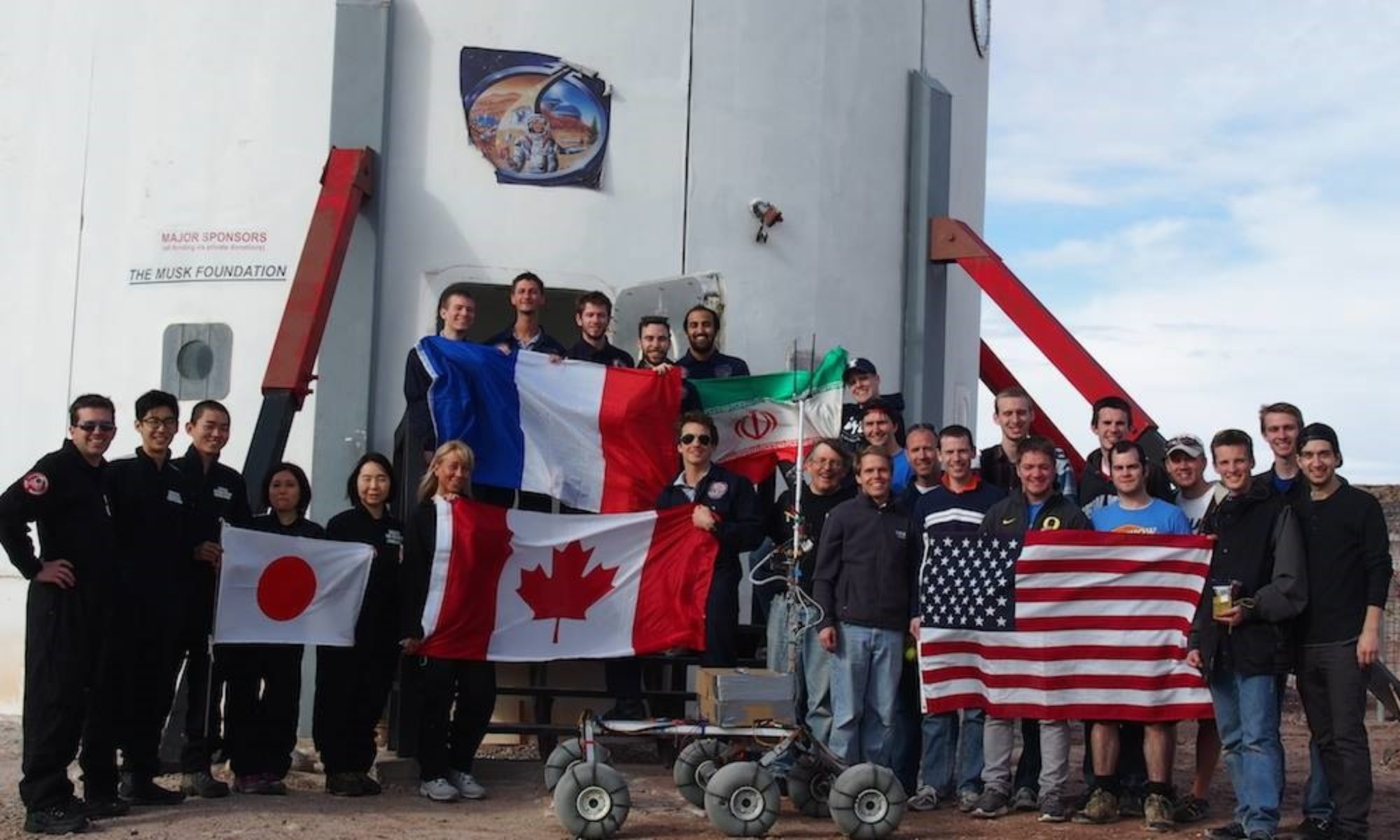
Crew Photos – January 08th

Photo of the Day: 20190108_MDRS202_TakingABreak

Photo Coordinates:

The Moon (Stop 1): E516130 N4254355

20190108_MDRS202_GroupPhoto

20190108_MDRS202_LivingOnTheEdge

20190108_MDRS202_TheMoon

Glistening Seas (Stop 2): E518000 N4254692

20190108_MDRS202_MartianHorizon

Small Canyon (Stop 3): E519219 N4251311

20190108_MDRS202_ATVFamilyShot

20190108_MDRS202_TakingABreak

Journalist Report – January 08th

Sol 10 – 01/08/2018

Name the space movie (or show) given the following quote. Answer at the end of the Report:

Science fiction. You’re right, it’s crazy. In fact, it’s even worse than that, it’s nuts. You wanna hear something really nutty? I heard of a couple guys who wanna build something called an airplane, you know you get people to go in, and fly around like birds, it’s ridiculous, right? And what about breaking the sound barrier, or rockets to the moon? Atomic energy, or a mission to Mars? Science fiction, right? Look, all I’m asking is for you to just have the tiniest bit of vision. You know, to just sit back for one minute and look at the big picture. To take a chance on something that just might end up being the most profoundly impactful moment for humanity, for the history… of history.

Have you ever tried celery in eggs? Next time you make scrambled eggs, add in some fried up sausage and celery. It adds a lovely crunch I never would have thought to try before becoming a Martian! This breakfast was especially important since the Commander, Geologist, and I were heading out to our most ambitious Extra-Vehicular Activity (EVA) to date, an area called “Skyline Rim” which is nearly 7 miles driving from the habitat. Unfortunately, our wonderful rovers cannot go that distance so we geared up and headed out on the ATVs (arguably way more fun to drive). With most, if not all, EVAs, we have been sent off on a quest to find geological samples, but why are these samples so important? What is so great about collecting a bunch of rocks?

I sat down with Ellen Czaplinski, our Crew Geologist and a PhD student in Space and Planetary Science at the University of Arkansas, to get the scoop on why we should all have a greater appreciation for the boulders that make up our home planet and planets beyond. As Crew Geologist, Ellen came into the mission with the research objective of collecting geological samples of sand or rocks near existing or previous areas with flowing water. The samples are valuable because the clays near MDRS are similar to those found on Mars. They will be grouped based on their location in the field and analyzed through infrared spectral analysis. Infrared spectral analysis involves taking a science fiction looking, construction yellow, light gun about the size of the average human forearm and shining its light onto the rock samples. The light projected from the gun bounces off the rock and back towards the gun which measures the light that has been bounced back and tells the user what minerals the rock is made from. After measuring and collecting the samples in the field, they are sent to a lab for further analysis. This work will be important for future Mars missions, and future planetary missions as a whole, since it allows us to practice sample collection in the field in a relatively easier environment than Mars. Additionally, it provides a platform to identify differences in analyzing samples in the field versus studying them in the lab. These differences will help us better analyze sample returns from missions such as the Mars2020 rover, OSIRIS-REx, and Hayabusa2 who all plan to send geological samples back to Earth from Mars, Asteroid Bennu, and Asteroid Ryugu, respectively.

On top of the valuable lessons we will learn from Ellen’s research, we’ve also made surprising finds outside of the expected samples! We’ve found banded iron formations, salt formations such as gypsum, and evaporites. The banded iron formations are some of Earth’s oldest known rock formations. They were abundant in the time of “The Great Oxygenation”, an event nearly 2.4 million years ago when the first organisms began photosynthesizing and creating the world we know today. The rock is approximately the size of a closed fist and is a deep black color with red, iron stripes running through its center. Salt formations and evaporites are the minerals left when water evaporates. For example, if you collected sea water and waited for the water to evaporate, the salty residue that is left would be considered an evaporite. The gypsum in the field appears on the ground like ice shards shattered in the clay. These samples not only add to the diversity of the study but are simply very neat finds while walking across the Martian plains.

Rocks are not just a story of their current environment, but a history book of evolving environments that could date back to the beginning of our home planet. Rocks could start as one mineral, millions of years ago, and evolve through heat and temperature to be redeposited, continuing to record the environment’s history until our Crew Geologist discovers it and translates its pages. Additionally, not all rocks are created equal, and together, they tell the evolution of our planet. Great work Ellen! You’re a ROCKstar!

Movie (or Show) Answer: Contact

Operations Report – January 08th

SOL: 10

Name of person filing report: Kasey Hilton

Non-nominal systems: Nothing to report

Notes on non-nominal systems: Nothing to report

Generator (hours run): 16hr 32min; Turned on last night (07Jan2019) at 16:26; Turned off this morning (08Jan2019) at 8:58; Turned on tonight (08Jan2019) at 16:33

Solar SOC – Turned on (07Jan2019) 79%; Turned off (08Jan2019) 100%; Turned on (08Jan2019) 80%

Diesel Reading – 70%

Propane Reading – 39%

Ethanol Free Gasoline – Not in use

Water (auxiliary tank) – Not in use

Water (static tank) – About 55%; 295 gallons

Auxiliary to Static tank transfer – No

Gallons transferred: Not applicable

Water in GreenHab – About 65%; 190 gallons

Water (loft) – At level marker 12

Static to Loft Pump used – Yes; At 20:01 to refill tank

Water Meter: 01398995

Toilet tank emptied: No

Deimos rover used: No, still not functional

Hours: Not applicable

Beginning charge: Not applicable

Ending charge: Not applicable

Currently charging: Not applicable

Sojourner rover used: ASSIGNED TO DIRECTOR

Hours: Not applicable

Beginning charge: Not applicable

Ending charge: Not applicable

Currently charging: Not applicable

Spirit rover used: No

Hours: 66.2

Beginning charge: 100%

Ending charge: 100%

Currently charging: Yes

Opportunity rover used: No

Hours: 45.4

Beginning charge: 100%

Ending charge: 100%

Currently charging: Yes

Curiosity rover used: No

Hours: 68.0

Beginning charge: 100%

Ending charge: 100%

Currently charging: Yes

Notes on rovers: Brake fluid in Opportunity was replaced but the brakes are still not functioning properly

ATV’s Used: Honda, YODA (300), 350.1 (Honda, 300, 350.1, 350.2, 350.3)

Reason for use: Geology EVA that was too long for rovers

Oil Added? No

ATV Fuel Used: About half a gallon; Still mostly full

# Hours the ATVs were Used today: 2.5 hrs

Notes on ATVs: ATVs returned very muddy due to the melting snow; An engineering EVA will be made to attempt to get some of the mud off of them

HabCar used and why, where? Not used

CrewCar used and why, where? Off site

General notes and comments: Nothing to report

Summary of internet: Internet usage is back to normal

Summary of suits and radios: Nothing to report

Summary of Hab operations: Side panel is no longer banging against the side of the Hab due to lack of wind; Has not been fixed yet but should be fixed in the next few days

Summary of GreenHab operations: Nothing to report

Summary of ScienceDome operations: Hot plate is not being used until it can be cleaned

Summary of RAMM operations: Nothing to report

Summary of any observatory issues: Nothing to report

Summary of health and safety issues: Nothing to report

Questions, concerns and requests to Mission Support: Nothing to report

EVA Report – January 08th

EVA #9

Author: Cesare Guariniello

Purpose of EVA: Study and collect geological samples from the upper layers of the area (Skyline Rim, Dakota Sandstone)

Start time: 11:09

End time: 13:35

Narrative: First of all, the EVA crew is grateful to the Program Director Dr. Shannon Rupert and to the Assistant Program Director Atila Meszaros for authorizing the use of the ATV, providing ATV training, and trusting us with the logistics of this EVA for possible contingencies. With the snow almost completely melted in all locations, Cow Dung Road was wet in a few points, but in perfect conditions. Brahe Hwy was a little muddier than the main road, but still safe with the ATV. However, right at the intersection of Brahe Hwy and Copernicus Hwy 1574 south, the road became very muddy. Notwithstanding the absence of snow and ice, the EVA crew decided to be conservative. To avoid risk of losing friction on slopes due to the amount of mud on the tires, we elected to turn around without reaching the intended final destination. Sticking to the submitted roads and routes, we added stops on our way back to study locations close to the road about 100-150ft above the elevation of the habitat. The first stop (35 minutes) was at the intersection of Brahe Hwy and Copernicus Hwy, where we collected samples of crystalline gypsum from the region of the Moon. The second stop (40 minutes) was at the intersection of Brahe Hwy and Cow Dung Rd, in the region of the Glistening Sea, where we collected fluvial pebbles and crystalline gypsum, and studied the area of the water stream flowing towards the East. The third stop (20 minutes) was at the intersection of Cow Dung Rd and the Stream Bed Connector, where we walked to the entrance of the small canyon carved by the stream and identified sand deposits. Due to the decision to abort the intended destination and turn around, the EVA lasted 2 hours less than proposed, but yielded an interesting study of the crystalline salts, possible ancient evaporites, in the lower portion of the Cretaceous layers (Dakota formation). Once back to the habitat, the EVA crew scraped most of the mud from the ATV and polished the EVA suits from the mud. During an engineering EVA, the Crew Engineer and Executive Officer evaluated the remaining mud on the ATV, which will be further scraped once dry.

Destination: Skyline Rim (intended). Turned around along Copernicus Hwy 1574 (actual)

Coordinates (use UTM NAD27 CONUS): E515300, N4251250 (intended). E515907, N4254093 (actual)

Participants: Cesare Guariniello (CMD), Ellen Czaplinski (GEO), Alexandra Dukes (JOU)

Road(s) and routes per MDRS Map: Cow Dung Rd, Brahe Hwy 1572, Brahe Hwy 1575, Copernicus Hwy 1574

Mode of travel: driving and walking

Vehicle used: ATV Honda, 300, and 350.1