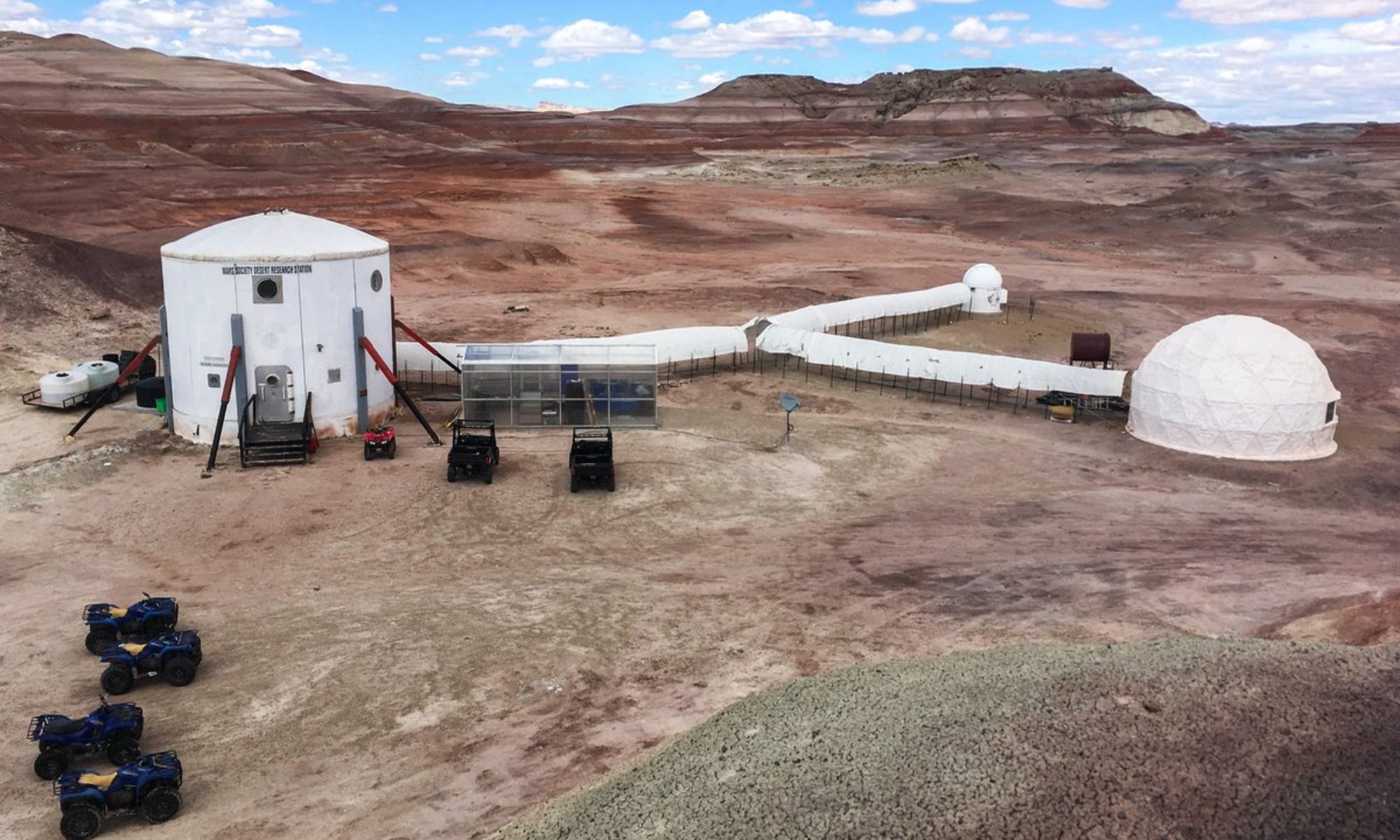

Research Report – April 8th

[category science-report]

During this past week, Crew ARES has continuously worked on their research. Our experiments cover a large range of topics and we hope to get good results out of our efforts. We still need to collect the data and work hard during this next week to exploit our simulation time in the most efficient way possible. Here is how our experiments are advancing.

“Confinement FOMO” – Aglaé Sacré

FOMO, “Fear of missing out”, can appear when we are cut out of society. The Mars simulation completely cuts the crew off of the network and the outer world, which makes it the best place to study how the lack of social media affects the mental condition of not wanting to miss out on something. The crew answered some anonymous questionnaires before leaving and were asked to check their social media usage data on their phone to realise how much time they were actually spending online on a daily basis. During this first week, different anonymous questionnaires were completed where we assess how we feel without social media and if we feel like we’re missing out on something. This way Aglaé could compare how the crew used to use social media, how they predicted they would live without it and how they actually lived without it.

As Crew Journalist, she writes the daily summaries and keeps the world notified on what work we do every day. She is also taking photos and videos to document and present after our mission.

“Radiation: how attacked are we?” – Thomas Stinglhamber

Every day, everywhere, different types of radiation attack us. On Mars, radiation will be way more brutal and dangerous than on Earth due to the difference of the atmosphere. It is thus very important to be able to have easy ways to measure the dosage of this radiation. Ty3MvLRT5KdkOsMwv-EnfUpIu3_r4MvwoIC-2UAZqNy6a2u_sC0E572hN7hCKkEXnruO1C6QjH3uRSk1fSNyKpOLSBjqJV-YLdA-Xo1C5H5wLYkhRFHuHgc0POPikgLWO_B9hcy0cF3uYaMMNA78Bg

Thanks to BeSure’s technology, Thomas has installed dosimeters both inside and outside the station to check how radiation proof the station actually is. He also gave the crewmates an individual dosimeter that they wear at all times to measure their personal dosage. He will collect all their data at the end of the simulation. Complementary to this, Thomas uses a Gamma detector to map out the dosage of the soil around the station by searching for radioactive isotopes near the station. He has already completed a 3-hour EVA where he took measures at different coordinates that he mapped out thanks to a Python grid. He still needs to do two EVA’s to measure the whole region close to the base. He is also trying to combine his grid with Augustin’s 3D maps.

“High Speed Rotor Manufacturing” – Gwenael le BussyTZoYk-LaYxp8lkhRCYlEHzNi2PYxmMur-JzjCQR81YqhmWmnxzGVETEDbNou4I3xJvFwjr9AahKzftCnlWpnup6MFPbAQy9uafgRmL6_ivM961ArgTWW2Os5rknAgxhAkV7KzOqVMv5kZ6_hD0OI-Q

The Martian atmosphere is a hundred times less dense than the one on Earth. This means that every flying object we would like to use for observation, scouting or measurements needs to be adapted to the physics of that new environment. Like the ones on Ingenuity, the rotor blades have to have a special shape. Naturally, every piece of equipment may encounter a problem and need to be repaired or replaced. The problem cannot be predicted precisely in advance, which means that we need an adaptable solution. Gwenael will study how he can use 3D printing to model (with SolidWorks with NACA profile) and print rotor blades for the Martian atmosphere. Afterwards, he will test them with a high speed motor and measure their thrust with a scale. The 3D printer was successfully reconstructed and has launched a couple of test prints. One of the test prints is an oven knob, we are trying to see if we can make one that works better than the ones currently used. Gwenael has started designing a blade and will start printing in the days to come.axFGHFXe2EdlR76MsqTwWSP-lQvH0ryVBV3IFEs6QSvZPQVs4Jt66hoFskdLeHz89qWbM0DVPDr-WOJSKPhNv8He9ty12QiJtIvBoHjcq7D9MXIAguIvkmuMOEDgXE_i0JQCxGotq-5vczTDFFVVVA

Parallel to his aerodynamics work, our Crew Astronomer has already observed the Sun with the solar observatory but is yet to take pictures as weather has not been favourable. He has also used the New Mexico observatory remotely to observe M63 and M51 and is currently working on the editing of the photos.

“Space Oddity” – Ioana Dimitrova

Long term spaceflight separates astronauts from society and their loved ones for months and months. It also keeps them confined without leaving them a possibility to feel free and do whatever they want. This can lead to mental health problems, stress, tensions within the team and can put the mission at risk. Music could be a cheap, easily transportable and effective solution to this problem. Choosing your personal music to help you relax could have multiple benefits. It could help you transport yourself elsewhere, work through your emotions and stimulate your senses. Ioana tests if this theory is true by measuring cardiac parameters during relaxing times with and without music chosen by the crew. The technology used for the measurements is KINO by HeartKinetics. It is an app that you put on your chest and that analyses your heart variability. Added to that, a blood pressure monitor is used to take blood pressure measurements. Before the measurement, she also asks the crew to complete an anonymous Self Perceived Stress Test to get some trends on how they feel throughout the mission and to correlate it with days they listen to music. Sadly, the KINO app had technical difficulties and we had to change our instrument, but everything is back on track and measurements are taking place every day. Ioana has started working on her spreadsheets, gathering data and pre-analysing it.

Our Crew Engineer has also kept busy by fixing a suit, a headset and managing water consumption.

“Hide and seek during radiation storms” – Augustin Tribolet

As we mentioned earlier, radiation is an important factor in a Mars mission. If we are to live there or try to make bacteria or plants survive, we must find the most protected areas on the surface. An easy way to be able to find those places could be to use a drone to map out the area and to find these places. Augustin will use a drone to scan the surface and generate a 3D model by photogrammetry. This digital technique allows us to build the 3D model from photographic images. He works closely with Agnes who studies extremophiles to analyse how effective his hiding places actually are but also with Thomas to map out his radiation with the 3D models. Augustin has already completed 3 EVA’s during which he mapped out the station, the Special Region and Marble’s Rituals. We had a small scare as the drone crashed during one of the EVA’s but the blade has been replaced and everything is nominal now. When he is not on EVA, he exports the images and combines them to create the 3D interactive maps.E-J9MCctlB09L17gBh2yls_Z1lHzA_6VwdA4mHhqAnQZS15UDIUtTpZz40T2R4q3iSfRbnuDroVOKIeWC8eXdu9ZCmn5UihvOlJvQPkX9cUzV2Pe_lGOI5qTi5DLInHi5XBkvgpOcXkkxYEuGVM5zQ

As Green Hab Officer, he has already collected 500g of cherry tomatoes and 100g of different herbs that he will dry to make spices for our team as well as the next teams.

“Mars well-being” – Ttele Hiriart

Confinement, isolation, extreme conditions… All these factors affect mental health and team dynamics. How is the well-being of the crew members evolving? How does the team work together? How do the dynamics evolve? Which teamwork tools actually work? During the mission, Ttele will keep a diary of her observations of the team and different crewmates. She will compare these observations with the ones made by other mission simulations in Antarctica for example. At the end of the mission, she will present her observations of the ups and downs of the mission, how the team interacted and different lessons the team has learned or must work on for future missions. During the day, she observes how effectively every crewmember works on their experiment, how their motivation changes and how they handle difficult decisions, tensions. Some examples include: decisions made during EVA’s when plans have to change due to lack of time, technical difficulties in the station, decision taking when not everyone has the same opinion, how the team reacts when somebody is down, the effect of the fatigue… She has started introducing some teamwork exercises at the end of day to work on the team cohesion. All this is documented in her diary and she takes notes of her observations continuously.

“I will survive” – Agnes DekeyseruxZRknY6Yp5T45mjcB2FEXpellAeAJjzItn4nWhT1TcKAupi2YxU2hzPEz7BX68mPgxkLcJVEOr1mGhaoe6UuWHJkc0i72IWq5_z_6rXkJSDTfXCG8oJI6i6f_fahpjcgdhhVl5rZrroG47bzzuMCQ

As you may know, the planet Mars is currently not habitable for life as we know it due to its extreme conditions. We are talking about an atmospheric pressure that is 1% of that found on Earth (at sea level), an average temperature of -60°C, and an atmosphere composed of only 0.1% oxygen.

However, there are microorganisms on Earth that could withstand such conditions. They are called “extremophiles”. These are microorganisms that live in conditions that are lethal to most other microorganisms. They live on the seabed, in the Earth’s crust, in glaciers, and in many other extreme environments.

During this simulated mission on the planet Mars, our Crew Executive Officer will study the viability of two strains of extremophiles after exposure to MDRS environmental conditions : Deinococcus Radiodurans and Cupriavidus Metallidurans.

Each strain will be exposed outside for 8 days in anaerobic condition. Their viability will be compared to their unexposed analogues based on CFUs (Colony-Forming-Units) analysis.

She also works closely with Augustin and Thomas to find a place with less radiation around the base where her bacteria could survive better. Agnes spent her first days culturing her extremophiles and used one of her EVA’s to take them to North Ridge, a ridge with a higher altitude than the station’s. She also placed their analog inside the station.

SOL 12 will be the day she collects her cultures and analyses the difference in viability. She used an Arduino to calculate parameters such as temperature, pressure and altitude at North Ridge. On top of this experiment, she launched a weather balloon on top of North Ridge with an Arduino as well to test if this could be a useful way to calculate parameters if bacteria were to be put inside of the balloon for a future experiment. Sadly, the balloon did not last long as it did not have enough helium. She will be checking her “outside” bacteria every two days during her EVA’s.

“We are what we eat” – Antoine de Barquin

The goal of Antoine’s experiment is to understand the impact of specific nutrition and confinement on the intestinal flora of astronauts. To conduct this study, a sample of each crew member was taken before departure to perform an analysis of intestinal bacteria by targeted metagenomics. This analysis is performed at the LIMS MBnext laboratory which collaborates with our crew for this experiment. The crew will give “post-mission” samples. This way, Antoine will be able to compare and analyse how freeze-dried food affected everyone’s microbiota. Every day, Antoine monitors everything the crew eats, type of food, quantities, time of the day etc. He will start analysing the data during the mission and will conclude the analysis after the return on Earth. He was also wondering how working the soil will affect the two crew members who work the most in the GreenHab. People who garden have higher levels of Mycobacterium vaccae, a bacteria found in the soil that stimulates production of serotonin and functions as an antidepressant. He thinks it will be interesting to see if our two gardeners have higher levels of it when he analyses their samples upon our return to Earth.

Sol Summary – April 8th

Crew 279 Sol Summary Report 08April2023

Sol: 6

Summary Title: In the spotlight

Author’s name: Agnès Dekeyser, Crew Executive Officer

Mission Status: Nominal

Sol Activity Summary:

The crew woke up again with the delicious smell of pancakes in which some chocolate chips had been added for the great pleasure of our martionautes. Then, four of them got ready and left for their EVA to the Special Region. After a few hours without any news from them because of the great distance between them and the Hab, the crew got back in touch before coming back. They used their full four hours of EVA to perform drone mapping and radioactivity measurements for Thomas and Augustin’s experiments. They found some interesting cavities in the rock as well as fossilised wood that gave off a mid level of radioactivity.

After their mission, the crew regained strength with an excellent lunch of Asian rice before taking several videos inside the Hab to add to their reportage. Then, they all finished the afternoon by progressing with their own experiments.

Ahead Plan:

For the next few days, the crew will be going every two days to North Ridge to check the bacteria that were placed there yesterday. On Sol 11 the samples will be collected for analysis. The crew will also plan next EVA’s for Thomas who need to make more radioactivity measurements in the surroundings of the MDRS and for Augustin who will continue the drone mapping of several places in the desert. The other experiments will also continue inside the MDRS including the use of the 3D printer.

Anomalies in work: nun-functional robotic observatory and the battery wires of Opportunity needs to be replaced.

Weather: Sunny, high 20°C/68°F, low 4°C/40°F

Crew Physical Status: Nominal

EVA: See above

Reports to be filed: Journalist report, Greenhab report, Operations report, EVA report, EVA request

Support Requested: None

Operations Report – April 8th

Crew 279 Operations Report 08-04-2023

Crew 279 Operations Report 08-04-2023
SOL: 6
Name of person filing report: Ioana Dimitrova
Non-nominal systems: robotic observatory, Opportunity
Notes on non-nominal systems:
Robotic observatory: awaiting for a solution from the manufacturer.
Opportunity Rover : see rover section
ROVERS
Spirit rover used: yes
Hours: 215.0
Beginning charge: 100%
Ending charge: 51%
Currently charging: yes
Opportunity rover used: no
Hours: 120
Beginning charge: 100%
Ending charge: 100%
Currently charging: yes
Curiosity rover used: yes
Hours: 228.0
Beginning charge: 100%
Ending charge: 54%
Currently charging: yes
Perseverance rover used: no
Hours: 260.4
Beginning charge: 100%
Ending charge: 100%
Currently charging: yes
General notes on rovers: one of the battery wires on the driver side of Opportunity is corroded out and needs to be replaced.
Summary of Hab operations: Music influence on stress experiment was conducted. Mid-mission report and video. Mid-mission cleaning.
WATER USE: 19,8
Water (static tank): 370,1
Static tank pipe heater (on or off): off
Static tank heater (On or off): off
Toilet tank emptied: yes
Summary of internet: used from 14:00 to 21:00 for experiments and reports.
Summary of suits and radios: Radios charging nominal. Suits charging nominal.
WATER USE: 9,5
Heater: Off
Supplemental light: Off
Harvest: 17g cherry tomatoes
Summary of ScienceDome operations : Filming and editing for mid-mission video. Anonymous questionnaires on FOMO experiment. Some bacteria was put at 37 degrees to verify that it is growing correctly.

Dual split: Heat or AC, Off

Summary of RAM operations: 3D design and test printing of new and better knobs for the oven following Operations Report of SOL 1 (stem too long to turn in an optimal way). If they work better than old knobs we will ask Mission support if we can replace the old ones. Old knobs still work nominal but could be optimized.

Design of 3D rotor blade for rotor blade experiment.

Summary of any observatory issues: see above for robotic observatory. New Mexico observatory used for M51. See observatory report for more details.

Summary of health and safety issues: none

Questions, concerns and requests to Mission Support:

EVA Report – April 8th

Crew 279 EVA Report 07-04-2023

EVA # 5
Author: Ttele Hiriart, Health and safety officer

Purpose of EVA:
This EVA was useful for 2 experiments:

Crew Scientist’s experience:
Like the measurements he made near the base, this time he focused on a particularly old area with a lot of fossils. Thanks to a scintillator, he performed occasional measurements of radioactivity (gamma emission). The area was vast to cover, he focused particularly on the fossils present but also measured the soil and took samples (only soil, not fossils). He was helped by Antoine who noted and guided him.

GreenHab officer’s experience:
As the drone unfortunately crashed the last time, Augustin maped a canyon. He took advantage of going out with Thomas to map an area of interest that is “Special Region”. As the drone crashed, Ttele supported him to help Augustin to see the drone and avoid a second crash.

The main objective of this EVA was therefore to pool Augustin’s maps and Thomas’ radioactivity measurements to create a 3D map of the activity and we thought it was an interesting region for mapping and for measurements of fossil radioactivity. They are parts that are old and therefore normally have a low radiation rate (like C11). We tried to see the difference with the measures taken with loana from Hab.

Start time: 9h08
End time: 12h39

Narrative :

This morning, we woke up with good energy. After a nice breakfast, the EVA team got prepared, with all the material we needed for the two experiments of Thomas and Augustin.
We went out of the sass at 9h08 and got to the rovers Cury and Spirit. We drove until the destination without a problem, meeting different kinds of martians on their big trucks. They were very curious about us. We lost contact with the hab after north ridge.
We arrived at the Special Region at 9h36, parked the rovers and started walking. We all went into the canyon, looking for places for the measurement of Thomas, and a good place for the drone to start flying. Thomas found several corners where the radiation datas were interesting, mostly in the ground of the canyon. Augustin managed to make a first 11 min flight with the drone, to make a video of the first area he needed. Then, we realized there were small caves, or recesses in the wall. We then mapped these places and took pictures to compare them.
We managed to join Thomas and Augustins experiments, by using different key points in the map. This made possible the matching of their information for the 3D cartography. The drone functioned very well, responding to the application as expected.
We walked in the canyon or above, during most of the time of the EVA according to Augustin’s and Thomas plans. Antoine helped Thomas for his mesures, and I supported Augustin with the drone, carrying the material and making sure the drone is always visible.
After a turning in the canyon, the narrowness of the place was replaced by a very big landscape. With a lot of luck, Thomas found a very big fossil of an old tree, stuck in the wall of the canyon. He made several measures and realized that the radiation of the fossil was higher than expected. He noted the radioactivity as mid-high, with the techniques of count rate.
We were very excited about it, and felt very lucky to witness such an old part of the earth.
After all these adventures, we went back to the rovers. At 12h07, we started to come back to the base. We met other Martians again, but they didn’t look very surprised to meet us.
We got in contact with the base again, and arrived at the hab, checked the rovers and took all our material and at 12h39 we got into the airlock.
At 12h44 we got out of it, and with the help of our crew mates that stayed in the hab, we took out all the equipment.
We were very happy with this EVA and very excited to explain our discoveries to the rest of the team.

Destination: Special Region
Coordinates (use UTM WSG 84): 518200 E ,4256000 N
EVA Participants: Ttele (EVA Leader) (HSO), Antoine (Commander), Augustin (GreenHab), Thomas (Scientist)
Road(s) and routes per MDRS Map: Cow Dung Road 0110
Mode of travel:
Drive to the cross of Cow Dung Road 0110 and Gateway to Lith then walking to the Special Region.

Journalist Report – April 8th

CREW 279 – Journalist Report – 08APR2023

Journalist Report : Aglaé Sacré, Crew Journalist
SOL 6: Report’s Day

SOL 6, the half of the simulation has arrived and thus the time of the mid-mission reports.

First, we sent a report summarizing the progress of our experiments on site. These have progressed a lot and the results are starting to come out.
We have also made a mid-mission video to present all that we have already done, we will show it to you soon!

This morning, 4 members of the team left for 4 hours of EVA to go to distant parts of Mars. Once again, a new mapping was made.
They also discovered tree fossils.

This lunch, Ioana prepared us a delicious nasi goreng! Yummy!

We wanted to take advantage of this mid-mission to thank again all our sponsors for allowing us to realize this project! We can’t wait to share our results in a few weeks!

GreenHab Report – April 8th

Crew 279 GreenHab Report 07-04-2023

GreenHab Officer: Augustin Tribolet
Environmental control: Open during day and heater during night
Average temperatures: 82.2 F
Hours of supplemental light: N/A
Daily water usage for crops: 9.5 gallons
Daily water usage for research and/or other purposes: N/A
Water in Blue Tank: 127.2 gallons
Time(s) of watering for crops: 07:20, 16:00
Changes to crops: N/A
Narrative: General watering of plants and crops was done today. The excess water drained from the rocket salad in the recovery tank underneath was also used to water some tomato plants. The microgreens planted yesterday have not yet germinated, they were watered in the afternoon. No other planting was done today. The sun was out, so the door was left open in the afternoon.
Harvest: 17 g tomatoes
Support/supplies needed: N/A

EVA Report – April 9th

Crew 279 EVA Report 07-04-2023

EVA # 5
Author: Ttele Hiriart, Health and safety officer

Purpose of EVA:
This EVA was useful for 2 experiments:

Crew Scientist’s experience:
Like the measurements he made near the base, this time he focused on a particularly old area with a lot of fossils. Thanks to a scintillator, he performed occasional measurements of radioactivity (gamma emission). The area was vast to cover, he focused particularly on the fossils present but also measured the soil and took samples (only soil, not fossils). He was helped by Antoine who noted and guided him.

GreenHab officer’s experience:
As the drone unfortunately crashed the last time, Augustin maped a canyon. He took advantage of going out with Thomas to map an area of interest that is “Special Region”. As the drone crashed, Ttele supported him to help Augustin to see the drone and avoid a second crash.

The main objective of this EVA was therefore to pool Augustin’s maps and Thomas’ radioactivity measurements to create a 3D map of the activity and we thought it was an interesting region for mapping and for measurements of fossil radioactivity. They are parts that are old and therefore normally have a low radiation rate (like C11). We tried to see the difference with the measures taken with loana from Hab.

Start time: 9h08
End time: 12h39

Narrative :

This morning, we woke up with good energy. After a nice breakfast, the EVA team got prepared, with all the material we needed for the two experiments of Thomas and Augustin.
We went out of the sass at 9h08 and got to the rovers Cury and Spirit. We drove until the destination without a problem, meeting different kinds of martians on their big trucks. They were very curious about us. We lost contact with the hab after north ridge.
We arrived at the Special Region at 9h36, parked the rovers and started walking. We all went into the canyon, looking for places for the measurement of Thomas, and a good place for the drone to start flying. Thomas found several corners where the radiation datas were interesting, mostly in the ground of the canyon. Augustin managed to make a first 11 min flight with the drone, to make a video of the first area he needed. Then, we realized there were small caves, or recesses in the wall. We then mapped these places and took pictures to compare them.
We managed to join Thomas and Augustins experiments, by using different key points in the map. This made possible the matching of their information for the 3D cartography. The drone functioned very well, responding to the application as expected.
We walked in the canyon or above, during most of the time of the EVA according to Augustin’s and Thomas plans. Antoine helped Thomas for his mesures, and I supported Augustin with the drone, carrying the material and making sure the drone is always visible.
After a turning in the canyon, the narrowness of the place was replaced by a very big landscape. With a lot of luck, Thomas found a very big fossil of an old tree, stuck in the wall of the canyon. He made several measures and realized that the radiation of the fossil was higher than expected. He noted the radioactivity as mid-high, with the techniques of count rate.
We were very excited about it, and felt very lucky to witness such an old part of the earth.
After all these adventures, we went back to the rovers. At 12h07, we started to come back to the base. We met other Martians again, but they didn’t look very surprised to meet us.
We got in contact with the base again, and arrived at the hab, checked the rovers and took all our material and at 12h39 we got into the airlock.
At 12h44 we got out of it, and with the help of our crew mates that stayed in the hab, we took out all the equipment.
We were very happy with this EVA and very excited to explain our discoveries to the rest of the team.

Destination: Special Region
Coordinates (use UTM WSG 84): 518200 E ,4256000 N
EVA Participants: Ttele (EVA Leader) (HSO), Antoine (Commander), Augustin (GreenHab), Thomas (Scientist)
Road(s) and routes per MDRS Map: Cow Dung Road 0110
Mode of travel:
Drive to the cross of Cow Dung Road 0110 and Gateway to Lith then walking to the Special Region.

Journalist Report – April 9th

CREW 279 – Journalist Report – 08APR2023

Journalist Report : Aglaé Sacré, Crew Journalist
SOL 6: Report’s Day

SOL 6, the half of the simulation has arrived and thus the time of the mid-mission reports.

First, we sent a report summarizing the progress of our experiments on site. These have progressed a lot and the results are starting to come out.
We have also made a mid-mission video to present all that we have already done, we will show it to you soon!

This morning, 4 members of the team left for 4 hours of EVA to go to distant parts of Mars. Once again, a new mapping was made.
They also discovered tree fossils.

This lunch, Ioana prepared us a delicious nasi goreng! Yummy!

We wanted to take advantage of this mid-mission to thank again all our sponsors for allowing us to realize this project! We can’t wait to share our results in a few weeks!