Sol Summary – May 12th

Sol 12

Summary Title: A successful search & rescue Safety drill for our last Sol on Mars !

Author’s name: Aline Decadi, XO

Mission Status: nominal

Sol Activity Summary: Today took place our final EVA-19.

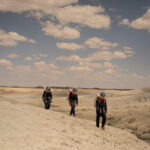
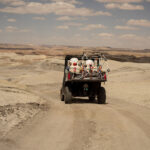
We conducted a safety drill that involved James Burk (Commander) and Aline Decadi (XO) taking a rover on a new route never traveled before and getting stuck and needing to be rescued. In actuality, the Commander and XO planned this out and discussed with Mission Support the night before, and so the entire situation was meant to improve safety and awareness on the part of the crew on what to do in an emergency.

Overall, we were very happy how the crew rallied and worked together to establish a rescue operation and arrived only 20 minutes after the initial Request for Assistance ping was sent. It was a great experience for all crewmembers and a great way to cap off our successful mission to the MDRS.

Many valuable outcomes and recommendations have been listed as lessons learnt from this Safety drill. They are collected in the EVA report.

Nota EVA-20 initially foreseen in the afternoon has been cancelled in order for the crew to finish their analysis and research before the end of Sim planned at 06:00 PM.

The crew spent the rest of the day finishing their experiments and analysis and start packing for tomorrow’s departure. The crew will have a nice dinner together tonight with Sergii as our VIP.

Look Ahead Plan: This is our last day in Sim. Tomorrow, the crew will leave MDRS.

Anomalies in work: None.

Weather: Pleasant and sunny. Windy in the afternoon.

Crew Physical Status: Nominal.

EVA: EVA-19 North on the main road to the "Gateway to Candor".

Reports to be filed: HSO Report, EVA Report, Operations Report, Journalist Report, Pictures of the day, GreenHab Report.

Support Requested: None.

Journalist Report – May 12th

Crew 261 Journalist Report 12-05-2023

Author: Kris Davidson, Crew Journalist

Earth and Mars pirouette around the sun in a cosmic dance covering mind-boggling distances. Two cosmic dancers, they swing close and then recede. The distance between Earth and Mars varies depending on their positions in their respective orbits around the Sun. At its closest approach, Mars is about 54.6 million kilometers (33.9 million miles) from Earth. At its farthest, the distance can be over 400 million kilometers (249 million miles).

Yet, distance isn’t merely a spatial concept. If we think of time as a flowing river, then each moment is an island in that river, each separated from the others by the relentless current of time. Consider standing at MDRS, your feet grounded in the same soil, separated not by miles but by millennia. Some 145 million years ago to 150 million years ago, dinosaurs roamed this landscape, the remnants of their existence still being unearthed by paleontologists working at the nearby Hanksville-Burpee Dinosaur Quarry. The same latitude and longitude, yet a chasm of a million years stretches between them. The temporal distance between these moments is profound and poignant, a vivid demonstration of how time itself is a kind of distance, no less real than the vast expanse between Earth and Mars.

Finally, there is another kind of distance, one not easily measured — the emotional distance between human beings. Not the unfathomable gulf between celestial bodies, nor the temporal chasm between epochs, but the distances that ebb and flow between souls.

On Sol 12, the crew’s final Sol on Mars, Commander Burk and Executive Officer Aline Decadi executed a rescue drill (carried out on EVA 19), unbeknownst to the rest of the crew. Once they sent the “assistance needed” signal over the garmin device, the crew at the hab went to work to close the distance, not knowing the nature of the call as comms had been lost. It ended up being a physical distance of 2 kilometers between the hab and the EVA crew, a gap that was closed in 22 minutes. The emotional distance during those 22 minutes can only be described as charged. After two weeks, we have all become good friends, and the concern while in the blind was real and raw.

Distance, in the end, is a paradox. It isn’t static. It separates and unites, isolates, and connects. Today marks Sol 12 for Transatlantic Mars Crew 261, the final day of our simulation. At 1800, we will exit our Mars habitat, shedding our spacesuits to reconnect with Earth’s environment. The distance is inconsequential, this traverse from Mars back to Earth occurring in an instant, with words spoken by Commander James Burk. We will leave here with memories and our shared story of time on Mars.

Anthony de Mello famously said that “the shortest distance between a truth and a human being is a story.” Stories serve as bridges, closing the gap between hearts and minds, weaving threads of understanding where misunderstanding once prevailed. Every sim carried out at MDRS can be thought of as a story, with the goal of bridging distances in understanding of what human-to-mars is all about. Throughout our Mars mission, we have fostered friendships destined to endure and contributed to the vast body of knowledge propelling humanity towards a future on Mars. Tomorrow, on an Earth day, we will begin our homeward journeys. The physical distances between us will become tangible once more, but the shared memories of our time on Mars will ensure that reconnection is only a thought away. Our collective story about our time on Mars will continue to bind us, regardless of the miles that separate us.

With immense gratitude, we are Transatlantic Mars Crew 261, signing out:
James Burk (Crew Commander)
Aline Decadi (Executive Officer + Crew Geologist)
Cécile Renaud (Greenhab Officer + Crew Biologist)
Julien Villa-Massone (Crew Engineer)
Erin Kennedy (Crew Robotics Engineer)
Audrey Derobertmasure (Health + Safety Officer)
Kris Davidson (Crew Journalist)

Sol Summary – May 12th

Crew 261 Journalist Report 12-05-2023

Author: Kris Davidson, Crew Journalist

Earth and Mars pirouette around the sun in a cosmic dance covering mind-boggling distances. Two cosmic dancers, they swing close and then recede. The distance between Earth and Mars varies depending on their positions in their respective orbits around the Sun. At its closest approach, Mars is about 54.6 million kilometers (33.9 million miles) from Earth. At its farthest, the distance can be over 400 million kilometers (249 million miles).

Yet, distance isn’t merely a spatial concept. If we think of time as a flowing river, then each moment is an island in that river, each separated from the others by the relentless current of time. Consider standing at MDRS, your feet grounded in the same soil, separated not by miles but by millennia. Some 145 million years ago to 150 million years ago, dinosaurs roamed this landscape, the remnants of their existence still being unearthed by paleontologists working at the nearby Hanksville-Burpee Dinosaur Quarry. The same latitude and longitude, yet a chasm of a million years stretches between them. The temporal distance between these moments is profound and poignant, a vivid demonstration of how time itself is a kind of distance, no less real than the vast expanse between Earth and Mars.

Finally, there is another kind of distance, one not easily measured — the emotional distance between human beings. Not the unfathomable gulf between celestial bodies, nor the temporal chasm between epochs, but the distances that ebb and flow between souls.

On Sol 12, the crew’s final Sol on Mars, Commander Burk and Executive Officer Aline Decadi executed a rescue drill (carried out on EVA 19), unbeknownst to the rest of the crew. Once they sent the “assistance needed” signal over the garmin device, the crew at the hab went to work to close the distance, not knowing the nature of the call as comms had been lost. It ended up being a physical distance of 2 kilometers between the hab and the EVA crew, a gap that was closed in 22 minutes. The emotional distance during those 22 minutes can only be described as charged. After two weeks, we have all become good friends, and the concern while in the blind was real and raw.

Distance, in the end, is a paradox. It isn’t static. It separates and unites, isolates, and connects. Today marks Sol 12 for Transatlantic Mars Crew 261, the final day of our simulation. At 1800, we will exit our Mars habitat, shedding our spacesuits to reconnect with Earth’s environment. The distance is inconsequential, this traverse from Mars back to Earth occurring in an instant, with words spoken by Commander James Burk. We will leave here with memories and our shared story of time on Mars.

Anthony de Mello famously said that “the shortest distance between a truth and a human being is a story.” Stories serve as bridges, closing the gap between hearts and minds, weaving threads of understanding where misunderstanding once prevailed. Every sim carried out at MDRS can be thought of as a story, with the goal of bridging distances in understanding of what human-to-mars is all about. Throughout our Mars mission, we have fostered friendships destined to endure and contributed to the vast body of knowledge propelling humanity towards a future on Mars. Tomorrow, on an Earth day, we will begin our homeward journeys. The physical distances between us will become tangible once more, but the shared memories of our time on Mars will ensure that reconnection is only a thought away. Our collective story about our time on Mars will continue to bind us, regardless of the miles that separate us.

With immense gratitude, we are Transatlantic Mars Crew 261, signing out:
James Burk (Crew Commander)
Aline Decadi (Executive Officer + Crew Geologist)
Cécile Renaud (Greenhab Officer + Crew Biologist)
Julien Villa-Massone (Crew Engineer)
Erin Kennedy (Crew Robotics Engineer)
Audrey Derobertmasure (Health + Safety Officer)
Kris Davidson (Crew Journalist)

GreenHab Report – May 12th

Crew 261 GreenHab Report 13-05-2023
GreenHab Officer: Cécile Renaud
Environmental control: Door open from 6:45 to 17:30
Average temperatures: 55.3°F at 06:45, 85.3°F at 11:35, 17:30
Hours of supplemental light: N/A
Daily water usage for crops: 6 gal at 06:45 + 6 gal at 17:30
Daily water usage for research and/or other purposes: 1 gal
Water in Blue Tank 143 gallons
Time(s) of watering for crops: 06:45 and 17:30
Changes to crops: N/A
Narrative: N/A
Harvest: (include which crop and mass in grams) : Mint (10 g), sage (10g), Thym (10g), Origano (10g).
Support/supplies needed: None

EVA Report – May 12th

Crew 261 EVA Report 12-05-2023

EVA # 19

Authors: James Burk (Commander), Aline Decadi (XO), Erin Kennedy (Crew Roboticist)

Purpose of EVA: Search & Rescue Drill

Start time: 8:52 am

End time: 10:19 am

Narrative:

Overview of EVA
Today was our crew’s final exam. We planned a safety drill that involved the Commander and XO taking a rover on a new route never traveled before and getting stuck and needing to be rescued. In actuality, the Commander and XO planned this out and discussed with Mission Support the night before, and so the entire situation was meant to improve safety and awareness on the part of the crew on what to do in an emergency.

Commander James Burk and XO Aline Decadi took out to rover Spirit at approx 9am and drove north on the main road to the "Gateway to Candor" turn, on a planned traverse to the area south of Compass Rock, ostensibly to investigate a route to the southern ridge of Candor. We had never taken this route before on this mission and it is marked on the map as a footpath.

We lost comms as normal, when passing behind the north ridge near Pooh’s Corner, but we also did not make any attempt to reestablish comms throughout the EVA, as was part of the drill parameters. We did not turn on the Garmin tracking device since that would have made it too easy for the crew to find us, and we ignored a couple reminders from HabComm to do so.

Once on the Gateway to Candor, Commander Burk found a suitable place for the EVA Team to "hide" so that it would not be obvious where we had "gotten stuck".

Commander Burk and XO Decadi parked the rover and debarked. We removed our helmets, as discussed prior to the EVA, since this was a rescue drill and we were planning to break sim anyway. We had prepared to be at that location for a couple hours if needed.

We decided to take the opportunity to record a couple narrative videos about what we were doing, to help with XO Decadi’s education & outreach project. We explained the drill and send the SOS ping "MDRS Assistance Required" which our crew uses when it’s a non-emergency situation but we are requesting support from the Hab to the EVA team. We hoped that the crew would react well and work together to find us.

After only a few minutes, we heard a drone flying nearby, which was obviously Crew Engineer Julien Villa-Massone’s attempt to locate us. After exactly 20 minutes, a rover carrying Villa-Massone and GreenHab Officer Cecile Renaud appeared. They walked to our position and we confirmed it was a drill, then we spent about 10 minutes doing a debrief before returning to the Hab and having a longer debrief session with the whole crew.

We learned that the Hab Crew forgot that assistance required means that they are safe so they treated the entire situation as an emergency, and were worried that the EVA crew was not working on getting back in Comms. As mentioned, Mission Support was in on the drill and did almost nothing to help them, even telling them "No Drone" to ensure they were not relying solely on a drone for rescue.

Overall, we were very happy how the crew rallied and worked together to establish a rescue operation and arrived only 20 minutes after the initial SOS ping was sent. It was a great experience for all crewmembers and a great way to cap off our successful mission to the MDRS.

Timeline
8:52 am EVA started
HabCom sent a message to EVA crew via Garmin InReach that tracking was not turned on

9:20 am EVA crew sent SOS Ping "MDRS Assistance Required" (Non-EMS) via Garmin InReach

9:20 am Received MDRS Assistance Required message via Garmin InReach
Mission Support (Sergii) was contacted, confirmed we should go (break sim)
First Aid kit bag was created, given to Cecile and Julien

9:27 am Cecile and Julien took Perseverance rover SOC: 98%

9:30 am Cecile and Julien on the road
EVA crew hears a drone sound (9:35 am?)

9:40 am Cecile and Julien at Gateway to Candor (website)

9:42 am Rescue team (Cecile and Julien) arrives to EVA crew (Aline and Julien)

9:38 am Cecile reports SOC 98%. They see the tracks of James and Aline’s rover that didn’t take the right road

9:50 am Cecile and Julien report that everything is OK with James and Aline, they are discussing about the drill

10:00 am Status update from Cecile: They are going to come back to the Hab

10:06 am Cecile reports Perseverance SOC: 94%

10:07 am Aline reports Spirit SOC: 75%

10:14 am EVA-2 Cecile and Julien in sight from Hab

10:16 am EVA-1 James and Aline in sight from Hab

10:17 am Cecile – Perseverance Hours: 129.0, SOC: 94%

10:17 am James – Spirit Hours: 222.0, SOC: 71%, plugged in

10:18 am 0 min Hab decompression requested (Sim already broken)

10:19 am Everyone is back in the Hab
Mission Support (Sergii) updated on the status

What Went Well
Crew all understood that it was clear to break sim (Safety over Sim)
Crew’s priorities were correct and everybody rallied
Everyone was safe at all times and nobody got hurt during the exercise
Rescue team found EVA team only 22 minutes from initial communication0
(James said his expectation was minimum 40 mins)

Areas for Improvement
Some time was taken (~ 2 mins) regarding asking about if the drone should be used to investigate first. Mission Support was firm "No Drone".

Disruption when initial Comms was happening

Confusion regarding retrieving a medical kit bag (there was none available, and the Hab’s main kit was taken)

Raspberry Pi stopped working / slow, mouse being intermittent, had to access webpage on computer, did not have URL handy.

There was only one person who could fly a drone, and they went on the rescue team.

There was confusion and lack of communication about who was going on the rescue team

Confusion on who was speaking on the radio, especially with similar sounding voices and accents. Confusion about who was acting as HabComm after Cecile (primary HabComm) left.

Cecile lost valuable data from her experiment that she was in the middle of collecting when the drill happened.

Issues Experienced During EVA-19
The crew back at the Hab did not fully understand the difference between our "MDRS Assistance Required" non-emergency/non-EMS ping and our Emergency SOS ping that is connected to the red SOS button on the Garmins. The former is meant when there is no crew injury or safety issue and the latter is for a true emergency when you need all-hands on deck including county EMS and Mission Support.
The crew was confused who was doing what role, and one person expected to go on the rescue team but wasn’t chosen. We plan to address this by recommending that all EVA teams have a designated rescue team.
The Hab does not have a quick carry medical kit for EVA rescues. In today’s case, the rescue team took the Hab’s entire medical kit with them.
There was confusion over who was HabComm after Cecile (who had been the primary HabComm) joined the rescue team.
The crew was not sure what emergency number they might need to call, other than trying to contact Mission Support.

Outcomes / Recommendations
The Hab should have a quick carry medical kit with needed supplies for broken bones, bleeding and other life threatening emergencies.
Every rover should have a first aid kit that is mandatory. This should be checked routinely throughout the mission.
Crews should designate a rescue team prior to EVA
Crews should carry a signaling device such as a reflective foil blanket in the emergency medical kit bag.
When using Radio Comms, people’s names should be used after breaking sim.
Need to remember to pause a bit before talking on Ch. 1 (repeater).
Role changing (ie changing who is HabComm) needs to be identified ("Audrey doing HabComm" or don’t use roles at all, just people’s names.
The person requesting assistance should advise if sim is being broken.
Water to go with the medical kit bag should be prepared
One person on the EVA should be assigned responsible for the medical kit bag
We are lacking some basic medical supplies for emergencies such as AED (see HSO recommendations as reported early on in the mission).
1st person to identify assistance required should make an announcement on radios regarding breaking sim
HabComm has to be located in the Hab, cannot have any science experiments or engineering work ongoing, just light work on a computer and focusing in on the EVA status. In today’s case, Cecile was trying to multitask and ended up losing valuable biological experiment data because of the perceived emergency.
Every crewmember should understand how to trigger a real SOS by using the dedicated button on the Garmin InReach. Pushing the actual button is not straightforward and it should be practiced. Garmin SOS can be cancelled within 20 seconds, so there is no risk to pushing the button as long as you cancel.
Every crewmember should understand the different ways to contact EMT in the case of a real emergency.
Crews should have a training procedure to call SOS prior to doing EVAs.

Destination: Southeast of Compass Rock where Gateway to Candor intersects with Spur of Galileo Road / Watney Road

Coordinates (use UTM WGS 84): 519800 E, 4251400 N

Participants: James Burk (Commander) (EVA Leader), Aline Decadi (XO).

Road(s) and routes per MDRS Map: Take Cow Dung Road to Gateway to Candor

Mode of travel: Rover

Vehicles you will be using (If applicable): Spirit
Supplemental Operations Report 13May2023

[title Supplemental Operations Report – May 13th]

Supplemental Operations Report 13May2023

Name of person filing report: Sergii Iakymov

Reason for Report: Routine.

Non-Nominal Systems: Robotic observatory.
Action taken for non-nominal systems: New parts for Robotic observatory are received and installation is pending.

Power system:
Solar: nominal. Input breaker of one of MPTT was off today. After resetting the breaker and solar charger controller current work is nominal.SOC Last 24 hours: Max 100%; Min 41 %; Avg 70.2%.
VDC Last 24 hours: Max 60.36V; Min 43.94V; Avg 50.34V.Generator run time: average run time 3.2 h/day . Generator hours 3810.3. Maintained on May 8th.

Propane Reading Station Tank: 75%
Propane Reading Director Tank: 60%
Propane Reading Intern Tank: 71%
Propane Reading Generator Tank: 72%

Water (Static Tank) – 540 gallons
Water in GreenHab – 190 gallons
Water (Outpost tank) – 380 gallons
Water in Science Dome: 0 gallons
Hab Toilet Tank emptied: n/a

Sojourner rover used: No.
Hours: 191.7
Beginning Charge: 100
Ending Charge: 100
Currently Charging: Yes
Notes on Rovers: All are plugged in, charged.
ATV’s Used: (Honda, 350.1, 350.2, 300): None
Reason for use: n/a
Oil Added? No
ATV Fuel Used: 0 Gals
Ethanol Free Gasoline — 0 Gallons
# Hours the ATVs were Used today: 0
Notes on ATV: All parked at the outpost and awaiting to be taken to service.

HabCar used and why, where? Yes. To Hanksville for water runs and supplies pick up.

Crew Car used and why, where? No. In Grand Junction.

General notes and comments: Nominal.

Dual Split in Science Dome: off due to warmer weather.

Summary of Internet: Nominal

Summary of suits and radios: Nominal

EVA COMMS: Nominal

Campus wide inspection, if action taken, what and why: nothing to report

Summary of General Operations: All nominal.

Summary of Hab operations: Kitchen outlets are not working, inspection will be done on SUnday morning. Septic tank emptied on May 4th, per vendor it was overfield.

Summary of GreenHab Operations: Nominal, heater turned off.

Summary of SciDome Operations: Nominal.

Summary of any Observatory Issues:

ew parts for Robotic observatory are received and installation is pending.

Summary of RAM Operations: Nothing to report

Summary of Outpost Operations:

Septic tank emptied on May 4th.

Summary of Health and Safety Issues: Nominal.

Questions, Concerns, Supplies needed and Requests: Nothing to report

Journalist Report – May 11th

Crew 261 Journalist Report 11-05-2023

Author: Kris Davidson, Crew Journalist

The awe-inspiring images of astronauts soaring through the cosmos will forever capture our imaginations. They are the main characters, the faces we associate with the ongoing saga of space exploration. While we extol these pioneers in the limelight, it is equally important to acknowledge the ones laboring tirelessly behind the scenes — the ones we know as Mission Support.

The successful and safe human exploration of Mars will necessitate a complex network of mission support. This endeavor will encompass extensive pre-mission training, development, and maintenance of comprehensive life support systems, including breathable air, clean water, food, health monitoring, and medical care. The formulation and rehearsal of contingency plans for emergencies will be essential. Robust communication systems need to be established. Lastly, the scientific objectives of each mission will necessitate ongoing, adaptable support capable of accommodating discoveries as they arise.

On Sol 10, during EVA 16, Sergii Iakymov’s voice echoed through the lower hab, warning Commander James Burk of a sudden weather shift and advising an immediate EVA termination. This instance is but one among many where our crew has benefited from the guidance of Mission Support. As crucial on Mars as it is at the MDRS, Mission Support is instrumental to the success of every mission. With crews cycling through, Mission Support remains the constant, the steady sentinels of this place. Their intimate knowledge of the MDRS structures and surrounding landscapes is invaluable. They establish and maintain crucial relationships in Hanksville and beyond, coordinate supplies between missions, and impart vital knowledge and insight to each incoming crew while ensuring the integrity of each simulation. On this penultimate Sol on Mars, the Transatlantic Mars 261 crew extends our heartfelt gratitude to Mission Support — Dr. Shannon Rupert and Sergii Iakymov. We could not have achieved this without you.

As Sol 11 dawned, the Transatlantic Mars Crew 261 is commencing the final stages of their experiments and projects, embarking on their final EVAs. EVA 18 set out for the Sea of Shells region to conduct the final tests on the Atmosphinder robot and to observe the geological features of the region. The participants, including Crew Engineer Julien Villa-Massone (EVA Leader), GreenHab Officer Cecile Renaud, Crew Roboticist Erin Kennedy, and Journalist Kris Davidson expressed a deep sense of gratitude for their mission experience. Back at the hab, Commander Burk and Executive Officer Aline Decadi worked on the final mission report, a critical communication with Mission Support and the larger Mars Society community at the end of a mission.

Space exploration is not solely a tale of astronauts and their heroic exploits. It is equally a story of the people comprising Mission Support who ensure the success and safety of each voyage. Their commitment and tireless efforts enable the astronauts to carry out their missions effectively, while simultaneously ensuring the integrity and continuity of each mission. Without them, the mesmerizing images of astronauts floating in space would remain a distant dream.

EVA Report – May 11th

Crew 261 EVA Report 11-05-2023

EVA # 17

Author: James Burk (Commander)

Purpose of EVA: Soil Gathering for Crew Biologist

Start time: 7:30 AM

End time: 8:15 AM

Narrative:

Overview of EVA

This was essentially a repeat of our crew’s EVA-3 to collect soil samples south of the campus. Commander Burk and Crew Renaud took Perseverance out to the same locations as EVA-3, collected soil, and returned without incident.

Issues Experienced

  • None

Outcomes

None

Destination: North side of Kissing Camel Ridge, just off Cow Dung Road.

Coordinates (use UTM WGS 84): 518300 E, 4249500 N

Participants: James Burk (Commander) (EVA Leader), Cecile Renaud (GreenHab Officer).

Road(s) and routes per MDRS Map: Drive towards Cow Dung Road, take it south to the entry to Robert’s Rock Garden, and walk east to collection site.

Mode of travel: Rover (Perseverance)


Crew 261 EVA Report 11052023


EVA # 18


Author: Erin Kennedy (Crew Roboticist)


Purpose of EVA:

Final testing of Atmosphinder robot

Observe the geological features of that region


Start time: 1:19 PM


End time: 4:37 PM


Narrative:


Overview of EVA


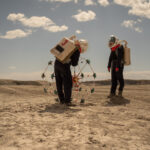
Today was the final testing of the Atmosphinder robot! Fixes were implemented that solved all of the problems from EVA-16 (yesterday). As a final test, the objectives were to test: 1) autonomous function activation based on anemometer wind speed and 2) computer vision with coloured card sequences.


1) Autonomous sensor-based function activation with the anemometer

The anemometer was activated, and the robot responded by changing the sail servo motor movements and LEDs. As the wind speed value hit different thresholds, the sail servo movements changed accordingly. Due to lack of wind, the anemometer was given a manual spin for the test. Two functions were tested, and both worked as expected. The result was prominent today owing to the servo motors functioning and the LEDs being brighter.

This test result proves that Atmosphinder was able to control its sail trim servos in response to the wind speed. This is an indicator that in the future, controlling the direction of the robot based on the current winds is possible.

2) Human-Robot Interaction experiment to activate functions based on coloured card sequences

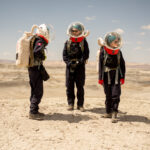
EVA crew members Cecile and Julien showed the robot pink and green cards, and the robot responded by moving its sails accordingly. The EVA crew members then swapped positions, making the combination green and pink, and the robot responded by moving its sails in the other direction.

This test result proves that this is as an alternate method for human-robot interaction for astronauts, and is worth exploring further to improve the usability. This interaction style will be important when humans and robots need to collaborate on the surface of Mars.

Challenges were experienced regarding the positioning of the cards in front of the camera, and the angle of the cards as to not introduce any shadows onto them. The evaluation of a better technology, as reported in the EVA-16 report, still stands. Today the lighting conditions outside matched those that were used for training the embedded computer vision system. Benchtop testing was conducted prior to the EVA to confirm the camera could detect the coloured cards.

Conclusion

As a final destructive test, the robot was extracted from the rover and attempted to roll down a gentle hill at the Sea of Shells destination. Due to the warmer temperatures, the hot glue repairs became disconnected. This resulted in the structure not being sturdy enough to roll for a single revolution. This was not detrimental to the overall testing as all of the functional testing was completed earlier in the EVA.

EVA-18 was an extraordinary conclusion to the Atmosphinder project. The functionality worked, making it a wonderful culmination of the efforts for the past two weeks. Sharing the enthusiasm with the entire crew was extremely rewarding! Many thanks to the entire crew for contributing to this final EVA to make it a favourable result.


Issues Experienced During EVA-18

None


Outcomes

1) All Atmosphinder testing worked!

2) Obtained rock samples


Destination: Sea of Shells

Coordinates (use UTM WGS 84): 516400 E, 4255400 N

EVA Participants: Julien Villa-Massone (Crew Engineer) (EVA Leader), Cecile Renaud (GreenHab Officer), Erin Kennedy (Crew Roboticist), Kris Davidson (Journalist) (Not In Sim – Not Wearing Suit)

Road(s) and routes per MDRS Map: Cow Dung Road north to Brahe Hwy 1572, then north turn and stop at Sea of Shells

Mode of travel: Rovers

Vehicles you will be using (If applicable): Curiosity and Opportunity

Operations Report – May 11th

Crew 261 Operations Report 11-05-2023 Update #1

SOL: 11

Name of person filing report: Julien Villa-Massone

Non-nominal systems:

· Remote observatory

· 1 Helmet, 1 headset

· Some electric outlets in the kitchen

Notes on non-nominal systems: Failed helmet and headset are set aside and labeled as such.

Electric outlets failed on the sink side of the kitchen. A cord extender has been installed to temporarily replace these outlets.

ROVERS

Spirit rover used: No

Hours: (before EVA) 221.5

Beginning charge: (Before EVA) 100

Ending charge: (On return from EVA, before recharging) N/A

Currently charging: Yes

Opportunity rover used: Yes

Hours: 127.3

Beginning charge: 100

Ending charge: 70

Currently charging: Yes

Curiosity rover used: Yes

Hours: 238.2

Beginning charge: 100

Ending charge: 63

Currently charging: Yes

Perseverance rover used: Yes

Hours: 264.0

Beginning charge: 100

Ending charge: 72

Currently charging: Yes

General notes on rovers: Nominal operation

Summary of Hab operations: Nominal day

WATER USE: rate of 40 gallons / sol today. Trend since mission start of 30 gal/day including 120 gal resupply. We will now finish the mission with 28 gallons extra if usage continues as per current trend.

Water (static tank): 191 gallons remaining

Static tank pipe heater (on or off): off

Static tank heater (On or off): off

Toilet tank emptied: no

Summary of internet: Nominal

Summary of suits and radios: Nominal

Summary of GreenHab operations: Nominal.

WATER USE: 11 gals total

Heater: Off

Supplemental light: Off

Harvest: Spinach (11g), lettuce (27g), microgreens (23g), Tomatoes (861g), Mustard spinach (65g), sage (10g), Thym (17g), 4 black carrots (27g of black carrots harvested today).

Summary of ScienceDome operations: Nominal.

Dual split: Off

POWER report: Nominal.

Summary of RAM operations: Nominal

Summary of Tunnels maintenance: No zip-ties added.

Summary of any observatory issues: Nothing to report

Summary of health and safety issues: Nominal.

Questions, concerns and requests to Mission Support: Thank you for your support today.