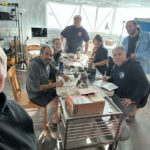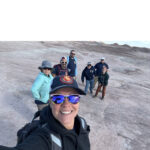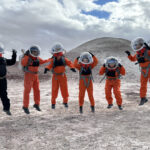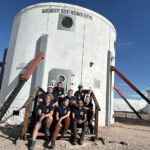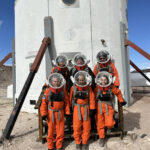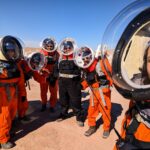
Bios, Photos and mission patch – October 29th

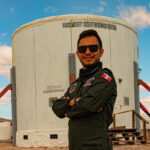
David Mateus (Commander)
ES
El commander de la misión, David, actualmente es estudiante de doctorado y asistente de investigación de posgrado en el Human Space Flight Laboratory de la Universidad de Dakota del Norte.
Entre sus otros certificados y reconocimientos destacamos las participaciones en varias misiones análogas espaciales a nivel mundial, como el inflable Lunar Mars Analog Habitat, The Mars Ocean Analogs y en The Mars Desert Research Station (MDRS).
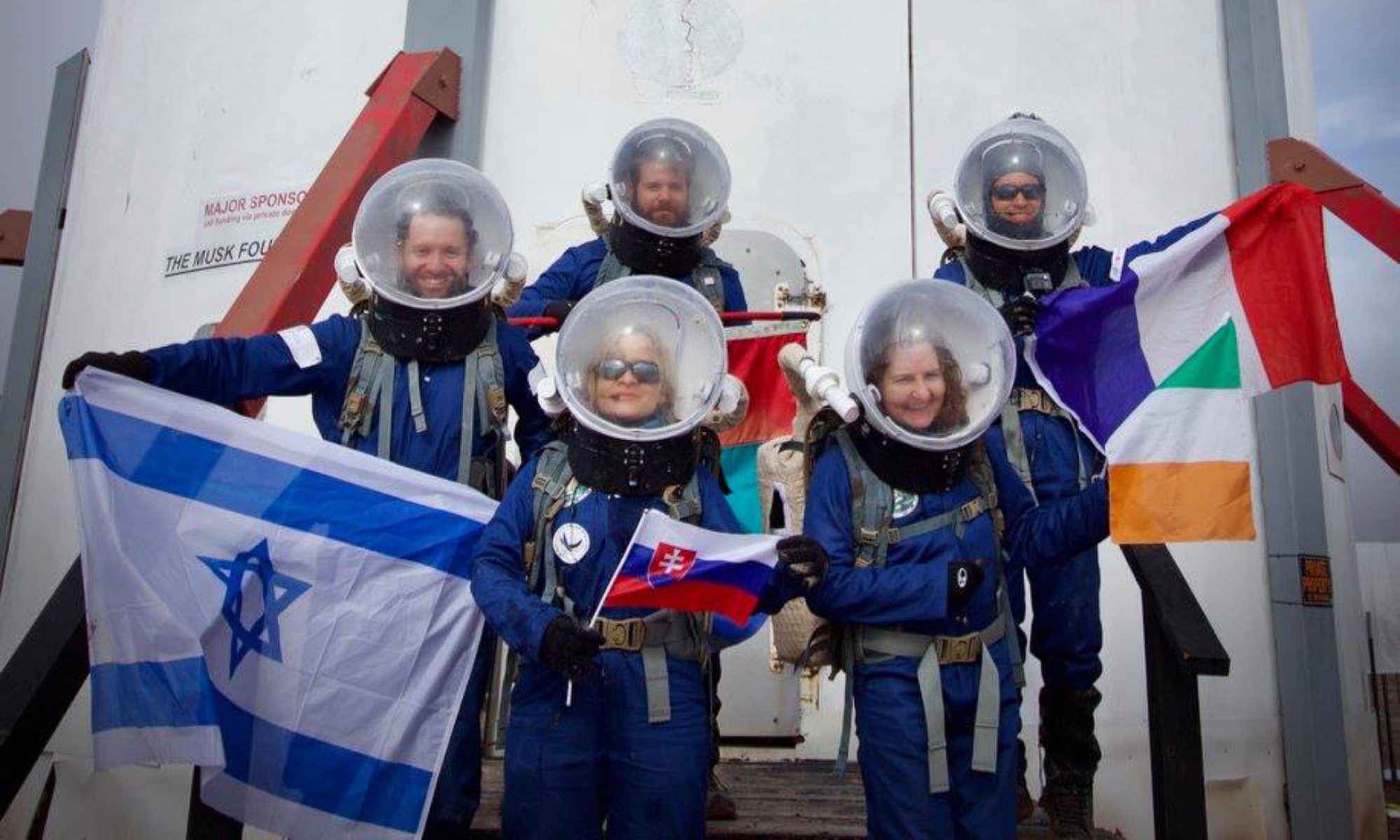
En 2023 participará en su 3ra misión análoga a Marte en MDRS Utah Crew 285 Hispanics.
EN
The mission commander, David, is currently a Ph.D. student and graduate research assistant at the Human Space Flight Laboratory in the University of North Dakota.
Among his various certificates and acknowledgements, the highlights include his participation in several analog space missions worldwide. He’s been to the inflatable Lunar Mars Analog Habitat, The Mars Ocean Analogs, and the Mars Desert Research Station (MDRS).
The Hispanics Crew 285 is David’s third mission at MDRS.
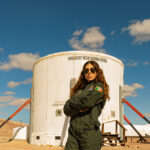
Luis Díaz (XO and Crew Astronomer)
ES
Luis es Especialista en Sensoramiento Remoto con imágenes multiespectrales utilizando Drones y Satélites. Ha participado en misiones de simulación de vida en Marte en la "Mars Desert Research Station (MDRS)" y en el programa "Mars Ocean Analogs (MOA)" . Así mismo, es el Presidente de la Agrupación Trujillana de Astronomía (ATA) y se especializa en Astrofotografía, adquiriendo y procesando imágenes planetarias y de objetos del espacio profundo a través de telescopios computarizados.
Actualmente se está preparando para participar en su tercer programa en la MDRS donde desempeñará los roles de Crew Astronomer y Executive Officer de la tripulación, trabajando directamente con los observatorios robotizados de la estación en la realización de proyectos que involucran especialmente la captura y análisis de imágenes de Galaxias y Nebulosas así como la realización de fotogrametría y generación de mapas 3D a través de Drones.
EN
Luis is a Remote Sensing specialist working with multispectral images using drones and satellites. He participated in Mars habitat simulation missions in the Mars Desert Research Station (MDRS) and Mars Ocean Analogs (MOA). He is also the President of the Astronomy Association of Trujillo (ATA), and specializes in astrophotography, acquiring and processing images of planets and deep space through computerized telescopes.
In the MDRS Crew number 285, Hispanics, Luis is taking on two roles, as Executive Officer and Crew Astronomer. He is working directly with the station’s automated observatories for capture and analysis of images of galaxies and nebulas, as well as generating 3D maps through photogrammetry with drone images.

Andrea De La Torre (HSO)
ES
Andrea, es ingeniera aeroespacial con estudios en ingeniería química, ha tenido la experiencia de participar en International Astronautical Congress y en el Space Generation Congress como ponente, dos eventos de nivel internacional en el sector. Actualmente, está trabajando como instructora de seguridad en Aeroméxico.
En 2023 participará en la misión en The Mars Desert Research Station (MDRS) – Utah como Health and Safety Officer (HSO) de la Crew 285 Hispanics.
Andrea es una apasionada en la exploración espacial, y entre otros hobbies está leer, patinar sobre hielo, volar aeronaves y bucear que la mantienen inspirada a cumplir sus sueños.
Su principal meta es la construcción de un legado tanto como para su familia como para la humanidad, así como la creación de una empresa de turismo espacial que contribuya a la mejora del planeta enfocada sobre todo en países en desarrollo.
EN
Andrea is an Aerospace Engineer with further studies in Chemical Engineering. She has presented in international events such as the International Astronautical Congress and the Space Generation Congress. She is now working as a safety instructor in Aeroméxico.
In the MDRS Crew number 285, Hispanics, Andrea is taking on the role of Health and Safety Officer (HSO).
Andrea is passionate about space exploration, and as hobbies she enjoys reading, ice skating, flying, and scuba diving. These keep her inspired to pursue her dreams.
Her main goal is to build a legacy for her family and humanity, and to create a space tourism company that contributes to the growth of developing countries.
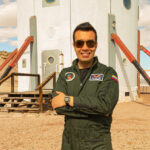
Tomás Ignacio Burroni (Crew Engineer)
ES
Tom se recibió de Ingeniero Espacial en la Universidad Nacional de San Martín (UNSAM), donde ha sido docente desde el 2017, también ha sido pasante en un grupo de investigación de la universidad LabOSat (2017-2021). Actualmente, está trabajando en Satellogic como Ingeniero de Guiado, Navegación y Control. Fue recipiente de la beca Estímulo a la Vocación Científica del Consejo Interuniversitario Nacional, y participó de un intercambio a la Universidad de Texas organizado por la Comisión Fulbright Argentina y financiado por la embajada de EE.UU.
En 2023 participará en la misión análoga a Marte en The Mars Desert Research Station (MDRS) – Utah como Engineer de la Crew 285 Hispanics.
Acentuamos su entusiasmo para trabajar en equipos diversos, compitió en Brasil con un modelo de ingeniería de CubeSat junto a sus compañeros de carrera y lideró al equipo ganador de Open Space, competencia que les permitía desarrollar un experimento estudiantil y ponerlo en órbita.
En sus aficiones mezcla su parte aventurera con la artística, es piloto privado de avión, conductor náutico y estudió piano y violín.
EN
Tom graduated as an Astronautical Engineer at the National University of San Martín (UNSAM), where he has been teaching since 2017. He has also interned in the research group LabOSat (2017-2021). He is currently working in Satellogic as a Guidance, Navigation, and Control Engineer since 2021. He received a research fellowship from the National Inter-University Council, and an exchange scholarship to the University of Texas organized by the Fulbright Commission and fully funded by the US Embassy.
In the MDRS Crew number 285, Hispanics, Tom is taking on the role of Crew Engineer.
He is particularly enthusiastic about working in diverse teams. He competed in Brazil with a CubeSat engineering model with his classmates, and led the team that won Open Space, a competition which allowed the team to develop a student-made experiment and launch it into orbit.
His hobbies show his adventuring and artistic sides, he has both an airplane private pilot license and a boating license, and he studied piano and violin.
Marina Buqueras Rovira (Crew Journalist)
ES
Marina es administrador de sistemas, arquitecto y diseñador de datos (BI). Actualmente, está trabajando en el Hospital de Badalona y es estudiante del Grado de Multimedia en la Universitat Oberta de Catalunya. Estudios de fotografía y trabajando con realidad virtual.
En 2023 participará en la misión análoga a Marte, en The Mars Desert Research Station (MDRS) – Utah, como Journalist de la Crew 285 Hispanics.
Destacamos su actitud amable y positiva, también sus vivencias con el deporte adaptado las cuales le enseñaron a no ponerse límites en la vida. Apasionada a la exploración espacial. Fan de la música, la aviación y las aventuras nuevas! Familiar y amiga de sus amigos.
EN
Marina is a systems administrator, architect, and database designer. She is currently working in the Badalona Hospital and is studying to become a Multimedia graduate at the Universitat Oberta de Catalunya. In parallel she also works in her other specialization, photography and virtual reality.
In the MDRS Crew number 285, Hispanics, Marina is taking on the role of Crew Journalist.
Marina has a specially kind, friendly, and positive attitude, her experiences in parasports have taught her not to limit herself in life. She is passionate about space exploration, a fan of music, aviation, and new adventures!
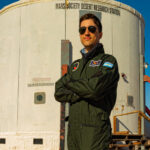
Andrés D. Reina (Green Hab Officer)
ES
Andrés recibió su grado en Ingeniería Aeronáutica de la Fundación Universitaria los Libertadores en 2015. Es técnico en Inspección y Ensayos NO Destructivos del Servicio Nacional de Aprendizaje SENA en 2016 y cuenta con un Master en Project Management. Durante sus estudios formó parte del “Grupo de Investigación en Ciencias Aeroespaciales” (GICA) de los Libertadores en donde puso sus conocimientos para desarrollar el diseño, fabricación y prueba de una Cápsula para transportar cargas biológicas para en vehículos del tipo cohete sonda.
Ha realizado diversos cursos en diferentes áreas de la ciencia tales como, producción científica, ciencias del animal de laboratorio, ingeniería aeroespacial, biología. Tiene experiencia en ingeniería de flota en la incorporación de Aeronaves. Fue miembro fundador de la Asociación Colombiana para la Ciencia y Bienestar del Animal de Laboratorio (ACCBAL) donde años después fue seleccionado para formar parte de la junta directiva. Andrés es un apasionado de las ciencias espaciales y sus principales áreas de investigación son la bioastronautica, diseño de sistemas de soporte de vida, ciencia del animal de laboratorio, ciencias biomédicas e ingeniería aeroespacial.
Actualmente, es investigador asociado del proyecto internacional titulado “The Effect of Microgravity on the Growth and Biofilm Production of Disease-Causing Bacteria Using the Instrument for Recording Microbial Activity” (IRMA) seleccionado en el marco de la cooperación entre la UNOOSA y la China Manned Space Agency (CMSA) entre los 9 proyectos más importantes a nivel mundial para ser implementado a bordo de la Estación Espacial China el cual tiene estimado ser enviado en 2024.

EN
Andrés received his degree in Aeronautical Engineering from the Los Libertadores University Foundation in 2015. He is a technician in Inspection and NON-Destructive Testing from the SENA National Learning Service in 2016 and has a Master’s degree in Project Management. During his studies, he was part of the "Aerospace Sciences Research Group" (GICA) of the Libertadores, where he put his knowledge to developing the design, manufacture, and testing of a Capsule to transport biological payloads on vehicles of the type sounding rocket.
He has taken various courses in different areas of science, such as scientific production, laboratory animal sciences, aerospace engineering, and biology. He has experience in fleet engineering incorporating Aircraft. He was a founding member of the Colombian Association for the Science and Welfare of Laboratory Animals (ACCBAL), where, years later, he was selected to be part of the board of directors. Andrés is passionate about space sciences, and his main research areas are bioastronautics, life support systems design, laboratory animal science, biomedical sciences, and aerospace engineering.
Currently, he is an associate researcher of the international project entitled "The Effect of Microgravity on the Growth and Biofilm Production of Disease-Causing Bacteria Using the Instrument for Recording Microbial Activity" (IRMA) selected within the framework of cooperation between UNOOSA and China Manned Space Agency (CMSA) among the nine most important projects worldwide to be implemented aboard the Chinese Space Station, which is estimated to be sent to space in 2024.
His hobbies include ecological walks, numismatics, swimming, exercising, listening to music, and collecting antiques.
In the MDRS Crew number 285, Hispanics, Andrés is taking on the role of GreenHab Officer.

Mission Plan – October 29th

Mission Plan

Commander David Mateus
Executive Officer and Astronomer Luis Diaz
Health and Safety Officer Andrea De La Torre
Crew Engineer Tomas Burroni
Green Hab Officer Andres Reina
Crew Journalist Marina Busqueras

A diverse Hispanic crew, hailing from various countries across Latin America including Spain, embarks on a mission to the Mars Desert Research Station (MDRS), a terrestrial analogue for Mars exploration. This mission is of paramount importance, as it not only underscores the universality of space exploration but also represents a significant step towards equitable participation in human spaceflight. By involving the Hispanic community in such missions, we foster inclusivity and expand the talent pool, drawing on the unique perspectives and expertise that diverse individuals bring to the table. Furthermore, it serves as an inspiration to underrepresented groups, encouraging their engagement in STEM fields and space exploration, ultimately enhancing innovation and the long-term sustainability of our journey to the stars.
Below, we present the projects that the crew members will be working on:
Project 1:
The continuity of the power generation system in a Martian station is of critical importance for crew survival. This means that all single point failure parts within this system must go through preventive maintenance. This strategy seeks to detect and isolate possible faults before they cause unrecoverable failures. One key component in MDRS is the diesel power generator, which as most combustion engines, is subject to constant vibration loads that degrade the parts over its lifetime. These vibrations can be measured via a set of sensors, namely accelerometers and ultrasonic microphones, and their data used to construct a characteristic signature. By monitoring this signature over time we hope to be able to generate early alerts for the crew to realize that maintenance is needed and avoid power outages.
Project 2:
During the early years of Martian settlements there will likely not be a global navigation system available as the ones we have on Earth. Therefore, reliable methods of geolocation must be developed and kept as backups to ensure that crewmembers can always return safely to base. We can assume that the areas surrounding the base will be photographed and mapped by satellites before settlement. We propose a solution to the case where a crew is lost far enough from the station such that a drone’s range/autonomy is not sufficient to find the way back. This proposal consists of using the drone to capture an image from above of where the crew is located, and then matching the picture to the satellite image database to pinpoint the location and relative orientation towards the station.
Project 3:
The research project carried out at the Mars Desert Research Station (MDRS) of October 29 to November 11, by Crew 285, focuses on development and implementation of a safety and rescue protocol during research outings extravehicular (EVA) under simulated Mars conditions.
The main objective of this project is to guarantee the safety of the crew members, establishing clear and effective procedures for cases of loss of communication between the members who are abroad and those at the base.
A drone will be used for search and rescue, along with specific signs of communication (indications), ensuring that all crew members are properly trained and prepared to face emergency situations in an environment analogous to Mars.
It is important to use clear and easy to understand visual and auditory methods.
Sequence of Movements for each signal:
Rescue Request Signal:
The crew member in distress activates a rescue request signal, a flash of light or a specific sound signal.
– Sequence: The drone makes a circular or elliptical pattern in the air to indicate that it has received the rescue request signal.
– Meaning: This circular or elliptical pattern would indicate to the crew member in distress that the drone has received the request and is preparing for the rescue.
Position Signal:
The drone marks the GPS coordinates of the base or the crew member in distress to know her exact location. On the drone operator screen.
– Sequence: The drone performs an up and down movement pattern 3 times.
– Meaning: This would indicate to the crew member her exact location and facilitates his identification on the ground.
Direction Sign:
The drone uses patterns to indicate the direction in which the distressed crew member should move to be safely picked up.
– Sequence: The drone makes a starting movement, zigagagar and in a straight line towards the direction in which the crew member in distress must move to be picked up.
– Meaning: These movements would clearly indicate to the crew member the direction in which he should move to meet the drone and be rescued safely.
Project 4:
A drone project for prior observation and research (image collection) of a Martian area, and to prevent incidents in the EVA (Extravehicular Activity) of the Crew 285.
Project to ensure the safety and success of the EVAs by providing valuable information about the exploration area (images and videos).
The objectives of observation and investigation, such as identifying places of interest, evaluating security and ground conditions, or search for key resources.
To observe ground conditions, or search for key resources: we must use satellite images to collect data from Martian areas and then collect precise coordinates for drone use.
By combining satellite information with data collected by the drone, we will obtain a more complete and detailed view of the region of interest.
Capturing these images could reveal crucial information about the presence of water, organic compounds or other essential elements.
Project 5
For several years, experiences and results from various Mars analog missions conducted have been documented through various written records such as summaries and journalistic reports. This current study aims to undertake an exercise that enables the creation of categories for the qualitative analysis of sociocultural dynamics within these settings, with the goal of establishing recommendations for future space travel processes. In this regard, the proposed interpretive categories are intended to serve as a methodological tool for identifying, based on patterns and unique aspects within the texts, variations in the social dynamics of the crew. This, in turn, allows for the discovery of factors that may either enhance or hinder social behaviors that can positively or negatively impact the success of a space mission.
Simultaneously, the study seeks to develop a data extraction methodology for the sociological and anthropological analysis of experiences in analog simulations. By consolidating these social analysis categories, the methodology can be applied in similar real-world space environments to gather relevant information regarding human interpersonal aspects in outer space.
Project 6
Scientific Background
The colonization of Mars implies to a great extent the use of Martian resources. The great cost of sending a kilogram of payload to the red planet makes us see the great utility of using Martian soil to produce materials that can be useful for various activities. In particular, I consider the construction and obtaining of fuels and other products. At the 2016 IAC held in Guadalajara, Elon Musk announced his interplanetary transport system, in which he proposed the idea of obtaining fuel directly from the Martian environment and thus recovering enough to return to Earth. This technology, in diapers still, implies not only chemical processes that must be carried out in situ, but also the use and design of technology and tools that astronauts will have to manipulate.
The challenge
The challenge is to find the raw materials in the Martian environment, verify that the product obtained is the desired one and produce it in the required quantities.
Also, it is necessary to achieve the optimal design for the tools that will be used by astronauts for these purposes.
Proposed Solution
The initial phase of the project involves creating an observational characterization of various types of soils to identify their solid properties relevant to construction material production. Once this data is collected, it will undergo analysis, and subsequently, the production tools will be put into operation.
Project 7
PROPOSAL FOR SCIENTIFIC RESEARCH ACTIVITIES
Luis Diaz (Peru) – Astronomer & Executive Officer – Crew 285
Mars Desert Research Station, Utah, USA
SCIENTIFIC BACKGROUND:
Traditionally, false color techniques in deep space photography have relied on expensive specialized filters to capture the wavelengths of hydrogen-alpha, oxygen-III, and sulfur-II. These three elements are notably abundant, especially in nebulae, in space, making them crucial for monochromatic camera-based imaging. However, alternative methods have emerged for achieving similar results with single-shot color cameras, using narrowband dual-channel filters to extract hydrogen-alpha and oxygen-III signals.
THE CHALLENGE:
The challenge is to develop a false colorization method that can replicate the results achieved with expensive narrowband filters using a monochromatic camera, but this time exclusively utilizing standard LRGB filters. Unlike the traditional approach, this method does not involve the use of filters designed to restrict light pollution. Consequently, it is only applicable in areas with low Bortle scale ratings or requires extensive post-processing to mitigate light pollution contamination.
PROPOSED SOLUTION:
The proposed solution involves the exploration of mathematical operations applied to each color channel in an attempt to mimic the results traditionally obtained with specialized filters. The primary goal is to replicate iconic palettes like the Hubble palette using only LRGB filters with a monochromatic
camera. The process will involve careful mathematical adjustments to each color channel to create a false color image that captures the essence of the hydrogen-alpha, oxygen-III, and sulfur-II signals without the need for narrowband filters. Special attention will be given to the processing techniques required to mitigate light pollution when working in areas with higher levels of light contamination. This approach aims to provide an economical and accessible way for astrophotographers to create stunning deep space images without the need for costly specialized filters.
The following targets have been simulated in Stellarium with the MDRS location and nighttime date and time ranges during my rotation to confirm that there will be a wide window of time to capture them; Likewise, it has been validated that the size of each objective can fit perfectly into the focal ratio of the telescope and the size of the camera sensor:
Main objectives to test the method:
– Veil Nebula
– Orion Nebula
– Heart Nebula
– Horsehead Nebula.
– Rosette Nebula
Additional Objectives:
– Helix Nebula
– Crescent nebula.
– Pleiades
Targets to be processed with normal LRGB signal:
– Andromeda
– Star clusters
– Others

INSTITUTIONAL AFFILIATION:
Astronomical Association of Trujillo (ATA)
Astronomy Club of the National University of Trujillo

Supplemental Operations Report – October 29th

Name of person filing report: Sergii Iakymov
Reason for Report: Routine
Non-Nominal Systems: Rovers: Perseverance, Curiosity, Spirit, Sojourner. A tunnel stick on the right from the rear airlock. GreenHab moisture meter. See below for details.

Power system:
Solar: Nominal.
SOC Last 24 hours: Max 100%; Min 76 %; Avg 89.9%.
VDC Last 24 hours: Max 58.69V; Min 46.15V; Avg 50.52V.
Generator run time: 3876.5 hours.

Propane Readings:
Station Tank: 71%
Director Tank: 46%
Intern Tank: 65%
Generator Tank: 66%

Water:
Hab Static Tank – 530 gallons
GreenHab – 200 gallons
Outpost tank – 450 gallons
Science Dome – 0 gallons
Hab Toilet Tank emptied: Yes

Rovers:
Sojourner rover used: No.
Hours: 195.4
Beginning Charge: 100 %
Ending Charge: 100 %
Currently Charging: Yes
Notes on Rovers: Perseverance – passenger and driver side battery sensor cable corroded out and fuse holder is burned from outside; battery clamps of sensor cable replaced, fuse and inside the fuse holder cleaned and checked, fuse holder wrapped in electrical tape; fuse holder requires replacement; long battery cable will require replacement in near future due to corrosion. Curiosity – passenger side battery sensor cable corroded out and fuse holder is burned from outside; battery clamps of sensor cable replaced, fuse and inside the fuse holder cleaned and checked, fuse holder wrapped in electrical tape; fuse holder requires replacement. Spirit – passenger side battery sensor cable corroded out and fuse holder is burned with the fuse from outside; battery clamps of sensor cable replaced; fuse holder with the fuse require replacement. Opportunity – passenger side battery sensor cable corroded out; battery clamps of sensor cable replaced; key switch is loosed and requires a washer. Sojourner – passenger and driver side battery sensor cable corroded out and fuse holder is burned from outside; battery clamps of sensor cable replaced, fuse and inside the fuse holder cleaned and checked, fuse holder wrapped in electrical tape; fuse holder requires replacement. All fuse holders are zip tight to the rover frame to prevent any contacts with the battery terminals. New parts are in order.

ATV: ATV’s Used: None. Nothing to report.

Cars:
Hab Car used and why, where: To Hanksville for supplies. Need to be serviced.
Crew Car used and why, where: To Hanksville for supplies.
General notes and comments: All cars awaiting renewed insurance ID.

Summary of Internet: All nominal.
EVA suits and radios:
Suits: All nominal
Comms: Headset #3 replaced due to absence on the ear cushion. All kits are labeled with new labels

Campus wide inspection, if action taken, what and why: One tunnel stick on the right from the rear airlock is corroded out at the ground level and needs to be replaced.
Summary of Hab Operations: New digital thermometer installed on the upper deck.
Summary of GreenHab Operations: Planted by crew 284. Moisture meter is broken and replacement is in order. New garden stakes received.
Summary of SciDome Operations: All nominal
Summary of Observatories Operations: All nominal.
Summary of RAM Operations: All toolkits are labeled with new labels.
Summary of Outpost Operations: All nominal.
Summary of Health and Safety Issues: All nominal.

Journalist Report – October 26th

By Loren Scott

8am – Breakfast

9am – The crew finished up the gypsum experimentin the dome lab. The conclusions formed were that in the oven, the gypsum calcified to the point of becoming plaster of paris. The team hypothesized that the H2O trapped in the rock was released as steam causing a chemical reaction. As for the gypsum in the water, we found that it became more clear and glass-like. Both experiments also found that somewhere between 5-10% of the mass was lost. Again, we thought that the water was released into the water and that what was left was slowly dissolving in the water.

10:30 – After the experiment, the crew ended the SIM.

11am – The crew took a hike to look for rocks. The crew saw dinosaur bones embedded into the stone east of the hab as well as some good petrified wood and baryte roses. Then we went up the bluff behind the hab to the Gryphaea bed.

1pm – Lunch and hike debrief.

Journalist Report – October 25th

By Deb DeBerard

This morning we started with a wonderful breakfast of cereal. The favorites were Chocolate Frosted Flakes and Extra Raisin Raisin Bran. We followed this with a quick meeting to go over our day. The first EVA started at 10 am. Darin, Emily and Deb headed out to the rovers where we successfully started two rovers and managed to drive off to the south. We successfully passed through the rocks by the Kissing Camels (unlike the 40’ long camper we found on the other side), escaped the lightning sand and made it to our destination. At the first destination we quickly decided to collect all the good rocks so the other group wouldn’t have any. We searched the glorious wash finding lava rocks, conglomerates, other pretty stones and even a Devil’s Toenail before proceeding to the second site. At the second site it took us a moment to find the correct wash, then we collected all the agate petrified trees we could, leaving nothing for the next group. Return to the Hab was successful.

Upon return to the Hab we had a wonderful lunch of macaroni and cheese, veggie soup and fresh bread. Better than we eat at home! Then we sent Enrique, Jason and Loren out to meet their doom or return triumphant, loaded down with rocks of all shapes and sizes (except all the good ones that we had already taken.)

Back at the Hab, Emily and Deb experienced their first very short showers and got cleaned up for a virtual meeting with Shannon, the research scientist. We discussed the plans for Spaceward Bound, the classroom portion. The goal is to get the Spaceward Bound program into the classroom. As teachers we have many ideas, hopefully some of them will be good and help students who can’t make it to the Hab learn the ways of life on Mars. Then Deb and Emily planted some seeds in the greenhouse for future use.

The second team had a successful mission gathering rocks. Their rovers successfully made it to the planned locations unlike the day before. Their communication was stellar and they had amazing map reading. The wind was nice without being overwhelming. Jason, Enrique and Loren all successfully returned to the Hab with no near death experiences and they even got the rovers back. They were greeted by Wicket at their return and came through the airlocks excited to share their experiences.

The entire group reconvened to investigate rocks with Jen in the science lab. We all now have both Mars and analog rocks in our collections. We also have a lot of other rocks that are just plain cool and we like them. Once our rock collections were complete Darin and Deb figured out the rock id’s of a Utah rock puzzle that Shannon had left them. Enrique and Jason went on a quest for solar flares using the solar observatory. Others returned to the Hab to shower, relax or do some work.

The gang is now all gathered in the upper floor of the Hab while Enrique, Jason and Emily figure out how to make a delicious meal of rice, chickpeas and one little scoop of protein each(chicken). It is smelling good and quite appetizing. We only hope it will taste as good as it smells or we will all be fighting over the Chocolate Frosted Flakes. We look forward to hearing Jen’s story and a video meeting with Shannon tonight.

EVA Report – October 25th

Crew 284 EVA Report 25-10-2023

EVA # 3

Author: Jen Carver-Hunter

Purpose of EVA: Geologic sample collection

Start time: 10:00

End time: 12:00

Narrative: Emily, Deb, and Darin drove to 1101 (the road to Barrainca Butte), where they stopped to collect specimens from the wash on the west side of Cow Dung Rd. After collecting specimens, they returned to the rovers and drove north on Cow Dung Road to the southwest side of Kissing Camels Ridge. There, they collected additional rock specimens along the wash on the west side of Cow Dung Rd before returning to the rovers and continuing on back to the Hab.

Destination: Road to Barranca Butte and Southwest Kissing Camel Ridge

Coordinates (use UTM WGS 84): 519700, 4247300 and 518200, 4249300

Participants: Emily Apgar, Deb DeBerard, Darin Orton

Road(s) and routes per MDRS Map: Crew took rovers from the Hab, turned south on Cow Dung Road, and continued to Route 1101 (the road to Barrainca Butte). They did collect specimens on foot in the wash near the road. From there, they returned North on Cow Dung Rd, stopping at Kissing Camels Ridge before continuing back to the Hab on Cow Dung Rd.

Mode of travel: Crew drove rovers to the collection sites and walked a small area on foot to collect specimens.

EVA Report – October 24th

Crew 284 EVA Report 24-10-2023

EVA # 1

Author: Jen Carver-Hunter

Purpose of EVA: Geologic sample collection

Start time: 11:30

End time: 12:15

Narrative: Loren, Enrique, and Jason were prepped and ready for the EVA on time. Perseverance dropped battery to 75% before the EVA team left the Hab, so they switched out Perseverance for another rover. Before the EVA team reached the halfway point to the first EVA destination, Curiosity had dropped to 60% battery. Crew was instructed to return to the Hab per protocols. EVA Team returned to the Hab with no other issues.

Destination: Intended destination: Intersection with Brahe Hwy followed by mounds near the balancing rock south of dry creek wash. Actual turn around point was near Galileo Rd.

Coordinates (use UTM WGS 84): (Intended coordinates: 518000, 4254750 and 518000, 4254000) Actual turn around point: 519000, 4252000

Participants: Loren Scott, Enrique Arce-Larreta, Jason Trump

Road(s) and routes per MDRS Map: Crew took rovers from the Hab to Cow Dung Rd, turned north onto Cow Dung Rd, and followed that what became their turn around point just south of Galileo Rd.

Mode of travel: Crew drove rovers to the turnaround point.