Journalist Report – December 1st

Sol #5
Title: Habituation
Journalist’s name: Sunny
Crew name: Alpha
Crew number: 287

As the Martian sun rose over the horizon, the Mars Desert Research Center buzzed with a disciplined rhythm, signifying another day of exploration and innovation. I, Journalist Sunny, am here to capture the essence of today’s activities.

Morning Activities: Our day began with a brief yet energizing breakfast, fueling us for the challenges ahead. Shortly thereafter, we engaged in a live log meeting with members and supporters of the Mongolian MARS-V project. This interaction was not only informative but also a morale booster, reinforcing the collaborative spirit of our mission.

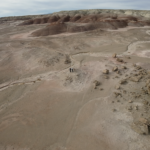
EVA #5: The highlight of the morning was EVA #5, where as the lead, I joined HSO Duluu, Geologist Davaa, and Engineer Muggi in a venture to Compass Rock. The EVA was successful, marked by drone testing and significant observations of the beautiful landscape of Mars and testing our rovers’ battery usage.

Afternoon Relaxation and Work: Post-EVA, we were treated to a delicious lunch of crew commander and psychologist, followed by a much-needed nap, allowing us to recharge our energy, quite literally. We received wonderful news from the greenhouse indicating that the radish and kale seeds, planted on November 28th, have successfully sprouted.

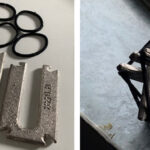
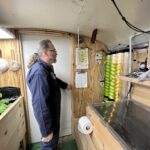
Innovations and Meetings: The afternoon saw Commander Dono engaged in an online meeting with the Helmet Design Development Team of the MARS-V project, focusing on advancements in protective gear. Simultaneously, Engineer Muggi and HSO were busy making a hydroponic wick system for the Greenhab, enhancing our agricultural capabilities in this distant world. Engineer’s measurements of the water tank brought good news – our water usage is becoming more efficient, a critical aspect of our long-term sustainability here.

Conclusion: Today was a testament to the disciplined and innovative spirit that drives our team. Each activity, from the EVA to the individual projects, contributes significantly to the success of our mission. As we continue to decrease our water usage and improve our self-sufficiency, the dream of a sustained human presence on Mars becomes ever more tangible.

Journalist Report – November 30th

Sol #4
Title: Habituation
Journalist’s name: Sunny
Crew name: Alpha
Crew number: 287

Today at the Mars Desert Research Center, Sol #4 commenced with the usual spirited breakfast, an essential start for our team’s physical health and psychological wellbeing. The day’s highlight was the long-distance EVA, led by Tungaa with team members Dono and Muggi. As CapComm, I, Journalist Sunny, had the privilege of overseeing and documenting this crucial operation. The EVA crew embarked at 10:30 a.m., aiming for the Gateway to Lith. However, an unexpected turn occurred when the rover’s battery proved insufficient for the journey, leading the team to stop at Cowboy Corner. This unplanned halt, rather than being a setback, became an opportunity for discovery as the crew explored the surrounding Martian landscape.

HSO Duluu, was immersed in the Greenhab, planting and harvesting microgreens, including radishes for our lunch salad. The freshness of these greens added a delightful touch to our already fantastic lunch, reminding us of Earth’s flavors amidst the Martian wilderness. As the evening approaches, excitement buzzes through the Hab. We’ve planned a "Martian movie night," featuring "Space Between Us." This event is not just a recreational activity; it’s a moment for the team to bond and unwind after a day of rigorous exploration and work.

In conclusion, Sol #4 has been a blend of meticulous planning, unexpected adventures, and communal harmony. As we forge ahead in our mission, each day reveals new facets of Mars and strengthens the camaraderie essential for our journey on this distant world.

Journalist Report – November 29th

Sol #3
Title: Adapting on Mars
Journalist’s name: Sunny
Crew name: Alpha
Crew number: 287

As of four days into the Mars simulation at the Desert Research Center, our team has begun to adjust to the 13-hour time difference. This adaptation is evident in their improved sleep patterns, allowing for more effective daily operations.

Our culinary practices have incorporated Mongolian-inspired dishes, noted for their time efficiency, minimal preparation, and delicious flavors. The crew have reached a consensus on a new approach: packaging green vegetables separately to maintain freshness. The lunch menu, prepared by the crew commander Dono and assisted by the psychologist Tungaa, featured a delectable spaghetti dish that I found particularly enjoyable. It’s fascinating and fulfilling to taste meals prepared by colleagues, despite our years of acquaintance. Dinner was an innovative twist on traditional cuisine, featuring black bean burgers and vegetable broth, during which we discussed strategies for more efficient water usage.

In terms of scientific exploration, three key team members – the crew commander, engineer, and geologist – embarked on an EVA this morning. Their goals were multifaceted: evaluating the rovers’ long-distance capabilities, identifying potential geological sampling sites, and comparing the efficacy of new versus old helmet designs. The Greenhab officer, serving as CapComm, reported positively on the EVA team’s performance.

From a journalistic standpoint, I’ve been planning feature pieces on the physical and psychological transitions involved in returning from Mars to Earth. The weather today was favorable, with minimal cloud cover and abundant sunshine, contributing to a positive working environment. A highlight of the day was the distribution of care and support by our ‘welfare minister’, whose identity remains a delightful secret among the team.

Team Alpha remains enthusiastic and well-prepared for another exciting day on this simulated Martian landscape.

Commander Report – November 28th

Sol #2

Title: Getting Acquainted with Mars

Commander’s name: Enkhtuvshin "Dono" Doyodkhuu

Crew name: Alpha

Today was the first official day of our simulation. The crew woke up promptly in the morning, made breakfast, exercised, and meditated as a group. We have been listening to each other’s music in the mornings and evenings, which has been quite uplifting. The two test EVAs we did went as smoothly as it could, and we are excited for long-distance EVAs in the next couple days. The MARS-V analog suits we brought were comfortable and warm, and we imagine future Mars astronauts would wear something similar in design, excluding the LSS and temperature and pressure control. I am jotting down some of the findings from today’s activities:

· We should have a checklist of necessary preparation before every EVA:

1. COMMS check

2. Helmet check

3. Mesh equipment check

4. Start the track record

· We should do voice recordings during EVAs.

· Not being able to see the rear of the rover is quite difficult when driving. The mirror on the front is quite limiting. We should find a way around this if possible.

· Protective visor on the helmet would be great during sunny days.

· The size of the helmet being big is an advantage. It could be even bigger.

· The new MDRS helmet and LSS is ergonomically quite uncomfortable.

· The headset on the COMMS should be designed as a cap with a chin fastener to keep it steady.

· We had difficulties operating comms during EVAs since we had bulky gloves to simulate actual Mars suits. The talk button of the headset should be easily accessible. We should find a way to keep it at an easy-to-access location on the outside of the helmet.

· Temperature control inside the suits is desired.

We will keep noting our comments and remarks after every meal and EVA since the freeze-dried recipe and the analog suits are two of the priorities of this rotation. Over and out.

Supplemental Operations Report – November 25th

Date: 11/25/2023
Name of person filing report: Ben Stanley
Reason for Report: Routine
Non-Nominal Systems: Director’s trailer heater

Power system: Solar: Nominal.
SOC Last 24 hours: Max 100%; Min 67%; Avg 78.3%.
VDC Last 24 hours: Max 59.32V; Min 43.53V; Avg 49.33V.
Generator run time: 4113.5 hours.

Propane Readings: Station Tank: 64%
Director Tank: 62%
Intern Tank: 65%
Generator Tank: 38%

Water: Hab Static Tank – 500.0 gallons
GreenHab – 200 gallons
Outpost tank – 450 gallons
Science Dome – 0 gallons
Hab Toilet Tank emptied: No

Rovers: Sojourner rover used: No.
Hours: 195.7
Beginning Charge: 100 %
Ending Charge: 100 %
Currently Charging: Yes
Notes on Rovers: Nothing to report

ATV: ATV’s Used: None. Nothing to report.

Cars: Hab Car used and why, where: To Hanksville for supplies. Need to be serviced.
Crew Car used and why, where: Taken to Grand Junction by crew 286.
General notes and comments: All cars awaiting renewed insurance ID.

Summary of Internet: All nominal.
EVA suits and radios: Suits: All nominal
Comms: All nominal
Campus wide inspection, if action taken, what and why: Tunnel stick replaced. Nothing to report.
Summary of Hab Operations: Nothing to report
Summary of GreenHab Operations: All nominal
Summary of SciDome Operations: All nominal
Summary of Observatories Operations: All nominal.
Summary of RAM Operations: All nominal
Summary of Outpost Operations: Director’s trailer heater is broken. New heater ordered and will be picked up in two weeks.
Summary of Health and Safety Issues: All nominal.

Operations Report – November 22nd

Crew 286 Operations Report 22-11-2023
SOL: 10
Name of person filing report: Donald "Duckie" Jacques
Non-nominal systems: None
Notes on non-nominal systems: Completed hand stitching of Suit 5 successfully this morning.
ROVERS
Spirit rover used: No
Hours: (before EVA)
Beginning charge: (Before EVA)
Ending charge: (On return from EVA, before recharging)
Currently charging: Yes
Opportunity rover used: No
Hours:
Beginning charge:
Ending charge:
Currently charging: Yes
Curiosity rover used: No
Hours:
Beginning charge:
Ending charge:
Currently charging: Yes
Perseverance rover used: No
Hours:
Beginning charge:
Ending charge:
Currently charging: Yes
General notes on rovers: Nothing to report
Summary of Hab operations:
WATER USE: 10 gallons
Water (static tank): 173.5 gallons before resupply, 293.5 after resupply of 120 gallons
Static tank pipe heater (on or off): On
Static tank heater (On or off) On
Toilet tank emptied: No
Summary of internet: Nominal
Summary of suits and radios: Nominal. Completed Suit 5 stitching repair. Liz use of suit 11 on 3 hour EVA was successful, with far less discomfort.
Summary of GreenHab operations: Nothing to report
WATER USE: 0 gallons
Heater: On
Supplemental light: On
Harvest: None
Summary of Science Dome operations: Guillaume took samples, and further readings from his ongoing Purple algae experiment. Scott prepared his equipment for today’s concert EVA, worked with his 3d printer. Roger poured his third casting.
Dual split: Off
Summary of RAM operations: (Tools used, work done) Served as airlock for our morning EVA to effect minimal egress of equipment for Scott’s concert, Liz’s drone work, and Don and Guillaume to execute preparations of the MASH for EVA tomorrow.
Summary of any observatory issues: Nothing to report
Summary of health and safety issues: Nothing to report
Questions, concerns and requests to Mission Support: put notes here

GreenHab Report – November 22nd

Crew 286 GreenHab Report 22-11-2023
SOL: 10
GreenHab Officer: Donald "Duckie" Jacques
Environmental control: heater on, fan off, door closed
Average temperatures: 97 F at 10:30, 84 F at 4:15 pm
Hours of supplemental light: 4 hours
Daily water usage for crops: 0
Daily water usage for research and/or other purposes: 0
Water in Blue Tank (200 gallon capacity): 160 gallons
Time(s) of watering for crops: Crops were still moist due to mild temperatures
Changes to crops: none
Narrative:
Harvest: None
Support/supplies needed:

Journalist Report – November 22nd

Crew 286 EVA #9 report 22-NOV-2023
EVA # 9
Author: Roger Gilbertson
Purpose of EVA: To perform hi-res LIDAR scanning of the campus buildings and surroundings (Scott). To perform aerial 3D imaging via a drone (Liz).
Start time for EVA: 10:06 am
End time for EVA: 11:35 am (five minutes late)
Narrative: In the morning, the EVA crew realized they would not need the entire duration originally planned, and requested a later departure time to allow for better lighting of the campus structures.
Suiting up went smoothly, and equipment was placed in the airlock. Their work proceeded effectively. Liz encountered some configuration errors with the drone, and eventually realized that the information provided in the manual was not entirely correct, or that something had changed from the standard settings. Many excellent scans and aerial clips were captured. They successfully returned, but five minutes past the requested ending time.
Destination: habitat campus only
EVA Participants:
Scott Beibin
Liz Cole

Road(s) and routes per MDRS Map: none
Mode of travel: walking
Vehicles used: none

Mission Summary – November 24th

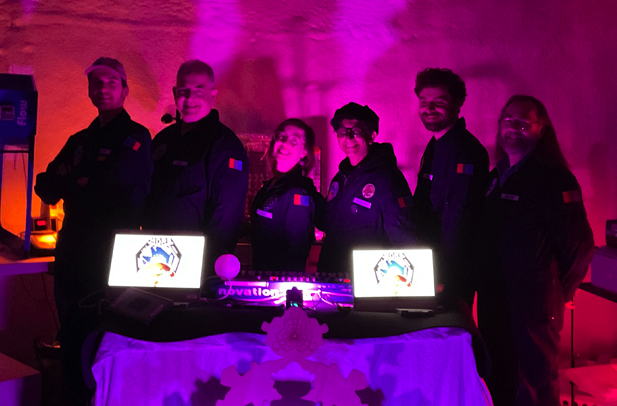
FINAL REPORT – MDRS 286

Nov 12–24, 2023

Roger Gilbertson – Commander
Donald Jacques – XO, Engineer
Liz Cole – HSO, Journalist
Guillaume Gégo – Scientist
Scott Beibin – Artist
Hugo Saugier – Documentary
XesFXQFApZqWOY8MC5tc2gNSI9qoPwjQBfG0kGv9RW3YeCN9xNNzkkdUFKnKbSHM0Ckz8Zucks4VUBXmGMJxM8OCUZ5-hxRHmIW3a8918zPttKylAHpy2gD4mkB0qkk1AUroRxZHnUGdhIk9bbBjQQ
Our diverse, creative and dedicated crew carried out a broad range of science, technology, and art projects including:

• Bacterial growth experiment helpful for creating closed-loop life support systems
• An extended range EVA using the MASH (Mobile Analog Space Habitat) vehicle
• Technology demonstrations collecting and studying some in situ resources
• LiDAR scanning of campus structures and local geological features
• Simulation and comparison of music as it would sound on Mars and Earth
• Metal casting and component fabrication
• Extensive videography of all aspects of habitat and EVA operations
• Daily media updates
• Daily monitoring of the environmental and life systems aboard the MASH
• Hosted two NY Times photojournalists for four nights who remained fully “in sim” with us

PROJECT 1: CO2 Fixation by Purple Bacteria for Space Food Production – Gégo

Purple bacteria Rhodospirillum rubrum were grown inside low-cost bag photobioreactors to assess the possibility of mass-production in altered gravity. This can provide CO2 absorption and production of important nutritional supplements for humans on Earth and Mars.
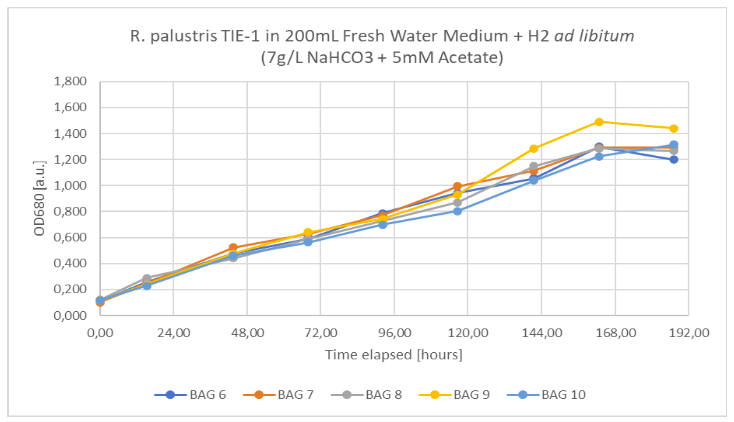
OD measurements between SOL 3 and 5. Growth is visible and follows known trends. Similar experiments will be performed at the University of Mons to confirm these results.

After nine days of steady growth it reached a stationary phase, indicating they had reached their peak. Samples were collected regularly, and are being returned to Belgium for analysis.

PROJECT 2: Performing Extended Extra-Vehicular Activities Using a Mobile Analog Space Habitat – Jacques

MASH EVA 11 excursion on Sol 11 lasted three-hours. We drove the vehicle south to Kissing Camel Ridge and parked. Liz and Guilliame exited and walked acquired drone footage of interesting cliff formations. Hugo and Don recorded the MASH at rest and driving.

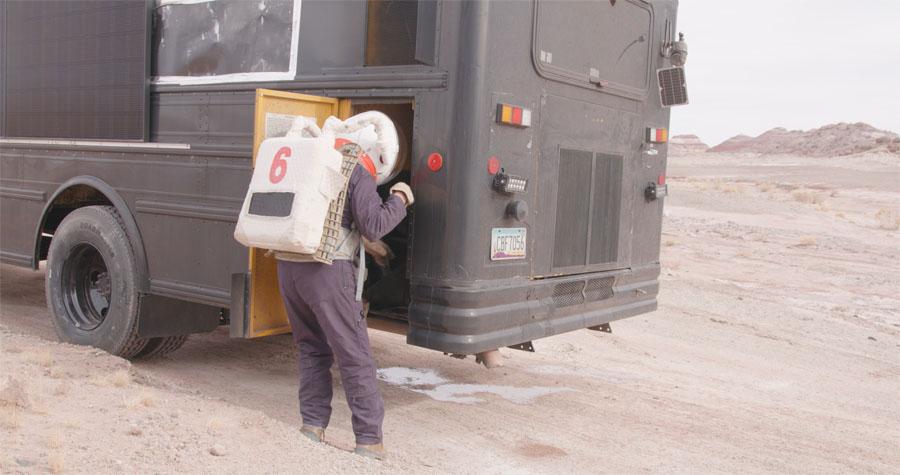
An unexpected engine warning light led to a spacesuited excursion to successfully service the engine, while remaining fully in-sim.

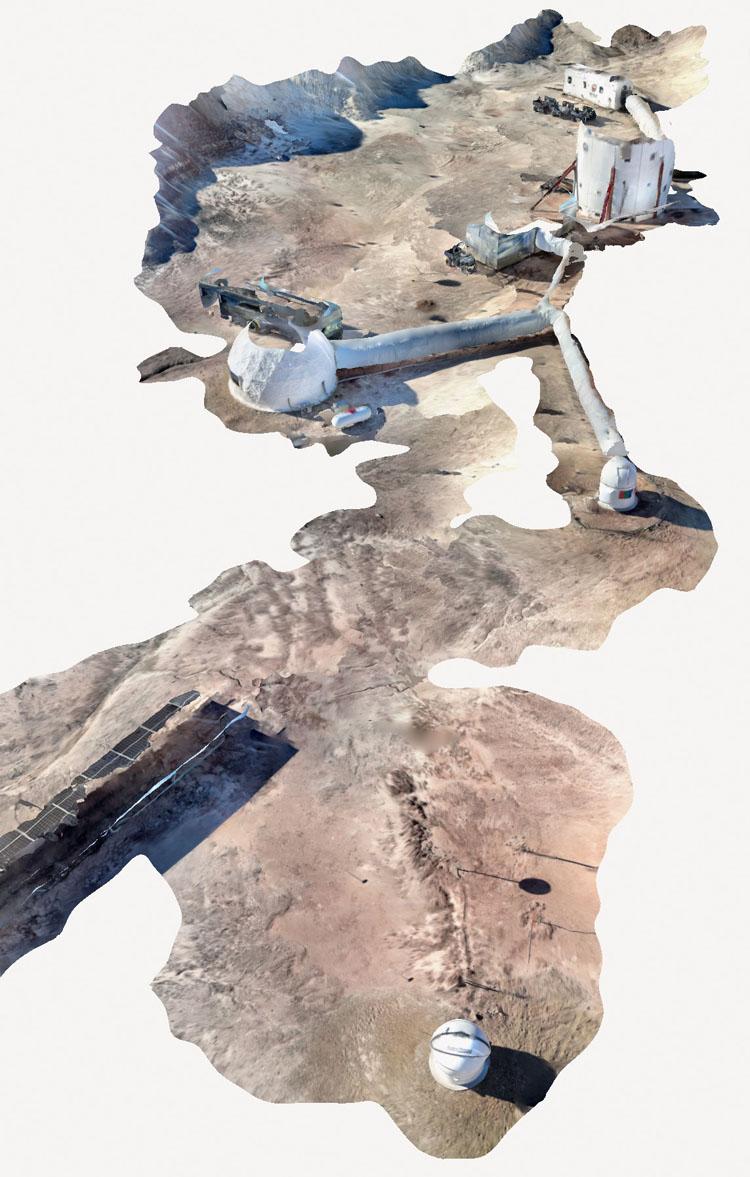
PROJECT 3: Creating High Resolution Interactive Digital Assets of MDRS and Local Geological Sites Using 3D Scanning techniques – Beibin

I conducted four successful LiDAR scanning EVAs on geological features and MDRS campus buildings. With each excursion, various technical and procedural problems were identified, and solutions were implemented. This gave increasingly improved results with each EVA.
Qn1krMwxUYcrl7mJHy-Y8HBebeH3zUEkSl4BuQjvAcguYeNiQBazxhHENhe6k5hf96PHrqCNnc6uQq-l1Dlmq2hFutPvgk8f-jLLyxd3kYoOEi1gC8G-XFpDR8INZJNMzejL0KD0NMt2cqtO1yZQnA

PROJECT 4: Producing Functional Artifacts Using Local Clay Resources and a 3D Extrusion Printer – Beibin

On EVA 4 we gathered clay near the Science Dome, but given time constraints and limited water resources, no further processing of the clay was performed. The samples will be taken to my lab in Philadelphia to process and create test 3D extrusions.

PROJECT 5: Using Local Gypsum Resources to Produce Molds for Metal Casting — Gilbertson

Since learning that previous missions had processed local gypsum into plaster, I used commercially prepared material in order to focus on casting. One mold pair produced four castings (one had structural problems and was melted and recast). The final pieces were trimmed and assembled into a tensegrity icosahedron using six elastic bands to suspended them without touching.
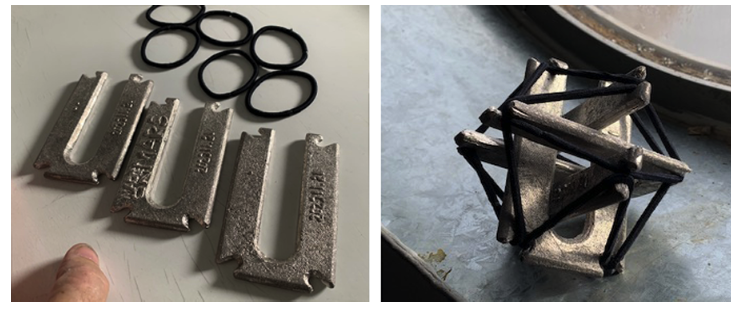
Left: Final cast parts and bands. Right: Assembled tensegrity icosahedron.

PROJECT 6: Mars Academy – A Documentary Film About ESA Scientist Claude Chipaux and the Past, Present and Future of Mars Life Sciences – Saugier

Filming an analog reality is quite a challenge when you’re making a documentary, but from the number of situations it generated on a daily basis, from EVAs to group discussions, brainstorming sessions and so on, I can say I’m bringing back some interesting footage in my suitcase. The other crew members were really available and willing to participate in the project, always keeping an eye on what they could bring to the table, which was really appreciated as a filmmaker. Even though I was busy almost every day, I also tried to help the others as much as I could.

As for the more technical aspects, I found it hard to handle all the shots by myself, but with good quality equipment and a few points learned in the field, it became somehow doable. The hardest things were the sound and shooting in the sun with the reflections from the helmet (but I found the suit in itself wasn’t that big of a deal). However, I always prefer challenge to comfort, so I was very excited to look for tricks to adapt my camera rig to the conditions. Being totally immersed in a mission, in addition to being a great human adventure, was the right approach, in my opinion, to get the most relevant footage of an MDRS analog mission.

Beyond these personal considerations, and as the grandson of one of the founders of the MELiSSA project, I was particularly fascinated by the works of Guillaume Gégo and Donald Jacques on life support systems. The way they think about how to supply not only space expeditions, but also multiple potential locations on Earth, has something that makes you dream of beautiful future explorations on the one hand, and stay connected to our immediate and urgent realities on the other. Not only did I find their works very relevant, despite their very different schools and ways of thinking, but they are exactly the kind of people I needed in the project to make a narrative connection between my grandfather’s story and analog missions.

Thanks to this stay here at MDRS, I’m happy to say that I somehow lived my grandfather’s dream: to experience Martian life, even if it was simulated, because I think that setting the context is enough to give you the first hint of what some real Martian sensations could be.

PROJECT 7: Simulating Acoustics of Mars for an Outdoor Martian Music Performance – Beibin

Using data published in Nature [https://www.nature.com/articles/s41586-022-04679-0] and from NASA [https://mars.nasa.gov/mars2020/participate/sounds] I collaborated with audio engineer John Knott to create a digital audio filter that accurately simulates how sound travels on Mars.

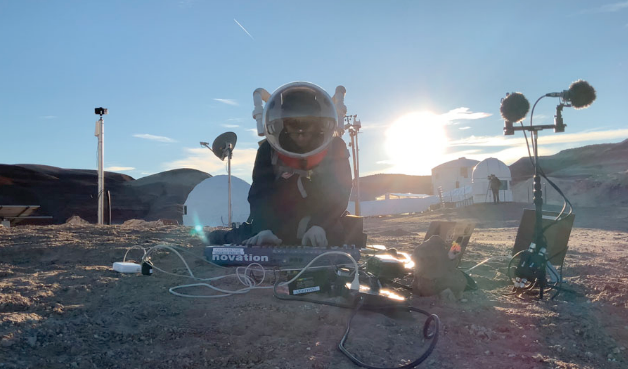
I conducted three Ptelepathetique performance. The first at night inside the Science Dome. Then a “sunrise” set north of the Observatory Dome, and then a “sunset” show east of the dome.

Each presented a musical audio comparison demonstrating the differences between sounds we would hear on Earth versus on Mars with its thinner, colder atmosphere.
kTp3phUDl0yUVcUbcVOfHrF00g4InaADaINq03H7Jb7N3seWIFB5iCKYgYAT0TXBM8rdkFr0kIqwNGrrrA_NBGtEtwXTqKHSuABkm0sKAexhbDK92LvUtiCDpdsdfpxeE0p7IJceCcogdLPyGjlUnA

Scott performs as listeners at the dome enclosure enjoy audio as we might hear it on Mars.

PROJECT 8: Documenting the MDRS Mission 286 Adventure in Words and Images – Cole

I recorded interviews with Guillaume and Scott regarding their experiments and creations. We arranged for two live conversations, one with Mars Society Belgium, then one with Journal des Enfants a children’s publication to inspire future astronauts and scientists. The MS Belgium event led to an interview with science publication Athena.

We provided visiting NY Times photojournalists with captions for their images, and very much enjoyed their five day / four night visit.

PROJECT 9: Evaluating Performance of Biological Life Support Components Installed within the Mobile Analog Space Habitat – Jacques

Upon arrival and docking at MDRS, the MASH mini-farm was populated by by two (2) operating PhotoBioreactors with Spirulina culture; approximately 55 blue tilapia, twelve (12) quail, 100 meal worms, 100 red wiggler worms, a garden, and marsh. By the end of the first week, I noted challenges in that I had added too many quail at once, and the consequences were the loss of 65 tilapia, and an overabundance of guano and odors. Despite this, each of the components functioned as designed, even though overloaded. I have much to correct as I look forward to growing the system, and improving its functionality and resilience.
8X62DRoMTieVKUws6iQqwowyp64TkxyMRyLdZsUG1VYqsMvgUsIPWxCktlDWf0PRQSM3dmMXR27ZbYn7y00l_JAnrwqi9ZAeRHBvboAOUN3ui-RiTmDaDumvF4pd2IBN7KOvqdhUfjt9qKaihDl-CQ

Don services the MASH vehicle while remaining fully in-sim.

CONCLUSION
We enjoyed a challenging, diverse, multifaceted, and ultimately extremely memorable, rewarding and enriching experience at MDRS. On to Mars!