Operations Report Oct 18th – 20th

MDRS Operations Report 18-20-OCT-2021

Name of person filing report: Shannon Rupert

Reason for Report: Routine

Non-nominal systems: Nothing to report

Action taken for non-nominal systems: Nothing to report

Generator: Nothing to report

ScienceDome Dual Split: Off

Solar—Nominal, supplying all power

Solar— SOC % Last 24 hours (Wednesday):

Average 88

Minimum 73

Maximum 100

Notes on solar: Nothing to report

Propane Reading, station tank – 61 %

Propane Reading, director tank— 70 %

Propane Reading, intern tank— 72 %

Propane Reading, generator— 80 %

Ethanol Free Gasoline – 1 gallons

Water (loft tank): 40 gallons

Water Meter: not checked units

Water (static tank) – 150 gallons

Static to Loft Pump used – no

Water in GreenHab – 10 gallons

Water in ScienceDome: 0 gallons

Water (Outpost tank) – 150 gallons

Hab toilet tank emptied: no

Perseverance rover used: yes

Hours: 220.6

Beginning charge: 100

Ending charge: 97

Currently charging: yes

Sojourner rover used: yes

Hours: not noted

Beginning charge: 100

Ending charge: 100

Currently charging: yes

Spirit rover used: no

Hours: 141.0

Beginning charge: 100

Ending charge: 100

Currently charging: yes

Opportunity rover used: no

Hours: 73.0

Beginning charge: 100

Ending charge: 100

Currently charging: yes

Curiosity rover used: no

Hours: 148.0

Beginning charge: 100

Ending charge: 100

Currently charging: yes

Notes on rovers: Nothing to report

ATV’s Used: (Honda, 350.1, 350.2, 350.3): none

Reason for use: n/a

Oil Added? No

ATV Fuel Used: 0 gallons

# Hours the ATVs were Used today: 0

Notes on ATVs: Nothing to report

HabCar used and why, where? No

CrewCar used and why, where? Yes, to town

Luna used and why, where? Yes, to town

General notes and comments: Nothing to report

Summary of internet: All accounts are nominal.

Summary of suits and radios: Nothing to report

Campus wide inspection, if action taken, what and why? I went to repair what I thought were a few areas where the wire holding the cattle panels needed replacing and I discovered that much of the wire has rusted and broken off and so much of the tunnels need replacement wire. I did some today.

Summary of general operations: The new sign seems to be working better than anything else we have tried, as people have mostly parked and viewed the station from the sign as instructed.

Summary of Hab operations: Nothing to report

Summary of Outpost operations: Got the rest of the work party trash materials on the trailer except for the things that were too big for me to handle alone.

Summary of GreenHab operations: Shade cloth needs to be removed. The plants are protesting phototactically. Spent some time on a new crop project.

Summary of ScienceDome operations: Working on some NASA Spaceward Bound Utah geology projects.

Summary of RAM operations: Nothing to report

Summary of any observatory issues: I went into the Observatory and pressed a button today at Peter’s request. Finally made it to the inner sanctum.

Summary of health and safety issues: Hand is fine. Not healing but also not infected.

Questions, concerns, supplies needed and requests: Mouse is gone.

Operations Report Oct 15th – 17th

MDRS Operations Report 15-17-OCT-2021

Name of person filing report: Shannon Rupert

Reason for Report: Routine

Non-nominal systems: water pump in Hab

Action taken for non-nominal systems: Ed was here to work on the telescope and he reported the pump in the Hab was working continuously through the night so he turned it off. The reason was that the loft tank was empty. I refilled it and pressurized the system and all is well again.

Generator: Nothing to report

ScienceDome Dual Split: Off

Solar—Nominal, supplying all power

Solar— SOC % Last 24 hours (Sunday):

Average 87.2

Minimum 72

Maximum 100

Notes on solar: Nothing to report

Propane Reading, station tank – 61 %

Propane Reading, director tank— 70 %

Propane Reading, intern tank— 72 %

Propane Reading, generator— 80 %

Ethanol Free Gasoline – 1 gallons

Water (loft tank): 40 gallons

Water Meter: not checked units

Water (static tank) – 150 gallons

Static to Loft Pump used – yes

Water in GreenHab – 30 gallons

Water in ScienceDome: 0 gallons

Water (Outpost tank) – 150 gallons

Hab toilet tank emptied: yes

Perseverance rover used: yes

Hours: 220.4

Beginning charge: 100

Ending charge: 83

Currently charging: yes

Sojourner rover used: yes

Hours: not noted

Beginning charge: 100

Ending charge: 100

Currently charging: yes

Spirit rover used: no

Hours: 141.0

Beginning charge: 100

Ending charge: 100

Currently charging: yes

Opportunity rover used: no

Hours: 73.0

Beginning charge: 100

Ending charge: 100

Currently charging: yes

Curiosity rover used: no

Hours: 148.0

Beginning charge: 100

Ending charge: 100

Currently charging: yes

Notes on rovers: Nothing to report

ATV’s Used: (Honda, 350.1, 350.2, 350.3): none

Reason for use: n/a

Oil Added? No

ATV Fuel Used: 0 gallons

# Hours the ATVs were Used today: 0

Notes on ATVs: Nothing to report

HabCar used and why, where? No

CrewCar used and why, where? No

Luna used and why, where? Yes, to town

General notes and comments: Nothing to report

Summary of internet: All accounts are nominal.

Summary of suits and radios: Nothing to report

Campus wide inspection, if action taken, what and why? Nothing to report

Summary of general operations: I mounted the new “park and view” sign under the MDRS sign. It’s crooked, because I opted to match the lower board instead of the sign.

Summary of Hab operations: Nothing to report

Summary of Outpost operations: Nothing to report

Summary of GreenHab operations: Nothing to report

Summary of ScienceDome operations: I finished cleaning the lab and it was much easier thanks to the work Crew 228 did.

Summary of RAM operations: Nothing to report

Summary of any observatory issues: Robotic observatory is online. This morning I found it open but I notified Peter and he closed it.

Summary of health and safety issues: I cut my hand pretty deep while mounting the sign. It’s wrapped with six band-aids and I’m sure will heal without complications.

Questions, concerns, supplies needed and requests: I have a small mouse in my house. I’m hoping to make things so uncomfortable for them that they move out.

Operations Report Oct 11th – 14th

MDRS Operations Report 11-14-OCT-2021

Name of person filing report: Shannon Rupert

Reason for Report: Routine

Non-nominal systems: nothing to report

Action taken for non-nominal systems: n/a

Generator: nothing to report

ScienceDome Dual Split: Off

Solar—Nominal, supplying all power

Solar— SOC % Last 24 hours (Thursday):

Average 88.5

Minimum 74

Maximum 100

Notes on solar: nothing to report

Propane Reading, station tank – 71 %

Propane Reading, director tank— 70 %

Propane Reading, intern tank— 72 %

Propane Reading, generator— 80 %

Ethanol Free Gasoline – 1 gallons

Water (loft tank): 25 gallons

Water Meter: not checked units

Water (static tank) – 200 gallons

Static to Loft Pump used – no

Water in GreenHab – 50 gallons

Water in ScienceDome: 0 gallons

Water (Outpost tank) – 180 gallons

Hab toilet tank emptied: no

Perseverance rover used: no

Hours: 220.2

Beginning charge: 100

Ending charge: 100

Currently charging: yes

Sojourner rover used: no

Hours: 152.2

Beginning charge: 100

Ending charge: 100

Currently charging: yes

Spirit rover used: no

Hours: 141.0

Beginning charge: 100

Ending charge: 100

Currently charging: yes

Opportunity rover used: no

Hours: 73.0

Beginning charge: 100

Ending charge: 100

Currently charging: yes

Curiosity rover used: no

Hours: 148.0

Beginning charge: 100

Ending charge: 100

Currently charging: yes

Notes on rovers: nothing to report

ATV’s Used: (Honda, 350.1, 350.2, 350.3): none

Reason for use: n/a

Oil Added? No

ATV Fuel Used: 0 gallons

# Hours the ATVs were Used today: 0

Notes on ATVs: I left the jack alone holding up the rear of the Honda and it sunk about 2 inches in the rainstorm.

HabCar used and why, where? Yes, to town for supplies and packages

CrewCar used and why, where? No

Luna used and why, where? Yes, to town to unload materials into the storage unit

General notes and comments: nothing to report

Summary of internet: All accounts are nominal.

Summary of suits and radios: Nothing to report

Campus wide inspection, if action taken, what and why? Erosion of the hill I try to keep people off is getting worse both by the station and at the Outpost. In addition, the gully created by the placement of the ScienceDome is about 9 inches deep and cutting through the driveway.

Summary of general operations: nothing to report

Summary of Hab operations: Nothing to report.

Summary of Outpost operations: nothing to report

Summary of GreenHab operations: Inga wins my “I would definitely go to Mars with them” award. The new watering can may be metal, so it won’t get brittle and break, but it’s about as subtle as a fire hose! Not good for watering young plants. I will order a better one, with more refined and gentler watering capabilities.

Summary of ScienceDome operations: Nothing to report

Summary of RAM operations: nothing to report

Summary of any observatory issues: Robotic observatory is down. Will be serviced soon.

Summary of health and safety issues: Nothing to report

Questions, concerns, supplies needed and requests: Weather has been bad, stormy and muddy so not much outside work has been done.

Revised Crew 228 Journalist Report October 6th

DAD JOKES ON MARS
Lindsay Rutter
Commander, Crew 228

Disclaimer: The sequence of events has been modified for creative purposes.

We Areonauts followed all planetary protection directives set forth by COVID amendments to the COSPAR treaties. And we successfully prevented the spread of the terrestrial virus into a space virus. But no matter how careful we were, there was one pest that hitchhiked its way onto our spacecraft and now can never be stopped – the Dad joke.

Dad jokes cannot be sterilized. There are no vaccines for Dad jokes. They are extremophiles of the highest order, surviving anything you throw at them, including microgravity and radiation. This is unequivocal.

It all started soon after we exited the Karman line. A crew member (who requested anonymity) let out what was unmistakably a Dad joke: "Just look at the rotation of the Earth from here. It really makes my day! …. Get it?"

For the most part, we tactfully ignored it. But then the crew member added: “Wanna know why we’re not stopping at the Moon along the way? Because it’s full!”

I can’t help but think most of the crew said a little prayer that night in their staterooms, hoping that would be the end of it.

As the solar days turn to solar months, it has become clear we will see no end to the Dad joke. A pattern has emerged. First, a crew member will slip out a Dad joke. Then, there is a moment of silence, followed by a cacophony of groans. Sometimes, the crew will clear the room, essentially imposing an unspoken quarantine on the source of the joke, who is left alone to reflect on how they are no Jerry Seinfeld.

We each have been that person. And we each have reflected in isolation. But still, the Dad jokes continue.

"Hey guys, what is the most important part of our computers up here?" A crew member asked one day. "The space key!"

With that, we finally called Mission Control.

"Crew 228 to Mission Control. We might have the Dad joke up here. Can you confirm: when is a joke so bad it becomes a Dad joke?"

"When it’s apparent." Mission Control responded with a straight face. Then they laughed at their own joke for one minute straight. That’s when we knew – even Mission Control was infected!

In a last-ditch bid to rid ourselves of the pest, we wrote down the worst jokes that have been committed on Mars so far, and ran the paper through the compost shredder. But this purification ceremony only emboldened the Dad joke, which victoriously resurrected itself within minutes when a crew member blurted out an all-new-low variant of the offense.

We have since surrendered defeat to the Dad joke. And even though we weren’t trained for it, we have learned to cope with it and will share our strategies in an operational report.

It is possible that, one day, the social contagion that is the Dad joke will make the fateful leap from human beings to AI beings. And should the AI community recursively self-improve the cheesiness factor, it will emerge worse than what we can even imagine today. It will be so bad, it will be almost transcendentally bad. What happens at that point – to space exploration, to consciousness in the universe – awaits latently in the realms of science fiction. Only time will tell.

Today, I transmit a rather sobering report that the Dad joke will always go wherever humans go. And now that we humans have landed on Mars, it is here with us to stay.

What to make of this, I wonder? If we couldn’t leave the Dad joke behind, is it possible to prevent contaminating Mars with other human transgressions? The wars? The corruption? The pollution?

I can’t help but fret sometimes. I’m concerned.

Why, nice to meet you, concerned! I’m Dad!

Operations Report Oct 08th – 10th

MDRS Operations Report 8-10-OCT-2021

Name of person filing report: Shannon Rupert

Reason for Report: Routine

Non-nominal systems: Complete Failure of Power System occurred on Saturday the 9th at 6 am.

Action taken for non-nominal systems: On Saturday, we awoke to a brownout, which is something that isn’t supposed to happen with our system and has never happened before. After about ten minutes of this, we lost power. SOC was 16%. One of the power controllers had tripped its breaker, but I didn’t know when, so nothing to do but resent it and wait until sunrise. Once the sun was up, all three charge controllers returned to nominal operations. I attempted to use the generator before sunrise but my first attempt failed. I changed the generator control to autostart, knowing the generator was programmed for autostart. It started well, but struggled and lagged, finally backfiring and quitting. The autostart was cancelled so will need to be reprogrammed on the generator before it can be used again. Error read undervolt L1-2. I attempted a second manual start but the generator turned itself off in a minute. So we waited for the sun to confirm the solar system was working. It was but we still weren’t getting power. My second attempt to restart the inverters worked and the system has been functional since. In the meantime, I restarted the generator with the breaker off and it ran well, then I flipped the breaker with the SOC at 30% and the generator did not struggle. I turned the generator off so I could clean and check it before putting it in service again. For the next few days I will once again run on solar only until this is done then I will test the system again.

Generator: Run three times on Oct 7 during a power failure.

ScienceDome Dual Split: Off

Solar— Except for during the complete power failture on Saturday it has run nominally, although struggling to keep up with power demand on rainy and cloudy days

Solar— SOC % Last 24 hours (Sunday):

Average 60.1

Minimum 14

Maximum 100

Notes on solar: See above

Diesel Reading – Removed on Oct 10th. This will be the last report for this tank.

Propane Reading, station tank – 71 %

Propane Reading, director tank— 70 %

Propane Reading, intern tank— 72 %

Propane Reading, generator— 80 %

Ethanol Free Gasoline – 1 gallons

Water (loft tank): gallons

Water Meter: units

Water (static tank) – 225 gallons

Static to Loft Pump used – yes

Water in GreenHab – 60 gallons

Water in ScienceDome: 0 gallons

Water (Outpost tank) – 200 gallons

Hab toilet tank emptied: unknown

Perseverance rover used: yes

Hours: 220.2

Beginning charge: 100

Ending charge: 100

Currently charging: yes

Sojourner rover used: yes

Hours: 152.2

Beginning charge: 100

Ending charge: 100

Currently charging: yes

Spirit rover used: yes

Hours: 141.0

Beginning charge: 100

Ending charge: 100

Currently charging: yes

Opportunity rover used: yes

Hours: 73.0

Beginning charge: 100

Ending charge: 100

Currently charging: yes

Curiosity rover used: yes

Hours: 148.0

Beginning charge: 100

Ending charge: 100

Currently charging: yes

Notes on rovers: Additions to the frame to protect the spacesuits have remained intact and functional.

ATV’s Used: (Honda, 350.1, 350.2, 350.3): Honda

Reason for use: removed two rear tires for repair

Oil Added? No

ATV Fuel Used: 0 gallons

# Hours the ATVs were Used today: 0

Notes on ATVs: Nothing to report

HabCar used and why, where? No

CrewCar used and why, where? Yes, to deliver crew to Grand Junctoin

Luna used and why, where? Yes, to town

General notes and comments: CrewCar needs repair before next crew arrives. Running well, but needs work on the undercarriage. The HabCar’s windshield has been scratched so much that it is difficult to see through it when the window isn’t cleaned. The windshield washer tank is broken so people have just been clearing and scratching it without any fluids.

Summary of internet: All accounts are nominal.

Summary of suits and radios: Nothing to report

Campus wide inspection, if action taken, what and why? Diesel tank removed, remaining spill containment system needs to be removed.

Summary of general operations: Diesel tank has been removed from campus. Old blackwater tank has been transferred to the trailer for disposal.

Summary of Hab operations: Nothing to report.

Summary of Outpost operations: Propane detector in director’s trailer malfunctioned after power failure and was removed. During removal, the fuse to the water pump failed. This is an amazingly short story for what was a really long and interesting learning experience. The thermostats in both trailers were replaced and the heating unit in the intern trailer was reinstalled after being cleaned and checked.

Summary of GreenHab operations: Nothing to report

Summary of ScienceDome operations: Nothing to report

Summary of RAM operations: Ladder was used and was reattached to the tunnel

Summary of any observatory issues: Robotic observatory is down.

Summary of health and safety issues: Nothing to report

Questions, concerns, supplies needed and requests: Nothing at this time.

Crew 228 Mission Summary October 10th

THE AREONAUTS: CREW 228

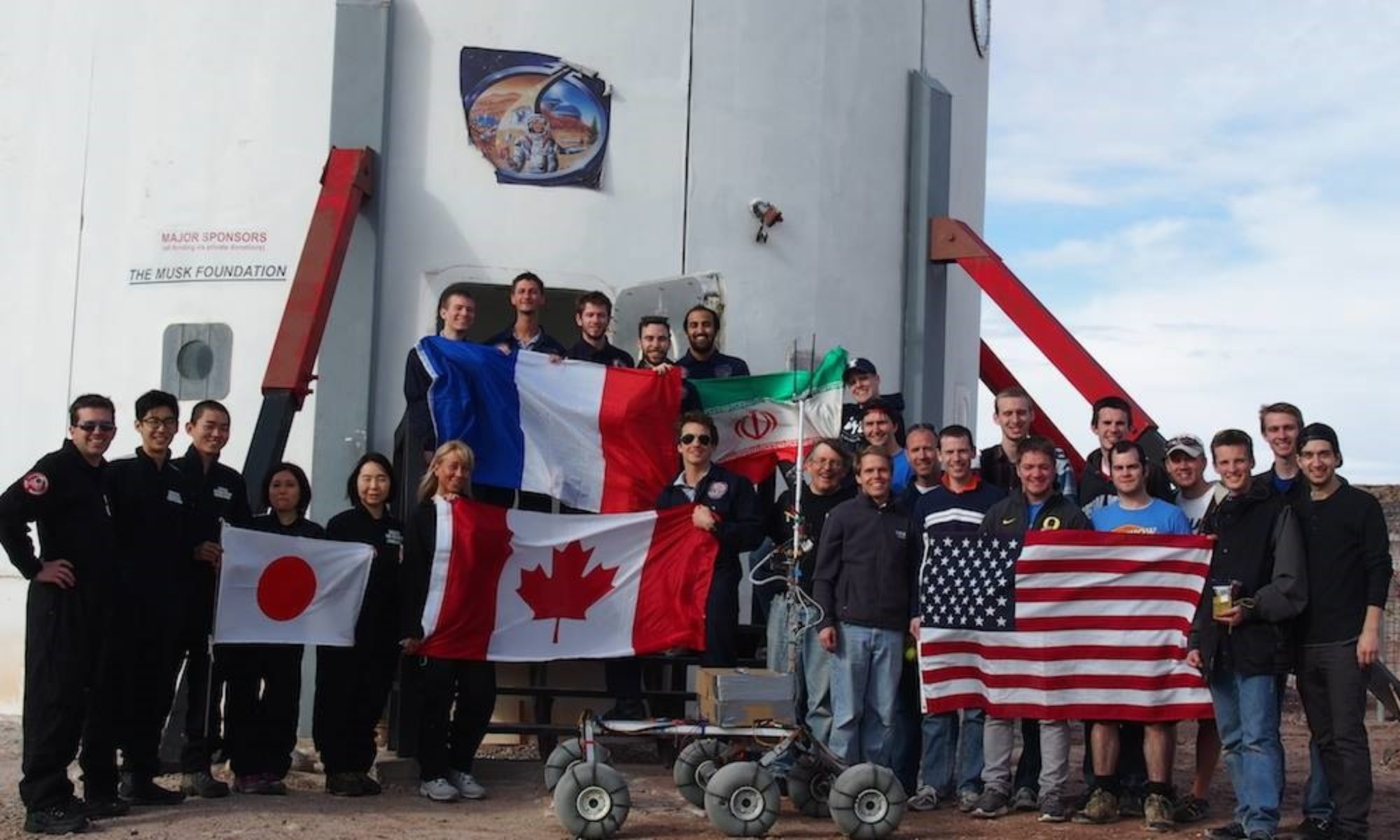
Crew 228, also known as the Areonauts, is an international crew selected by the Mars Society. Our team traveled to the Mars Desert Research Station this year to help put humans on Mars. We are engineers, artists, sociologists, astronomers, biologists, journalists, and physicians, who hail from all walks of life and eight nations. But most of all, we are explorers. The word ‘Areonaut’ is derived from the Greek roots Ares (Mars) and nautes (sailor), translating to ‘sailor of Mars’. Our motto, Multi Terris, Unus Finis (many nations, one goal) reflects our internationality.

Although we started as a group of strangers who had never met before in person, we shared the common goal to serve as “one small step” toward sending humankind to Mars. Over 2.5 years, we carefully prepared for a productive mission on the Red Planet from all across the globe.

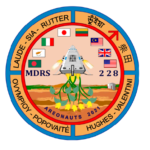
From September 26 to October 9, 2021 we conducted various activities in simulated space conditions. To read more about the symbology of our mission patch and details about our research and outreach activities, please view our mission website at:

https://mdrs228.github.io

RESEARCH PROJECTS

Sociological study of group processes in a space analog environment

By: Inga Popovaite

For two weeks, Inga Popovaite collected data for her doctoral dissertation (University of Iowa IRB#201911141). She leaves MDRS with ~24 pages of notes (17k words) that document every day on “Mars”. In her dissertation Inga examines crew interactions from the structural, as opposed to the individual, perspective. Her work will contribute to the growing body of literature that examines group processes in isolated, confined, and extreme environments.

Sparks of creativity in isolated and confined environment helps with group cohesion

In addition to participant observation, Inga tested data collection instruments for a future research project in which she wants to investigate emotion management in isolated, confined, and extreme environments. Crew 228 were given individual journals and were asked to write daily entries based on provided prompts. Based on their suggestions, Inga plans to use digital journaling in the future instead of a pen-and-paper version. She is also rethinking how this project can be better incorporated into MDRS crews’ daily routines.

Lastly, during her time here, Inga found some time to work on a presentation for the Mars Society International Convention, which is happening in a week. In her talk she will be talking about how unsupervised machine learning algorithms (sentiment analysis and structural topic modeling) can be used to infer behavioral patterns from crews’ daily reports.

MDRS GIS map update

By: Jin Sia

In collaboration with: Marc Levesque

Jin suggested information to be added to the MDRS GIS map that corresponded to useful or interesting geographic features. Furthermore, he provided feedback on the formatting of the draft EVA planning map provided by Marc, such as about the usefulness of including an optical map as well as a topographical one, and providing coordinates in DD (Decimal Degrees) as well as UTM (Universal Transverse Mercator.)

GIS mapping of MDRS area

By: Jin Sia

In collaboration with: Marc Levesque

Jin explored the applications of GIS (Geographic Information Systems) for EVA planning and real-time EVA support at the MDRS. Initially, he created a digital map of the area in ArcGIS Pro using data provided by Marc Levesque (Commander, Crew 216) with the intent of starting a process of accumulating scientific SOIs (Sites Of Interest) that would be passed down from crew to crew.

However, he soon concluded that this specific system would likely be impractical due to the limited availability of the software, standardization issues, and other logistical complexities. Instead, he learned several valuable lessons and found unexpectedly useful insights from using the software.

Firstly, as planned, he supported Lindsay’s field microbe genomics project by recording geographic data for samples she collected using the GPS Essentials app. With the help of a visualization of the sample collection sites in ArcGIS Pro with aerial imagery and a DEM (Digital Elevation Model), Lindsay concluded that she had taken samples from a sufficiently diverse range of sites.

Secondly, an unexpected finding was the usefulness of ArcGIS Pro for real-time EVA support. When the EVA team ran into issues locating the target site, they provided Jin with a GPS fix, and he was able to provide them with a bearing and distance to it using the existing digital map in ArcGIS Pro.

Thirdly, Jin noticed during the mission that he could calculate the slope at each point in the map based on the DEM. Using the resulting map, he helped Dave and Inga locate a pass with a gentle average slope that would provide them with access to the dried-up river delta southwest of the Kissing Camel Ridges, which is underexplored. Using the 3D Map feature in ArcGIS Pro also helped them visualize the expected topography on arrival at the site.

Finally, Jin also noticed during the mission that he could perform a viewshed calculation based on the DEM, which was useful for determining whether a radio would have direct line-of-sight to the Hab in every point on the map. He and Inga performed an EVA to verify the accuracy of this calculation. He learned that while the calculation was pessimistic in predicting whether radio reception would be available, it was still useful for finding areas with poor reception or radio blackout. Based on these findings, he recommended that EVA protocol require teams to check in with HabComm and provide an estimated time to reestablishment of radio contact before entering blackout zones.

Future MDRS Research Project Conceptual Investigation

By: David Laude

Dave investigated the prospects of a research project for his next rotation should he be so fortunate. It made good use of a few crew hours at MDRS. What would a nascent Martian colony want or need to be different on Mars from the culture and civilizations on Earth for the better? Why not ask the crew members in a Mars sim? An hour session was conducted mid-sim with all crew participation. Discussions resulted in the idea that just discovering relevant attributes to consider would be beneficial, even if no further details on the subject were immediately forthcoming. Some technological/societal/cultural subjects revealed were food production, labor shortages, extended families living together and reliance upon each other. Full discussions on a single subject could take considerable time and so would have to be limited when considering crew participation. More thought will be required to identify an efficient use of crew time for this potential research project. Most of the work to develop this for publication would have to be completed on Earth.

In-situ, real-time metagenomics analysis of MDRS regolith using the Oxford MinION

By: Lindsay Rutter

In this project, Lindsay added to a unique body of astrobiological research that has been conducted by scientists at MDRS. She will continue to add the next logical “stepping stone” in this stream of work that started 16 years ago. Below is a timeline of the previous work and how her project builds to it.

2005: Moran et al. confirmed the presence of methane in the Utah desert soil around MDRS [1]. The authors provided preliminary evidence (using growth medium) that the methane could be derived by microbes, a finding that, if verified, would be intriguing given that methanogens were not known to survive in desert regolith. Interestingly, around this same time, methane was detected on Mars, where it remains unknown if it is biological in origin.

2011: Direito et al. [2] and Thiel et al. [3] conducted 16S rRNA studies and PCR-based detection surveys at MDRS. Both groups confirmed high bacterial diversity in the Utah desert soil.

2020: Maggiori et al. [4] performed the first metagenomics study of Utah desert soil around MDRS using the handheld nanopore sequencing technology of the Oxford Nanopore MinION [5]. Metagenomics (the study of genetic material collected directly from environmental samples) is a new approach that allows biologists to examine all members in a microbial community at once (regardless of whether they can be cultured). Maggiori et al. characterized a rich microbial community that included several methanogens, which verified the unexpected preliminary evidence from 2005 that methanogens can indeed survive in desert conditions. Maggiori et al. [4] performed their MinION sequencing on MDRS samples returned to their home lab.

During this mission, Lindsay attempted to replicate Maggiori et al.’s findings – but, this time, to perform the MinION sequencing directly at MDRS, instead of her home lab. Because she did not have access to expensive sequencing facilities, she used a “field sequencing kit”, a kit even more designed for remote environments than what Maggiori et al. used. Her study could serve as a proof-of-concept that sequencing can be done in remote space analog environments far away from sequencing facilities, all while under planetary exploration operations.

All equipment used for this study.

Lindsay attempted to replicate Maggiori et al.’s findings by returning to the exact same desert feature from which the previous authors collected their samples – an inverted river channel called Jotunheim, located about 1 kilometer North of the habitat. Before the mission ended, Lindsay was able to obtain a small amount of DNA reads (about 1,000 per sample). Upon returning to her home lab, she will determine the quality and characteristics of these reads and whether similar microorganisms were detected.

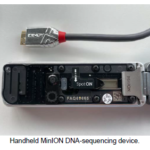
Handheld MinION DNA-sequencing device.

Back at her home lab, Lindsay will analyze the samples again not just for the microbial diversity (metagenomics), but also the microbial ecology (metatranscriptomics), of the Utah desert soil around MDRS. This would allow us to increase the resolution and understand not just what microorganisms are present, but also what biochemical pathways and substrates they use to survive. Overall, the project will use MinION to sequence DNA and RNA to identify methane-producing metabolic pathways of the methanogens that were recently

detected for the first time in the desert environment.

OUTREACH PROJECTS

Areonauts sharing their mission with elementary, middle, and high school students

By: everyone

This project is led by Stuart Hughes and Lindsay Rutter, with participation from all other crew members. Lindsay Rutter gave virtual presentations about our mission to elementary students (4th and 5th grade), middle school students (7th grade), and high school students (11th grade) through the program “Skype a Scientist”. All together, the presentation about our mission was seen by about 250 students, many of whom sent in questions afterward.

The questions from the students spanned various fields from space farming to life support system engineering to planetary science to space medicine. We filmed short videos to answer the elementary students’ questions, and wrote answers to the older students. Stuart Hughes will help with video editing. The crew will send the final video to all classrooms that participated.

Areonauts at the Space Week 2021

By: Ludovica Valentini

Supported by the whole crew

Ludovica presented the crew 228 and their “hybrid” simulation during the Space Week 2021 in the Italian region Marche. In-situ crew shared their videos and photos, and remote crew helped editing the footage and sharing their remote experience.

Media outreach

By: Inga Popovaite

Inga got >33 GB pictures and videos which she will use to tell a story about her research, MDRS, and Mars analogs more generally to various Lithuanian media outlets and the University of Iowa alumni magazine.

Diaries from Analog Mars

By: Jin Sia

On behalf of: Mars Society of Canada

Jin wrote daily diary entries for the Mars Society of Canada’s Marslog (marssociety.ca/marslog.) He provided a candid, storied perspective into space analog life that was well-received by the public.

Mars-to-Mars (M2M) Video Link

By: Lindsay Rutter, Inga Popovaite, Jin Sia, and David Laude

The AARG-1 (American Public University System Analog Research Group) crew at the University of North Dakota’s ILMAH (Inflatable Lunar/Mars Analog Habitat) analog site, by happy coincidence, were also conducting a simulated Mars mission at the same time as the Areonauts. On October 8 (Sol 11), they joined a cross-planetary video conference together called M2M (Mars-to-Mars) Video Link that was broadcasted live to Earth, during which they discussed space analogs and World Space Week.

RECREATIONAL PROJECTS

Lunch Time TV

We watched two episodes of the science fiction TV series Moonbase 8 and the first episode of Away, both of which the Areonauts found almost too relatable. Moonbase 8 was especially poignant as some of the plot points corresponded closely to issues the crew faced at the MDRS.

Radio Reception Experiments

By: David Laude

David Laude had a 1924 radio with him. The crew set it up to hear what radio signals could be caught from Earth.

Remote Journalist Report Task

By: All crew

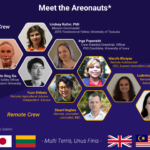
We wanted to involve our remote crew as much as possible during the mission, as they prepared for it for 2.5 years, only to drop out due to travel bans. However, they were located all across the globe – In the UK, California, Hawaii, Japan, and Italy. As a result, it was difficult for us in-situ crew to correspond synchronously with remote crew. We also were concerned the remote crew would not be as visible about their experiences. As a result, we created a rotating schedule for all crew to publish a journalist article at least once, describing their experiences. This permitted a certain cohesion in our group, because we had creative or unique reports from a different crew member – whether in-situ or remote – each evening to look forward to. It also allowed them to tell their story, how it felt to almost go to Mars, only to stay back as support on Earth.

REFERENCES

1. Moran M, Miller JD, Kral T, Scott D. Desert methane: Implications for life detection on Mars. Icarus. 2005. pp. 277–280. doi:10.1016/j.icarus.2005.06.008

2. Direito SOL, Ehrenfreund P, Marees A, Staats M, Foing B, Röling WFM. A wide variety of putative extremophiles and large beta-diversity at the Mars Desert Research Station (Utah). International Journal of Astrobiology. 2011. pp. 191–207. doi:10.1017/s1473550411000012

3. Thiel CS, Ehrenfreund P, Foing B, Pletser V, Ullrich O. PCR-based analysis of microbial communities during the EuroGeoMars campaign at Mars Desert Research Station, Utah. International Journal of Astrobiology. 2011. pp. 177–190. doi:10.1017/s1473550411000073

4. Maggiori C, Stromberg J, Blanco Y, Goordial J, Cloutis E, García-Villadangos M, et al. The Limits, Capabilities, and Potential for Life Detection with MinION Sequencing in a Paleochannel Mars Analog. Astrobiology. 2020. pp. 375–393. doi:10.1089/ast.2018.1964

5. Jain M, Olsen HE, Paten B, Akeson M. The Oxford Nanopore MinION: delivery of nanopore sequencing to the genomics community. Genome Biology. 2016. doi:10.1186/s13059-016-1103-0

Crew 228 – MissionReport _2.pdf

Commander’s Report October 8th

Crew 228 Commander Report 08Oct2021

Sol: 11

Summary Title: Pale purple dots

Author’s name: Lindsay Rutter

Mission Status: Nominal

Commander Report:

Time flies like arrows; fruit flies like freeze-dried bananas. And somehow we find ourselves on the final sol of our mission.

We spent much of the day cleaning. Cleaning duties at the base cannot be underestimated. Mars has dust storms, sometimes covering the planet for months. With a thin atmosphere, a hurricane on Mars feels like a breeze on Earth – but the dustiness remains an issue. Martian dust is finer than what we remember back on Earth. We know that Spirit and Opportunity significantly outlived their life expectancies, demonstrating that technical hardware can survive on Mars. Regardless, we play it safe here, because our critical technical equipment (such as our 15kW solar array) could experience reduced efficiency should they become covered in a film of dust. We wanted to leave the HAB in top-notch shape for the next Martians.

Alongside maintenance, we worked at a steady pace, finishing remaining passion projects. We filmed ourselves answering a final set of questions from fourth graders about our mission – responding to innovative questions about both science and science fiction, and replying to children who want to become space explorers. We also concluded our science experiments. Each member of this crew thoroughly prepared for this mission – and I have worked hard to support their ambitious projects.

Soon after I submit this report, my crew will participate in the first Mars-to-Mars (M2M) Virtual Link. We will hold a brief conference with the AARG-1 crew, who recently touched down at the other research base on Mars, ILMAH station. It feels surreal for us to communicate with four other humans – without the forty minute delay. With multiple bases on Mars now, human exploration of the planet will surely mushroom in the upcoming years.

Tomorrow, we will enter a pressurized exploration vehicle and return to Earth via the Hanksville Spaceport. We will transition from a life of isolation among the four of us to a life of quarantine among the global population. Some of what made us better Earthlings these past few years made us better Martians. And some of what made us better Martians this mission will make us better Earthlings. I feel less as though we are exclusively home to the Pale Blue Dot. Red lessons from Mars will stay with us. Home feels more like a Pale Purple Dot to me now.

Just after we depart the HAB tomorrow, we will drive past Henry, the complete dinosaur fossil discovered by Dr. Shannon Rupert. Henry is a Pteranodon. Or a Quetzalcoatlus. Or a Rhamphorhynchus. Or something like that, that nobody can pronounce to save their lives. But what we do know is that he had wings to fly. We humans need to spread our wings and soar even higher. Improve our contingency plans. For asteroids. For pandemics. For climate change. These themes have played in my head during this mission – and I suspect they will even more tomorrow.

Our crew has accomplished a generous amount of scientific output. We reached out to students across the world. We fixed equipment in the HAB. Our crew prepared for this mission for 2.5 years – and the effort was worth it. It will be hard to part with the crew tomorrow, but I have learned and grown from each of them. I can only hope I successfully guided each crew member to reach their biggest goals. I want to give a very special thanks to Dr. Shannon Rupert for her tireless support with our mission. This one-of-a-kind gem of a research station would cave into itself without her unwavering resolve and fierce talents. I want to thank our remote crew, our CapComs, and Mission Support for their selfless assistance throughout our mission. And I want to thank the Mars Society for pushing humanity to the next frontier of space exploration. Thank you for giving us all this incredible opportunity, and thank you for trusting me to command this mission.

Crew 228 Sol 11 Summary October 8th

Sol: 11

Summary Title: The Mission Winds Down

Author’s name: Dave Laude

Mission Status: Nominal

Sol Activity Summary:

After breakfast discussed the day’s activities, mostly cleaning and preparing campus for our departure.

Lindsay continued metagenomic regolith experiments in the ScienceDome and
Inga prepared for her upcoming presentation at the Mars Society
Conference. She will present machine learning findings about social
dynamics in space analogs.

For a Show and Tell during lunch break Dave talked about radio in the early 1920s and demonstrated a 1924 battery operated 2-tube receiver.

Dave and Inga took food inventory and entire crew performed general cleaning.

Weather: Cloudy, windy, dark, light rain and cold. Nice day to stay inside, clean and write reports.

Crew Physical Status: All crew nominal, except one scraped back of hand on irregular piece of wood. Very little slow bleeding stopped itself in a few minutes. Wound cleaned and bandaged.

EVA: None

Reports to be filed: Commander, Science, Photo, Sol Summary, Journalist.

Support Requested: None

END

Crew 228 Journalist Report October 8th

THE LAST SUNRISE
Jin Sia
HSO, Crew 228

Disclaimer: The characters are based on the real Areonauts of Crew
228, but the story is entirely fictional to depict an emotional rather
than physical journey.

Dedicated to all who have looked up at the night sky and dreamed
impossible dreams.

— I: ROLL-OUT —

"What, my boy, you are not weeping? You should save your eyes for sight;
You will need them, mine observer, yet for many another night."

– Sarah Williams, ‘The Old Astronomer (to His Pupil)’

And as rapidly as the mission started, it came to an end.

The last few days of the stay on Mars were hectic with preparations to
leave. Three sols before liftoff, breakfast was eaten under a
deafening pall of silence. Minds had begun to stray to last-minute
data collection or to the inevitable litany of press conferences and
presentations that awaited them on Earth. Jin’s was lost in the
labyrinthine regulations governing planetary protection, while Inga’s
chewed on the logistics of defending her PhD thesis remotely from a
spacecraft during the six-month voyage home.

It was Dave who broke the silence: "Could you all please be a bit quieter?"

Amid the chorus of laughter, the crew felt a little more like a crew once again.

Lindsay spent most of her days in the Science Dome, working late hours
in a determined bid to find alien microbes in her samples of the
Jotunheim structure. After 2200 hours, the sound of Inga’s keyboard
chattering away pounded against her closed room door. Jin seemed to be
writing constantly, perhaps some email summarizing his geographical
findings to his contact on Earth or blogging about the events of the
day. Dave was the only one who seemed unbothered by the go-go-go
thrumming drone of work. He investigated the mysteries of the Hab’s
water system and the radios in his methodical engineer’s way.

The dust storms of the previous two days had cleared over Candor
Chasma. The Sun stretched its hands through the portholes, painting
oval spots of warmth on the room doors. The sky glowed a dusty Martian
pink, oblivious to the gray sternness of the sols before. The mascot,
Tiny Diamond, stood in the window as he always had, silver hair afire
like the lining of a stray stormcloud. A conversation about the water
tank echoed up the stairs.

— II: GO —

"Fortune has taken away, but Fortune has given. Let us greedily enjoy
our friends, because we do not know how long this privilege will be
ours."

– Seneca the Younger

"Do we really have to go back to Earth?" said Inga as the Areonauts
suited up in the Hab’s lower deck.

"Not sick of us yet?" Jin replied.

"Oh no, I’m just sicker of Earth than I am of you."

"I’ll take that as a compliment."

Both chuckled and grinned, but the grins soon dissipated like smoke.

The lower deck was suffused with a muted melancholy mood – not like
the other EVA preparation sessions, which always had a spark of
excitement to them. Once all the visors had snapped closed and the
life support packs were whirring away, they tore themselves away from
the Hab’s interior and clambered into the airlock. Leaving Mars was
necessary, for there was work to be done for the species the Areonauts
had left behind.

As they walked out of the airlock and to the pressurized long-range
rover, Jin turned around to look at the Hab one last time – the
faithful Hab that had kept them alive for six months in space and
nearly two years on the Martian surface. It had weathered ferocious
dust storms and the sleet of radiation from Solar flares. Its water
system was leaky, its fire detectors were trigger-happy, and it had
nearly run out of power once, but it was still home.

The next crew to land at Candor Chasma would be a special one – a team
of teachers, working for the benefit of both Earth and Mars with
laser-focused determination to raise up the next generation of space
explorers. Then, there would be the first all-women crew to land on
Mars. Plans had been conceived so that the other five Areonauts still
Earth-bound – Ludo, Yuzo-san, Stu, Marufa, and Charikleia – would one
day warm the Hab’s rooms and be as stunned by the austere beauty of
the planet as the crews before them were.

Jin turned his back on the Hab and joined the others in the rover. He
slammed the door shut, repressurized the rover, and they drove off
together into their last sunrise on Mars.

— III: ORBIT —

"Prometheus they say, brought God’s fire down to Man,
and we’ve caught it, tamed it, trained it, since our history began.
And now we’re going back to Heaven, just to look Him in the eye,
there’s a thunder ‘cross the land, and a fire in the sky!"

– Jordin Kare, ‘Fire in the Sky’

An email flashed on the screen of the Earth Return Vehicle’s cockpit:
"Areonauts go for Mars ascent final checklist."

"Alright, we’ve gotten the go for launch," said Dave, in the pilot’s
seat. "Here’s the final checklist. Fuel – one hundred percent. Life
support?"

"Reserves at one hundred percent, recyclers nominal, atmosphere is
good," reported Jin.

These had been checked and rechecked hundreds of times in the past
hour by the flight computer, but Dave’s meticulousness took no
chances. Finally, after dozens of items, he reached the last line of
the checklist.

"Commander, are we go for launch?"

There was no hesitation. "Go for launch," said Lindsay.

"Okay, we’re on auto sequencer," said Dave. "Tanks pressurizing,
chilling turbopumps, igniter armed…"

The vehicle began to hum as its auxiliary power units started.

"Eight, seven, six, five, four, three…"

The turbopumps screamed to life and the ship vibrated, straining like
a wild animal caught in a trap.

"…two, one, zero."

With surprising force, the ship leapt into the Martian morning sky
upon a pillar of fire and sound. The reddish-brown mesas and plains
shuddered and fell away.

"Off we go!" exclaimed Lindsay. "Woo hoo!"

As the ship ascended, the gees piled on. Two gees crushed them into
their seats. Three gees. Four gees. Jet black darkness flooded the
butterscotch sky. As the ship pitched over on its trajectory, the dark
sky disappeared from the windows and was replaced by the ochre sands
of Mars stretching out above them, like a mural on a gargantuan chapel
ceiling. They raced under the ancient, tortured plains of Arabia
Terra. Clusters of craters left their view as soon as they appeared.
For long minutes, the Earth Return Vehicle gathered speed upon speed
upon speed, going faster and faster across the terrain as its tanks
ran dry.

The engines shut down. The awful weight leapt off the Areonauts’
chests and they drank in their suits’ oxygen greedily, catching their
breath. They heard the staccato bang-bang-bang of attitude control
thrusters firing as the guidance computer fine-tuned their velocity.
The ship gently rolled over to point its solar panels at the Sun, and
the windows were filled with darkness again.

And in that darkness, steady and bright, a blue point of light pierced
through the firmament. No-one needed to say anything to know what it
was. Earth was calling her children home.

— IV: RETROGRADE —

"I think that I shall never see
A poem lovely as a tree."

– Joyce Kilmer, ‘Trees’

The capsule shook and shuddered as it plummeted out of the sky like a
stone. There was a bang as a mortar in the nose fired and
luridly-colored drogue chutes blossomed open in the dense Earth air.
After three years of fractional gravity, the deceleration of four gees
felt like being squeezed in a vice.

Seconds later, the drogue chutes fell away and the main chutes opened,
filling the windows.

The altimeter counted down.

Five hundred metres. Four hundred. Three hundred. Two hundred. One hundred.

A final lurch knocked the air out of the Areonauts as the capsule met
the water. It rolled and pitched like a wild bull for a few seconds
before settling into an upright position. Then, there was silence save
for the gentle splashing of the waves.

Snap.

Dave was the first to open his visor and inhale the salty atmosphere
of the Florida coast, which had been admitted through valves that had
opened in the ceiling.

Snap. Snap. Snap.

The other three opened their visors and inhaled deeply. The fragrance
was sharp and biting, after years of sterile, metallic-smelling
recycled air. Seagulls squawked as they flew over the capsule,
scattering from the cacophony of the approaching recovery barge. They
sounded uncannily familiar, like hypnotic music heard in a dream, or
embers of memory from a life long past.

"Well, that was fun!" said Lindsay. "Anyone wanna go again?"

— V: RECOVERY —

"Here he lies where he longed to be;
Home is the sailor, home from sea,
And the hunter home from the hill."

– Robert Louis Stevenson, ‘Requiem’

Cameras exploded with light like supernovae in the night.

After three years in the womb of a spaceship, the Areonauts squinted
in the harsh glare of the stagelights, hunched forward on the table.
Earth’s gravity well was obviously pleased, in its own jealous way, to
have them back. Journalists had filled the auditorium, some crushed
against the walls. After years of having only each other for company,
to the crew, the immense throng of people seemed to add a few extra
bars of atmospheric pressure to the room.

"Commander Rutter!" came a voice near the front. Lindsay struggled to
find the journalist’s face in the glare. "James Reed, New York Times.
In your opinion, were you or Dr. Popovaite the first to set foot on
Mars, and what does this mean for women in STEM?"

The moment her lips parted to answer, another question cannonballed
out of the darkness.

"Mr. Sia, Fauzi bin Rashid from The Malay Mail. What is your response
to criticism that you have spent too long in the West and have lost
your Malaysian roots?"

Another question, this time with a light German accent.

"Dr. Popovaite, Anna Schoellig from Deutsche Welle. Do you think the
European Space Agency has done enough to support space research in
Lithuania?"

"Alright, one at a time!" Dave said, firmly but without a hint of
being rattled. A hand went up. "There, the lady in the black vest."

"Joanne Swanbeck, The Guardian," said the journalist. "This question
is for the whole crew. You spent three years in space, away from your
friends and families, risking your lives, and giving all you had to
complete the mission. Do you think it was worth it?"

The Areonauts glanced at each other.

Lindsay leaned forward to the microphone. "Yes, it was."

Dave added, "That’s our story, and we’re sticking to it."

The Areonauts burst out in raucous laughter. The journalists, space
agency officials, and dignitaries in the room looked at each other in
abject confusion.

"Keep Ithaka always in your mind.
Arriving there is what you’re destined for.
But don’t hurry the journey at all.
Better if it lasts for years,
so you’re old by the time you reach the island,
wealthy with all you’ve gained on the way,
not expecting Ithaka to make you rich.

Ithaka gave you the marvelous journey.
Without her you wouldn’t have set out.
She has nothing left to give you now."

– Constantine P. Cavafy, ‘Ιθάκη’ (Ithaka), translated by Edmund Keeley

END

Copyright © The Mars Society. All rights reserved. | Main Site