

Journalist Report
Crew 319
Position: Crew Journalist
Report prepared by: Mackenzie Calle
Date: 15-10-2025
Sol: 3
Report from Sol 3
Slightly belated but the crew celebrated Canadian Thanksgiving last night! We delved into our first freeze dried food and made mashed potatoes from a box with freeze dried powdered butter. Crew Journalist Mackenzie Calle then introduced everyone to her new favorite game, Rummukib, and Commander Rym Chaid impressively won both games.
The start of Sol 3 was productive with a crew meeting to set our daily tasks and prepare for our first EVAs. Crew Scientist Shriya and Mackenzie spent the morning working in the Science Dome on Spaceseed and the structure is now complete! Crew Engineer Ricardo spent the morning in the RAM preparing for the EVA and building our preparation checklist.
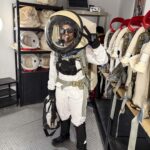
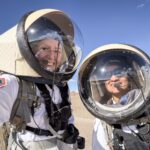
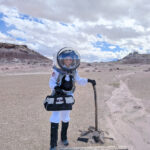
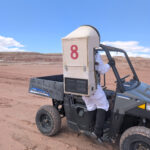
Rym and Ricardo then embarked on Crew 319’s first EVA! They took Perseverance Rover to Marble Ridge for the training EVA to familiarize themselves with the spacesuits and vehicles. Shriya and Mackenzie then followed later in the afternoon with our crew’s second EVA, following the same mission plan to Marble Ridge. Along the way they discovered a Martian shell fossil specimen and brought it back to the hab for examination.
Training EVAs are now officially complete!
Report title: Sol 3 Summary Report
Crew #: 319
Position: Mission Commander
Report prepared by: Rym Y. Chaid
Date: 15-10-2025
Sol: 3
Summary Title: Perseverance & Curiosity
Mission Status: Nominal. All systems operational.
Sol Activity Summary:
This is Commander Rym Y. Chaid reporting from Mars Station.
Today, SOL 3 tested our patience and resolve. Our crew began the day with high spirits as the long-awaited first EVAs were finally on the schedule. Helmets were ready, suits prepped, checklists reviewed. But as every explorer learns, plans rarely survive contact with the unknown.
Mission Support issued a partial abort for EVA 1, followed by a directive to reduce crew participation in EVA 2. Though necessary for safety and coordination, the news struck hard. The energy inside the habitat shifted, quieter, more subdued than usual. We could all feel the collective weight of disappointment upon us.
Still, this is the nature of missions in extreme environments. Mars doesn’t bend to human desires, and success often means knowing when to pause, reassess, and adapt. The crew did exactly that. Each member turned focus back to daily operations, reports, maintenance, GreenHab monitoring, and planning for the next opportunity to step outside.
Even on difficult days, there’s value in persistence. Today was not only the day for first steps on the Martian surface, but it was another day of discipline, patience, and teamwork, because at the end of the day, those are the skills that carry explorers forward when conditions turn against them.
Out here, resilience is as vital as oxygen.
We’ll regroup, recalibrate, and continue forward. Mars demands nothing less.
End Transmission.
Anomalies in work: EVA 1 and 2 had to readjust their plan and procedures on the spot. Team adapted well despite all.
Weather: Very windy!
Crew Physical Status: All Crew in Good Health – Spirits are low today, but that’s to be expected at times. Our crew is adapting nonetheless in good strength.
EVA: Our crew’s first 2 EVAs took place today – No EVA planned for tomorrow
Reports to be filed: Sol Summary, Journalist Report, Crew Photos, Greenhab Report, Operations Report, Mission Plan, EVA Report 1 & 2
Support Requested: None at this time.
Report title: Operations Report
Crew #: 319
Position: Crew Engineer
Report prepared by: Ricardo Javier Gonzalez
Date: 15-10-2025
Sol: 3
NON-NOMINAL SYSTEMS
Non-nominal systems:
Nothing to report
Notes on non-nominal systems:
Nothing to report
ROVERS
Spirit rover used: No
Hours: N/A
Beginning charge: N/A
Ending charge: N/A
Currently charging: N/A
Opportunity rover used: No
Hours: N/A
Beginning charge: N/A
Ending charge: N/A
Currently charging: N/A
Curiosity rover used: Yes
Hours:
Initial – 327.6
Final – 327.8
Beginning charge: 94%
Ending charge: 82%
Currently charging: No
Perseverance rover used: Yes
Hours:
Initial: 369.7
Final: 370.1
Beginning charge: 100%
Ending charge: 94%
Currently charging: No
General notes on rovers:
Nothing to report.
CAMPUS
Summary of Hab operations:
Water Use (see notes): 11.52 gal
Main tank level (remaining gallons, see notes): 308 gal
Static tank pipe heater (ON or OFF) (Orange cable): OFF
Static tank heater (ON or OFF) (Black cable): OFF
Toilet tank emptied (NO or YES): No
Summary of internet:
Nothing to report
Summary of suits and radios:
Suits – Suit #7, 8, 9, & 10 were used for today’s EVA training. Crew reports no issues with suits during the EVA. All suits are charging and in nominal configuration.
Radios – the earpiece for headset set #1 broke on Sol 0. During our night EVA, Commander reported that their headset was falling off their head and needed adjustment. During the adjustment, the earpiece broke off.
Summary of GreenHab operations:
Water use: 0 gal
Heater (ON or OFF): OFF
Supplemental light (hours of operation): 0 hrs
Harvest (name, weight in grams): N/A
Summary of ScienceDome operations:
Crew Scientist and Journalist continued their assembly of the SpaceSEED experiment structure.
Dual split (Heat or AC, On or Off or Automatic): Automatic
Summary of RAM operations:
Nothing to Report
Summary of any observatory issues:
Nothing to Report
Summary of health and safety issues:
HSO reported all crew safe and Health Equipment to be intact
Questions, concerns and requests to Mission Support:
N/A
Mission Plan
MDRS Crew 319
Historic Global Mission, Expedition 1
World’s Biggest Analog – Advanced Analog Astronaut Crew
Author: Rym Chaid – Commander
Review: Full Crew
October 12-25, 2025
1. Mission Overview
The World’s Biggest Analog (WBA) is the largest coordinated analog mission in history, linking 17 analog habitats across five continents to simulate Moon and Mars settlements in a unified, synchronous campaign.
Its core objective is to explore how humans can “live and work together cooperatively in the harsh environment of Space,” investigating not only technical and scientific challenges but also the sociopsychological, anthropological, and human-factor aspects of off-Earth habitation.
As MDRS Crew 319, we will serve as one of the four advanced habitats at the core of WBA. We will operate under Mars-analog conditions (or Moon/Mars mixed, per habitat assignment) and collaborate with the global network of analogs.
Advanced Core Habitats – Leading the WBA Global Mission:
Mars Desert Research Station (MDRS) – The United States of America
Lunares – Poland
Habitat Marte – Brazil
Hydronaut – Czech Republic
This mission will run for 2 weeks (October 12–25, 2025) across participating habitats.
2. Crew Composition & Roles
Our crew has five mandatory roles and two supplemental roles to explore all facets of life on Mars during our mission and complete our experiments and outreach plans successfully and safely.
First, we have the five key roles:
Commander: Rym Y. Chaid
The Commander is responsible for the overall safety, organization and management of the mission and is the person held accountable for all things related to the mission, although they still need to respect the overall authority of MDRS staff and the HSO in health and safety matters. Commanders will have prior successful analog experience. Commanders usually have demonstrated leadership and experience in remote or challenging field areas. Their duty is to keep an overview on the mission goals, progress of the crew experiments, crew well-being, and social climate, mediate and settle any disputes inside the crew, and take a lead and responsibility for the crew in difficult situations (e.g. emergency simulations).
Health and Safety Officer (HSO): Elias Mulky and Shriya Musuku
The role of the HSO is dependent on the applicant’s skill level. First responder training is preferred and EMT’s, nurses and doctors are highly desired, unless no one in the crew has a medical background. This position is also responsible for the operational safety of the crew and the campus. The Medical Officer can override decisions made by the Commander if medical reasons suggest a veto. Their duty is to: oversee the correctness and completeness of taking the daily medical measurements,observe the crew physical and mental health, and take care of injuries and sick crew members.
Crew Engineer: Ricardo Gonzales
The Crew Engineer is responsible for the maintenance and monitoring of the station, its buildings and systems. The person in this position has to think proactively and be able to think like a Martian in terms of active response to the physical environment at MDRS. In order for daily activities to proceed as scheduled, the crew engineer needs to routinely monitor the equipment being used by the crew and make sure it is ready for whatever is planned. In addition, when systems fail, the crew engineer needs to diagnose the problem and contact Mission Support with a plan for solving the problem.
Crew Scientist: Shriya Musuku
The role of a scientist on the crew is to conduct research and maintain the ScienceDome and its equipment. They generally plan the crew’s EVAs based on their research goals. They must have a pre-approval of their home institution for any studies done at MDRS. This is particularly important if the scientist is studying human factors. All human factors research is required to be approved by the home institution’s IRB, even if it doesn’t require an IRB. In that case, simple proof that it was reviewed and an IRB was not deemed necessary is all that is needed for the research. For WBA, we will need to discuss this role further with the MDRS Organizers to discuss feasibility and need.
Crew Journalist: Mackenzie Calle
The Crew Journalist is responsible for the daily reports and photos sent from MDRS. This included a daily Journalist Report that is a record of your crew’s daily life, but also they should be the organizer for the crew’s media efforts.
Then we have the two supplemental roles to further explore the life on Mars through our connection to the greenery of Earth and the vastness of space:
Crew Astronomer: Ricardo Gonzales & Rym Chaid
The crew astronomers must have both experience using a telescope and a research project that has been approved by the MDRS Astronomy Team. They will work with the director of observatories prior to their arrival at MDRS and must take an online test in order to operate the observatories.
GreenHab Officer: Mackenzie Calle
This person is responsible for keeping the crops alive and thriving in the GreenHab, as well as the overall maintenance and monitoring of the GreenHab’s environmental controls. GreenHab Officers can have experience in biology and/or gardening.
Crew Educator: Rym Chaid & Shriya Musuku
The crew educators are responsible for all educational and outreach initiatives and coordinations relating to the mission. This includes coordination with classrooms around the World to teach hundreds of students about space exploration and life on Mars as part of the ACE education international program.
3. Mission Objectives
3.1 WBA’s Core Experiments
WBA has defined ten flagship experiments to be run across all participating habitats, to facilitate comparative analysis. Our crew has analyzed and selected a total of 7 experiments to conduct during our rotation at the Mars Desert Research Station. Below is a summary and how we plan to implement or augment them:
Emotion Response Analysis (ERA) – Astronaut Emotional Analysis
Principal Investigators: Dr. Patrick Stacey & Dr. Suzanne Elayan
The experiment objective is to identify key emotional dynamics in the astronaut experience and aims to understand motivational and hazardous factors in the job using interviews to predict astronaut emotional responses
Use regular video diaries and before and after interviews to model emotional response of the crews
SIMOC – Live Mesh Network Sensory Array – Measures Habitat Life Support Data
Principal Investigator: Kai Staats
The experiment objective is to identify real time sensor data in the habs to create a system that functions as an Environmental Control and Life Support System that observes air quality in real time and allows for future data analysis
The crew will monitor functionality of this installed sensor system to ensure continued experiment operation throughout the duration of the mission
Job / Home / Team Crafting (MARSCRAFT project)
Principal Investigator: Vera Hanger mann and Christianne Heinecke
The experiment objective is to explore how crew members self-adjust tasks (“job crafting”), adjust personal spaces (“home crafting”), and refine collaboration dynamics (“team crafting”) to maintain well-being and performance.
The crew will be taking two surveys that journal their crafting behaviors and well being right after work and right before bed
INDEX (INtuition and DEliberation in eXtreme environments)
Principal Investigators: Pierpaolo Zivi and Fabio Ferlazzo
The objective of the experiment is to examine individual decision making factors throughout the World’s Biggest Analog mission
The crew will complete surveys measuring stress, sleep, mood and team climate to facilitate data analysis
SPACESEED
Principal Investigators: Victor Buchli and Tarun Bandemegala
The objective of the study is to understand the human side of Space Controlled Environment Agriculture and study the socio cultural factors of SpaceCEA
The crew will complete the assembly of the space seed and report on plant growth as we monitor things
Salutogenesis in Space Analog Environments
Principal Investigators: Dr. Laura Thomas & Dr. Mike Rennie
The experiment objective is to study the post experience growth and subjective factors that impact the time spent in analog settings
The crew will conduct daily journaling and a post analog interview to trace these factors throughout the mission and provide reflection on salutogenesis after the mission
ARBMH – Relationship between Mental Health, Sexual Functioning, and Team Dynamics
Principal Investigators: Simon Dube and Justin Garcia
The objective of the experiment is to study the evolution of psychological and sexual well being in isolated, confined, and extreme environments.
The crew will answer a daily questionnaire about their well being to provide data for this experiment
Mars-to-Earth Outreach & Education
All habitats engage in public communication: data-sharing, livestreams, educational modules, virtual tours.
Our MDRS crew will produce multimedia content, host virtual classrooms, publish in National Geographic, run photography exhibitions.
We will map our internal experiments to these WBA standards to maximize cross-habitat comparability, while also contributing unique experiments (as below).
3.2 Crew-Specific Experiments
Engineering / Technical Experiments:
Hab Maintenance & Reliability
Monitor and log all maintenance, failures, and mean time between failures (MTBF).
Redundancy strategies and emergency repair protocols.
VR & Simulation for Space Tasks
Implement virtual-reality simulations
EVA Emergency Experiment:
Communication Protocol Testing
Create and test rigid but adaptive comms protocols under degraded signal, latency, or partial blackout conditions.
Capture metrics: packet loss, misinterpretation, delays, crew stress under degraded comms.
Emergency Response Protocol Testing & Framework Definition
Stage “EVA emergencies” (ex: suit breach, comms cut, medical splint) and test response workflows.
Evaluate decision-making time, crew coordination, resilience measures, and communications.
Assessment Criteria, Risk Mitigation
Define quantitative and qualitative criteria for success/failure in emergencies.
Pre-develop mitigation strategies (ex: abort thresholds, redundancy checks, fallback positions).
Adaptive Response in Wilderness (Mars-like Terrain)
Simulate emergency scenarios in rugged terrain outside the habitat (within EVA constraints). Simulation shall be verbal and no real hazard shall be implemented.
Observe how crew improvises given simulated constraints (power, comms, supply limits).
Media / Outreach Experiments:
National Geographic Collaboration
Co-author an article (print + digital) linking our Mars-analog experiences with a moon-analog mission elsewhere in the WBA network.
Public Talks / Virtual Classroom Engagement
Conduct scheduled recorded sessions with classrooms globally, walking through mission day, experiment highlights, crew Q&A.
Magazine Journaling, Photography, Social Media
Daily journaling (crew diaries), photo essays, art pieces, social media posts framed as “Life on Mars” content.
Short Documentary Film
Produce a short film capturing mission flow, personal stories, scientific moments, challenges overcome.
“Life on Mars” Photography Exhibition
Curate a small exhibit of photos narrating crew life, experiments, landscapes, micro-moments, to be shared digitally and post-mission in galleries.
4. EVA Strategy
EVA Personnel:
EVA Lead: Commander leads Crew during EVA operations and is responsible for Crew safety.
HABCOM: One crew member must remain in the Main Campus at all times during EVAs. Habcom is responsible for communications between MSC and EVA Crew. Habcom monitors EVA Crew activities via Dashboard. Crew will rotate this position to ensure everyone goes on at least one EVA.
EVA Crew: EVA crew shall only consist of 3 members maximum, as one crewmember must remain in the Main Campus.
EVA Planning Principles:
EVA windows will be scheduled with buffer margins for safety, weather, suit prep, and delays.
Each EVA will have clear objectives (science, sampling, traverse, infrastructure) and contingencies.
A buddy system will always be enforced; no solo EVA under any circumstance. One night EVA will be performed on Sol 0, prior to Mission Ingress following special permission and crew training.
Before EVA: checklists (suit integrity, Air flow, comms, tool inventory, emergency supplies, MSC awareness).
During EVA: strict timeline adherence, regular check-ins MSC, strict perimeter adherence
After EVA: immediate debrief, log any anomalies, sample processing, suit maintenance, checking with MSC.
EVA Allocation Framework:
MDRS allows for two EVA windows per day (morning + afternoon), with flexibility depending on crew fatigue and environmental conditions (weather forecasts)
Assign roles rotating among crew (e.g. leader, navigator, instrument handler, media) to build redundancy and cross-training.
Only two EVAs should test Crew’s emergency protocols (simulated health hazard).
Reserve contingency EVA time for unexpected troubleshooting or extra sampling.
Emergency EVA Scenario Use:
Insert forced delays, simulated system failures (e.g. comms dropout), or tool breakage to test robustness of protocols and visual communications strategies. Comms will remain nominal, but crew will simulate loss of comms, for a controlled and predetermined amount of time.
Use terrain features (rocks, slopes) to simulate challenges in EVA navigation, emergency return path planning.
Two EVAs should test Crew’s emergency protocols by simulated health hazards. Trainers shall be Commander and HSO, while trainees shall be Crew Engineer and GreenHab Officer.
5. Crew Cohesion, Morale & Well-Being
Crew mental health, trust, and cohesion are central to our mission success. Key strategies:
Crew Norms & Values
Pre-mission: conflict resolution norms, roles, communication practices, personal boundaries.
Daily Emotional Check-ins
Short check-ins/check-outs “highs and lows” rounds led by Commander each morning and evening.
Encourage vulnerability, psychological safety, and listening.
Commander and HSO are both responsible for monitoring the safety and well-being of the crew and are trained in human factors and emotional support.
All crewmembers are encouraged to reach out and communicate with whoever they are comfortable with in the crew, if needed.
Scheduled Social Time & Rituals
Board games, storytelling, themed nights (music, art), shared stargazing or guided astronomy sessions.
Small traditions (mission halfway celebration, mission closure celebration quote-of-the-day) help us build our identity.
Rotation / Cross-Role Engagement
Occasionally rotate duties to prevent monotony and foster empathy (e.g., engineers help with greenhab, journalist helps data entry).
Encourage side learning: short peer-led “micro-teach” sessions (biology, art) during downtime.
Physical Fitness & Recovery
1 hour daily exercise (stretching, yoga, cycling, resistance bands) to maintain physical health, reduce stress.
Encourage naps or rest periods when fatigue accumulates.
Private Reflection Time
All crew members have quiet time daily to journal, decompress, or meditate. Everyone should respect those boundaries.
Conflict Management Protocol
Early “cool-down” before escalation, structured mediation session if needed.
Use crew norms as reference for dispute resolution.
6. Risk Management & Safety Protocols
Primary Risk Categories
EVA mishaps (suit breach, tool failure, disorientation, heat stroke, hypothermia)
Habitat system failures (power, life support, communications)
Health and medical emergencies
Psychological stress, interpersonal conflict, fatigue
Media/communications breakdowns with external support
Environmental hazards (storms, terrain, dust, fire)
Mitigation Strategies
Redundancy & Backup Systems
Monitor critical systems (power, comms, telemetry).
Spare parts, tools, repair kits easily accessible.
Pre-mission Training & Drills
Emergency drills (fire, depressurization, medical) pre-mission and early mission days.
Cross-training: every crew member cross-training on backup systems, basic first aid, EVA rescue, COMS protocol.
Checklists & Standard Operating Procedures (SOPs)
Mandatory checklists for EVA, maintenance, communications, emergency.
All procedure updates must be documented and signed.
Abort Criteria & Decision Gates
Define clear thresholds to abort EVA, halt experiment, or retreat to safe mode.
Utilize “go/no-go” decision points, favor safety margins.
Health Monitoring & Medical Protocols
Medical kit ready, telemedicine support, protocols for remote assistance.
In case of worsening symptoms: fallback “safe mode” and potential early egress.
Psychological Safeguards
Scheduled breaks, counseling check-ins, possibility to pause high-load tasks.
Communicate stress or private feedback to Commander or HSO – per individual preference.
Commander/HSO and involved crewmember might decide to escalate this matter to MSC and/or external professional support.
Communications Backup & Latency Simulation
Use redundant comms channels, monitor delays and outages to test robustness.
Backup archive of critical data.
Environmental Monitoring & Safeguards
Continual habitat sensors (humidity, temp).
Fire hazard equipment.
Automated alerts, threshold alarms, emergency vent or scrubber activation.
Post-Incident Review & Learning
Immediate debrief after any anomaly, near-miss, or emergency test.
Log lessons learned, update procedures and file Incident Report.
Comms check with MSC.
7. Expected Outcomes & Deliverables
By the end of the mission, we aim to deliver:
Comparative data sets aligned with WBA’s core experiments (psychological, communication, productivity, space agriculture)
Internal reports on our crew’s engineering, EVA, and emergency protocol experiments
Daily SOL Summaries and Journaling reports
A collaborative National Geographic article (digital + print) intersecting our Mars analog story with another WBA Moon mission – Lunares Station in Poland
A short documentary film, photo exhibition, artistic pieces, and social media educational content
Recommendations and best-practice protocols (EVA, comms, conflict resolution) for future analog missions
A mission debrief and lessons-learned package to WBA/MDRS
Outreach engagements (virtual talks, classroom sessions, published mission diaries)
Personal growth, team resilience, cross-role competence, and a crew legacy of inspiration for future analog astronauts and space explorers
These deliverables will help us fulfill both our crew’s scientific objectives and the WBA’s global mission of expanding awareness, research standards, and analog cooperation.
8. Commander’s Closing Statement
Fellow crew members, as we stand on the cusp of this historic analog mission, I am honored to lead Crew 319 on Expedition 1 of the World’s Biggest Analog. This is more than a simulation, it is our chance to contribute meaningfully to humanity’s journey beyond Earth and onto newer Planets.
Each of you brings unique talents and perspectives: Ricardo with engineering rigor, Shriya with scientific curiosity, Mackenzie with narrative vision, and Elias with health and safety perspective. Together, we form a living mosaic of exploration, resilience, and creativity.
Our mission will test us: in environment, in psyche, in cooperation. But more than that, it will redefine us and allow us to explore not just Mars, but ourselves. Our success will not only be the science accomplished here at the Mars Station, but the way we support each other, adapt to surprises, and rise through challenges together.
Let us lead with empathy, discipline, curiosity, and courage. Let our data, art, words, and camaraderie echo across the global WBA network. We are writing a new chapter in analog exploration, and we can only hope that the world will watch, learn, and be inspired by our adventures here together.
Here’s to safe EVAs, crew laughter echoing in the Hab, starry nights of wonder, and a mission that leaves a legacy for future space explorers.
Onward, together.
Rym – Commander,
World’s Biggest Analog – Advanced Crew
Mars Desert Research Station
Report title: Operations Report
Crew #: 319
Position: Crew Engineer
Report prepared by: Ricardo Javier Gonzalez
Date: 14-10-2025
Sol: 2
NON-NOMINAL SYSTEMS
Non-nominal systems:
Nothing to Report
Notes on non-nominal systems:
Nothing to Report
ROVERS
Spirit rover used: No
Hours: N/A
Beginning charge: N/A
Ending charge: N/A
Currently charging: N/A
Opportunity rover used: No
Hours: N/A
Beginning charge: N/A
Ending charge: N/A
Currently charging: N/A
Curiosity rover used: No
Hours: N/A
Beginning charge: N/A
Ending charge: N/A
Currently charging: N/A
Perseverance rover used: No
Hours: N/A
Beginning charge: N/A
Ending charge: N/A
Currently charging: N/A
General notes on rovers: Nothing to Report
CAMPUS
Summary of Hab operations:
Water Use (see notes): 12.73 gal/d
Main tank level (remaining gallons, see notes): 321 gal
Static tank pipe heater (ON or OFF) (Orange cable): OFF
Static tank heater (ON or OFF) (Black cable): OFF
Toilet tank emptied (NO or YES): NO; tank sensor indicates that it is ⅔ full and will need to be emptied in the near future
Summary of internet:
Nominal – Nothing to Report
Summary of suits and radios:
Nominal – Nothing to report
Summary of GreenHab operations:
Water use: 0 gal
Heater (ON or OFF): OFF
Supplemental light (hours of operation): 0 hrs
Harvest (name, weight in grams): N/A
Summary of ScienceDome operations:
The Green Hab officer began setting up Spaceseed, one of the WBA experiments. It proved much more difficult than anticipated to assemble the cabinet and soon the entire crew was eventually working on it together. We have collectively spent 10 hours working on the setup and it is still not complete
Dual split (Heat or AC, On or Off or Automatic): Automatic
Summary of RAM operations:
Nothing to Report
Summary of any observatory issues:
N/A
Summary of health and safety issues: Questions, concerns and requests to Mission Support:
HSO reported all crew sage and Health Equipment to be intact
Attached pictures if needed.
N/A
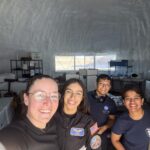
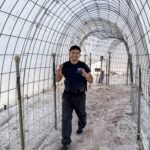
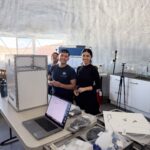
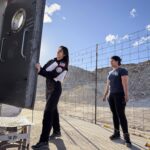
Crew #319
Position: Crew Journalist & Green Hab Officer
Report prepared by: Mackenzie Calle
Date: 14-10-2025
Sol: 2
Environmental control (fan & heater): Fan min 75F, max 80F
Average temperatures (last 24h): 74.8F
Maximum temperature (last 24h): 90F
Minimum temperature (last 24h): 59.6F
Hours of supplemental light: 0
Daily water usage for crops: 0
Daily water usage for research and/or other purposes: 0
Water in the Tank (160 gal useful capacity): 159 gallons remaining
Time(s) of watering for crops: 0
Changes to crops: 0
Soil Moisture Level: 9.4 (Average across 5 different points – each corner and middle)
The Green Hab officer began setting up Spaceseed, one of the WBA experiments. It proved much more difficult than anticipated to assemble the cabinet and soon the entire crew was eventually working on it together. We have collectively spent 10 hours working on the setup and it is still not complete. Shriya and Mackenzie tackled the main structure, Rym came in and saved the day fixing the door attachment issue, and Ricardo knocked it out of the park with the fan installation. We are completing the Spaceseed setup this evening after having some dinner. The crew, but especially the Green Hab Officer, is really excited to begin collecting data for this experiment.
Because we are pressed on time, the Microgreens experiment that was intended to start today will now be set up and begin tomorrow.
Report title: Sol 2 Summary Report
Crew #: 319
Position: Mission Commander
Report prepared by: Rym Y. Chaid
Date: 14-10-2025
Sol: 2
Summary Title: Canadian Turkey spotted on Mars!
Mission Status: Nominal. All systems operational.
Sol Activity Summary:
This is Commander Rym Y. Chaid reporting from Mars Station.
SOL 2 reminded us that life on Mars, even an analog Mars, is never predictable. Early in the day, one of our GreenHab experiments ran into technical difficulties during setup. What was expected to be a simple procedure quickly became a full-crew operation, and all engineers on deck responded to action. Ricardo, Shriya and myself, all came in to troubleshoot and support our GreenHab Officer Mackenzie in this difficult task.
In moments like these, you see the strength of a crew, not in how perfectly things go, but in how quickly everyone steps in when they don’t. There’s no “someone else’s task” here on Mars. Every system depends on every person, and today, we proved just that.
On a happy note, the habitat was filled with anticipation all day as we’re preparing for our first EVA tomorrow. The suits are ready, checklists complete, and spirits high. You can feel the excitement in every conversation, every glance toward the airlock.
And since I am proudly Canadian, we’re closing SOL 2 by celebrating Canadian Thanksgiving on Mars, proof that even 225 million kilometers from home, you can still find something to be grateful for… especially if someone remembered the instant mashed potatoes!
As we wrap up SOL 2, there’s a sense of calm pride in the air. We adapted, we worked together, and we grew stronger as a team. Each Sol brings its own story, and today it was about teamwork, flexibility, and trust.
Tomorrow, we take our first steps outside, on the surface of Mars, a moment every astronaut dreams of.
End Transmission.
Look Ahead Plan: First Crew EVA tomorrow, pending approval and weather conditions.
Anomalies in work: One GreenHab experiment had technical difficulties during setup. All engineers on deck had to step up: Commander, Scientist and Engineers came in as support for GreenHab Officer.
Weather: Temperature around 57 F, No rain, 67% Humidity. Overall Sunny day with slight overcast
Crew Physical Status: All Crew in Good Health + Spirit.
EVA: No EVA activity today. Request sent it for tomorrow – SOL 3.
Reports to be filed: Sol Summary, Journalist Report, Crew Photos, Greenhab Report, Operations Report, Mission Plan
Support Requested: None at this time.
Green Hab Report
Crew #319
Position: Crew Journalist & Green Hab Officer
Report prepared by: Mackenzie Calle
Date: 17-10-2025
Sol: 5
Environmental control (fan & heater): Fan min 75F, max 80F
Average temperatures (last 24h): 86.6F
Maximum temperature (last 24h): 124.5F
Minimum temperature (last 24h): 48.7F
Hours of supplemental light: 0
Daily water usage for crops: 0.1 gallons
Daily water usage for research and/or other purposes: 0
Water in the Tank (160 gal useful capacity): _160____ gallons remaining (system says 160 but I used some last night and the last few days it has been at 159)
Time(s) of watering for crops: 5 minutes misting the microgreen seeds for Spaceseed and MDRS microgreens
Changes to crops: Nothing to report
Soil Moisture Level: 9.4 (Average of five points, one on each corner and center)
Green Hab Officer checked on both Spaceseed and the microgreens experiments, both of which are currently in trays that are stacked and in dark locations with weight on top of them to encourage germination. Spaceseed has started to germinate evenly across the top tray but the bottom three trays germination has only begun in locations where the ridges of the tray on top does not press into the seeds as strongly.
The microgreens with moist paper towels have not started germination and have again been watered. There is some concern over the 124.5F max temperature that was reached today and the seeds not having enough water to begin germination, especially for the paper towels. The seeds with vermiculite that was soaked in water have just begun some germination but the seeds where vermiculite was moist have not.
You must be logged in to post a comment.