Mars Desert Research Station
Mission Plan
Crew 326 – Gaia
Dec 28th, 2025 – Jan 10th, 2026
Crew Members:
Commander Keegan Chavez
Crew Scientist: Benjamin Huber
Crew Engineer: Idris Stevenson
Health and Safety Officer: Katharina Guth
Green Hab Officer: Vindhya Ganti
Crew Journalist: Daria Bardus
Crew Biologist: Armand Destin
Mission Plan:
The twin “Aether” (325) and “Gaia” (326) missions are the tenth and eleventh all-Purdue crew at MDRS. The enthusiasm and interest raised by the previous experiences of Purdue students and alumni at the station, the numerous high-quality research projects carried on at MDRS, as well as Purdue’s honored tradition in the field of space exploration, granted us once again two back-to-back rotations.
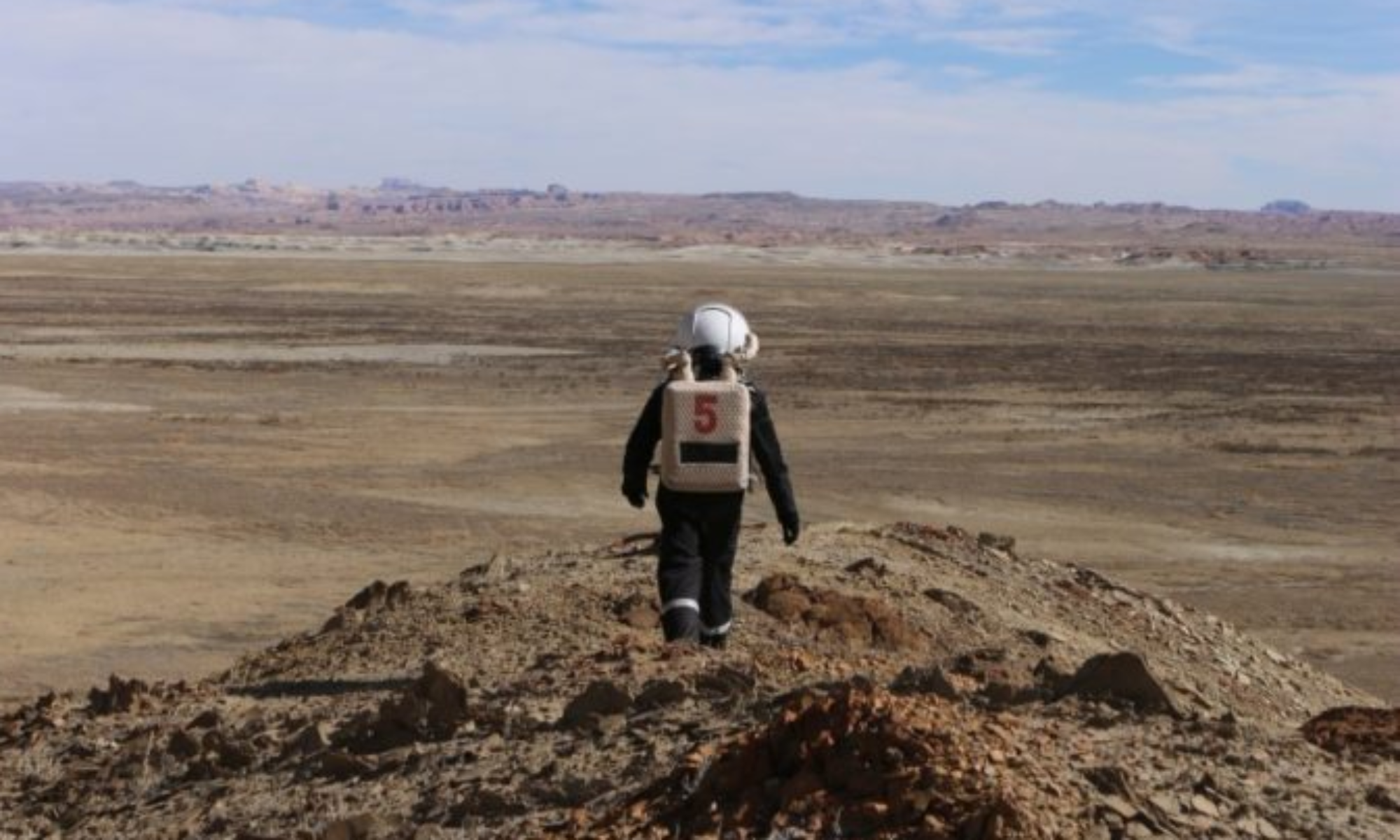
Crew 326 will perform various research tasks, including engineering projects on RF communications, autonomous rover sample collection and navigation, in-situ resource utilization, environmental sensing, and low gravity seed germination. Some of the experiments will be performed inside the MDRS modules, while others require Extra Vehicular Activities (EVA), thus adding realistic difficulties to the task. As usual, the combination of excursions and life inside the habitat will provide crew members with the opportunity to both work on their research and identify potential difficulties of working with space suits and living in close quarters in a small habitat.
The main objectives of the Gaia analog Martian mission are:
- Keeping the highest level of fidelity and realism in the simulation. Earth analogs cannot reproduce Martian gravity and atmosphere, but the crew will keep every other aspect into consideration. This includes safety and research protocols, definition of roles and daily schedule, EVA protocols (and limitations), communication protocols, fruitful collaboration with the program director and mission support, and adaptation to limited resources and environmental difficulties.
- Performing research in the fields of engineering, biology, communications, autonomy, and geology on Mars.
- Continuing the fruitful collaboration of Purdue crews with the MDRS program.
- Following the mission, supporting MDRS with useful results for future crews.
Crew Projects:
Title: Autonomous Mars Rover for Geological Sample Collection
Author(s): Vindhya Ganti
Objectives: Train an image-based navigation system on local landmarks to allow a rover to navigate autonomously
Description: The goal of this project is to develop a rover capable of harnessing navigational targets, ideally in the form of images captured of the local geography, to gather localization information. Using this information, the robot should be able to adapt its autonomous path to optimally reach a target destination. In the autonomous path, the rover will move other attachments, like an arm to collect samples. This work is in collaboration with Daria Bardus, with an emphasis on developing an imaging pipeline.
Rationale: If this rover can harness imaging for navigation, we would have a fallback mechanism for localization that will not be affected by the rocky terrain of Mars. This will ensure greater consistency, along with checkpoint verification to hone accuracy in path movement. This would enable the crew to gather more samples and conduct additional research on Mars’ terrain within a single mission.
EVAs: 6; 1-2 EVAs to gather images of local landmarks, 1 EVA to test basic functionality of rover hardware and software, 1-2 EVAs to return to sites where images were taken and test the rover’s ability to navigate autonomously, 1 extra EVA is included for Crew member Daria Bardus to test rover’s sample collection ability on different regolith
Title: Dust Storm Detection
Author(s): Idris Stevenson
Objectives: Install environmental sensors to give crews early warnings on incoming dust storms and other hazardous weather
Description: A suite of sensors will be assembled on site and deployed in the Martain environment in areas surround the Hab. Many environmental factors are influenced by incoming weather patterns, including temperature and humidity, which will be measured in this study to determine their behavior before storms hit. By the end of the mission, all sensors will be collected and the data will be compared to weather data gathered while at the station.
Rationale: Dust storms on Mars can last for weeks, covering extremely large portions of the Martian surface. Detecting storm formation early helps astronauts and engineers plan for dust storm ramifications, including decreased solar panel power output, when it would be safe to perform EVAs, and when there would be periods of increased maintenance needs
EVAs: 6; 3 EVAs to place sensors in the environment, 3 EVAs to retrieve sensors
Title: Utilization of In-Situ Materials for Construction
Author(s): Benjamin Huber
Objectives: Gather materials from the surface of Mars to make bricks for construction and testing the strength of those bricks
Description: In this research, the experimenters will collect surrounding surface materials and create a concrete that will be able to withstand the harsh conditions of Mars. The geologically similar landscape of the Utah desert and the limited water given to the MDRS team makes the perfect circumstances to accurately reflect the viability of creating concrete on Mars. The materials gathered at the site will be made into bricks, different mineral compositions from different locations will be collected to find the strongest brick formula. To figure out which brick formula is strongest, each of the bricks will then be stress tested to gauge how well they can endure the environment of Mars.
Rationale: If concrete could be created on Mars, this will give future explorers on Mars the ability to construct structures without any materials from Earth. This will enable the colonization of Mars by improving the ability to create infrastructure and protect colonizers from the planet’s harsh environment.
EVAs: 4; 4 EVAs to gather different types of surface samples
Title: Terrain-Dependent RF Signal Propagation Mapping
Author(s): Katharina Guth
Objectives: Begin to create an RF signal strength map of the area surrounding the Hab
Description: The goal of this project is to investigate how Martian surface features, including rock formations, slopes, depressions, and habitat features, affect radio frequency (RF) signal strength and coverage during surface operations. Using a transmitter-receiver pair, this project will measure and map signal propagation across different terrain types. Data will be collected during multiple EVAs, with signal strength, GPS position, and environmental conditions recorded at each measurement point. The resulting dataset will be used to generate a terrain-dependent coverage map, influencing future communication network design.
Rationale: Reliable communication is essential to EVA safety, mission success, and crew coordination. Terrain irregularities can significantly disrupt line-of[1]sight communication and reduce signal reliability. By studying how environmental features influence signal behavior in a Mars analog setting, this project will guide communication infrastructure design for crewed surface missions.
EVAs: 4-5; all EVAs will be used to gather RF signal strengths level in areas of interest, we do not expect to be able to map the entire region but will give as many EVAs to this project as we can and is safe to map as much as possible
Title: Crew-Centric Interface for Performance Optimization at MDRS
Author(s): Armand Destin
Objectives: Develop a platform to allow teams to perform risk assessment in an efficient and effective manner
Description: This research proposes the development and preliminary validation of a quantitative framework design in case of a contingency event. It will act as a decision-support tool, providing crews with a data-driven assessment of risk and mission performance value in real time. This research aims to develop a model to assess mission success based upon realistic EVA scenarios. Collected data from the crew’s decisions and the model’s output are then evaluated through a debrief and analysis.
Rationale: For future long-duration missions to Mars, astronaut crews will operate with unprecedented autonomy, facing complex challenges far from the comfortability of Earth-based mission control. The ability to make rapid, accurate, and justifiable decisions during critical operations, such as Extravehicular Activities is important to crew safety, science, and mission success.
EVAs: 4; 4 EVAs with a different scenario for crews to handle on each
Title: Autonomous Mars Rover for Geological Sample Collection
Author(s): Daria Bardus
Objectives:
Description: The goal of this project is to develop a rover capable of reaching locations on Mars that are inaccessible to humans through EVAs, collect samples, and safely return them to the HAB. The rover will use imaging and recognition to locate where it is using landmarks created by the crew then collect a dirt sample and bring back to the HAB. This work is conducted in collaboration with Vindhya Ganti, whose research emphasizes imaging and recognition, while the complementary focus is on terrain traversal and sample collection
Rationale: If this rover can be utilized to collect samples for the crew geologist, then less EVAs will be needed. By using this rover for sample collection, life support resources can be allocated to other EVAs. This rover also has the potential of going farther than the crew members could travel. This would enable the crew to gather more samples and conduct additional research on Mars’ terrain within a single mission.
EVAs: 4, 4 EVAs to test rover’s ability to gather samples on different terrains, this project will also be supported by the efforts of the autonomous Mars rover navigation project
Title: Simulated Microgravity Germination: A Proof-of-Concept for Bioregenerative Life Support Systems (BLSS)
Author(s): Keegan Chavez
Objectives: Investigate Plant Growth in Simulated Microgravity
Description: This project is a continuation of the work done by Saranya Ravva on Crew 325. This experiment investigates how short-term exposure to simulated microgravity influences the germination and early growth of plants. Using a custom-built rotational positioning machine (RPM), seeds will experience continuous multi-axis rotation to nullify the net gravity vector—mimicking conditions of microgravity during space transit. After one week, treated seeds will be transferred to the Green Hab at MDRS for comparison with control samples germinated under Earth gravity.
Rationale: Long-duration missions to Mars require sustainable bioregenerative life support systems (BLSS) for food, oxygen, and waste recycling. Studying how plants initiate growth under microgravity analogs provides insights into seed resilience, cellular adaptation, and nutrient uptake mechanisms during space transit. This project models a Mars mission scenario where seeds are grown in microgravity en route to Mars and later cultivated under Martian gravity.
EVAs: None
Roles and Responsibilities:
The leadership structure is as follows:
- Crew Commander – has ultimate say in operations performed by the crew, including in HAB and on EVA
- HSO – Due to an understanding of the safety and emergency procedures the HSO will act as an Executive Officer, taking over command in the case the Commander is indisposed or otherwise unreachable
- In the unlikely case both the CC and HSO are indisposed, leadership will fall to the crew member with skills and competencies relevant to the situation, this will be determined at the necessary time
For EVAs: An effort will be made to place the Commander or HSO on each EVA and that person will take a leadership role for the EVA. In the case where that cannot happen, the Commander will determine a member on the EVA team to take the role of mission leader and assume leader responsibilities for that EVA.
Responsibilities for Each Roles:
All crew members will be expected to perform scientific research that will benefit the advancement of humans on Mars.
Crew Commander:
- Ensuring a high fidelity simulation while keeping members of the crew safe and focused on tasks related to research and reporting
- Handling the daily Sol Summary reports
- Primary point of contact for Mission Support
Health and Safety Officer
- Monitor physical and mental health of crew
- Report on all health and safety issues as they arise
- Ensure First Aid kits, fire extinguishers, fire blankets, and other safety devices are in proper working order
- Assume responsibilities of Commander when necessary
Green Hab Officer
- Monitoring of plant growth in Green Hab as outlined by Green Hab coordinator Ben Greaves
- Maintenance and cleaning of Green Hab
- Handling of daily Green Hab report
Crew Journalist
- Tracking of daily activities performed by crew members at the station and on EVA
- Gathering and cataloguing of all pictures taken by crew members throughout the day
- Handling of daily Journalist report
Crew Engineering
- Monitoring and maintenance of access tunnels
- Ensuring all communications equipment is working properly prior to EVAs and charging properly post EVAs
- Maintenance and cleaning of RAM
- Handling of daily Operations report
Crew Scientist
- Maintenance and cleaning of Science Dome
- Ensuring proper use and storage of equipment in the Science Dome
- Handling of EVA requests when applicable
Crew Biologist
- Handling of EVA reports when applicable
Expected Deliverable:
Research:
All crew members are expected to perform daily tasks that pertain to the research projects that were accepted by the Purdue MDRS command team. They will strive to make significant progress to be reported at the mid mission mark and have data generation and collection finished by the end of mission date. Data analysis and final reporting can happen post mission.
Crew performance:
Crew members are expected to improve on aspects of daily mission life, such as EVA prep and daily report writing. They will build a daily routine that is a healthy balance between work and relaxation in order to avoid excess stress and burn out while maintaining productivity.
Risk Management and Safety Protocols:
On EVA:
- Any health concerns due to environmental factors, such as dehydration, heat exhaustion, extreme cold or others, will take priority over sim. This includes returning to base immediately while maintaining sim if possible, or breaking sim by removing EVA suits and returning to base as soon as possible.
- Physical injuries constitute exiting sim and returning to base if possible, or waiting on site for assistance if necessary
- If signs of dangerous wildlife can be identified, steps should be taken to avoid said wildlife and exit the area immediately
- Encounters with non-mission personnel should be ignored if possible and sim can be maintained. If encounters escalate to dangerous levels then sim will be exited and steps taken to remove crew members from the encounter.
In Hab:
- Health concerns due to environmental factors should first attempt to be dealt with in sim by HSO. Sim can be exited if conditions worsen
- Physical injuries that do not require immediate medical attention can be treated in sim by HSO
You must be logged in to post a comment.